


Hair oil treatments are one of those hair care routines that we think are simple, almost obvious, yet are often misunderstood.
Behind this ancient ritual lies a precise logic: providing the hair fiber with what it can no longer retain on its own, namely lipids. When hair becomes dry, dull, or brittle, it is not only due to a lack of care, but often to a profound imbalance in its structure.
Oil treatment is therefore not just a gimmick. When done properly, it nourishes, protects, and restores consistency to the hair fiber. When done poorly, however, it can weigh hair down, suffocate it, and make it difficult to rinse out.
This is where many people get discouraged.
My experience has taught me one thing: it's not so much the principle of oil bathing that is problematic, but the way it is approached today.
The "how to" is essential, as is the evolution of modern formulas, capable of offering the benefits of the classic oil bath without its constraints.

What is an oil treatment for hair?
Definition of hair oil bath
A hair oil treatment involves applying a lipid-rich product to the entire head of hair before shampooing in order to deeply nourish the hair fiber.
Unlike a moisturizer, it does not aim to provide water, but to strengthen the hair's natural lipid barrier. This barrier is essential for limiting dehydration, breakage, and porosity.
Oil treatment vs. nourishing mask: what are the differences?
Traditionally, oil baths are based on the use of pure vegetable oils. Nourishing masks, on the other hand, combine several families of active ingredients in an emulsified formula that is more stable and easier to rinse off.
Today, certain expert formulas allow you to enjoy the benefits of an oil treatment without the drawbacks. This is a logical development, driven by a detailed understanding of the hair fiber and the limitations of oils alone.
What are the benefits of an oil hair treatment?
An oil treatment primarily nourishes the hair. It is particularly recommended when the hair fiber lacks lipids.
Its main benefits are clear:
- Deeply nourish the fiber with fatty acids
- Restore suppleness and elasticity to the lengths
- Smooth the scales to improve shine
- Reducing drought damage
- Protect hair from mechanical and environmental damage
Contrary to popular belief, oil treatments do not chemically "repair" hair. They improve its condition by strengthening what can still be strengthened, which is already considerable.
For which hair types is an oil treatment recommended?
Hair oil treatments are primarily intended for:
- Dry or very dehydrated hair
- Hair damaged by heat or coloring
- Curly, frizzy, or kinky hair, naturally low in lipids
- Dull, coarse, or brittle lengths
On fine or low-porosity hair, it should be used sparingly and wisely. This is precisely where modern alternatives, such as concentrated masks with targeted active ingredients, come into their own.

How to do an oil hair treatment (step-by-step tutorial)
Achieving an effective hair oil treatment is neither a matter of chance nor the amount of product used.
Everything depends on the choice of treatment, the preparation of the fiber, and the method of application. Here is a clear, progressive, and realistic approach, based on both practice and theory.
Step 1 – Choose the right oil treatment for your hair
The choice of product determines 80% of the result. There are two options.
Option 1: Pure vegetable oils
They provide lipids, but only act on a single lever.
- Coconut oil: suitable for thick and very dry hair
- Argan oil: versatile, nourishing
- Jojoba oil: lighter, similar to sebum
- Castor oil: coating, but difficult to rinse off
These oils are effective, but require precision and experience to avoid a greasy effect.
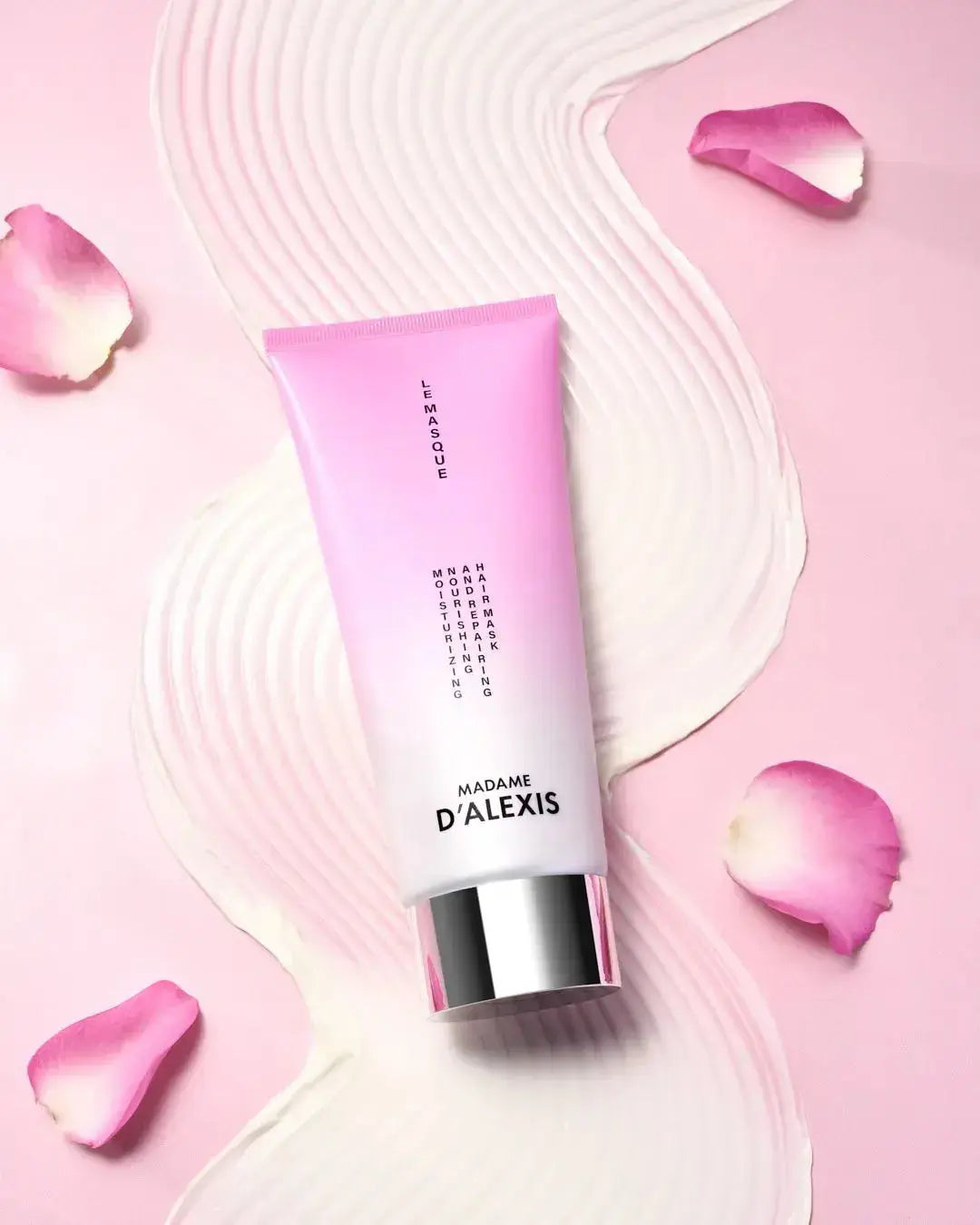
Option 2: Madame d’Alexis Floral Mask, an expert alternative
A concentrated mask, formulated without added water, enriched with organic hydrosols, plant ceramides, and fine oils. It replicates the benefits of an oil bath while providing additional moisturizing and repairing action.
Why a concentrated mask is more effective than oil alone
From a hair perspective, oil nourishes but does not moisturize. An expert mask acts on several levels:
- Lipid intake to nourish the fiber
- Provides moisturizing ingredients to retain water in the hair
- Emulsified structure for homogeneous distribution
- Easy rinsing, no residue
It is this versatility that makes the result more consistent and predictable.
How to use the Madame d'Alexis mask
Step 2 – Prepare your hair before the oil treatment
Preparation is often neglected, wrongly so.
- Carefully detangle to avoid breakage
- Lightly dampen the lengths, especially if they are very dry.
- Separate hair into sections for even application
Prepared hair absorbs active ingredients better.
Step 3 – Apply the oil bath correctly
The method varies depending on the condition of the hair.
On dry hair
Intensive treatment, ideal for very dry or damaged hair.
Apply section by section, focusing on the lengths and ends, massaging gently.
On damp hair
A gentler method, suitable for regular use.
Apply after shampooing, to towel-dried hair, only on the lengths.
Step 4 – Ideal application time depending on the desired result
- 5 to 10 minutes: light nutrition, discipline
- 20 to 30 minutes: visible repair, flexibility
- Occasional long exposure: only with a well-balanced formula
Extending the exposure time does not always increase effectiveness.
Step 5 – How to rinse an oil bath without leaving a greasy residue
Rinsing is the critical point.
- Apply the shampoo directly to the treatment.
- Emulsify before adding water.
- Rinse thoroughly without rubbing.
- One shampoo is enough with a well-formulated mask.
A successful oil treatment leaves hair supple, never heavy.
Traditional oil bath or expert mask: which is the best option?
Choosing between a classic hair oil treatment and an expert nourishing mask is not a trivial decision. Both approaches have the same goal—to nourish the hair fiber—but they do not work in the same way or with the same precision.
With hindsight and observation of the results on different hair types, a clear distinction is necessary.
The limitations of conventional oil baths
The traditional oil treatment involves applying vegetable oil before shampooing. It has real benefits, but it has several structural limitations.
- Oil nourishes but does not moisturize. It does not add water to the fiber.
- It acts uniformly, without distinguishing between healthy lengths and damaged areas.
- Rinsing is often difficult, especially on fine or less porous hair.
- The accumulation of lipids can weigh down the fiber in the medium term.
In practice, I have often found that repeated oil baths end up smoothing the surface of the hair without permanently improving its internal quality.
The touch is flattering at the time, but the effect does not always last.
Madame d'Alexis Floral Mask, the new generation oil bath
A well-formulated expert nourishing mask goes beyond these limitations. Madame d'Alexis Floral Mask is part of this modern approach. It does not replace oil baths for marketing purposes, but for functional effectiveness.
Its difference is based on three key areas:
- A base of bioactive hydrolats that truly hydrates the fiber
- Plant ceramides that strengthen the lipid barrier
- Fine oils incorporated into a stable emulsion, better absorbed
This approach provides deep nourishment without weighing hair down. Hair becomes more supple, but retains its movement. In my opinion, this is the difference between a supplementary treatment and a structuring treatment.
Video results of Madame d'Alexis hair mask
Mistakes to avoid at all costs with an oil bath
Even the best treatment can be counterproductive if used incorrectly. Certain mistakes are frequently made.
- Applying too much product, thinking it will increase effectiveness
- Choosing an oil that is unsuitable for your hair type
- Leaving it on for too long without any real need
- Rinsing poorly, adding too much water too quickly
- Repeating the treatment too often
These mistakes account for the majority of negative opinions about oil treatments for hair. They do not call into question the principle itself, but rather its use.
How often should you do an oil treatment for your hair?
The frequency must always be adapted to the actual condition of the fiber, not to a fixed routine.
- Very dry or damaged hair: once a week
- Normal to dry hair: once every ten days
- Fine hair: once every two weeks
- Oily hair: occasionally, only on the ends
Excessive frequency can weigh down the fiber, even with natural care products. The right frequency is one that improves texture without ever stiffening it.
Complete nourishing routine inspired by oil bathing
An effective routine for dry hair is not based on accumulating treatments, but on consistency.
Hair oil treatments can serve as a guiding principle, provided they are part of a comprehensive approach designed to nourish, protect, and stabilize the hair fiber over time.
The logic is simple: cleanse without damaging, nourish deeply, then protect on a daily basis.
- Clean with a mild shampoo, formulated without harsh ingredients, to preserve the natural hydrolipidic film.
- Nourish with a treatment inspired by oil baths, capable of providing lipids while maintaining hydration.
- Protect hair lengths from mechanical, thermal, and environmental damage
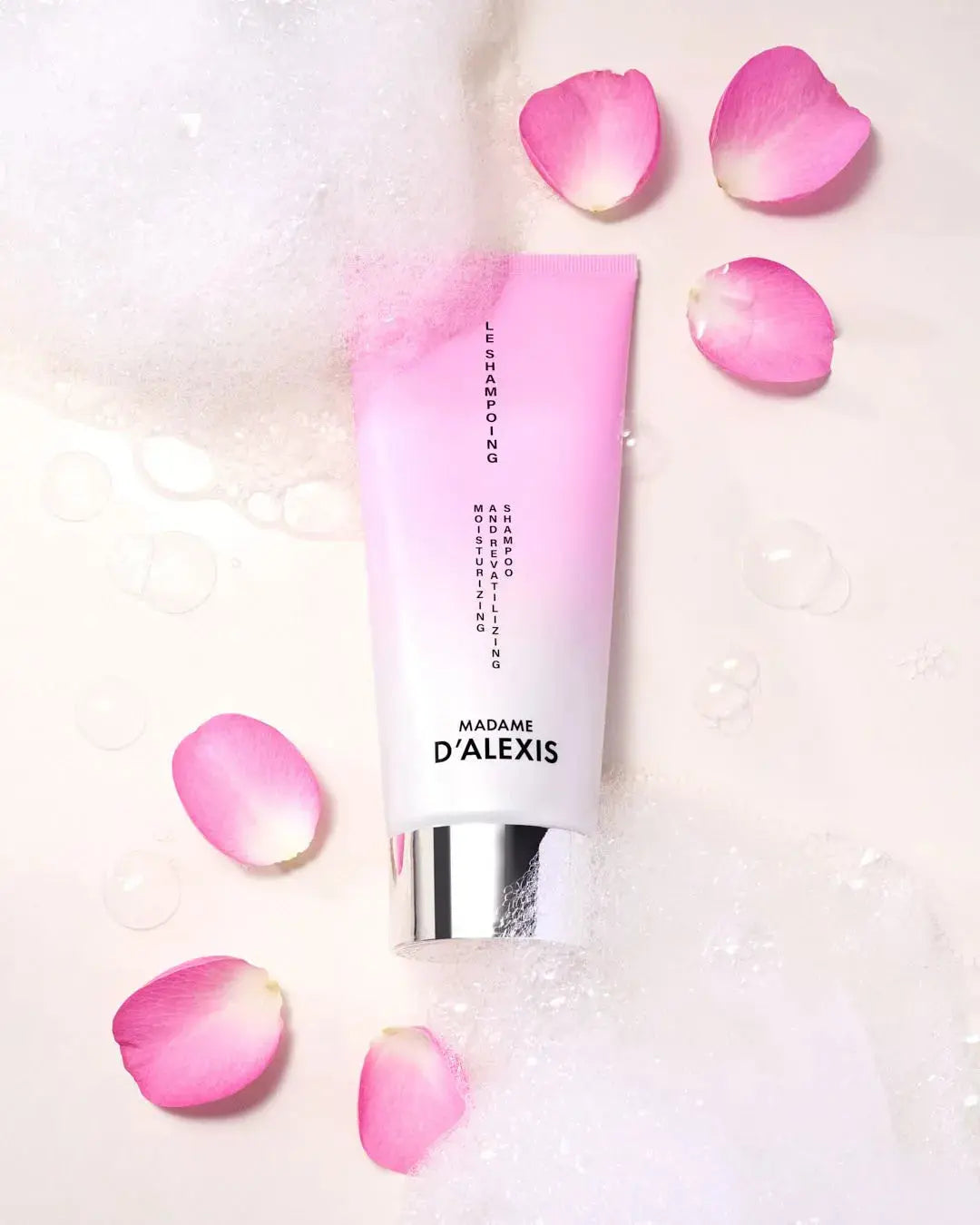
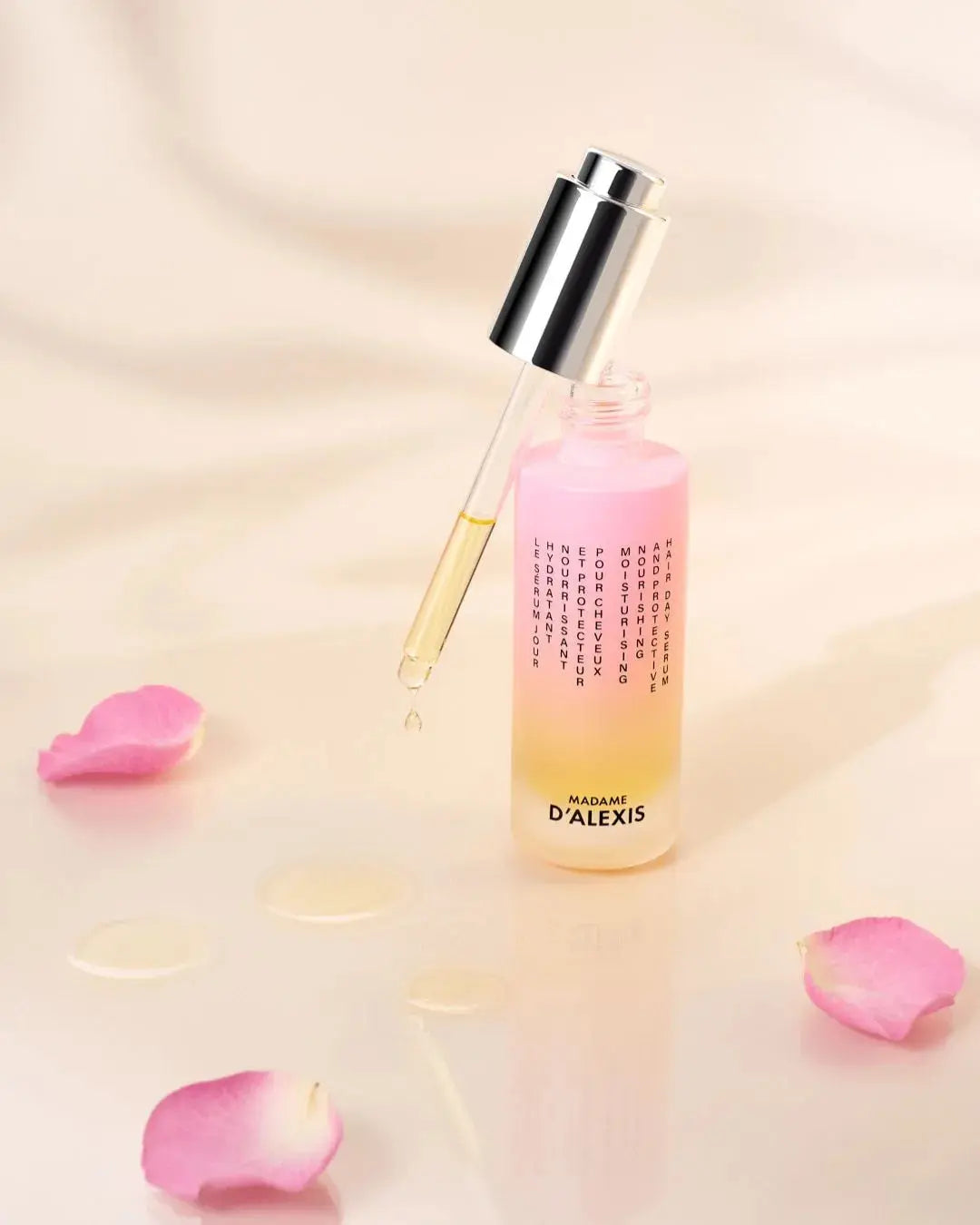
In this approach, Alexis' Madame Floral Mask plays a central role. Used as a modern oil treatment, it intensely nourishes without stiffening the hair fiber.
For dry and damaged hair, I recommend leaving it on for 20 to 30 minutes, once or twice a week depending on how dry your hair is. The difference is less noticeable in the immediate effect than in the regularity of the texture, which becomes softer and more uniform.
In addition, applying a light serum to the ends helps prolong the benefits of the treatment without weighing hair down.
FAQ – Hair oil treatment
Can you do an oil treatment on fine hair?
Yes, but in moderation. Fine hair does not tolerate excess lipids well. It is best to choose a balanced formula, applied only to the lengths, with a limited application time.
Oil treatment before or after shampooing?
Traditionally, oil treatments are applied before shampooing. This is the most effective method for nourishing hair without leaving residue. However, some modern formulas can be used after washing, on towel-dried hair.
Should oil treatments be applied to the scalp?
Only if it is dry or uncomfortable. For scalps prone to oiliness, it is better to focus on the lengths.
Is an oil treatment suitable for colored hair?
Yes. It helps maintain the fiber's suppleness and limits dullness, provided you choose a non-occlusive treatment.
How to make an oil treatment for hair?
Applying an oil treatment to your hair requires specific instructions to be truly effective. It is not a matter of randomly coating your hair, but rather of applying a nourishing treatment that is tailored to your hair type.
The first step is to choose an oil that is suitable for your hair type. An oil that is too rich for fine hair or too light for very dry hair can compromise the result.
The product is best applied to dry or slightly damp hair. Take 1 to 3 tablespoons depending on the length and thickness of your hair. Warm the oil between your hands, then distribute it strand by strand along the lengths and ends. The scalp can be included only if it is dry.
The application time is crucial. For effective nourishment, it is recommended to leave the product on for 20 to 30 minutes. Any longer than that and the fiber will not absorb any more lipids, and rinsing will become more difficult.
Once the time is up, rinse thoroughly by applying the shampoo directly to the oil bath before adding water. This method removes excess oil without damaging the hair.
What are the benefits of oil bathing?
Oil treatments offer numerous benefits when done properly and incorporated into a hair care routine. Their main role is to deeply nourish the hair fiber, providing it with the lipids essential to its structure.
Unlike moisturizing treatments alone, oil baths improve hair health by strengthening the hair's lipid barrier. This limits water loss, improves softness and shine, and makes the hair more supple to the touch.
Among its most notable effects:
- Long-lasting nourishing action on dry lengths
- Better indirect hydration, thanks to water retention
- A visible reduction in breakage and split ends
- Shinier, more manageable hair
When it comes to hair growth, oil treatments do not act directly on the follicle. However, by improving the condition of the hair shaft and limiting breakage, they help maintain length and achieve visibly thicker hair over time.
Its properties and uses make it a key treatment for dry, damaged, curly, or colored hair, provided it is used regularly and in moderation.
Which oil should you choose for an oil bath?
Not all hair oils are created equal. Your choice should be guided by your hair type and the desired outcome.
- Castor oil: known for promoting growth, thick, to be used only on dry roots
- Coconut oil: highly nourishing, ideal for thick or frizzy hair
- Jojoba oil : light, regulating, suitable for fine hair
- Hazelnut oil: penetrating, beneficial for combination hair
An unsuitable vegetable oil can weigh down the fiber. That is why a pre-balanced formula, combining several oils and active ingredients, often offers more consistent results.
How often should you do an oil bath?
The frequency depends on hair type and hair care routine.
- Dry hair: once a week
- Normal hair: every 10 to 15 days
- Oily hair: occasionally, on the ends only
Excessive frequency can unbalance the fiber and create a lasting greasy effect.
What hair types benefit from oil treatments?
Oil baths are particularly suitable for:
- Long, sensitized hair
- Frizzy or very dry hair
- Colored or bleached hair
- Dry and uncomfortable scalp
On fine hair or oily scalps, it should be used sparingly.
What are the risks of an oil bath?
An improperly performed oil bath can cause several problems:
- Persistent greasy effect
- Heavy or flat hair
- Scalp irritation or itching
- Residue accumulation
- Increased sensation of falling due to root suffocation
The most serious mistake is overuse. An oil bath is a one-off treatment, not a daily routine.
How to make an oil treatment for hair?
Applying an oil treatment to your hair requires specific instructions: choose an oil that is suitable for your hair type, apply to dry or damp hair (1 to 3 tablespoons), leave on for 20 to 30 minutes, then rinse by applying shampoo directly to the oil before adding water.
What are the benefits of oil bathing?
The oil treatment deeply nourishes the hair fiber, improves softness and shine, reduces breakage, limits water loss, and makes hair more supple. It does not directly promote hair growth but limits breakage, helping to maintain length.
Which oil should you choose for an oil bath?
The choice depends on the hair type: castor oil for growth, coconut oil for thick hair, jojoba oil for fine hair, hazelnut oil for combination hair. A balanced formula combining several active ingredients often provides more consistent results.
How often should you do an oil bath?
Dry hair: once a week. Normal hair: every 10 to 15 days. Oily hair: occasionally, on the ends only. Excessive use can upset the balance of the hair fiber.
What hair types benefit from oil treatments?
Oil treatments are particularly suitable for long, sensitized hair, frizzy or very dry hair, colored or bleached hair, and dry scalps. On fine hair or oily scalps, they should be used sparingly.
What are the risks of an oil bath?
An improperly performed oil treatment can result in persistent greasiness, weighed-down hair, scalp irritation, residue buildup, and increased hair loss. Overuse is the main mistake to avoid.
Can you do an oil treatment on fine hair?
Yes, but in moderation. Fine hair does not tolerate excess lipids well. It is best to opt for a balanced formula, applied only to the lengths, with a limited application time.
Oil treatment before or after shampooing?
Traditionally, oil treatments are applied before shampooing. This is the most effective method for nourishing hair without leaving residue. However, some modern formulas can be used after washing, on towel-dried hair.
What results can you expect from a properly performed oil bath?
The effects of a successfulhair oil treatment are gradual and measurable. From the very first applications, the texture changes. The lengths become more supple and less coarse. Detangling becomes easier.
In the medium term, we observe:
- A noticeable reduction in breakage
- Better moisture retention
- More even shine, without a greasy effect
- A fiber that feels more uniform to the touch
A well-designed oil treatment does not artificially transform the hair. It supports and stabilizes it, restoring favorable conditions for it to regain its natural quality.

