Advice
What Oil Is Best for Dry Hair? A Guide to Nourishing Without Weighing It Down
Which oil is best for dry hair? Jojoba, argan, or camellia: discover how to choose the right oil or serum for your hair.

Why dry hair needs oil
Dry hair is not just a cosmetic concern: it reveals a deep imbalance in the hair fiber. Its dull, coarse, and unruly appearance is often linked to a lack of sebum, a substance naturally secreted by the scalp to protect the hair.
When produced in insufficient quantities, hair loses its ability to defend itself against external aggressions.
Understanding sebum deficiency
The hydrolipidic film formed by sebum acts as a natural barrier. It envelops each strand, retains moisture, and maintains the fiber's suppleness. When this film is insufficient—due to genetics, age, chemical treatments, or excessive washing—the hair becomes vulnerable, dry, and porous.
Applying a suitable oil can compensate for this deficiency by mimicking the action of sebum, while strengthening the cohesion of the scales.
- It preserves the hair's natural moisture.
- It smooths the cuticle and makes detangling easier.
- It protects against friction, heat, and limescale.
Visible effects on the hair fiber
Dry hair can be recognized by several telltale signs:
- Permanent frizz, even after styling.
- Split split ends despite regular trims.
- Easy breakage, especially when brushing.
- A dull appearance, lacking luster or suppleness.
These symptoms indicate a loss of fiber cohesion, which is unable to retain moisturizing active ingredients. This is where plant oils —and even more so, targeted serums—come into play to restore lipid balance.

What are the best oils for dry hair?
When seeking to revitalize thirsty hair fibers, it is not enough to turn to just any oil. Quality, origin, texture, and lipid profile make all the difference. A well-chosen hair oil can transform dull, fragile hair into supple, shiny, full-bodied hair.
Over the years, I have tried everything: oils brought back from artisan cooperatives, precious bottles gleaned from exclusive perfumeries, and even unnamed raw formulas. Here are the ones that deserve a place in a demanding routine.
Nourishing oils
For very dry or textured hair, rich oils are essential. They penetrate slowly, nourish deeply, and form a long-lasting protective film.
- Argan oil: Native to Morocco, it is prized for its fatty acids and vitamin E. It repairs, strengthens, and combats split ends.
- Coconut oil: Recommended only for very porous hair. It penetrates the fiber but can be occlusive on fine hair.
- Macadamia oil: Very similar to human sebum, it softens and strengthens without leaving a greasy residue.
Light oils so as not to weigh down the hair
Some oils are perfect for fine hair or sensitive scalps. They moisturize without weighing hair down or clogging pores.
- Jojoba oil: A marvel. Its structure, similar to sebum, makes it universal.
- Hazelnut oil: Sebum-regulating, ideal for oily lengths and dry ends.
- Grape seed oil: Rich in antioxidants, light, and quickly absorbed.
- Repairing and soothing oils
For a sensitive scalp or after a period of hair stress, these oils provide deep nourishment.
- Camellia oil: Revered in Japan. It softens, protects, and enhances.
- Avocado oil: Highly concentrated, it is perfect for deep conditioning or as an oil treatment before shampooing.
- Sunflower or sweet almond oil: Soothing, they calm scalps prone to itching.
Each of these oils has its own virtues. But the elegance lies in the art of combining them intelligently, or finding them concentrated, perfectly balanced, in an expert hair serum. This is where treatments such as Madame d'Alexis serums come into their own.
What is the difference between hair oil and hair serum?
In the demanding world of hair care, it is no longer enough to simply talk about dry hair oil. Today, understanding the clear distinction between an oil and a hair serum is essential.
Despite their sometimes similar textures, these two types of skincare products follow different approaches, both in terms of formulation and targeted effectiveness.
Texture, penetration, formulation: the cosmetic approach
Purevegetable oil is a fatty substance, often containing a single ingredient, extracted by cold pressing plants, seeds, or fruits. It acts on the surface, coating the hair, slowing down water evaporation, and smoothing the cuticle.
Its richness is valuable... but its texture can be occlusive, even heavy on fine or moderately porous hair.
Hair serum, on the other hand, is a more sophisticated cosmetic formula. It combines precious oils with targeted active ingredients that moisturize, protect, and repair. Its texture is often finer, more fluid, and more sensorial. It penetrates the hair fiber more effectively without saturating it.
The benefits of serums enriched with active ingredients
What really distinguishes a serum from an oil is its functional complexity. Whereas an oil offers a single benefit (nutrition), a serum combines several benefits at once:
- Deep hydration, thanks to humectants such ashyaluronic acid or vegetable glycerin.
- Strengthening of the fiber, via ceramides or plant proteins.
- Heat protection against hair dryers or hot plates.
- Targeted action on issues such as hair loss, dry scalp, or breakage.
Serum is not an unnecessary luxury: it is a concentrate of cosmetic intelligence.

Why are serums often better tolerated by sensitive scalps?
Some oils, although natural, can irritate sensitive scalps or cause reactions when used in the wrong proportions. Serums, with their balance of oil and water phases, are better absorbed, less occlusive, and often fragrance-free, avoiding olfactory sensitivities.
It allows you to act directly on the roots or lengths without causing damage. It is this enhanced tolerance that makes it particularly suitable for dry, reactive scalps that are prone to itching or imbalance.
Madame d’Alexis: the natural alternative to traditional hair oils
In this spirit of natural innovation, Madame d'Alexis has designed two hair serums that embody this highly distinctive approach. Neither crude oil nor chemical formula: a subtle treatment, designed as an extension of the skincare ritual... but for the hair.
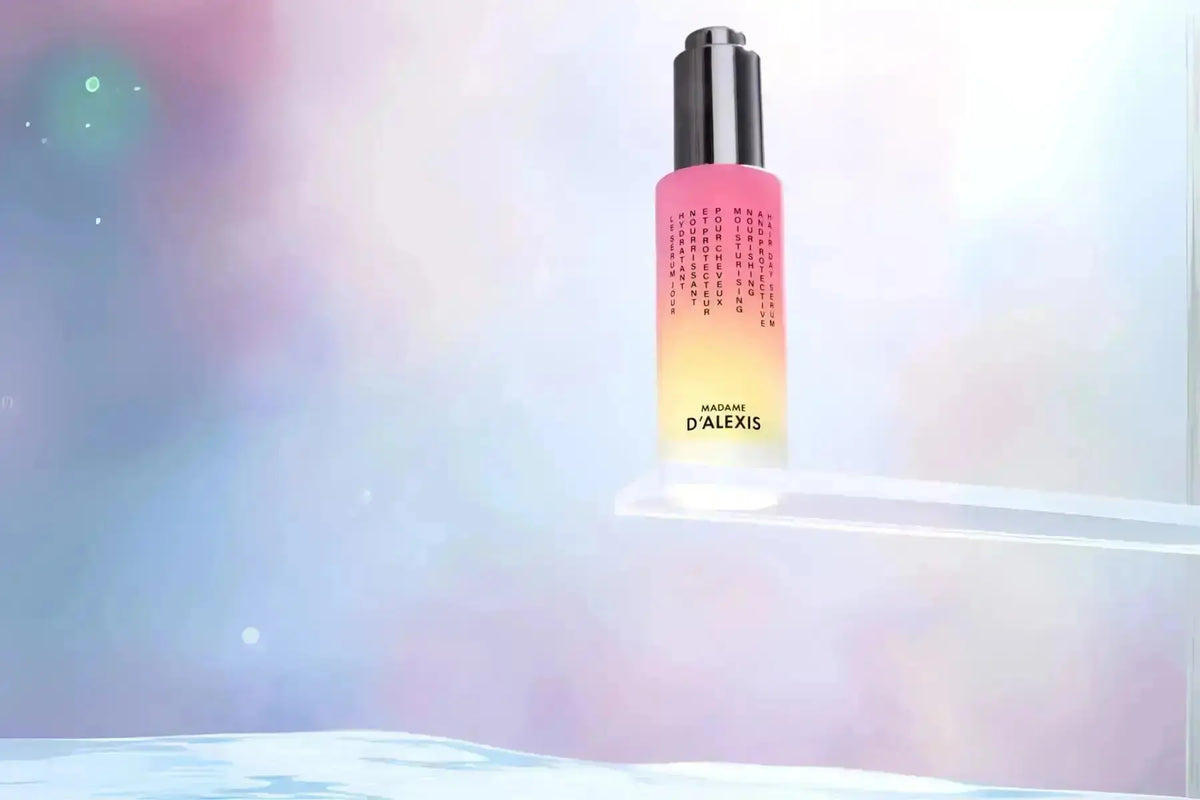
Day Serum: a light, protective oil, silicone-free
Madame d'Alexis Day Serum is the answer to the question: how can you moisturize and protect your hair without weighing it down?
- 99% natural ingredients, free from silicone and artificial fragrances.
- Jojoba oil, selected for its lightness and similarity to natural sebum.
- Plant ceramides, which strengthen the lipid barrier of the fiber.
- Orange blossom essential wax, a soft, refined, and discreet sensory signature.
It protects hair from heat (blow drying, straightening irons, sun) while enhancing the length. Ideal as a finishing touch on dry hair, or on damp hair for easier styling.
Night Serum: deep regeneration while you sleep
Le Madame d'Alexis Night Serum is an evening treatment designed as a regenerating ritual.
- A synergy of rare hydrosols: Damask rose, orange blossom, and chamomile to soothe and rebalance the scalp.
- Cationic hyaluronic acid, to lock moisture into the fiber.
- Hair probiotics, which strengthen the scalp microbiome.
- Natural anti-hair loss ingredients to support hair growth.
Its fluid, non-greasy texture leaves no residue on pillows. It literally melts into the scalp, leaving hair supple when you wake up. With no added fragrance, it is gentle on even the most sensitive scalps.
How to choose between a vegetable oil and a hair serum?
The dilemma between plant-based oil and hair serum often comes up, especially when trying to repair dry hair without weighing it down. Yet, the choice should not be made instinctively or based on marketing promises alone. Above all, it depends on your hair type, your lifestyle, and your sensory or practical preferences.
Depending on your hair type: fine, thick, or porous
Fine hair tends to become weighed down quickly, especially if you use an oil that is too thick. Conversely, thick or curly hair, which is often more porous, can better tolerate rich textures.
- Fine hair: opt for a light serum made from jojoba or grape seed oil, which moisturizes without leaving a greasy residue.
- Thick or curly hair : a richer oil such as argan or macadamia oil may be ideal.
- Porous hair: it absorbs oil quickly, but can also become saturated. Hair serum allows for more precise dosing in this case.
Depending on your routine: express need or deep care
It's also a question of time. I often used oils during my long weekends, when I could afford to spend two hours soaking in oil under a hot towel. But during the week, between appointments, I tend to use a fast-absorbing serum.
- If you are looking for an immediate, smooth effect without rinsing, opt for a hair serum.
- For a repair ritual, leave the oil on for a few hours before shampooing.
According to your expectations: nutrition, shine, or protection
- Nutrition: vegetable oils are perfect for restoring the lipid barrier.
- Shine and softness to the touch: the serum, with its smoothing and protective agents, offers an incomparable silky finish.
- Heat protection: only a cosmetic formulation, such as a serum, can truly protect the hair fiber from heat.

Recommended hair care routine for dry hair
The ideal routine for dry hair does not rely on a single product, but on a thoughtful combination of steps and treatments. What I recommend—and what I do myself—is based on four key steps, designed as a sensory and restorative ritual.
Before shampooing: night serum or oil treatment
Apply Madame d'Alexis Night Serum to the scalp and hair lengths. Its light, fragrance-free texture works deeply while you sleep. Alternatively, applying vegetable oil to the hair 1 hour before washing is a good alternative.
After shampooing: moisturizing and protection
Apply a few drops of Madame d'Alexis Day Serum to towel-dried hair. It moisturizes, coats, and protects the hair fiber against heat and friction. Its fine, silicone-free texture is perfectly suited to dry and delicate hair.
Touch-up: targeted shine and anti-frizz
Apply a small amount of serum to the lengths or ends throughout the day. This simple step revives shine and tames flyaways without leaving hair greasy.
Once a week: deep restructuring treatment
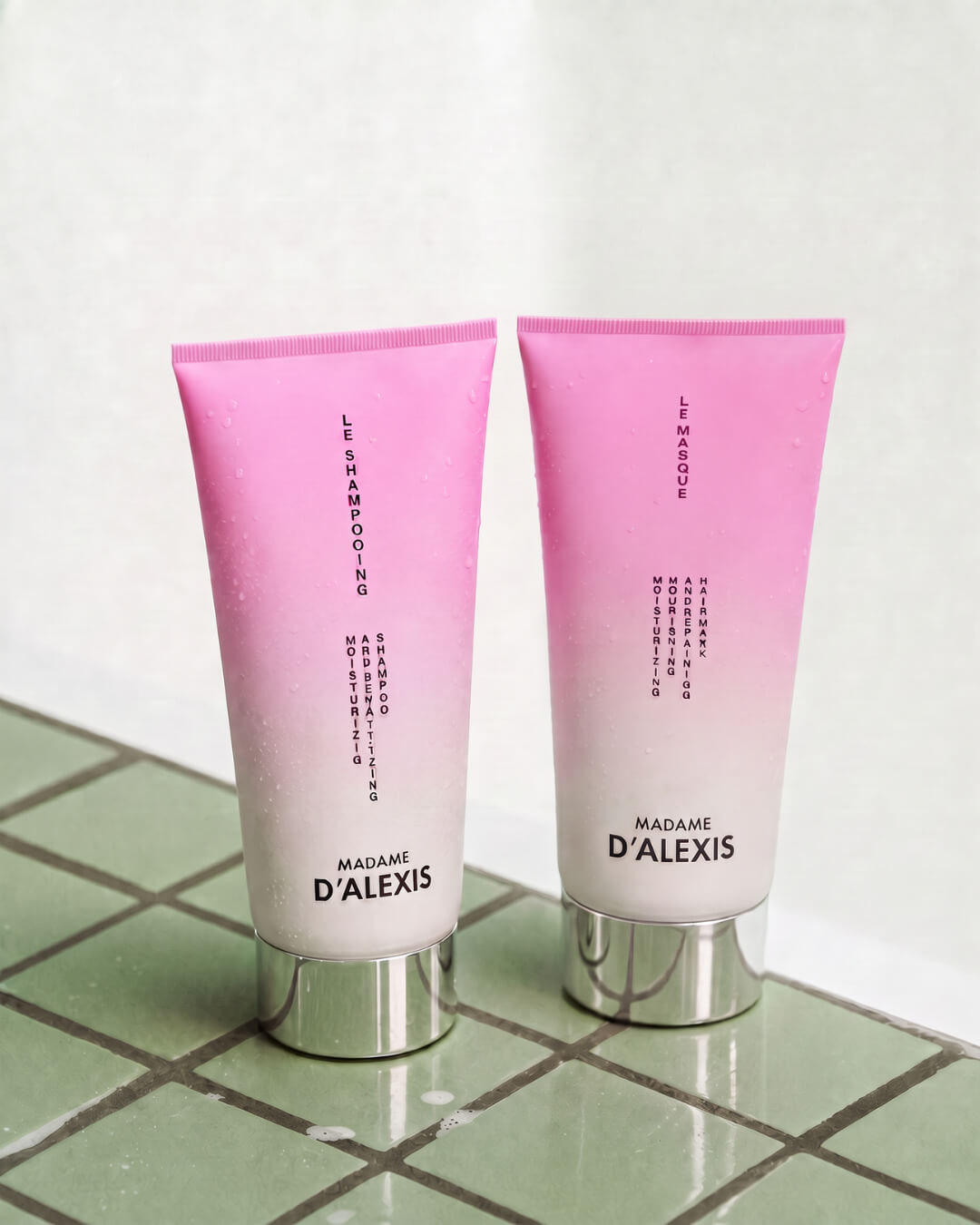
Treat your hair to intense regeneration with a nourishing hair mask, such as Madame d'Alexis's plant-based keratin mask. Leave on for 20 minutes, ideally under gentle heat, to allow the active ingredients to penetrate more effectively.
Haircare excellence, like any skincare routine, is based on consistency. With the right balance of oils and serums and a well-structured routine, hair regains its shine, suppleness, and lasting vitality —without compromising on naturalness, effectiveness, or elegance.
Oil, yes... but better with a suitable serum
Vegetable oil has long been the traditional remedy par excellence for nourishing dry hair. It evokes a simple, age-old ritual, one that we perform on Sunday mornings, in the bathroom or on a sun-drenched balcony, to restore life to depleted hair. But modern cosmetics have evolved.
Today, given the demands of our lifestyles and the specific needs of each hair fiber,hair serum has emerged as a more targeted, more elegant, and above all, more comprehensive solution.
Summary of the best vegetable oils
If we had to choose the most effective vegetable oils for dry hair, they would be:
- Argan oil, for its high antioxidant and essential fatty acid content.
- Jojoba oil, perfect for mimicking natural sebum without weighing hair down.
- Macadamia oil, soft and nourishing, ideal for thick hair.
- Ultra-nourishing avocado oil for damaged hair.
- Camellia oil, for its dry feel and incomparable finesse.
Each has its virtues, but not all have the subtlety of a treatment formulated to address several issues at once.
Why serums are more comprehensive, more modern, and more targeted
A hair serum is not just oil in disguise. It is a synergy of active ingredients designed to offer, in a single step:
- Hydration, thanks to humectants such as hyaluronic acid.
- Nutrition, through fine, penetrating oils.
- Repair, with protective agents such as ceramides.
- Thermal protection, often absent in conventional oils.
- Balance the scalp with non-occlusive formulas, some of which are enriched with prebiotics.
It is this multifunctionality—combined with an elegant texture and a subtle or absent fragrance—that makes serum a modern ally in hair care.
Incorporate the right care into a consistent hair care routine
The beauty of hair does not depend on a single miracle. It is built on consistency,intelligent techniques, and the coherence of each treatment applied.
By replacing pure oil with asuitable serum, or alternating between the two as needed, you can give your hair a more refined, sensory approach that is more respectful of its nature.
My advice: listen to your hair. And above all, allow yourself to elevate your routine to the status of a ritual.
Frequently asked questions about oils for dry hair
What is the best oil for dry hair?
The best oil depends on your hair type. For intense nourishment without weighing it down, choosejojoba, macadamia, orarganoil. For very porous hair,avocado oil offers deep repair.
Can hair oil be replaced with hair serum?
Yes. A well-formulated hair serum well-formulated hair serum can be a great alternative to vegetable oil. It moisturizes, nourishes, and protects in one step, with a lighter texture that is often better tolerated.
What is the difference between a day serum and a night serum?
A day serum protects the hair fiber from damage (heat, pollution) and adds shine without leaving it greasy. The night serum works deep down while you sleep, regenerating the scalp and preparing the hair for better growth.
What product should I use on dry hair without making it greasy?
Opt for a silicone-free serum made withlight oils and moisturizing active ingredients. Madame d'Alexis Day Serum, for example, moisturizes and smooths without leaving a greasy film.
Should hair oil be rinsed out?
Yes, in most cases. Vegetable oil applied to the hair must be rinsed out after a certain amount of time to prevent buildup. However, hair serum does not need to be rinsed out.