Advice
Jojoba Oil for the Scalp: The Natural Ingredient That Makes All the Difference
Jojoba oil balances, hydrates, and protects the scalp. A luxurious treatment for healthy, shiny, and naturally enhanced hair.

What is jojoba oil and why is it so good for our scalp?
An oil unlike any other: a biomimetic wax ester
The name "jojoba oil" actually refers to a rare botanical phenomenon: a wax ester, not a fatty oil as one might think. Extracted from the seeds of Simmondsia chinensis, a plant native to the desert regions of North America, this precious substance has an exceptional affinity with human skin.
Itschemical structure is surprisingly similar to human sebum, the lipid film that our scalp naturally produces to protect itself.
Unlike other vegetable oils, which are often too greasy or occlusive, jojoba has a dry, silky feel and is non-comedogenic. It literally melts into the skin, leaving no shine or residue.
A unique composition rich in vitamins and essential fatty acids
Jojoba oil is distinguished by its high concentration of omega-9 unsaturated fatty acids, particularly gadoleic acid, but also unsaponifiables —compounds that remain intact after pressing—including vitamins A, E, D, B complex, and K, as well as zinc, copper, and natural antioxidants.
This nutritional profile makes it a true hair care elixir, capable of nourishing, regenerating, and protecting without damaging.
Why does the scalp respond so well to jojoba oil?
The scalp is a sensitive area that is often prone to imbalances: excess sebum, irritation, dandruff, etc. Jojoba oil acts as a regulator. Thanks to its similarity to sebum, it tricks the scalp into slowing down its own production, thereby restoring a natural balance.
When used regularly, it:
- restores the hydrolipidic film;
- cleanses the roots without drying them out;
- provides flexibility and lasting comfort, even for the most sensitive scalps.
An elegant, subtle, and highly effective solution for anyone who wants to combine natural ingredients, performance, and refinement in their hair care routine.

The benefits of jojoba oil for the scalp and hair
6 major benefits you should know about
Jojoba oil for the scalp is much more than a cosmetic treatment: it is a natural rebalancing agent of rare elegance. Its biomimetic composition works in perfect harmony with the needs of the hair.
Here is what it offers, specifically:
- Deep and long-lasting hydration: it forms a non-occlusive protective film, retaining moisture without leaving a greasy residue.
- Sebum regulation: its similarity to human sebum encourages the scalp to naturally stabilize its production.
- Targeted nutrition: rich in vitamins A, E, B, D, and minerals, it strengthens hair from root to tip.
- Thermal and environmental protection: it coats the hair fiber and protects it from external aggressions, particularly blow drying and pollution.
- Shine and softness: it smooths the hair cuticle and revives natural shine without weighing it down.
- Prevents breakage: strengthens hair fibers, reduces split ends, and promotes stronger hair.
Does jojoba oil help against dandruff?
Yes, and remarkably so. Its antifungal properties help eliminate the yeast responsible for oily dandruff, while soothing dry flakes. Applied with a massage, it unclogs follicles, stimulates microcirculation, and purifies without irritating.
Combats itching and irritation
Jojoba provides real relief for an irritated scalp. As a natural anti-inflammatory, this oil reduces redness, soothes tightness, and begins to alleviate discomfort from the very first applications.
Is jojoba oil suitable for all hair types?
Absolutely. It balances oily roots while nourishing dry lengths. From fine hair to curly or frizzy hair, jojoba oil adapts to all hair types, providing care, structure, and shine to each strand. A truly universal treatment, without compromise.
How to apply jojoba oil to the scalp and hair?
Basic routine: massage, oil bath, or targeted treatment
Applying jojoba oil to the scalp is not just a simple beauty routine. It is part of a refined, sensory, and targeted skincare ritual. There are three distinct uses:
- For scalp massage, a few drops warmed between the palms are sufficient. Massage slowly with your fingertips, focusing on areas prone to dandruff or tension. This stimulates microcirculation and provides deep relaxation.
- For an oil treatment, apply the oil generously from the roots to the ends. Wrap your hair in a warm towel. Leave on for between one hour and overnight.
- As a targeted treatment, one to two drops on the lengths are enough to enhance the shine of the hair fiber without weighing it down.
Apply before or after shampooing: which method should you choose?
It all depends on the desired result. Used as a pre-shampoo treatment, the oil protects, nourishes, and repairs. It acts as a deep conditioning treatment. Used after washing, on damp hair, it closes the cuticles, tames frizz, and prolongs hydration.
Personally, I prefer a two-step ritual: a weekly oil treatment on Sunday evenings, and a light touch every day to tame flyaways.
How often should jojoba oil be used?
- Once or twice a week for oily or dandruff-prone scalps.
- Every 10 days, apply to dry hair and leave on for a deep conditioning treatment.
- Use daily, in very small amounts, on dry or towel-dried hair for shine.
Can it be mixed with other active ingredients?
Absolutely. Thanks to its fine texture and remarkable affinity with the skin, jojoba oil lends itself to targeted, subtle, and effective combinations of active ingredients. It is this versatility that makes it an ingredient of choice in exceptional hair care products.
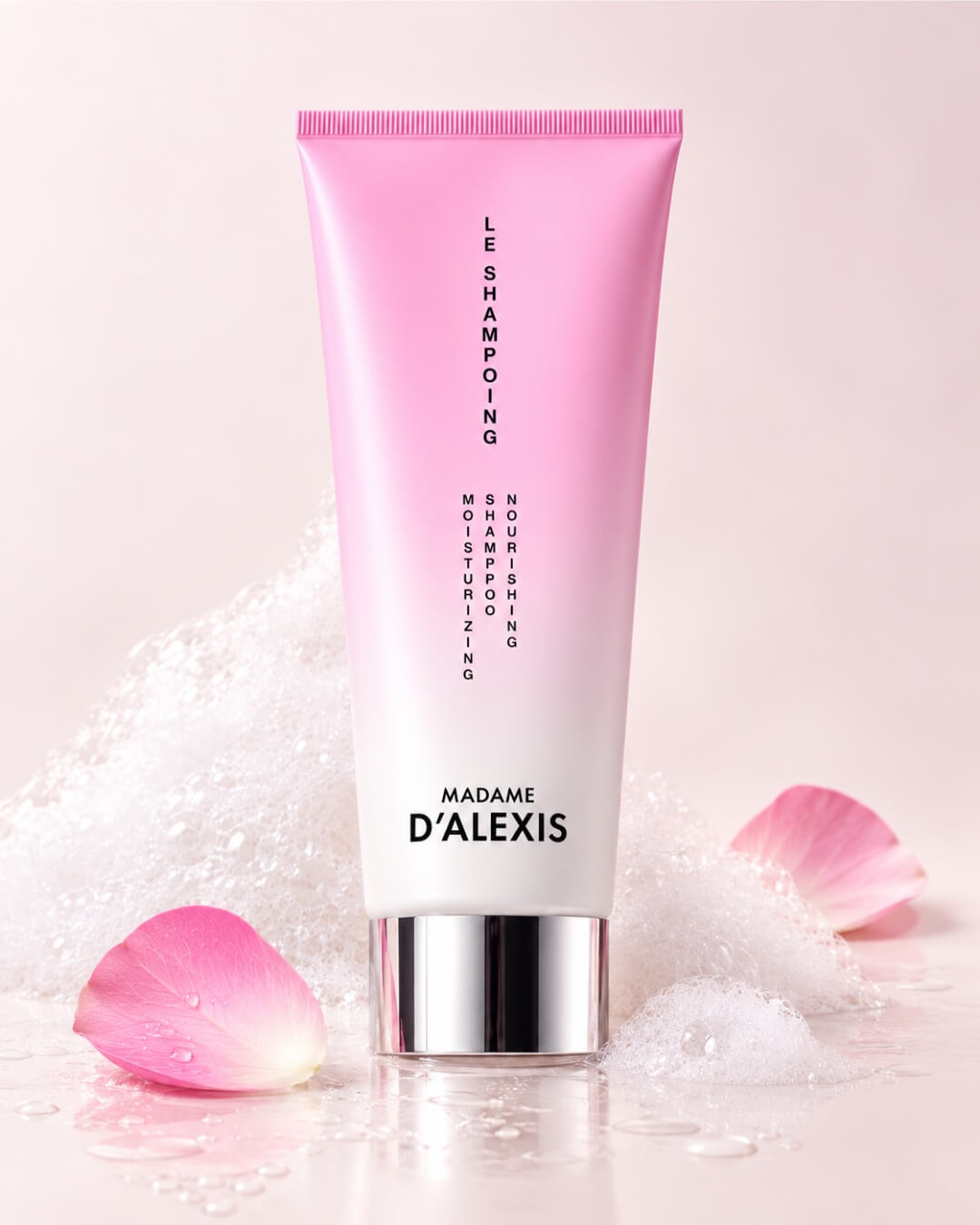
At Madame d'Alexis, we have formulated our signature shampoo by combining it with:
- Apricot kernel oil, for its softness, lightness, and richness in essential fatty acids. It provides suppleness and shine without weighing hair down, while strengthening the scalp's barrier function.
- Orange blossom essential wax, a rare and precious ingredient, is prized for its softening properties and its enveloping, refined floral scent. It gives the shampoo a unique sensory dimension, combining care and ritual.
At home, other synergies can be considered as needed:
- Apple cider vinegar for a purifying effect on the scalp, to be used as a rinse.
- Tea tree, rosemary, or lavender essential oils to soothe, regulate, or stimulate.
- Hazelnut or coconut vegetable oils, depending on whether you are looking for a sebum-regulating or nourishing effect.
These combinations must always respect the balance of the scalp, favoring refined formulas that are precisely measured. It is this requirement, combined with great finesse in the selection of raw materials, that defines the DNA of our skincare products.

Jojoba oil and specific scalp problems: our targeted advice
Oily hair: how jojoba oil helps regulate sebum
An oily scalp is not inevitable, but rather a sign of an imbalance in sebum production. Jojoba oil, with its structure similar to human sebum, sends a regulatory signal to the skin.
Result: the scalp produces less oil, naturally, without harshness. Personally, I recommend applying a small amount and massaging it into the scalp twice a week before shampooing.
Dandruff scalp: natural home remedies using jojoba
Dandruff is often a sign of irritated or even inflamed skin. Jojoba oil, thanks to its antifungal and soothing properties, can be used:
- alone, as a gentle massage 15 minutes before shampooing;
- or mixed with a few drops of tea tree essential oil for enhanced purifying action.
This regular action unclogs follicles, gently cleanses, and reduces visible flaking.
Hair loss and scalp stimulation: jojoba + essential oils
When combined with cineole rosemary or ylang-ylang, jojoba oil becomes an ally against hair loss. Its role? To transport active ingredients to the root while nourishing the bulb.
Apply in circular motions before bedtime, then rinse in the morning. Results are often visible after 3 to 4 weeks, provided the treatment is used regularly and consistently.
Care for frizzy, dry, curly, or chemically treated hair
These hair types, which are often dehydrated or sensitive, require tailored care. Jojoba oil acts as a protective conditioner, coating the hair without weighing it down and taming it without making it stiff.
Incorporate it into a homemade styling cream or apply it neat as a daily finishing touch. It enhances curls, softens textures, and protects against heat and chemical damage. Simple elegance, but incredibly effective.
Madame d'Alexis' opinion on jojoba oil for the scalp
Why we chose to formulate our skincare products with jojoba
At Madame d'Alexis, each ingredient is carefully selected with a single goal in mind: to combine effectiveness and elegance. Jojoba oil was an obvious choice for us. Its affinity with human skin, exceptional stability, and moisturizing power without leaving a greasy residue make it an active ingredient of rare finesse.
Used for centuries by desert peoples to protect the skin from wind and sun, this exceptional vegetable oil has a balancing, soothing, and protective effect on the scalp.
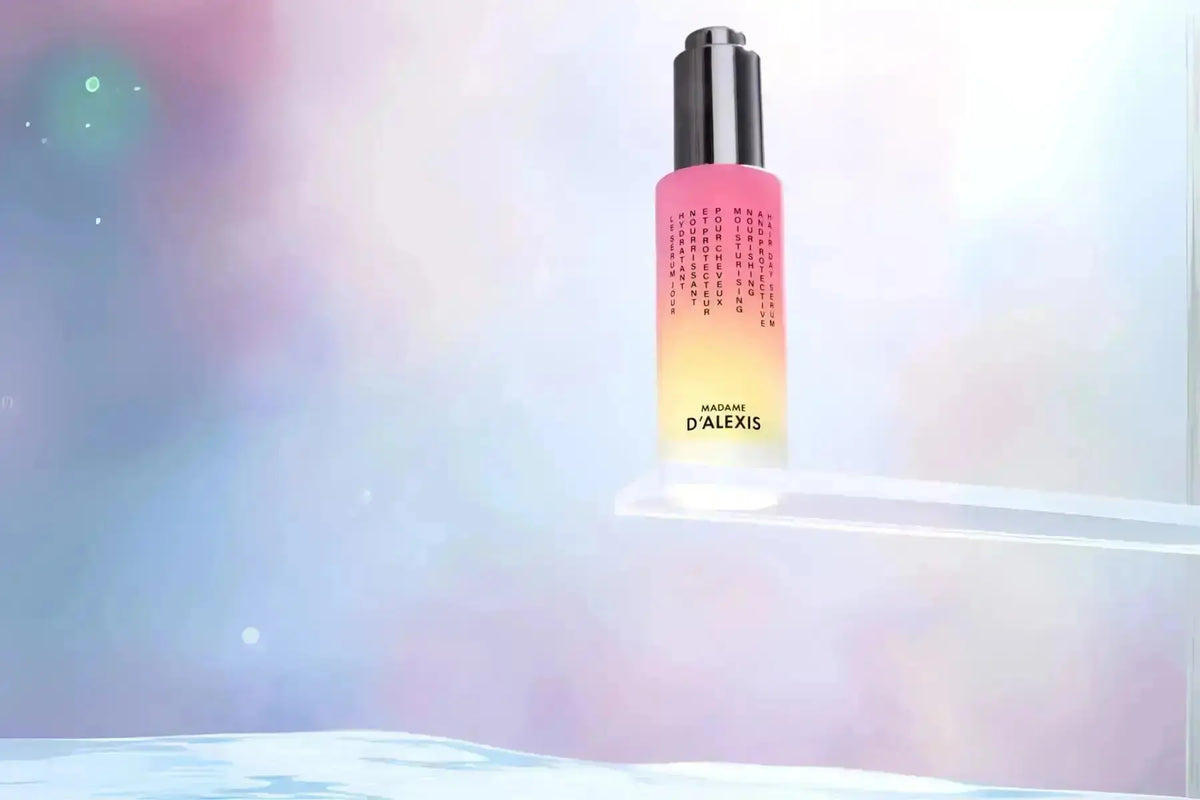
Our Day Serum: a daily hair care product rich in repairing and protective active ingredients
Madame d'Alexis Day Serum was designed to be a natural and intelligent hair care product. Enriched with jojoba oil, it tames hair without weighing it down and strengthens the scalp's hydrolipidic film.
This is the perfect treatment to protect hair from daily aggressions such as pollution, heat, and oxidative stress. Its light, non-greasy texture melts into the hair and can be applied every morning to the roots or ends, as needed.
How to incorporate our jojoba-based products into your routine
Consistency is more important than quantity. We recommend:
- Madame d'Alexis shampoo, 2 to 3 times a week, to gently cleanse without upsetting the balance.
- The Day Serum, applied daily, to maintain hydration and preserve natural radiance.
Combined with our formulation expertise, jojoba oil becomes an exceptional product, at the crossroads of science and refinement.
Precautions for use and potential side effects of jojoba oil on the scalp and hair
Are there any contraindications for jojoba oil?
Jojoba oil is one of the few vegetable oils that is almost perfectly tolerated by the skin. It causes no irritation or known allergic reactions when used in the usual way, even repeatedly.
However, caution is still advised. In very rare cases, individual hypersensitivity may occur. It is therefore recommended to test the product on the inner arm before applying it to the scalp for the first time. This rule applies to all cosmetic products, even natural ones.
Is it suitable for pregnant women, children, and sensitive skin?
Yes. Jojoba oil is extremely gentle. It contains no hormone-like compounds, irritants, or allergenic fragrances. It can therefore be used without restriction by pregnant or breastfeeding women, as well as by children.
It is also one of the only plant-based oils that we incorporate into our skincare products at the first signs of scalp imbalance, even for reactive or sensitive skin. Its film-forming effect protects without suffocating.
Recommendations for the use of essential oils in synergy
If you combine jojoba oil with essential oils—to purify, stimulate, or treat the scalp—caution is essential. Some aromatic molecules are photosensitizing, neurotoxic, or hormone-like. Before any synergy, take the following contraindications into account:
- No essential oils for pregnant women in their first trimester or children under 6 years of age.
- Always test the mixture 24 hours in advance on a small area.
- Do not exceed 1 to 2% essential oil in vegetable oil.
Opting for oils such as fine lavender, tea tree, or rosemary cineole remains a safe bet. And always use them locally and temporarily.
Why using jojoba oil on your scalp is a smart choice
In the world of hair care, certain raw materials transcend trends without ever losing their relevance. Jojoba oil is undoubtedly one of them. With its unique composition, non-greasy texture, and ability to regulate the scalp without upsetting its balance, it combines science and nature with rare elegance.
For those looking for a targeted, gentle, and effective solution, jojoba oil is a modern classic, capable of addressing a wide range of issues—oily roots, dandruff, skin discomfort, dryness, hair loss, or thinning hair.
By incorporating this precious oil into your hair care routine, you are choosing a path that respects your skin and hair, and is deeply aligned with the idea of sustainable, simple, and controlled beauty.
At Madame d'Alexis, we believe in sincere ingredients, refined formulas, and the natural intelligence of skin and hair. Jojoba oil embodies this vision.