Advice
Hair Mask for Dry Hair: Expert Tips for Soft, Nourished, and Repaired Hair
A dry hair mask is essential for restoring softness and vitality to hair fibers damaged by thermal or chemical stress.

Hair Mask for Dry Hair: How to Choose, Apply, and Get the Most Out of a Deep Conditioning Treatment
A good mask for dry hair doesn't just make your hair softer after rinsing. It should help smooth the hair shaft, strengthen the lipid barrier, improve flexibility, and make the lengths easier to style—without weighing down the scalp.
- The dry hair mask should be applied to the mid-lengths and ends, never to the roots if your scalp tends to get oily easily.
- "Dry hair" and "damaged hair" are not the same thing: dryness, porosity, breakage, and structural damage must be distinguished from one another.
- A good face mask combines hydration, lipids, and surface-active ingredients: plant-based ceramides, hyaluronic acid, fine oils, and organic hydrosols.
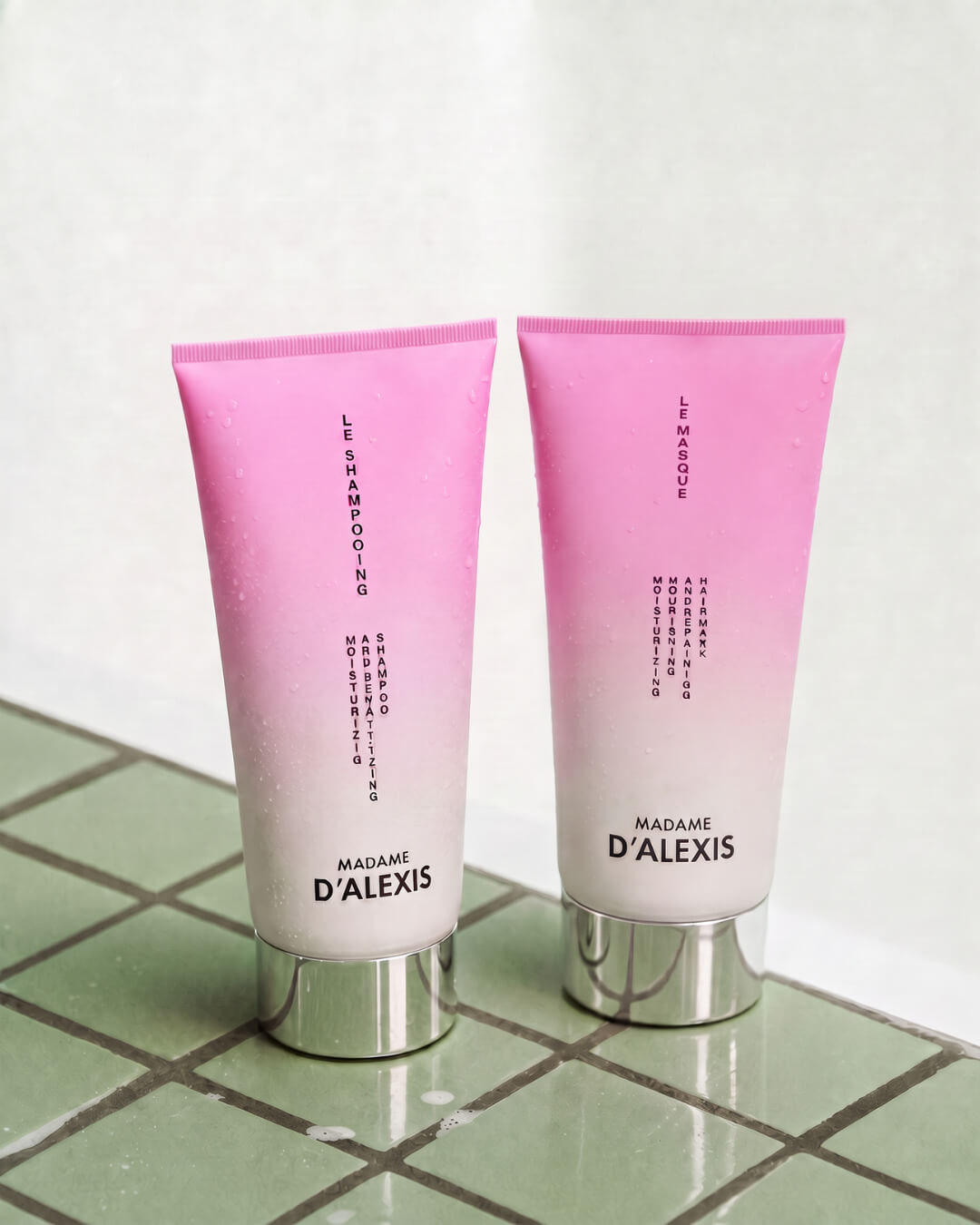
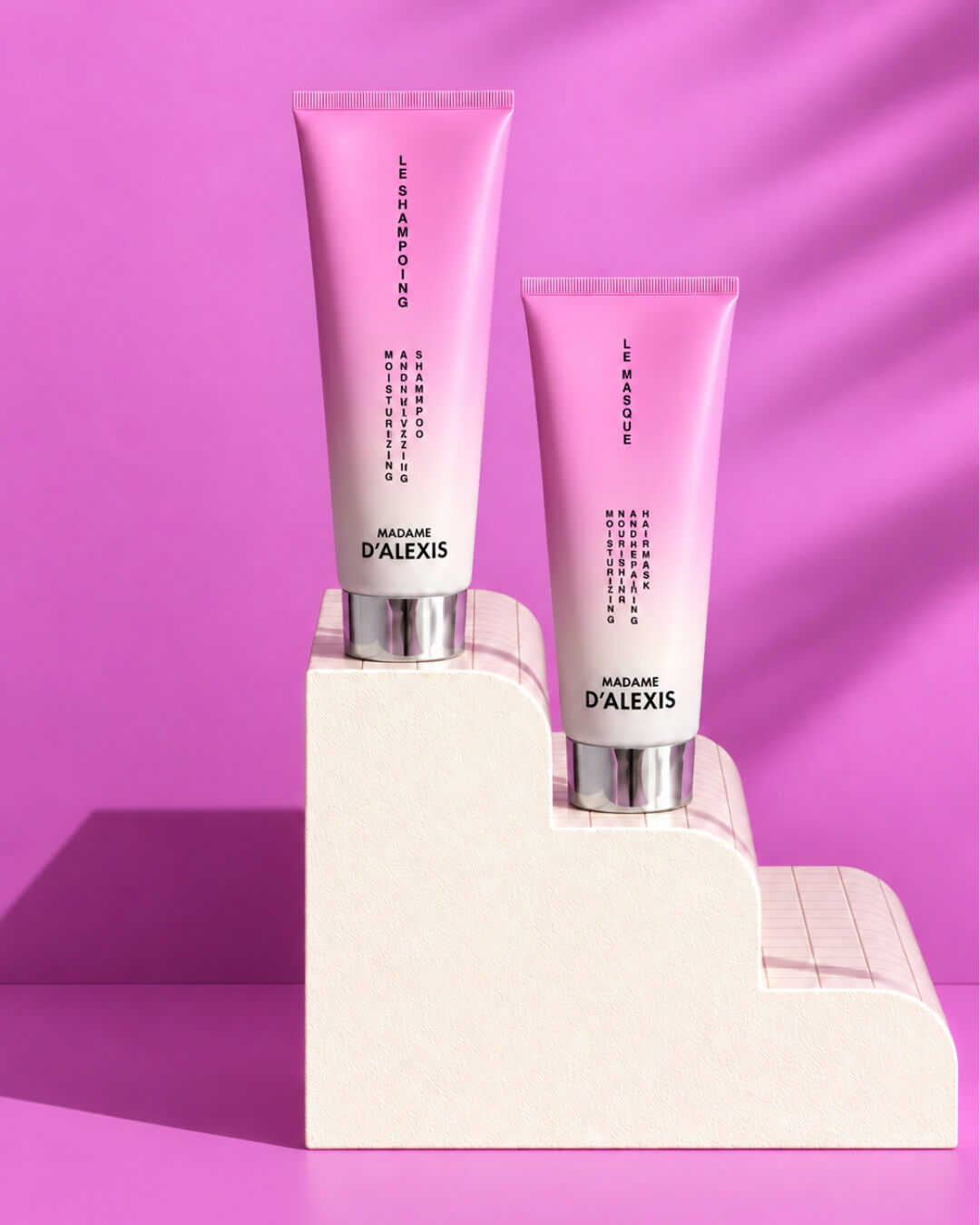
- Alexis’s Madame Mask is the focus of this article: 97% naturally derived, with organic hydrosols, ceramides, hyaluronic acid, and jojoba and apricot oils.
- The right frequency: 1 to 2 times a week, depending on dryness, porosity, color, heat, or curly texture.
Alexis' Madame Mask: Deep Conditioning Treatment for Dry Hair to Make a Central Part of Your Routine
In this article, the product in question is exclusively Le Masque. It targets dry, dull, frizzy, porous, or sensitized mid-lengths and ends. It is not intended for use on the scalp: it is a treatment for the hair shaft, not the roots.
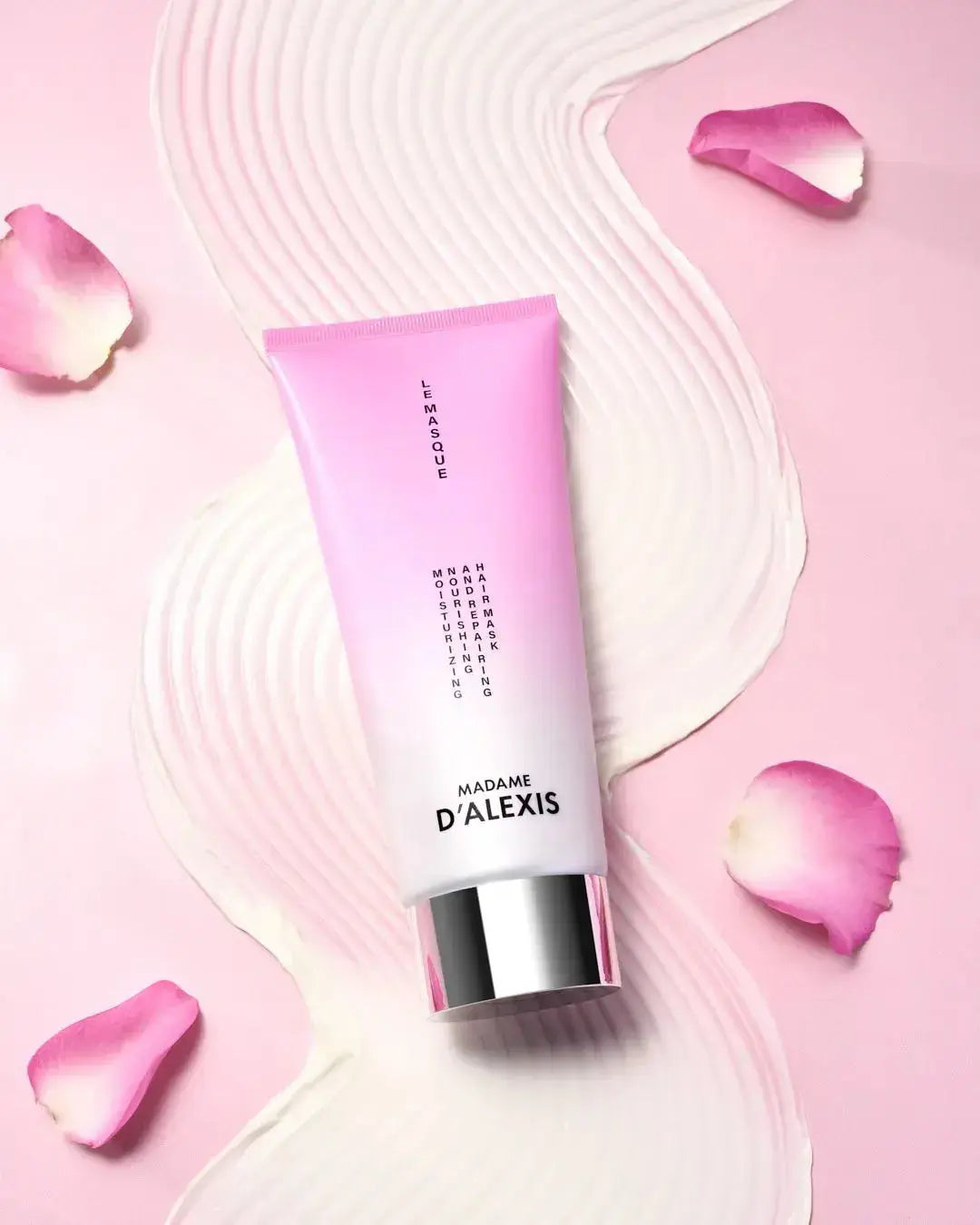
Hair Mask for Dry Hair with Organic Hydrosols
- For lengths and ends only
- Organic hydrosols, plant-based ceramides, HA
- Helps smooth, nourish, and soften
How can you tell if your hair is dry?
You can often tell if your hair is dry just by touching it: it loses its suppleness, becomes dull, is hard to detangle, and feels rougher. The mid-lengths may become thinner, the ends may split, and the hair shaft may become more porous.
Rough texture
Your hands feel rough, your hair no longer glides through your fingers, and the ends feel stiff or dry.
Lack of shine
The cuticle reflects light less effectively, especially after coloring, heat, or sun exposure.
Visible porosity
Hair swells in humidity, becomes frizzy, or absorbs hair care products without remaining supple.
To narrow down the diagnosis, see also the guide on porous hair and the article on frizzy hair.

Dry or damaged hair: how can you tell the difference?
People often confuse dry hair with damaged hair, but the distinction is crucial. Dry hair lacks moisture, lipids, or suppleness. Damaged hair, on the other hand, exhibits structural damage: a cracked cuticle, breakage, abnormal elasticity, or very brittle ends.
| Sign | Dry hair | Damaged hair | Skincare Solution |
|---|---|---|---|
| Touch | Rough, dull, lacking in suppleness. | Rough, brittle, irregular grain. | Moisturizing and nourishing mask. |
| Tips | Dry, harder to smooth out. | Split ends, brittle, sometimes thinning. | Conditioner + trim if the ends are split. |
| Aftercare | Rapid improvement in touch. | Only a partial improvement. | Long hair care routine and heat protection. |
Why use a hair mask for dry hair?
A hair mask isn't just a supplementary treatment. For dry hair, it's often more important than a regular conditioner because it provides a richer texture and active ingredients specifically designed for damaged hair.
- It helps restore the fiber's natural lipid barrier.
- It smooths the scales to improve the texture and shine.
- It makes detangling easier and reduces breakage caused by friction.
- It helps reduce frizz and flyaways.
- It better prepares the hair for air-drying or styling.
For a complete routine, the mask can be used in combination with a gentle, sulfate-free shampoo; however, this article focuses exclusively on the mask.
Moisturizing mask or nourishing mask: What's the difference?
Hydration and nutrition are two different but complementary needs. Dry hair often needs both: water, to restore suppleness, and lipids, to limit evaporation and improve the cohesion of the hair fiber.
| Type of mask | Role | Key ingredients | When should you use it? |
|---|---|---|---|
| Moisturizing mask | Deliver and retain water within the fiber. | Hyaluronic acid, aloe vera, glycerin. | Dull, coarse, dehydrated hair. |
| Nourishing Mask | Strengthen the lipid layer and improve flexibility. | Plant oils, ceramides, butters. | Very dry, porous, curly, or frizzy hair. |
| Full-face mask | Moisturize, nourish, and smooth the cuticle. | HA, ceramides, organic hydrosols, fine oils. | Regular routine for dry hair. |
Alexis’s Madame Mask falls into this third category: a comprehensive formula for dry hair, featuring organic hydrosols, cationic hyaluronic acid, plant-based ceramides, organic jojoba oil, and apricot oil.
What ingredients should you look for in a good dry hair mask?
A good hair mask for dry hair should combine complementary active ingredients. The formula shouldn’t just “coat” the hair shaft—it should help restore its suppleness, create a smoother surface, and improve its resistance to daily stressors.
Hyaluronic acid
Cationic hyaluronic acid helps maintain hydration and has a beneficial affinity for hair fibers. See also: hyaluronic acid for hair.
Plant ceramides
They support the lipid barrier and help smooth dry hair strands. See the guide on ceramides for hair.
Organic hydrosols
Damask rose, chamomile, and orange blossom provide a gentle botanical base that is more interesting than plain water.
What to avoid
- Heavy silicones that create the illusion of softness without actually improving the underlying condition.
- Denatured alcohols that dry out the skin when used regularly in skincare products.
- Formulas that are too rich when applied to the roots, especially on fine hair.
For more information, check out our guide to natural alternatives to silicone.

How to apply a mask for dry hair?
The effectiveness of the mask depends as much on the formula as on how it’s applied. Applying it too close to the roots can weigh the hair down. Applying it to soaking-wet hair can dilute the treatment. The right method is simple: clean, well-towel-dried hair, with the lengths worked on strand by strand.
After shampooing
Apply the mask to clean, towel-dried hair. Remove excess water with a soft towel.
Lengths and ends only
Apply the product under the ear, strand by strand. Avoid the roots and the scalp.
Leave-in time
A regular treatment takes just 5 to 10 minutes. You can extend the treatment as needed, but don’t leave it on overnight unless the formula is designed for that.
Thorough rinsing
Rinse thoroughly with lukewarm water, then cooler water. No residue should remain on the hair.
To complete your post-rinse routine, read the guide on leave-in treatments for dry hair.
Can you make a homemade hair mask for dry hair?
A homemade mask for dry hair can be a quick fix, but it has its limitations: inconsistent measurements, cannot be stored, can sometimes be difficult to rinse out, and carries a risk of allergic reactions. Recipes using honey, yogurt, banana, avocado, or shea butter may leave your hair feeling soft, but they are no substitute for a stable, tested formula.
Olives, honey, yogurt
A traditional option, but be sure to rinse thoroughly to avoid leaving any residue.
Banana, shea butter
Very filling, but the banana must be blended thoroughly to prevent lumps.
Lawyer, communist
Effective on very dry hair, but may weigh down fine or low-porosity hair.
DIY treatments can be a one-time thing. For a regular routine, a mask for dry hair made with organic hydrosols is more reliable, more consistent, and easier to rinse out.
Formulation Spotlight: Why Le Masque Madame d’Alexis Is Ideal for Dry Hair
The Mask - Deep hydration with organic floral waters
Alexis’s Madame Mask is formulated for dry, coarse, dull, or sensitized hair. Its formula combines organic hydrosols, plant-based ceramides, cationic hyaluronic acid, and organic jojoba and apricot oils—free of sulfates and silicones.
Who is it suitable for?
- Dry hair: to restore suppleness and softness to the hair shaft.
- Curly hair: to nourish the lengths without disrupting the natural shape.
- Colored hair: for use on hair that is more porous and sensitive.
- Fine hair: Be sure to apply it only to the lengths and rinse thoroughly.
For curls, use it as part of a routine for curly and wavy hair. For very dry hair, also check out the dry hair care category.
FAQ - Dry Hair Mask
What's the best hair mask for dry hair?
The best hair mask for dry hair combines hydration, nourishment, and surface-active ingredients. Look for a formula with hyaluronic acid, ceramides, organic hydrosols, and fine plant oils. Madame d’Alexis’s Hair Mask follows this approach with a formula designed to target the mid-lengths.
How do you apply a mask for dry hair?
Apply it after shampooing curly hair to clean, towel-dried hair, focusing only on the mid-lengths and ends. Leave it on for 5 to 10 minutes, then rinse thoroughly.
Should you apply a mask to the roots?
No, unless otherwise specified. For a mask designed for dry hair, apply it below the ears, along the lengths and to the ends. Applying it to the roots may weigh the hair down.
Moisturizing or nourishing mask: Which one should you choose?
Dry hair often needs both. Hydration adds suppleness, while nourishment helps strengthen the lipid barrier. A comprehensive hair mask can combine both functions.
How many times a week should you use a mask for dry hair?
Generally, 1 to 2 times a week, depending on the level of dryness, porosity, color treatment, or heat styling.
Can you leave a hair mask on overnight?
Not necessarily. It depends on the product. For a regular routine, 5 to 10 minutes is often enough with a concentrated mask. A mask not intended for overnight use should be rinsed off.
Is a homemade mask as effective as a commercially formulated one?
A homemade mask can be a quick fix, but it’s less stable, less precise, and sometimes hard to rinse off. For a regular routine, a tested and balanced formula is still more reliable.