


Key points to remember about the types of grains used for scalp exfoliation
- Sugar is ideal for gentle, gentle exfoliation, especially on sensitive scalps.
- Sea salt deeply purifies and is suitable for oily scalps or those prone to impurities.
- Coffee grounds invigorate, stimulate microcirculation, and promote hair growth.
- Vegetable and mineral powders (green clay, kernels) detoxify and regulate excess sebum.
- The choice of hair scrub should always be tailored to the scalp (sensitive, dry, oily) to remain effective without damaging it.
Alexis' Madame Scrub: the best scalp scrub to purify and stimulate
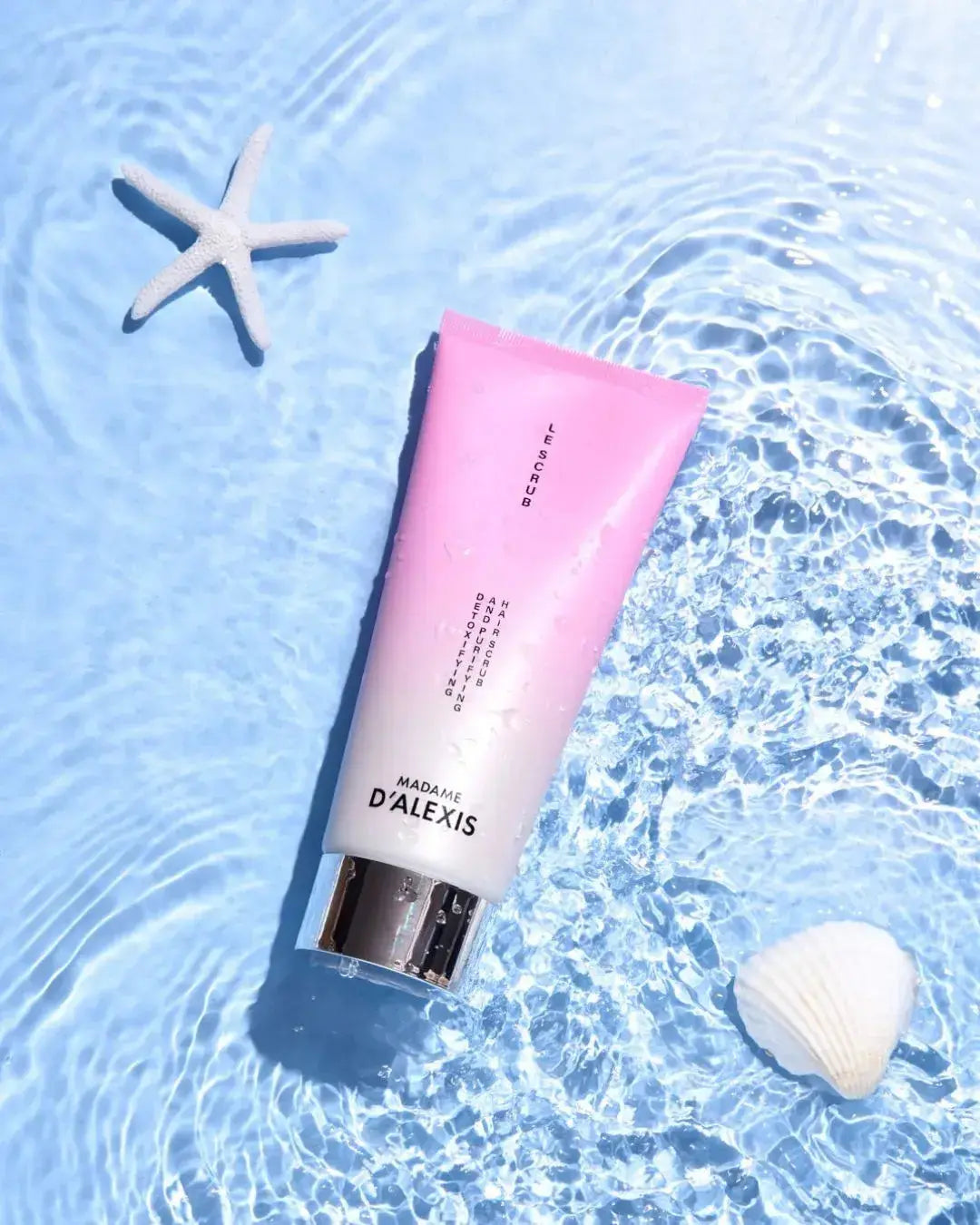
The Scrub – scalp exfoliation
- Detoxifies and deeply cleanses the scalp
- Regulates sebum and reduces dandruff
- Stimulates microcirculation to promote growth
- Hydrates and soothes thanks to organic hydrosols
- Adds volume at the roots, shine, and lightness
How to use Madame d'Alexis hair exfoliating scrub?
Asking yourself what types of grains to use for a scalp scrub has become essential for anyone who cares about the health and beauty of their hair.
The scalp, like the skin on the face, requires specific care to remain healthy, oxygenated, and balanced. However, over time, impurities, excess sebum, dandruff, and hair product residue accumulate, creating conditions that can lead to itching and weakening of the hair fiber.
La réponse se trouve souvent dans une exfoliation adaptée, qui dépend directement de quels types de grains pour un gommage du cuir chevelu on choisit.
Not all grains are suitable for all hair or skin types.
Comprendre quels types de grains pour un gommage du cuir chevelu permet d’ajuster son soin à ses besoins réels : sucre fin pour une exfoliation douce, sel marin pour une action purifiante, marc de café pour stimuler la circulation ou encore poudres minérales comme l’argile pour rééquilibrer.
Knowing which types of grains to use for a scalp scrub is therefore not a minor detail, but the key to transforming this gesture into a genuine hair care treatment.
We will carefully analyze which types of grains for scalp exfoliation offer the best results, depending on the scalp and the specific needs of each hair type.

What is the purpose of a scalp scrub?
The benefits of scalp exfoliation for your hair health
A scalp scrub is much more than just a beauty treatment. It is an essential part of hair care. Personally, I consider it as essential as a good shampoo, because it acts at the root of the hair, where it all begins.
L’exfoliation capillaire permet de redonner de la vitalité en agissant directement sur l’équilibre du cuir chevelu.
The benefits are numerous and tangible:
- Remove dead cells and impurities: over time, the scalp becomes suffocated by dead skin and styling product residue. Exfoliation cleanses deeply and provides an immediate feeling of freshness.
- Combats excess sebum, dandruff, and itching: by regulating sebum production and removing deposits that cause irritation, it soothes discomfort and promotes a healthy scalp.
- Stimulate blood circulation and hair growth: massage combined with exfoliation activates microcirculation, which nourishes the hair follicles and promotes more vigorous hair growth.
In my opinion, neglecting this care is tantamount to ignoring the very foundation of the hair. The lengths can only be beautiful and full of vitality if the base is well maintained.
Difference between scrub and exfoliant
It is common to confuse the terms "scrub" and " exfoliant," even though they refer to two distinct approaches.
- Mechanical exfoliation, the most common type, uses grains (salt, sugar, coffee grounds) that remove impurities through physical action. It is ideal for oily scalps or those prone to stubborn impurities.
- Chemical exfoliation works without grains, using active ingredients such as fruit acids or enzymes, which gently dissolve dead cells. It is more suitable for sensitive scalps that cannot tolerate mechanical rubbing.
In practice, I recommend choosing a product that suits your scalp type. If you are looking for an immediate purifying effect, exfoliating scrubs are effective. If you have sensitive skin, a gentle exfoliation using natural acids will be more appropriate.
The scalp scrub is a key treatment for maintaining a healthy scalp, regulating imbalances, and optimizing hair beauty.
What types of grains should be used for scalp exfoliation?
Naturally sourced grains: gentle and effective
Choosing the right grains is crucial for transforming a simple gesture into a truly beneficial hair care routine. From experience, I have found that natural grains offer the best compromise between effectiveness and respect for the scalp.
- Sugar: fine and soluble, it dissolves upon application, preventing irritation. It is the ideal choice for gentle exfoliation on sensitive scalps or those prone to redness.
- Sea salt: rich in minerals, it purifies and detoxifies. Its action is more pronounced and is particularly suitable for people with oily scalps or those exposed to pollution.
- Coffee grounds: a natural tonic, coffee grounds promote microcirculation thanks to their regular grains. They help stimulate growth and restore vitality.
- Vegetable or mineral powders:green clay or kernel powder are beneficial for their sebum-regulating and detoxifying effects. They absorb excess sebum and restore balance to the scalp.
Exfoliating textures specific to hair care
Today, there are products specially formulated for safe exfoliation. These include exfoliating gels and exfoliating shampoos.
Their texture is designed to spread easily over the scalp and rinse out without leaving any residue. Brands that favornatural or organic activeingredients often guarantee gentle care products that are suitable for regular use in a hair care routine.
These ready-to-use formats offer a practical solution for those who prefer to avoid homemade mixtures, while still benefiting from targeted and effective care.
Grains to avoid to protect your scalp
Be careful: not all grains are suitable for the scalp. Particles that are too abrasive or insoluble (such as certain synthetic crystals or plastic beads) mayirritate the skin and disrupt its protective barrier.
Un cuir chevelu agressé peut réagir par une surproduction de sébum ou par des démangeaisons persistantes du cuir chevelu.
The choice of grains must balance skin care with exfoliating effectiveness.

How to perform a hair scrub in practice?
The right frequency for hair exfoliation
The success of scalp exfoliation depends first and foremost on regularity. If done too often, it can irritate or weaken the skin barrier. If done too infrequently, it loses its effectiveness. I believe that the frequency should be adapted to the hair type and nature of the scalp:
- Pour les cheveux gras, un gommage par semaine permet de réguler l’excès de sébum et de maintenir une sensation de fraîcheur durable.
- For dry, curly, or sensitive hair, one application every two to three weeks is enough to remove impurities while preserving the hydrolipidic balance.
This adjustment is essential: it ensures a healthy scalp without risking damage to the skin.
How to apply a hair exfoliant
A scalp scrub cannot be improvised; it requires method and precision. The treatment should always be applied to a damp scalp to avoid any feeling of tightness. The product should be distributed section by section to ensure that all areas are covered evenly.
Massage is essential: performing gentle circular movements with your fingertips not only stimulates microcirculation, but also promotes the penetration of active ingredients. The movement should remain gentle, as rubbing too vigorously can cause irritation.
Once the massage is complete, rinse thoroughly with warm water, then finish the treatment with a gentle shampoo or moisturizing mask to nourish the hair fiber and prolong the effects of the exfoliation.
Homemade recipes using simple ingredients
Making a homemade scrub is an effective alternative, provided you use the right ingredients in the right proportions:
- Sea salt + vegetable oil (coconut or jojoba): for a purifying and nourishing effect.
- Sugar + honey + aloe vera: for gentle exfoliation and moisturizing.
- Coffee grounds + tea tree essential oil: to stimulate and cleanse.
It is recommended to follow simple guidelines such as mixing one tablespoon of grains with one or two teaspoons of liquid. This ensures a balance between exfoliating effectiveness and comfort of use.
En pratique, le gommage du cuir chevelu devient un rituel de soin précis, pensé pour purifier, stimuler et renforcer la santé capillaire sur le long terme.
What criteria should you use to choose the best scalp scrub?
Adapt to hair type
Choosing the best scalp scrub is not something to be done at random. Each hair type and scalp has specific needs. In my opinion, adapting exfoliation to your hair type is essential in order to fully enjoy the benefits.
- For oily hair, choose purifying grains such as sea salt. Their ability to absorb excess sebum and remove impurities leaves your hair feeling light and your scalp feeling clean.
- For dry or curly hair, opt for fine, moisturizing grains, such as sugar. Soluble and gentle, it exfoliates without damaging the hair and helps preserve its natural moisture.
- For sensitive scalps, it is best to opt for gentle exfoliation using soothing ingredients such as aloe vera or certain plant powders. The aim is to remove impurities while respecting the fragility of the skin.
Choose hair care products formulated for the scalp.
Although homemade recipes are effective when properly measured, ready-to-use formulas offer undeniable advantages: perfect balance of active ingredients, pleasant texture, and above all, safety of use.
Anexfoliating shampoo or gel specially designed for the scalp allows you to exfoliate without the risk of overuse.
Personally, I appreciate these hair care products because they combine practicality and effectiveness. They fit easily into a regular hair care routine and provide targeted action tailored to different hair types.
What is the best scalp scrub?
It is difficult to answer this question without mentioning Madame d'Alexis' Detoxifying Scrub. This treatment, formulated with 98% natural ingredients, offers a rare balance between exfoliating effectiveness and respect for the scalp.
Fleur de sel crystals exfoliate dead skin cells, while organic rose, chamomile, and orange blossom hydrosols immediately soothe the skin. Hyaluronic acid rehydrates, coconut oil nourishes, and orange blossom wax seals in moisture.
The benefits are tangible:
- purification and detoxification of the scalp,
- stimulation of microcirculation,
- sebum regulation and dandruff reduction,
- volume amplification right from the root.
This hair scrub is particularly recommended for oily and fine hair, but it is also suitable for anyone who wants to give their scalp a deep "reset." Personally, I consider it a benchmark in modern hair exfoliation.
Whether you choose salt, sugar, or a professional formula, the secret lies in adapting it to your scalp.
Choosing the right exfoliator is an investment in long-term hair health. When incorporated into a regular routine, this simple step helps maintain a healthy scalp, ensuring shiny, thick hair that is full of vitality.
FAQs about scalp exfoliation
Is it good to exfoliate the scalp?
Yes, provided it is done correctly. Scalp exfoliation is a treatment that complements regular shampooing.
Where washing removes surface impurities, exfoliation works deeper to eliminatedead skincells, styling product residue, andexcess sebum accumulated around the hair follicles.
This action helps keep the scalp oxygenated, prevents dandruff, and restores vitality to the roots.
From experience, I recommend incorporating it into your hair care routine as soon as you feel your scalp is suffocating, itchy, or lacking volume.
What is the difference between a scrub and an exfoliant?
The term "scrub" generally refers to mechanical exfoliation, i.e., the use of grains (salt, sugar, coffee grounds, kernel powder) that remove impurities through friction.
Conversely,chemical exfoliants rely on active ingredients such as enzymes or fruit acids that gently dissolve dead cells without mechanical action.
In my practice, I recommend a grainy scrub for oily or normal scalps, and a gentle, grain-free exfoliant for sensitive or irritated scalps.
What types of grains are suitable for exfoliating sensitive scalps?
A sensitive scalp requires gentle exfoliation. Avoid using grains that are too large or abrasive, as they may irritate and aggravate redness. Opt for:
- fine sugar, which melts gradually and has a gentle effect;
- light vegetable powders (such as certain softening clays);
- products formulated with soothing agents such asaloe vera or chamomile.
One essential point: never rub vigorously. Massage should be light, using your fingertips, to stimulate circulation without damaging the skin.
How often should you exfoliate your hair?
The frequency depends directly on the hair type and condition of the scalp.
- For oily hair or hair prone to dandruff, exfoliating once a week is recommended to regulate sebum production and remove excess impurities.
- For dry, curly, or sensitive hair, it is best to apply the product every two to three weeks to avoid further drying out the scalp.
- For normal hair, once every two weeks may be enough to maintain balance.
The most important thing is to observe your scalp's reaction: if it feels tight or itchy after exfoliation, you are doing it too often.
What is the best scalp scrub?
The "best" scrub depends on individual needs, but some products stand out for their composition and effectiveness. I particularly recommend Madame d'Alexis'Detoxifying Scrub.
Its formula, containing 98% natural ingredients, combinesfleur de sel crystals to remove residue, organic rose, chamomile, and orange blossom hydrosols to soothe and rebalance, and cationic hyaluronic acid to moisturize and revitalize the roots.
Coconut oil and orange blossom wax provide nourishment without weighing hair down. This treatment is suitable for all hair types but is particularly effective on oily, dull, or unbalanced scalps.
It is a true purification ritual that transforms the hair, restoring its shine, volume, and lightness.
What grains should be used for scalp exfoliation?
The choice of grain directly affects the effectiveness of the scalp scrub. For a natural and suitable type of scrub, there are several options: sea salt, which purifies and detoxifies, ideal for oily scalps; sugar, which is finer and more soluble, providing a gentle exfoliation suitable for sensitive scalps; coffee grounds, known for toning and stimulating microcirculation; or powders such asgreen clay, which are very useful for rebalancing and absorbing excess sebum.
These ingredients can be incorporated into ahomemade scrub or chosen from a ready-made hair scrub. From experience, using natural ingredients ensures an effective scrub without the risk of irritation, while respecting the skin and hair fiber.
How to choose a scalp scrub?
Choosing the best scalp scrub requires analyzing several criteria. The first is the nature of the scalp: an oily scalp will need a purifying scrub rich in grains such as salt or clay, while a sensitive scalp will need a gentle scrub formulated with soothing ingredients.
The second criterion concerns the objective: detoxifying, reducing dandruff, stimulating growth, or simply maintaining skin balance. Finally, it is important to distinguish between ahomemade scrub, which is practical and economical, and a ready-to-use product, which is often better formulated and safer.
In any case, aneffective scrub is not the one that exfoliates the most, but the one that respects the scalp while precisely meeting its needs.

