Advice
Dehydrated Hair: What Are the Real Symptoms?
Do you have dull, coarse hair that is difficult to style despite using hair care products? Discover the real symptoms of dehydrated hair and the common causes of this hair imbalance.

How can you recognize dehydrated hair?
Hair dehydration manifests itself through specific symptoms, which are often confused with simple dryness. Here are the signs to look out for in order to make the correct diagnosis:
-
Rough texture and lack of suppleness
Dehydrated hair feels rough to the touch, lacks elasticity, and can break when handled. -
Loss of shine and dull fibers
Since the cuticle is no longer smooth, light is no longer reflected. Hair appears dull, even after washing. -
Uncontrollable frizz and humidity-induced puffiness
The high porosity of dehydrated hair makes it unstable in response to humidity variations, often resulting in uncontrollable frizz. -
Difficult detangling and ineffective treatments
The fiber struggles to retain moisturizing agents. As a result, treatments "slip away," lengths become tangled, and effects are short-lived.

These symptoms indicate a lack of water at the very heart of the hair fiber. Identifying dehydration is the first step toward a targeted and truly effective solution.
When we talk about damaged hair, we often think of dry hair. However, hair dehydration is a separate issue, often confused with dry hair, but with very distinct mechanisms and consequences.
Where dry hair naturally lacks sebum, dehydrated hair suffers from alack of water. These are two different hair conditions, but their symptoms can sometimes be misleading.
Dehydrated hair: how to recognize it?
Knowing how to identify hair that lacks moisture is essential for choosing the right steps and appropriate care. This dehydration can affect all hair types, including those that appear to be the most oily.
And contrary to popular belief, hair doesn't have to "break" to be considered dehydrated: the signs often appear earlier and are more subtle.
Signs visible from the very first days
The first symptoms are often visible to the naked eye or noticeable to the touch. Far from being trivial, they should immediately raise alarm bells:
- Fiber feels rough to the touch: the hair loses its natural softness, giving a sensation of friction or dryness, almost "sandy" between the fingers.
- Loss of elasticity: hydrated hair bends and springs back into place. Dehydrated hair breaks more easily or remains fixed in its shape.
- Dull, lackluster appearance: the hair cuticle, the thin outer layer that reflects light, becomes uneven, preventing shine.
- Strands that "squeak" when touched: this sharp, almost metallic sound is an often underestimated clue. It indicates a clear lack of moisture in the fiber.
A client once told me that she no longer recognized her hair after a long stay at high altitude. Its texture had changed dramatically.
It wasn't the color or the cut: it was the water, or rather the lack of it. She thought she had damaged her hair, when in fact she had simply dehydrated it.
Characteristic hair behaviors
Beyond appearance, dehydrated hair develops unusual characteristics. This is often the first sign, especially for those who take care of their hair on a daily basis:
- Hair that puffs up at the slightest hint of humidity: the porous fiber absorbs water from the air in an uncontrolled manner, creating unmanageable volume.
- Excessive frizz or uncontrollable frizz: these small, unruly hairs are a sign of a disorganized fiber with an unbalanced structure.
- Frequent tangles, especially along the length of the hair: the more dehydrated the hair is, the more it clings to neighboring strands. It becomes difficult to detangle, even immediately after brushing.
- Difficulty absorbing or retaining skincare products: masks seem to "slide off" without any effect, or products penetrate too quickly without lasting results. This is a sign that the cuticle barrier is damaged.
- This paradox—feeling like you are caring for your hair without ever seeing lasting results—is a typical sign of dehydration. The hair fiber, which is both too open and poorly sealed, is unable to retain water or nourish itself.
Sensations felt by the scalp
Finally, dehydrated hair can be felt. Literally. If the scalp is also affected, it will send out signals that are often mistakenly attributed to simple dry skin.
- Tightness: feeling of tension, especially after washing or exposure to wind, dry air, or sun.
- Feeling of "empty" hair that lacks substance: the hair seems to lack density and bounce, as if it were weakened from within.
- Need for more frequent rehydration: the lengths dry out from one day to the next, requiring endless treatments without lasting satisfaction.
Many people are surprised to see their "clean" hair looking dull or tired the very next day. This is not due to excessive washing, but to constant moisture loss that the hair fiber is no longer able to compensate for.
Recognizing dehydrated hair is not a diagnosis reserved for professionals. It is a condition of the hair that can be observed, felt, and even guessed at. Provided you pay attention.
Knowing how to identify it is the first step toward treating it. And that is what Madame d'Alexis strives to do, with an approach that prioritizesdeep hydration, lightness, and sensoriality in its skincare products, without compromising on naturalness or effectiveness.

Why does your hair become dehydrated?
Hair dehydration is never random. It always results from an imbalance between what the hair fiber loses, particularly water, and what it is able to retain.
This phenomenon affects all hair types, including those that are oily at the roots. And contrary to popular belief, drinking more water is not enough to remedy the problem: in this case, it is the quality of the hydrolipidic film and the integrity of the cuticle that are at issue.
Here are the most common causes of hair dehydration, which often occur together and are sometimes overlooked:
-
Excessive heat
Regular use of heating appliances (hair dryers, straighteners, curling irons), as well as prolonged exposure to the sun, damages the hair cuticle, causing rapid moisture loss. -
Washing your hair too often
Every time you wash your hair, even with a gentle shampoo, you remove some of its natural protective layer. When you wash your hair every day or use the wrong products, your hair doesn't have time to regulate itself. -
Hard water
Rich in aggressive minerals, it upsets the pH balance of the scalp and gradually dries out the hair fiber, making it rough, porous, and vulnerable. -
coloring and chemical treatments Bleaching, perms, and straightening permanently alter the internal structure of the hair, making it permeable, porous, and therefore unable to retain water. -
Unsuitable or overly occlusive hair care products
Certain silicones, although they give the illusion of softness, form an impermeable film that prevents real hydration from penetrating the hair fiber. The result: hair that is smooth on the surface but empty deep down.
Understanding these mechanisms is the first step toward a more respectful routine. And, as is often the case, it is in the formulation of skincare products that repair takes place, provided you know how to read beyond the label.
How does Madame d'Alexis treat dehydrated hair?
At Madame d'Alexis, each treatment is designed to meet one requirement: to deeply rehydrate the hair fiber without weighing it down or saturating it.
This approach is based on one of the brand's founding principles:replacing water, a neutral ingredient that often makes up the majority of a product, with organic floral hydrosols, chosen for their richness in micronutrients and their perfect affinity with the hair structure.
This choice is not insignificant. Hydrosol acts not only as a carrier of active ingredients, but also as an ingredient in its own right, capable of strengthening the hair's natural moisturizing mechanisms.
The ideal trio for dehydrated hair
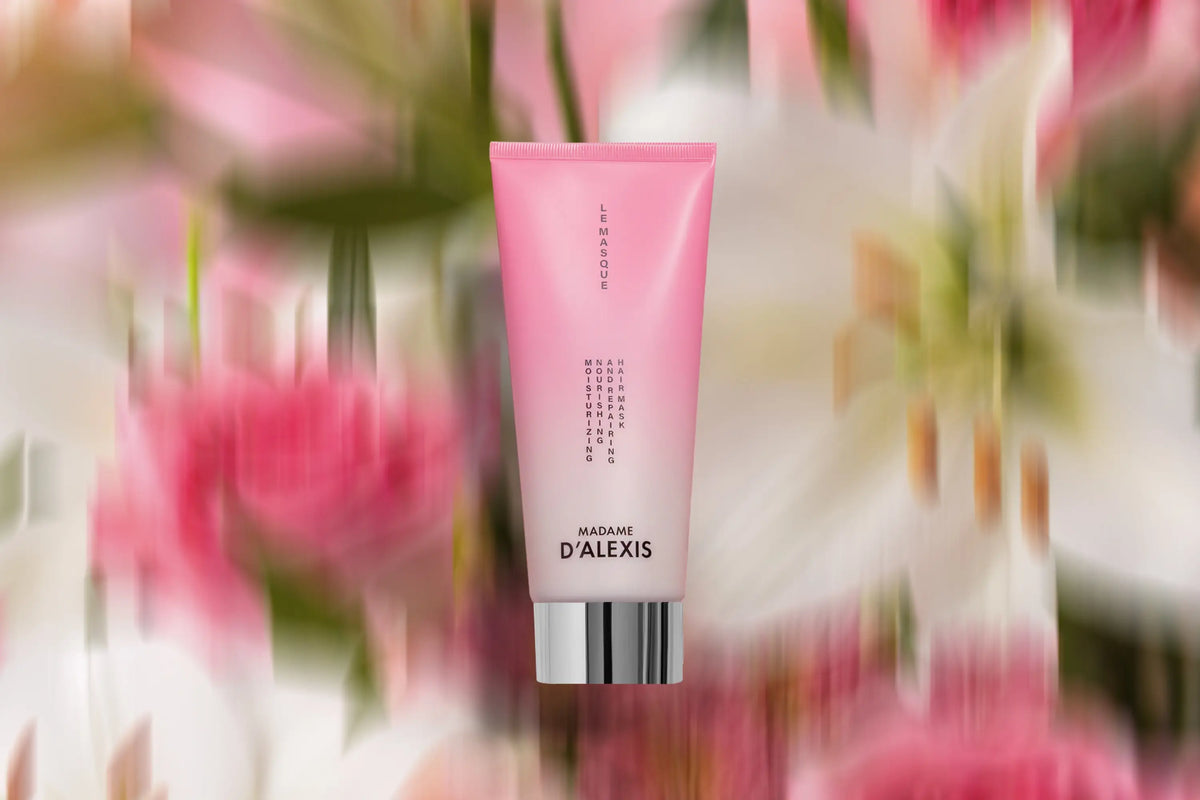
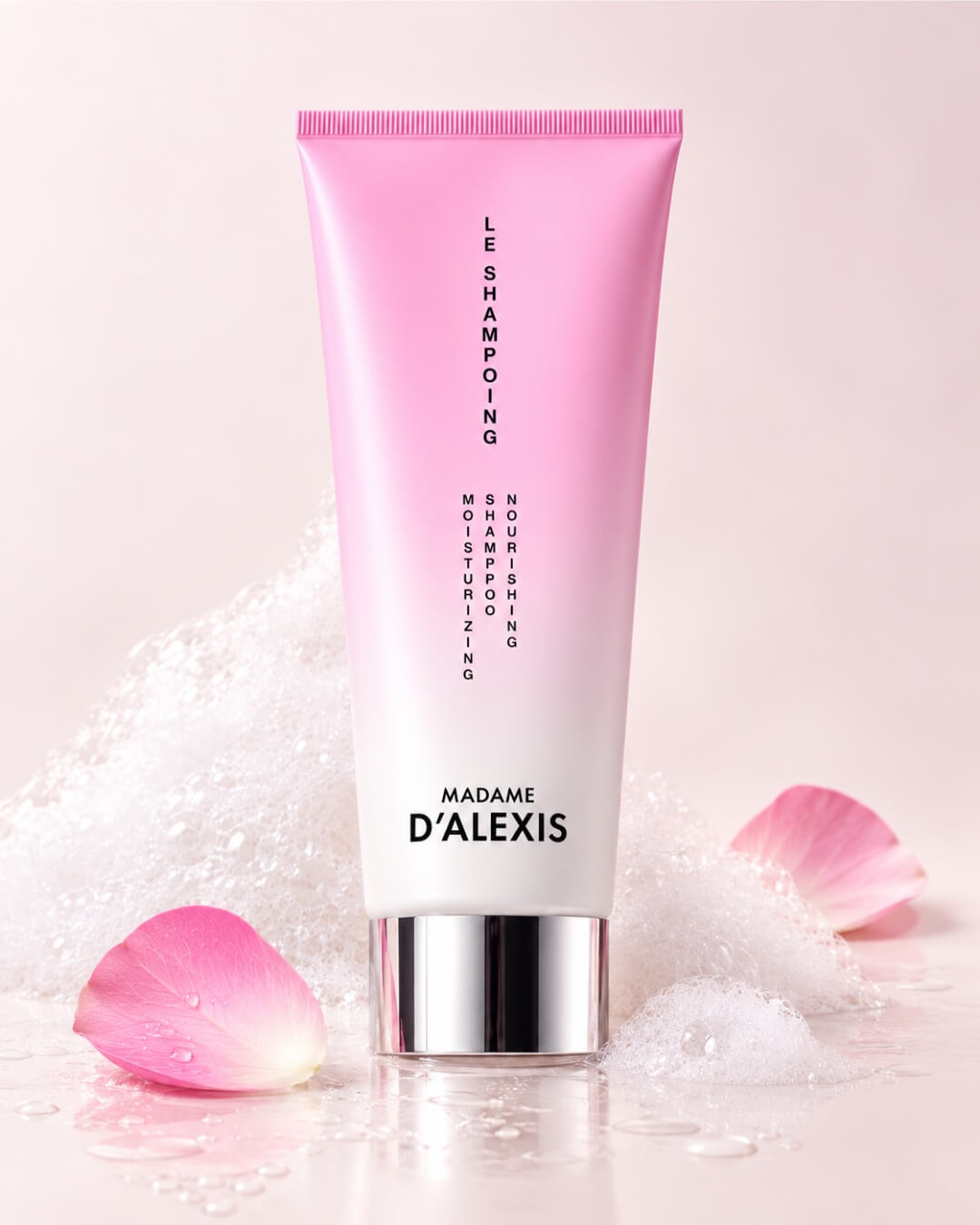
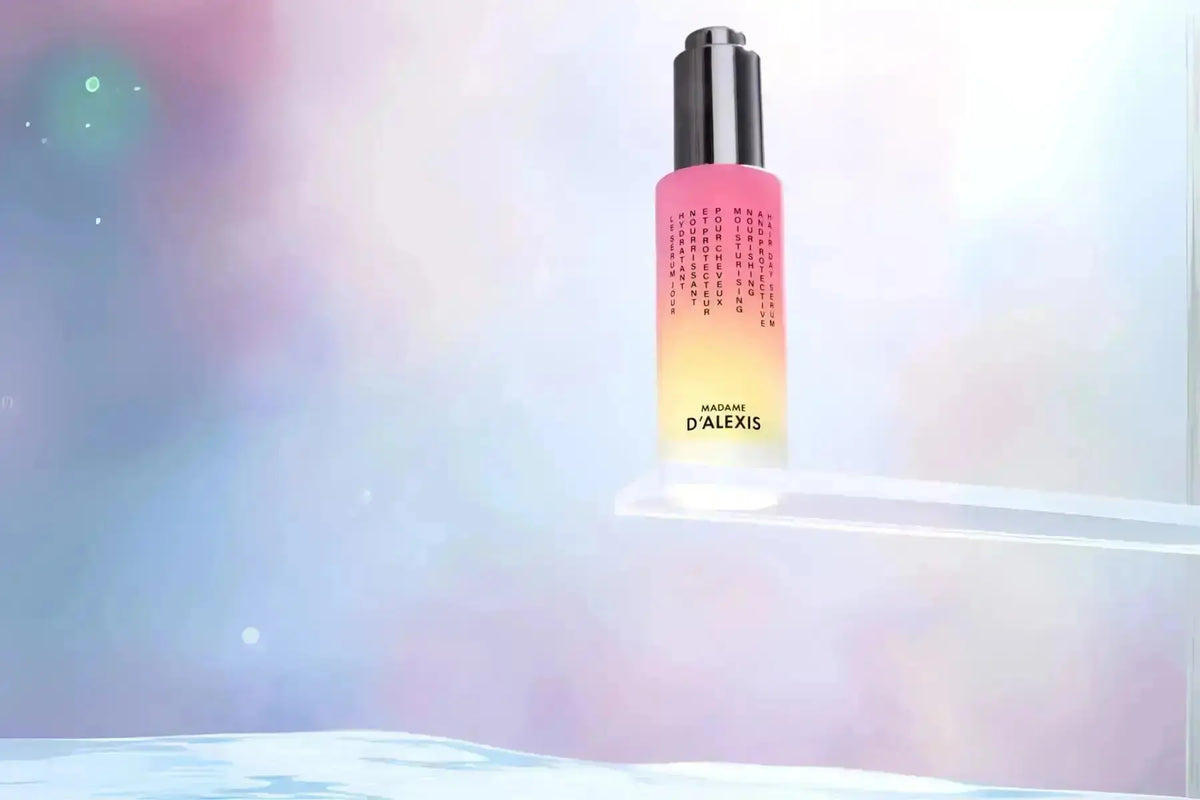
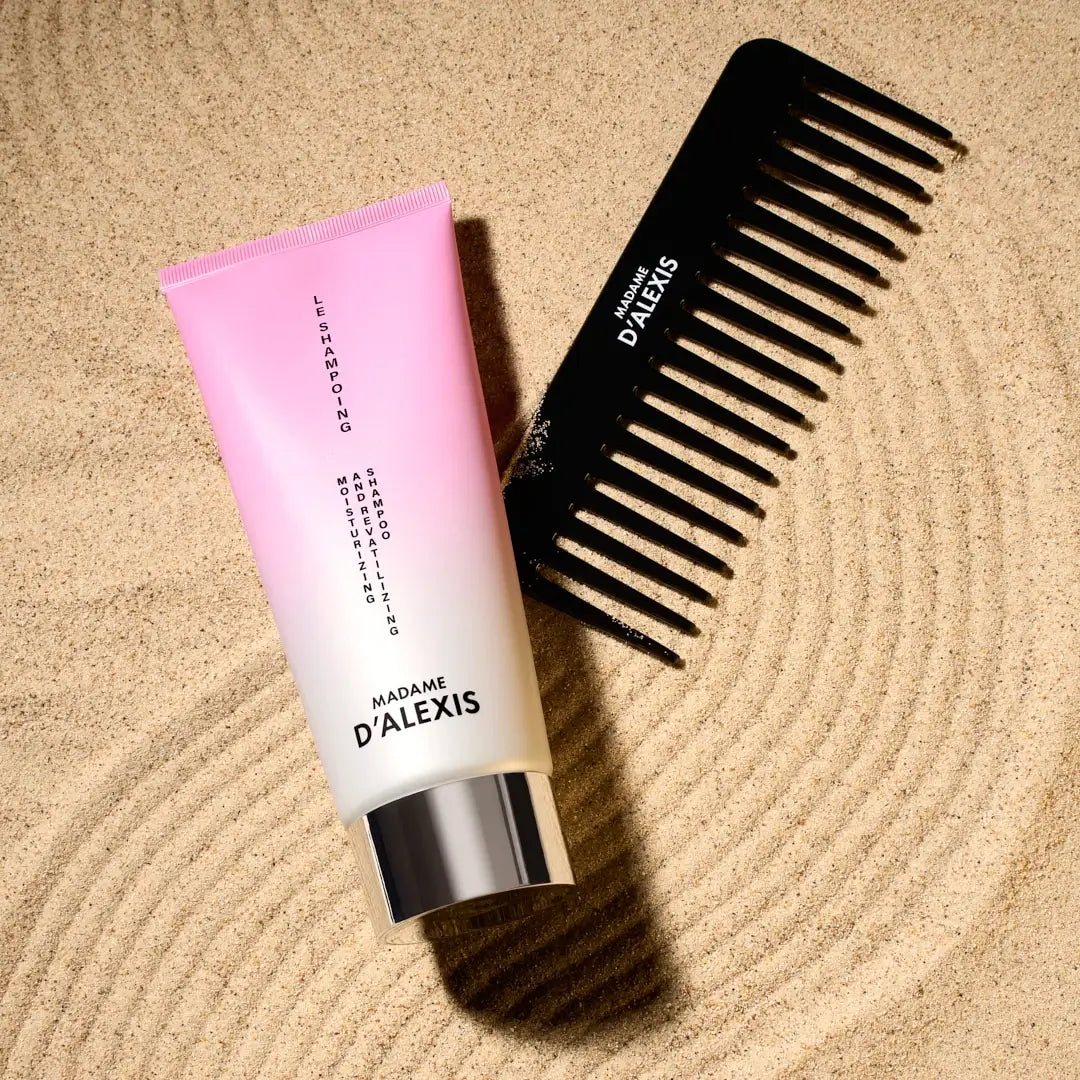
Three complementary treatments to restore moisture and suppleness to the lengths.


Madame d'Alexis formulas are enriched with moisturizing and biomimetic active ingredients, recognized for their effectiveness:
- Hyaluronic acid, capable of retaining up to 1,000 times its weight in water, restores suppleness and density to the fiber.
- Plant ceramides, which restore the lipid barrier and strengthen the hair cuticle;
- Probiotics, to rebalance the scalp microbiome, which is often disrupted in cases of chronic dehydration.
Silicone-free and without any occlusive film, each treatment allows the hair to breathe while providinglong-lasting, gradual hydration. The light yet generous texture of the formulas allows for rapid penetration without leaving any residue.
This is not just a beauty routine, but a repair ritual inspired by professional protocols that restores hair to its true nature: fluid, radiant, and vibrant.