


Brittle hair: what can you do to repair it?
To restore strength to your hair and prevent breakage in the long term, it is essential to take action on three fronts: the scalp, the hair fiber, and your lifestyle. Here are five key steps to remember:
- Purify the scalp once a week with a gentle scrub to stimulate circulation and promote healthy growth.
- Wash with a mild shampoo, free from sulfates and silicones, to maintain the balance of the scalp.
- Apply a nourishing mask rich in plant-based active ingredients and plant-based keratin to fill in the gaps in the hair fiber.
- Protect your hair every day with leave-in serums, light moisturizers, and gentle styling products.
- Strengthen yourself from within with a balanced diet or a course of targeted supplements (iron, zinc, vitamin B6).
These simple steps, repeated regularly, constitute an effective hair care routine for treating brittle hair naturally and sustainably.

Brittle hair: understanding what happens to the hair fiber
Hair doesn't break without reason. Behind every weakened strand lies a specific imbalance, often caused by multiple factors. To take effective action, you first need to understand the mechanisms at play. Here are the main causes of brittle hair that you should be aware of before choosing a treatment.
Why is your hair breaking?
Healthy hair is supple, strong, and slightly elastic. When it breaks, it means that its structure has been weakened, often on several levels: damaged cuticle, exposed cortex, weakened bulb. This progressive deterioration is linked to one or more of the following factors:
- A lack of natural sebum: Sebum, secreted by the glands in the scalp, acts as a protective film. When there is not enough sebum—which is common in curly or frizzy hair—the hair fiber becomes dry, porous, and breaks more easily.
- Excessive heat: Repeated use of straightening irons or hair dryers that are too hot damages the keratin in your hair. But the sun also has this effect. Prolonged exposure to UV rays dehydrates the hair fiber, causing it to lose its elasticity and eventually split.
- Harsh hair products: Shampoos containing detergent sulfates, alcohol-based treatments, hairsprays, and silicone-based mousses have a stripping effect that weakens the cuticle. Stripped hair loses its shine, but more importantly, its strength.
- Excessive chemical treatments: Repeated coloring, straightening, Brazilian blowouts... All these processes open the cuticle and alter the internal structure of the hair. They weaken the fiber permanently, especially if they are performed too frequently or not properly neutralized.
- A suffocated scalp: A scalp clogged with product residue, sebum, or pollution prevents oxygenation and disrupts keratin production. The result: weakened growth and lifeless hair.
- Nutritional deficiency: A lack of iron, zinc, vitamin B6, or protein can directly affect hair health. Hair becomes thinner, drier, and more brittle. These nutrients are essential for keratin production, cell regeneration, and follicle anchoring.
- Stress and hormonal changes: Hormonal changes (menopause, postpartum, thyroid disorders) or chronic stress can lead to a loss of density and overall weakening of the hair.
The cause of brittle hair is therefore never purely cosmetic. It is often linked to lifestyle, environment, or habits that can, fortunately, be corrected.

What to do when your hair breaks? 6 essential steps to repair it permanently
When hair breakage becomes visible, it is rarely a coincidence. It results from an imbalance, often subtle at first, which eventually alters the very structure of the hair.
To restore strength and resilience to your hair, every step counts. Here is a six-stephair care routine that combines scientific rigor with cosmetic effectiveness.
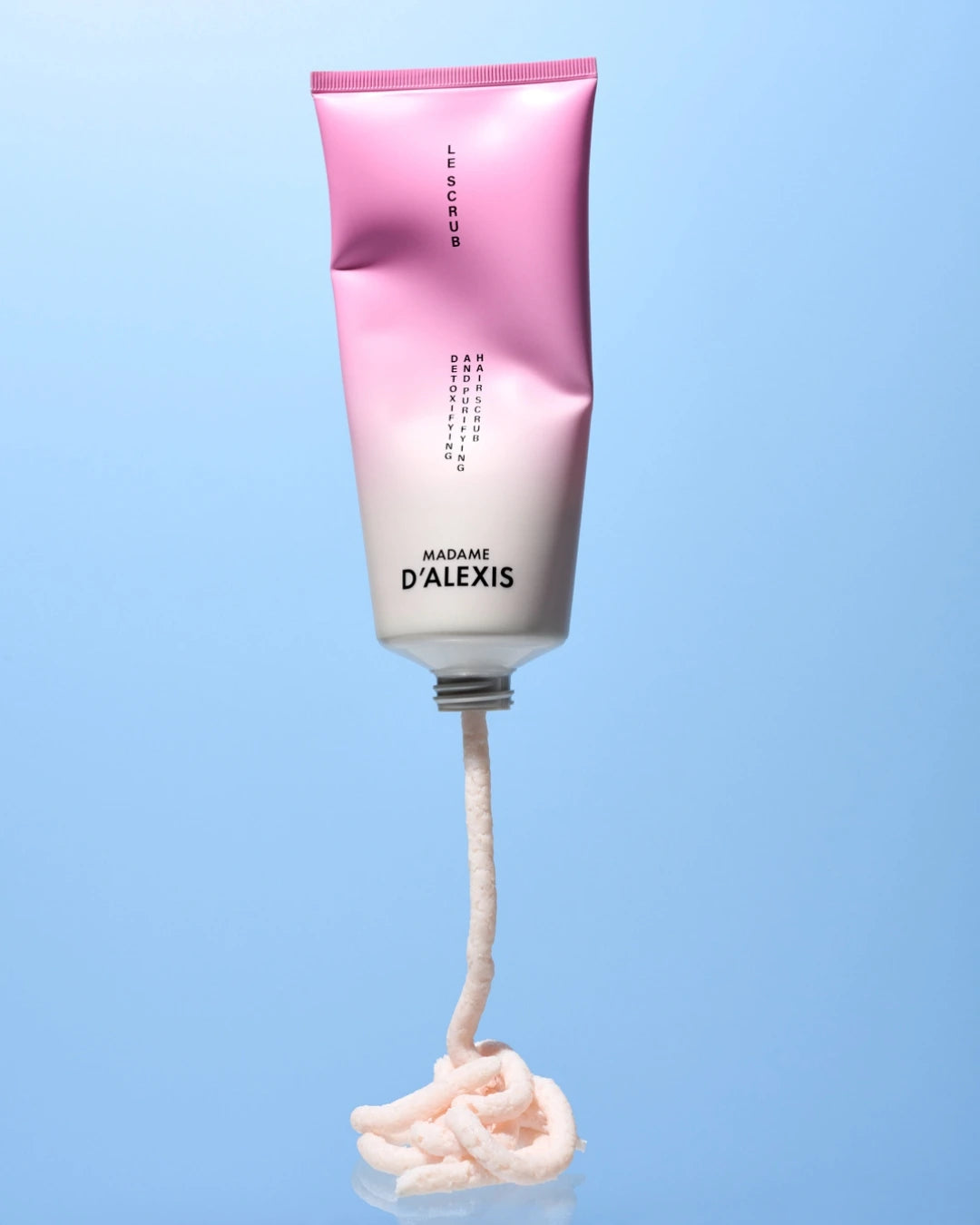
1. Exfoliate the scalp to stimulate hair growth.
A healthy scalp is the foundation of effective hair care. However, when it is clogged with dead cells, oxidized sebum, or styling product residue, microcirculation slows down, oxygenation decreases, and hair growth is disrupted. The result: the roots become thinner, the fiber becomes more fragile and prone to breakage.
Madame d'Alexis Scrub was designed to target precisely this cause:
- Its fleur de sel exfoliates mechanically and gently, without causing irritation.
- Damask rose hydrosol intensely moisturizes the scalp, improves shine, and soothes irritation.
- Chamomile hydrosol provides soothing and anti-inflammatory properties.
- Orange blossom hydrosol, which is invigorating and revitalizing, stimulates circulation at the roots.
- Cationic hyaluronic acid, specially formulated to target damaged areas, moisturizes and protects, while adding body to the roots.
When used weekly, this purifying treatment promotes healthier growth while strengthening the hair roots.
2. Cleanse with a mild, sulfate-free shampoo.
Using a gentle shampoo is essential when hair is brittle. Harsh products containing sulfates or powerful foaming agents damage the scalp's hydrolipidic film, weaken the cuticles, and promote dehydration of the hair fiber.
Madame d'Alexis Shampoo offers a natural restorative approach:
- Formulated without sulfates or silicones, with mild plant-based surfactants.
- Enriched with organic hydrosols (rose, chamomile, orange blossom), it soothes irritation, moisturizes the root, and prevents breakage.
- Contains prebiotics that balance the scalp microbiome, thereby limiting imbalances that cause hair loss.
- Its plant-based keratin repairs damage to the cuticle and improves hair strength.
- Hyaluronic acid acts as a deep moisturizer, protecting each strand with an imperceptible film.
The result: a healthier scalp, soothed hair fibers, and strengthened lengths right from the first wash.

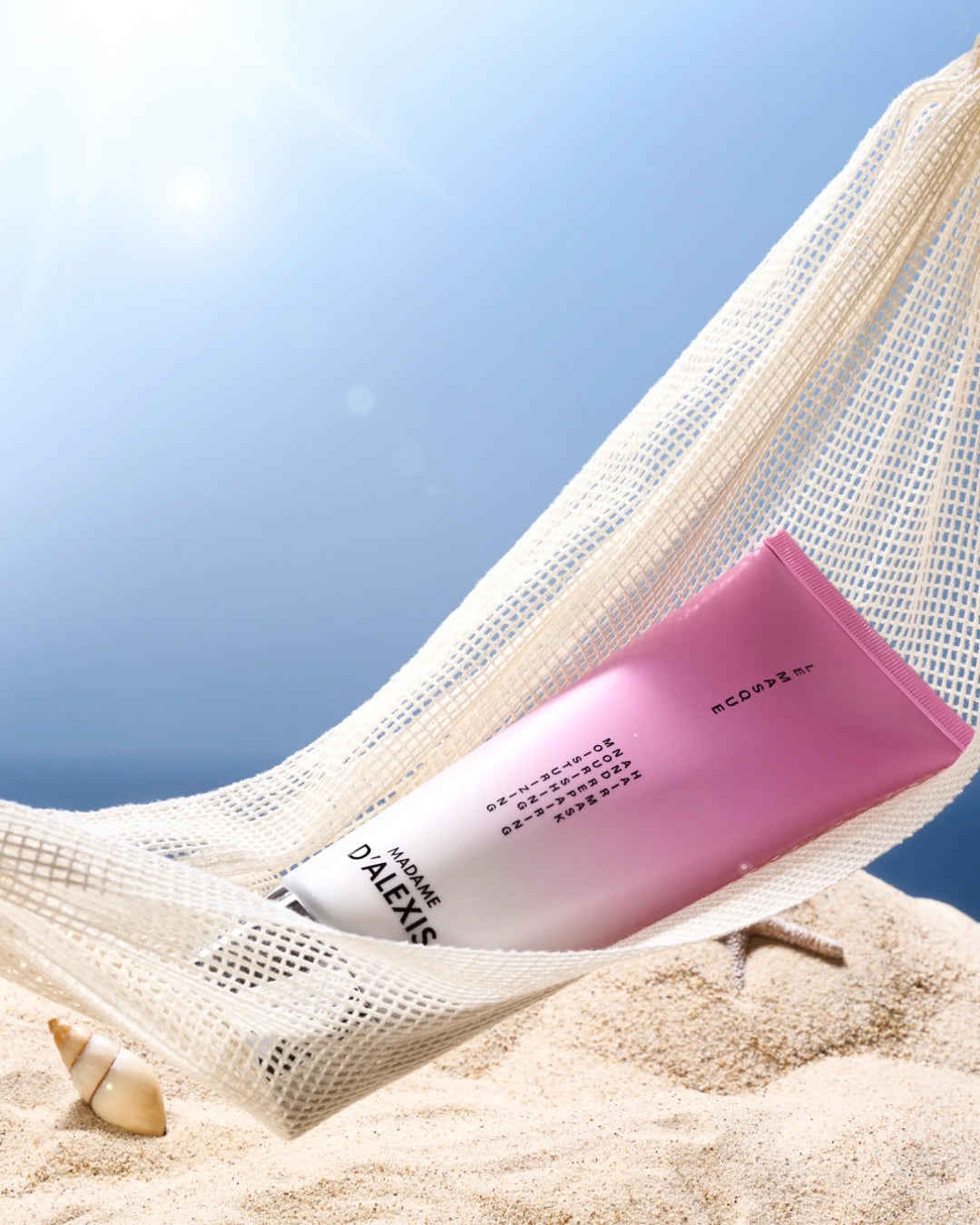
3. Nourish and repair with a nourishing mask
Brittle hair is hair whose internal structure has been damaged. This can be caused by chemical treatments, mechanical damage, or a lack of protein and lipids. To restore elasticity and prevent split ends, you need to go beyond hydration: you need to nourish your hair.
Alexis' Madame Mask, with no added water, is a concentrate of repairing active ingredients:
- Rose, chamomile, and orange blossom hydrosols to revitalize and soften the hair fiber.
- Plant-based ceramides that strengthen the hair's protective barrier.
- Organic jojoba and apricot oils, rich in vitamins A and E, which deeply restore the hair shaft.
- Cationic hyaluronic acid, which fills micro-cracks in the fiber and protects against excessive heat.
- Essential orange blossom wax to seal in moisture and restore shine.
A nourishing mask essential for restoring soft, supple, and visibly less brittle hair.
4. Apply protective leave-in treatments
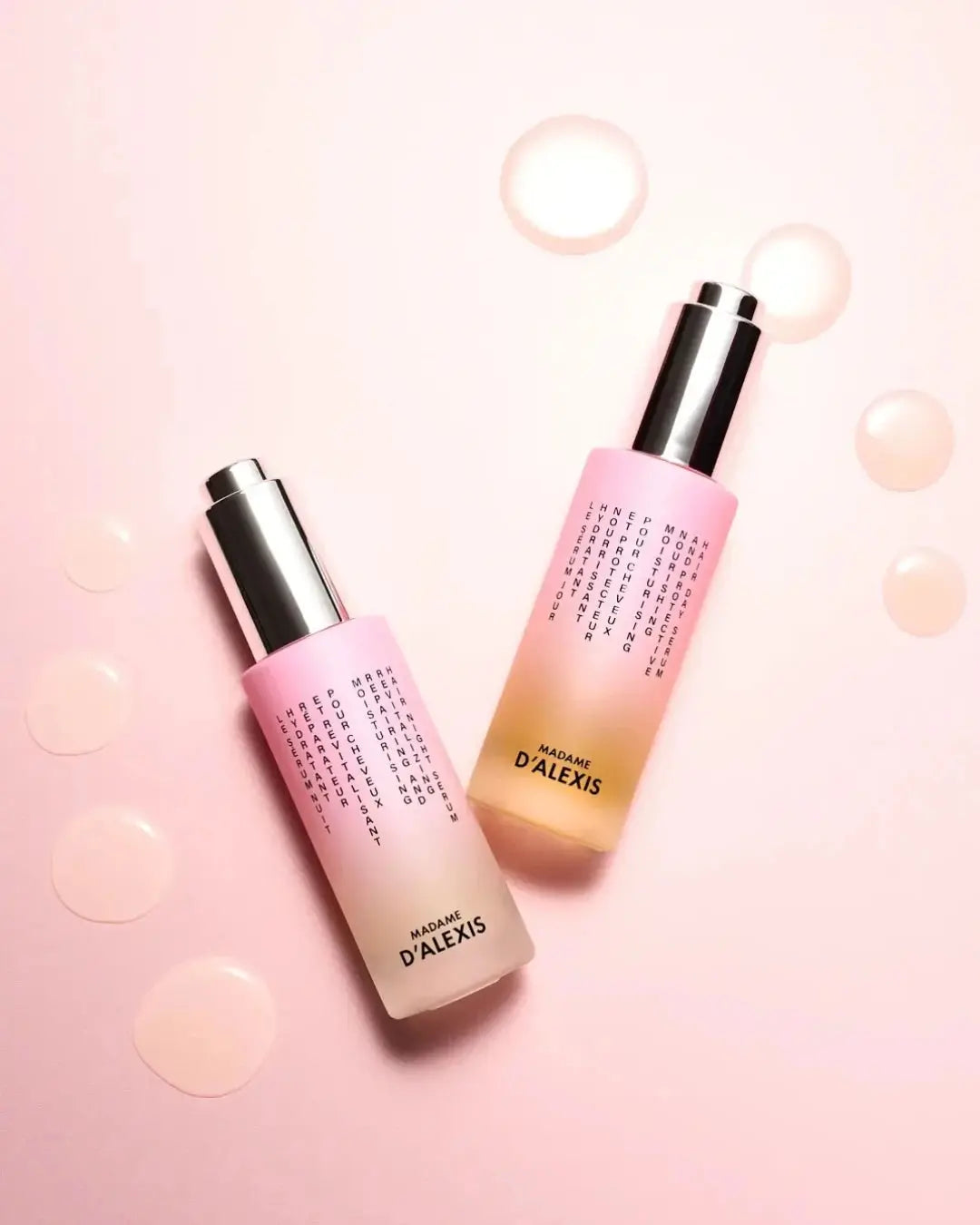
Between washes, hair is exposed to numerous aggressions: pollution, UV rays, friction, and temperature variations. To prevent moisture loss, it is best to apply a leave-in treatment with a light but effective texture every morning and evening.
- Madame d'Alexis Day Serum acts as a protective film: it moisturizes, prevents oxidation, and reduces hair breakage when brushing or styling.
- The Night Serum, concentrated in probiotics, ceramides, and plant oils, restores the integrity of the hair fiber during sleep. It is a deep-acting nighttime repair treatment that works while cell regeneration is at its peak.
These two treatments enhance your daily hair care routine, while adding shine, suppleness, and density.
5. Limit mechanical and thermal damage
Styling habits play a major role in preventing breakage. Wet hair is more elastic and therefore more vulnerable.
Avoid:
- Tie up wet hair
- Use metal elastic bands
- Brush from the root
- Smooth without protection
Best of all :
- A soft brush with flexible bristles
- Silk elastic bands
- Heat protection when using a hair dryer or straightening iron
- Light, loose hairstyles
- These simple adjustments limit mechanical breaks in the fiber, particularly on lengths that are already weakened.
6. Strengthen hair from within
Finally, brittle hair can be a visible sign of nutritional imbalance. A lack of iron, zinc, or B vitamins, particularly vitamin B6, can compromise keratin synthesis, weakening the hair mass.
A three-month course of hair supplements works in synergy with topical treatments:
- It promotes hair growth.
- Reduces hair loss caused by stress or deficiencies
- Increases the fiber's resistance to daily wear and tear
Each step in this routine helps totreat breakage and prevent it from recurring. Hair regains its structure, density, and shine—with lasting results. Because strong hair is built at the root, on the surface, and from within.
Preventing hair breakage: good habits to adopt
Prevention is always better than cure. When it comes to brittle hair, adopting simple, consistent habits can make all the difference. It's not enough to choose a good hair care product or nourishing mask once a week.
It is a daily, comprehensive, and conscious approach that trulyprevents breakage and keeps the hair fiber in optimal condition.
Opt for protective, non-aggressive hairstyles.
Hairstyles that are too tight or repeated, such as high ponytails, tight buns, and flat braids, exert constant tension on the roots.
This tension, repeated day after day, weakens the hair root and can cause what is known as traction alopecia. This phenomenon is particularly visible at the temples and nape of the neck, where hair becomes sparse and then breaks.
Prefer:
- Soft ties, made of silk or satin, that do not snag the fabric.
- Low, relaxed hairstyles, especially at night.
- Regular alternations so that the same areas are not always used.
Protect hair from the sun
We often talk about skin, but hair suffers just as much from UV rays. Under the effect of the sun, keratin breaks down, the fiber dries out, and the color (natural or otherwise) oxidizes. This results in a loss of elasticity and increased breakage.
To remedy this:
- Wear a hat or scarf outdoors.
- Apply a UV protection product, either a spray or a light cream.
- Avoid prolonged exposure without protection, especially after swimming in salt water or chlorinated water.
Moisturize your hair between washes
Washing your hair less frequently is necessary to maintain the balance of the scalp. However, between shampoos, the hair fiber can become dehydrated, especially if it is exposed to heat, friction, or dry air.
However,moisturizing your hair regularly is essential to maintain its suppleness and prevent it from becoming brittle.
Adopt:
- A light moisturizing mist made from hydrosols or floral water.
- A few dropsof dry vegetable oil, to be spread over the lengths (jojoba, apricot, grape seed).
- A minimalist but regular routine, focusing on the ends.
Space out coloring and chemical treatments
Every chemical treatment, coloring, bleaching, straightening, or permanent smoothing profoundly alters the structure of the hair. This results in a weakening of the cuticle, a loss of strength, and greater porosity. If sufficient recovery time is not allowed, the fiber does not have time to regenerate.
To limit the damage:
- Allow a minimum of six weeks between chemical treatments.
- Choose gentle hair dyes that are free of ammonia and peroxide.
- Systematically incorporate restorative treatments in the weeks that follow.
Adopt a balanced and remineralizing diet
There is a direct link between a balanced diet and healthy hair. Hair is made up of keratin, a protein synthesized by the body from available nutrients. Even a slight deficiency can affect the strength of the hair fiber, thespeed of growth, and the quality of the scalp.
Be sure to consume:
- Plant proteins (legumes, quinoa, tofu), rich in sulfur amino acids.
- B vitamins (B6, B8), essential for hair growth.
- Iron and zinc, found in seeds, oilseeds, and egg yolks.
- Fruits and vegetables rich in antioxidants, to combat oxidative stress.

What if your hair was deficient?
When hair breaks at the root, becomes thin, limp, or falls out in unusual quantities, it is essential to consider a deeper cause. Sometimes, hair breakage is not simply the result of inappropriate actions or harsh products, but a reflection of an internal imbalance.
Recognizing warning signs
Certain symptoms may indicate a nutritional or hormonal deficiency:
- Diffuse and persistent hair loss
- Hair that breaks at the root, without growing longer
- Appearance of thinner areas, particularly at the top of the head
- Brittle nails, drier skin, associated chronic fatigue
These signs should alert you, especially if they appear suddenly.
The most common deficiencies
Iron deficiency is one of the most common types of deficiency, particularly among women. As iron is involved in cellular oxygenation, a deficiency directly impacts the scalp.
Other nutrients to watch out for:
- Vitamin B6: essential for keratin synthesis
- Zinc: promotes tissue repair and sebum regulation
- Biotin (vitamin B8): prevents hair loss and improves hair structure
- Sulfur amino acids: essential for building hair fiber
An unbalanced diet, chronic stress, or certain endocrine disorders (such as thyroid problems) may also be contributing factors.
When to consult a professional for brittle hair
If, despite following a suitable routine and eating a healthy diet, your hair remains very brittle or has stopped growing, we recommend:
- Request a complete blood count, including iron, zinc, B6, and TSH (thyroid).
- Consult a dermatologist or a specialized trichologist.
- Consider taking dietary supplements on professional advice.
Taking care of your hair also means learning to listen to what it reveals about your overall well-being.Healthy hair is often a silent reflection of a well-nourished, well-oxygenated, and well-respected body.
Madame d'Alexis signature: repairing brittle hair without compromise
When a hair breaks, it's not just a matter of repairing damaged fiber. It's about restoring balance, soothing a tired scalp, and restarting the growth cycle under optimal conditions.
AtMadame d'Alexis, this vision is central. It guides each of the formulas, designed as an extension of the nature and biological intelligence of the hair.
Formulas with no added water, rich in plant-based active ingredients
Unlike most hair care products, which often contain more than 80% water, Madame d'Alexis products are formulated without added water.
Water is replaced bycertified organic hydrosols: Damask rose, chamomile, or orange blossom, chosen for their properties:
- Soothing and anti-inflammatory for the scalp
- Revitalizing for dull or tired hair
- Naturally rich in antioxidants, minerals, and vitamins
This radical choice makes it possible to obtain formulas that are highly concentrated in active ingredients, offering visible results from the very first uses.
Sulfate-free, silicone-free, no compromises
The brand's products systematically exclude harsh ingredients often used in conventional industry: sulfates, silicones, parabens, and drying alcohol. This rejection is not just a marketing ploy; it is a commitment to formulation.
- Mild surfactants clean without stripping, respecting the pH of the scalp.
- Plant-based emollients replace silicones to smooth the fiber without suffocating it.
- Biotechnological active ingredients, such as cationic hyaluronic acid or plant ceramides, deeply restore the fiber.
This selection of natural products, free from unnecessary additives and artificial ingredients, guarantees optimal tolerance and targeted effectiveness on brittle hair, even severely damaged hair.
A simple but effective hair care routine
The consistency of a hair care routine depends on its regularity, simplicity, and the synergy between products. Here is the protocol recommended by Madame d'Alexis to effectively treat damaged hair:
-
Scalp scrub (once a week)
Purifies, gently exfoliates, and stimulates microcirculation. Thanks to fleur de sel and organic hydrosols, it promotes healthier growth. -
Gentle shampoo (2 to 3 times a week)
Cleanses while respecting the skin barrier. Its plant-based cleansing base combined with prebiotics rebalances the scalp's microbiome. -
Nourishing mask (once a week or after sun exposure)
Intensely repairs. The absence of water allows for optimal penetration of plant oils, ceramides, and hyaluronic acid. -
Day & night serums (for daily use)
The Day Serum acts as an antioxidant shield. The Night Serum deeply regenerates thanks to a synergy of natural active ingredients adapted to nighttime biological cycles.
This natural, targeted routine works at every level: roots, fiber, and scalp environment. It respects the nature of the hair while restoring what it has lost—shine, strength, and suppleness.

In summary: what can you do to treat brittle hair?
Brittle hair is not inevitable. It is a symptom of an imbalance that can be corrected with a tailored approach based on observation, regularity, and well-formulated treatments.
Here are the six essential steps to remember for restoring strong, shiny hair:
- Purify the scalp: A suffocated scalp slows down growth and weakens the roots. Gentle exfoliation helps restore a healthy foundation.
- Wash without stripping: Say goodbye to sulfates and harsh foaming agents. A gentle shampoo cleanses without stripping the hair fiber of its natural protection.
- Deep nourishment: A nourishing mask rich in lipids and ceramides restores the cohesion of the cuticle and restores elasticity to the fiber.
- Protect your hair every day: Moisturizing mist , leave-in treatments, protective hairstyles: every step counts in preventing breakage.
- Strengthen with tailored care: A consistent and complementary hair care routine is more effective than using random products on their own.
- Provide the right nutrients from within: A balanced diet rich in protein, iron, zinc, and B vitamins strengthens the hair at the root and optimizes regrowth.
By combining rigor, gentleness, and naturalness, it is possible not only to treat brittle hair, but also to prevent future damage. At Madame d'Alexis, each formula is designed as a deep treatment that respects the hair fiber and remains faithful to one requirement: never compromise between effectiveness, sensoriality, and naturalness.
Frequently asked questions – Brittle hair: what can you do about it?
What can you do about brittle hair?
If your brittle hair breaks at the slightest friction or when brushing, it is urgent to review your hair care routine. To strengthen it effectively, take a comprehensive approach:
- Use a mild sulfate-free shampoo to avoid damaging the hair fiber.
- Apply a nourishing mask once or twice a week.
- Incorporate a protein treatment if your hair is very damaged or after bleaching.
- Massage the scalp to stimulate growth.
- Limit the use of heating appliances and avoid wearing your hair in tight styles.
How can you prevent hair breakage?
To prevent breakage, it is important to maintain the elasticity and hydration of the hair fiber. Here are some best practices to adopt:
- Moisturize your hair with light moisturizing products between washes.
- Incorporate moisturizing masks and oil baths (such ascoconut oil) into your routine.
- Opt for protective hairstyles and avoid elastic bands that are too tight.
- Protect your hair from the sun, chlorine, and salt.
- Follow a balanced diet rich in vitamins and plant-based proteins.
What causes brittle hair?
There are many possible causes of brittle hair. Here are the most common ones:
- A deficiency in iron, vitamin B6, or zinc.
- A poor diet lacking in sulfur amino acids.
- Stress, which disrupts hair growth.
- An imbalance of the thyroid gland, often associated with hair loss or thinning.
- Excessive heat (straighteners, blow dryers, sun).
- Repeated use of harsh products or chemical treatments.
- Chronic dehydration of the lengths.
- Environmental factors (pollution, hard water).
How to repair damaged hair?
To repair damaged hair, you need to combine external care with a nutritional approach:
- Use a hair mask rich in repairing ingredients (vegetable oils, ceramides, hyaluronic acid).
- Opt for a shampoo with plant-based keratin, which strengthens the hair structure.
- Regularly apply a nourishing oil (jojoba, apricot, coconut) to the ends.
- Choose a natural treatment, free from silicones and sulfates.
- Consider adjusting your diet to include sources of vitamin B6 and protein.
- Trim the ends slightly to remove split ends and encourage healthier growth.
What advice do you have for brittle hair?
Here are the best tips for brittle hair, to be applied daily:
- Trim the ends regularly to limit the spread of split ends.
- Leave your treatments on longer, especially repairing masks.
- Apply a mask at least once a week, focusing on the lengths.
- Moisturize your hair between washes, especially in summer.
- Detangle without pulling, using a suitable brush, starting at the ends.
- Use gentle products formulated without sulfates or silicones.
- Avoid tight or repetitive hairstyles.
- Protect your hair at night with a silk pillowcase or scarf.
- Choose products that are suitable for your hair type and level of fragility.
How can you strengthen brittle hair?
To strengthen brittle hair, focus on the regularity and quality of your routine:
- Incorporate moisturizing products into every step: shampoo, mask, leave-in treatment.
- Use a mild shampoo that respects the pH balance of the scalp.
- Apply a nourishing mask rich in plant oils and plant keratin.
- Supplement with vitamins and minerals, particularly iron, zinc, and biotin.
- Follow a healthy diet rich in protein (animal or plant-based).
- Jojoba oil, which is very similar to natural sebum, is ideal for strengthening the hair fiber without weighing it down.

