Advice
What product is best for curly hair?
Which product for curly hair? A complete guide with targeted routines, explanatory videos and recommended hair care products.

Taming your curls is a subtle art. It’s not enough to simply dampen, smooth, or tie them back. Curly to coilyhair requires special attention, constant care, and products specifically tailored to its needs. This comprehensive guide helps you understand the true needs of your curls so you can bring out their best every day.
Understanding the needs of curly hair
A naturally drier hair fiber
The distinctive feature of curly hair lies primarily in the shape of the hair fiber itself. This natural curvature prevents sebum from being distributed evenly, often leaving the lengths more vulnerable. The result is dry, more fragile hair that requires both nourishing and protective care.
➤ The diagnosis is simple: lack of shine, rough texture, uncontrollable frizz.
The treatment is less straightforward: you need to rehydrate without weighing the hair down.
Sensitivity to external aggressions
Exposed tothe open air, sun, wind, heat from styling tools, andhumidity, curly hair reacts strongly. This reactivity is reinforced by the often high porosity of the fiber. As a result, curls swell, lose their shape, and the scalp can become uncomfortable.
➤ An effective skincare routine must therefore anticipate these environmental variations by creating a nourishing and moisturizing shield.
The challenge: nourishing without weighing down, defining without freezing
Finding the right balance between hydration, definition, and lightness often involves trial and error. The right styling product should not dry out, weigh down, or "freeze" the curl. On the contrary, it should maintain the hair's natural movement and respect it.
➤ A light styling cream, a flexible styling gel, or a moisturizing styling mousse are all options depending on your curl type and desired look.
Each hair type has its own nuances, but the intention remains the same: to enhance without constrain.

How to use Madame d'Alexis curly hair products for curly and textured hair?
The essentials for a hair care routine and caring for curly hair
Curly hair, due to its complex and precious nature, does not tolerate approximation or excess. Its care requires a rigorously constructed hair care routine, in which every gesture and every formula is important.
Choosing theright products for curly hair is not a matter of trends, but an art of listening: listening to the texture, the need for moisture, the environment, and above all, the fiber itself.
A sulfate-free moisturizing shampoo: the basis of a gentle routine
Beautiful hair always starts with gentle washing. A moisturizing shampoo, formulated without sulfates, is essential for preserving the integrity of the hair fiber without stripping it.
A good shampoo for curls should:
- be rich in moisturizing agents (such as vegetable glycerin),
- respect the scalp without irritating it,
- preserve the natural moisture of dry hair.
A detangling and moisturizing conditioner: the restorative treatment
After washing, it's time for hair care. A moisturizing conditioner plays a fundamental role in rebuilding the protective film of curly or textured hair. Choose a rich but non-greasy cream that can smooth without suffocating, and strengthen without weighing down.
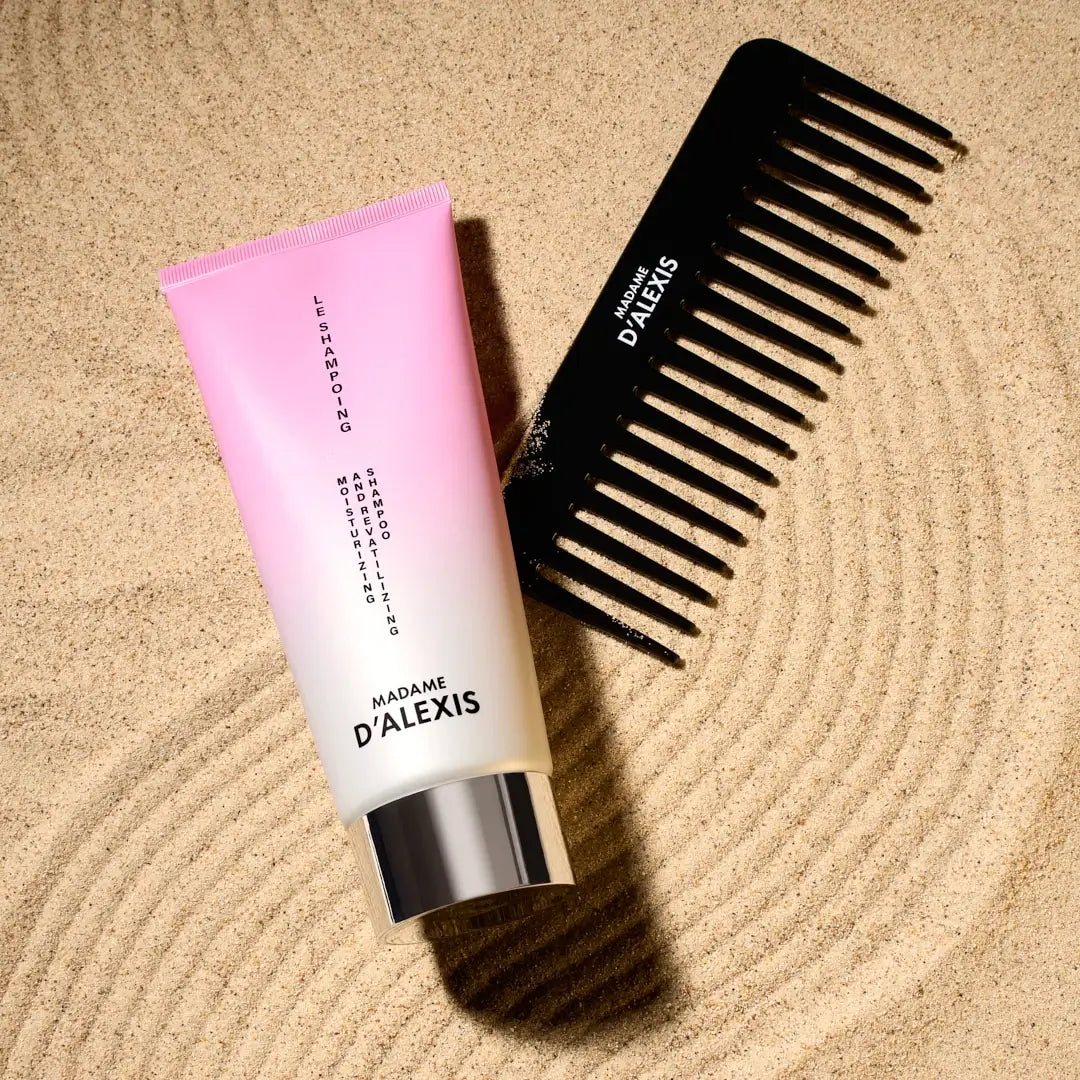
Tip: Apply with a wide-toothed comb to thoroughly towel-dried hair to promote even distribution and prevent breakage.
A weekly nourishing mask: a moment of rebirth
It's not a luxury, it's a necessity. A good nourishing mask deeply rehydrates, fills in gaps in the hair fiber, and prevents breakage.
Choose moisturizing masks rich in shea butter, hyaluronic acid, or vegetable keratin for curly or frizzy hair.
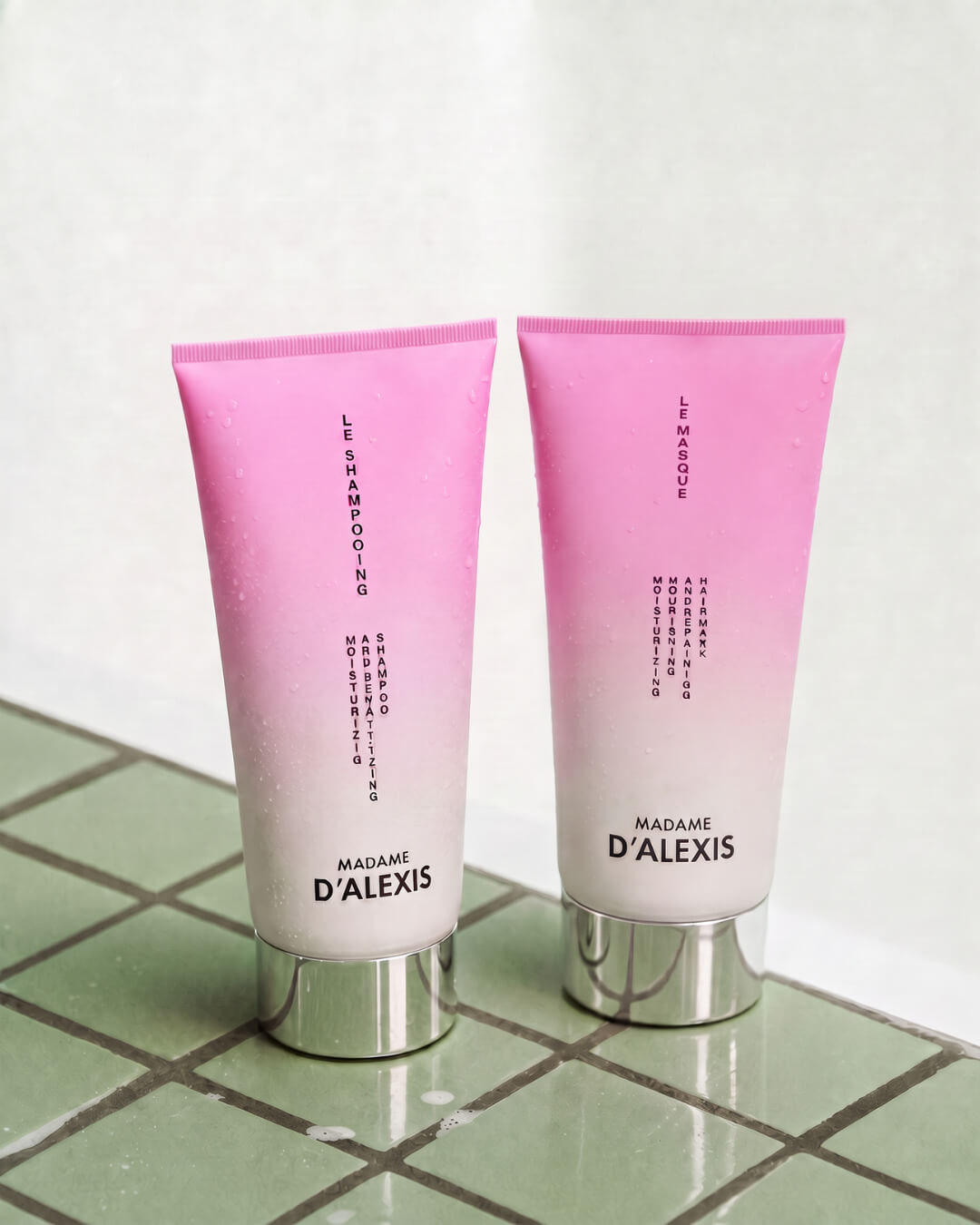
🧴 Try it out: Le Masque Madame d'Alexis – an ultra-sensory treatment formulated with 97% natural ingredients, no added water, enriched with plant ceramides and organic floral hydrosols. Perfect for curly to kinky hair.
A leave-in conditioner to define curls
Using a leave-in conditioner is a step that many people forget... and they're wrong to do so. This leave-in treatment helps maintain moisture in the hair fiber, define curls, and protect against heat.
Choose a light formula for fine hair, or a creamier one for tight curls. It can be combined with gel for extra hold, or used alone for a natural, flexible finish.
A styling gel or mousse for hold without a stiff effect
Sculpt without stiffening: that's the role of a good styling gel or mousse. Choose flexible textures that respect the natural bounce of curls. Styling creams can also be an excellent alternative, especially for long or very thick hair.
Please note: certain products such as Curl Manifesto by Kérastase and Curl Expression by L’Oréal Pro are highly acclaimed for their balance between definition and softness.
A serum or light plant oil for shine
The final step in your routine: a touch of shine. A carefully chosen plant oil enhances curls, fights frizz, and preserves moisture levels in the hair fiber. Look for high-quality oils such as:
- argan oil, for suppleness,
- jojoba oil, for lightness,
- coconut oil, for its nourishing properties.
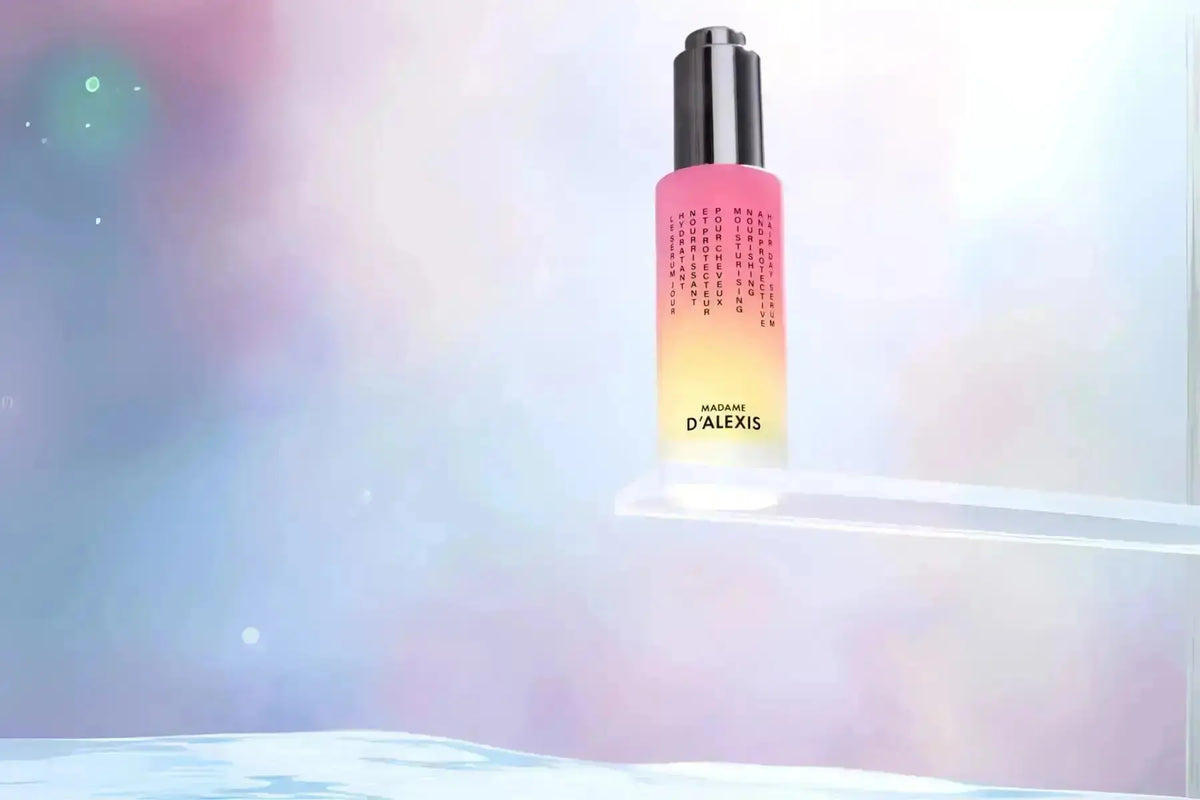
Try: Madame d'Alexis Day Serum, a 99% natural leave-on treatment enriched with plant ceramides and jojoba oil, for a refined and effective moisturizing routine.
What is the routine for curly hair with Madame d'Alexis products?
Which product for curly hair should you choose based on your hair type?
Choosing the right product for curly hair always starts with a thorough understanding of your hair type. Because not all curls are the same. And behind the generic term " curly to kinky hair" lies a wide variety of textures, needs, and reactions to hair care products.
Wavy hair (2A to 2C) → lightness and definition
Wavy hair requires extreme delicacy. Its S-shaped texture often lacks hold and tends to lose its shape when exposed to humidity. The goal is clear: define without stiffening.
- Opt for light creams, airy styling mousses, and leave-in conditioners that do not leave a film on the hair.
- Avoid heavy oils or stiff gels that weigh down the curl.
A simple moisturizing texturizing spray can be enough to revive waves while allowing the hair to breathe.
Curly hair (3A to 3C) → hydration and elasticity
Tighter curls require constant hydration. Their beauty lies in their bounce and suppleness.
- Choose hair moisturizing products rich in humectants (aloe vera, vegetable glycerin).
- Product lines such as Curl Expression and Curl Manifesto by Kérastase are designed to maintain definition without sacrificing softness.
Leave-in conditioner is essential here to maintainelasticity between washes.
Kinky hair (4A to 4C) → nourishment and maintenance
Kinky hair is beautiful... provided you understand it well. It is very textured, often porous, and needs deep and regular nourishment.
- Choose hair care products enriched with shea butter, argan oil, or coconut oil.
- Nourishing masks, rich styling creams, and plant oils are essential for preserving the hair's structure.
Special cases: fine, curly, or colored hair
- For fine hair, be careful with formulas that are too rich, as they may weigh it down.
- Colored Colored hair requires specialized care to prevent the hair shaftfrom drying out or becoming more porous.
- Oily or suffocated hair requires regular but gentle cleansing to maintain the balance of the scalp.

Which ingredients should you look for in curly hair products? Natural ingredients to look for
Understanding the formulation of a hair care product means empowering yourself to make informed choices. In the world of curly hair products, natural ingredients play an essential role. They nourish, moisturize, and protect—without artifice or superficial effects.
The essentials for moisturizing and nourishing
To restore suppleness to curly hair, which is often prone to dryness, certain natural active ingredients are essential:
- Aloe vera: the ultimate plant-based moisturizer, it retains water within the hair fiber and soothes the scalp.
- Shea butter: ultra-nourishing, it seals in moisture and protects against external aggressions.
- Argan oil: rich in antioxidants and essential fatty acids, it strengthens, enhances, and softens the skin.
- Plant proteins (rice, silk, wheat): they fill gaps in the hair fiber, improve elasticity, and limit breakage.
- Vitamins A, E, and B5: they promote regeneration and give hair shine and vitality.
When properly balanced, these ingredients combine performance and pleasure in a natural routine that respects the hair's intrinsic beauty.
Ingredients to avoid at all costs for curly hair
Certain substances, although still widely used in conventional cosmetics, should be avoided in a routine dedicated to curls.
- Silicone: coats the fiber without treating it. Over time, it weighs down, suffocates, and accentuates dryness.
- Drying alcohols: some hairsprays still contain these. They dry out the hair, making it dull and brittle.
- Products with multiple synthetic variations (complex fragrances, colorants): potential sources of scalp irritation.
- Occlusive agents that are too oily: unsuitable for fine or oily hair, they upset the balance of the scalp and compromise the lightness of the curls.
How can you moisturize curly hair on a daily basis?
Hydration is undoubtedly the most overlooked step... yet it is also the most crucial. Dry hair, even when nourished, remains vulnerable if it is not properly hydrated. To maintain a consistent hydration routine, a few simple, repeated steps are all it takes.
- Use a gentle, sulfate-free moisturizing shampoo enriched with humectants such as glycerin or aloe vera.
- Incorporate a moisturizing mask once a week, made with plant butters and light oils.
- Apply a moisturizing spray every morning or before styling, especially if you expose your hair tothe open air or heat.
- Finally, always choose skincare products that are rich in water and low in occlusive film-forming agents.
A well-designed moisturizing routine is the key to maintaining the suppleness, definition, and shine of your curls, day after day.
Our personal ritual for curly hair (tested and approved)
Over time—and after several more or less forgivable cosmetic mistakes—I learned that the ideal hair care routine is not about the quantity of products, but about choosing the right ones.
To tamecurly hair and enhance it without restricting it, you need to combine precision, gentleness, and a certain degree of regularity.
What we refer to here as our "personal ritual" is not set in stone, but it is based on four essential products that our users ask us for again and again.
The 4 products that our curly-haired users use every day
-
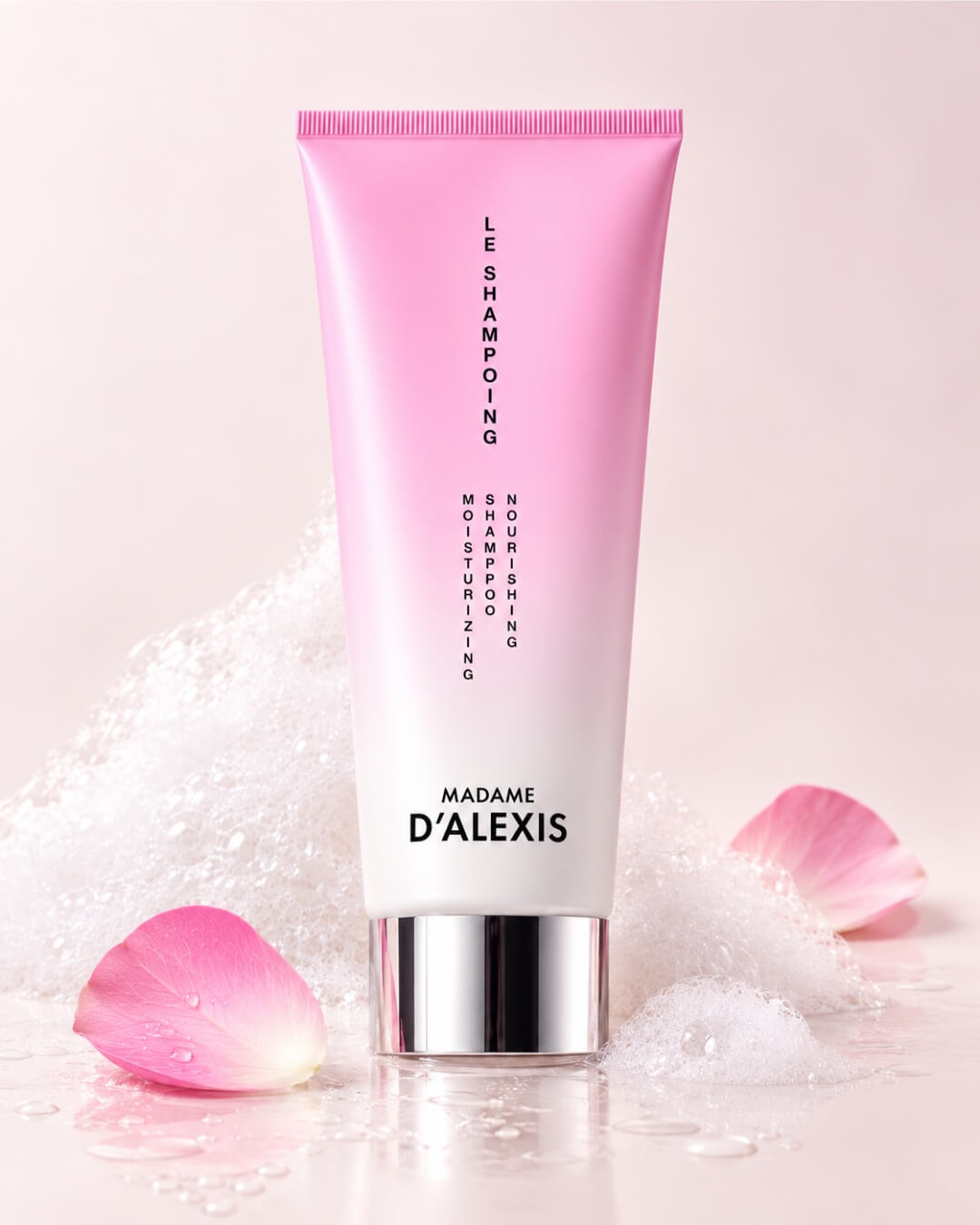
Shampoo Madame d'Alexis
This moisturizing shampoo, formulated without sulfates and added water, cleanses deeply without ever damaging the hair. Its secret? An exclusive base composedof organic floral hydrosols (Damask rose, orange blossom, chamomile), which leave hair supple, clean, and soothed.
This is the essential starting point for any balancedhair care routine, especially for curly to kinky hair.
- Le Masque Madame d'Alexis
This nourishing mask is an invitation to regeneration. Its texture is dense yet melt-in, enriched with plant ceramides, cationic hyaluronic acid, and essential orange blossom wax.
Apply to the lengths or roots as needed. It literally transforms the hair fiber and prepares it forgorgeous curls without weighing it down.
- Madame d’Alexis Night Serum
Designed as a hair treatment, this concentrate is applied directly to the scalp in the evening. It works deeply while you sleep, thanks to a complex of probiotics and soothing active ingredients.
Just a few drops are enough to rebalance, strengthen, and stimulate growth, while improving scalp comfort.
- Madame d’Alexis Day Serum
A true leave-in treatment, it slips discreetly into your daily routine. Warm a few drops between your palms, apply to the lengths of your hair, and frizz is under control. More than just a styling cream, this serum acts as a protective film against humidity and pollution. It leaves hair shiny, defined, and incomparably light.
Frequently Asked Questions – Products for Curly Hair
In a world saturated with hair care promises, it is essential to rely on clear, well-founded, and nuanced answers. This section aims to shed light on the most common questions asked by those who want to offer the best product for their curly to kinky hair.
Because properhair care begins with understanding your hair type and its underlying needs.
Should you avoid shampoos with sulfates?
Absolutely, especially on curly or very textured hair. Sulfates, powerful foaming agents, are also detergents that can excessively dry out the hair fiber. Frequent use can weaken curls, dull the lengths, and upset the balance of the scalp. Choose gentle, sulfate-free formulas enriched with moisturizing and soothing active ingredients.
What is the difference between a styling cream and a leave-in conditioner?
A leave-in conditioner(or rinse-free treatment) is generally more fluid. It aims to moisturize, make detangling easier, and provide daily protection. Styling cream, on the other hand, focuses more on hold and curl definition. It can be enriched with coating or nourishing agents depending on its formulation. The ideal solution? Combine the two in a complete hair care routine.
Can coconut oil be used on curly hair?
Yes, but in moderation.Coconut oil, rich in lauric acid, penetrates deeply. It is particularly suitable for curly to frizzy, even porous hair. On fine or oily hair, it can weigh it down. Opt for lighter oils such asjojoba or grapeseedoil.
How often should you use a face mask?
Once or twice a week is ideal. A nourishing or moisturizing mask, depending on the season and your needs, helps maintain the suppleness of the hair fiber. For colored, exposed, or sensitized hair, this frequency can be increased.
Can you straighten curly hair without damaging it?
Yes, provided you do it carefully and use protection. Always use a heat protection product, limit the temperature to 180°C, and space out your straightening sessions. It is essential to moisturize before, protect during, and nourish after. Straightening then becomes a one-off treatment, supported by a smart hair care routine.
What routine should you follow to get well-defined curls?
Experience shows that curly hair, whether wavy, frizzy, or kinky, does not respond to a universal routine. Its beauty depends on a series of precise steps, carefully selected products, and an intimate understanding of its language.
The pillars of an effective routine:
- A moisturizing sulfate-free shampoo
- A weekly nourishing mask
- A light leave-in conditioner or a suitable styling cream
- A leave-in serum to enhance the finish
- And a touch of vegetable oil, depending on porosity and density