Conseils
Difference between curly, coily, and kinky hair: the complete diagnostic guide
Curly, coily, or kinky? This comprehensive diagnostic guide helps you identify your hair type (2a to 4c) and build a hair care routine truly suited to your texture.


The difference between curly, coily, and kinky hair: the complete diagnostic guide
A clear guide to identifying your curl type, understanding porosity, adapting your care, and avoiding mistakes that break the hair fiber.
Key takeaways in 30 seconds
- Curly, type 3: wide to tight spiral curls, good elasticity, moderate hydration required.
- Coily, type 4a-4b: very tight S or Z curls, often high porosity, strong need for nourishment.
- Kinky, type 4c: most compact texture, maximum fragility, difficult moisture retention.
- The André Walker classification helps establish a diagnosis, but porosity, density, and thickness matter just as much as the curl shape.
Curly, coily, kinky: why the distinction is essential for your care
Using the wrong care on the wrong hair type is the leading cause of chronic dryness, breakage, and undefined curls. Not because the product is bad, but because it is not made for your texture.
The difference between curly, coily, and kinky hair is not just about aesthetics. It involves the very structure of the hair fiber.
The tighter the curl, the harder it is for natural sebum to travel down the hair shaft. The scalp still produces just as much sebum, but it does not lubricate the lengths. Result: dryness, raised cuticles, increased porosity, and fragility at the bend points.
This is also why the scalp's microenvironment differs depending on the texture. A scalp under very tight kinky hair accumulates less sebum on the surface, which changes the balance of its microbiome. Understanding your texture means understanding the real needs of your scalp, not just your lengths.
Curly, coily, kinky: understanding hair types at a glance
Types 2, 3 and 4 are distinguished mainly by the curl shape, the shrinkage level, the natural dryness, and the care needs. Here is a simple guide to help you find your place.
Type 2 · Wavy
S-shaped wave, light to pronounced
- Appearance: soft movement, roots often flatter
- Subtypes: 2A, 2B, 2C
- Key need: lightness, definition, frizz control
- Caution: avoid overly rich products that weigh it down
Type 3 · Curly
Defined curls, loose to tight
- Appearance: visible spirals, natural volume
- Subtypes: 3A, 3B, 3C
- Key need: hydration, definition, moderate nourishment
- Caution: preserve the curl without breaking the structure
Type 4 · Coily / Kinky
Very tight to zigzag curls
- Appearance: strong shrinkage, dense volume
- Subtypes: 4A, 4B, 4C
- Key need: intense nourishment, protection, gentle routine
- Caution: more pronounced mechanical fragility and dryness
Simple guide: the tighter the curl, the more the hair tends to be dry, fragile, and demanding of nourishment. Conversely, the more wavy the hair, the more it needs lightness and definition to avoid a flat or weighed-down effect.
The curly hair classification system: from 2a to 4c
The global reference system is that of André Walker, which classifies textures from 1, straight, to 4, kinky, with three subcategories A, B, C from least tight to tightest. Types 2, 3 and 4 concern wavy, curly, coily, and kinky hair.
| Type | Texture | Curl shape | Approximate diameter |
|---|---|---|---|
| 2a | Lightly wavy | Slight S | > 5 cm |
| 2b | Defined wavy | Visible S | 3-5 cm |
| 2c | Thick wavy | Very pronounced S | 2-3 cm |
| 3a | Wide curly | Loose spiral | ~2.5 cm |
| 3b | Tight curly | Dense spiral | ~1.5 cm |
| 3c | Very tight curly | Corkscrew | ~0.5 cm |
| 4a | Coily | Tight S or spiral | < 0.5 cm |
| 4b | Coily kinky | Slightly defined Z | Very short |
| 4c | Kinky | Flattened or invisible Z | Almost zero |
One essential point: most people have several types on the same head. The temples are often finer and curlier than the nape. This is normal, and it changes the way care is applied.
S-shaped wave, more or less pronounced. Priority: lightness, definition, frizz control without weighing it down.
Visible spiral curls. Priority: regular hydration, definition, and frizz control.
Tight to very compact curls. Priority: nourishment, moisture retention, and minimal manipulation.
Type 2 - wavy hair, 2a, 2b, 2c
- 2a: light wave, often flat. Easy to straighten, easy to curl, not very prone to dryness.
- 2b: more defined wave, with a little volume. Starts to get frizz in humid weather.
- 2c: thick and very pronounced wave, close to 3a. Prone to frizz, already requires targeted hydrating care.
Type 2 is often underestimated in hair routines. Overly heavy products are applied to it, which weigh it down, or overly light ones, which do not define. Lightness and definition are the two keywords.
Type 3 - curly hair, 3a, 3b, 3c
- 3a: wide and loose curls, shiny. Good elasticity, prone to frizz if poorly hydrated.
- 3b: tighter, more voluminous curls. More pronounced dryness, regular need for hydration.
- 3c: very tight corkscrew curls. Often confused with 4a, generally higher porosity, increased need for nourishment.
Type 4 - coily and kinky hair, 4a, 4b, 4c
- 4a: very tight S curls, still visible. Dense texture, often high porosity, strong need for hydration.
- 4b: loosely defined Z curls. Strong shrinkage, up to 75% of the actual length. Very sensitive to breakage.
- 4c: tightest texture. The curl is almost invisible when dry. Extreme shrinkage, maximum fragility, intense need for nourishment.
How to identify your hair type: the 3-step test
Wash curly hair with a gentle sulfate-free shampoo, apply no styling product, let it air dry, and observe the natural shape.
Slide a clean hair between your thumb and index finger: barely noticeable, it is fine; clearly noticeable, it is thick.
Place a clean hair in a glass of water. If it floats, low porosity; if it stays in the middle, moderate; if it sinks, high.
Your full type = number + letter + thickness + porosity. One person can be 3b, fine hair, high porosity, and another 3b, thick hair, low porosity. Their routines will be very different.
Key differences between curly, coily, and kinky: porosity, hydration, fragility
| Criterion | Curly, type 3 | Coily, 4a-4b | Kinky, 4c |
|---|---|---|---|
| Porosity | Moderate to high | Often high | Very often high |
| Hydration | Moderate | High | Intense and regular |
| Fragility | Moderate | High | Maximum |
| Shrinkage | 20-40% | 50-70% | 70-80% |
| Natural sebum | Partially travels down | Travels little | Travels very little |
Curly hair: suppleness and moderate hydration
Curly hair, type 3, has good natural elasticity. Its main enemy: lack of hydration which breaks the curl definition and generates frizz.
What it requires: regular hydration, light to moderate active ingredients, and definition without weighing it down.
Coily hair: high porosity and need for nourishment
Coily hair, 4a and 4b, has naturally more raised cuticles at the bend points. Water enters easily and leaves just as quickly. This is the definition of high porosity.
What it requires: deep hydration, emollient active ingredients, and occlusion to seal the hydration.
Kinky hair: maximum fragility and moisture retention
Type 4c is the mechanically most fragile texture. The very close bend points create as many potential areas of weakness.
What it requires: intensive nourishment, minimal manipulation, powerful occlusive care, and systematic nighttime protection with a satin bonnet or pillowcase. To structure this gesture, the curly hair night routine can serve as a basis for the driest textures.
Routine adapted to each type: the active ingredients that make the difference
For wavy and curly hair, types 2 and 3
Priority: lightness, definition and hydration without weighing hair down.
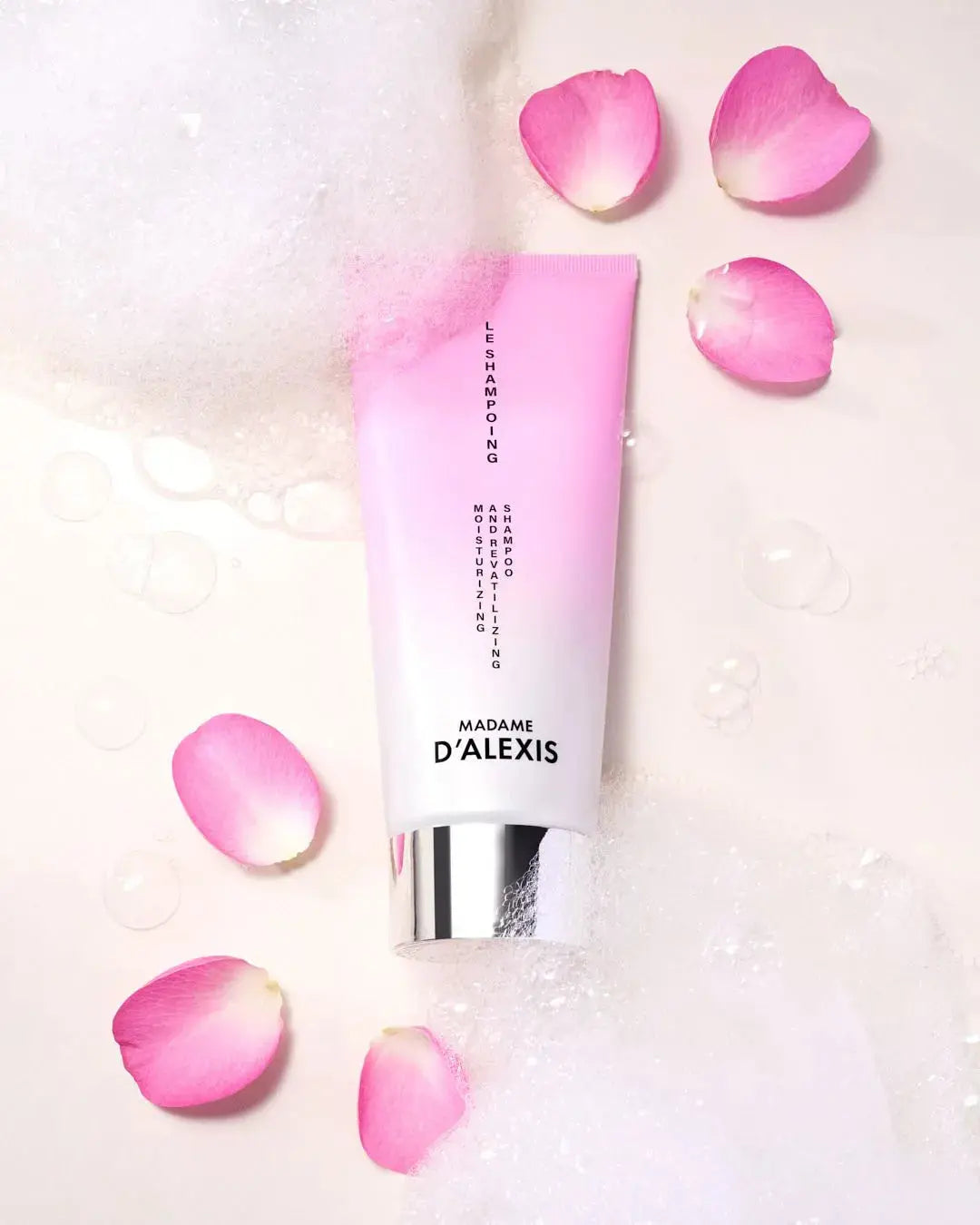
- Shampoo: free from harsh sulfates, to preserve the hydrolipidic film without stripping.
- Light conditioner or mask: once a week for type 2, twice for types 3b-3c.
- Key active ingredients: aloe vera, floral hydrosols, light proteins.
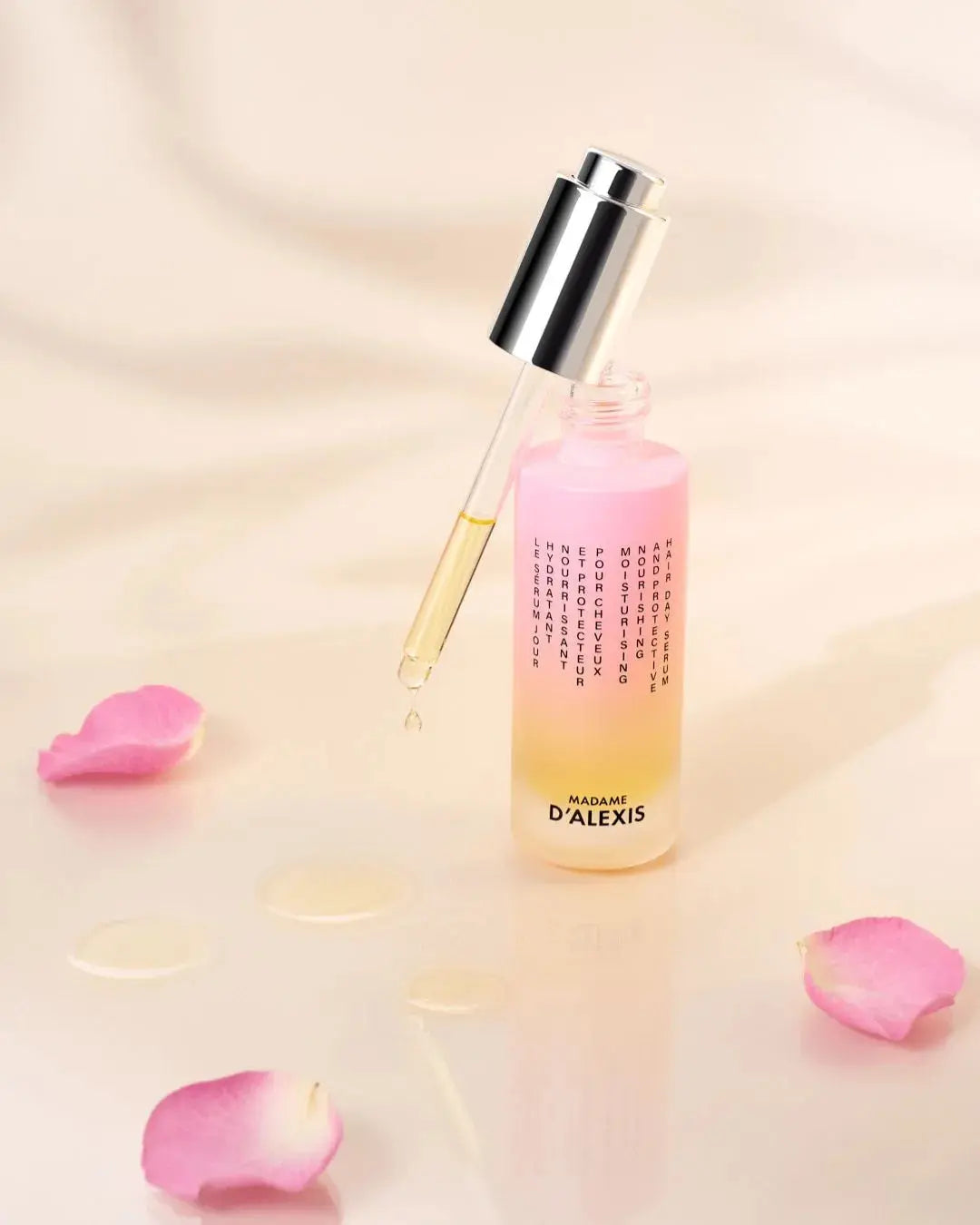
- Serum or leave-in treatment: apply a defining serum for curly hair to damp hair after shampooing, before drying, to set the curl without residue.
A light routine cleanses, hydrates and defines without weighing hair down. Discover the curly and wavy hair collection.
For curly and coily hair, type 4
Priority: deep nourishment, sealing and minimal manipulation.
- Shampoo: a gentle sulfate-free shampoo, used no more than once or twice a week. Co-washing can complement shampooing between washes.
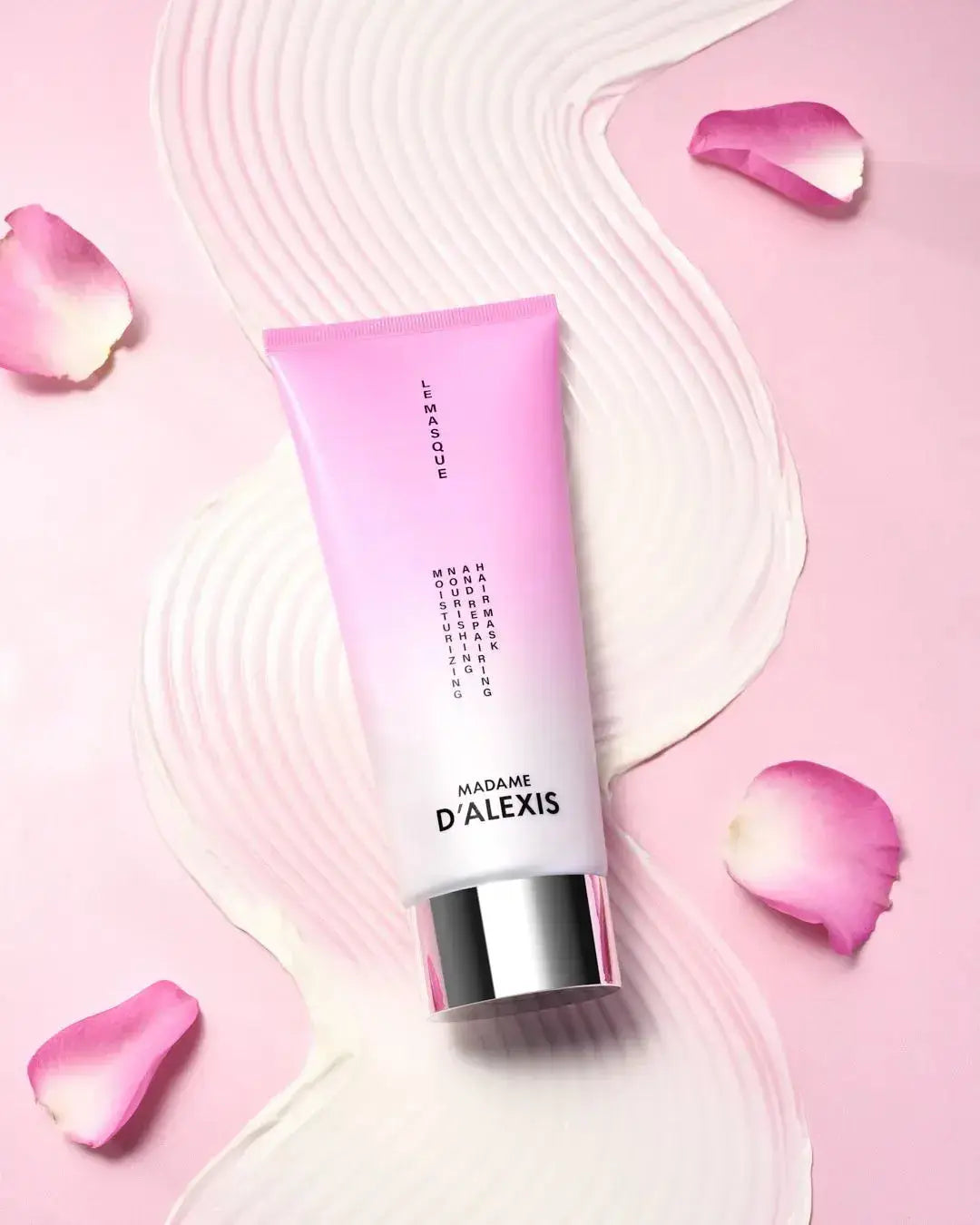
- Nourishing mask: essential, once or twice a week, left on for 20 to 30 minutes under gentle heat. Madame d'Alexis' nourishing mask for curly and coily hair meets the nourishment needs of types 3 and 4.
- Key active ingredients: shea butter, castor oil, aloe vera, hydrosols, light oil to seal.
- LOC or LCO method: Liquid, Oil, Cream, or Liquid, Cream, Oil depending on porosity.
- Night protection: a satin bonnet or pillowcase, always.
Useful products for this routine
Common mistakes according to your hair type
Even with the right products, certain habits sabotage the routine.
For all curly, coily and coily types
- Detangling dry: the leading cause of breakage. Detangle damp or wet hair with a conditioner or mask, starting from the ends.
- Rubbing with a terry towel: rough fibers lift the cuticles and create frizz. Opt for microfiber or a cotton t-shirt.
- Touching the curls while drying: every touch before complete drying destroys definition.
Mistakes specific to types 2 and 3
- Applying products that are too rich: weighing hair down, limp curls, oily scalp.
- Washing too often: drying out the hair fiber, loss of elasticity.
- Using a shampoo with harsh sulfates: stripping natural sebum, increased frizz.
Mistakes specific to type 4
- Not hydrating regularly enough: chronic breakage, stagnant lengths.
- Applying products to hair that is too dry: poor penetration, mediocre results.
- Neglecting night protection: friction on the pillow = breakage and frizz upon waking.
- Using too much heat without heat protection: weakening the curl points.
FAQ
How do I know if I have curly or coily hair?
Wash your hair without styling products and let it air dry. If your curls form visible spirals more than 0.5 cm in diameter, you are type 3, curly. If the curl is very tight, in an S or Z shape, with strong shrinkage, you are type 4, coily.
How do I identify my hair type?
Determining your hair type involves three steps: the natural curl test, the thread test and the porosity test. This diagnosis provides a complete profile: type, thickness and porosity.
What is the difference between curly and coily hair?
Curly hair, 4a-4b, still has a visible curl in an S or Z shape. Coily hair, 4c, has a curl so tight that it is almost invisible when dry, with higher shrinkage and fragility.
Why is curly hair more fragile?
Each curl point is a mechanical weak zone. The tighter the curl, the more numerous these zones are. Care therefore begins with damp detangling, with a mask or conditioner, always starting from the ends.
What routine for type 3a hair?
Type 3a needs light hydration and definition: sulfate-free shampoo, light conditioner, serum or defining gel on damp hair, drying with a low-temperature diffuser.
What products for curly and coily hair?
A solid routine rests on four pillars: gentle sulfate-free shampoo, weekly mask, light oil to seal hydration and defining styling product applied to damp hair.
What routine for type 4b hair?
Type 4b requires intensive hydration: co-washing or gentle shampooing once or twice a week, nourishing mask for 20 to 30 minutes, LOC method, satin night protection and detangling only on damp hair.
What care for coily and curly hair?
Coily and curly hair needs a routine structured around nourishment and moisture retention: pre-shampoo oil treatment, weekly nourishing mask, LOC method and gentle manipulation.
What is hair porosity and how do I measure it?
Porosity measures the cuticle's ability to let water in and out. Low porosity: closed cuticles. High porosity: open cuticles. The water glass test gives an indication, but not an absolute verdict.
What natural products for coily hair?
Useful active ingredients are aloe vera, floral hydrosols, shea butter, castor oil and jojoba oil. The order of application matters: water-based actives first, then oils.
How do I hydrate coily hair?
Hydrating coily hair means applying water and then sealing it. The LOC method remains the most effective: hydrosol, light oil, cream or butter. For a ready-to-use approach, discover our natural care for coily hair.
Do wavy hair need a specific routine?
Yes. Wavy hair needs a sulfate-free shampoo, light hydration and defining care. Products that are too heavy weigh them down and erase the curl.
Can you have several hair types on the same head?
Yes, it is even common. Some areas may be 3b, others 4a. In this case, care is adapted zone by zone or versatile products are chosen.
How do I avoid frizz on curly hair?
Do not detangle dry, apply products to damp hair, do not touch the curls while drying, use microfiber and sleep with a satin pillowcase or bonnet.
Is the André Walker classification sufficient to choose your care?
No. The curl type describes the shape, not all the needs. Porosity, density and fiber thickness are equally determining.
Useful sources
- André Walker classification system - Orescence Laboratory: analysis of the Walker grid and its application in hair formulation.
- Scalp microbiome - PMC / NCBI: study on the microbial communities of the scalp and hair according to textures.
- Coily hair specificity - Clauderer Center: dermatological analysis of the structural characteristics of coily hair.
- Hair porosity - Dyson: explanation of hair porosity and its impact on care.