
Care and shampoo for curly and wavy hair
A curl is a spiral fiber: sebum never travels down to the ends. Curly hair is therefore naturally drier, more porous, and more prone to frizz, and the curl loses its bounce as soon as it lacks water. Our formulas replace inert water with active organic floral hydrosols, without sulfates or silicones, to deeply hydrate without weighing down the curl.
The routine consists of three steps: The Shampoo to wash gently without breaking the spiral, The Mask to restore suppleness and definition, The Day Serum to lock in moisture and tame frizz.
- 97 to 99% natural ingredients
- Sulfate-, silicone- and paraben-free
- Made in France
4 products
Curly Hair Routine: Shampoo, Mask & Serum with Hydrosols
110,00€Original price: 119,00€


The daily grind
Hydrate, define and naturally enhance curls
-
Étape 1 : Clean
Le Shampoing35,00€Start with the Shampoo, enriched with organic hydrosols, which cleanses without drying out and prepares the hair fiber to receive hydration.
-
Étape 2 : Treat
Le Masque49,00€Then apply the Mask to define curls, smooth frizz, and restore elasticity and bounce to your hair.
-
Étape 3 : Protect
Le Sérum Jour35,00€Finally, apply the Day Serum to protect the lengths from humidity, add shine, maintain natural definition throughout the day, and redefine the curl. Result: bouncy, hydrated, and perfectly defined curls.
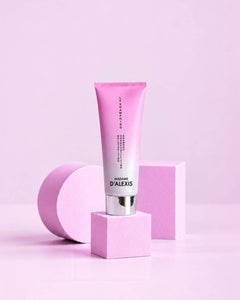
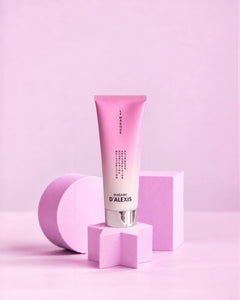
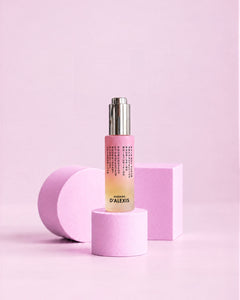
Which treatment should you choose for curly and wavy hair?
A curl is a spiral fiber. The sebum produced by the scalp never reaches the ends: it hits a wall at every curve. This is why curly hair is naturally drier and more porous than straight hair, and why a curl loses its bounce as soon as it lacks water.
At Madame d'Alexis, the answer lies in just three treatments, formulated with 97 to 99% natural ingredients on a base of active organic floral hydrosols, sulfate- and silicone-free, and made in France.
HydrateOrganic floral hydrosols instead of inert water, to nourish the spiral without saturating it.
DefinePlant-based ceramides that smooth the cuticle and restore the curl's clean shape.
SealA dry oil that closes the scales and cuts off moisture re-entry, thus preventing frizz.
Curly hair is prone to frizz, especially in humid weather, because its cuticle is not watertight: the fiber absorbs moisture from the air and swells. The whole point of a curly hair routine is therefore to hydrate deeply, then seal this hydration so that the surrounding air no longer has a hold on the fiber.
Which product for curly hair?
Three treatments, three distinct roles for the curl. Each acts on a specific stage of the fiber's cycle: washing, nourishing, protecting.
The Madame d'Alexis routine for curly and wavy hair
Three complementary treatments to wash without breaking the spiral, nourish the fiber deeply, and seal in hydration.

The Shampoo — washing without breaking the curl
Sulfate-free cleansing · 98% natural
★★★★★ 4.9/5 · 159 reviews
- Cleanses without stripping the lipid film
- Hyaluronic acid and plant-based keratin
- The curl remains supple after drying

The Mask — restoring the spiral's definition
Intense nourishment · Plant-based ceramides
★★★★★ 4.9/5 · 119 reviews
- Nourishes the lengths that sebum does not reach
- Plant-based ceramides and apricot and jojoba oils
- More defined curls, fewer knots

The Day Serum — sealing and cutting off frizz
Leave-in dry oil · 99% natural
★★★★★ 4.8/5 · 28 reviews
- Closes the cuticle against moisture
- Plant-based ceramides and organic jojoba
- Protects from heat drying

The Complete Routine — the three steps combined
Shampoo + Mask + Day Serum
€9 savings on the ritual
- The entire protocol, in the right order
- Enough to last a two-month cycle
- The recommended format for a first try
€110View the ritual
Which mask for curly hair?
The mask is the most decisive treatment in a curly hair routine, because it precisely compensates for what the fiber lacks: the lipids that sebum never brings to the lengths. It is also the one we get wrong the most, by confusing it with a conditioner or by using it too little.
Mask or conditioner: what difference on a curl?
Conditioner acts on the surface and for a few seconds: it closes the scales and facilitates detangling right after washing. The mask works deeply, with a leave-on time of several minutes, and deposits lipids inside the fiber. On straight hair, conditioner may be enough. On a porous spiral, whose scales are mechanically separated by the curvature, it only masks the problem for a few hours. It is the mask that truly nourishes.
How often to use a mask when you have curls?
Once or twice a week for a loose wave or curl, two to three times if your curls are tight, if the fiber has been colored, or if you regularly use a hair dryer. Contrary to popular belief, a suitable mask does not saturate the curl as long as it remains on the lengths and ends. What weighs it down is applying it to the roots and insufficient rinsing, not the frequency.
The Madame d'Alexis Mask: nourishing without weighing down the spiral
Its base is not water but organic floral hydrosols, which allows for a higher concentration of active ingredients at the same volume. Plant-based ceramides reconstitute the cement between the scales, apricot and jojoba oils provide the missing lipids, and the absence of silicone prevents the occlusive film that freezes the curl and prevents it from bouncing back. The result is visible during detangling, then on the regularity of the curl from one strand to another. Discover The Mask.
Plant-based keratin on curly hair
This is the objection that comes back most often, and it comes from confusion. Many curly-haired people avoid any product mentioning keratin, for fear of seeing their spiral relax. This fear is actually aimed at so-called keratin straightening: chemical processes applied in salons, under high heat, whose very purpose is to undo the curl.
The plant-based keratin of a cosmetic treatment has nothing to do with it. It does not restructure the fiber by force: it attaches to areas where the cuticle is damaged, fills the gaps, and strengthens the hair's resistance. The shape of the curl, however, depends on the follicle and the disulfide bonds of the fiber, which no cosmetic modifies. Plant-based keratin therefore makes the curl stronger, not straighter.
This is why it is included in the formula of the Shampoo, combined with hyaluronic acid: strengthening a fiber that the curvature weakens, without ever touching its shape.
Why curly hair dehydrates faster
Three mechanisms specific to the curly fiber explain this chronic dryness, and none can be corrected with a treatment designed for straight hair.
Sebum does not go down. On straight hair, the protective film produced at the root slides along the fiber to the ends. On a spiral, it stops at the first curves. The lengths and ends therefore live without natural protection, which makes them rough and dull much sooner.
The cuticle is lifted. The curvature mechanically separates the scales of the fiber. Curly hair is therefore more porous: it absorbs quickly, but it loses it just as quickly. This is what explains that a well-hydrated curl in the morning can seem thirsty by the end of the day.
The points of curvature are points of breakage. Every turn of the spiral is a zone of lesser resistance. Detangling dry, an unsuitable brush, an elastic band tightened in the same place, and breakage occurs precisely there.
How to choose your shampoo for curly hair
The decisive criterion is the cleansing agent. Sulfates clean effectively but also remove the little lipid film present on the lengths: the curl comes out clean, dry, and without shape. A shampoo suitable for curly hair must cleanse without stripping, and compensate with hydrating active ingredients.
The second criterion is the base of the formula. In a classic shampoo, water represents 60 to 90% of the product — inert water, which only dilutes. Our formulas replace it with organic floral hydrosols, active in themselves, which changes the actual concentration of hydrating agents at the same volume.
The third criterion depends on you: your curl type. A light wave and a tight curl do not have the same need, and overloading a wave with nourishment flattens it just as surely as a lack of water relaxes a tight curl.
| Curl type | What it looks like | The main need | The treatment to favor |
|---|---|---|---|
| 2A to 2B — wavy | Loose wave, rather flat roots, the shape is mainly defined on the lengths | Light hydration, without weighing down or crushing the root | The Shampoo and The Day Serum on the ends only |
| 2C to 3A — curly | Clean curl from the root, in a wide S shape, prone to frizz in humid weather | Sustained hydration and shape definition | The Shampoo and The Mask once or twice a week |
| 3B to 3C — tight curl | Marked spiral, from the diameter of a marker to that of a straw, significant volume | Nourishment and frizz control along the entire length | The complete routine, mask twice a week |
| 4A to 4C — coily to kinky | Very tight Z or spring curl, fine and fragile fiber despite the dense appearance | Intense nourishment and mechanical protection against breakage | The Mask as a priority, complemented by The Day Serum |
You are hesitating between two lines? Our guide details the difference between curly, coily, and kinky hair, with the visual cues to decide.
The gestures that break the curl
Detangling dry
Dry curl does not slide. Detangling is done in the shower, mask still in place, with fingers then with a wide-tooth comb.
Dry curl does not slide. Detangling is done in the shower, mask still in place, with fingers then with a wide-tooth comb.
Rubbing with a terry towel
The looped fabric catches the lifted scales and deconstructs the spiral. We press into a soft fabric, we never rub.
The looped fabric catches the lifted scales and deconstructs the spiral. We press into a soft fabric, we never rub.
Washing too often
Each wash removes a little of the protective film that sebum takes days to reconstitute. Two to three times a week is enough.
Each wash removes a little of the protective film that sebum takes days to reconstitute. Two to three times a week is enough.
A fourth reflex does a lot of damage without us thinking about it: touching your curls while drying. Each pass of the hand separates the strands that are forming and transforms a clean curl into frizz. We let it dry without touching it, we restore the shape once dry.
Detangling without breaking: the gesture to adopt
Detangling is the moment when curly hair breaks the most, because we approach it like straight hair. The rule is simple: we never detangle dry, and never from the top down. We detangle in the shower, mask still in place, the fiber then coated and slippery. We start with the ends, on a small section, then gradually move up towards the roots: each knot untied releases the next instead of piling it up.
Fingers first, then a wide-tooth comb, never a classic brush whose tight bristles pull at the points of curvature. If a knot resists, we add treatment rather than force. And for the days when we have to detangle outside the shower, a few drops of leave-in serum on the ends are enough to make the comb slide — without silicone, therefore without a film that would prevent the curl from reforming.
Madame d'Alexis's advice: apply The Day Serum to still damp hair, never dry. The dry oil then seals the water inside the fiber instead of settling on the surface. It is the gesture that makes the difference between a shiny curl and a greasy curl.
What you can expect from the routine
From the first washSignificantly easier detangling, supple curls to the touch, fewer strands separating during drying.
After one weekThe shape of the curl is more regular from one strand to another, frizz recedes on the top of the head.
After three weeksThe lengths no longer drink the treatment in a few hours: the hydration lasts from one wash to the next.
After two monthsLess breakage at the points of curvature, a curl that keeps its bounce even in humid weather.
Frequently asked questions about curly hair
Which shampoo to choose for curly hair?
A sulfate-free shampoo, that is the criterion that takes precedence over all others. Sulfates remove the lipid film already rare on a curly fiber, and the curl comes out dry and without shape. Then look for truly concentrated hydrating active ingredients: our Shampoo replaces inert water with organic floral hydrosols and adds hyaluronic acid and plant-based keratin, to cleanse without the curl paying for the wash.
How to hydrate curly hair without weighing it down?
By playing on the timing rather than the quantity. The mask is applied to towel-dried hair, from the lengths to the ends, avoiding the roots. The serum is applied to still damp hair, two to three drops warmed between the palms, never more. A treatment applied at the right time hydrates; the same treatment applied in excess or on dry hair settles on the surface and weighs it down.
How to avoid frizz on curly hair?
Frizz comes from an open cuticle that lets the fiber absorb moisture from the air. The solution lies in two gestures: hydrate the fiber so it is no longer thirsty, then seal with a dry oil that closes the scales. Add the right reflexes: no terry towel, no hands in the curls during drying, and a satin pillowcase if frizz forms mostly at night.
What routine for hair that is both fine and curly?
The difficulty is real: the curl demands nourishment, fine hair gets crushed as soon as we put too much. The solution consists in shifting the application zones. The mask only on the lengths and ends, never on the first half of the hair. The serum limited to two drops, on the ends. And we space the masks to once a week instead of twice.
How long before seeing a change in my curls?
The touch changes from the first wash, the shape takes longer. Count one week for a more regular curl from one strand to another, three weeks for the hydration to really last from one wash to the next. If your lengths have been colored or heavily heated, give the fiber two months: it repairs itself, but at its own pace.
Do you have another hair concern?
Dry hairOily hairFine, flat hairIrritated scalpDamaged and brittle hairColor-treated or highlighted hairMadame d'Alexis's advice

Our selection
Curly hair routine: how to hydrate, define and protect your curls
Discover a complete curly hair routine with expert tips, suitable products, targeted recommendations, and practical videos to hydrate, define, and protect your curls long-lasting.


