Conseils
Dry hair oil: benefits, usage and tips
Embrace dry hair oil: a nourishing, weightless treatment that hydrates, protects, and adds shine to the hair fiber without weighing it down. The perfect combination of effectiveness and natural lightness.

Why incorporate a dry hair oil into your hair care routine?
A dry hair oil is much more than a simple finishing product: it is a complete hair treatment that nourishes, protects, and enhances the hair fiber every day. Thanks to its lightweight, non-greasy texture, it is suitable for all hair types and easily integrates into a natural and effective hair care routine.
- Hydrates and nourishes without weighing hair down: its fluid texture quickly penetrates the hair fiber while leaving a dry, silky feel.
- Protects the hair fiber: acts as a shield against heat, the sun, and pollution.
- Adds shine and softness: restores radiance, suppleness, and luminosity to dull or tired hair.
- Suitable for all hair types: fine, dry, damaged, or curly hair benefits from its repairing and disciplining properties.
- Easy to use every day: a few drops are enough to nourish the ends, repair the lengths, and enhance the hair.
A true natural hair oil, the dry oil combines the benefits of plant oils (jojoba, argan, camellia, macadamia) with a unique sensory experience: it deeply nourishes while leaving the hair lightweight, soft, and luminous.

What is a dry hair oil?
A lightweight, non-greasy hair oil
Dry hair oil is a hair treatment that is both nourishing and lightweight, designed to add shine and softness without weighing hair down.
Unlike traditional oils, which are often thick and greasy, dry oil stands out for its fine, silky texture. It quickly penetrates the hair fiber, leaving only a light, almost imperceptible film.
This is due to its composition: it is based on a blend of so-called “dry” plant oils, such as jojoba, camellia, grapeseed, argan, or macadamia oils. These oils have a lipid structure similar to the scalp's natural sebum, making them easy to absorb without leaving sticky residue.
Dry oil thus acts as a beautifying treatment: it deeply nourishes the hair fiber, protects against external aggressors, and instantly adds shine. This treatment is particularly popular with those seeking a soft, non-greasy finish, or who want to tame their lengths without compromising volume.
Personally, I consider it a smart beauty choice: a combination of invisible nourishment and sensory elegance. This type of product embodies the philosophy of modern, effective, yet discreet hair care.
The origins of dry oil in natural cosmetics
Originally, dry oil was formulated for the skin: it was designed to moisturize and enhance the skin without leaving a greasy film. Its success in body care eventually led to its adaptation for hair, meeting a clear need: to nourish the hair fiber while preserving the hair's lightness.
In the world of contemporary hair care, it has become a hybrid product combining treatment and finishing.
Our selection of leave-in dry hair oil


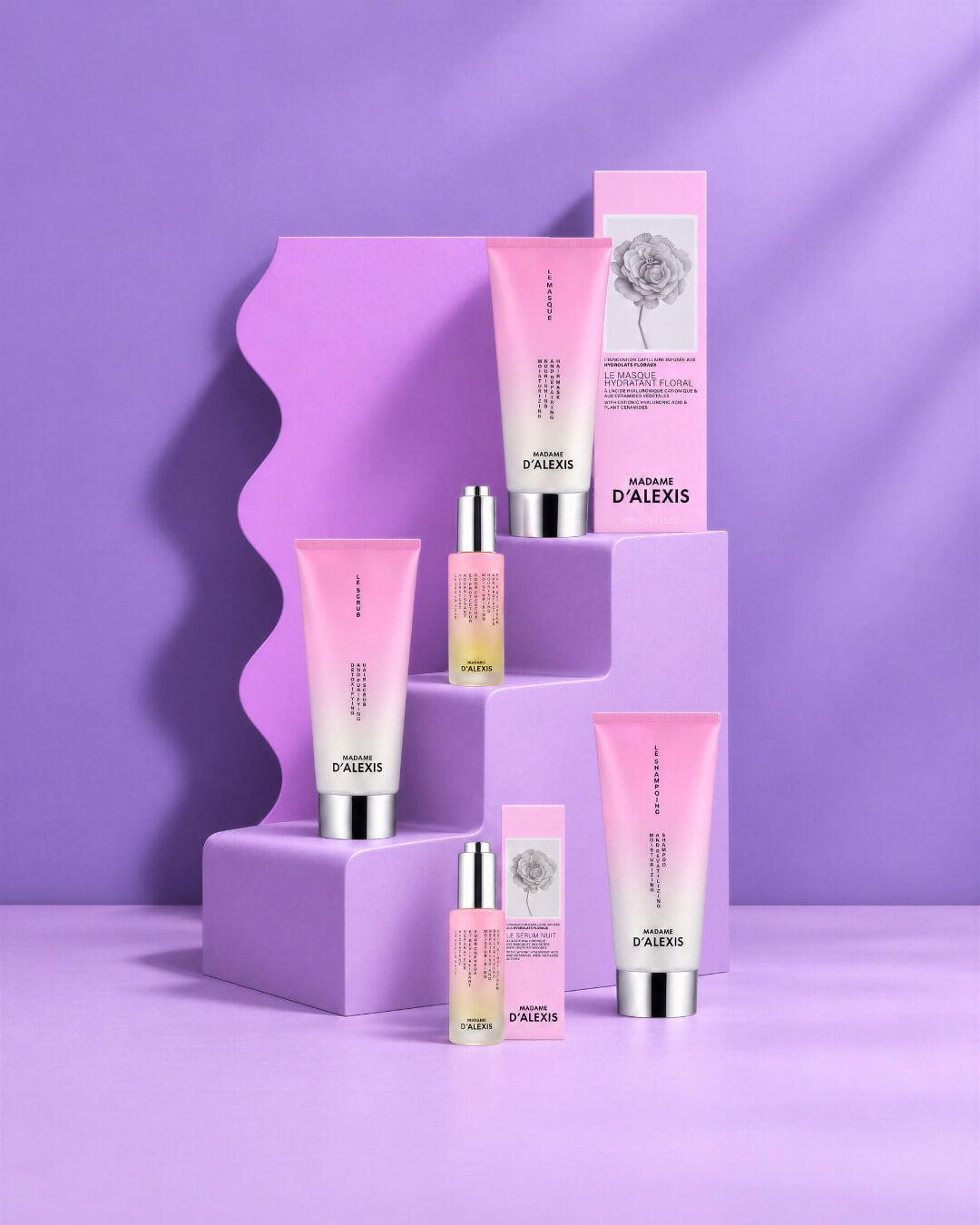
At Madame d’Alexis, this approach is reflected in hair care formulas inspired by skincare: precious plant oils combined with floral waters and active ingredients from skincare. This approach offers a fluid, sensory texture that is true to the brand's signature.
Dry hair oil represents a major evolution in hair care today: a product that is both technical and sensory, designed to nourish without weighing hair down, enhance it without adding shine, and bring the hair fiber back to life with a natural finish.
What are the benefits of dry oil for hair?
Nourishes, moisturizes, and protects the hair fiber
Dry hair oil is a valuable ally for several reasons. It provides essential fatty acids and integrates into the hair fiber to nourish it deeply.
At the same time, it acts as a shield against external aggressors: heat from styling tools, urban pollution, and UV rays.
Thanks to its lightweight texture, it restores a natural suppleness to the hair, a subtle shine, and restored softness.
I have found that, when used after shampooing or on towel-dried hair, it instantly transforms the hair's appearance: the hair looks smoother, and the lengths less coarse.
It is particularly suitable for stressed, colored, or weakened hair: by deeply nourishing, it replenishes the loss of lipids caused by treatments or heat.
Multi-purpose benefits
One of dry oil's greatest strengths is its versatility. It can be incorporated in different ways:
- As a light daily treatment: a few drops on the lengths and ends are enough.
- As a finishing product: to tame frizz after styling or exposure to the wind.
- On dry or damp hair: depending on the desired effect, but always in small quantities.
- As a multi-purpose product: some formulas can also be applied to the body or as a targeted treatment for severely damaged areas.
Personally, I appreciate this type of product: it avoids using multiple textures, "treating" and then "finishing," because dry oil fulfills both roles at once. This simplifies the hair care routine without compromising performance.
In short, for anyone looking for a treatment that is nourishing, protective, and lightweight, dry oil is a wise choice.

What hair types is dry oil suitable for?
For dry, damaged, or colored hair
These hair types have lost a lot of lipids, their cuticles are raised, and the hair fiber lacks elasticity.
Dry oil restores this fragility: it seals the cuticles, protects after coloring or frequent use of heat tools, and limits the appearance of coarse or dull lengths.
For fine hair: choose a lightweight oil
Fine hair requires a lightweight treatment that does not weigh down the hair. In this case, a dry oil based on jojoba or grapeseed oil is ideal: fast absorption, a "weightless" yet invisible finish, and no greasy feel. For this hair type, I always opt for the lightest textures.
For curly or coily hair: a discipling and enhancing treatment
When the curl is tight or the hair fiber highly textured, dry oil can help control frizz and enhance definition. Choose slightly richer oils (argan, shea butter, coconut) in a "dry" texture: nourishment without a sticky film, discipline without stiffness. This restores elasticity, bounce, and hold to the curl.
How to use a dry hair oil?
As a daily treatment, after shampooing
Dry hair oil is easy to use every day, provided you master the right dosage.
After shampooing, apply two to three drops to the lengths while they are still damp or completely dry. Warm the oil between your palms, then distribute it evenly, section by section, focusing on the ends.
This simple step instantly transforms the hair's texture: frizz is calmed, the fiber becomes more supple, and the hair regains its shine. It is also an excellent way to prevent dehydration caused by drying or temperature fluctuations.
Personally, I like to apply the dry oil just before styling. It acts as an invisible touch of shine, while leaving a soft and airy finish. The idea is not to coat, but to enhance the hair.
As an oil treatment before shampooing
Dry oil can also be used as a deep treatment, in the form of a hair mask.
Apply a more generous amount to the lengths and ends of your hair, then massage gently to stimulate blood circulation on the scalp. Leave on for at least 30 minutes, ideally one hour, before shampooing.
This ritual helps to repair damaged hair, restore the lipid film, and protect the hair from repeated washing. It is an essential step for dry or colored hair, which often lacks nourishment.
Dry oil has the advantage here of being easier to rinse out than a regular oil, while maintaining the same nourishing effectiveness.
As protection before styling or sun exposure
Dry oil is not just a treatment: it is also a protective barrier.
Before using a hair dryer, flat iron, or prolonged sun exposure, apply a thin layer to the lengths. It forms an invisible film that protects the hair fiber from heat and UV rays, two major causes of dehydration and breakage.
This protective function makes it an ideal ally for summer routines, or simply to preserve the shine of the hair over time.
Mistakes to avoid with dry oil for hair
Too much product = greasy effect
This is the most common mistake. Dry oil is concentrated: a few drops are more than enough. Applying too much does not nourish it more, it weighs down the hair and accentuates the greasy appearance.
The right approach is to adjust the quantity according to the density of the hair, even if you need to add a little more later if necessary.
Wrong time of application
Dry oil is applied to towel-dried or dry hair, never soaking wet.
On wet hair, water prevents the penetration of the active ingredients and dilutes the benefits of the treatment. On the other hand, on slightly damp hair, the fiber is more receptive: it absorbs oils better and retains moisture better.
Choosing an oil not suited to your hair type
Not all dry oils are created equal.
An oil that is too rich, such as coconut oil, risks weighing down fine hair. Conversely, an oil that is too light will not be enough for curly or damaged hair.
The main thing is to choose a suitable texture: fluid and light for fine hair, more nourishing for thick or sensitized fibers.
What is the difference between a dry oil and a regular oil?
At first glance, dry oil and regular oil seem to have the same purpose: to nourish, protect, and enhance the hair. However, their composition and their behavior on the hair fiber differ profoundly.
Dry oil is based on light plant oils, often rich in unsaturated fatty acids and with a fine texture, such as jojoba, camellia, or grape seed. These oils quickly penetrate the fiber without greasing it. The result is hair that is softened, shiny, and fluid, without residue or heaviness.
Regular oil, on the other hand, is based on denser fats: coconut, olive, or castor oil. These oils create a protective occlusive film, ideal for very dry, curly, or coily hair, but sometimes too rich for fine hair.
In short, dry oil is designed for daily, natural, and elegant use:
- Texture: fine, silky, quickly absorbed.
- Finish: soft, non-greasy, velvety touch.
- Use: as a treatment or finishing oil, leave-in.
Personally, I consider dry oil to be a new generation of hair treatments: it combines the performance of plant oils with the lightness of a beauty mist. It is the ideal treatment step for those looking for shine without compromising on naturalness or the purity of the formulas.
Which dry oil to choose for hair?
The most precious plant oils for hair
The choice of dry oil depends on the need and the nature of the hair. Among the most effective:
- Jojoba: balances sebum production and regulates the scalp.
- Camellia: provides exceptional shine and a silky touch.
- Argan: nourishes and protects the hair fiber against aggressions.
- Macadamia: softens and adds suppleness to thick or dull hair.
These natural oils are often combined in high-end formulas for an overall effect: nourishment, radiance, and heat protection.
Organic dry oil, a purer choice
Choosing an organic and natural dry oil is a guarantee of transparency. Free from silicone or mineral oil, it preserves the full benefits of plant oils. Organic treatments better respect the balance of the scalp, while contributing to responsible production.
A certified organic dry oil intensely nourishes the fiber without weighing it down, and its fragrance, often of natural origin, accompanies the ritual without overpowering it.
Madame d’Alexis expertise
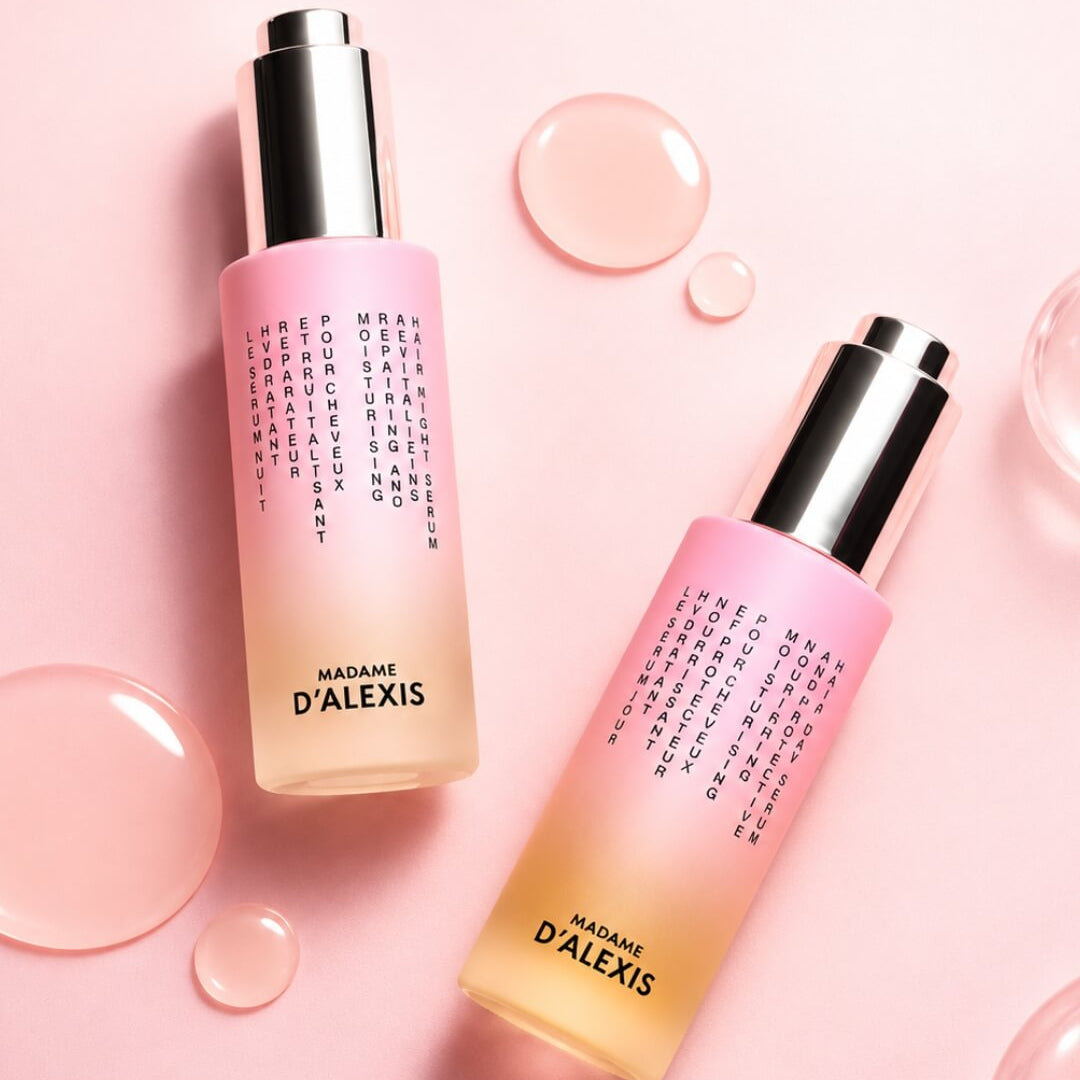
At Madame d’Alexis, the vision of hair care goes beyond simply applying an oil. The brand has designed hybrid leave-in serums, inspired by the textures of skincare:
- The Night Serum regenerates and revitalizes the hair during sleep. Its formula without added water, based on organic Damask rose, chamomile, and orange blossom hydrosols, nourishes the scalp, stimulates growth, and restores natural shine.
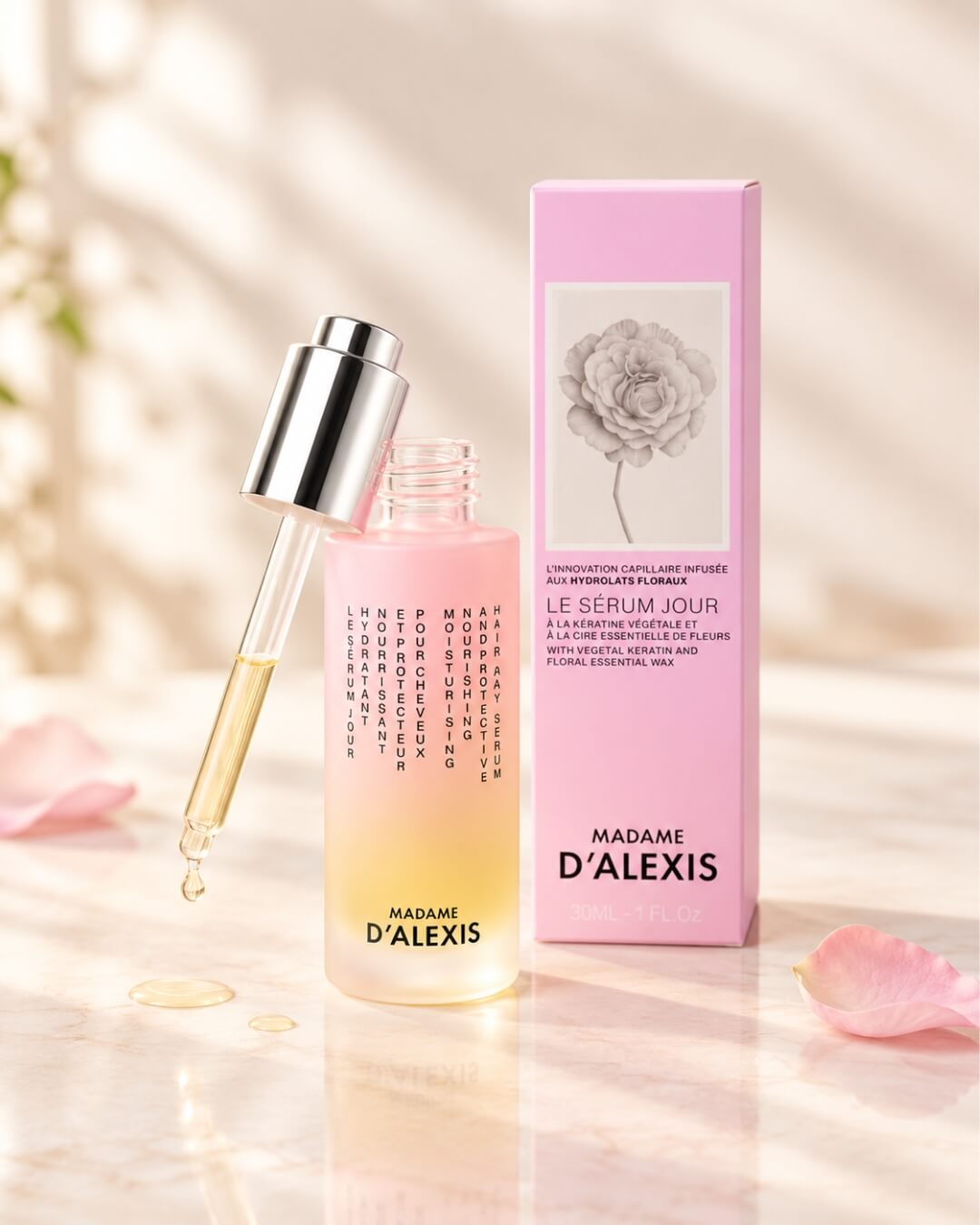
- The Day Serum, meanwhile, protects the fiber from heat aggressions while providing softness and radiance. Enriched with plant ceramides and organic jojoba oil, it seals in moisture and preserves the suppleness of the hair.
These treatments embody, in my opinion, the future of hair oils: intelligent, sensory, and life-respecting formulas, where dry oil becomes a true active treatment, as pleasant as it is effective.
Everything you need to know about dry oil for hair
Is dry oil good for hair?
Yes, provided you choose it correctly according to the nature of your hair.
A dry oil formulated from light plant oils such as jojoba, camellia, or grape seed nourishes the hair fiber deeply without greasing it. It restores suppleness, shine, and softness while protecting the hair from external aggressions. It is an ideal treatment for dry, damaged, or dull hair.
When to apply dry oil to hair?
The best time to apply it is after shampooing, on towel-dried or dry hair. On damp hair, it retains moisture and makes styling easier. On dry hair, it provides shine and discipline. It can also be used before styling to protect the fiber from heat or after, as a finishing touch, to smooth frizz.
Does dry oil make hair greasy?
No, if it is properly dosed.
Two to three drops are enough to enhance the lengths and nourish the ends. Too much product creates the opposite effect: it weighs down the hair. The right dosage depends on the hair type – the finer the hair, the less oil.
Can dry oil dry out hair?
This is a common misunderstanding. Dry oil does not dry out hair: it protects against dehydration.
The fatty acids it contains strengthen the hair's natural lipid barrier and prevent water from evaporating. Result: hair that is better hydrated and more resistant to temperature fluctuations.
Can you use dry oil every day?
Yes, but in moderation.
Daily application on the ends or dry areas helps to preserve shine and protect the fiber without weighing it down. The secret lies in consistency: a few drops are enough to maintain the beauty of the hair over time.
Which dry oil to choose for dry hair?
For dry or brittle hair, choose an argan oil for its richness in vitamin E, or a jojoba oil for its lightness and rebalancing power. These two plant oils restore the lipid film and provide lasting radiance. Macadamia or camellia oils are also excellent for smoothing and softening the lengths.
How to use dry oil for hair?
Dry oil for hair fits into all hair routines. Its light texture makes it an ideal daily treatment for nourishing hair without a greasy effect.
A few simple steps are enough to fully enjoy its benefits:
- Place a few drops of dry oil in your hands, then apply them to the lengths and ends.
- Choose to apply dry oil to towel-dried or dry hair, never soaking wet, to promote the penetration of the active ingredients.
- As a deep treatment, leave the oil on for 30 to 60 minutes before shampooing: this is the ideal leave-on time to restore the fiber.
- Finish your hair routine with a small amount as a finishing touch to smooth frizz and add shine.
This simple treatment visibly transforms the texture: damaged hair regains softness, radiance, and suppleness.
What are the benefits of oils for hair?
Hair oils offer a complete action: they are nourishing, hydrating, and protective. Rich in fatty acids, they strengthen the fiber and form an invisible film that protects the hair fiber from external aggressions (pollution, heat, UV).
Among the benefits of oils, we find:
- Deep hydration that restores elasticity and shine.
- Long-lasting nourishment that replenishes dry areas.
- Natural shine for hair without weighing it down.
Regular use brings vitality, strength, and shine: it is an essential treatment for any hair lacking life.
Which oils are best for fine hair?
Fine hair requires lightweight, non-greasy treatments that are easy to absorb. Certain plant oils perfectly meet this need:
- Jojoba oil: balances the scalp and regulates sebum production.
- Castor oil: strengthens and densifies the hair fiber.
- Macadamia oil: nourishes fine hair without weighing it down.
Used alone or incorporated into a styling product, these oils provide volume and suppleness while protecting the fiber. They are the best option for nourishing fine hair without compromising its natural lightness.
How to repair damaged hair with an oil?
To repair damaged hair, you must restore the structure of the fiber and replenish its lipid reserves.
Plant oils are true allies:
- Coconut oil rebuilds the fiber and limits breakage.
- Argan oil, rich in vitamin E, smooths the cuticles and restores shine.
These natural treatments fit into a regular hair care routine: as an oil treatment before shampooing or as a finishing touch on dry hair.
This ritual helps to nourish hair deeply, hydrates dry hair and restores its original softness.
What hair routine for curly hair?
Curly hair requires specific attention: it is naturally dry and fragile. A suitable hair routine relies on the combination of rich and protective oils:
- Shea oil, ultra-nourishing, seals in moisture and strengthens the fiber.
- Coconut oil penetrates to the core of the hair to reduce breakage and soften the texture.
Applied regularly, these oils help to nourish hair deeply and ensure the protection of the hair fiber.
The result: softer curls, a softer feel, and visibly revitalized hair.
Which hair types are best suited for dry oil?
All hair types can benefit from the virtues of a plant oil, provided you choose the right texture:
- Normal hair: balancing oils such as jojoba or camellia.
- Dry hair: rich oils such as argan, shea, or coconut.
- Fine hair: lightweight oils such as grapeseed or macadamia.
- Curly hair: nourishing and protective oils (castor, shea, coconut).
Each hair type requires an oil to choose according to its density and needs: lightness, nourishment, or repair. A good oil transforms the texture, improves shine, and durably protects the hair fiber.