Conseils
Hair oiling: how to oil your hair properly
Hair oiling is an age-old ritual that deeply nourishes dry hair. Learn how to oil your hair step by step, the mistakes to avoid and why Le Masque by Madame d’Alexis, made with organic hydrosols, is a modern alternative to pure oils.

Hair oiling is one of those hair care rituals that look simple, almost obvious, yet are often misunderstood.
Behind this age-old ritual, rooted in South Asian and Ayurvedic tradition, lies a precise logic: giving the hair shaft what it can no longer hold on to by itself, namely lipids. When hair turns rough, dull or brittle, it is not merely a lack of care but often a deeper imbalance in its structure.
This ritual is therefore no gimmick. Done properly, it nourishes, protects and restores cohesion to the strands. Done badly, it weighs hair down, clogs the scalp and makes rinsing a chore.
This is where many people give up.
My experience has taught me one thing: the problem is not so much the principle itself, but how we approach it today.
Knowing how to do it matters, and so does the progress of modern formulas, which now offer what traditional oiling brings without its drawbacks.

What is hair oiling?
Oiling, defined
It means applying a lipid-rich treatment to the hair, and sometimes the scalp, before you wash it, so that the strands are deeply nourished.
Unlike a hydrating mask, it is not meant to add water but to reinforce the hair's natural lipid barrier. That barrier is what limits dehydration, breakage and porosity.
Oil treatment vs. a mask: what is the difference?
Traditionally, the ritual relies on pure plant oils. A mask, on the other hand, combines several families of active ingredients in an emulsion that is more stable and easier to rinse.
Today, some expert formulas deliver the same advantages without the drawbacks. It is a logical step forward, based on a precise understanding of the hair shaft and of what natural oils alone cannot do.
What are the benefits of hair oiling?
An oil treatment is first and foremost nourishing. It is most useful when the strands lack lipids.
Its main advantages are clear:
- Coats the hair strands with fatty acids
- Restores suppleness and elasticity to the lengths
- Smooths the cuticle for shiny, silky hair
- Reduces breakage linked to dryness
- Protects hair from mechanical damage and heat styling
Contrary to popular belief, it does not chemically “repair” the hair. It improves its condition by strengthening what can still be strengthened, which is already a lot.
Which hair types benefit most?
This ritual is particularly recommended for:
- Parched or severely dehydrated hair
- Hair damaged by heat or colour treatments
- Curly, coily or textured hair, which is naturally low in lipids
- Dull, rough, or brittle lengths
Thin or low-porosity hair should be oiled sparingly and thoughtfully. This is exactly where modern alternatives, such as concentrated masks with targeted active ingredients, make perfect sense.

How to oil your hair: step-by-step guide
Good oiling depends neither on luck nor on the amount you use.
Everything comes down to what you choose, how you prepare the hair shaft and how you apply it. Here is a clear, progressive and realistic method, based on both practice and theory.
Step 1: choose the right oil or mask
What you choose shapes most of the result. You have two options.
Option 1: pure plant oils
They provide lipids, but only address a single factor.
- Coconut oil: penetrating, suits thick, very thirsty hair
- Argan oil: versatile and nourishing
- Jojoba oil: lighter and closer to the scalp's natural oils
- Castor oil: coats the hair, but is hard to rinse
These oils work, as do olive oil, sweet almond oil, rosemary oil or amla, but they need care and experience to avoid a greasy finish.
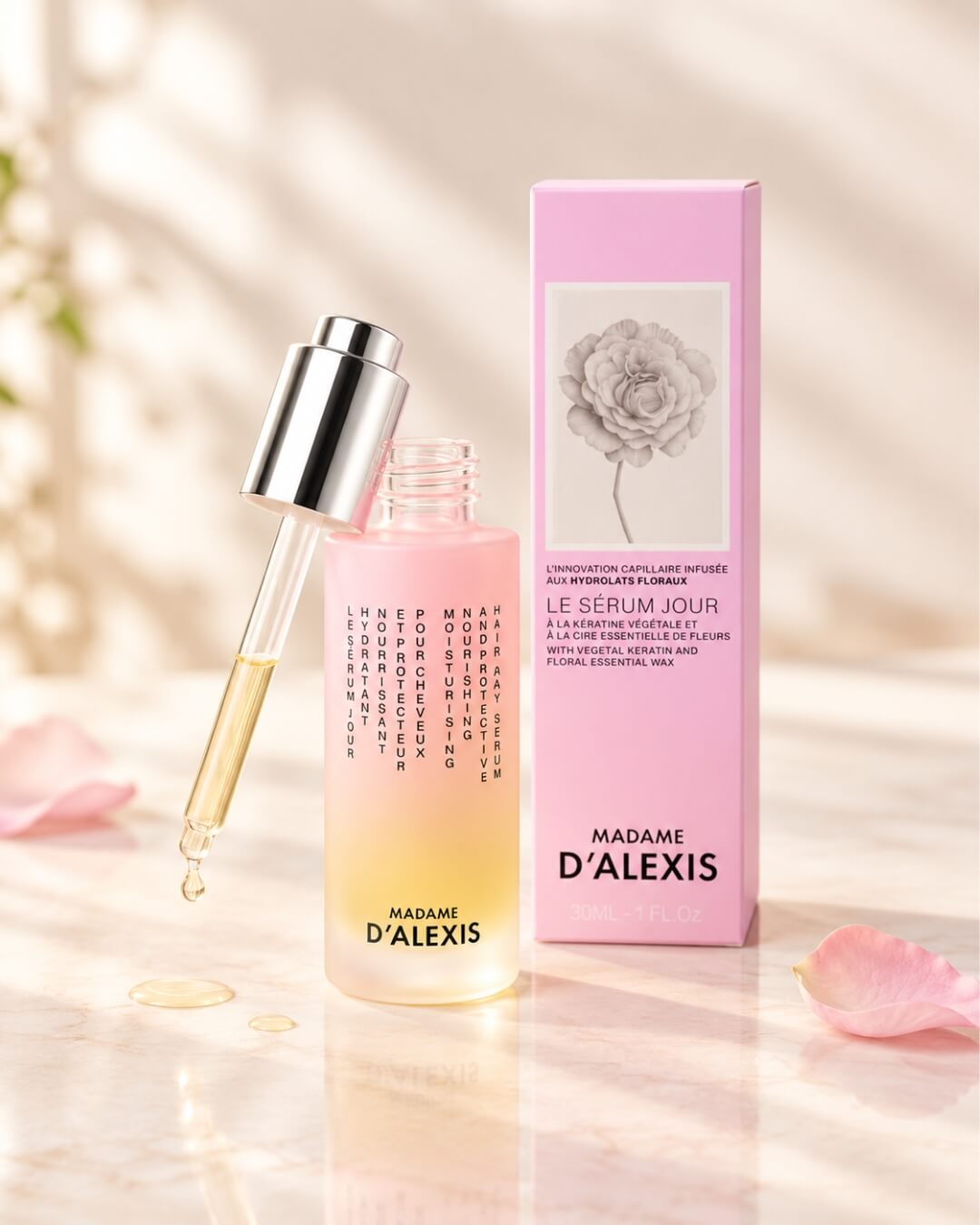
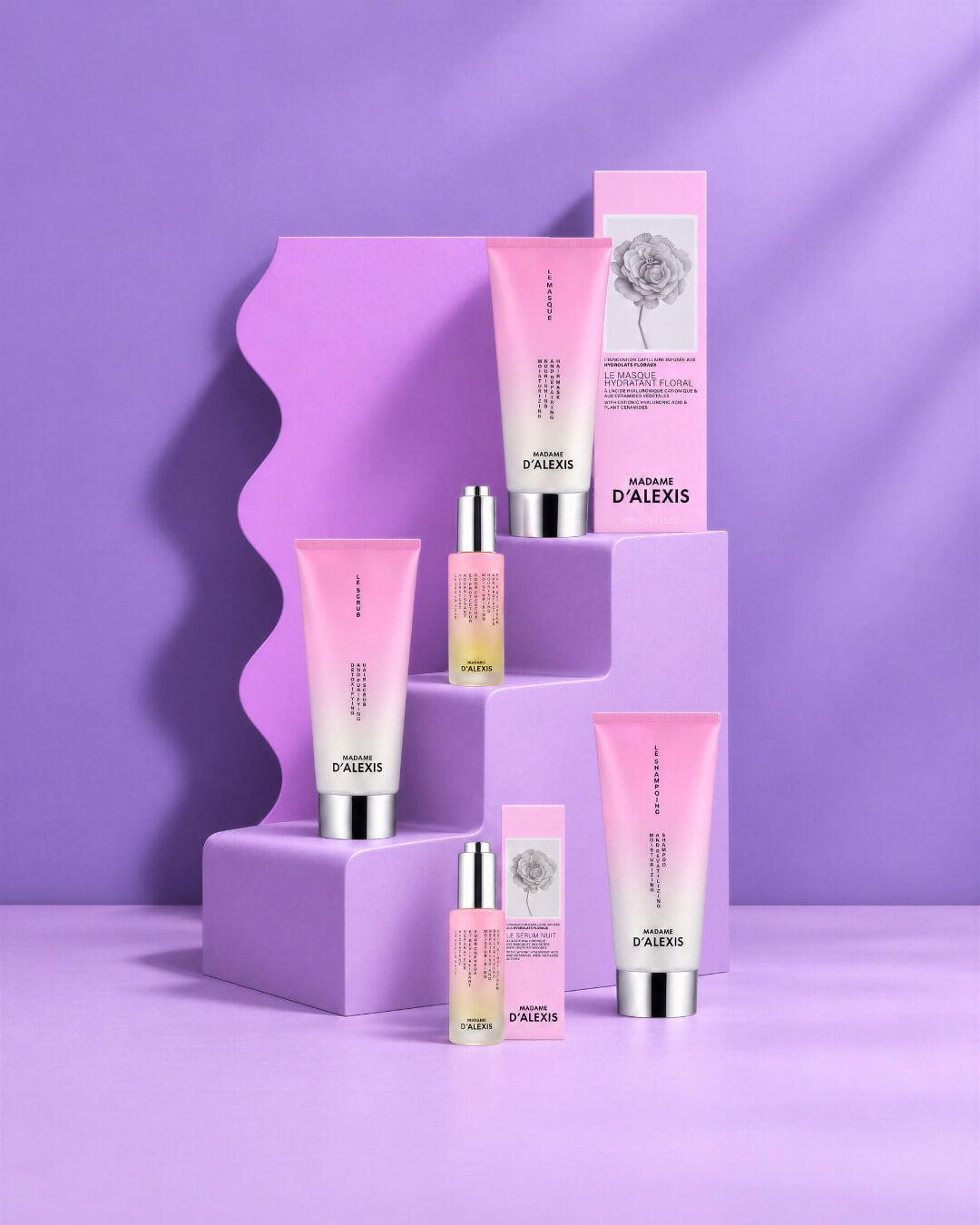
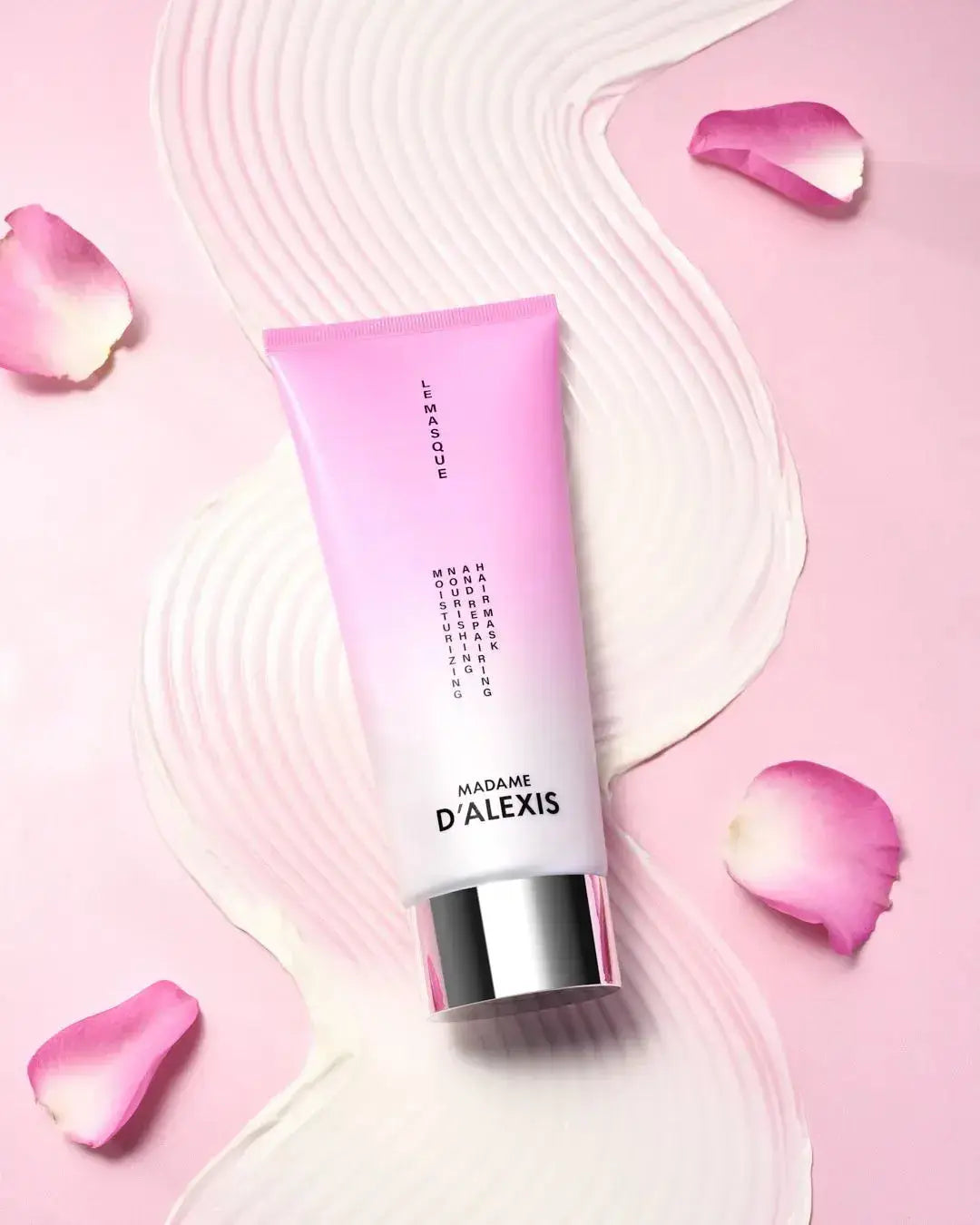
Option 2: Le Masque by Madame d’Alexis, an expert alternative
A concentrated mask, made with no added water and enriched with organic hydrosols, plant ceramides and organic jojoba and apricot oils. It gives you the advantages of an oil treatment while adding a hydrating, repairing action.
Why a concentrated mask does more than oil alone
From a hair care point of view, oil nourishes but does not hydrate. An expert mask works on several levels:
- Provides lipids to strengthen the hair shaft
- Provides hydrating active ingredients that help the hair hold on to moisture
- Emulsified texture for even distribution
- Easier to rinse, without residue
This versatility makes the result more consistent and predictable.
How to use Le Masque by Madame d'Alexis
Step 2: prepare your hair
Preparation is often skipped, and the result suffers.
- Detangle carefully to prevent breakage
- Lightly dampen the lengths, especially if they are very rough
- Separate the hair into sections for even application
Prepared hair absorbs active ingredients more effectively.
Step 3: apply the oil properly
The method varies depending on the condition of the hair.
On dry hair
Intensive method, ideal for very damaged or brittle hair.
Work section by section, focusing on the lengths and ends, massaging gently with your fingertips.
On damp hair
A gentler method, suitable for regular use.
Apply after shampooing to towel-dried hair, only on the lengths.
Step 4: how long to leave it on
- 5 to 10 minutes: light softening, easier detangling
- 20 to 30 minutes: visible repair, suppleness
- An occasional longer session, or a hair overnight treatment: only with a well-balanced formula
A longer session does not always mean better results.
Step 5: how to wash it out without a greasy finish
Rinsing is the critical step.
- Apply shampoo directly onto the oiled lengths
- Emulsify before you rinse
- Rinse thoroughly without rubbing
- One shampoo is enough with a well-formulated mask
Successful oiling leaves the hair supple, never weighed down.
Traditional oiling or an expert mask: which is best?
Choosing between a traditional oil treatment and an expert mask is not a trivial decision. Both pursue the same goal, strengthening the hair shaft, but they do not work in the same way or with the same precision.
With hindsight and observation of the results on different hair types, a clear distinction emerges.
The limits of traditional oiling
The traditional method relies on a plant oil applied before shampooing. Its advantages are real, but it has several structural limits.
- An oil nourishes but does not hydrate. It brings no moisture to the hair shaft.
- It acts uniformly, without distinguishing between healthy lengths and damaged areas.
- Rinsing is often difficult, especially on thin or low-porosity hair.
- The build-up of lipids can weigh the strands down over time.
In practice, I have often found that repeated oil treatments end up smoothing the hair on the surface without lastingly improving its inner quality.
The hair is pleasant to the touch at first, but the effect does not always last.
Le Masque by Madame d’Alexis, a new-generation alternative
A well-formulated expert mask overcomes these limits. Le Masque by Madame d’Alexis follows this modern approach. It does not replace the oil treatment through marketing, but through what it actually does.
Its difference lies in three essential areas:
- A base of organic hydrosols that genuinely hydrates the strands
- Plant ceramides that strengthen the lipid barrier
- Organic jojoba and apricot oils built into a stable emulsion, better absorbed
This makes deep nourishment possible without saturation. The hair gains suppleness while keeping its movement. In my view, that is the real difference between an occasional fix and lasting care.
Results in video: Le Masque by Madame d'Alexis
Mistakes to avoid
Even the best formula can backfire if used wrongly. Some mistakes come up again and again.
- Applying too much, thinking it increases effectiveness
- Choosing an oil unsuitable for your hair type
- Keeping it on too long for no real reason
- Rinsing badly, adding lots of water too quickly
- Repeating it too often
These mistakes explain most disappointing experiences. They do not call the principle into question, only the way it is used.
How often should you oil your hair?
Frequency should always follow the real condition of the strands, not a fixed routine.
- Very parched or damaged hair: once every 7 days
- Normal to thirsty hair: every ten days or so
- Thin hair: once a fortnight
- Oily hair: occasionally, only on the ends
Overdoing it can weigh the strands down, even with natural treatments. The right pace improves texture without ever making it stiff.
A complete nourishing routine inspired by oiling
An effective routine for thirsty hair does not rely on piling up treatments, but on consistency.
Oiling can be the common thread, provided it fits into an overall approach designed to replenish, protect and stabilise the strands over time.
The logic is simple: cleanse gently, replenish in depth, then protect every day.
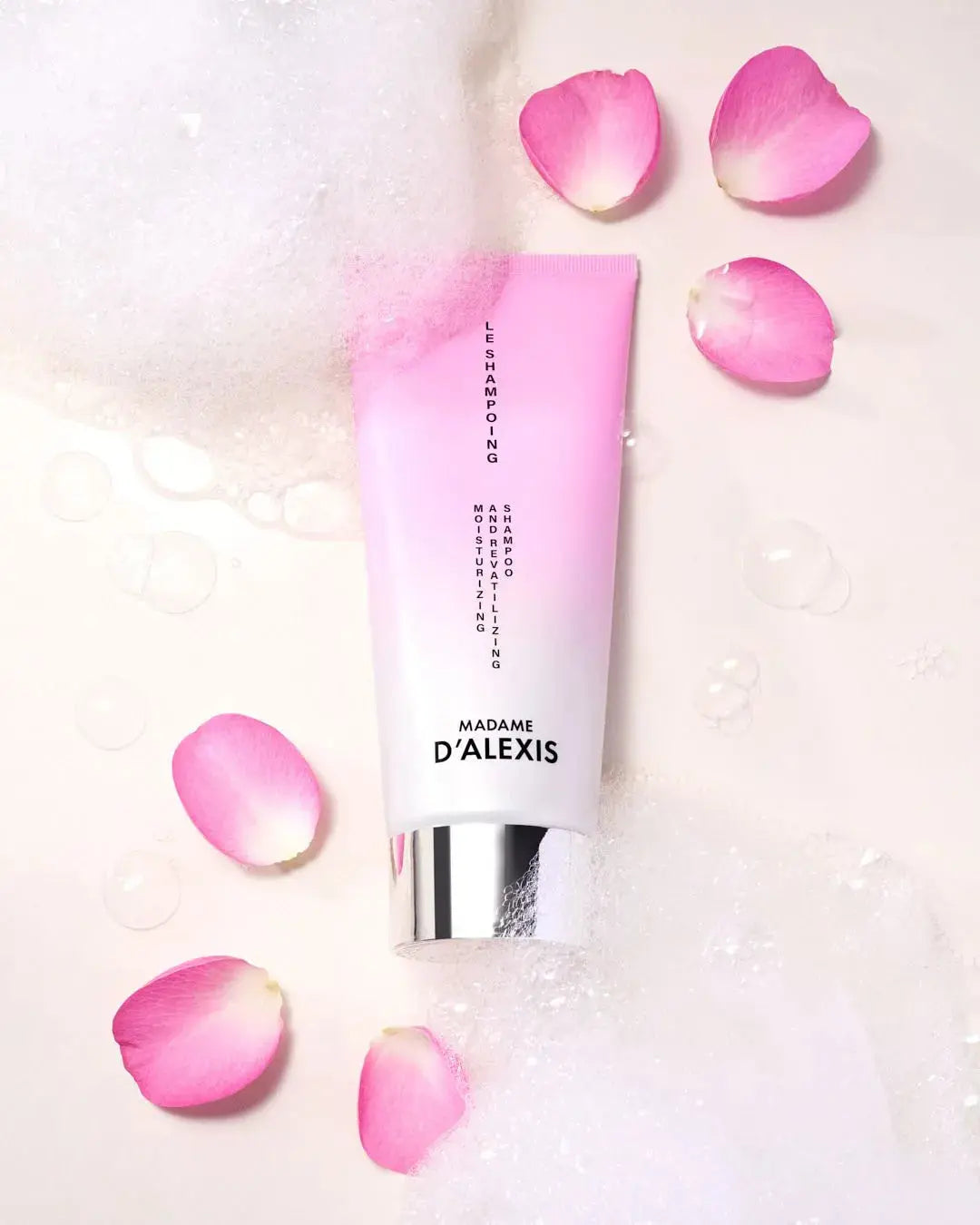
- Cleanse with a gentle shampoo, free from harsh agents, to preserve the natural hydrolipidic film
- Replenish with a mask inspired by oiling, which delivers lipids while keeping hair hydrated
- Protect the lengths from mechanical, heat and environmental damage
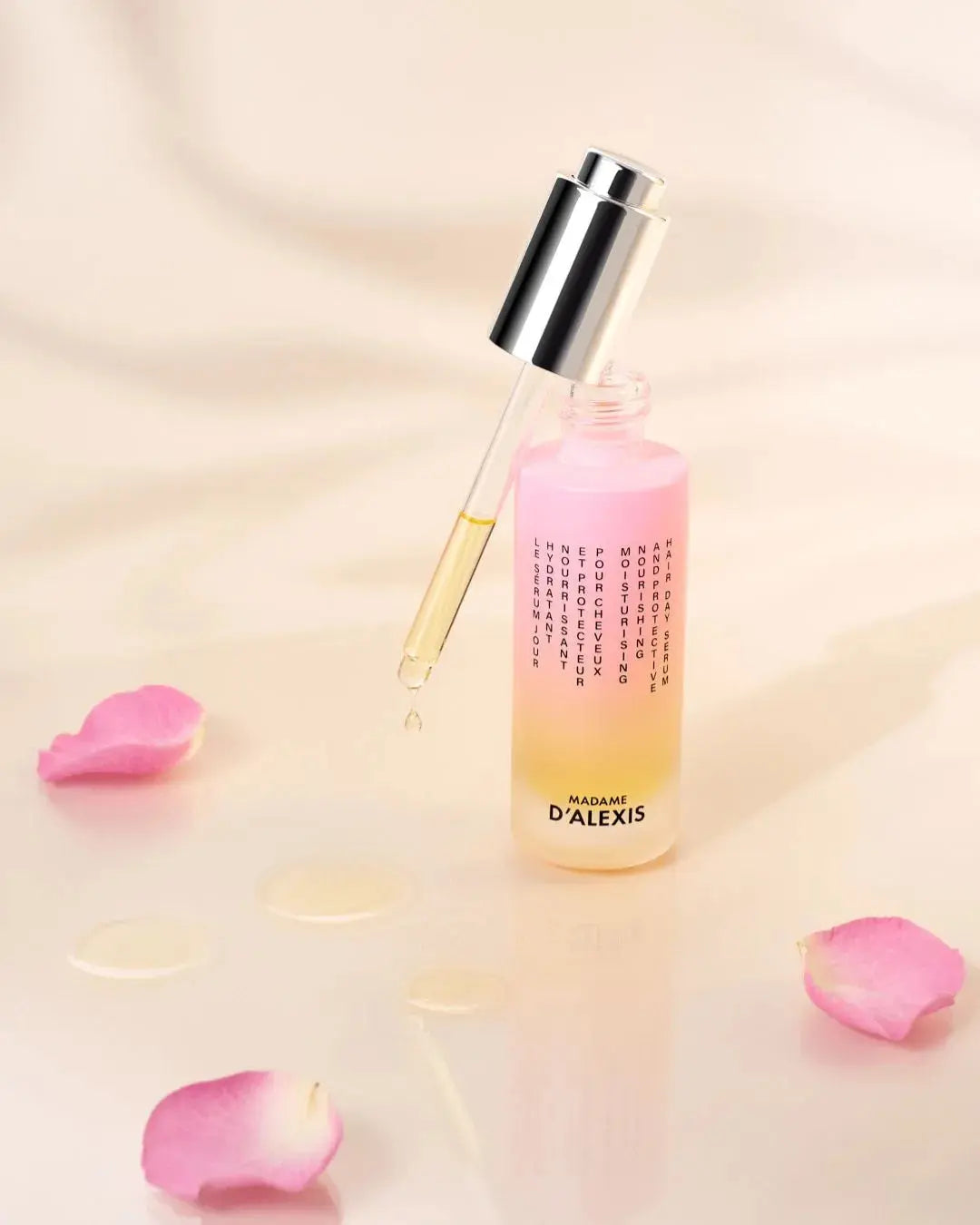
In this approach, Le Masque by Madame d’Alexis plays a central role. Used as a modern alternative to oiling, it softens intensely without making the strands stiff.
For parched, weakened hair, I recommend twenty to thirty minutes, once or twice every 7 days depending on how rough it is. The difference shows less in the immediate effect than in the touch, which becomes more supple and more even.
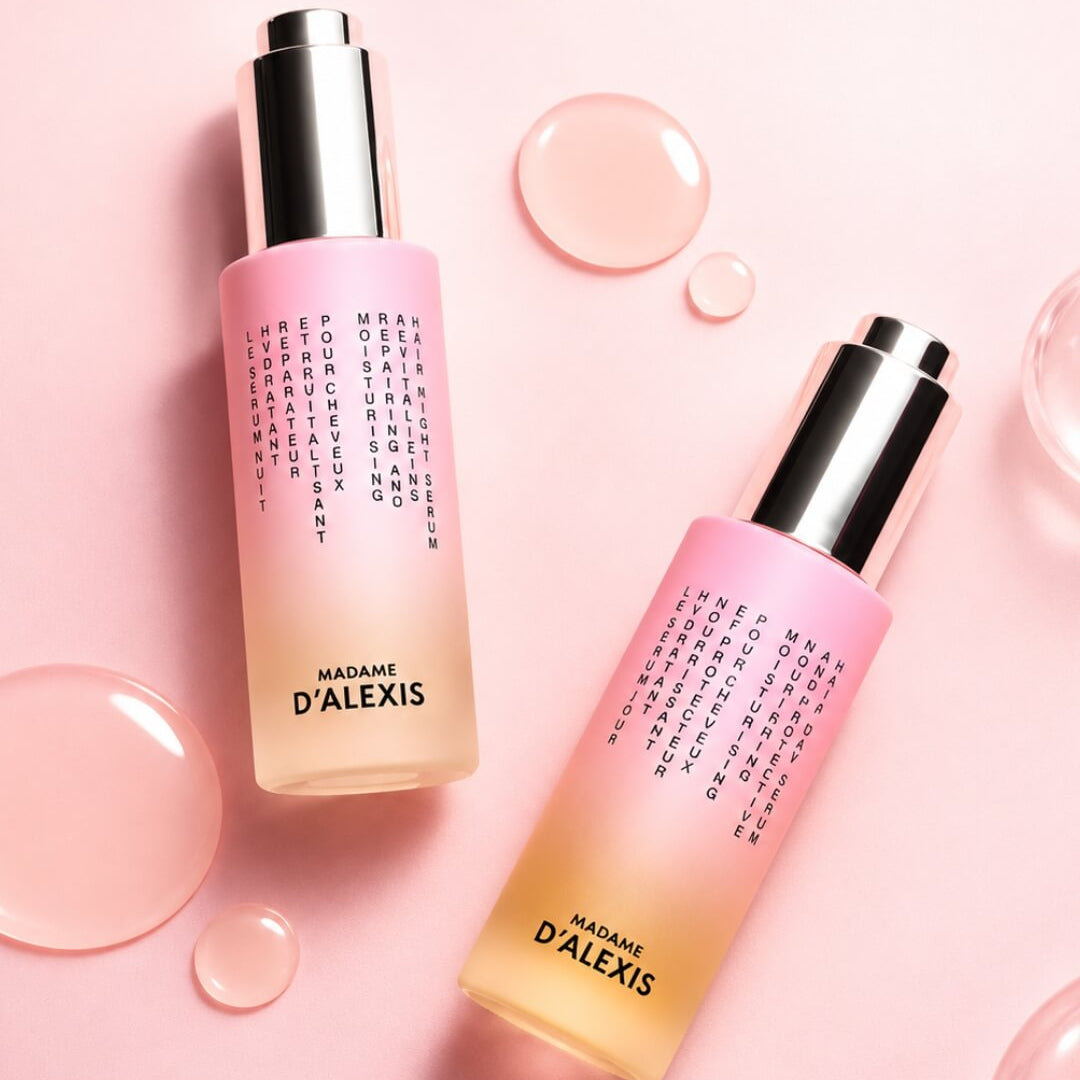
To finish, a light serum on the ends helps the results last without overloading the hair.
FAQ: oiling your hair
Can you oil fine hair?
Yes, in moderation. Thin strands do not handle excess lipids well. Choose a balanced formula, applied to the lengths only, for a short session.
Should you oil before or after shampooing?
Traditionally, it is done before shampooing, as a pre-wash step. It is the most effective way to soften the hair without leaving residue. Some modern formulas can also be used after washing, on towel-dried hair.
Should you oil your scalp?
Only if it is tight or uncomfortable. Scalp oiling, with gentle massaging, suits a parched scalp and supports scalp health; if yours gets greasy quickly or is prone to dandruff, focus on the lengths.
Is it suitable for coloured hair?
Yes. It helps keep the strands supple and limits dullness, provided you choose a non-occlusive treatment.
How do you oil your hair?
Oiling your hair takes a precise method to be truly effective. It is not about pouring oil on at random, but about giving your hair a nourishing ritual suited to the hair shaft.
The first step is to choose an oil suited to your hair type. An oil that is too rich for thin hair or too light for very thirsty hair can spoil the result.
The application is best done on unwashed or slightly damp hair. Use 1 to 3 tablespoons depending on length and thickness. Warm the oil between your palms, then work it through section by section, from mid-lengths to ends. Include the scalp only if it is tight, massaging gently with your fingertips to stimulate blood circulation.
The timing matters. For best results, keep it on for 20 to 30 minutes. Beyond that, the strands absorb no more lipids and rinsing gets harder.
Then wash it out carefully, applying shampoo directly onto the oiled hair before rinsing. This removes excess oil without stripping the hair.
What are the advantages?
Oiling offers many advantages when it is done properly and fits into your hair care routine. Its main role is to feed the strands in depth, giving them the lipids they need.
Unlike products that only moisturise, it supports hair health by reinforcing the hair's lipid barrier. It limits moisture loss, improves softness and shine, and leaves the strands more supple.
Among its most noticeable effects:
- A lasting nourishing effect on rough lengths
- Better indirect hydration, as moisture stays in
- Less visible breakage and fewer split ends
- Shiny, more manageable hair, less frizzy
Regarding hair growth, oiling does not act directly on the hair follicles and cannot promote hair growth on its own. However, by improving the condition of the lengths and limiting breakage, it helps you keep length and get visibly thicker hair over time.
Its properties and uses make it a key ritual for damaged, curly or coloured hair, provided it is regular and moderate.
Which oil should you choose?
Not all hair oils are equal. Let your hair type and your goal guide the choice.
- Castor oil: thick and rich, best kept for a tight-feeling scalp
- Coconut oil: very rich, ideal for thick or curly hair
- Jojoba oil: light and balancing, suitable for fine hair
- Hazelnut oil: penetrating, interesting for combination hair
A poorly chosen plant oil can weigh the strands down. That is why a ready-balanced formula, combining several oils and active ingredients, often gives more consistent results.
How often should you do it?
It depends on your hair type and your hair care routine.
- Thirsty hair: every 7 days
- Normal hair: every 10 to 15 days
- Oily hair: occasionally, on the ends only
Overdoing it can unbalance the strands and leave a lasting greasy effect.
Which hair types benefit?
It is particularly suitable for:
- Long, sensitised hair
- Curly or very parched hair
- Coloured or bleached hair
- A tight, uncomfortable scalp
On thin hair or an oily scalp, use it sparingly.
What are the risks?
Badly done, it can lead to several problems:
- Persistent greasy effect
- Weighed down or flat hair
- Scalp irritation or itching
- Residue buildup
- A feeling of more shedding when the scalp is clogged
The most serious mistake is overdoing it. It is an occasional ritual, not a daily habit.
How do you oil your hair, in short?
Choose an oil suited to your hair type, apply it to dry hair or damp hair (1 to 3 tablespoons), keep it on for 20 to 30 minutes, then wash it out by applying shampoo directly onto the oil before rinsing.
What does oiling do for your hair?
It nourishes the strands in depth, improves softness and shine, reduces breakage, limits moisture loss and makes hair more supple. It does not directly make hair grow but by limiting breakage it helps you keep your length.
Which oil is best?
It depends on your hair type: castor oil for a tight scalp, coconut oil for thick hair, jojoba oil for thin hair, hazelnut oil for combination hair. A balanced formula combining several active ingredients often gives more consistent results.
How many times a week should you oil your hair?
Thirsty hair: every 7 days. Normal hair: every 10 to 15 days. Oily hair: occasionally, on the ends only. Overdoing it can unbalance the strands.
Who should try it?
It suits long, sensitised hair, curly or very parched hair, coloured or bleached hair and a tight scalp. On thin hair or an oily scalp, use it sparingly.
Can oiling cause hair loss?
No, but badly done it can leave a persistent greasy effect, flat hair, scalp irritation and build-up, and a clogged scalp can make hair shedding seem worse. Overdoing it is the main mistake to avoid.
Is it suitable for fine hair?
Yes, in moderation. Thin strands do not handle excess lipids well: choose a balanced formula, applied to the lengths only, for a short session.
Pre-wash or post-wash?
Traditionally, it is a pre-wash step. It is the most effective way to soften the hair without leaving residue. Some modern formulas can also be used after washing, on towel-dried hair.
What results can you expect?
The effects of a well-done oiling routine are gradual and noticeable. From the first sessions, the texture changes: the lengths become more supple and less rough, and detangling is easier.
Over time, you will notice:
- Less visible breakage
- Better moisture retention
- More even shine, without a greasy feel
- Smoother strands to the touch
Well-thought-out oiling does not artificially transform the hair. It supports it, stabilises it and gives it the right conditions to regain its natural strength and quality.