Advice
How many times a week should you wash your hair, depending on your hair type?
Oily, dry, or color-treated hair? Adjust how often you shampoo based on your hair type to keep your scalp healthy and balanced.

What is the right shampoo frequency for your hair type?
The question of how many times a week you should wash your hair comes up time and time again, and rightly so. Between excessive washing and insufficient hygiene, finding the right balance requires taking into account your hair type, your lifestyle, and the quality of the products you use. Here's what you need to remember:
- ✅ Oily hair: Wash 2 to 4 times a week maximum, using a gentle shampoo to regulate sebum production without causing a rebound effect.
- ✅ Dry, curly, or frizzy hair: 1 to 2 washes are sufficient. These fragile textures require nourishing care rather than frequent washing.
- ✅ Normal or fine hair: 2 to 3 shampoos per week depending on physical activity, environment, and scalp sensitivity.
- ✅ Colored or sensitized hair: wash no more than twice a week with a sulfate-free shampoo to preserve pigments and hair fibers.
The key to healthy hair lies not in frequency, but in the regularity of a tailored, respectful, and elegant routine.

Why does how often you wash your hair depend on your hair type?
There is no absolute truth when it comes to shampooing frequency. What works for fine, oily hair may prove disastrous for dry curls or fragile hair. It all comes down to observation, understanding, and the elegant discipline of a personalized routine.
Oily hair: do you really need to wash it every day?
An oily scalp is not a defect. It simply indicates that the sebaceous glands are more active. These glands produce sebum, a natural oil that protects the scalp and nourishes the hair fiber. However, the more you try to remove it, the more it fights back. This is the vicious cycle ofthe rebound effect.
Washing your hair too often can increase sebum production. If your hair becomes greasy again the next day, your routine may be too harsh.
To space out shampooing:
- Choose a dry shampoo, powder or spray, depending on the texture of your roots.
- Finish each wash with a rinse in cool water: this helps to tighten the scales and slow down re-greasing.
- Brush your hair every evening with a natural fiber brush to distribute sebum along the length of your hair.
Dry, curly, or frizzy hair: avoid excessive washing
These textures suffer more from washing. Their high porosity makes the fiber more vulnerable, while sebum, often blocked at the root, does not spread naturally throughout the hair.
In these cases:
- Shampoo your hair once or twice a week.
- Between washes, opt for rich treatments: plant-based butters, moisturizing masks, or conditioners, light oils applied before shampooing.
Your hair needs time to regain its balance. A client with frizzy hair told me that after spacing out her washes to once every ten days, her curls had softened and reshaped effortlessly.
Normal hair: adopt a balanced washing frequency
So-called "normal" hair requires a regular but moderate routine. Washing every two to three days is usually sufficient.
This rhythm can be:
- Spaced out in winter, when the scalp produces less sebum.
- Shortened in summer or duringfrequent physical activity.
The important thing is to listen to your hair: if your scalp feels uncomfortable or your roots look dull, you should take note, but don't automatically reach for the shampoo.
Colored or damaged hair: space out treatments to preserve the hair fiber.
Every shampoo causes some loss of pigment, however slight. Colored hair is, by nature, more porous and more sensitive to surfactants.
It is therefore advisable to:
- Space out washes to a maximum of twice a week.
- Use a sulfate-free shampoo enriched with protective ingredients.
- Choose soft, even creamy textures that respect the hair fiber.

What factors influence the ideal washing frequency?
Your lifestyle matters (more than you think)
It would be simplistic to think that only the nature of your hair determines how often you wash it. Your lifestyle habits are just as important:
- Exercise, especially intense activities, causes the scalp to sweat.
- Urban environments expose hair to microparticles and dust.
- A diet rich in fats or sugars can increase sebum production.
But be careful: "dirty" hair is not necessarily "damaged" hair. It is important to differentiate between how clean your hair feels and its actual health.
The ideal frequency for shampooing is not universal.
There is no magic frequency. There is your own.
Several factors can affect your needs:
- The climate (humidity, heat, dry cold)
- Hair styling products used (hairsprays, sprays, oils)
- Styling tools (heated brushes, irons, diffusers)
Signs to watch for:
- Irritated scalp, tingling, or redness
- Excess sebum, oily roots, dull appearance
- Itching, oily or dry dandruff
Learning to read these signs is the first step toward adjusting the frequency of washing in an appropriate and respectful manner.
Why can excessive washing do more harm than good?
Washing your hair every day, unless medically indicated or for extreme sports activities, profoundly unbalances the scalp.
This results in:
- Increased hair loss (stressed scalp loosens hair follicles)
- Brittle hair, deprived of its protective hydrolipidic film
- A loss of visual density, with hair becoming limp and lacking body
I have observed this phenomenon in several clients who, due to excessive hygiene practices, had weakened their hair to the point of breakage.
The key? A gentle and natural hair care routinethat respects your scalp and takes into account the natural regeneration of your hair.

Tips for spacing out shampoos and keeping your hair healthy
In the world of hair care, anything that allows youto space out your shampoos intelligently is valuable. It's not a question of laziness or a passing fad: it's a hair care strategy.
By spacing out washes, you give the scalp time to restore its natural balance while preserving the integrity of the fiber. However, to successfully navigate this hair transition with peace of mind, you need to know the rules.
Choosing the right shampoo formula for your hair type
It all starts with choosing the right product. Shampoo isn't just a cleanser; it's a basic care product that lays the foundation for a healthy routine. Opt for a formula that:
- sulfate-free, to preserve the hydrolipidic film
- pH neutral, to respect the scalp
- rich in botanical active ingredients to meet the specific needs of hair (purifying clay, soothing hydrosols, balancing essential oils)
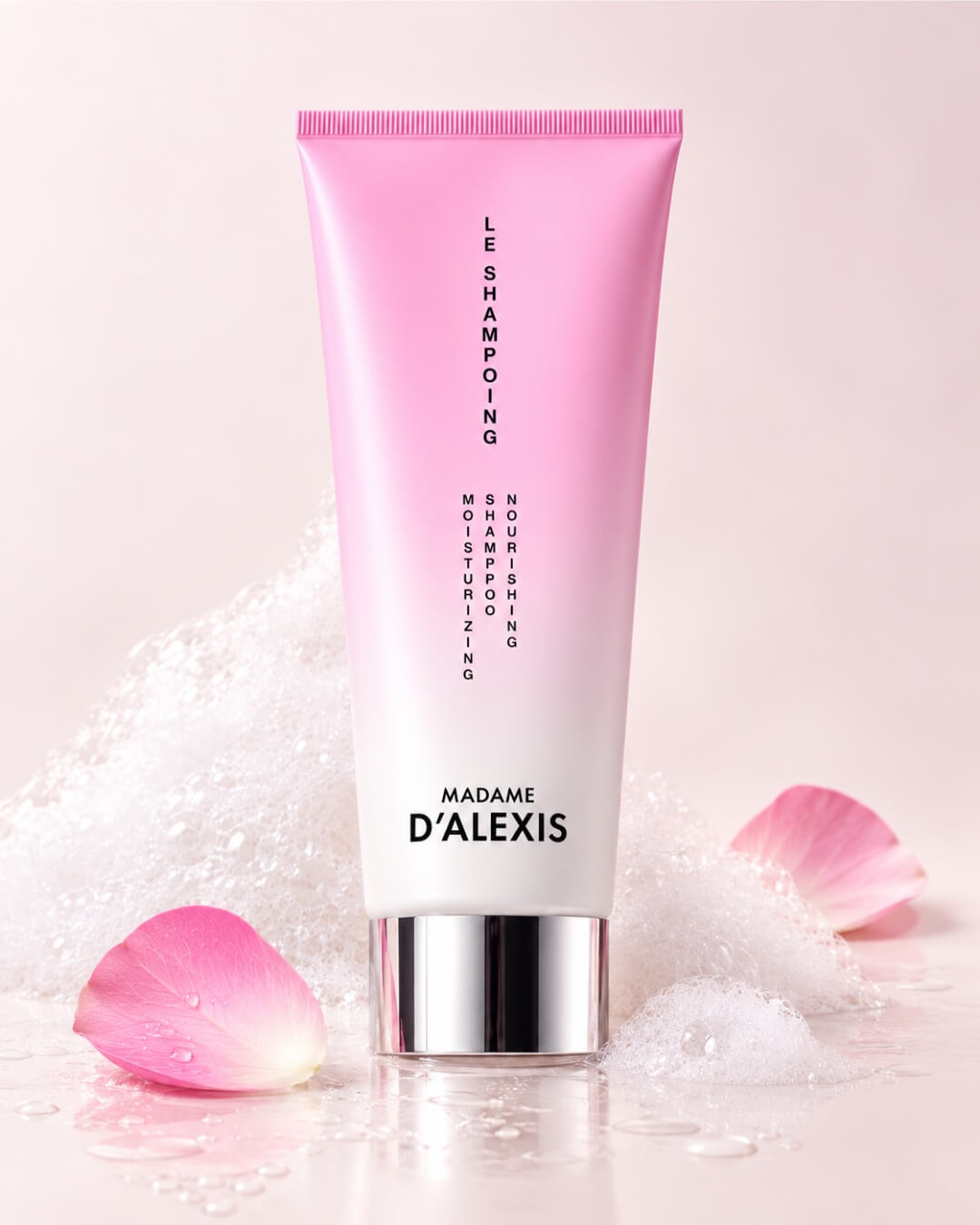
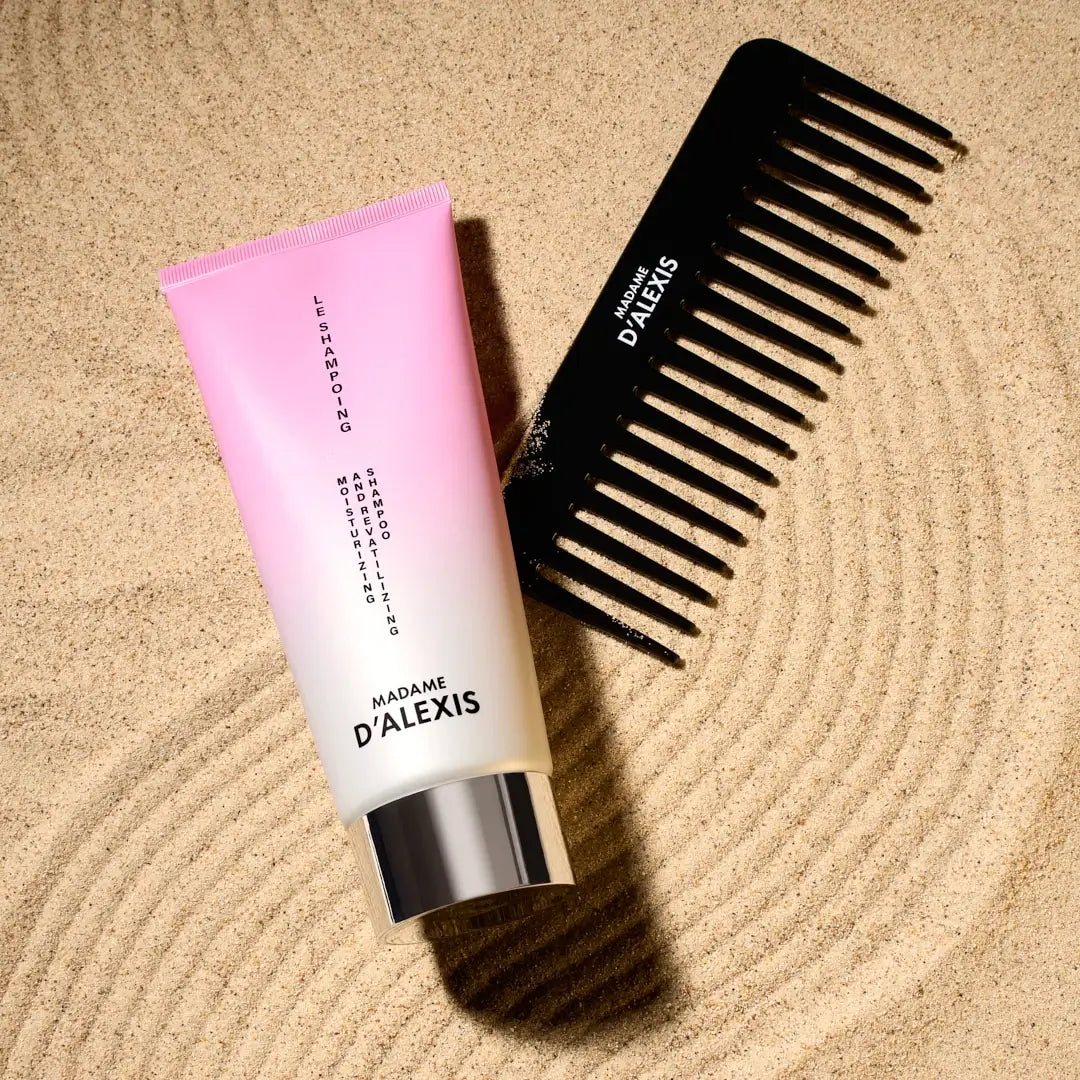
I personally recommend our Madame d'Alexis shampoo, which is sensorial, gentle, and highly effective. It cleanses thoroughly while respecting the nature of even the most delicate hair.
Key takeaway: a well-formulated shampoo not only cleanses without damaging the hair, but also delays the need for the next wash.
Incorporate dry shampoo to limit washing
Dry shampoo is your discreet ally on days when you don't have access to water. Its purpose is not to replace washing, but to save time between washes while controlling the appearance of your roots.
- It absorbs excess sebum, dust, and surface impurities.
- It restores volume, especially to fine hair or hair weighed down by styling products.
- It prolongs the elegance of a blow dry or elaborate styling.
A few golden rules:
- Apply it from a distance (approximately 20 cm), only on the roots.
- Leave on for a few minutes before brushing
- Choose a formula suited to your skin tone to avoid a powdery residue effect.
Complete your routine with key steps
Spacing out shampooing does not mean neglecting your hair. On the contrary, it means paying closer attention to the signals sent by your scalp.
Here are some habits to adopt:
- Brush your hair every evening with a natural fiber brush: this distributes sebum, gently cleanses, and stimulates microcirculation.
- Rinse hair with cold or lukewarm water after sports or a day in the city, without using shampoo.
- Apply a purifying or moisturizingmask once a week, depending on your scalp type.
These steps, repeated regularly, allow you togradually space out washes without compromising the appearance or cleanliness of your hair.
How many times a week should you wash your hair, according to experts?
The answer always depends on the nature of your hair, its condition, and your lifestyle. Here is a clear summary of the recommendations:
| Hair type | Number of shampoos per week |
|---|---|
| Greasy hair | 2 to 4 washes |
| Dry, curly, or frizzy hair | 1 to 2 washes |
| Normal hair | 2 to 3 washes |
| Colored or fragile hair | 1 to 2 washes, maximum |
| Fine hair | Every 2 days, as needed |
| Children's hair | 1 to 2 washes, with appropriate care |
| After sports activities | Gentle rinse or light wash |
This table is not an absolute rule, but a basis for reflection. Observation remains the best guide: a soothed scalp, shiny hair, and a pleasant feel are the best indicators of a well-adjusted frequency.