Advice
Should you rinse out a hair mask?
Should you rinse out a hair mask? Yes, unless otherwise indicated. Proper rinsing frees the hair fiber, optimizes the effectiveness of the treatment, and prevents dull, heavy, or sticky hair.


Yes, a hair mask should always be rinsed out, unless the packaging explicitly states "no-rinse" or "leave-in."Rinse if:
- Classic Mask (rich, creamy texture)
- Pre-Shampoo Mask
- Oil bath
- Overnight Mask (rinse off in the morning)
Do not rinse if:
- The product is labeled "leave-in" or "no-rinse"
- Lightweight Hair Serum
- Finishing treatment or heat protectant
How to Rinse Properly:
- Warm water to remove residue
- Fresh water to close the scales
- At least 30 to 60 seconds
- A mild shampoo if the mask is very rich
Why it's important: A leave-in treatment blocks oxygen from reaching the hair, creates a buildup of product, and weighs the hair down without improving its condition.
Yes, you need to rinse out a hair mask for it to be effective
A hair mask is not designed to stay on the hair fiber after the application time. Even the most luxurious treatments require a meticulous rinse to deliver their benefits without weighing down the hair. Not rinsing a mask hinders its action. Here's what you need to remember:
- A hair mask should always be rinsed out, unless explicitly stated otherwise. The rare "leave-in" treatments are formulated differently (lighter textures, non-occlusive film-forming active ingredients). In the absence of a clear indication, rinsing is imperative.
- Not rinsing prevents the active ingredients from penetrating properly into the fiber. Instead of treating, the mask remains on the surface, forming a film that attracts dust, blocks oxygenation, and weighs down the hair.
- A precise rinse optimizes the effects of the treatment. It eliminates excess product, closes the hair cuticles, and reveals its natural shine. Lukewarm then cool water is ideal for this purpose.
- Even after a long application, rinsing remains essential. Some masks, such as those formulated for pre-shampoo application or as an overnight treatment, require a gentle wash after application. This removes the rich agents (oils, ceramides, vegetable butters) without leaving any residue

Hair masks are often seen as an exceptional treatment, reserved for damaged or sensitized hair. However, the way they are applied, as well as the rinsing process, is often done imprecisely.
Is it always necessary to rinse out a hair mask? Can it be left on indefinitely to « extend » its effects? Behind these seemingly simple questions lies a precise hair dynamic, almost subtle, where every action counts.
For those who consider hair care as a refined ritual — reflecting the Madame d’Alexis philosophy — it is essential to understand not only the active ingredients of a hair mask, but also the exact impact of rinsing it on the hair fiber and scalp.
Is rinsing out a hair mask mandatory?
What hair logic dictates
A mask is neither a finishing cream nor a styling balm. It is a deep treatment, designed to act temporarily on the hair fiber and then be removed.
Not rinsing it amounts to:
- blocking the hair's natural oxygenation,
- creating a cosmetic overload on the fiber,
- compromising the hair's lightness and radiance,
- unbalancing the scalp (especially in case of prolonged contact).
Rich textures, especially those based on ceramides, oils, or plant proteins, require thorough rinsing to free the hair, reveal its substance, and allow the active ingredients to do their job without a "weighing down" effect.
Can a hair mask be left on overnight?
Indeed, there are extended rituals. Pre-shampoo masks, like the one from Madame d’Alexis, are formulated to be left on for a long time, sometimes several hours.
But here again, the key is to rinse after application. Why? Because beyond a certain point, the hair no longer « absorbs ». It becomes saturated. And what was a treatment becomes an occlusive film, depriving the fiber of its natural suppleness.
Not rinsing risks:
- a loss of volume,
- a greasy or stiff feel,
- increased scalp sensitivity.
A mask, however luxurious, is all the more appreciated when it is perfectly rinsed. It is in this final step that care becomes art.
How to properly rinse a hair mask?
Rinsing a hair mask is a step that deserves more attention than we think. Behind this seemingly simple step lies the effectiveness of the entire treatment.
Poor technique can ruin the quality of the most exquisite mask. In our vision of care, each phase counts — and rinsing is the final signature of a well-conducted ritual.
Frequent mistakes to avoid
Whether due to rushing or simply out of habit, certain mistakes are common. These alone can explain why a carefully chosen treatment might fail.
- Rinsing poorly or too quickly: Leaving residue, even invisible, weighs down the hair and dulls the strands.
- Intentionally leaving some product in: Contrary to popular belief, this does not improve hold or hydration. Instead, it mainly encourages buildup and scalp imbalance.
- Applying too much product: An excess makes rinsing difficult and promotes saturation. A thin, well-distributed layer is better than a heavy coating.
The correct way to rinse effectively
Ideally, rinsing should be considered a treatment in itself. You're not just removing the mask, you're revealing its benefits.
- Start with lukewarm water to loosen residue and smooth the hair shaft.
- Finish with cooler water to close the cuticles and lock in shine.
- Comb through your hair under the water to evenly distribute the treatment and make it easier to remove.
- If the mask is very rich, a second gentle shampoo may be necessary, especially for fine hair.

Should all hair masks be rinsed out?
The answer is nuanced. Not all masks are created equal, and they are not all used in the same way.
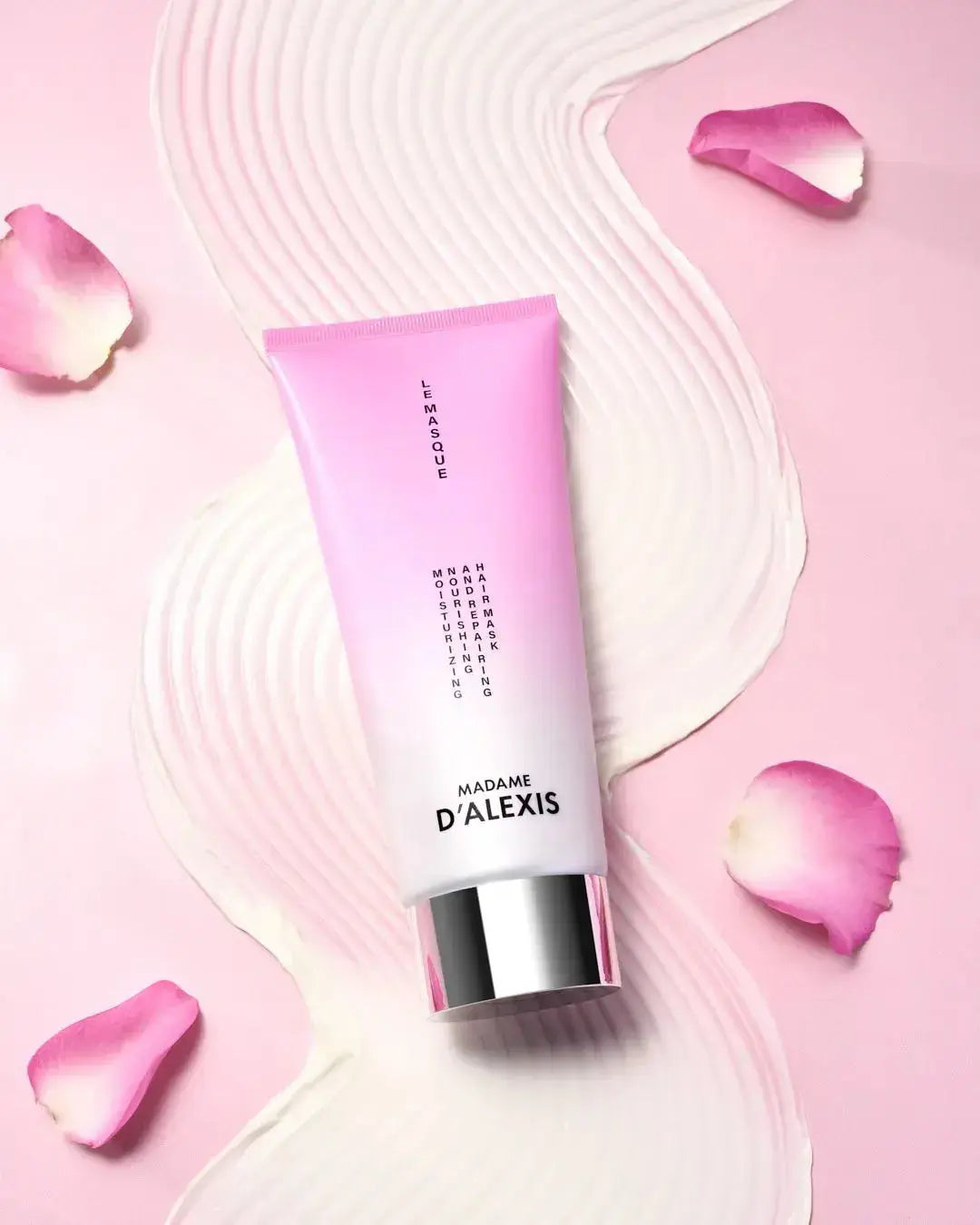
Leave-in masks: what are they used for?
Some masks, also known as finishing treatments, are designed to be left on the hair.
- Thermo-protective masks: applied before blow-drying, they form a light film.
- Daytime formulas, enriched with non-greasy film-forming agents.
- Fluid textures, designed for touch-ups, somewhere between treatment and styling.
These products are often more concentrated, but in less nourishing formats. They can be used daily as a supplement, but do not replace a true deep treatment.
Adjust rinsing according to hair type and chosen treatment
The choice of rinsing method depends closely on your hair type:
- Fine hair: it doesn't like excess product. Rinsing should be thorough, and even followed by a quick shampoo to avoid a flat effect.
- Dry, curly, or textured hair: it tolerates residue better but can become weighed down if the mask is too rich or used too often.
In all cases, a well-formulated treatment is easily removed. This is also where the sophistication of a high-end mask lies: acting in depth without ever weighing the hair down.
Rinse-Off Masks vs. Leave-On Masks: A Comparison
Which mask should you choose based on your profile?
Choose a rinse-off mask if:
- Dry, damaged, brittle, or frizzy hair
- Are you looking for an intensive weekly moisturizing treatment?
- Do you have some time (15 to 20 minutes)?
Choose a leave-in mask if:
- Fine hair that tends to get weighed down easily
- Are you looking for quick, everyday protection?
- Do you use heat styling tools regularly?
Hair masks: mistakes to avoid
Like many, I've experienced that strange feeling after a hair treatment at a salon or at home: hair that feels nourished but lacks radiance, heavy, almost stiff.
Over time, I realized that the problem wasn't the mask itself, but how it was being used. A hair mask, especially one formulated with high standards, requires precise application that respects the hair fiber.
Here are the most common mistakes to avoid, the ones that turn a luxurious treatment into a hair care blunder.
Choosing a Mask at Random
A mask is not a one-size-fits-all product. It should be chosen based on:
- the type of hair (fine, thick, curly, colored, dry, oily, etc.),
- the condition of the hair fiber (dehydration, breakage, loss of elasticity, dullness),
- the time of application (pre-shampoo or post-shampoo).
A hydrating mask restores suppleness and elasticity. A repairing mask acts on the cohesion of keratin. A nourishing mask, enriched with oils, targets damaged ends.
Unlike a conditioner — designed to detangle and smooth — a mask provides deep treatment. It doesn't replace conditioner; it complements it.
Thinking that 'the longer you leave it on, the better'
This is a common misconception. Leaving it on for longer can be beneficial... but only up to a certain point. Beyond that:
- the hair fiber becomes saturated,
- the active ingredients stop penetrating,
- the hair becomes dull, sticky, and lifeless.
Ideally, follow the recommended application time, or opt for a long application followed by a perfect rinse. A good mask should be unnoticeable after rinsing — not felt every time you touch your hair.
Applying the mask too high up on the roots
This is a common tendency, especially with creamy textures. However, with some exceptions (like the Madame d'Alexis Scrub designed for the scalp), a mask should be applied from mid-lengths to ends. At the roots:
- it suffocates the follicles,
- stimulates excessive sebum production,
- disrupts the scalp's microbiome.
What you gain in treatment, you lose in lightness.
Failure to follow the rinse temperature instructions
Hot water opens the hair cuticles and allows the moisture that the mask has just provided to escape. This is the most common and most damaging mistake.
The right way to do it: Start with lukewarm water to remove residue, then finish with cool water to close the scales and lock in the shine.
Rinsing too quickly
Rinsing poorly leaves invisible residue on the hair shaft. This residue builds up, dulls the hair, and makes it feel heavy with each wash.
The right way to do it: Rinse thoroughly for 30 to 60 seconds. Comb through the lengths under running water to distribute and rinse out the product evenly.

Which mask to choose according to your needs?
Best practices
Choosing a hair mask is a significant decision. It reflects a deep understanding of your hair's needs and a certain level of expectation.
- Read the ingredient list: Avoid occlusive silicones with prolonged use. Opt for formulas based on plant-based active ingredients and floral hydrosols.
- Look for targeted ingredients: At Madame d'Alexis, our masks are made without added water and are enriched with Damask rose hydrosols, matricaria chamomile, and orange blossom.
- Consider the timing of the treatment: Some masks are applied before shampooing to prepare the hair fiber (as a night or transition treatment). Others are used after washing to close the cuticles and lock in shine.
A well-chosen mask transforms the hair without compromising its integrity. It's a silent yet decisive treatment.
In summary: a mask should be rinsed... but not just any way.
Key points to remember
The question may seem simple: Should you rinse out a hair mask? The answer is a definitive yes, always, unless the manufacturer indicates otherwise. But behind this 'yes' lies a more demanding truth: effective rinsing is an essential step in the treatment, just like choosing the right mask or setting the application time.
Not rinsing a mask means:
- preventing the hair fiber from breathing,
- leaving residue on the hair,
- saturating the hair, which can weigh it down,
- depriving the scalp of its natural balance.
Proper rinsing doesn't remove the treatment—it reveals it. It frees the hair fiber from excess product, allows the active ingredients to work deeply, and restores the hair's original shine. Lukewarm water opens the cuticles, while cool water closes them. This final step is both technical and sensory. It transforms the texture into substance, the treatment into results.
Key takeaway:
- A hair mask, unless labeled 'no-rinse', should always be rinsed out.
- Leaving a mask unrinsed negates its benefits: the hair fiber becomes saturated, and the hair feels dull.
- Proper rinsing provides lightness, movement, and shine, even to damaged hair.
- A well-formulated, well-dosed, and well-rinsed treatment acts as a discreet but lasting remedy for the hair.
In an era where saturation is often mistaken for care, hair masks require a commitment to simplicity: use a small amount of product, control the application time, and, above all, rinse thoroughly. It is in this precise balance that effectiveness—and elegance—lies.
Frequently Asked Questions About Rinsing Out Hair Masks
How long should you leave a hair mask on?
Between 10 and 20 minutes for a standard mask. Any longer than that, and the hair fibers become saturated, preventing the active ingredients from penetrating further. For a pre-shampoo mask or an overnight treatment, a longer application time (1 hour to overnight) is possible, but rinsing is still required.
Can a hair mask be left on overnight?
Yes, if the mask is formulated for that purpose (labeled "leave-in" or "overnight treatment"). In that case, rinse it out in the morning with a mild shampoo. A standard mask left on overnight without rinsing may weigh down the hair and irritate the scalp.
Should you shampoo your hair after using a hair mask?
Not always. If the mask is applied after shampooing, simply rinsing it out with water is sufficient. If the mask is applied before shampooing (oil treatment, overnight treatment), a mild shampoo is needed to remove the rich ingredients.
Should you use hot or cold water to rinse a face mask?
Neither one alone. The right technique: start with lukewarm water to loosen residue, then finish with cool water to close the cuticles and bring out the shine. Very hot water should be avoided at all costs: it opens the cuticles and causes moisture to escape.
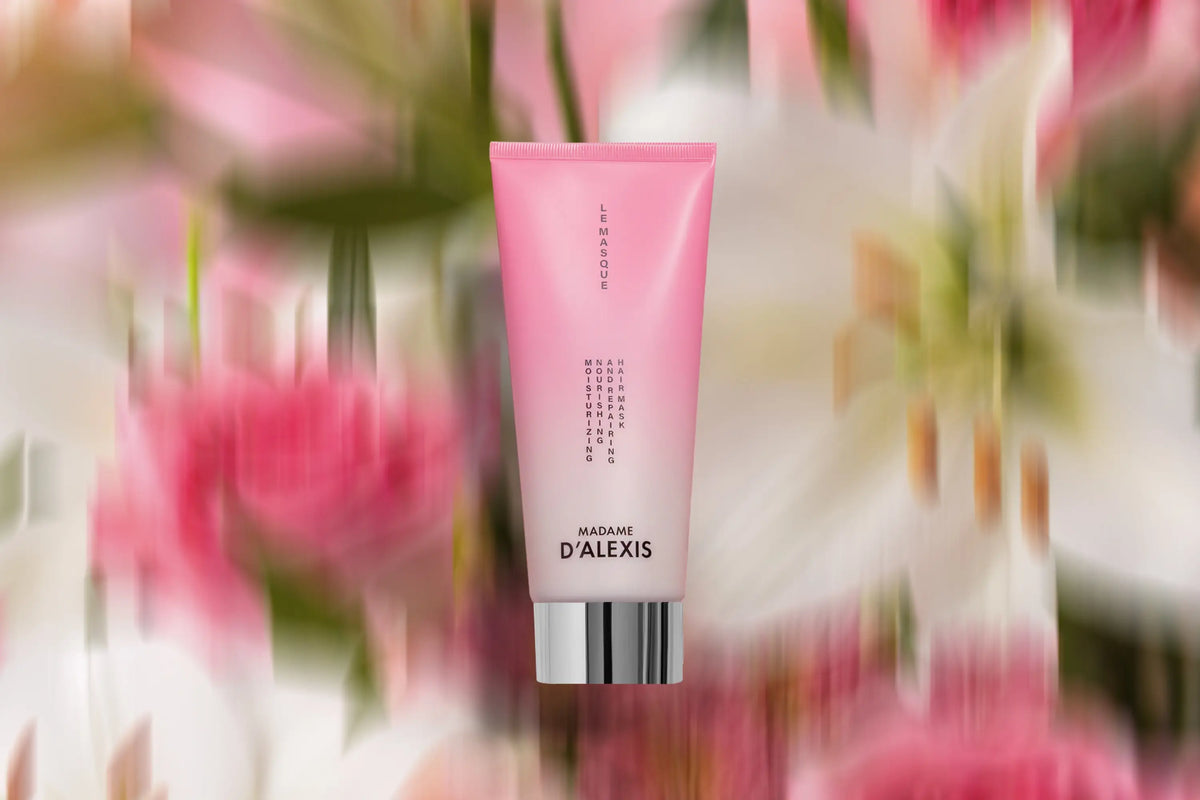
Does the Madame d'Alexis Floral Mask need to be rinsed off?
Yes. The Floral Mask is applied after shampooing, to damp hair, and rinsed out after 10 to 30 minutes, depending on the condition of the hair. It is not formulated to be left in without rinsing.