Conseils
Itchy scalp and hair loss: causes, link and what to do
An itchy scalp should never be ignored: the inflammation behind it can add to hair loss. Learn to identify the cause, soothe your scalp and protect your hair density.

Itchy scalp and hair loss: what is the link?
A complete visual guide to the link between itching, inflammation and reactive hair loss, followed by a short, clear scalp care routine.
Repeated scratching keeps low-grade inflammation going around the follicle.
Sebum, pollution and product build-up can clog the root.
Hair can switch to the resting phase sooner than it should.
Exfoliating, washing without sulphates, nourishing and soothing remain the four key levers.
If it itches, it is not just "a sensitive scalp"
The real issue is often the environment: oxidised sebum, styling residue, pollution, hard water, an unbalanced microbiome or inflammation. The more reactive the skin, the more the hair follicles suffer.
The symptoms to address first
Night-time scratchingThe skin is broken during sleep, which keeps the irritation and hair loss cycle going.
Oily or yellow dandruffPossible Malassezia overgrowth, to monitor if it persists.
Hair loss when washingMay be linked to inflammation if it lasts more than a few weeks.
Scratching, inflammation, hair loss: the mechanism in 5 steps
Oxidised sebum, pollution, hard water and styling products build up at the root.
The scalp reacts: tightness, dandruff, tingling.
The skin barrier weakens and becomes even more permeable.
The root grows in a less favourable, inflamed environment.
Hair breaks or falls out more easily when washing, brushing or on the pillow.
Six common causes to check before choosing a treatment
Hard water
Makes hair rough and adds to deposits and itchiness.
Pollution
Clings to sebum and increases the irritating load on the scalp.
Styling residue
Hairspray, waxes, silicones and powders can clog the follicles.
Sulphates
Strip the hydrolipidic film and can set off itching again after washing.
Stress
Stress hormones weaken the skin barrier and increase reactivity.
Microbiome
An imbalance keeps dandruff, redness and low-grade inflammation going.
What to keep in mind before treating
The aim: keeping a simple core routine, not piling up harsh steps.
The Madame d'Alexis routine in 4 clear steps
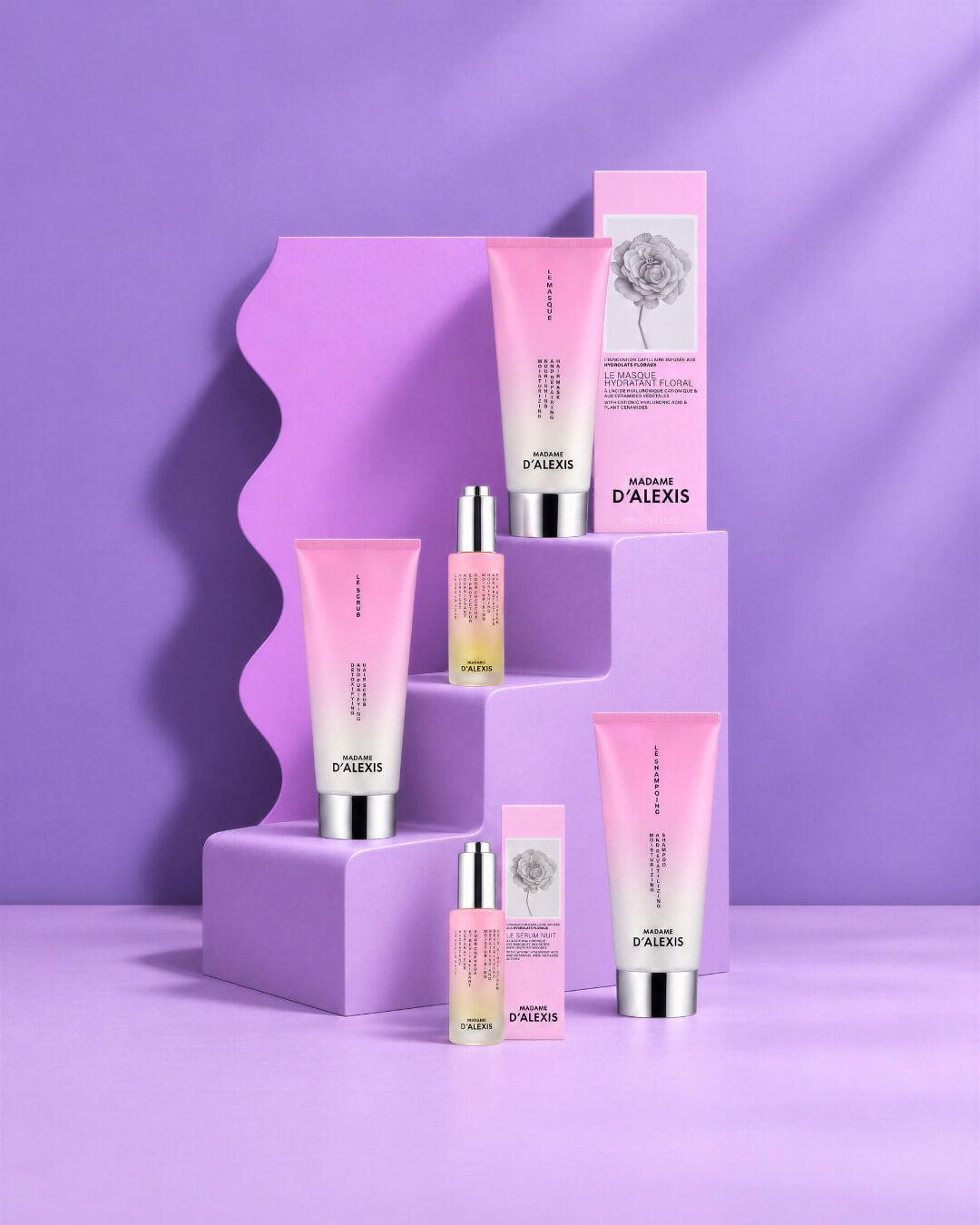
The Madame d'Alexis products in this routine
A short, simple routine to soothe the scalp, clear the follicles and care for the lengths without stripping.
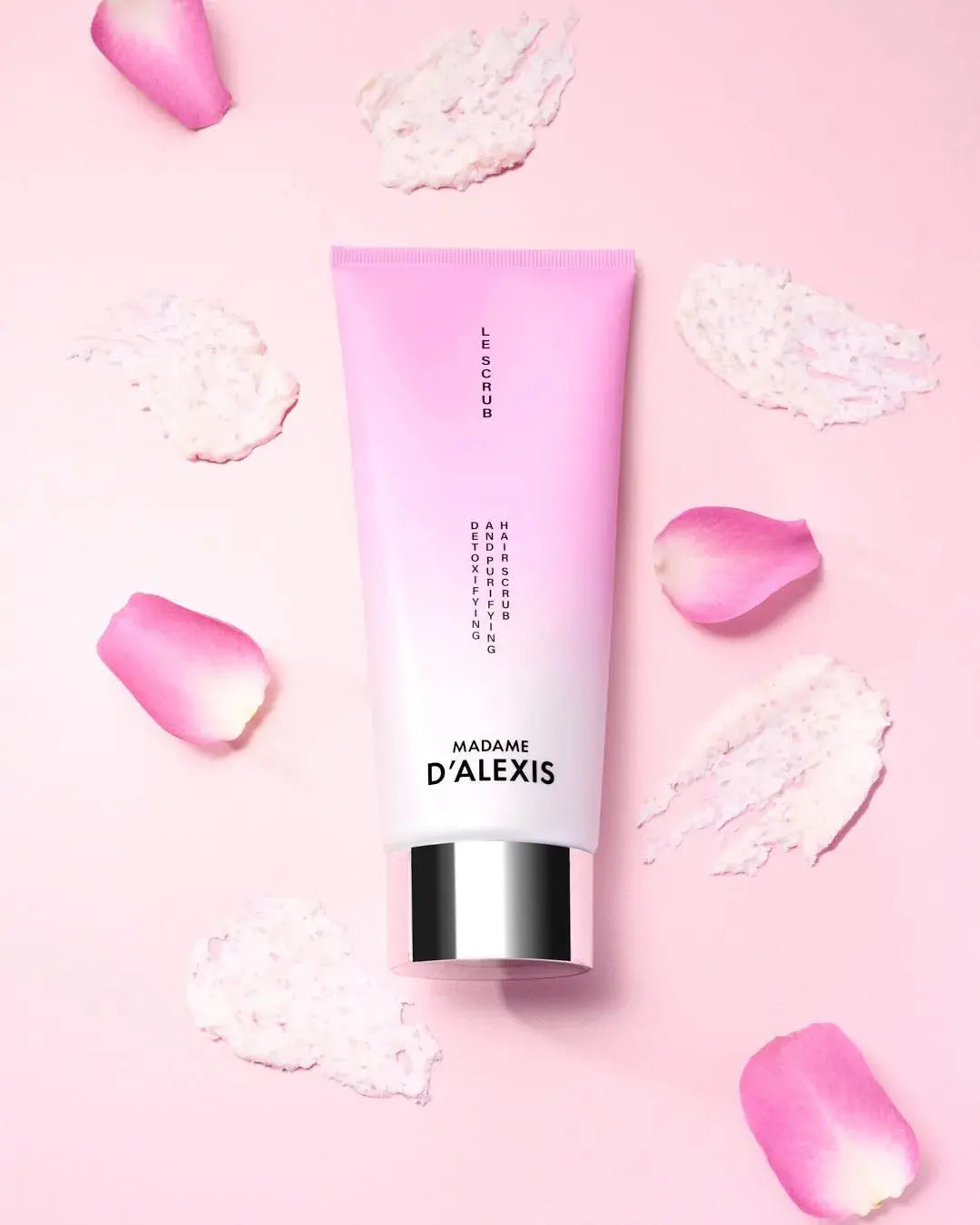
Le Scrub - exfoliating scalp shampoo with organic hydrosols
Gentle detox · scalp
- Lifts residue and dandruff
- Fleur de sel + organic hydrosols
- A fresher scalp
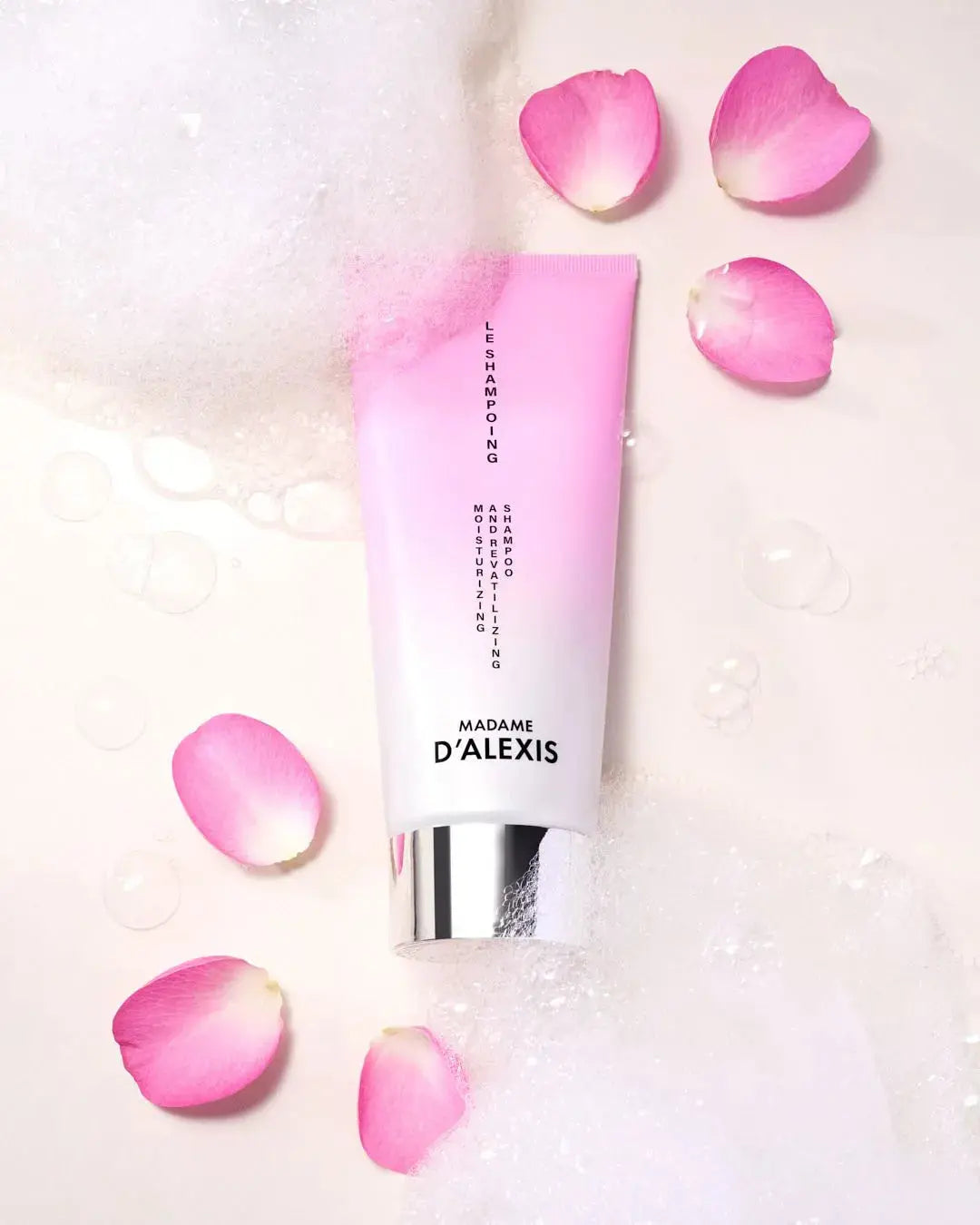
Le Shampoing - organic hydrosols and hyaluronic acid
Sulphate-free · gentle
- Cleanses without stripping
- Soothing organic hydrosols
- Prebiotics + cationic HA
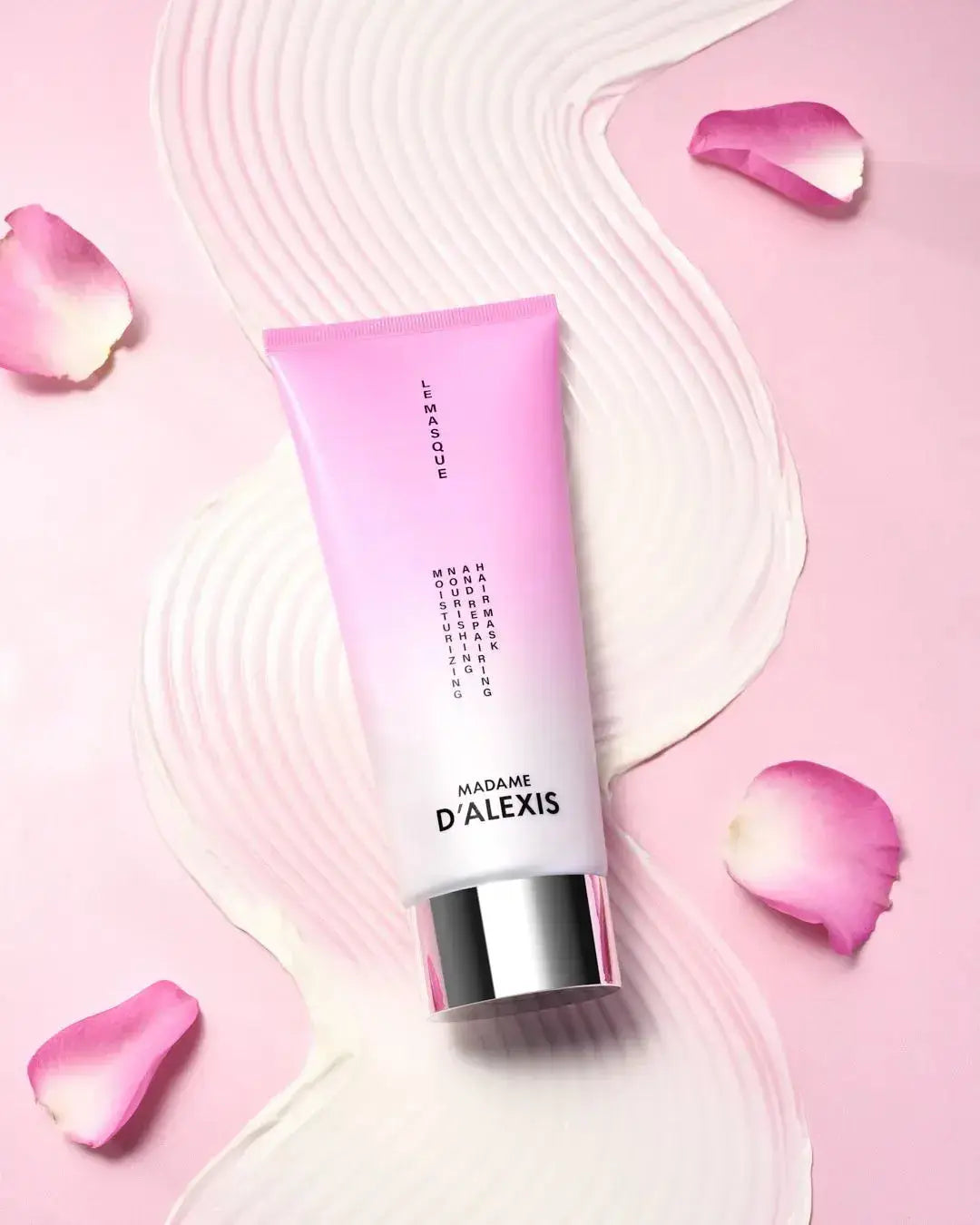
Le Masque - deep hydration with organic hydrosols
Ceramides · sensitised hair
- Nourishes and softens
- Plant ceramides
- Helps limit breakage
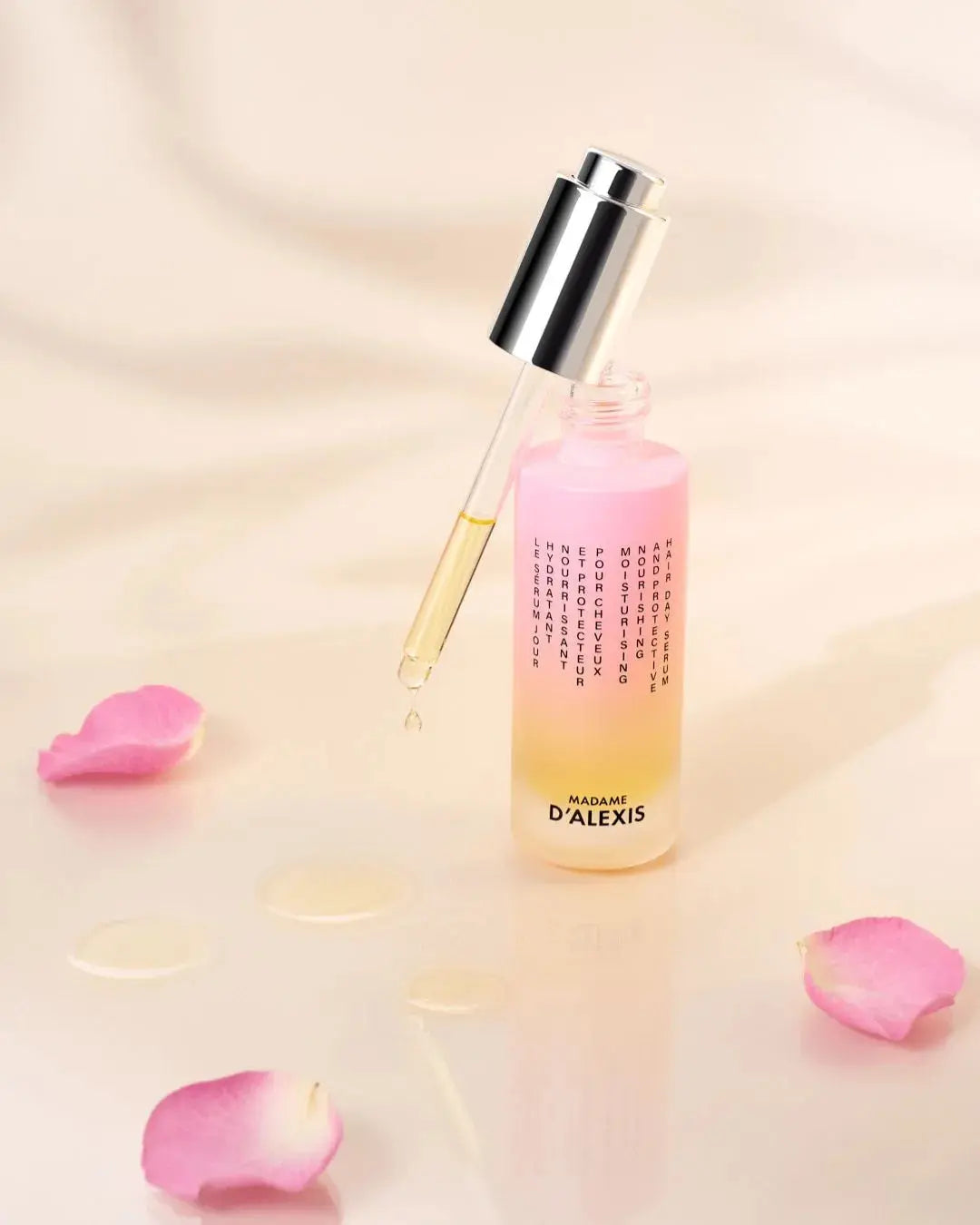
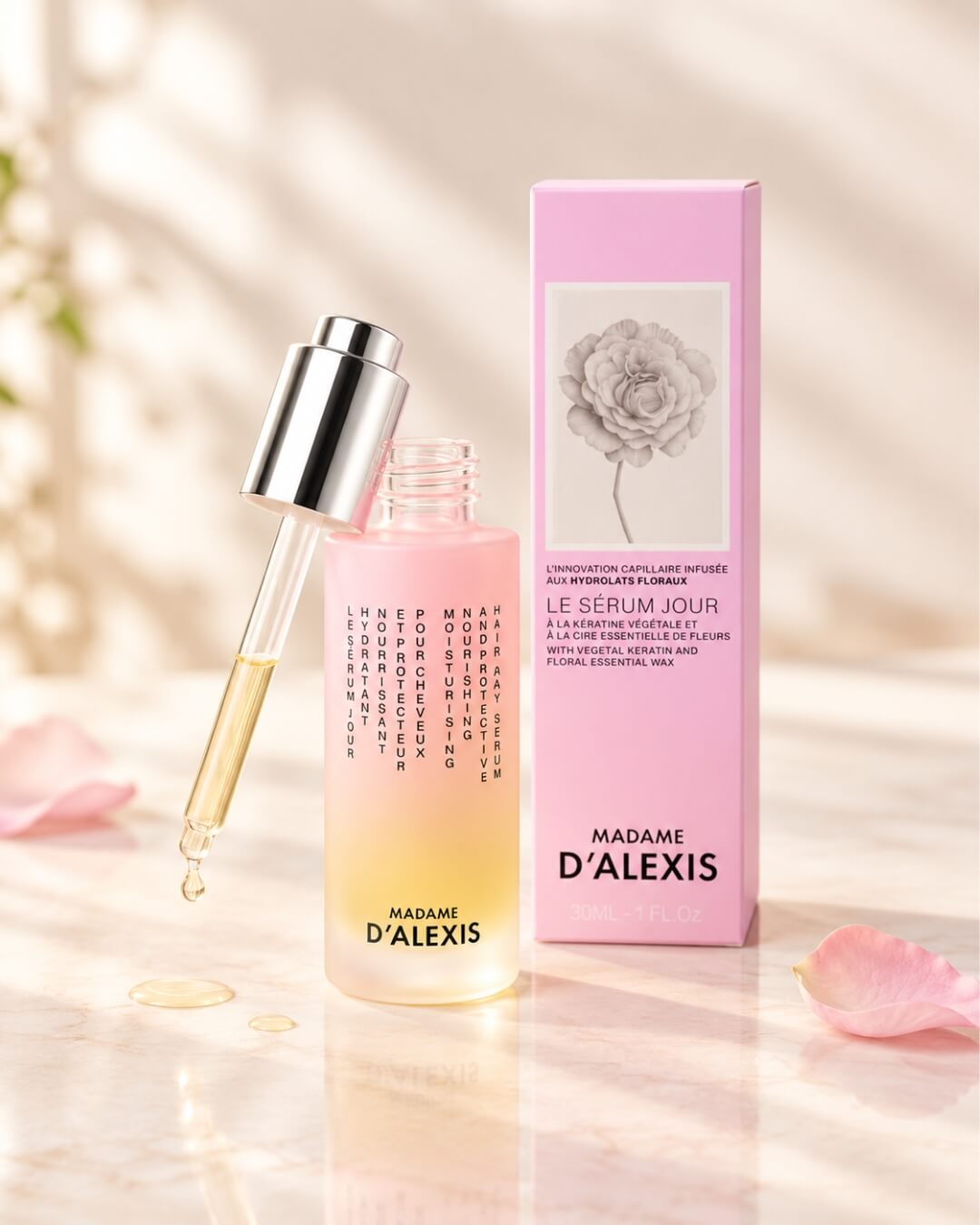
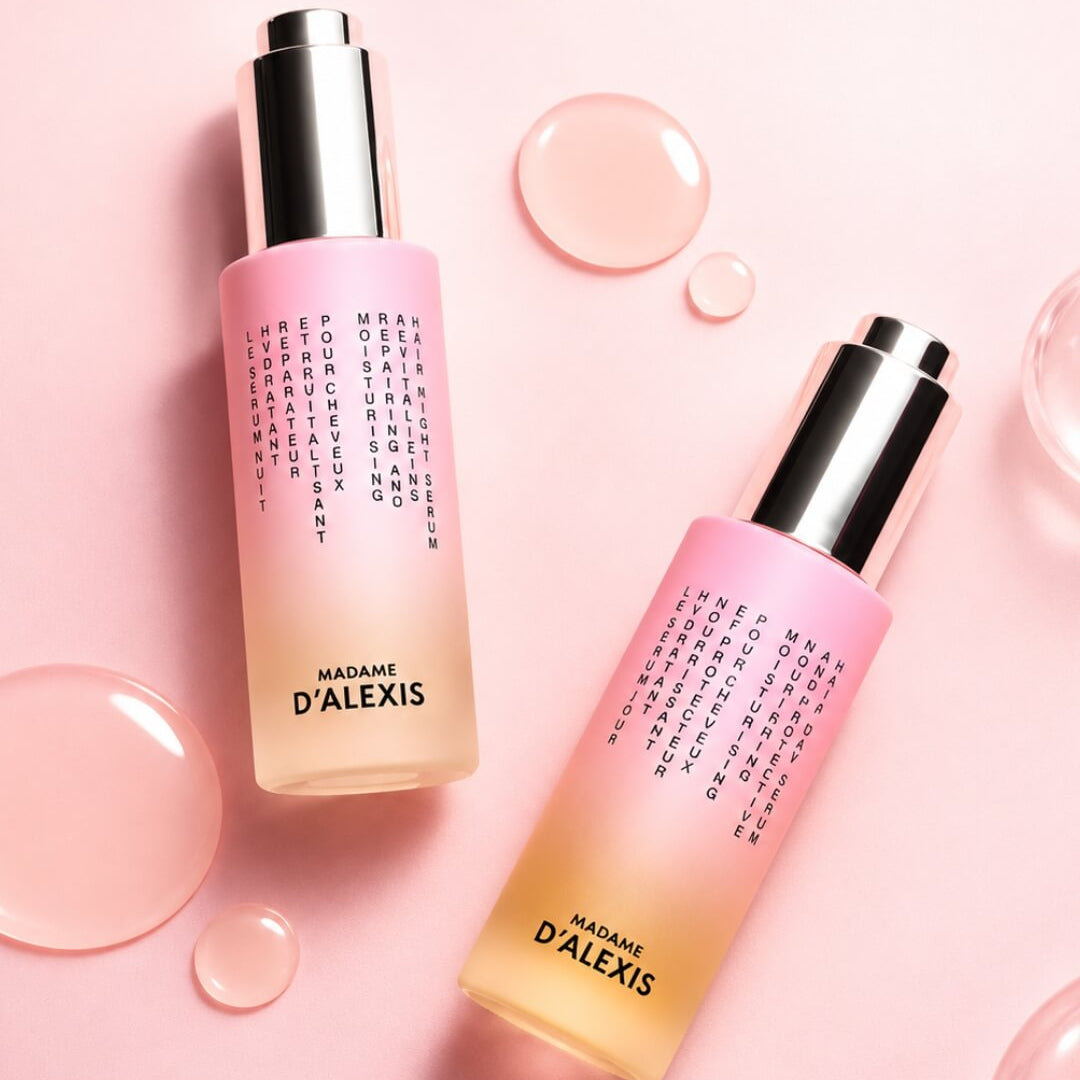
Le Sérum Jour - ceramides and organic jojoba oil
Heat protection · shine
- Heat protection up to 200 °C
- Lengths and ends
- Light, non-greasy finish
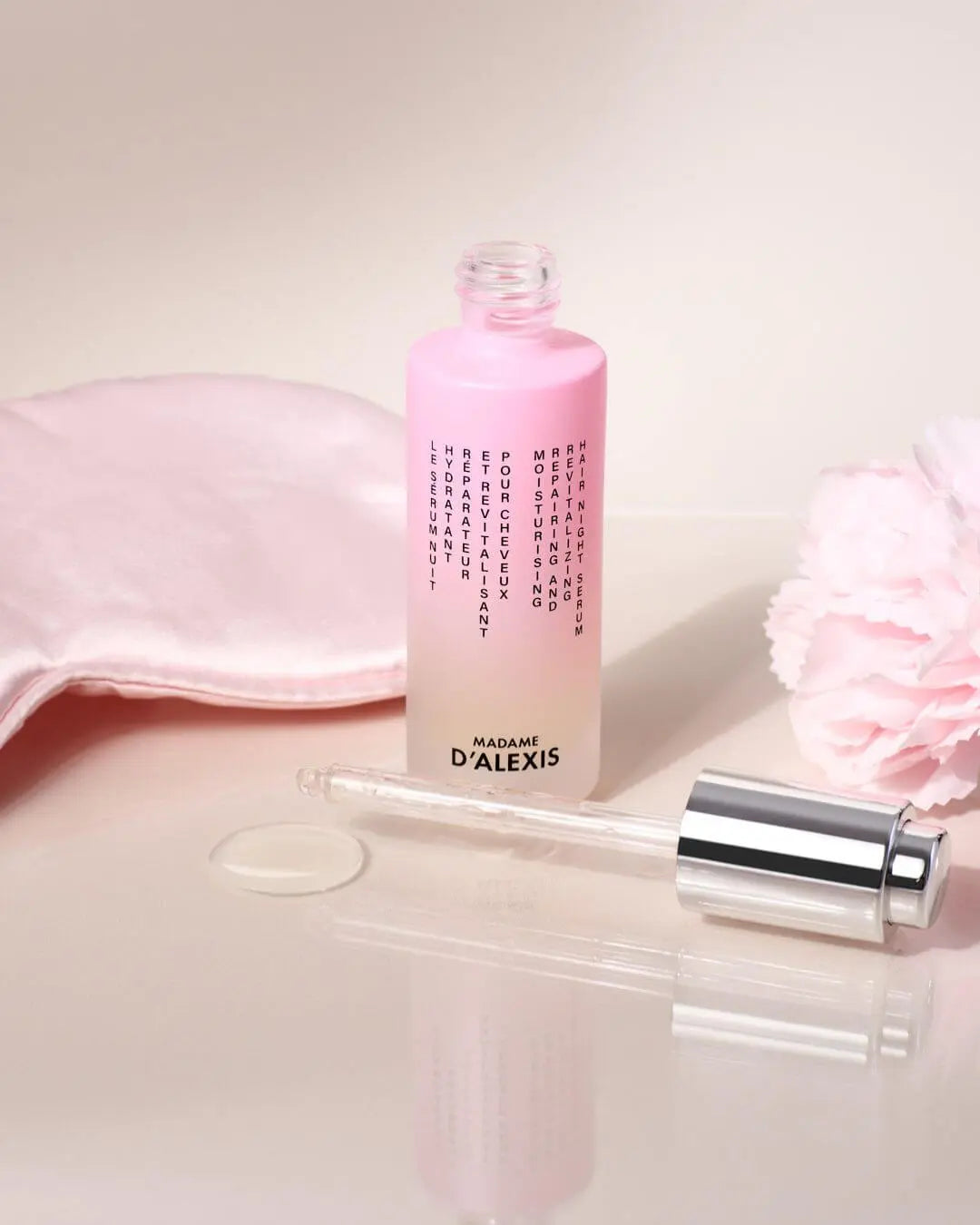
Le Sérum Nuit - anti-hair loss and densifying with probiotics
Microbiome · roots
- Night-time scalp care
- Probiotics + postbiotics
- Density course, 3 to 5 evenings a week
The scratching, inflammation, hair loss cycle
Hard water, pollution, sulphates, stress or an unbalanced microbiome weaken the skin barrier.
Broken skin keeps the inflammation going and makes the scalp more reactive.
The root is in a less comfortable environment for healthy hair growth.
Reactive hair loss increases, especially when brushing, washing or on the pillow.
- Chronic irritation can trigger inflammation around the follicle; hair may leave its growth phase sooner.
- Sebum and pollution build-up on the scalp can clog the follicles and weaken the root.
- Each bout of repeated scratching causes tiny injuries that loosen the hair's anchoring.
- A calm, comfortable scalp is a better environment for hair, and keeping it that way is the first step.
- The most effective approach: gentle exfoliation every 10 to 15 days, a sulphate-free shampoo, and a balanced diet with iron and zinc.

When an itchy scalp becomes a warning sign
Many people scratch their head more often than they realise, and some then notice thinner hair. A winter in a big city, with pollution and hard water, is often enough to make the parting sensitive and leave more strands in the brush.
Understanding why the scalp itches and how this irritation affects hair loss helps you act before density drops.
We take a complete look at the external, dermatological and internal causes, then at the right steps, including gentle exfoliation with Le Scrub by Madame d'Alexis, which clears the follicles without irritating them. The aim: bring comfort back to the skin and strength back to the hair.
Why does my scalp itch?
The main causes of scalp irritation
The scalp faces the same aggressions as the skin on your face, sometimes more, whether you have dry skin or oily skin.
- Hard water: common across much of the United Kingdom, it leaves limescale deposits. The result: roughness, dull film and itchiness between washes.
- Styling residue: silicones, hairsprays and waxes oxidise in the air, causing build-up that can block the follicle opening.
- Pollution: fine particles stick to sebum and add to the irritating load.
- Harsh products:
- Sulphate surfactants (SLS, SLES) that strip surface lipids, alcohol and synthetic fragrances, which can cause an allergic reaction, are often behind immediate itching.
Our advice: rinse with filtered water when you can and avoid strong-hold aerosols, especially in the city.
Skin conditions behind an itchy scalp
When itching comes with symptoms such as redness, a rash, scaly patches or dandruff, the problem goes beyond simple cosmetic irritation.
- Seborrheic dermatitis
Linked to an overgrowth of Malassezia yeasts.
Oily or yellowish scales behind the ears and at the temples, sometimes with redness or small bumps.
- Psoriasis
Thick silvery scales that can bleed when pulled off.
Tender to the touch, sometimes with patches on the crown.
- Atopic eczema
Patches of dryness and strong itching at night.
Often linked to atopic skin elsewhere on the body; symptoms often occur or worsen in winter.
- Lice
Visible under a fine-tooth comb, with itching at the nape of the neck. In babies, flaky patches are more often cradle cap.
See a healthcare professional or dermatologist when hair loss is heavy or lasts, when patches ooze, or when itching wakes you at night. Other causes such as ringworm (a fungal infection), folliculitis, scalp acne, alopecia areata or lichen planopilaris also need a medical diagnosis, and a sore that does not heal should always be checked to rule out skin cancer.
Internal factors
The scalp quickly reflects the general state of the body, and risk factors include age, weight loss and hormonal changes.
- Iron or zinc deficiency
Iron carries oxygen to the hair follicle; low levels can slow hair growth.
Zinc helps regulate the sebaceous glands; a lack of it can add to itchiness.
- Hormone changes
Excess androgens increase sebum production, an ideal environment for Malassezia.
Changes after pregnancy or at menopause can increase scalp dryness and irritation.
- Chronic stress
Stress hormones make the skin more permeable, so irritants get through more easily, and symptoms can flare.
Stress can also push more hairs into the resting phase: this temporary hair loss, called telogen effluvium, shows up as shedding a few months later.
Most cases of itching and their symptoms fall into these three categories. Identifying yours is half the work towards a calm scalp. What next?
Adopt a routine that combines gentle hygiene, a balanced diet and exfoliation every 10 to 15 days to lift build-up and rebalance the microbiome. We come back to this in detail below.

Itchy scalp and hair loss: what's the link?
When the scalp itches regularly, it is tempting to see it as simple discomfort. Yet the connection between scalp itchiness and hair thinning (doctors call the itch scalp pruritus) deserves a closer, more clinical look.
Dermatologists talk about inflammation around the hair follicle: when it settles in, the follicle can leave the growth phase (anagen) early and enter the resting phase (telogen).
This mechanism is described in dermatology for many scalp conditions: inflamed, itchy areas often shed more than calm ones.
In other words, itching left untreated can lead to hair shedding: you may lose more strands to your brush.
Good to know
Itching and shedding often settle once the cause is identified and treated. This is why acting early, with a doctor's clinical diagnosis when needed, matters so much.
From itching to inflammation: the vicious circle
- Repetitive scratching: tiny skin lesions, an entry point for bacteria and infection.
- Immune reaction: the skin releases inflammatory messengers that cause swelling around the follicle.
- Less blood flow: the root receives less oxygen and fewer nutrients.
- Early resting phase: diffuse hair loss, sometimes called reactive shedding, leading to hair thinning or loss over time.
Published research (for example in dermatology journals) describes this cascade: people with an itchy scalp often also report increased hair loss. It shows how central chronic inflammation is.

Hair loss symptoms to watch for and when to see a dermatologist
An early diagnosis remains key. Note your symptoms for a week, then decide; a diary is helpful for your doctor. If you experience persistent itching, it is advisable to consult.
Warning signs and symptoms
- Diffuse redness that lasts more than 48 hours after washing.
- Yellow or greasy scales stuck to the root (think seborrheic dermatitis).
- Tenderness or pain when you touch the scalp, sometimes a burning sensation.
When to book an appointment
- Heavy hair loss that you notice every day, if it lasts several weeks in a row.
- Patchy hair loss forming round or oval bald patches, or losing hair in one area: this can be alopecia areata, which needs a quick diagnosis.
- Night-time itching that disturbs your sleep or leaves visible scratch marks in the morning.
- A sudden change in texture (finer hair all over the head). Hair loss after chemotherapy or with some medication follows its own course: ask your medical team.
Before your appointment, prepare
- A list of the hair products you have used in the last three months (shampoos, styling oils, hair dye).
- Photos taken once a week: nape, crown, temples.
- Any medication, possible deficiencies and hormonal context (after pregnancy, menopause).
What you can do for your scalp while you wait for your appointment
Choose gentle exfoliation every 10 to 15 days. Le Scrub by Madame d'Alexis, with organic hydrosols and fleur de sel, lifts sebum build-up and leaves the scalp feeling fresher.
Massaging the scalp stimulates blood microcirculation. It is a simple, gentle habit; on the day you use Le Scrub, it replaces your shampoo, so no shampoo afterwards.
Itching and hair loss share a common thread: low-grade inflammation. Spotting the symptoms, seeing a doctor without delay and following a gentle exfoliating routine are the most effective way to protect the density and comfort of your scalp.
Preventing and soothing itching: four levers for lasting relief
Gentle hygiene: wash your hair without stripping it
An itchy scalp needs gentle handling. Yet many conventional shampoos are alkaline and rely on strong sulphates (SLS, SLES) that strip the hydrolipidic film.
Choose a mild cleansing base with plant-derived surfactants. Many people with a sensitive scalp find the difference noticeable from the first rinse.
Finally, a lukewarm rinse with a spoonful of apple cider vinegar helps counter hard water and smooth the cuticles, for more shine.
Remember:
- A gentle, slightly acidic shampoo that respects the skin barrier.
- Rinse with lukewarm water; very hot water can make itching worse.
- A little diluted apple cider vinegar in the final rinse.
Exfoliation every 10 to 15 days: free the root
The inflammation described above feeds on sebum build-up and styling residue. A gentle scrub every 10 to 15 days is enough to unclog the follicles. The video below shows the technique:
- Wet your hair.
- Apply Le Scrub by Madame d'Alexis section by section on the scalp.
- Massage for two minutes in small circles with your fingertips, rinse, then repeat a second time, like a double shampoo, and rinse thoroughly
This simple ritual stimulates blood microcirculation. On that day, Le Scrub replaces your shampoo.
The formula combines soothing organic hydrosols (Damask rose, chamomile), fleur de sel and organic coconut oil: fine enough to polish, gentle enough for a sensitive scalp. A homemade sugar scrub is one of the classic home remedies, but it lacks the softness of hydrosols.
Nutrition: support your hair health from within
A soothed, healthy scalp starts on your plate. Skin cells need iron, zinc and B vitamins to build their proteins; without them, hair becomes finer and itching can return.
- Iron: red meat, lentils and dark leafy greens.
- Zinc: pumpkin seeds, shellfish and wholegrains.
- Vitamins B6-B8: whole eggs and salmon.
A simple idea: rye bread with lentil spread and a soft-boiled egg. If you suspect a deficiency, ask your doctor for a blood test before taking supplements.
Managing stress: calm the scalp through the nervous system
Chronic stress raises cortisol, which weakens the skin barrier, so irritants get in more easily. Three discreet exercises:
- 4-4-6 breathing: breathe in for four seconds, hold for four, breathe out for six. Repeat five times before bed.
- Temple self-massage: index and middle fingers at the edge of the forehead and temples, slow circles for one minute.
- Neck stretch: interlace your fingers behind your neck and gently tilt your head back to release tension.
Done morning and evening, these gestures help limit night-time itching, keeping unconscious scratching in check.
A gentle wash, exfoliating your scalp every 10 to 15 days, a balanced diet and a calmer nervous system: these four pillars protect against an itchy scalp and the reactive hair loss it can cause. Start today.
Treating hair loss linked to itching
We rarely talk about the thin line between an itchy scalp and increased hair loss, yet the two feed each other.
The first step to treat it is to name the cause: without a precise diagnosis, any treatment is a plaster on a leak. Three situations are common.
- Seborrheic dermatitis: greasy, yellowish scales and more itching at night (spelt seborrhoeic dermatitis in the UK). A pharmacist may suggest a medicated antidandruff shampoo (for example with zinc pyrithione or salicylic acid) to calm the Malassezia overgrowth and the inflammation.
- Female pattern hair loss: a widening parting and diffuse thinning, common in women with age; it is a form of hereditary hair loss, like male pattern hair loss or pattern baldness in men. Scratching adds stress to the follicles; a dermatologist can confirm the diagnosis and discuss a treatment plan, including any potential side effects.
- Nutrition-related shedding: sudden hair loss after pregnancy or a restrictive diet, often with a sensitive scalp. A blood test checks iron and zinc levels; your doctor may then suggest iron supplements if needed.
Alongside medical care, a balanced diet rich in protein, iron and zinc supports the hair from within. Ask your doctor before taking any supplement.
A four-step routine to soothe the scalp
Four simple gestures that are easy to remember: a calm scalp, clear follicles, nourished lengths and care at night.
- Scrub every 10 to 15 days: Massage for two minutes with Le Scrub by Madame d'Alexis, in two passes like a double shampoo; its fleur de sel lifts residue while organic hydrosols leave the scalp feeling soothed. That day, it replaces your shampoo.
- Gentle shampoo for your other washes: Choose a base without harsh sulphates; a mild formula respects the skin barrier and soothes tingling. Tip: let the lather sit for thirty seconds before rinsing.
- Nourishing mask twice a week: Apply Le Masque by Madame d'Alexis, rich in plant ceramides, to the lengths for ten minutes under a warm towel. Hair feels softer and breakage on the surface is reduced.
- Night serum: scalp care in the evening: Apply a few drops of Le Sérum Nuit, with probiotics and postbiotics for the scalp, 3 to 5 evenings a week as a course, then once or twice a week. Pat it in gently; a little is enough.
Useful marker: If you notice less hair in the plughole after a few weeks, your routine is working; keeping it up is what counts.
Treating hair loss caused by an irritated scalp comes down to three things: a precise diagnosis, appropriate medical care and a consistent cosmetic routine. When they come together, itching fades, the hair feels stronger and density is better protected.
How to use Le Scrub by Madame d'Alexis step by step
FAQ: itchy scalp and hair loss
Why does my scalp itch and my hair fall out?
Persistent itching often reflects inflammation around the follicle: sebum build-up, pollution or styling residue clog the root, and the hair may enter the resting phase early. Itching comes first, then reactive shedding when brushing. These symptoms usually ease with gentle exfoliation and a mild, sulphate-free shampoo; a dermatologist can confirm the cause.
Which conditions and diseases make the scalp itch?
Four common skin diseases include:
- Seborrheic dermatitis: greasy, yellowish scales and an overgrowth of Malassezia yeast.
- Psoriasis: thick silvery scales, sometimes painful.
- Atopic eczema: dry areas and strong night-time itching.
- Ringworm (fungal infection): scaly, itchy bald patches, sometimes with bumps; it is contagious and can look like alopecia areata.
For some people these are chronic conditions that need expert advice: see a doctor rather than self-medicating.
Which deficiency can cause itching?
Three nutrients play a key role:
- Iron: low iron levels can increase hair loss.
- Zinc: helps regulate sebum; a lack of it can encourage inflammation and dandruff.
- Vitamins B6 and B8: help build keratin; low intake can cause dryness of the scalp.
A blood test is the way to check: consult a healthcare professional before any supplement.
Which shampoo is best for an itchy scalp?
Choose a formula:
- without harsh sulphates (SLS, SLES);
- that is mild and respects the hydrolipidic film;
- with soothing ingredients such as chamomile hydrosol, colloidal oat or bisabolol; some people also like a drop of tea tree oil, well diluted.
A lukewarm rinse with a little diluted apple cider vinegar completes the soothing routine. For dandruff, an anti-dandruff or medicated shampoo may be advised by a pharmacist.
Why does unwashed hair end up itching?
Oxidised sebum mixes with fine particles in the air and feeds bacteria and yeast. Their growth releases irritating substances that weaken the skin barrier; the scalp stings like itchy skin elsewhere, then flakes. A gentle wash every two or three days breaks this cycle without stripping.
Is it normal for the scalp to itch when hair grows back?
It can happen: slight tingling may occur as new hair grows, because the scalp is very active. This is normal; mist with aloe vera and massage gently to calm the sensation.
How can you prevent hair loss linked to the scalp?
The approach rests on four pillars:
- Treat the inflammation: with the treatment a healthcare professional or dermatologist recommends.
- Exfoliate every 10 to 15 days: a fleur de sel and hydrosol scrub clears the follicles.
- Nourish the bulb: a balanced diet with iron, zinc and protein.
- See a doctor if heavy hair loss lasts several weeks, if bald patches appear or if you start losing hair in clumps.
What causes an itchy scalp?
An itchy scalp usually results from several factors:
- Seborrheic dermatitis: Malassezia yeast that feeds on sebum, causing inflammation.
- Eczema or scalp psoriasis: chronic inflammatory skin diseases with scales, redness or a rash.
- Contact allergy: allergic reactions to fragrances, hair dye or preservatives.
- Fungal infections (scalp ringworm) or bacterial ones (folliculitis, with small bumps or acne-like spots): sharp, often localised itching.
- Finally, simple oxidised sebum and pollution can trigger scalp itching or scalp acne without any underlying disease.
How is scalp-related hair loss treated?
Inflammatory hair loss is managed step by step:
- A dermatologist's appointment to find out whether the alopecia is androgenetic, scarring (such as lichen planopilaris), alopecia areata or reactive; age and family history help guide the diagnosis.
- Topical treatments: creams, lotions or shampoos prescribed or recommended by a doctor or pharmacist, depending on the diagnosis.
- Natural remedies:
- Essential oils such as rosemary or cedarwood, well diluted in a plant oil.
- Fresh aloe vera gel to calm and moisturise the scalp.
- Complete with a balanced diet and, if your doctor advises it, a supplement. These remedies support, but do not replace, medical treatment.
Which home remedies soothe an irritated scalp?
To calm and soothe it quickly and bring relief:
- Spray a thermal water mist, then massage in two drops of castor oil, rich in omega-9.
- After washing, pour a capful of apple cider vinegar into 500 ml of lukewarm water as a final rinse.
- Do a light circular massage from the nape to the crown to stimulate microcirculation.
- Use soothing products with panthenol, bisabolol or chamomile hydrosol.
- Keep up your hydration: drink enough water and eat foods rich in essential fatty acids.
Itchy scalp and hair loss: is there a link?
Yes. An itchy scalp can enter a vicious circle: inflammation around the hair follicle can shorten the growth phase and encourage hair loss. In androgenetic alopecia, this inflammatory environment can speed up thinning. Similar mechanisms are seen in poorly controlled atopic dermatitis. Treating the irritation therefore helps reduce reactive hair loss.
How can you prevent scalp itching?
Prevention rests on six habits:
- Gentle hygiene (a mild, sulphate-free shampoo).
- Choose suitable hair products, free from allergenic fragrances and harsh hair dye.
- Rinse with lukewarm water, keeping the temperature mild rather than very hot.
- Manage stress: 4-4-6 breathing, scalp massage.
- Look after your diet: iron, zinc, B vitamins, omega-3.
- Set up a simple hair routine: gentle exfoliation every 10 to 15 days, a moisturising mask, a protective serum.
When should you see a dermatologist about your scalp?
You should see a dermatologist when:
- persistent symptoms (itching, scales, redness) last more than two weeks despite gentle care, or flare up again and again;
- the irritation comes with oozing or pain when touched;
- the hair loss is heavy or forms bald patches;
- you suspect a fungal infection, an allergic reaction or psoriasis.
An accurate diagnosis means you get the right treatment before any lasting damage sets in.
The Madame d'Alexis routine in 4 steps
Care at night
Le Sérum Nuit, anti-hair loss and densifying with probiotics, section by section on the scalp.
Le Scrub - exfoliating scalp shampoo with organic hydrosols
Gentle detox · scalp
- Lifts residue and flakes
- Fleur de sel + organic hydrosols
- A fresher scalp
Le Shampoing - organic hydrosols and hyaluronic acid
Sulphate-free · gentle
- Cleanses without stripping
- Soothing organic hydrosols
- Prebiotics + cationic HA
Le Masque - deep hydration with organic hydrosols
Ceramides · sensitised hair
- Nourishes and softens
- Plant ceramides
- Helps limit breakage
Le Sérum Nuit - anti-hair loss and densifying with probiotics
Microbiome · roots
- Night-time scalp care
- Probiotics + postbiotics
- Density course, 3 to 5 evenings a week
Read more about the scalp
Calming the scalp with everyday care already helps protect density.
Start with a simple routine: clear residue, wash without stripping, nourish the lengths and care for the scalp at night.
See the irritated scalp routine