Advice
How can you moisturize dry hair and restore its softness and shine?
Hydrating dry hair requires precision, consistency, and targeted active ingredients. Discover how to deeply reveal its radiance.

Why does hair become dry?
Hair dryness is never random. It reflects animbalance between what the hair receives and what it actually needs. Understanding the causes of dryness is the first step toward lasting, deep hydration that is, above all, gentle on the hair fiber.
A natural or man-made drought?
Some hair types are naturally drier: this is the case with curly, frizzy, or textured hair, whose curvature makes it more difficult for sebum to be distributed along the hair shaft. But very often, dryness is acquired, caused by our daily habits.
Frequent washing, sulfate-based shampoos, aggressive brushing, repeated coloring,sun exposure, heating, air conditioning, and oxidative stress gradually weaken the hair structure.
They alter the cuticle, the protective barrier that covers each fiber, and disrupt the hydrolipidic film that is supposed to maintain its natural moisture.
The key role of sebaceous glands
They produce sebum, the scalp's natural lubricant. Insufficient secretion—whether natural or due to imbalance—can leave the hair fiber exposed, vulnerable, and without lipid protection. The result: hair that breaks, becomes dull, tangles, and, above all, loses its suppleness.
Key takeaways
- Drought can be structural or environmental.
- It worsens in the absence of targeted and regular care.
- Effective hydration begins with understanding these mechanisms.
In a demanding and respectful approach, care becomesprevention, correction, and revelation. A ritual.

What are the signs that your hair lacks moisture?
Hair, like skin, speaks in its own way. Even before it breaks, it whispers, alerts, tires. A fiber that lacks moisture never behaves as usual—itreacts, often silently, until the day the mirror no longer lies.
Among the first signs:
- A rough, almost coarse texture that sticks between your fingers
- Persistent frizz, even without external humidity
- A lack of flexibility, the lengths no longer bounce back
- Loss of shine, dullness, matte appearance
- Difficult to detangle, knots accumulate, ends snag
- No elasticity: when you pull a strand slightly, it does not spring back.
Personally, it was a summer in Lisbon—between sun, wind, and sea spray—that made me understand the difference between tired hair... and thirsty hair. Shampoo was no longer enough. It was in a deep treatment, rich in hydrolats and biomimetic active ingredients, that I rediscovered living matter.
Dry or dehydrated hair: what's the difference?
The two are often mistakenly confused.Dry hair lacks lipids: its sebaceous glands do not produce enough sebum to protect the hair fiber. Dehydrated hair, on the other hand, lacks water: it does not retain the moisture necessary for its suppleness.
Understanding this nuance is fundamental, because the cosmetic response will not be the same.
- Dry hair needs nourishment: vegetable oils, butters, ceramides
- Dehydrated hair needshydration: humectants, hyaluronic acid, floral water.
A common mistake?Saturating the hair with oils to "nourish" it, without ever providing it with moisture. The result: the hair fiber becomes heavier, but remains dull and brittle.
Effective skincare must always combine two steps: moisturizing and then sealing, in that order. This is essential for restoring shine, suppleness, and lasting balance to the skin.
What really moisturizes hair?
There is a widespread belief, as appealing as it is mistaken, that water hydrates hair. However, while water is vital, it does not penetrate the hair fiber permanently. It evaporates, often too quickly, leaving behind an illusion of hydration. To truly hydrate dry hair, you have to go further. You have to formulate, structure, and retain.
It is the moisturizing and hydrating ingredients that make the difference. Their role? To attract moisture into the fiber and keep it at the core of the hair. Among the most effective are:
- Cationic hyaluronic acid, known for its ability to bind up to 1,000 times its weight in water
- Aloe vera, rich in moisturizing polysaccharides, gentle on the scalp
- Floral hydrosols, such as Damask rose or orange blossom, which soothe, revitalize, and infuse the fiber with micronutrients.
- Vegetable glycerin, the star of humectants, which retains water and softens the material.
But effectiveness never comes from a single ingredient. It comes from the synergy of active ingredients: moisturizing without weighing down, strengthening without stiffening. A successful formula respects this subtle balance.
How can you deeply moisturize dry hair?
Deep hydration is much more than just a single step. It’s a consistent routine—a sequence of carefully chosen and properly applied skincare products.
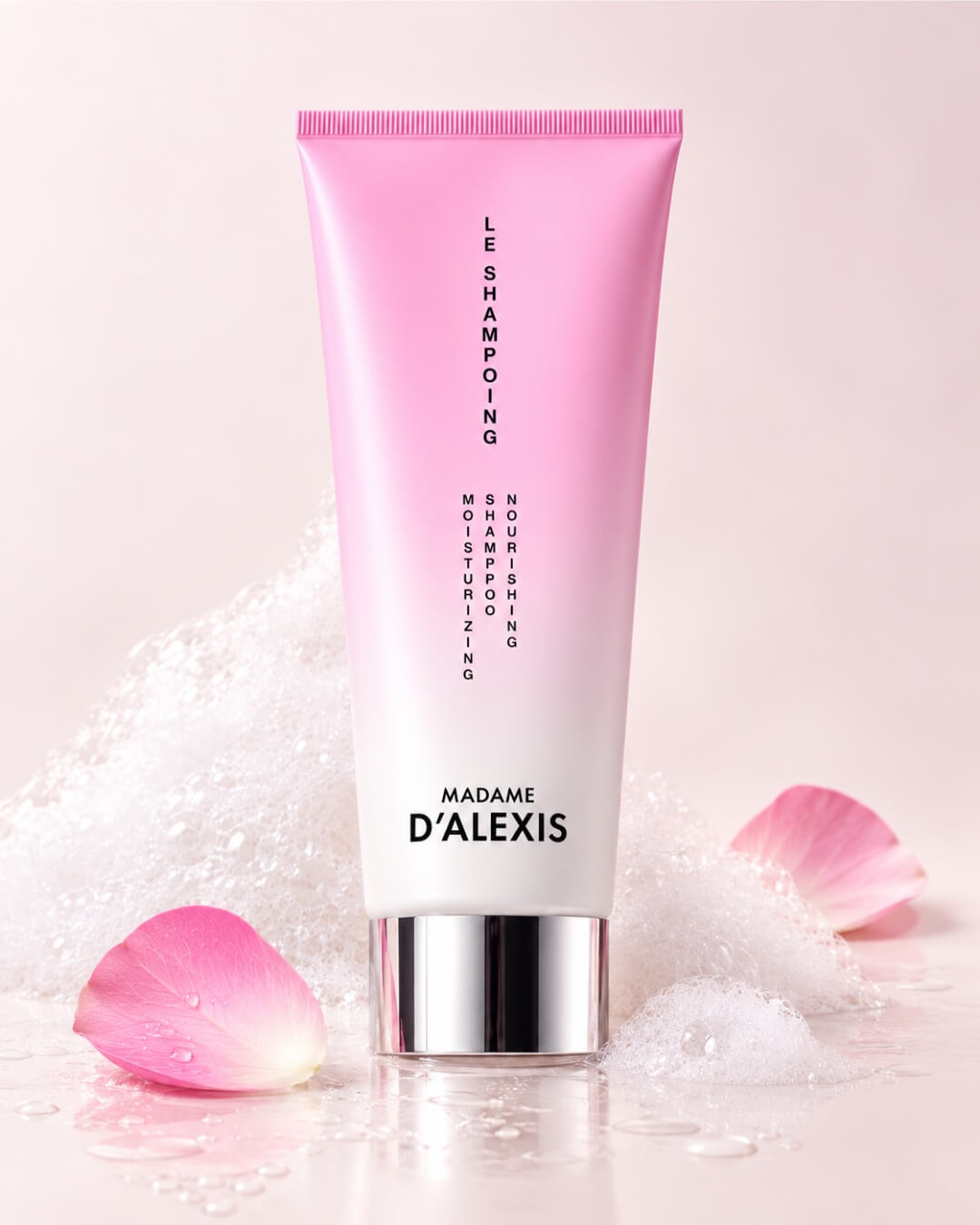
It starts with a gentle, sulfate-free cleanse to avoid damaging the cuticle. Next comes deep conditioning, often in the form of a rich mask formulated withmoisturizing and repairing active ingredients. Finally, a finishing touch (serum, light cream) seals in moisture.
For visible and long-lasting hydration:
- Apply a moisturizing mask to dry hair once or twice a week.
- Leave on for at least 15 minutes, under a warm towel or treatment cap.
- Gently detangle during the pause time to allow the treatment to penetrate better.
A personal memory: after intense coloring, it was a mask made from floral water and hyaluronic acid, applied under gentle heat, that literally restored my hair length. The fibers, which had been dull and brittle, regained their suppleness, definition, and shine.
True hydration is lasting hydration. Hydration you can feel. Hydration you can see.
Which moisturizing products should you choose for your hair type?
Not all hair has the same needs. To be effective, hair hydration must be tailored to the nature of the hair fiber, its density, porosity, and history (coloring, heat, mechanical damage).
An effective treatment for dry hair is, above all, a well-targeted treatment. It’s not a matter of quantity, but ofcompatibility between the texture, active ingredients, and hair structure.

Fine hair: hydration without weighing it down
Fine hair is fragile and needs to be treated gently. The aim isto moisturize without adding grease, and to add suppleness without weighing down the hair fiber.
Skincare products in the form of gels, serums, or light lotions, based onhyaluronic acid orfloral hydrosols, are preferable. A texture that is too rich could flatten the hair's natural movement and weigh it down unnecessarily.
Thick or curly hair: intensity and nourishment
Textured, curly, or thick hair is inherently more porous. Its more open cuticle requireslong-lasting, enveloping hydration, often combined with lipid nutrition.
Rich masks and melt-in-the-mouth plant butters, combined with moisturizing agents such as vegetable glycerin oraloe vera, are particularly suitable. Here, skincare becomes substance: it penetrates, restores, and tames.
Colored or sensitized hair: repair and protect
Colored hair is transformed hair—and sometimes weakened. Hydration must be combined with targeted care tostrengthen the hairfiber, in order to prevent breakage and maintain shine.
Look for formulas rich in ceramides, hyaluronic acid, and natural film-forming agents that can retain water in the hair fiber and seal in color vibrancy.
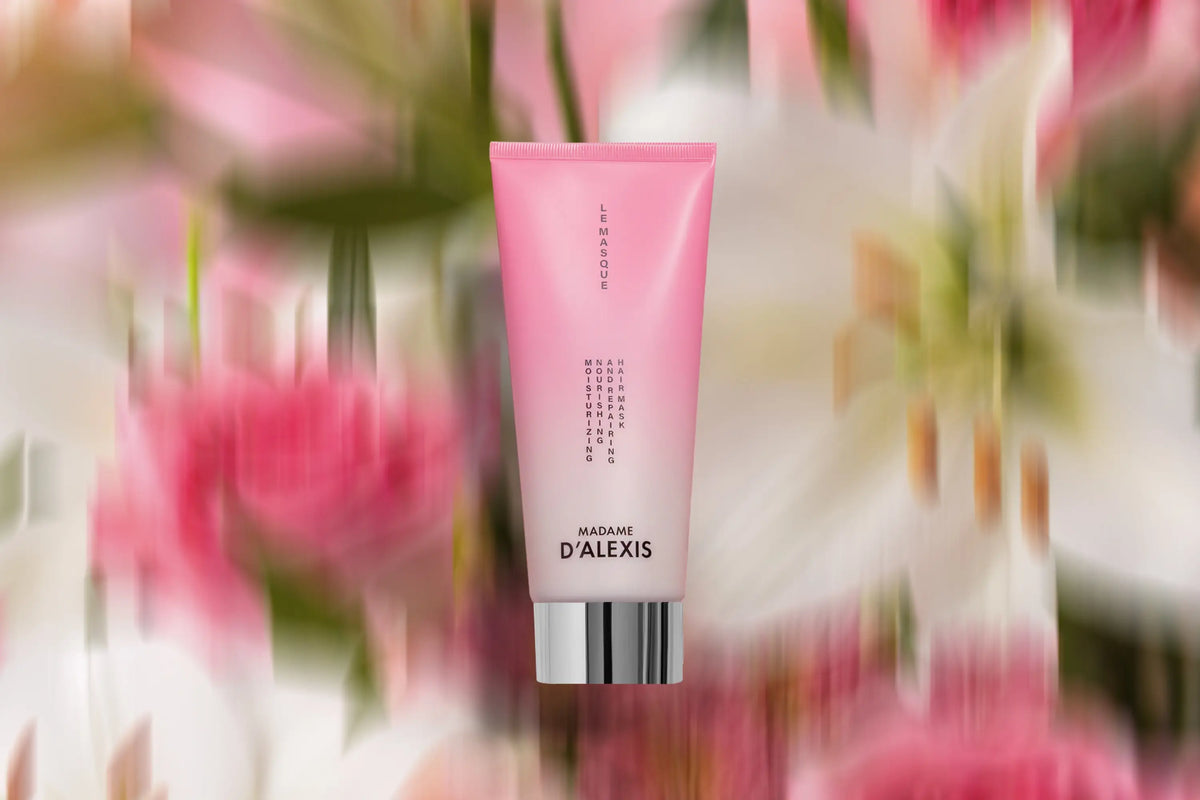
Alexis' Madame Mask: a high-performance moisturizing and repairing treatment
The result of a demanding formulation process,Alexis' Madame Mask stands out for its complete absence of added water, replaced by a trio ofcertified organic floral hydrosols.
:
- Damask rose, for intense hydration and a velvety feel
- Chamomile, soothing, ideal for sensitive scalps
- Orange blossom, invigorating and revitalizing
In addition to these active waters:
- Des plant ceramidesto restore the lipid barrier
- Cationic hyaluronic acid, which locks moisture into the core of the fiber
- An essential orange blossom wax, a soft and sensory signature scent
Its melt-in texture, which is non-greasy, is suitable for all hair types, even fine hair. It deeply moisturizes, restores elasticity and shine, and leaves hair supple, manageable, and visibly regenerated. Highly effective, in a rare skincare gesture.
How can you prevent dry hair?
Maintaining the hair’s natural moisture is a delicate balance that is often overlooked in rushed or ill-informed routines. However, dry hair is not inevitable—it is almost always preventable. Prevention rather than cure: that is the philosophy of informed hair care.
Review the basics of washing
The first step is to rethink your shampoo. Aggressive surfactants—particularly sulfates—can damage the hydrolipidic barrier and leave the hair fiber exposed. It is therefore essential to choose a sulfate-free shampoo, which is gentle but effective and cleanses without causing imbalance.
Washing your hair less frequently also helps preserve natural sebum, the protective film that is essential for keeping hair supple. For me, washing my hair every three days and lightly refreshing the roots was enough to transform my locks.
Beware of hot water and invisible hazards
Water that is too hot expands the hair cuticles, leading to dehydration. Lukewarm water is sufficient to cleanse without damaging the hair. Similarly, sun, chlorine, and sea salt are drying factors. It is important to protect your hair as well as your skin.
Moisturize, even between treatments
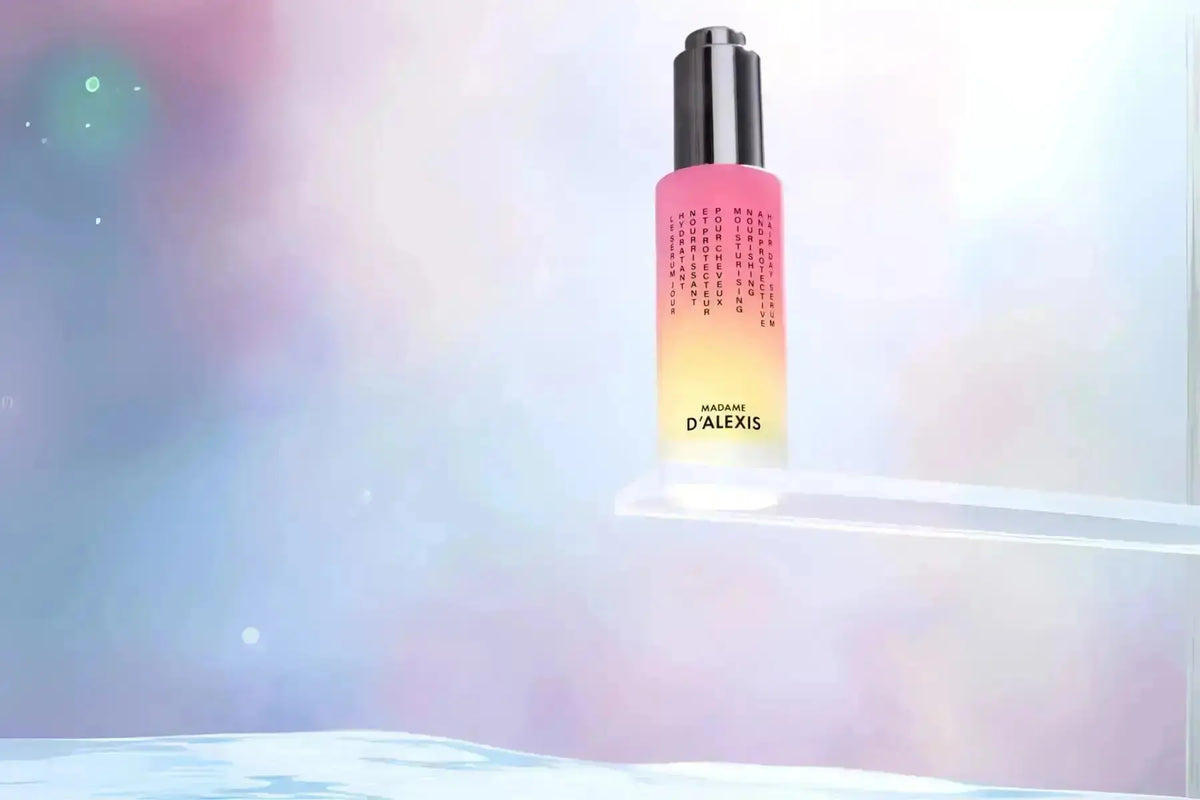
A lightweight hair serum, applied to dry or damp hair, can make all the difference. It creates a moisturizing shield, repairs split ends, and prevents water evaporation. A simple, daily gesture, but a decisive one.
What hair care routine should you adopt to moisturize your hair?
A routine is only effective if it is consistent. AtMadame d'Alexis, we consider each step to be an intelligent complement, where each treatment prepares for the next.
Example of a moisturizing routine:
- Step 1: Gentle, sulfate-free cleansing to purify without damaging the skin.
- Step 2: moisturizing mask, made with hydrosols and biomimetic active ingredients, once or twice a week
- Step 3: protective serum, to be applied to lengths and ends, to seal in moisture
- Step 4: nighttime treatment if hair is very dry or damaged
Consistency and precision are just as important as the quality of the formula. Well-hydrated hair is not saturated hair: it is hair that has been treated with respect, regaining its suppleness, shine, and manageability.
Your frequently asked questions about moisturizing dry hair
How can you naturally moisturize very dry hair?
Natural hydration requires simple yet thorough steps. It’s essential to eliminate invisible aggressors: sulfate-based shampoos, washing too frequently, hard water, or excessive heat. Next, opt forplant-based active ingredients that have a high affinity for the hair fiber:
- Floral hydrosols, such as Damask rose, with soothing and moisturizing properties
- Aloe vera, for its high content of moisturizing polysaccharides
- Vegetable glycerin, which captures and retains water in the hair shaft
- Cationic hyaluronic acid, with long-lasting effect
Once a week, apply adeep moisturizing mask and leave it on under a warm towel. The treatment then becomes a ritual.
What is the best treatment for moisturizing hair?
A good moisturizer is not measured by its richness, but by its ability to penetrate the hair fiber without saturating it. It should contain:
- Powerful humectants
- Repairing agents such as plant ceramides
- A base without inert water, replaced by active floral waters
Alexis' Madame Mask, for example, combines effectiveness, sensoriality, and naturalness, without compromise.
Can a mask replace conditioner?
No.Conditioner temporarily detangles and smooths hair. A mask, on the other hand, provides deep treatment. The two are not mutually exclusive, but they are not interchangeable.
Is it possible to moisturize hair without weighing it down?
Yes, if the formula is well designed. Choose light textures, free from silicones, with high-performance active ingredients. Haircare products containing hyaluronic acid or floral water are discreet but powerful allies.
Why does my hair remain dry despite using hair care products?
Several possible causes:
- Inappropriate skincare (too nourishing, not moisturizing enough)
- Overdose of oils without water intake
- Irregular frequency or too short application
- Use of occlusive products
How can I tell if my hair lacks moisture or nutrients?
Dehydrated hair is dull, coarse, and lacks elasticity. Dry hair is brittle, split, and difficult to style. One lacks water, the other lacks lipids. The ideal solution? Moisturize then nourish. Always in that order.