Conseils
Differences between rice water and floral hydrosols in shampoos: which one to choose?
Rice water or floral hydrosols for your shampoos? Expert advice on choosing the ideal natural treatment for your hair type and needs.

Rice Water or Floral Hydrosols: What Should You Know to Choose the Right Shampoo?
Here are the key points to help you make an informed choice:
- Rice water: ideal for coating the hair, making it easier to detangle, and adding volume to fine hair.
- Floral hydrosols: perfect for deeply hydrating, soothing sensitive scalps, and naturally stimulating hair growth.
- Frequent use: floral hydrosols are perfectly suited to daily use, unlike rice water, which is best reserved for more occasional use.
- Sensory experience: hydrosols add a touch of luxurious refinement and an incomparable natural fragrance.
- Precautions for use: rice water requires thorough rinsing to prevent residue, while hydrosols should be stored in a cool place to preserve their optimal effectiveness.
In recent years, natural hair care has enjoyed tremendous growth, bringing time-honored ingredients back into the spotlight. Among these gems, rice water and floral hydrosols have attracted considerable interest from those seeking a refined and effective hair care routine.
But when choosing between these two natural elixirs, how do you know which one to favor for healthy, shiny, strong hair? Let’s take a closer look at the options, with precision and elegance.

Rice Water and Floral Hydrosols: Understanding Their Origins and Characteristics
First, it’s essential to understand what fundamentally sets rice water apart from floral hydrosols. Each ingredient has a unique history and composition, along with its own specific properties.
What Is Rice Water?
Rice water is far more than a passing trend. Used for centuries in Asia, particularly by the Yao women of Huangluo village in China, it is emblematic of an ancient hair care tradition.
A well-known story has it that these women have exceptionally long, lustrous hair thanks to the extraordinary benefits of regularly using rice water.
This precious water is obtained by soaking or cooking rice, resulting in a blend rich in nutrients essential for hair:
- Starch: coats the hair, making it easier to detangle and leaving it soft to the touch.
- Vitamin B (particularly inositol): strengthens hair, stimulates growth, and helps prevent breakage.
- Minerals (zinc, magnesium): essential for scalp balance, they regulate sebum production.
Rice water is therefore a natural choice for a revitalizing, affordable, and readily available treatment, prized for its quick, visible results on all hair types.
What Is a Floral Hydrosol?
Floral hydrosols, on the other hand, have a completely different character, defined by delicacy and elegance. They are produced through a subtle, precise process: steam-distilling aromatic plants or fresh flowers.
This technique yields water containing the plant’s active compounds, without the potentially irritating intensity of essential oils.
Some of the most prestigious floral hydrosols include:
- Damask rose: renowned for its revitalizing effects, it stimulates cell regeneration in the scalp while leaving dry, dull hair soft and shiny.
- Roman chamomile: this floral hydrosol is known for its calming and soothing properties, making it ideal for sensitive scalps or those prone to irritation.
- Orange blossom: a symbol of elegance, it deeply nourishes tired hair, restores its vitality, and promotes healthy growth thanks to its toning properties.
Floral hydrosols (read our article on the differences between hydrosol-based shampoo and water-based shampoo), made primarily of water-soluble plant active ingredients (vitamins, minerals, and gentle aromatic compounds), offer targeted benefits and a refined sensory experience in premium shampoos.
Ultimately, choosing between rice water and floral hydrosols comes down to considering your own hair care needs. While rice water appeals with its fast results and ease of use, floral hydrosols stand out for their deeper, more luxurious effects, specifically tailored to particular hair concerns.
This fundamental difference will likely determine which ingredient you prefer in your ideal shampoo.
The Specific Benefits of Rice Water in Shampoos
Benefits of Rice Water for Hair
Rice water has valuable benefits that have been recognized in Asia for centuries. A true age-old secret of Japanese women, it is one of the keys to their shiny, thick, healthy hair.
-
Strengthens fragile hair:
Rich in B vitamins, particularly inositol, rice water strengthens hair fibers from within. This natural compound penetrates deeply, effectively repairing brittle, fine hair. -
Coating and detangling action thanks to starch:
The starch gives it a slightly viscous texture. This makes detangling easier right away while enveloping the hair fiber in a delicate protective veil. Hair is left soft, supple, and easier to style. -
Visibly boosts shine:
With regular use, rice water gives dull hair a natural luminosity, a highly sought-after quality in luxury hair care. Its minerals (zinc, potassium, magnesium) actively help restore visible shine from the first uses.
Potential Drawbacks of Rice Water
Despite its many benefits, a few precautions are necessary:
-
Risk of residue buildup:
When used in excessive amounts or too frequently, rice water can leave starch deposits on the scalp. If not properly removed, this residue can weigh hair down and make it look dull. -
Requires thorough rinsing:
Rinsing thoroughly is essential to prevent buildup. The key recommendation is to use rice water as a final rinse, followed by a light rinse with fresh water to retain its benefits without unpleasant side effects.
The Specific Benefits of Floral Hydrosols in Shampoos
Benefits of Floral Hydrosols for Hair
Floral hydrosols, or floral waters, represent the gold standard in natural hair care. For centuries, these precious waters, obtained by steam-distilling fresh flowers, have captivated people with their delicate sensory qualities and remarkable effectiveness.
-
Soothes the scalp:
Thanks to their gentle molecules, hydrosols such as Roman chamomile and Damask rose soothe irritated, sensitive scalps, reduce redness, and help prevent dandruff. -
Intense, lasting hydration:
Naturally rich in water-soluble plant actives, they deeply hydrate hair without weighing it down. Their immediate effects leave hair more supple, soft to the touch, and subtly shiny. -
Naturally stimulates hair growth:
Rich in revitalizing active compounds, orange blossom hydrosol, for example, invigorates the hair roots and gently promotes steady, healthy growth.
Potential Drawbacks of Floral Hydrosols
Despite their evident benefits, floral hydrosols require a few precautions when used:
-
Higher cost:
Because of the sophisticated distillation process, they are often more expensive than rice water. This cost may influence the final choice, especially for regular daily use.

Rice Water vs. Floral Hydrosols: A Direct Comparison of Their Effects on Hair
Rice water and floral hydrosols are now part of high-end beauty rituals. Their benefits for hair, however, differ subtly. Having personally tested both ingredients in various routines, I noticed distinct results depending on my hair’s specific needs.
To clarify these differences, let’s look at the effects of each one point by point:
-
Hydration:
- Rice water: moderate hydration thanks to its B vitamins.
- Floral hydrosols: intense, long-lasting hydration thanks to their concentrated plant compounds.
-
Repair:
- Rice water: temporary coating effect from starch, ideal for fine or brittle hair.
- Floral hydrosols: deep, lasting repair, particularly rose hydrosol, which deeply regenerates the hair fiber.
-
Shine:
- Rice water: gives hair immediate but superficial shine.
- Floral hydrosols: provide natural, subtle shine that reflects the hair’s overall health.
-
Detangling:
- Rice water: excellent natural detangler thanks to its starch content.
- Floral hydrosols: gentler detangling, paired with incomparable softness.
-
Scalp irritation:
- Rice water: no significant soothing effect.
- Floral hydrosols: strong anti-inflammatory action, especially valued by people with sensitive or irritated scalps.
-
Optimal frequency of use:
- Rice water: weekly use to avoid residue buildup.
- Floral hydrosols: suitable for daily use without the risk of weighing hair down or buildup.
Comparison Table: Rice Water vs. Hydrosols in Shampoos
| Criteria | Rice water | Floral hydrosols |
|---|---|---|
| Hydration | Moderate | Deep and long-lasting |
| Repair | Surface-level, coating | Intense and long-lasting |
| Shine | Surface-level, immediate | Natural and long-lasting |
| Detangling | Excellent | Mild to moderate |
| Scalp irritation | No noticeable effect | Strong soothing effect |
| Frequency of use | Weekly | Daily |
The superiority of floral hydrosols is particularly evident in their comprehensive action: intense hydration, deep scalp care, and a unique sensory experience. Their delicate fragrance transforms every wash into a truly refined beauty ritual.
Can rice water be used with hydrosols?
It is entirely possible, and even recommended, to combine these two exceptional ingredients to enjoy their complementary benefits. Personally, I have long used a simple, effective, and pleasant recipe based on rice water and lavender hydrosol.
Here is this recipe, easy to incorporate into your hair care routine:
- Prepare your rice water by soaking organic rice for 20 minutes in cold water, then straining carefully.
- Add one to two tablespoons of lavender hydrosol (or another hydrosol suited to your hair needs) to this filtered rice water.
- After your usual rose shampoo, apply this mixture as a final rinse to your hair. Gently massage the scalp to fully enjoy the soothing properties of lavender.
- Rinse lightly one last time with clear water to remove any excess.
This luxurious combination instantly reveals enhanced hair, combining the best of both worlds.
Which ingredient should you choose according to your hair type?
Every head of hair has distinct needs and requires targeted care. Therefore, before incorporating rice water or floral hydrosols into your beauty routine, you should clearly determine which ingredient will perfectly suit the exact nature of your hair.
Rice water: ideal for enhancing fine hair
Rice water, with its light texture and subtly coating action, is particularly beneficial in the following cases:
-
Fine hair seeking volume:
Thanks to its richness in starch, it delicately coats each fiber, providing light volume without weighing down the lengths. A close friend with very fine hair adopted this practice inspired by ancestral Asian rituals. After just a few uses, her hair already appeared thicker and airier. -
Hair needing light coating:
The starch naturally present in rice water provides instant detangling while protecting fragile hair from daily breakage. Ideal after coloring or repeated chemical treatments.
Floral hydrosols: recommended for luxurious, deep repair
Floral hydrosols stand out for their precious nature and targeted action, specifically recommended for:
-
Dry and damaged hair requiring deep repair:
Floral waters, such as Damask rose water, penetrate deep into damaged fibers. Their exceptional regenerating power restores softness and shine to the hair, visible from the first application. -
Sensitive or irritated scalp seeking soothing and softness:
Roman chamomile hydrosol is renowned for its calming properties. If you suffer from frequent irritation or discomfort, incorporating this hydrosol into your routine will immediately bring softness and well-being. -
All hair types wishing to enjoy a luxurious, sensory treatment:
Beyond visible hair effects, floral hydrosols provide a true moment of sensory pleasure thanks to their delicate natural fragrances. Their use transforms an ordinary hair routine into a truly refined beauty ritual.
Floral hydrosols at Madame d’Alexis: an advanced formulation
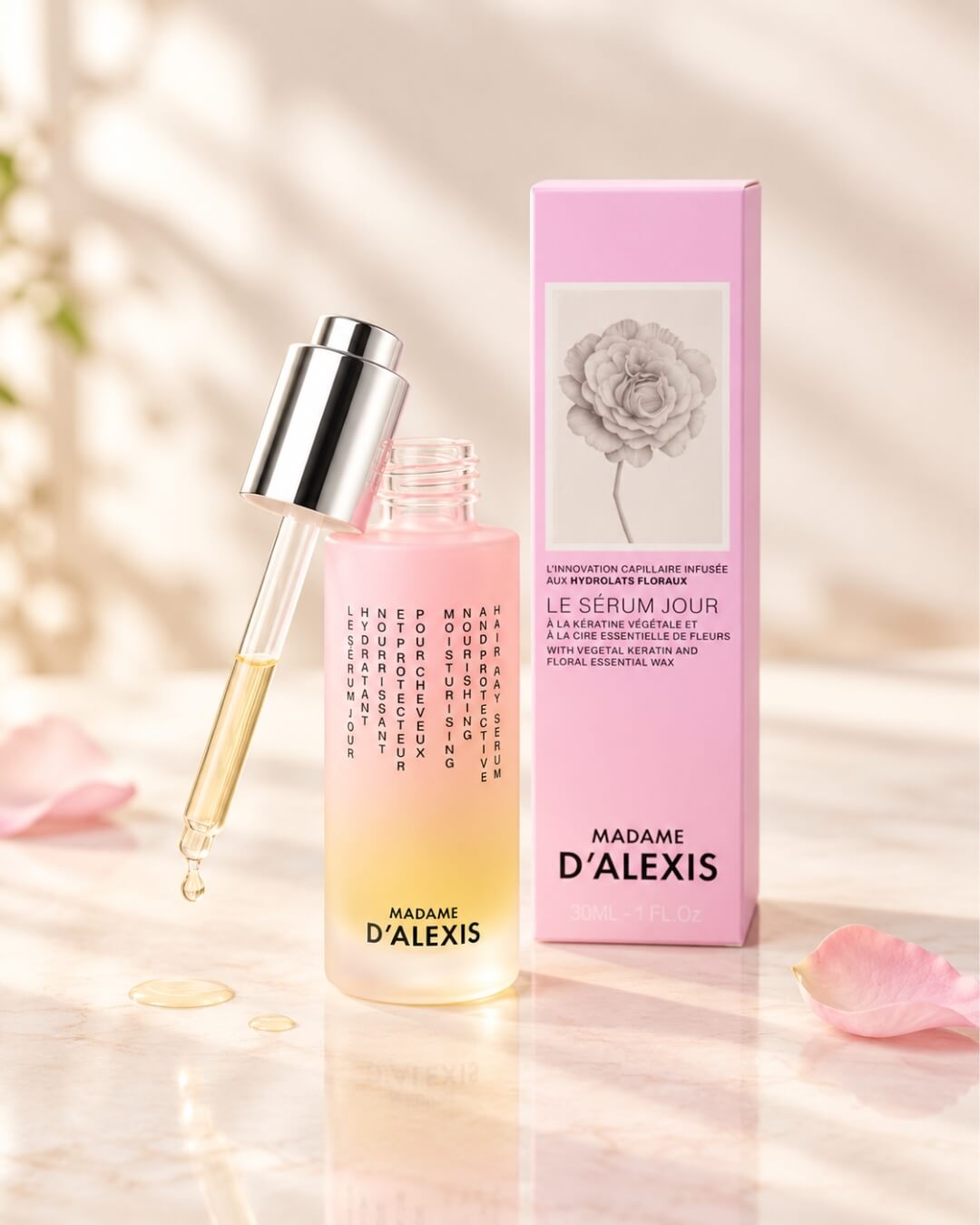
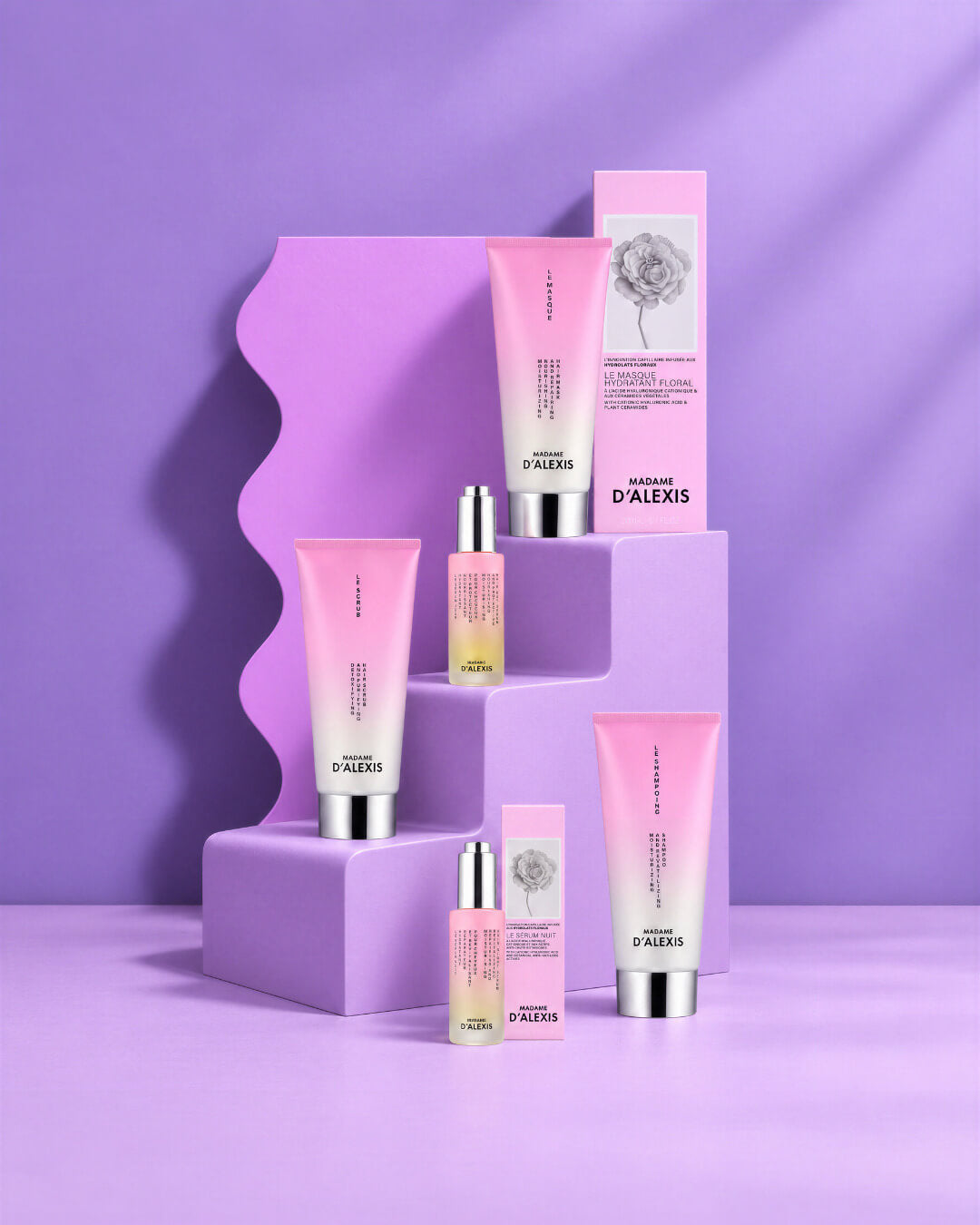
The Madame d’Alexis brand makes the bold choice to exclude regular water, which is often neutral and inert, in favor exclusively of high-quality floral hydrosols. This luxurious and innovative approach guarantees remarkable effectiveness from the very first uses.
Each Madame d’Alexis shampoo meticulously incorporates:
- Damask rose hydrosol: intensely revitalizes and protects thanks to its exceptional antioxidant properties.
- Roman chamomile hydrosol: immediately soothes the sensitive scalp, durably reduces irritation and redness.
- Orange blossom hydrosol: subtly stimulates hair growth, provides a refreshing and relaxing sensation while leaving a delicate and elegant fragrance on the hair.
This attention to detail and this rigorous choice of prestigious ingredients demonstrate the excellence that Madame d’Alexis wishes to offer each of her users. A clear commitment: to transform every hair treatment into a unique, refined, and deeply beneficial experience.
Prioritize floral hydrosols for enhanced hair
While rice water appeals with its immediate detangling action and light coating effect, floral hydrosols, on the other hand, offer an exceptional, refined, and complete beauty experience. Their intense hydrating power, their soothing properties on the sensitive scalp, and their delicious natural fragrance make them essential ingredients in a premium hair care routine.
For my part, incorporating floral hydrosols into my routine has revolutionized my approach to daily care: enhanced hair, glowing with health and delicately scented.
Madame d’Alexis has made these botanical treasures her secret to excellence. Discover her range of luxurious, natural, and high-performance hair care products without further delay.
Conseils