Advice
Clarifying Shampoo: Definition, Benefits, and How to Use It
The clarifying shampoo deeply cleanses the scalp by removing residue, pollution, and excess sebum. Used occasionally, it purifies the roots and optimizes the effectiveness of hair care products.


Clarifying shampoo: why, when, and how to use it?
A clarifying shampoo is used to remove the invisible buildup that weighs down hair: styling product residue, pollution, hard water, and oxidized sebum. When used correctly, it gives your hair fiber and scalp a fresh start. When misused, it can be too harsh.
Key takeaways:
- A clarifying shampoo deeply cleanses accumulated product residue, silicones, hard water minerals, and impurities.
- It is used occasionally, generally once every 3 to 4 weeks.
- A purifying shampoo mainly targets sebum and an oily scalp, whereas a clarifying shampoo targets overall buildup.
- The Madame d’Alexis Floral Scrub offers a gentle alternative: purifying and exfoliating without stripping.
Clarifying shampoo: why do we keep needing it?
If your hair feels heavy despite a careful routine, the problem is not always the product used but rather product buildup.
Residues from styling products, urban pollution, excess sebum, hard water: all of these gradually build up on the scalp and hair fiber. Over time, cleansing becomes superficial, hair care products do not penetrate properly, and hair loses its vitality.
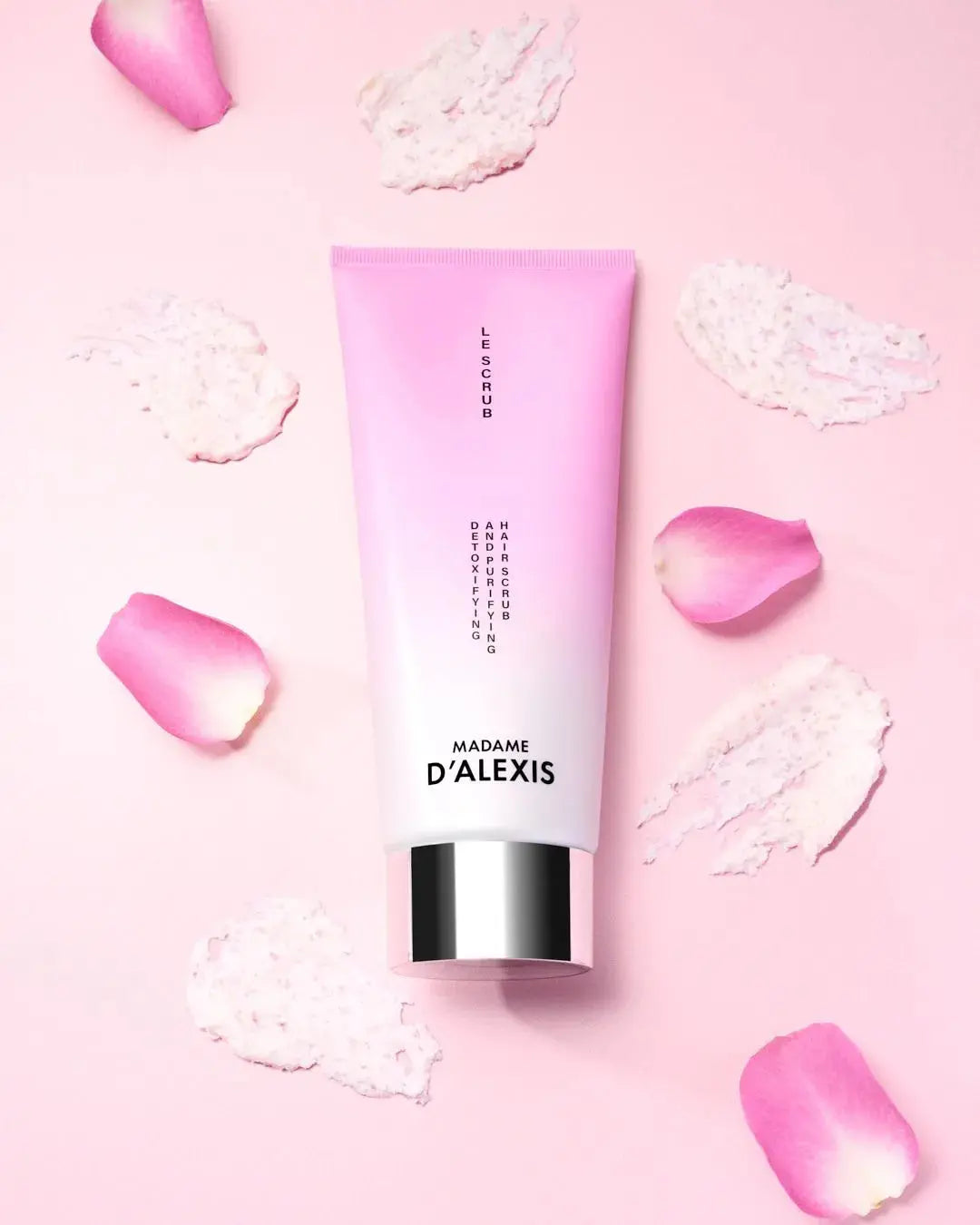
The Floral Scrub
Fleur de sel · Organic floral waters · Purification
★★★★★ 4.8/5- Gently exfoliates
- Helps remove residue
- Ideal for a fresh reset
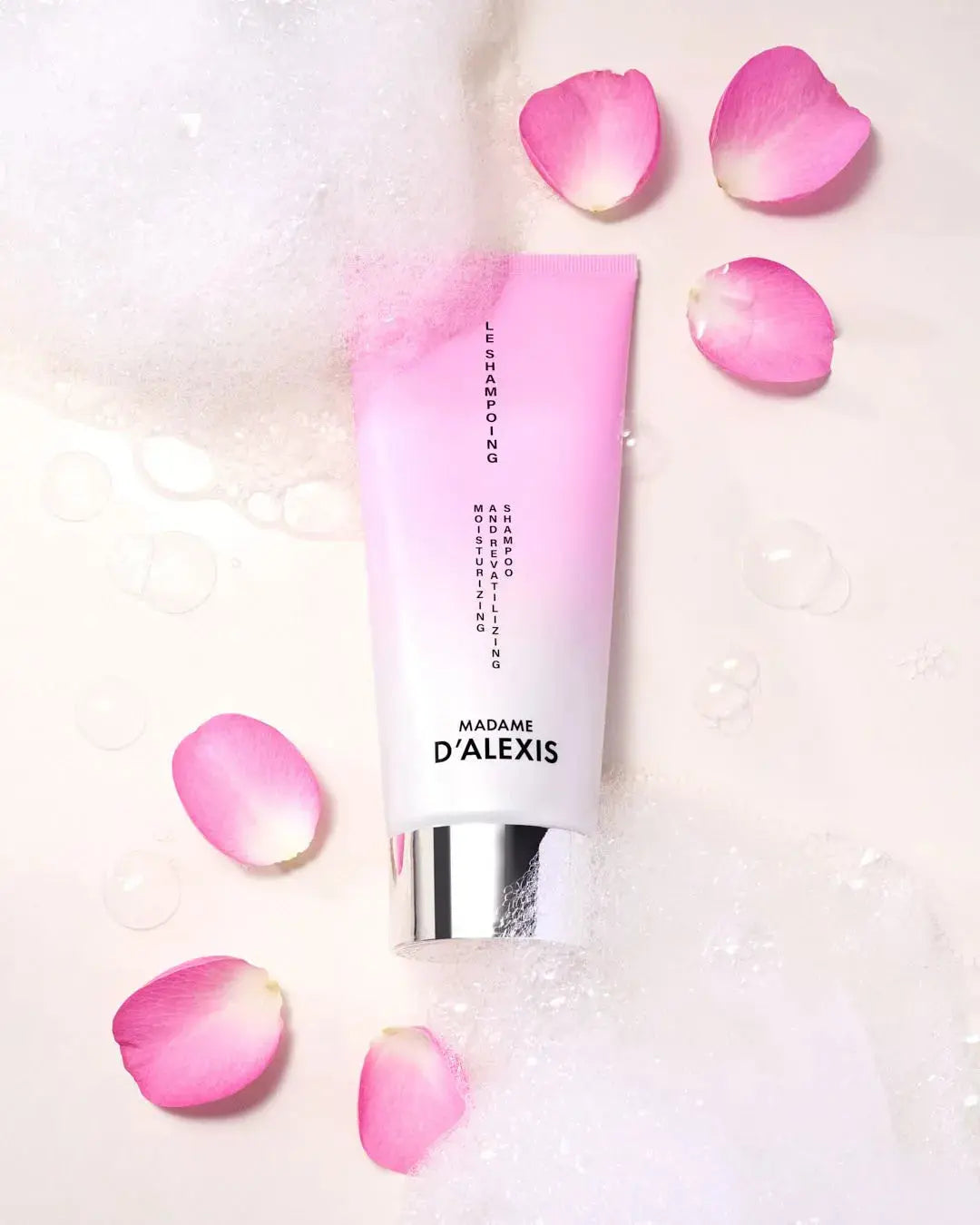
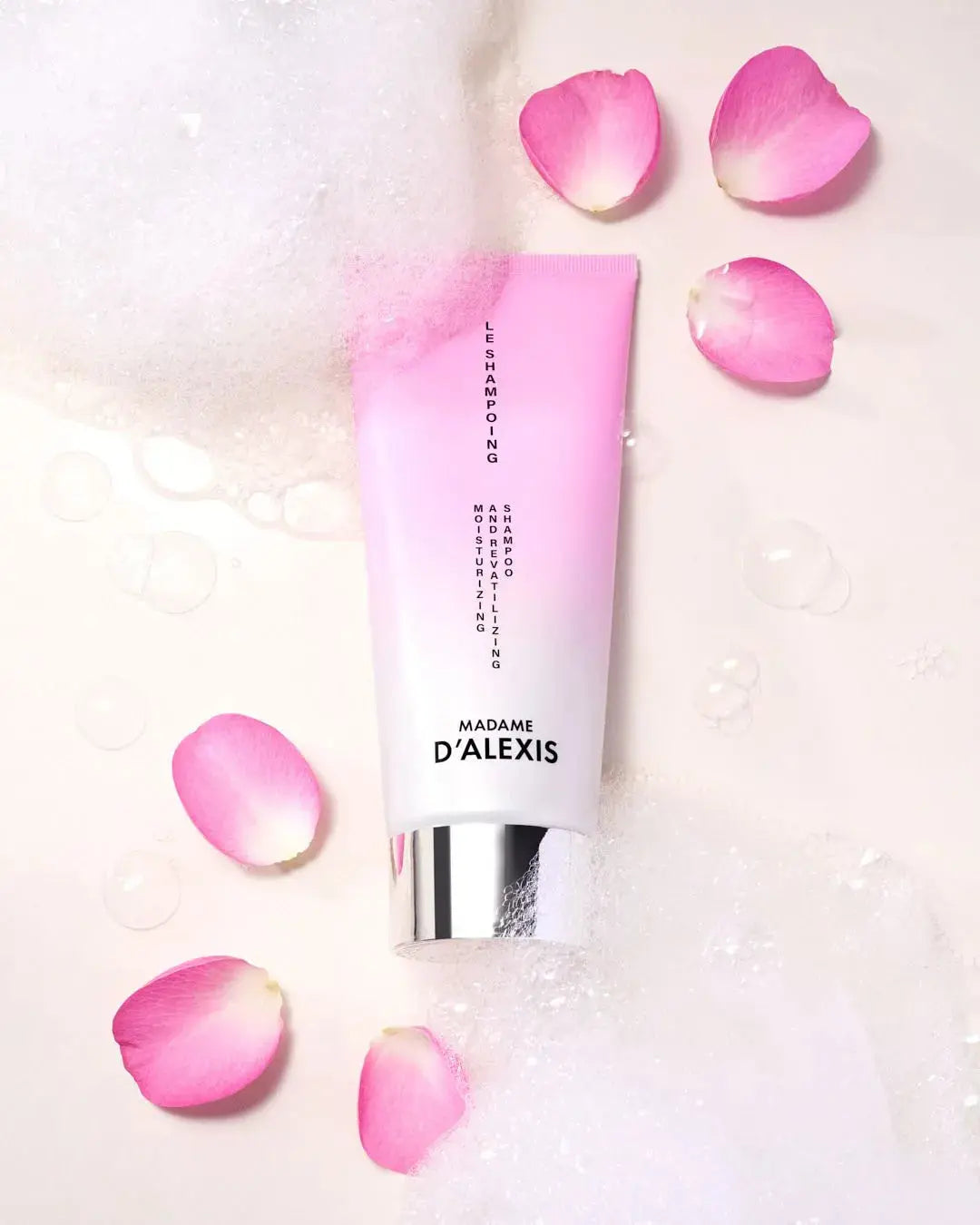
Hydrolat Shampoo
Sulfate-free · Organic hydrosols · Hyaluronic acid
★★★★★ 4.9/5- Cleans without stripping
- Cationic hyaluronic acid
- Prebiotics and plant keratin
This is precisely where the clarifying shampoo comes in. Its role is not to beautify, but to reset. It addresses a specific need: clearing away buildup to restore a healthy foundation.
However, there are several approaches. Traditional solutions prioritize immediate effectiveness, sometimes at the expense of scalp comfort. Newer natural alternatives aim to cleanse deeply without disrupting the scalp's balance. In my view, this is the path to follow today.
The scalp is not just a base. It is a living ecosystem. Treating it with care has a lasting effect on hair health.
What is a clarifying shampoo?
A clarifying shampoo is a shampoo designed to cleanse deeply. Unlike a conventional shampoo, it does more than just remove visible dirt. It removes invisible impurities that build up over time with repeated washing.
In concrete terms, a clarifying shampoo cleanses:
- styling product or treatment residue;
- buildup from film-forming products;
- pollution and certain minerals in tap water;
- excess oxidized sebum.
The difference between regular shampoo and clarifying shampoo lies in the intensity of the purifying action. The former maintains. The latter cleanses.
Why do we sometimes say that it "strips"? Because some formulas use powerful surfactants. They are truly effective, but can cause dryness if not used properly.

Clarifying or purifying shampoo: what's the difference?
Both cleanse deeply, but they target different things:
| Criterion | Clarifying shampoo | Purifying shampoo |
|---|---|---|
| Target | Styling product residue, silicones, hard water, minerals | Excess oil, scalp impurities |
| Action | Detoxifying, removes buildup from the hair fiber and scalp | Regulating, rebalances oil production |
| Frequency | Once a month or after product buildup | 1 to 2 times a week on oily hair |
| Key ingredients | Citric acid, clay, AHAs | Zinc, clay, astringent ingredients |
| Who is this for | All hair types, especially after smoothing treatments, coloring, or styling products | Oily scalp, oily dandruff |
In short: if your hair feels heavy, dull, and treatments no longer seem to work, it needs clarifying. If your scalp becomes oily the day after washing, it needs purifying.
Madame d’Alexis Floral Scrub combines both actions: physical exfoliation with sea salt and purification with organic floral waters, all in a single step.
What is the purpose of a clarifying shampoo for the scalp?
Its main benefit concerns scalp health. A congested scalp disrupts skin balance and hair growth.
It removes buildup that clings to the scalp and roots.
It helps restore a lighter, less weighed-down foundation.
It reduces impurities associated with a congested scalp.
The hair treatments applied afterward become effective once again.
My perspective is simple: used sparingly and thoughtfully, a clarifying treatment is a useful tool. Used incorrectly, it can cause imbalance. It is all about frequency, formulation, and truly understanding your needs.
What hair types need a clarifying shampoo?
Not all hair types require a clarifying shampoo, and this is an essential point to understand. This treatment is designed for specific situations related to the environment, habits, or the very structure of the hair.
Oily hair and heavy roots
Oily hair is often the first to be affected. When the roots quickly become oily again, it is not always due to excess natural sebum, but rather a buildup of residue that disrupts the balance of the scalp.
Curly, kinky, frizzy hair
People with curly and coilyhair often use rich treatments, butters, oils, or gels. Over time, these products can lead to product buildup. A clarifying shampoo helps restore a clean base, provided it is followed by a nourishing treatment.
Dry, damaged, fragile hair
Dry or damaged hair doesn’t necessarily need clarifying, but it can benefit from it in some cases. Pollution, silicones, or hard water can weigh down the hair shaft. Over-clarifying can make the hair even drier. When used sparingly, clarifying shampoo restores lightness without further weakening the hair.
Colored hair and Brazilian straightening
On colored hair or after a Brazilian straightening treatment, a clarifying shampoo should be used with care. It can prepare the hair for a treatment or remove residue left behind after a treatment. However, if used improperly, it can accelerate pigment loss or damage the keratin.
Hard water, pollution, and urban life
In France, particularly in Paris,hard water and urban pollution promote mineral deposits. Even normal hair may then require occasional clarification to restore freshness and shine.
The classic ingredients in clarifying shampoos
Clarifying shampoos are based on ingredients known for their cleansing action.
- Green clay to absorb impurities.
- Cider vinegar to help dissolve hard water buildup.
- Baking soda to lift away residue.
- Strong sulfates for a deep cleanse.
- Cleansing agents, gels, keratin ingredients, and sometimes shea butter to prevent dryness.
Effective, yes. But not always suitable for regular use. Their strength explains why certain scalps react poorly.

Natural clarifying shampoo: myth or real alternative?
A natural clarifying shampoo is not a myth, provided you understand what it does. Natural does not mean ineffective. A well-designed formula can purify without being harsh.
The key points of a good natural alternative:
- a gentle composition, free from harsh sulfates;
- ingredients of natural origin, sometimes organic;
- respect for the scalp microbiome.
The fundamental difference lies right here: purifying means cleaning and rebalancing; stripping removes everything, including what protects you.
The risks of misusing clarifying shampoo
Clarifying shampoo is a useful tool, but it must be used with care. Used too often or indiscriminately, it can have the opposite effect to that desired.
Clarifying too often also removes some of the protective lipids.
A reactive scalp may feel tight, itchy, or produce more sebum.
This sensation often indicates that the hair fiber has been stripped of its natural oils.
Excessive cleansing disrupts the scalp's ecosystem.
A clarifying shampoo is not designed for regular washing. Using it like a traditional shampoo, or even daily, is a mistake. Clarifying should remain an occasional, thoughtful step, always integrated into a comprehensive routine.
How often should you use a clarifying shampoo?
The right frequency depends on lifestyle, hair type, and environment. There is no universal rule, but there are reliable guidelines.
- Once every 3 to 4 weeks is sufficient in most cases.
- If styling products are used heavily, use every 2 weeks may be considered.
- Daily use is to be avoided, without exception.
The duration of use should remain short. The clarifying shampoo acts as an occasional cleansing step, never as a permanent routine.
Alexis's Madame alternative to clarifying shampoo
Rather than stripping the fiber, Madame d'Alexis proposes a different approach, inspired by skin care: purify, then rebalance.
Detoxifying scrub: deep cleansing without stripping
The detoxifying scrub acts as an intelligent clarification. Its action relies on targeted cleansing of the scalp, the elimination of residue, pollution, and excess sebum, as well as gentle exfoliation.
The Floral Scrub
Fleur de sel · Organic floral waters · Scalp
★★★★★ 4.8/5- Purifies without being harsh
- Helps free the roots
- Prepares hair for subsequent treatments
Floral moisturizing shampoo: rebalance after scalp detox
After the detox treatment , the scalp needs to be soothed. The floral moisturizing shampoo facilitates this transition. It gently cleanses, moisturizes with cationic hyaluronic acid, strengthens with plant-based keratin, and helps maintain the scalp’s balance with prebiotics.
Hydrolat Shampoo
Sulfate-free · 98% naturally derived · Organic floral waters
★★★★★ 4.9/5- Gentle cleansing
- Cationic hyaluronic acid
- Plant keratin and prebiotics
How can you incorporate this alternative into your hair care routine?
Integrating an alternative to the clarifying shampoo requires method and consistency. The goal is not to multiply steps, but to follow a clear and effective hair care routine. Clarification should be seen as a first, occasional step that prepares the canvas.
- Step 1: Scalp detox. On the day you use the scrub, use it instead of shampoo. Wet your hair, apply the scrub section by section to your scalp, massage it in, then rinse. Repeat the process, as if you were shampooing twice, massaging it in and rinsing thoroughly.
- Step 2: Gentle cleansing. For subsequent washes, use a moisturizing shampoo. It cleanses without stripping the skin and restores its natural balance.
- Step 3: Targeted care. Apply a mask or nourishing treatment to the lengths if necessary.
- Frequency. Use the Scrub every 10 to 15 days. The rest of the time, gentle cleansing helps maintain the results.
Comparison: classic clarifying shampoo vs. Madame d'Alexis approach
| Criterion | Classic clarifying shampoo | Approach Madame d'Alexis |
|---|---|---|
| Objective | Quick deep cleaning | Clarify without stripping, then rebalance |
| Purifying action | Strong, sometimes aggressive | Targeted, progressive, respectful |
| What it eliminates | Residue, pollution, excess sebum | Residues and impurities on the scalp, without causing imbalance |
| Risks | Dryness, irritation, imbalance, squeaky-clean hair effect | Limited risks if used according to the recommended frequency |
| Recommended frequency | Occasional, every 2 to 4 weeks | Occasional detoxifying scrub + moisturizing shampoo as part of your routine |
| Vision | Quickly remove buildup | Purify, respect the microbiome, restore balance |
Can you make a DIY clarifying shampoo?
Yes, with 3 accessible ingredients. Two recipes can help out on an occasional basis, provided pH and frequency precautions are respected.
Recipe 1: Baking soda clarifying shampoo for normal to oily hair
- 1 tablespoon of baking soda diluted in 200 ml of lukewarm water.
- Apply to wet hair, massage for 2 minutes, then rinse thoroughly.
- Mandatory follow-up: a diluted apple cider vinegar rinse, 1 tablespoon per 500 ml of water, to restore the pH. Baking soda is alkaline, with a pH around 9, which opens the cuticles.
- Maximum frequency: once a month, as baking soda can be abrasive to the hair fiber if used too often.
Recipe 2: Clay clarifying shampoo for dry to sensitive hair
- 2 tablespoons of white clay, also known as kaolin.
- 3 tablespoons of Damask rose floral water.
- 1 teaspoon of lemon juice.
- Apply to a damp scalp, leave on for 5 minutes, then rinse.
- Benefit vs. baking soda: the naturally acidic pH of the hydrosol, around 4.5, reduces the need for a corrective rinse and is gentler on the hair cuticles.
Limitations of homemade recipes: they work well for occasional clarification, but without the right cleansing agents, deep removal of silicones and mineral buildup remains incomplete. For thorough clarification before coloring or a protein treatment, a professionally formulated product is more reliable.
FAQ - Your questions about clarifying shampoo
What is a clarifying shampoo?
A clarifying shampoo provides a deep detoxifying action that removes styling product buildup, silicones, oils, waxes, mineral deposits like hard water minerals, and impurities accumulated on the scalp and hair. It is used occasionally, about once a month, not daily.
How often should you use a clarifying shampoo?
Once a month for standard use. Up to twice a month if you use many styling products such as hairsprays, mousses, gels, or oils. Never more than twice a month, as overuse can strip the protective moisture barrier and weaken the hair.
Sulfate-free clarifying shampoo: is it possible?
Yes. Sulfates like SLS and SLES are traditional cleansing agents in many clarifying shampoos, but alternatives exist: sugar-based cleansers, coco glucoside, decyl glucoside, citric acid, and clay. These alternatives are milder than sulfates and effective on light to moderate buildup. For heavy buildup, such as after a Brazilian blowout or frequent use of silicones, sulfates are often more powerful.
Organic clarifying shampoo: does it really exist?
Yes, provided you check the INCI ingredient list. An organic clarifying shampoo uses certified plant-based cleansers, such as coco glucoside or sodium cocoyl glutamate, combined with natural clarifying ingredients like citric acid, kaolin clay, or plant-derived AHAs. Be cautious of "natural" claims lacking COSMOS or Ecocert certification.
What are the benefits of clarifying shampoo?
It helps remove buildup that weighs down the hair, promotes a healthier scalp, restores lightness to normal, curly, or coily hair, and boosts the effectiveness of subsequent treatments. Its purifying action removes impurities, but it is not intended for frequent use.
How to use a clarifying shampoo?
Apply to wet hair, gently massage the scalp, leave on briefly, and rinse thoroughly. This deep clean should always be followed by a moisturizing or nourishing treatment to maintain the balance of both the scalp and lengths.
What hair types benefit from clarifying shampoo?
Clarifying shampoo is suitable for oily hair, curly or coily hair that uses rich products, dry hair occasionally weighed down by hard water or silicones, and even normal hair exposed to hard water or pollution. Your actual needs matter more than your hair type.
What is the composition of a clarifying shampoo?
Common ingredients include green clay, apple cider vinegar, baking soda, natural or organic purifying agents, and sometimes stronger cleansers. These ingredients explain why the product works so well, as well as why it must be used sparingly.
How to choose a clarifying shampoo?
Look at the quality of the formula, the ingredients used, the recommended frequency, the bottle size, customer reviews, and how well it matches your actual needs. The best clarifying shampoo is one that cleans effectively without disrupting the scalp.
What are the side effects of clarifying shampoo?
Incorrect use of a clarifying shampoo can lead to dryness, skin irritation, more fragile hair, or scalp imbalance. These risks are mainly caused by overuse or incorrect application frequency.
Where can I buy clarifying shampoo?
You can buy clarifying shampoo at specialty stores, brand websites, or general online retailers. Compare the ingredient lists, delivery terms, customer service quality, and the clarity of the information provided before ordering.