Advice
Hair Clarification: How to Perform an Effective Scalp Detox
Scalp detox purifies the roots, removes residue, and rebalances the scalp for healthier, lighter hair that is more receptive to treatments.


Scalp detox: the essentials for long-lasting purification and rebalancing
- Scalp detox involves removing styling product residue, excess sebum, and pollution particles that accumulate at the roots and disrupt the scalp's natural balance.
- A well-conducted detox helps to purify the scalp, lighten the roots, and restore hair that is softer, shinier, and more receptive to care.
- Unlike conventional shampoo, detox shampoo works deep down without stripping the hair, as it is based on gentle formulas that are suitable for the scalp.
- The ideal frequency is generally every 10 to 15 days, to be adjusted according to hair type and lifestyle, in order to avoid over-clarification.
- When incorporated into a consistent routine, scalp detox improves skin comfort, supports microbiome balance, and helps maintain healthy hair over the long term.

What is hair clarification?
Definition of hair clarification or detox
Hair clarification is an essential step in deeply purifying the scalp. Unlike traditional shampoo, scalp detox removes styling product residue, excess sebum, and pollution particles that accumulate at the roots.
Proper clarification leaves hair lighter, shinier, and more receptive to treatments.

We often talk aboutscalp detox or hair detoxification because the desired effect is that of a "reset": cleaner roots, lighter hair, and treatments that work again.
In my practice, I see clarification as a common-sense approach. When you layer on sprays, mousses, dry shampoo, serums, sometimes several times a week, it makes sense that a gentle shampoo isn't always enough to remove everything.
What the clarification aims to achieve, in concrete terms:
- Scalp: declutter the base, limit the "film" effect, and restore a lasting feeling of cleanliness.
- Fiber: remove anything that dulls, weighs down, or makes hair less receptive to masks and treatments.
Clarifying shampoo vs. regular shampoo: what's the difference?
A classic shampoo has a simple role: to clean. It removes everyday dirt and some of the sebum. It is designed to be used regularly without upsetting the balance of the scalp.
Clarification, on the other hand, aims to remove impurities. Clarifying formulas often use cleansing agents that are more effective on stubborn residues.
It's useful, but that also explains why we don't use it every day: if used too often, it can leave hair feeling dry or "squeaky."
Why is shampoo alone not always enough?
- Some styling polymers adhere very well to the fiber.
- Dry shampoo binds to sebum and can form a paste.
- Environmental particles are mainly deposited in the roots.

Clarification, purifying shampoo, or exfoliation: which one should you choose?
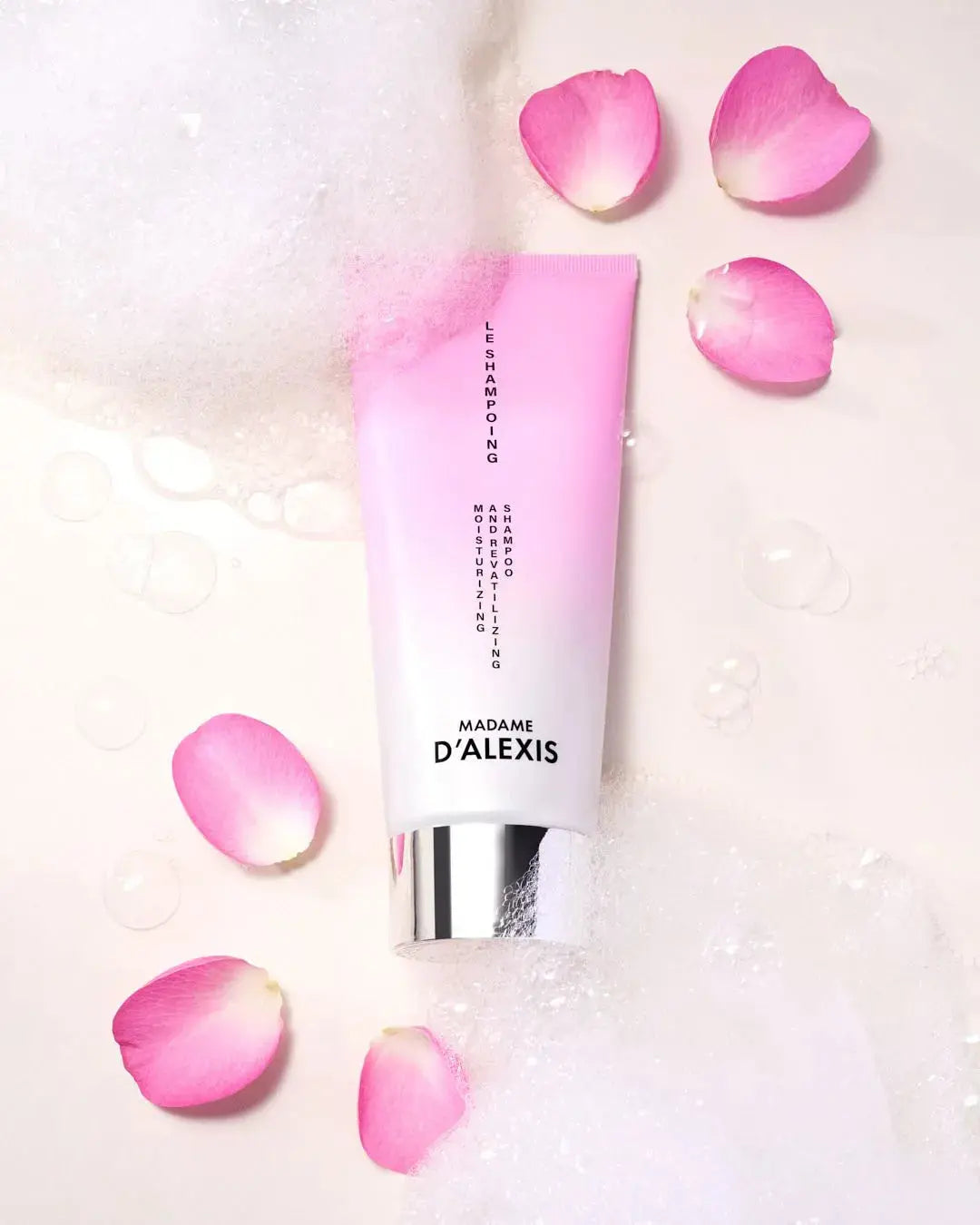
Given the wide variety of detox treatments available, it’s natural to wonder which method to choose.Hair clarifying treatments, purifying hyaluronic acid shampoos, and scalp scrubs don’t address exactly the same needs, even though their goal is similar: deep cleansing.
The table below summarizes the main differences to help you choose thehair detox treatmentbestsuited to your situation.
| Criterion | Clarification (detoxifying scrub) | Purifying shampoo | Scrub/exfoliant alone |
|---|---|---|---|
| Main action | Mechanical exfoliation + purification | Deep chemical cleaning | Mechanical exfoliation only |
| Targeted area | Scalp | Scalp + lengths | Scalp only |
| Recommended frequency | 10-15 days | Once a week | 2-3 weeks |
| Effectiveness on stubborn residues | ⭐⭐⭐⭐⭐ | ⭐⭐⭐⭐ | ⭐⭐⭐ |
| Respect for skin balance | ⭐⭐⭐⭐⭐ (if mild formula) | ⭐⭐⭐ (depending on cleaning agents) | ⭐⭐⭐⭐ |
| Suitable for sensitive hair | ✅ Yes (gentle scrub) | ⚠️ Depending on the formula | ✅ Yes |
| Suitable for colored hair | ✅ Yes (targeted roots) | ⚠️ Risk of discoloration | ✅ Yes |
| Immediate sensation | Freshness + lightness | Intense cleanliness | Stimulated scalp |
Clarification (detoxifying scrub): the ideal balance
Hair clarificationusinga scrub combines two complementary actions: the grains mechanically exfoliate accumulated residue, while the cleansing base purifies without damaging the hair. It is this dual action that makes it the most comprehensive method.
Advantages :
- Targeted action on the scalp, where residue accumulates most
- Respects the balance of the skin microbiome if the formula is well designed
- Stimulates microcirculation through massage
- Suitable for all hair types, including colored and sensitive hair
When to choose it:
- If you regularly use styling products (sprays, mousses, dry shampoo)
- For acompleteand gentlehair detox treatment
- If you are looking for a gentle yet effective solution
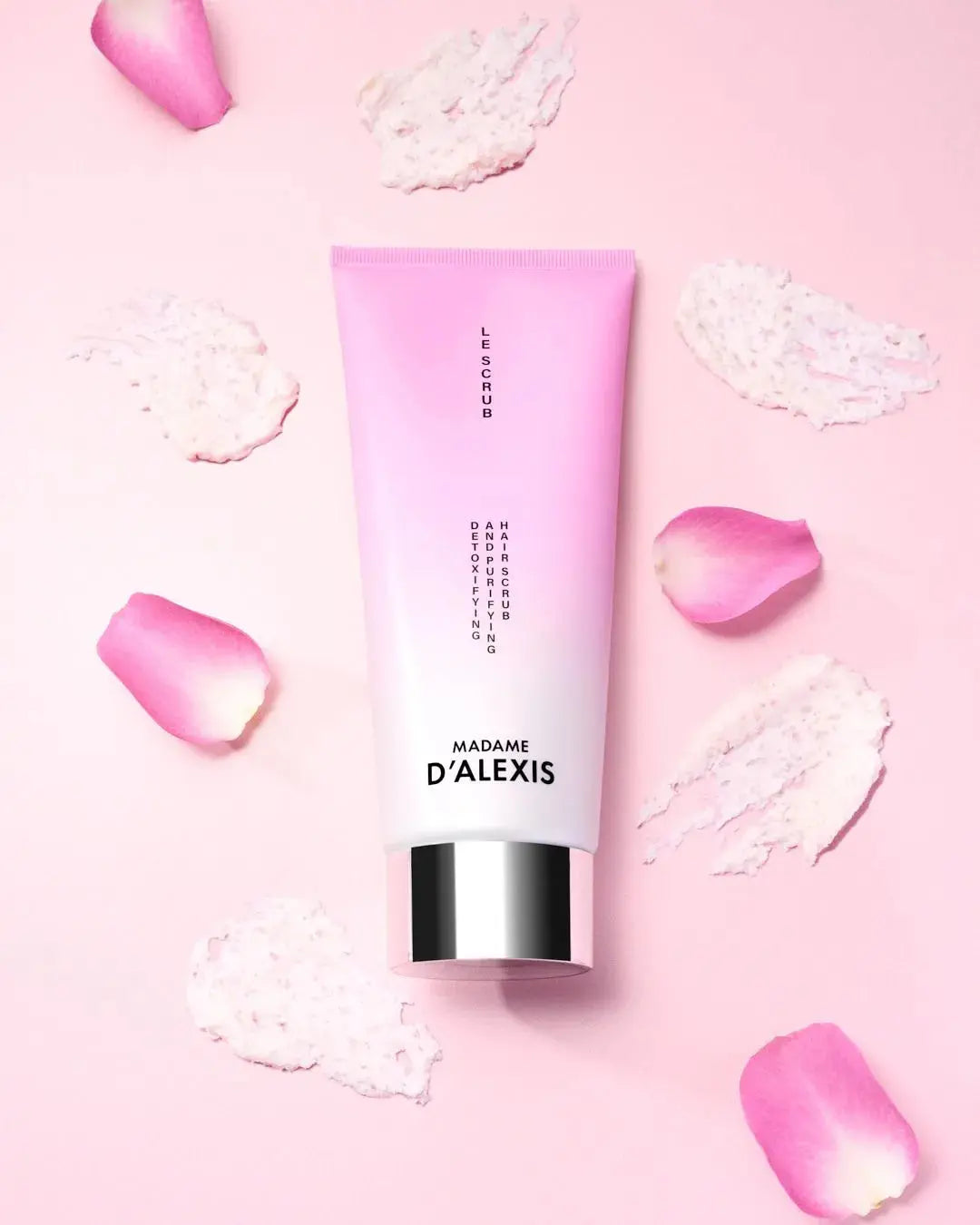
Madame d'Alexis' Detoxifying Scrub, formulated with organic hydrosols and fleur de sel, illustrates this approach: it deeply clarifies while preserving the comfort of the scalp.
Purifying shampoo: the express solution
Purifying orclarifying shampoocontainsstronger surfactants than regular shampoo. It cleans chemically, without mechanical action.
Advantages :
- Easy to incorporate into a routine (replaces shampoo)
- Acts quickly
- Effective on lengths as well
Limits:
- May be harsh if the cleaning agents are too strong (sulfates)
- Risk of dehydration on dry or colored hair
- Less focused on the scalp than the scrub
When to choose it:
- In addition to clarification, between two detoxes
- For oily hair that requires frequent washing
- If you don't have time for a more elaborate treatment
⚠️Warning:Always check the ingredients. A purifying shampoo without harsh sulfates and with a balanced pH is always preferable.
Exfoliation alone: pure mechanical action
Some hair scrubs only offer exfoliation, without an integrated cleansing phase. They are rinsed off with water and require shampooing afterwards.
Advantages :
- Very gentle action on the scalp
- Stimulates blood circulation
- Ideal for sensitive or reactive scalps
Limits:
- Not sufficient to remove product residue
- Requires shampooing afterwards, so two steps
- Less comprehensive than a clarification
When to choose it:
- If your scalp is sensitive but needs stimulation
- As a complement to a gentle shampoo, not as a replacement for a detox
- For a relaxing massage and better absorption of skincare products
Our recommendation: prioritize clarification
Foreffectiveand gentlescalp detoxification, clarification using a detoxifying scrub remains the most balanced method. It combines:
✅ Effective on stubborn residue
✅ Respects skin balance
✅ Targeted action on the area that needs it most
✅ Stimulates microcirculation
Purifying shampoo can be used between clarifying treatments to maintain cleanliness. Exfoliation alone is more suitable for very sensitive scalps that cannot tolerate cleansing agents.
The bottom line:whateveryou choose, always opt for gentle formulas without harsh sulfates, and never forget to rebalance your skin after detoxing (with a moisturizing mask or targeted serum).
Why does the scalp need a detox?
The scalp is skin. It produces sebum, perspires, and hosts a microbiome. When it is overloaded, we often see very concrete signs: dull hair, heavy roots, itching, dandruff, flat volume, and above all, the feeling that "nothing works," even with good products.
A well-done scalp detox can change three things:
- Brilliance: the fiber reflects light better when it is not coated with deposits.
- Growth: A clean and comfortable scalp creates better conditions, even if this is not a medical promise.
- Effectiveness of care: a mask or serum works best on clean skin.
Why do a hair detox?
Signs that your hair needs clarifying
A hair detox is never something you do automatically. It responds to specific signals, which are often ignored or misinterpreted. When the scalp becomes saturated, the hair sends clear messages:
- Dull, heavy hair, sometimes sticky the day after washing
- Oily roots that quickly become greasy again despite regular shampooing
- Presence of dandruff, itching, or diffuse discomfort of the scalp
- Usual treatments that seem ineffective, as if the hair no longer absorbs them
In my opinion, this is often where the problem lies. Not in the choice of products, but in the condition of the base on which they are applied.
The benefits of a scalp detox
A well-executed scalp detox allows you to start again on a healthy foundation. The benefits are tangible and noticeable:
- Purified scalp, more comfortable, less prone to imbalances
- Visibly lighter, shinier, less dull hair
- Better absorption of skincare products, restoring their effectiveness
- Long-lasting feeling of freshness, without any harsh effects
A hair detox treatment does not change the nature of the hair, but it significantly improves its daily behavior.
How often should you clarify?
Clarification remains a one-off action. In practice:
- Every 10 to 15 days maximum
- More spaced out on dry, curly, or colored hair
- Slightly more common on oily scalps or scalps that are highly exposed to styling products.
Be careful not to over-clarify. Doing so too often weakens the natural balance of the scalp and negates the desired benefits.

How do you clarify hair?
Method 1: Detoxifying scalp scrub (recommended)
In my experience, scalp exfoliation is the most balanced method for successfully clarifying hair.
The principle is simple: combine gentle mechanical action with a gentle cleansing phase. The grains remove residue, while the formula purifies without damaging the skin.
Why this method is the most respectful:
- it acts locally, on the scalp, where residue accumulates,
- it avoids excessive stripping associated with certain chemical agents,
- It respects the skin's balance and microbiome.
Instructions for use:
- Apply to thoroughly wet scalp.
- gently massage with your fingertips, without rubbing,
- rinse thoroughly,
- The scrub replaces shampoo when used.
In an expert approach, a detox hair treatment formulated without added water, based on organic hydrosols and fleur de sel, such as Madame d'Alexis' Detoxifying Scrub, effectively clarifies while maintaining scalp comfort.
Method 2: Clay mask
Detox hair masks containing green clay, white clay, or rhassoul clay are particularly suitable for oily scalps. However, be careful: if used in the wrong quantities or too frequently, clay can dry out the hair.
Simple recipe: clay + water or hydrosol, leave on for 5 to 10 minutes, no more than once every two weeks.
Method 3: Baking soda
Often recommended for homemade hair detoxes, baking soda is a powerful cleanser, but its alkaline pH can cause irritation. It should only be used in specific cases and with extreme caution.
Method 4: Apple cider vinegar
Used only as a rinse, it helps close cuticles and restore shine after clarifying, never as a primary treatment.
Complete scalp detox routine (step by step)
Successfully clarifying hair is not a one-time event, but rather a consistent routine. An effective detox first acts on the scalp, then supports the repair phase. It is this precise sequence that makes all the difference.
Step 1 – Preparation: dry brushing
Before any detox treatment, dry brushing helps remove surface impurities, activate microcirculation, and distribute sebum. The scalp is more receptive, and the treatment works more evenly.
Step 2 – Applying the clarifying treatment
Apply a detoxifying hair treatment to the roots of thoroughly wet scalp. The detoxifying scrub is particularly suitable as it combines:
- gentle mechanical exfoliation thanks to the grains,
- gradual purification without stripping.
A scrub formulated with organic hydrosols and fleur de sel removes residue, pollution, and excess sebum while maintaining the skin's balance.
Step 3 – Scalp massage
Massage is essential. Slow, precise, performed with the fingertips, it stimulates blood circulation and improves the effectiveness of the treatment without causing irritation.
Step 4 – Exposure time
Stick to the recommended duration. A detox doesn't need to last long to be effective.
Step 5 – Rinsing
Rinse thoroughly with lukewarm water. This step is essential for achieving lightness and a clean scalp feeling.
Step 6 – Post-detox repair treatment
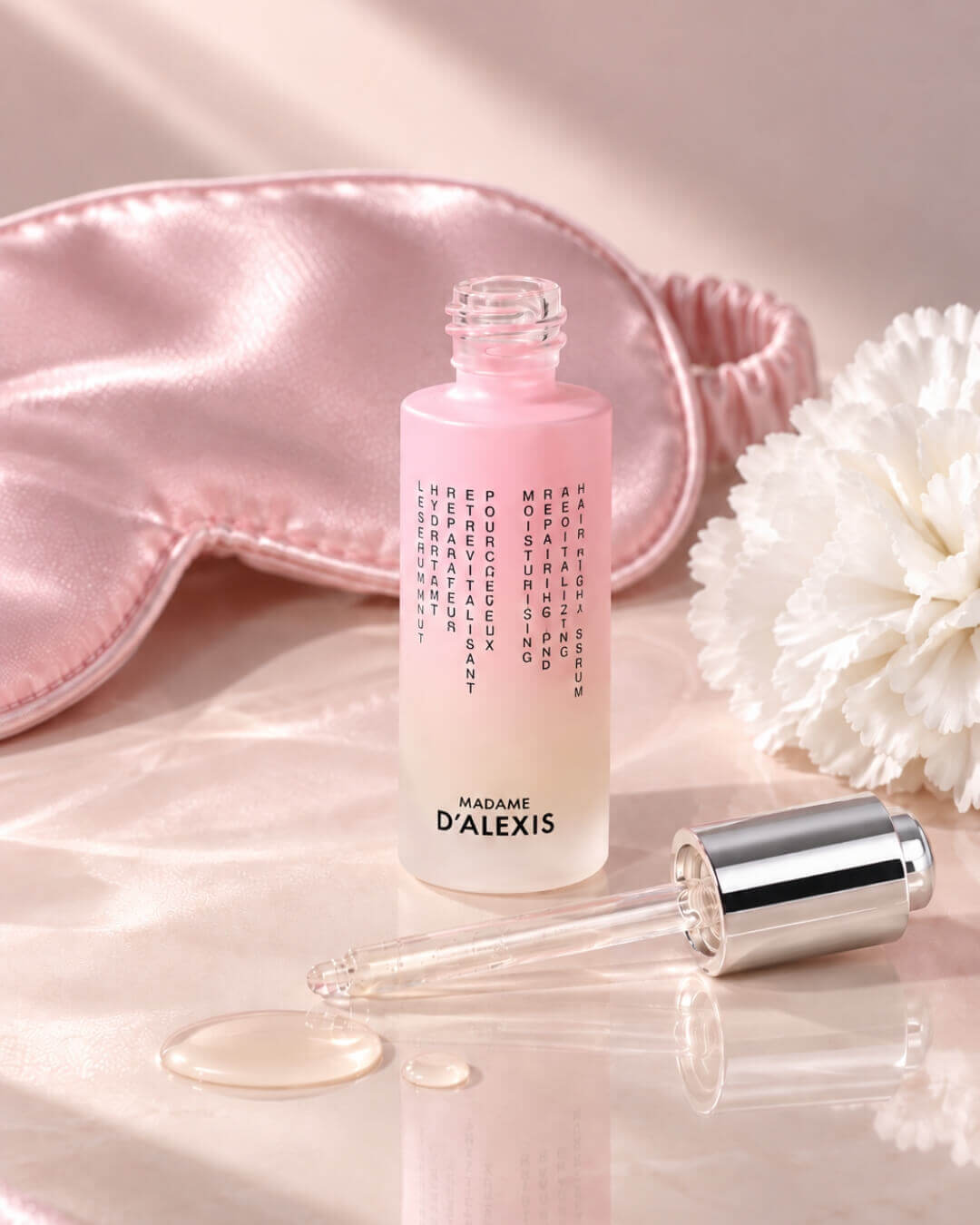
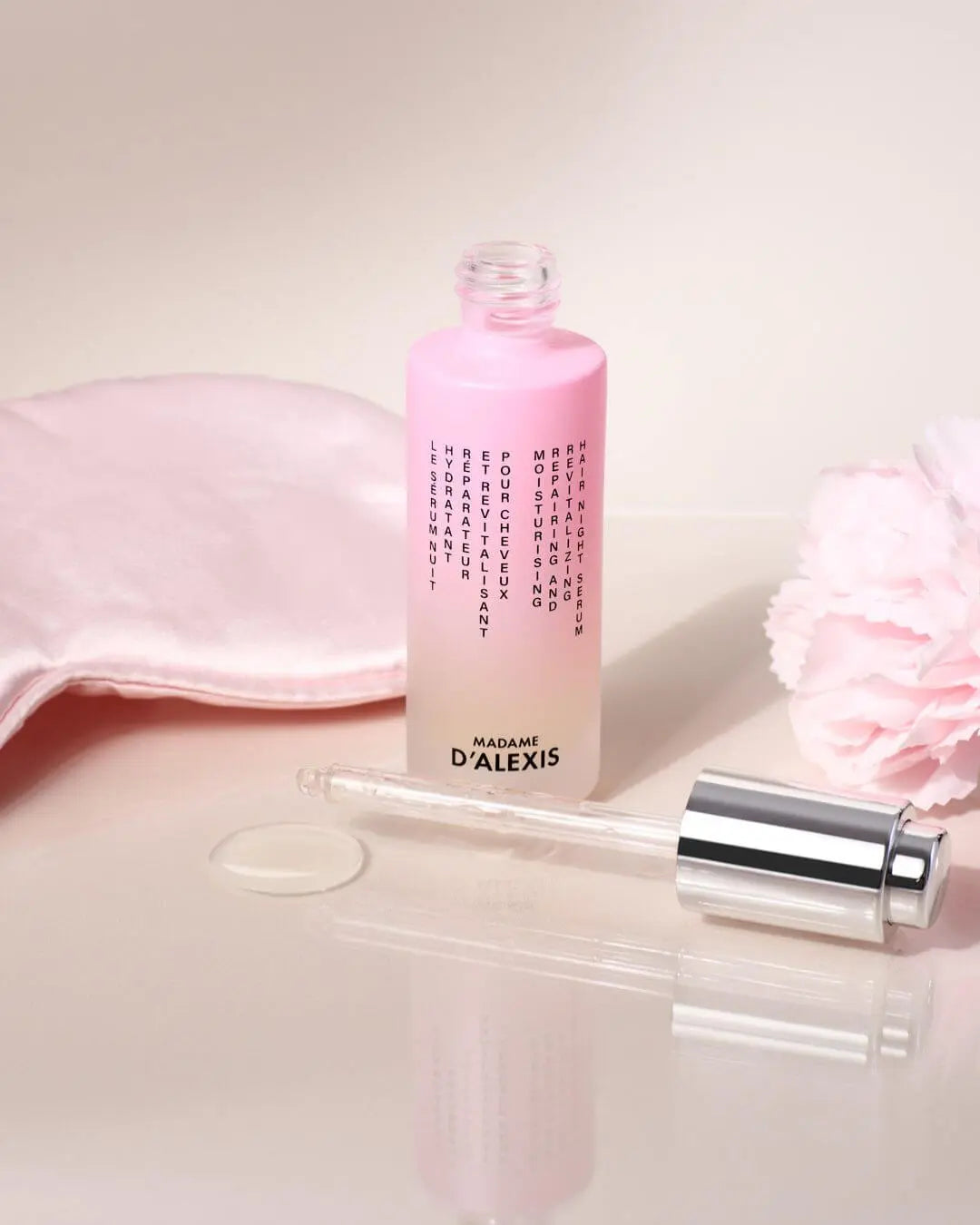
After cleansing, the scalp is more permeable. This is the ideal time to apply a targeted treatment such as Madame d'Alexis Night Serum. Used in the evening, it helps to:
- rebalance the scalp after detoxification,
- deeply moisturize the scalp overnight,
- support growth in a peaceful environment.
In my opinion, it is this combination of controlled purification and nighttime repair that guarantees visible and lasting results.
Hair clarification: mistakes to avoid
A well-executed clarifying treatment can transform a routine. Done poorly, it can have the opposite effect. The first mistake is to clarify too often. A scalp detox is not an everyday shampoo.
Too frequent washing disrupts the skin barrier, increases sensitivity, and can trigger scalp reactivity. In most cases, washing every10 to 15 days is sufficient. Any more than that is too much.
Second mistake: choosing products that are too harsh. Strong sulfates and especially bicarbonate are often used to "strip" the hair. The problem is simple: the scalp and hair fiber have a natural acid balance, whereas a bicarbonate solution is significantly more alkaline.
Third mistake: forgetting to moisturize after detoxing. Clarifying means removing. You then need to rebalance. Without follow-up care, you end up with clean but unstable hair: dry ends, frizz, loss of suppleness. After clarifying, I always recommend a targeted treatment, choosing from the following options:
- a nourishing mask on the lengths,
- or a scalp treatment if the goal is comfort and balance.
Last mistake: not adapting the detox to your hair type. The same method does not suit everyone. The right indicator is not "what works for others," but how your scalp reacts on day 2 and how your hair looks.

Hair detox according to your hair type
Curly or frizzy hair
When detoxing curly hair, caution is advised. Curls dehydrate more quickly because sebum does not circulate as well along the hair shaft.
- Frequency: once a month or depending on styling product use.
- Priority: hydration and nutrition after detox, otherwise the curl loses its definition.
Colored hair
Hair coloring weakens the hair shaft. Over-lightening can accelerate the loss of shine.
- Choose a gentle clarifying treatment that targets the scalp.
- Space out more, and always follow with a protective treatment on the lengths.
Greasy hair
Here, detoxing is often beneficial, provided it is done regularly and not aggressively.
- Frequency: every 10 to 15 days if the scalp becomes saturated quickly.
- Helpful ingredients: gentle exfoliation, purifying formulas, thorough rinsing. The goal is to purify the scalp without triggering a rebound effect.
Dry hair
Clarification should be rare and precise.
- Frequency: every 3 to 4 weeks, sometimes less.
- After detoxing: nourishing treatment is essential, otherwise the hair fiber breaks and becomes dull. With dry hair, success depends mainly on what you do afterwards, not on the "stripping" process.
Myths about hair lightening
Hair clarification suffers from many misconceptions that discourage users or lead them to counterproductive practices. Let's debunk the most common myths together to understand whathair clarificationcanreally do.
❌ Myth 1: "Clarifying strips the hair."
The belief:Many peoplethink that ascalp detoxorclarifying treatment will dry out the hair and make it brittle, like a chemical strip.
✅ The reality:
Proper clarifying does not strip the hair. This is a common misconception between "deep cleansing" and "stripping."
The difference is crucial:
- Stripping= removing all natural sebum and damaging the fiber (negative effect)
- Clarify= remove accumulated residues while preserving the natural protective film (positive effect)
The problem only arises if you use products that are too harsh (shampoos with strong sulfates, baking soda in the wrong proportions) or if you clarify too frequently.
With a properly formulated hair detox treatment—such as a scrub made with organic hydrosols and fleur de sel—your hair will feel lighter and shinier, without any dryness. It's the lack of care after clarifying that creates problems, not the clarifying itself.
Tip:Always follow up with a clarifying repair treatment (moisturizing mask or night serum) to maintain skin balance.
❌ Myth 2: "You have to clarify every day."
The belief:Some peoplethink that to keep hair clean and healthy, you need todetox your scalpdaily, just like you would with regular shampoo.
✅ The reality:
It's the opposite. Clarifying every day would be counterproductive and damaging to your scalp.
Here's why:
Clarification works deep down and temporarily disrupts the balance of the scalp. If you repeat it too often, you will:
- Weaken the skin barrier
- Stimulate excess sebum production in response (rebound effect)
- Increase sensitivity and itching
- Cancel all intended benefits
The ideal frequency:
- For most scalps:every10 to 15 days
- For dry, curly, or colored hair:oncea month
- For oily hair heavily exposed to styling products: up to once a week, but no more
Between clarifying treatments, a mild shampoo is sufficient to maintain daily cleanliness.
Tip:Listen to your scalp. If you notice itching, dryness, or very rapid regreasing after clarifying, space out the treatments more.
❌ Myth 3: "All clarifying shampoos are the same."
The belief:Many peoplethink that all products labeled "clarifying" or "purifying" offer the same results and work in the same way.
✅ The reality:
That's not true. Formulas vary greatly in terms of effectiveness, gentleness, and impact on the scalp. Three elements make all the difference:
1. The type of cleaning agents (surfactants)
Some clarifying shampoos use harsh sulfates (SLS, SLES) that clean very thoroughly but also strip the hair. Others favor gentler cleansing agents derived from plant-based ingredients that purify without damaging the hair.
Example:
- ❌ Shampoo with strong sulfates = intense cleansing but risk of dryness
- ✅ Scrub with organic hydrosols = effective and gentle cleansing
2. The pH of the product
A healthy scalp has a slightly acidic pH (around 4.5-5.5). Some clarifying shampoos have a pH that is too alkaline, which irritates and upsets the balance.
3. The presence of soothing ingredients
The bestdetox hair care productscombinepurifying action with soothing ingredients (hydrolats, botanical extracts) to protect the scalp during cleansing.
How to choose:
- Check the list of ingredients: choose formulas without sulfates.
- Testez le pH si possible (idéalement < 6)
- Look for soothing ingredients (chamomile, lavender, calendula)
- Read reviews: see if users report a feeling of freshness or dryness.
A detoxifying scrub made with organic hydrosols and fleur de sel, for example, will provide a much better experience than a basic clarifying shampoo full of sulfates.
Tip:Invest in a quality product. A good clarifying hair treatment will make the difference between a pleasant experience and a disappointing result.
❌ Myth 4: "Clarifying replaces shampoo."
The belief:Some peoplethink that once you've clarified your hair, you can stop using regular shampoo and only use clarifying products.
✅ The reality:
No. Clarifying shampoo is acomplement to, not a substitute for, regular shampoo. They are two separate steps with different purposes.
Here is the difference:
| Appearance | Classic shampoo | Clarification |
|---|---|---|
| Objective | Cleaning up everyday life | Deep detoxification |
| Frequency | 2-3 times a week | 10-15 days |
| Targets | Dirt, daily sebum | Stubborn residues, pollution |
| Formula | Mild, balanced | More active, more focused |
| Role | Regular maintenance | One-time treatment |
How to combine them:
- Classic shampoo: use it regularly for daily cleansing.
- Clarification: incorporate it every 10-15 days to detoxify.
- After clarification: apply a repairing treatment (mask or serum)
It is this combination that creates a balanced and effective routine.
Example of a weekly routine:
- Monday: regular shampoo
- Wednesday: regular shampoo
- Friday: regular shampoo
- Sunday:Clarification+ Repair Treatment
Tip:Think of clarification as a weekly or biweekly treatment, not as a daily product. It is its occasional nature that makes it effective.
❌ Myth 5: "Clarifying makes hair grow faster."
The belief:Many peoplethink that ascalp detoxwillsignificantly and measurably accelerate hair growth.
✅ The reality:
Clarification does not make hair grow faster in a medical sense. However, it creates thebest conditionsforoptimal growth.
Here's what it actually does:
- ✅ Purifies the scalp, reducing inflammation that slows growth
- ✅ Improves blood circulation (through massage)
- ✅ Removes residue that suffocates the bulb
- ✅ Creates a healthier and more balanced skin environment
The result:Hair that grows in better conditions, without obstruction. This may give the impression of faster growth, but above all, it ishealthierand morevisible growth.
Realistic expectations:
- ❌ "My hair will grow 5 cm per month."
- ✅ "My scalp will feel more comfortable and my hair will grow in the best conditions."
Tip:Combine clarification with a complete routine (care, balanced diet, stress management) to optimize overall hair health.
❌ Myth 6: "Clarifying is mainly for oily hair."
The belief:Manypeople think that only those with oily hair need to clarify regularly.
✅ The reality:
False.All hair typesaccumulateproduct and pollution residue. Clarification benefits everyone, with adjustments made according to hair type.
Who needs clarification:
- Oily hair: regularly (every 10-15 days) to prevent sebum buildup
- Fine hair: regularly to restore volume
- Colored hair: occasionally to remove residue without damaging the color
- Curly hair: less often, but necessary to avoid the flat effect
- Dry hair: rarely, but useful after an intensive period of styling
The difference:Adaptationis based onfrequencyandtype of product, not on the necessity itself.
Tip:Regardless of your hair type, proper clarification will do you good. Just find the frequency and formula that works for you.
🎯 Summary: key takeaways
| Myth | Reality |
|---|---|
| Clarification strips away | Gentle clarification respects and improves the fiber. |
| You have to clarify every day | 10-15 days are sufficient for most people. |
| All clarifiers are equal. | Formulas vary greatly (pH, cleaning agents) |
| Clarifying replaces shampoo | It is a temporary supplement, not a substitute. |
| Clarification accelerates growth | It creates the best conditions for healthy growth. |
| It is only for oily hair. | All hair types benefit from it |
The bottom line:Properhair clarification, using asuitabledetox treatment followed by a repair treatment, is beneficial and risk-free for everyone. Don't be put off by misconceptions: it's a valuable ally for a healthy scalp and shiny hair in the long term.
FAQ: Everything you need to know about hair clarification and scalp detoxification
What is the difference between cleansing and detoxing?
Confusion is common. Hair clarification is a targeted action aimed at removing residue accumulated on the scalp and hair fiber. Hair detox, on the other hand, refers to a more comprehensive approach, often integrated into a routine, which combines clarification, soothing, and rebalancing.
In practice, clarification is the technical action. Detoxification is the complete process. The two are complementary, provided they are done in moderation.
Can colored hair be lightened?
Yes, but with caution. Colored hair does not tolerate aggressive lightening well, as the fiber is already weakened. It is preferable to:
- focus on the scalp rather than the lengths,
- choose a gentle clarifier, without harsh sulfates,
- Always apply a protective or nourishing product afterwards.
Proper clarification does not alter the color. It can even restore shine by removing the dull film caused by residues.
How often should you clarify your hair?
The frequency depends on lifestyle and hair type. In most cases:
- every 10 to 15 days is sufficient,
- more rarely on dry, curly, or colored hair,
- sometimes a little more often on oily scalps or scalps that are very exposed to styling products.
Cleansing too often is counterproductive. The scalp compensates by producing more sebum, which negates the desired benefits.
Does clarifying damage the hair?
No, as long as it is suitable. It is not the clarifying process itself that damages the hair, but rather:
- products that are too harsh,
- an unsuitable pH,
- the lack of aftercare.
Respectful clarification, followed by targeted care, actually improves the hair's flexibility, shine, and hold.
Can you do a hair detox while pregnant?
In most cases, yes, if the formula is gentle and well tolerated. However, it is recommended that:
- avoid products that are too harsh or highly alkaline,
- to prioritize scalp-friendly hair care,
- Seek professional advice if you have a sensitive or reactive scalp.
The rule remains the same as for the face: simplicity and moderation.
Clarification, a key step for a healthy scalp
When done correctly, clarifying is a powerful tool for restoring balance to the scalp and making hair more receptive. It helps to:
- purify the scalp,
- restore lightness and shine,
- optimize the effectiveness of care.
The key lies in gentleness and consistency in your routine. An approach that combines a detoxifying scrub to clarify, followed by a night serum to rebalance and support the scalp, is part of a sustainable vision of hair care.
It is this progressive and respectful approach that we champion at Madame d'Alexis.
Why do a hair detox?
A hair detox primarily purifies the hair and scalp when their natural balance has been disrupted. With each wash, product residue, pollution, and excess sebum accumulate. This applies to all hair types, including curly and dry hair.
A well-conducted detox treatment helps to:
- restore healthy, softer hair,
- restore balance to the relationship between hair and scalp,
- prepare the fiber to better receive care.
Hair detox is not a trend, but a one-time maintenance treatment.
How to detox your hair?
There are several methods for detoxifying your hair. The most common ones are based on:
- a detox shampoo or exfoliating treatment for deep cleansing,
- a detox mask made from green or white clay,
- A one-time rinse with apple cider vinegar to rebalance the pH.
Homemade recipes using baking soda or essential oils are often mentioned, but caution is advised. Baking soda is too alkaline and can weaken the hair fiber. An effective detox should always be followed by a moisturizing mask.
What are the benefits of hair detox?
The benefits of hair detox are both immediate and gradual, provided that it is done in moderation. The goal is not to strip the hair, but to gently detoxify it in order to restore its natural functioning.
A hair detox can help to:
- Purify the scalp by removing impurities, styling product residue, and pollution.
- Restore the natural balance between sebum production and hydration
- Revitalize hair by freeing the fiber from deposits that weigh it down.
- Restore shiny, lighter, visibly healthier hair
- Improve hairstyle hold and texture, with softer hair
As a one-time detox treatment, it supports the overall health of the hair and scalp without altering their natural properties.
What products should you use for hair detox?
Natural products are preferable for a gentle detox:
- purifying shampoo or gentle exfoliating treatment,
- detox mask with white or green clay,
- clay powders combined with hydrosols,
- Essential oils in low concentrations, such as tea tree essential oil, only on tolerant scalps.
Dietary supplements can complement your routine, but they can never replace external detox treatments.
How often should you detox your hair?
The frequency of hair detox is a key point. If done too rarely, it loses its effectiveness. If done too frequently, it upsets the balance of the scalp.
For a balanced hair care routine, we recommend:
- A detox every 10 to 15 days for most scalps
- Less frequent washing for dry or curly hair, to preserve moisture
- A slightly more regular detox for oily scalps or scalps that are highly exposed to styling products.
Detoxing once or twice a week is only appropriate in very specific cases and for a short period of time, for example at the start of a detox program, and always with gentle treatments.
The best indicator remains the condition of the hair and scalp: comfort, lightness, shine. A successful detox helps to space out shampoos and maintain healthy hair in the long term.
How can you soothe an irritated scalp?
An irritated scalp requires a gentle approach. After a hair detox, it is essential to soothe:
- with a soothing treatment or a moisturizing mask,
- avoiding essential oils if the skin is reactive,
- by favoring pH-friendly formulas.
A soothed scalp promotes soft, more supple, and long-lasting balanced hair.