Advice
Water in Hair Care: Unnecessary or Essential?
Water is a key ingredient in hair care products, but is it really necessary? We examine its role, limitations, and effective alternatives.

Water, an omnipresent but controversial ingredient in hair care products
Water is omnipresent in hair care products. On anINCI label, it often appears first under the name "Aqua, " highlighting its dominant presence in formulas. But what does it actually do for hair?
In conventional cosmetics, water is often used simply as a solvent to dilute active ingredients and achieve a pleasant texture. But in reality, it is inert and does not nourish either the hair fiber or the scalp.
✔ Unlike oils and humectants, it does not have long-lasting moisturizing properties.
✔ It can dilute the concentration of active ingredients, limiting their actual effectiveness on the hair.
✔ It evaporates quickly, sometimes leaving hair drier than before.
In aclean beauty and high-performance approach, some brands are replacing water with floral hydrosols, rich in minerals and botanical active ingredients, to offer more concentrated and effective skincare products.

Is water essential for hair?
Water is often seen as akey ingredient in cosmetics, symbolizing hydration and purity. However, in hair care, its role is much more controversial.
If it is ubiquitous in formulas, it is primarily for technical and economic reasons, and not for its actual benefits on the hair fiber.
Water in hair care: myth or necessity?
▪️ Does it really moisturize hair? Unlike skin, hair is dead matter with no ability to retain water. Applying water alone to hair has no lasting moisturizing effect.
▪️ An ingredient that acts more as a diluent than an active ingredient: in most conventional hair care products, water makes up 70 to 80% of the formula. It acts mainly as a solvent, allowing the other ingredients to be mixed together, but without any direct benefit for the hair fiber.
A moisturizing function... in appearance
Water alone cannot hydrate. It needs to becombined with film-forming and humectant agents, such as:
- Hyaluronic acid: captures moisture and maintains hydration.
- Vegetable oils: prevent water evaporation by forming a protective barrier.
- Glycerin: attracts and retains moisture in the hair fiber.
If these elements are not present,the water evaporates quickly, sometimes leaving hair drier and coarser than before application.
An often inert ingredient
▪️ No active nutrients: unlike vegetable oils or botanical extracts, water does not provide any vitamins, minerals, or beneficial elements for the hair.
▪️ A filler: used in cosmetics to lower the cost of formulations without actually improving the product's effectiveness.
▪️ A more effective alternative: replacing water with floral hydrosols allows for 100% active formulas, where every drop provides a benefit.
💡 Water is a myth in hair care. It neither nourishes nor protects. Relying on powerful active ingredients, such as hydrosols and plant ceramides, is a much more effective approach.
What are the effects of hard water on hair?
The water we use every day is not always good for our hair. In some regions, it isrich inminerals, particularly calcium and magnesium, which can damage the hair fiber and reduce the effectiveness of hair care products.
Hard water is often responsible for dull, coarse, and difficult-to-style hair, especially for the most fragile textures.

A mineral-rich composition that alters the hair fiber
▪️ Residue buildup: The calcium in hard water deposits on the hair fiber, creating a film that prevents moisturizing ingredients from penetrating. The result? Hair that is drier, more brittle, and more difficult to manage.
▪️ Heavy, dull hair: The minerals inhard water can disrupt the scalp’s natural balance and weigh down the hair shaft. Over time, this can make your hair feel sticky or stiff, even after a thorough wash.
An aggravating factor for certain hair types
Certain hair textures are particularly vulnerable tothe effects of hard water.
- Curly, dry hair is naturally more porous. Hard water accelerates dehydration, making curls less defined and more prone to frizz.
- Colored hair also suffers. Limescale alters the pigment's hold, causing the color to fade more quickly and reducing the shine of the shades.

How can you limit the negative effects of hard water on your hair?
▪️ Use a clarifying shampoo to remove mineral buildup and purify the hair fiber.
▪️ Choose products rich in humectants, such ashyaluronic acid and aloe vera, which retain moisture and protect hair from external aggressions.
▪️ Choose formulas without water, replaced by active hydrosols, which act deeply without leaving mineral deposits.
Hard water is a challenge, but with the right care, you cankeep your hair looking beautiful and healthy by preventing the damaging effects of limescale and restoring its natural shine.
Can water damage hair?
Water is often seen as the ultimate ally for hair. However, depending on itscomposition and how it is used, it can actually aggravate certain hair problems. If it is too hard, too full of limescale, or used too often, it can weaken the hair fiber and upset the balance of the scalp.
An unexpected factor contributing to dehydration
▪️ Hard water: an invisible enemy
Water containing minerals, particularly calcium,damages the hair cuticle. As it builds up, it leaves behind imperceptible residues, making the hair fiber coarse, brittle, and more prone to frizz.
▪️ Water-based hair treatments: misleading hydration
Contrary to popular belief,using too much water in your hair care routine does not provide lasting hydration. Water alone does not penetrate the hair fiber, and its evaporation can even aggravate dryness, leaving hair dull and unstructured.
Water is a source of irritation for the scalp.
▪️ An imbalance in the hair microbiome
Excess water canalter sebum production and disrupt the natural balance of the scalp. This can lead to excessive dryness, itching, and even dry dandruff.
▪️ Oily hair: an undesirable rebound effect
Washing too often? The scalpdefends itselfby producing more sebum, leading to rapid oiliness and dependence on frequent washing.
💡 A tailored routine, rich in balancing active ingredients and free from inert water, provides hair with what it really needs: deep, controlled hydration.
Why is water so prevalent in hair care products?
Water is an omnipresent ingredient in hair care products, often listed at the top of the ingredients list under the name"Aqua." However, its actual role in formulas is rarely questioned. Is it truly essential or simply a filler?
Although it has always been used, this is primarily because itis easy to incorporate into formulas, but its impact on the effectiveness of treatments remains debatable.
Water as a universal solvent
▪️ A technical base rather than an asset
Water is used to dilute active ingredients and make formulas more fluid, allowing for pleasant and even application. It facilitates the emulsification of ingredients, particularly in shampoos and hair masks.
▪️ A question of texture and cost
Water helps to achieve light textures, ideal for rinsing and quick application. However, large quantities of water can dilute the concentration of active ingredients, reducing their effectiveness.
A moisturizing function... in appearance
▪️ A false ally for hydration
Contrary to popular belief, water alone does not provide lasting hydration for hair. Hair fiber is dead matter, incapable of retaining moisture without the help of fixing agents.
▪️ Rapid evaporation, drying effect
Without humectants or lipids to bind it, the water evaporates immediately, sometimes leaving hair drier and coarser than before application.
An often inert ingredient
▪️ No nutritional value
Unlike vegetable oils or floral hydrosols, water does not provide vitamins or minerals that are beneficial to the hair fiber.
▪️ A simple filling agent
In many conventional formulas, water is used primarily to reduce production costs and increase product volume, with no real benefit to the hair.
💡 Opting for hair care products without inert water, enriched with hydrosols and concentrated active ingredients, allows for much greater effectiveness and better absorption of nutrients by the hair fiber.
Why do some hair care products replace water in their INCI list?
Water is an omnipresent ingredient in hair care products, but its role is increasingly being questioned.Why dilute a treatment with an inert element when every drop could be active?
With this in mind,floral hydrosols are gradually replacing inert water in the most advanced formulas. These plant extracts, obtained through distillation, are rich in natural active ingredients, offering much greater effectiveness.
Inert water vs. active hydrosols
Unlike regular water, which contains no beneficial elements, hydrosols are rich in minerals, antioxidants, and active compounds. They offer much more than just a solvent and have a real effect on the hair fiber.
▪️ Water does nothing, hydrosols nourish: they penetrate the fiber and provide targeted benefits.
▪️ Undiluted treatment: with an active water-based formula, each application is more effective and more concentrated.
▪️ Optimized absorption: unlike water, which evaporates, hydrosols act deeply, offering prolonged action.
The benefits of hydrosols on hair fiber
Each hydrosol hasspecific properties tailored to the needs of the hair:
▪️ Damaskrose hydrosol: moisturizes, brightens, and protects against external aggressions.
▪️ Chamomile hydrosol: soothes the scalp and revives the natural shine of the hair.
▪️ Orange blossom hydrosol: revitalizes, tones, and helps regenerate hair fibers.
Thanks to them, hair careis no longer just an emulsion, but a true infusion of active ingredients.
A higher concentration of active ingredients
Replacing water with hydrosols meansputting the essentials back at the heart of formulas.
▪️ Eliminate the unnecessary to keep only the best: no filler ingredients, only effective components.
▪️ Enhanced performance: each drop provides deep care, rather than simply adding texture.
▪️ A purer, more natural routine: an approach that respects the hair, giving it what it really needs.
💡 A treatment formulated without inert water and enriched with hydrosols is much more than just a hair product. It is a revolution in the art of hair care.
What hair care products should be avoided to preserve hair moisture?
Hair hydration relies ontargeted active ingredients that can penetrate deeply and seal moisture into the hair fiber. However, some hair care products, far from being beneficial, alter this balance by depriving the hair of its fundamental needs.
Diluted formulas, silicones, sulfates, drying alcohols... All these ingredients weaken the hair fiber and hinder its natural shine.
Products containing a high proportion of inert water
In many conventional formulations,water is used as the first ingredient, often under the name "Aqua. " While its role is mainly technical, its impact on the effectiveness of the product is debatable.
▪️ Dilution of active ingredients: a high concentration of water reduces the presence of nourishing and repairing ingredients.
▪️ Misleading hydration: water alone does not nourish the hair fiber; it evaporates quickly, sometimes leaving hair drier.
▪️ Limited performance: treatments rich in hydrosols or precious oils are much more effective at restoring lasting hydration.
Hair care products containing silicones and sulfates
Some formulations contain ingredients that, under the guise of improving hair texture and appearance, damage hair health in the long term.
▪️ Silicones: they create an artificial film that prevents the fiber from breathing and blocks the absorption of moisturizers.
▪️ Sulfates: these harsh surfactants strip the scalp of its natural oils, which can increase dryness and hair sensitivity.
▪️ Dehydrating alcohols: often found in styling sprays and mousses, they accelerate water evaporation, thereby promoting dehydration of the hair fiber.
💡 Choosing hair care products that are rich in natural active ingredients and free from unnecessary additives helps to preserve the hair's moisture and vitality in the long term.
Madame d’Alexis: a new generation of hair care products without inert water
Water is omnipresent in the cosmetics industry. It often makes up70% to 80% of hair care formulations, appearing first in the list of ingredients under the name "Aqua. " However, its role is essentially technical and not active.
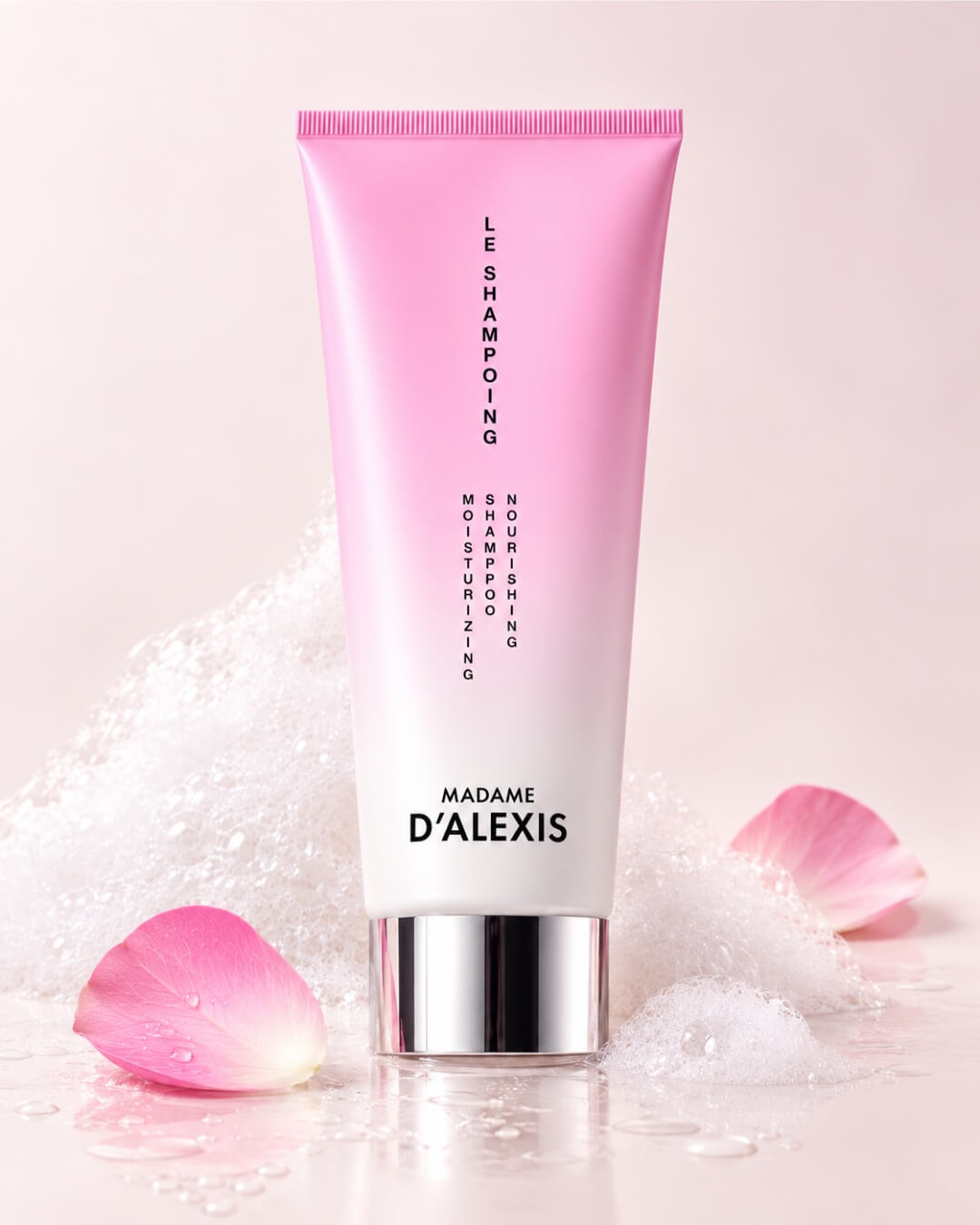
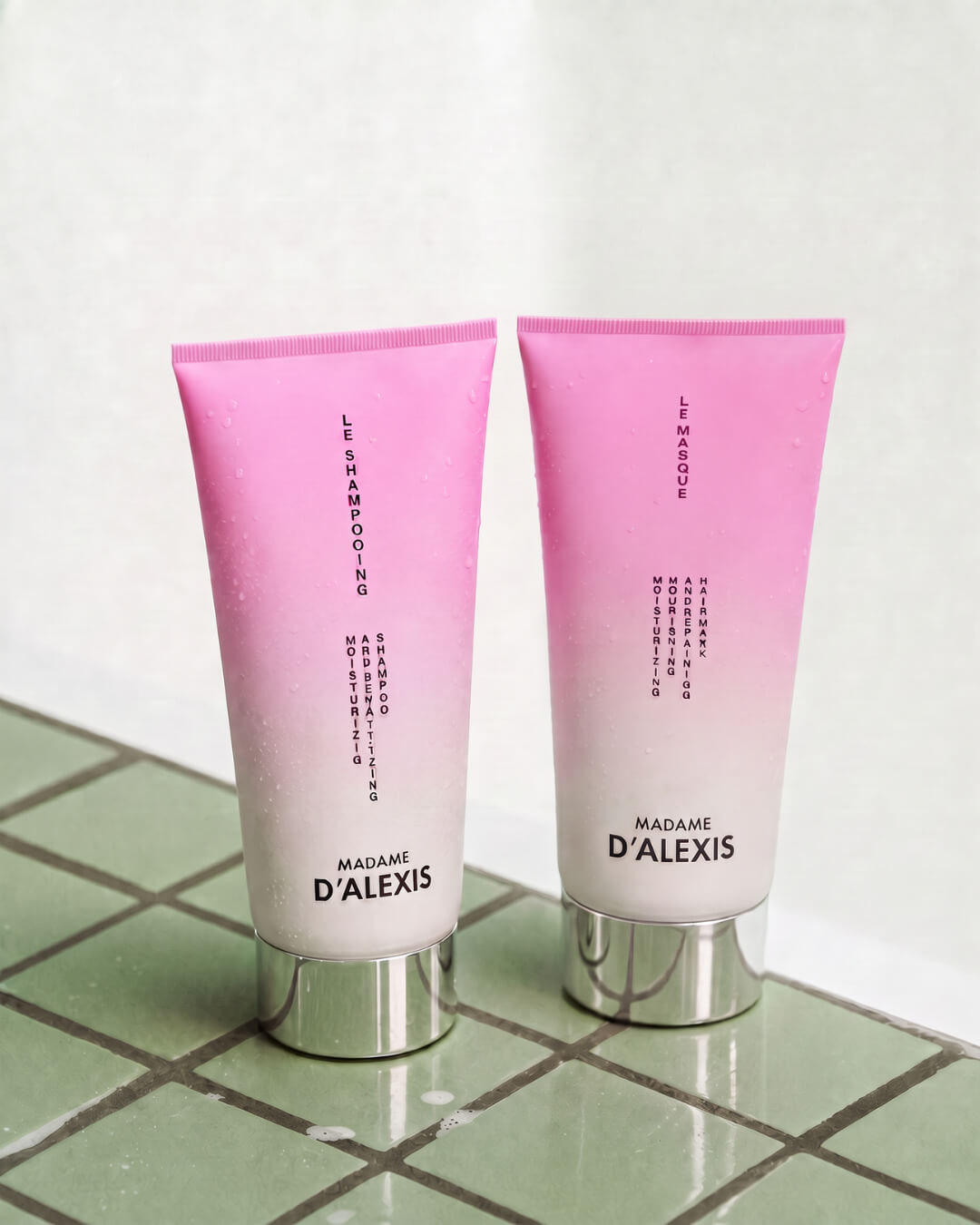
Madame d'Alexis chose to reinvent hair care by replacing inert water with floral hydrosols, rich in precious active ingredients. This bold decision guarantees highly concentrated formulas, where every drop nourishes and enhances the hair fiber.
Formulas enriched with precious hydrosols
Unlike conventional cosmetics, every Madame d’Alexis skincare product is formulated without added water. Instead, hydrosols carefully selected for their beneficial properties enrich the formula.
- Damask rose hydrosol: known for its illuminating and protective properties, it moisturizes without weighing down the skin.
- Chamomile Hydrosol: soothes sensitive scalps, while bringing out the hair’s natural shine.
- Orange blossom hydrosol: regenerates the hair fiber and provides unparalleled softness.
The combination ofbotany and advanced biotechnology makes it possible to formulate effective hair care products designed to moisturize, protect, and strengthen hair over the long term.
Visible effectiveness from the very first application
Replacing water with active hydrosols is not simply an aesthetic choice. It is a revolution in the world of hair care, offering immediately visible results.
▪️Deep hydration without evaporation: where water evaporates without leaving a trace, hydrosols penetrate the hair fiber and nourish it deeply.
▪️Better penetration of active ingredients: without inert water, the active ingredients bind directly to the hair fiber, optimizing their effectiveness.
▪️Healthier, shinier hair: by providing essential nutrients, hydrosols improve hair texture and shine without weighing it down.
Each Madame d'Alexis treatment is designed toenhance hair naturally, with results that can be seen from the very first application.
Conclusion: should water be banned from hair care?
Water remains afundamental ingredient in cosmetics, but its usefulness in hair care is increasingly being questioned. Unlike hydrosols and vegetable oils, it does not nourish the hair fiber and offers no direct benefits.
▪️Opting for formulas without inert water, enriched with hydrosols and concentrated active ingredients, optimizes the effectiveness of the treatments while preserving the health of the hair.
▪️Madame d'Alexis embodies this new generation of hair care products, where every drop nourishes and enhances the hair fiber.
A new vision of skincare, combining excellence and naturalness, where the essentials finally take center stage.