


Do you feel like your shampoo is damaging your hair? Does your scalp feel tight, itchy, or uncomfortable after every wash? This feeling is not insignificant. It often indicates that the formula is too harsh and unsuitable for sensitive scalps and fragile hair fibers.
An ultra-gentle sulfate-free shampoo is distinguished by three simple but essential pillars: a non-aggressive cleansing base, mild surfactants of natural origin, and respect for the hydrolipidic film that naturally protects the scalp. It's not about "washing less," but washing better.
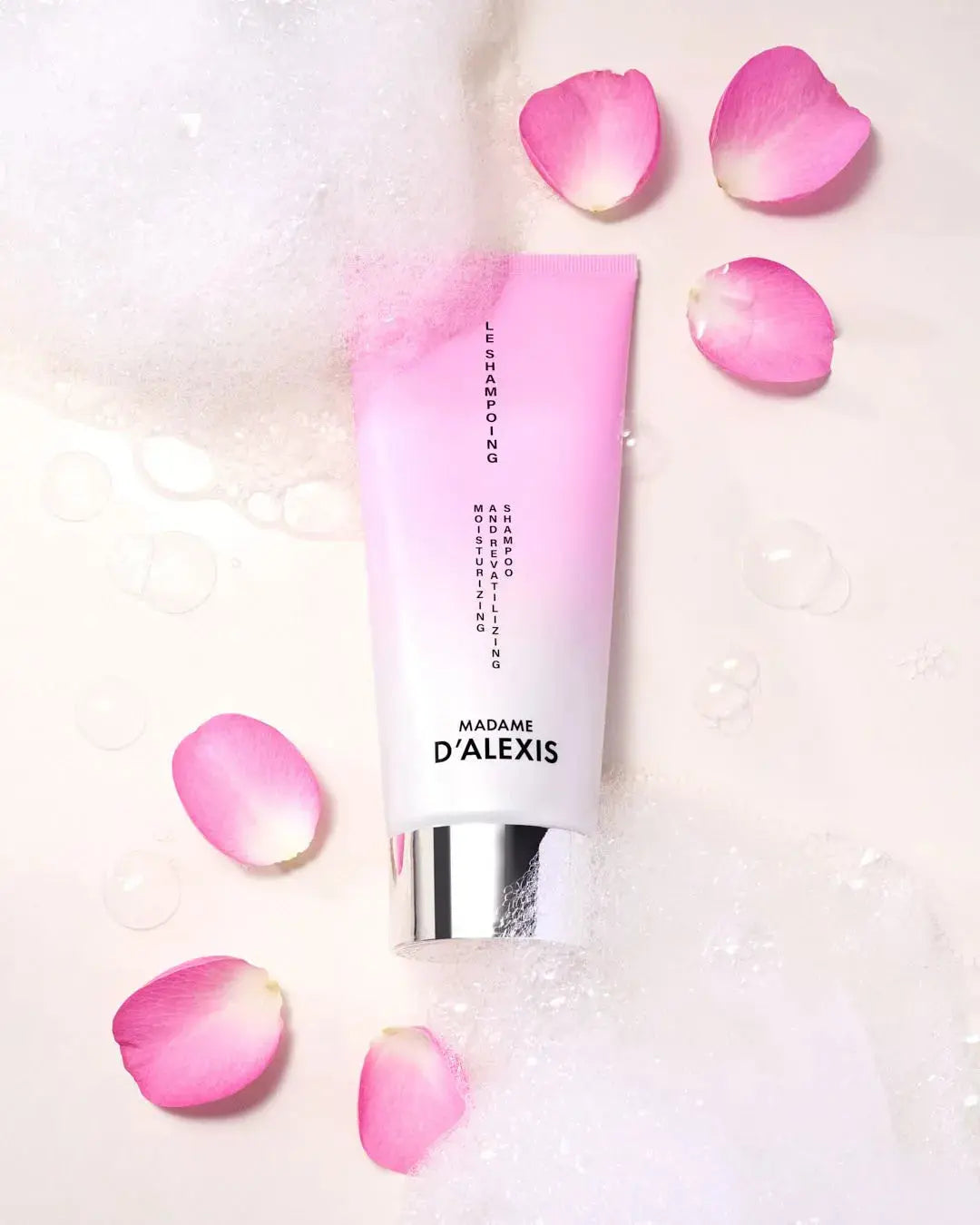
Ultra-gentle shampoo
Gentle cleansing care · 98% natural origin
- Organic hydrosol base, no added water
- Prebiotics, cationic AH
- Cleans without stripping, shine
In just a few minutes, you will understand why sulfates have become one of the main enemies of sensitive hair, and above all, what to replace them with without compromising cleanliness, shine, or comfort.
One statistic speaks for itself: nearly 70% of women still use harsh shampoos without realizing it. The effects are not immediate, but gradually set in. Dryness, discomfort, frizz, loss of shine. To remedy this, you first need to understand what is really happening on your scalp.
What is sulfate and why is it harsh?
Simple definition: what are sulfates?
Sulfates are synthetic surfactants, mainly Sodium Lauryl Sulfate (SLS) and Sodium Laureth Sulfate (SLES). Their role is simple: to dissolve grease, create lather, and give a feeling of "cleanliness."
The problem is their potency. These molecules act like industrial detergent, comparable to a very strong soap that makes no distinction between what needs to be removed and what needs to be preserved. As a result, they clean quickly, powerfully, and too thoroughly.
They are still found in around 80% of conventional shampoos because they are inexpensive, stable, and very effective in terms of appearance. They produce abundant lather and give an immediate feeling of "cleanliness." But this effectiveness is misleading.

How sulfates damage your hair
The action of sulfates takes place in several stages, often invisible at first.
-
Elimination of the hydrolipidic film
This film protects the scalp from dehydration and external aggressions. Sulfates dissolve it completely. -
Excessive opening of the cuticle
To clean, the hair fiber is forced to open. Too often. For too long. -
Progressive dehydration of the fiber
Water evaporates, natural lipids disappear, and the fiber becomes porous.
The consequences are well known:
- dry and brittle hair,
- loss of shine,
- persistent frizz,
- cuir chevelu irrité ou réactif.
In the long term, hair becomes dependent on increasingly rich repair treatments, without ever regaining its natural balance.
Signs that your shampoo contains harsh sulfates
Some signs are unmistakable. They should serve as a warning, especially if you have sensitive or colored hair.
- Very rich lather from the first application
- Feeling of hair "crunching" under your fingers
- Tightness or itching after rinsing
- Dry lengths the very next day
- Color that fades quickly
- Frizzy hair that is difficult to control
A healthy scalp does not feel tight. Healthy hair does not squeak.
Who is particularly affected by sulfates?
Not everyone reacts to it in the same way. However, some hair types are much more vulnerable.
- Fine, fragile hair that is more prone to breakage
- Sensitive or irritated scalps
- Colored or chemically treated hair
- Curly or frizzy hair, which is naturally more porous
- Children, whose skin is thinner and more reactive
- People prone to seborrheic dermatitis
In these specific cases, a natural sulfate-free gentle shampoo is not an optional comfort. It is a functional necessity to preserve the balance of the scalp and the quality of the hair fiber.
The real benefits of an ultra-gentle sulfate-free shampoo
Choosing an ultra-gentle sulfate-free shampoo is not a trend. It is a rational decision based on scalp physiology and the very structure of the hair.
The benefits are gradual, measurable, and lasting, provided that a logic of care rather than stripping is accepted.
Benefit #1: Respects the hydrolipidic film
An ultra-gentle sulfate-free shampoo cleanses without altering the scalp's natural barrier. Unlike harsh surfactants, it removes excess sebum and impurities without dissolving protective lipids.
Direct result:
- the scalp remains comfortable,
- the fiber retains its internal moisture,
- The lengths become less rough with each wash.
The effect is not instantaneous. It usually becomes noticeable after two to three weeks, once the hydrolipidic film has been restored. This is when sulfate-free moisturizing shampoo really comes into its own.
Benefit #2: Soothed and rebalanced scalp
One of the most noticeable effects is on the scalp. By removing sulfates, irritation is drastically reduced.
In concrete terms:
- less itching,
- reduction in burning or tightness sensations,
- reduction of dandruff caused by mechanical and chemical damage.
An ultra-gentle shampoo also acts on the skin microbiome, the ecosystem of microorganisms that are essential to the balance of the scalp. When this balance is maintained, inflammatory reactions decrease. This is a key point for anyone looking for a truly effective shampoo for sensitive scalps.
Benefit #3: Shinier, more supple hair
The natural shine of hair depends directly on the condition of its cuticle. Gentle washing allows the scales to close properly.
The effects are mechanical and visible:
- A tight cuticle reflects light better.
- moisture remains trapped in the fiber,
- Flexibility increases, breakage decreases.
In the medium term, hair gains length and apparent density. This is what distinguishes a better mild shampoo from a product that is simply "pleasant."
An ultra-gentle shampoo for all hair types
Contrary to popular belief, ultra-gentle shampoo is not intended for a single hair type. It promotes the natural balance of all hair types.
It is particularly beneficial for:
- dull or blondehair, lacking shine,
- damaged, brittle, or fragile hair,
- kinky or textured hair, which is naturally drier.
Thanks to its balancing action, the scalp stabilizes, the hair fiber gradually rebuilds itself, and the hair regains a luminous and revitalized appearance, without any artificial cosmetic effect.
Benefit #4: Color protected for longer
On colored hair, the benefits are immediate. A less damaged cuticle retains pigments better.
This implies:
- a more stable color,
- less spillage,
- longer intervals between two colorings.
Over time, the savings are real. A sulfate-free shampoo for colored hair protects both the hair fiber and your investment in salon treatments.
Benefit #5: Gradual transition to natural balance
Switching to an ultra-mild shampoo requires some adjustment.
- Weeks 1 to 2: the scalp may become oily again as sebum resumes its role.
- Weeks 3 to 4: balance is achieved.
- From the fifth week onwards: hair reaches its optimal condition.
My advice is simple: don't rush to judgment. Patience is not a compromise; it is the key to success.

The essential criteria for a truly ultra-gentle sulfate-free shampoo
Not all shampoos labeled "gentle" are created equal. For an ultra-gentle sulfate-free shampoo to be truly effective and gentle on sensitive hair, certain criteria are non-negotiable. Reading the label becomes an essential part of your hair care routine.
Criterion #1: Completely free of sulfates (SLS, SLES, ALS)
That's the basic rule. An ultra-gentle shampoo should not contain any harsh sulfates, particularly sodium lauryl sulfate (SLS), sodium laureth sulfate (SLES), or ammonium lauryl sulfate (ALS).
In concrete terms:
- sulfates almost always appear among the first five ingredients,
- The terms "sulfate-free" or "sans sulfate" must be verified in the INCI list.
- If you see "sodium lauryl sulfate" or "sodium laureth sulfate," there's no need to look any further.
A natural sulfate-free shampoo does not strip the hair. It cleanses without causing imbalance.
Criterion #2: Acidic pH between 4.5 and 5.5
pH is too often overlooked, even though it affects the health of the hair fiber. A shampoo with an acidic pH, similar to that of the scalp, respects the cuticle.
Its effects are measurable:
- the scales close properly,
- breakage decreases,
- The surface of the hair becomes smoother and shinier.
Ideally, the brand should communicate clearly on this point. If not, a pH test strip can be used to remove any doubt. An acidic pH shampoo is not a technical detail, it is a performance criterion.
Criterion #3: Mild surfactants of natural origin
An ultra-gentle shampoo depends on the quality of its cleansing base. Certain surfactants are known for their excellent tolerance.
Best of all :
- cocamidopropyl betaine, gentle and well tolerated,
- decyl glucoside, plant-based, very gentle,
- sodium cocoyl isethionate, an effective yet gentle cleanser.
Avoid:
- sulfates,
- sulfoxylates,
- paraffin derivatives.
Mild surfactants ensure gentle cleansing, suitable for regular use and sensitive scalps.
Criterion #4: Useful moisturizing and soothing ingredients
An ultra-gentle shampoo does more than just clean. It must also treat.
The truly relevant assets are:
- rose, chamomile, or orange blossom hydrosols to moisturize and soothe,
- hyaluronic acid to retain water in the fiber,
- vegetable glycerin for its moisturizing properties,
- ceramides to strengthen the hair barrier.
A well-formulated moisturizing shampoo begins the care process as soon as you start washing your hair.
Hair nutrition: when shampoo becomes a treatment
An effective ultra-gentle shampoo does more than just cleanse. It provides gradual nourishment without weighing hair down. Certain plant-based ingredients are now recognized as true hair treasures.
Among the most effective:
- shea butter, which repairs and protects,
- argan, camellia,avocado, or black cumin oils, rich in essential fatty acids,
- oats and plant-based milk, soothing,
- honey andapricot, natural revitalizers.
Used in the right amounts, these active ingredients transform shampoo into a nourishing elixir, capable of restoring suppleness and vitality to dull, damaged, or brittle hair.
Criterion #5: High and transparent natural origin
A minimum threshold of 90% natural ingredients automatically limits the presence of irritants. Labels such as Ecocert and Cosmos provide a framework, but transparency remains essential.
A reputable brand:
- clearly lists all ingredients,
- explains their role,
- Avoid vague expressions.
This is one of the foundations of clean beauty applied to hair care.
Criterion #6: Free of silicones and parabens
Silicones give an immediate illusion of softness, but suffocate the fiber in the long term. Parabens, on the other hand, raise legitimate questions about endocrine disruption.
Alternatives exist:
- light oils such as jojoba or baobab,
- biomimetic active ingredients for real shine.
A silicone-free shampoo protects the hair fiber over time. It is this overall consistency that makes the difference between a marketing product and a truly ultra-gentle shampoo.
Natural ultra-mild shampoo vs. synthetic shampoo: the real debate
The debate between ultra-gentle natural shampoo and synthetic shampoo is not simply an ideological opposition. It is based on specific mechanisms that can be observed on the hair fiber and scalp.
Immediate experience can be misleading. Lasting results, however, do not lie.
Summary comparison of the two approaches
Ultra-gentle natural shampoo
- Mild plant-based surfactants
- Respect for the hydrolipidic film
- Long-lasting hydration, without artificial cosmetic effects
- Balanced scalp
- Real shine, linked to the cuticle
- Gradual but steady effect
Classic synthetic shampoo
- Aggressive surfactants (often sulfated)
- Scalp peeling
- Temporary feeling of softness
- Progressive imbalance
- Artificial brilliance
- Product dependence
This difference explains why the initial feeling can be confusing.
Why synthetic shampoos seem better at first
Synthetic shampoos are designed to impress from the very first use. Their effectiveness is immediate, but superficial.
Several factors are working in their favor in the short term:
- Abundant foam, mistakenly associated with better cleaning
- Silicones, which coat the fiber and give it an instant smooth feel
- Low prices, reassuring at the time of purchase but misleading in the long term
- Aggressive marketing, heavily focused on visual appeal
The problem is structural. Foam is only a sensory indicator. Silicones do not treat the hair. They mask it. Gradually, the hair dries out under the occlusive layer, and the scalp overproduces sebum to compensate.
It becomes a vicious circle. That's the paradox ofsynthetic shampoo: pleasant at first, but restrictive in the long term.
Why ultra-gentle natural shampoos win in the long run
An ultra-gentle natural shampoo works in the opposite way. It doesn't try to impress. It aims for balance.
The phases are generally as follows:
- Weeks 1 to 2: adjustment, sometimes a slight excess of sebum
- Weeks 3 to 4: stabilization of the scalp
- From the second month onwards: shinier, more supple, stronger hair
The benefits then become clear:
- the fiber regains its natural structure,
- longer lengths break less,
- washing can be spaced out.
Added to this is an often underestimated economic factor: a concentrated ultra-mild shampoo lasts two to three times longer. The logic behind clean beauty is also that of sustainability.
The transition trap
The main mistake is giving up too soon. After years of sulfates, hair needs to be retrained.
Cette transition vers les soins capillaires naturels (ou dégorgement, lire notre article ici) dure rarement plus de deux à quatre semaines. Elle n’est pas un échec, mais un signal positif. Le cuir chevelu recommence à fonctionner seul.
My advice is simple:
- space out washes,
- avoid occlusive treatments during this phase,
- allow the hair to regain its rhythm.
Patience is often the line between disappointment and lasting transformation.

Our selection of the best ultra-gentle sulfate-free shampoos
Not all sulfate-free shampoos are created equal. Some simply remove harsh ingredients without rethinking the formula. Others, more demanding, actually work to balance the scalp and improve hair quality. This selection is based on specific criteria: genuine gentleness, measurable effectiveness, skin tolerance, and consistency of formulation.
#1 – Madame d'Alexis Shampoo ⭐
In my opinion, it strikes the best balance between naturalness and performance. Its strength does not lie in any single ingredient, but in the consistency of the whole.
The formula is composed of 98% natural ingredients, with a base of organic Damask rose, chamomile, and orange blossom hydrosols, which replace inert water. This active base truly changes the perception of washing.
Key assets:
- cationic hyaluronic acid, to plump up the fiber,
- plant-based keratin, to strengthen the structure,
- plant ceramides, to lock in moisture,
- Acidic pH, which closes the scales.
Surfactants, including cocamidopropyl betaine, are gentle and well tolerated. The foam is present, but never harsh. The floral fragrance, dominated by Damask rose, remains elegant and not overpowering.
One bottle lasts two to three months, which puts its price of €39 into perspective.
Verdict: ideal for sensitive, fragile, or colored hair, with an easy transition and visible results in about three weeks.
Ultra Gentle Shampoo
Gentle cleansing care · 98% natural origin
- Organic hydrosol base, no added water
- Prebiotics, cationic AH
- Cleans without stripping, shine
#2 – Rahua Hydration Shampoo
This shampoo draws on the richness of Amazonian oils, particularly rahua and morete oils, which are naturally rich in omega-9 and vitamins.
Advantages :
- intense nutrition,
- vegan formula,
- carbon neutral approach.
However, its very rich texture can weigh down fine hair. Its high price means it is best suited to thick, dry, or frizzy hair that needs a deeply nourishing moisturizing shampoo.
#3 – Rossano Ferretti Parma Dolce Nourishing Shampoo
Here, we enter the world of high-end hair spa treatments. The texture is creamy and enveloping, with up to 48 hours of hydration promised.
The formula, which is 94% natural, combines grape, ginseng, and hyaluronic acid. It is truly effective, but the rich texture may not be suitable for frequent use on fine hair. The price is in the luxury range.
#4 – Christophe Robin Hydrating Shampoo with Aloe Vera
This is the most accessible product in this selection. Its 98.6% natural formula, enriched with aloe vera and plant-based amino acids, offers good tolerance.
Strengths:
- Acidic pH around 4.8,
- frequent use possible,
- light foam.
It is slightly less nourishing than the others, but remains an excellent mild shampoo for normal to sensitive hair, especially when used alternately.
#5 – Innersense Hydrating Cream Hairbath
Highly appreciated by those with textured hair, this creamy, silicone-free shampoo is formulated with shea butter, tamanu oil, and organic avocado oil.
It is extremely concentrated. A small amount is enough. On the other hand, its thick texture can weigh down fine hair. It is an excellent choice for curly, frizzy, or very dry hair in need of nourishment and control.
Summary table
- Madame d'Alexis: balance, sensitive scalp, regular use
- Rahua: intense nourishment, thick hair
- Rossano Ferretti: luxury and repair
- Christophe Robin: everyday luxury within reach
- Innersense: curls and very dry hair
The right choice always depends on your hair type, but a well-formulated ultra-gentle shampoo remains the basis for healthy hair in the long term.
The complete routine to maximize the effectiveness of your Madame d'Alexis ultra-gentle shampoo
An ultra-gentle shampoo reveals its full potential when used as part of a routine designed as a coherent whole.
This is precisely the logic of Madame d'Alexis : each treatment prepares, supports, or prolongs the action of the previous one. Hair imbalances cannot be corrected with a single product, but with the right actions, repeated over time.
Step 1: Weekly pre-shampoo to protect the hair fiber
Before washing, the fiber needs to be prepared. Once a week, apply an oil treatment to the lengths and ends of your hair thirty minutes before shampooing.
- jojoba oil if your hair is fine or sensitized,
- baobab oil if the fiber is thicker or dry.
This pre-shampoo limits dehydration during washing and improves scalp tolerance. Even with an ultra-gentle shampoo, this step makes a difference in the long term.
Step 2: Gentle washing with Madame d’Alexis Shampoo
Washing should remain precise. Twice a week is sufficient in most cases.
The recommended method:
- first foam for cleaning,
- second foam to treat.
Dilute a small amount of Madame d'Alexis Shampoo in a little warm water. Massage only the scalp, without rubbing the lengths. Organic hydrosols, cationic hyaluronic acid, and prebiotics then act without aggression.
Two to three minutes is enough. There's no need to prolong it.
Step 3: Targeted repair with Le Masque Madame by Alexis
After washing, tailor your hair care routine to the actual condition of your hair.
- normal to slightly dry hair: short application time, five minutes,
- fragile, colored, or brittle hair: longer application time, up to fifteen minutes.
Alexis' Madame Mask, rich in plant ceramides and precious oils, restores the lipid barrier without weighing hair down. Rinse thoroughly to maintain lightness and shine.
Step 4: Final rinse to seal in the benefits
Always finish by rinsing with cold water for about 30 seconds. This step closes the cuticle and locks in the moisture provided by the previous steps. The shine becomes clearer and the hair feels silkier.
Step 5: Daily protection with Day Serum
Apply two to three drops of Madame d'Alexis Day Serum to the lengths of slightly damp hair. Its dry texture nourishes, protects, and tames without weighing hair down. This daily ritual prolongs the effects of shampoo and mask.
Step 6: Nighttime repair with Night Serum
Two to three nights a week, apply Madame d'Alexis Night Serum directly to the scalp. While you sleep, the probiotics and botanical active ingredients work to balance the skin and revitalize the roots.
Typical seven-day routine
- Monday: Day Serum
- Tuesday: Shampoo + Mask
- Wednesday: Day Serum
- Thursday: Night Serum
- Friday: Pre-shampoo
- Saturday: Shampoo + Mask
- Sunday: Rest
This routine respects the hair's biological rhythm. In my opinion, this is essential for visible, lasting, and consistent results.
FAQ: Everything you need to know about ultra-gentle sulfate-free shampoo
What is the difference between "soft" and "ultra soft"?
The difference is more significant than it seems.
A gentle shampoo generally uses less aggressive surfactants than traditional sulfates, but often retains a neutral pH and few truly soothing ingredients. It cleanses effectively, without necessarily treating sensitivity.
An ultra-gentle shampoo goes even further:
- very mild and well-tolerated surfactants,
- Acidic pH, similar to that of the scalp,
- presence of soothing and moisturizing ingredients.
For sensitive or damaged scalps, the verdict is clear: ultra-gentle remains the best option in the long term.
How long before I see results?
The effects follow a fairly consistent schedule.
- Weeks 1 to 2: adjustment phase, sometimes with excess sebum.
- Weeks 3 to 4: the scalp regains its natural balance.
- From the second month onwards: shine, suppleness, and strength become visible.
The most important advice is to be patient. The transition to a natural shampoo can never be judged on the basis of a single wash.
Why is my hair greasy after the change?
This phenomenon is common and perfectly normal. After years of harsh shampoos, the scalp has learned to overproduce sebum to protect itself.
When switching to an ultra-mild shampoo:
- sebum production is regulated,
- The scalp gradually returns to its natural functioning.
This phase generally lasts two to four weeks maximum.
Simple solutions:
- space out washes,
- use dry shampoo occasionally.
This is a good sign. It means that balance is being restored.
How much does the ultra-gentle shampoo cost?
The price of an ultra-gentle shampoo depends directly on its formulation. Behind an identical name, the realities are very different.
In supermarkets, certain products labeled as "gentle" or "ultra-gentle" are priced between €3 and €6. At this price point, the formula remains largely standard: water as the main base, simple cleansing surfactants, and active ingredients in low concentrations. The results are acceptable in the short term, but often insufficient for sensitive scalps or fragile hair.
Conversely, a truly effective ultra-gentle shampoo is based on a different approach: concentration, functional active ingredients, a non-aggressive cleansing base, and controlled pH. This explains why the most advanced formulas are priced at around €35 to €40.
This is precisely the case with Alexis' Madame Shampoo, priced at €39. This price corresponds to:
- a formula that is 98% natural in origin,
- a base with no added water, replaced by bioactive hydrosols,
- very mild surfactants,
- an acidic pH that is gentle on the scalp,
- a high concentration, allowing one bottle to last two to three months.
In reality, the recommended retail price must always be considered in relation to the duration of use and the results. An effective ultra-gentle shampoo costs more to buy, but often works out cheaper to use, while improving the long-term health of the hair.
Is ultra-mild shampoo suitable for children?
Yes, provided that it is a genuine ultra-mild shampoo, and not simply a product that has been "milded" for marketing purposes.
Children's scalps are thinner, more permeable, and more reactive than those of adults. They do not tolerate harsh formulas, harsh cleansers, or strong fragrances well. A well-formulated ultra-mild shampoo therefore poses very little risk when used correctly.
For safe use with children, the essential criteria are:
- free from harsh sulfates,
- very mild surfactants,
- short and readable formula,
- pH-friendly,
- soothing ingredients.
In this context, a shampoo such as Madame d'Alexis is particularly suitable for occasional use on children, especially those with sensitive, dry, or itchy scalps. Its organic hydrosol base and absence of irritants make it a gentle product, even on delicate scalps.
A few precautions are still useful:
- avoid daily use,
- use a small amount,
- test on a small area during initial use.
An ultra-mild shampoo is not a "baby" product, but when it is well formulated, it is a safe and effective solution for the whole family, without compromising on quality.
Does it work on colored hair?
Yes, and it is even highly recommended.
An ultra-gentle sulfate-free shampoo respects the cuticle, which helps retain pigments for longer.
Results observed:
- more stable color,
- less spillage,
- shinier hair.
It is advisable to wait 48 hours after coloring before washing your hair for the first time, to allow the pigments to set.
Safety and risks: who is ultra-mild shampoo really for?
A well-formulated ultra-mild shampoo poses a limited risk, even for the most sensitive skin types.
The potentialrisks identified today mainly concern older industrial formulas that are rich in aggressive cleaning agents or poorly controlled fragrance allergens.
For children, adolescents, and pregnant women, safety is based on several specific criteria:
- free from harsh sulfates,
- low allergen content,
- pH-friendly,
- dermatologically tested formula.
To date, no significant risks have been identified with modern ultra-gentle care products when used as directed. At Madame d'Alexis, the formulas are designed for maximum tolerance, which explains why they are suitable for sensitive scalps, including for family use.
Which ultra-gentle shampoo is best for children?
Children's skin is thinner and more reactive. The criteria must be strict:
- sulfate-free,
- ultra soft,
- pH adjusted,
- hypoallergenic formula.
Brands such as Christophe Robin and Madame d'Alexis meet these requirements. It is always best to test the product on a small area before regular use.
Is it really more expensive?
When purchasing, yes. The price is often 30 to 40 percent higher.
But the actual cost tells a different story:
- a bottle lasts two to three times longer,
- washing is less frequent,
- the need for restorative care decreases.
In the long term, the savings are real. The benefits for scalp health, however, are priceless.
Can you use an ultra-mild shampoo every day?
It is possible, but rarely necessary.
Washing two to three times a week allows the hydrolipidic film to rebuild naturally.
In addition:
- rinsing with clean water,
- occasional co-wash.
Washing less, but better, remains the most effective strategy.
Which ultra-gentle shampoo is best for very irritated scalps?
The criteria are specific:
- very mild surfactants,
- acidic pH,
- hydrosols with soothing properties.
In this context, formulas based on organic hydrosols, such as those from Madame d'Alexis, are particularly suitable. In cases of persistent dermatitis, a dermatological consultation remains essential.
How to switch to an ultra-gentle sulfate-free shampoo (without disaster)
Changing shampoo should never be a difficult experience. However, the transition to an ultra-gentle sulfate-free shampoo is often misunderstood, which explains why many people are disappointed. When done properly, it is simple, gradual, and beneficial.
Week 1: Preparation
The first mistake is to change abruptly. A successful transition begins with anticipation.
During this phase:
- continue to use your usual shampoo,
- buy your new ultra-gentle shampoo,
- Take the time to read the list of ingredients and understand the difference in formulation.
It's also a mental preparation. The feeling will change. Less lather, a different sensation under your fingers. This isn't a flaw, it's a signal. This shampoo transition is as much about understanding as it is about the action itself.
Weeks 2 to 3: Gradual transition
The scalp needs time to readjust. Intelligent alternation limits imbalances.
Recommended organization:
- Days 1 and 2: one wash with the new shampoo, one with the old shampoo.
- Days 3 and 4: two washes with the new detergent, one with the old detergent.
- Days 5 to 7: switch to using the ultra-mild shampoo 100% of the time.
This gradual pace allows the shampoo to adapt without causing any shock. Sebum production begins to regulate itself, without any excessive rebound effect.
Week 4 and beyond: Full adaptation
At this stage, some hair may appear oilier. This is normal. The scalp is relearning how to produce the right amount of sebum after years of stripping.
Simple solutions:
- space out your washes,
- use dry shampoo occasionally,
- Avoid using too many products.
After a few weeks,the hair's natural balance is restored. The roots become less oily, and the lengths become more supple.
Key tips for a successful transition
A few simple steps can make all the difference, especially for sensitive hair.
To do:
- limit washing to two or three times a week,
- incorporate a nourishing pre-shampoo,
- finish by rinsing with cold water,
- apply a serum or light oil after washing,
- reduce exposure to heat.
To be avoided at all costs:
- give up too soon.
- shampooing too frequently
- perform a series of treatments
The rule is simple: a minimum of four weeks. Patience is not a constraint, it is the key to a healthy and sustainably balanced scalp.

