Conseils
French organic hair care: how to identify a genuine organic product made in France

On the label, everything looks the same: “natural,” “organic,” “made in France,” a green leaf, a blue-white-and-red flag. Yet, behind these words, the promises are not all equal. A French organic hair care product can be exemplary, or simply well packaged. The good news is that a few simple reading tips are enough to make a difference, without a chemistry degree or spending an hour studying the ingredients list.
Here is how to recognize a genuine organic hair care product made in France, what labels and country-of-origin claims say (and don’t say), and how to create a consistent routine with organic hydrosol hair care products.
What is a French organic hair care product?
A French organic hair care product is a hair care product that contains ingredients partially sourced from organic farming and is manufactured in France. Three ideas are often confused in this expression, even though they do not mean the same thing.
“Organic” refers to how the plant-based raw materials were grown. “Natural” refers to the origin of the ingredients in the formula, whether they are plant-based, mineral, or derived from gentle processes. “French” refers to where the product is manufactured, sometimes formulated, and sometimes only packaged. A product can be natural without being organic, organic without being made in France, or made in France without being organic at all. A product that ticks all three boxes is rarer than it seems, and that is precisely what is worth checking.
How to recognize an organic hair care product?
To recognize an organic hair care product, first check if it carries a recognized label, then read the INCI list on the back, and finally check the percentage of naturally derived ingredients stated by the brand. These three indicators complement each other: none is sufficient on its own.
The label provides a framework controlled by an independent body. The INCI list, which lists all the ingredients, shows what is actually in the bottle. The percentage of naturally derived ingredients indicates the proportion of the formula that comes from nature, not just from organic farming: do not confuse it with the percentage of organic ingredients, which only concerns ingredients sourced from organic farming. Finally, transparency matters: a reputable brand explains what it puts in its formulas, why, and where it makes them. If this information is difficult to find, that is already a red flag.
Which labels guarantee an organic cosmetic product?
The labels that guarantee an organic cosmetic product in France are mainly based on the European Cosmos standard, available as Cosmos Organic and Cosmos Natural, and on certification bodies such as Ecocert or Cosmébio. Each has its own role.
Cosmos is a set of standards shared by several European bodies: it regulates the permitted ingredients, manufacturing processes, the proportion of ingredients sourced from organic farming, and certain aspects of packaging. Ecocert is a control body that audits brands and issues certifications. Cosmébio is the French professional association for the sector, whose label is based notably on this standard: an organic-certified product has therefore undergone an audit and must comply with a set of standards. When you see one of these mentions, you know that an independent third party has checked the formula. For details on the standards, our organic shampoo guide compares Cosmos Organic and Cosmos Natural.
However, keep one nuance in mind: a label is not mandatory, and its absence does not mean that a formula is bad. Conversely, a nice word like “clean” or “green” is not a substitute for a label. What matters is that the brand can tell you exactly what its product contains and where it comes from.
Manufactured in France, made in France, formulated in France: what’s the difference?
“Manufactured in France” means that the product was made in France, while “formulated in France” only means that the formula was designed here, without guaranteeing that production takes place there. The three terms are not equivalent, and none of them provides information about the origin of the ingredients themselves.
For a cosmetic product, the country-of-origin claim generally refers to the place of the last substantial transformation, that is, where the product takes its final form. A hair care product can therefore be manufactured in France with raw materials from several countries, which is normal: no plant grows everywhere. A French brand is also not necessarily a product made in France: the company’s headquarters and the manufacturing site are two different pieces of information. To see clearly, check if the brand indicates the place of manufacture, the region, and whether it takes responsibility for the origin of its active ingredients.
At Madame d'Alexis, the products are manufactured in France, in Brittany. This is verifiable information, provided on the product pages, and it is the type of information to look for with any brand claiming to offer a made-in-France hair care product.

How to read an INCI list and a percentage of naturally derived ingredients?
To read an INCI list, look at the order of the ingredients: they are listed from most concentrated to least concentrated, down to 1% of the formula. The first names on the list therefore represent the main part of the product.
In most shampoos and masks, water comes first, followed by surfactants or texturizing agents. It is precisely this first ingredient that makes the difference with a formula without added water: ours is based on organic hydrosols, Damask rose, matricaria chamomilla, and orange blossom, to which are added skincare actives such as cationic hyaluronic acid, plant-based ceramides, or prebiotics. If you want to understand what this changes, our article on shampoo without added water explains the logic in detail. Useful clarification: without added water does not mean dry shampoo; these are still products that you rinse out.
The percentage of naturally derived ingredients, meanwhile, is read as an average: the higher it is, the more the formula relies on natural ingredients. The Shampoo and Scrub display 98% naturally derived ingredients, while the Mask shows 97%. A figure is only meaningful if it is accompanied by an accessible ingredients list: always ask for both.
Does organic mean gentle on the scalp?
Organic does not automatically mean gentle: an organic hair care product can contain harsh surfactants or essential oils that are not suitable for a sensitive scalp. The “organic” criterion refers to cultivation, not tolerance.
After checking the label and the INCI list, look at what the formula avoids. At Madame d'Alexis, the products are sulfate-free, silicone-free, and paraben-free. If you want to understand why these ingredients are questionable, our guide on sulfates and hair and the one on natural alternatives to silicone provide the necessary information. A scalp that feels tight, hot, or itchy rarely reacts to a single ingredient: the entire routine matters, and that is where a diagnosis can help.
Which products to choose for an organic routine made in France?
To create an organic hair care routine made in France, start with what your hair needs, then choose one product for each step rather than piling products on top of each other. Here is how each Madame d'Alexis product follows this logic.
The Shampoo is a cleansing product that is 98% naturally derived, based on organic hydrosols, cationic hyaluronic acid, prebiotics, and plant-based keratin. It hydrates, soothes, and adds shine without sulfates: it is the starting point of a consistent routine that can be used daily. Apply it as a double shampoo to a thoroughly wet scalp, massage, and then rinse very thoroughly.
The Mask repairs, nourishes, and softens thanks to plant-based ceramides, orange blossom wax, and organic apricot and jojoba oils. It is suitable for dry, damaged, colored, or bleached hair. Allow 2 to 5 minutes for detangling, 5 to 10 minutes as a standard treatment on towel-dried hair, 20 to 30 minutes as a deep treatment, and rinse thoroughly.
The Scrub is an exfoliating shampoo with sea salt, hydrosols, and organic coconut oil. Use it every 10 to 15 days: on that day, it replaces the Shampoo, applied twice in succession like a double shampoo, then rinse. This frequency makes it suitable for sensitive scalps.
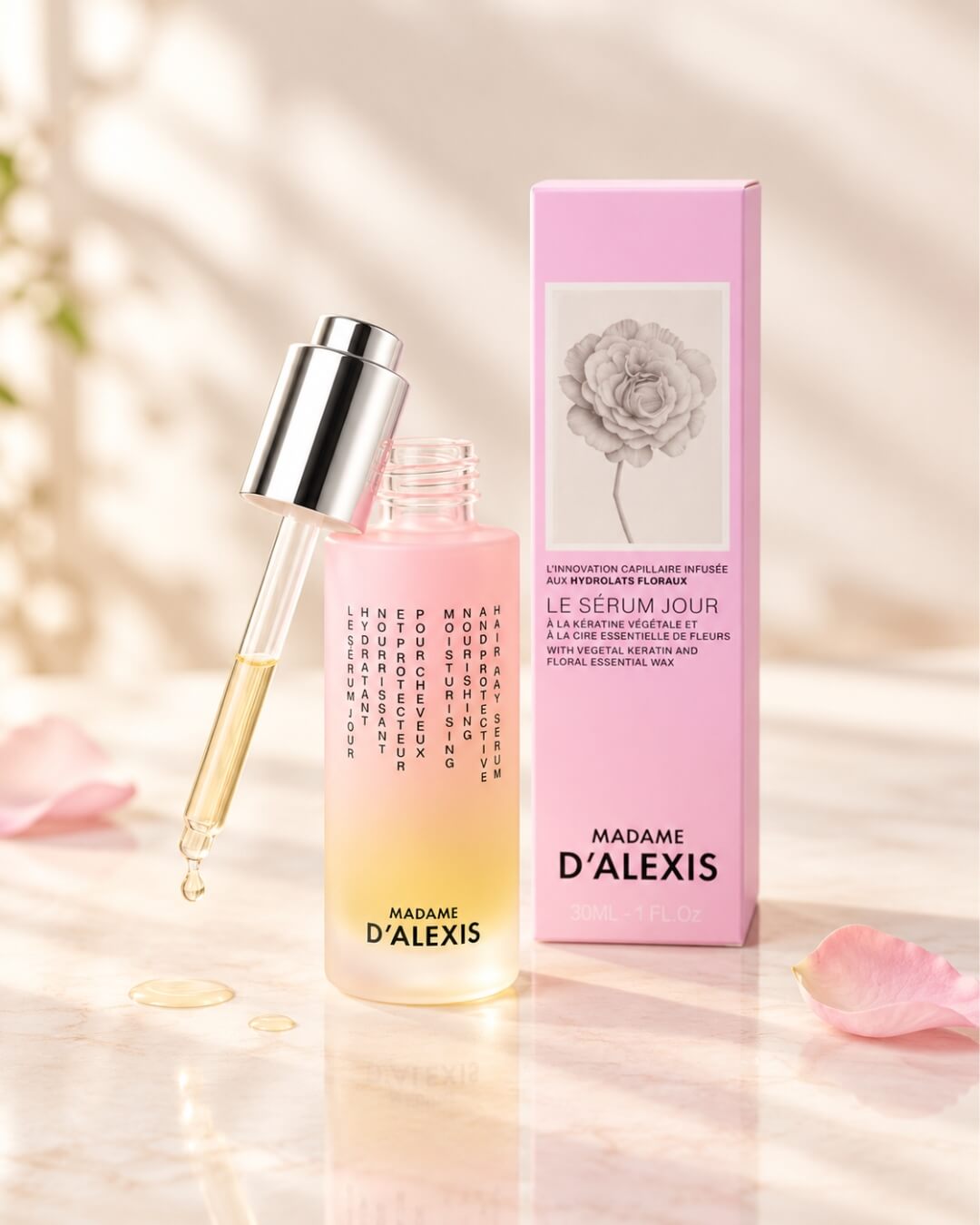
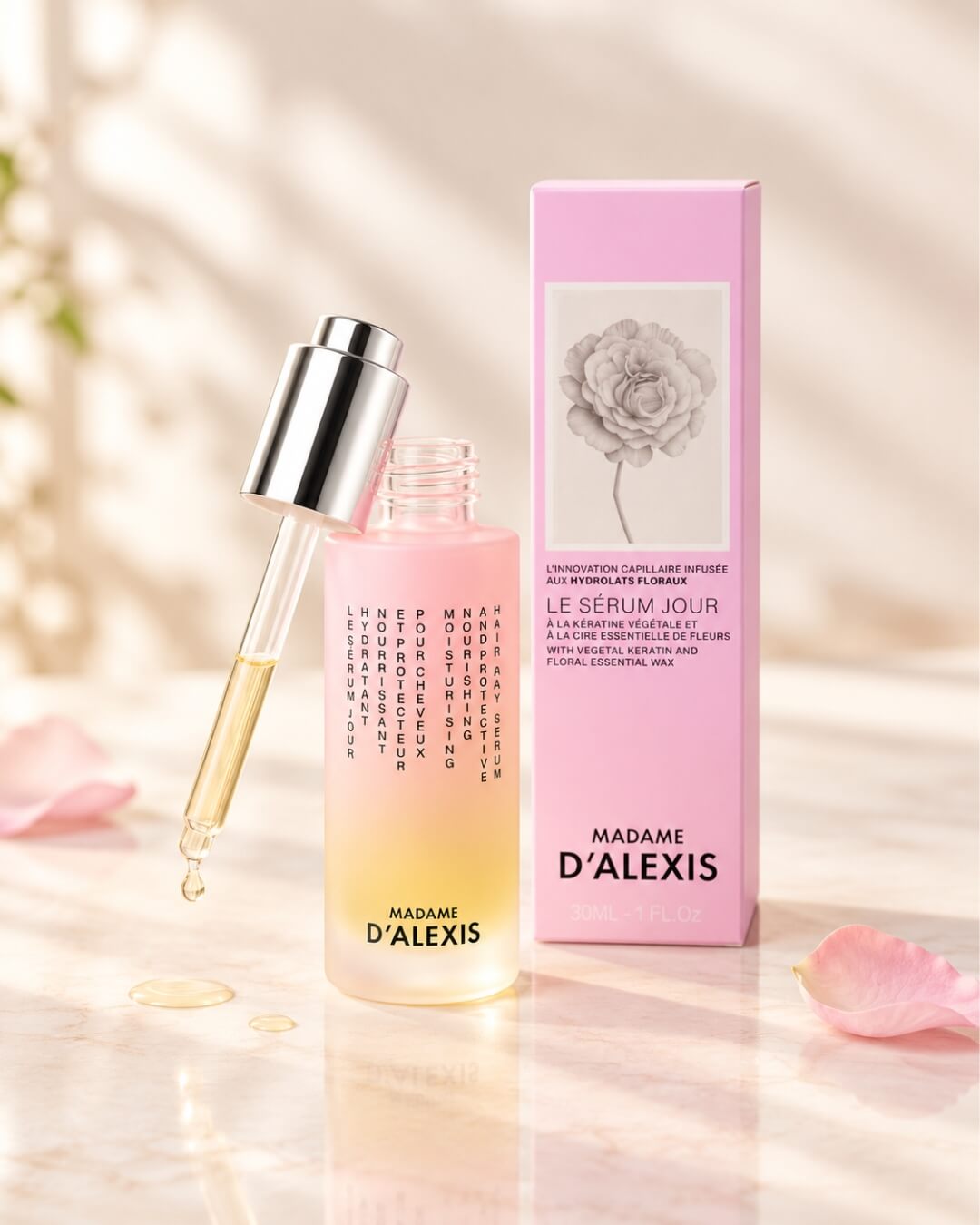
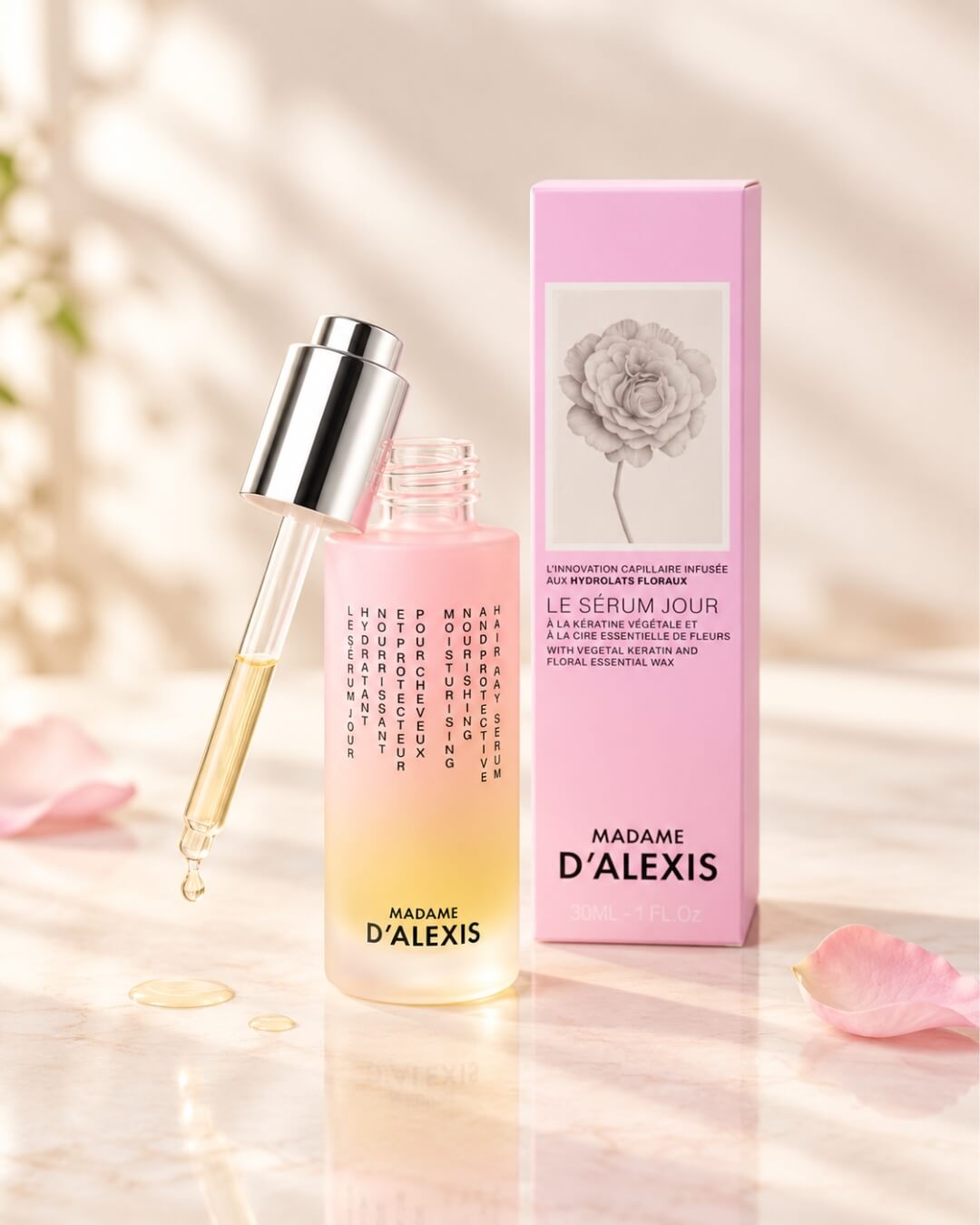
The Day Serum is a dry oil that is 99% naturally derived, based on organic jojoba, plant-based ceramides, and natural heat protectants up to 200°C. One to three drops on the lengths and ends, whether the hair is dry or slightly damp, adds suppleness without weighing it down.
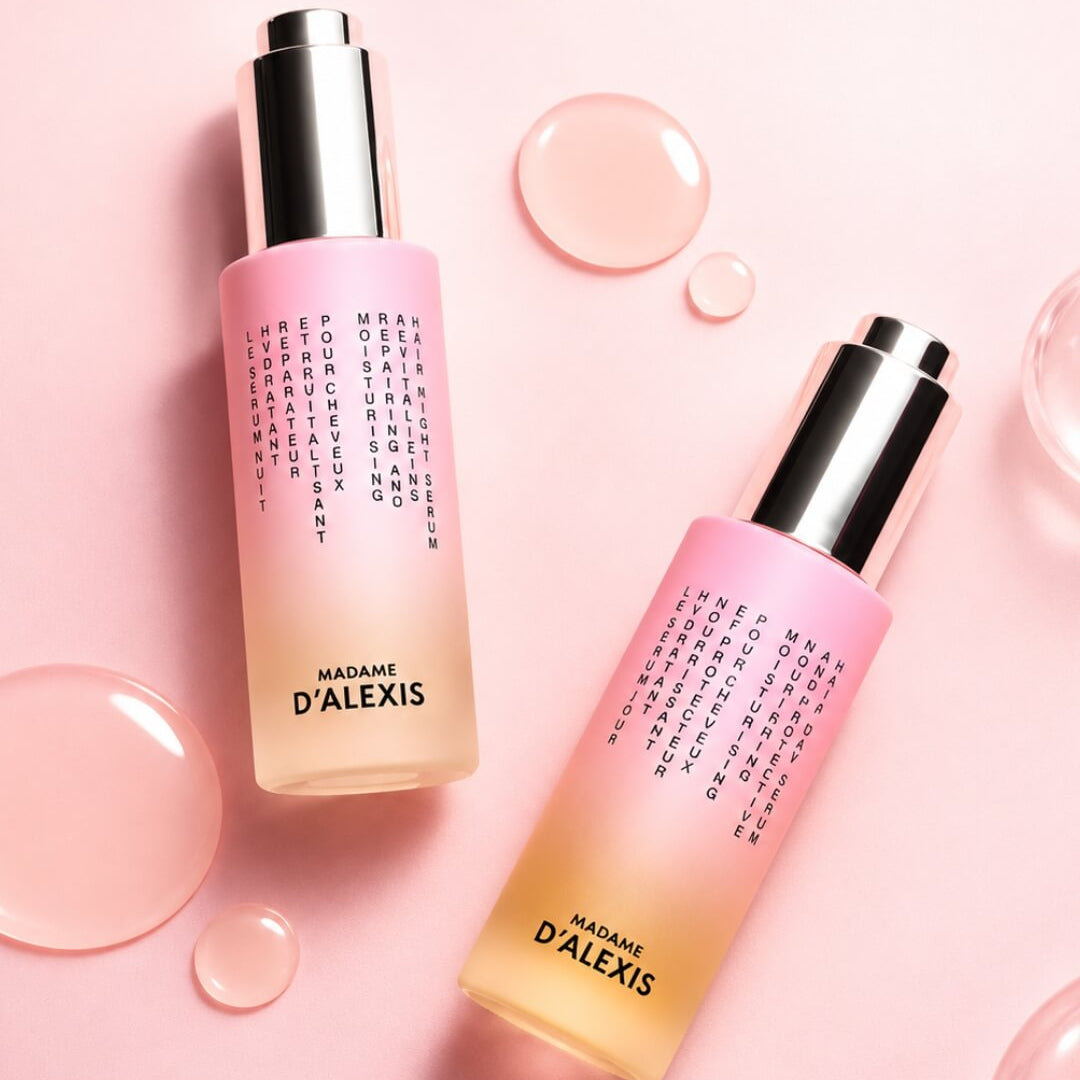
The Night Serum is applied in the evening, one drop at a time from the dropper across the scalp, without rinsing. Its probiotics and postbiotics, fermented extracts, and natural actives (oak, nettle, licorice) support an anti-hair loss, growth, and density routine. Use 3 to 5 times a week as a treatment, then 1 to 2 times for maintenance.

For weakened lengths, the dry hair care collection brings together the most suitable products. And if you are unsure about the order or frequency, the hair diagnosis below will guide you.

The Shampoo

The Mask

The Scrub

The Day Serum

The Night Serum
How to choose an organic product according to your hair type?
To choose an organic product according to your hair type, first identify your main need: hydrate dry lengths, soothe a sensitive scalp, or support growth. The rest follows.
Dry or damaged hair especially needs a gentle shampoo and a nourishing mask. A sensitive scalp benefits from a sulfate-free wash, an occasional scrub, and a Night Serum applied in the evening. Dull hair regains shine with a Day Serum on the ends. If you are not sure where you stand, the free hair diagnosis guides you to the right products in about two minutes. And if you are looking to discover the entire range, find our organic hair care products, designed as a ritual rather than an accumulation of products.
Which organic product is right for your hair ?
Answer a few questions about your scalp and lengths, and we will create your ritual from our 5 organic hydrosol products, formulated without added water.
Do you recognize yourself ?
- You answer
- You discover your ritual
- You adjust your selection
Frequently asked questions about French organic hair care
Is an organic cosmetic product necessarily 100% natural?
No, an organic cosmetic product is not necessarily 100% natural. Even labeled formulas contain ingredients necessary for preservation or texture, within the limits of a set of standards. The percentage of naturally derived ingredients indicates the exact proportion of the formula that comes from nature: ask the brand.
What does manufactured in France mean for a hair care product?
“Manufactured in France” means that the product was made in France, but not that all its ingredients come from there. Look for a brand that clearly indicates the place of manufacture: Madame d'Alexis products are manufactured in Brittany.
What is the Cosmos Organic label?
Cosmos Organic is a European standard that regulates organic cosmetics: permitted ingredients, manufacturing processes, and the proportion of ingredients sourced from organic farming. It is controlled by independent bodies such as Ecocert.
Are products without added water dry shampoos?
No. A product without added water is a product that you apply to wet hair and then rinse, like a regular shampoo. The difference comes from its base: organic hydrosols rather than water.
Do you need to change your entire routine to switch to organic?
No, it is not necessary to change everything at once. Start with the product you use most often, generally shampoo, then add the mask or serum when you feel the need. Your scalp and lengths will gradually adapt.
In summary
A good French organic hair care product is recognized by three things: a readable ingredients list, honest origin indicators (labels, percentage of naturally derived ingredients, place of manufacture), and a formula that truly suits your hair. Take the time to read the label a first time: after that, the reflex becomes simple, and your routine gains consistency.