Conseils
Flyaway hair: why it gets charged and how to calm it down

It's the season of sweaters you pull over your head, scarves wrapped up to your chin, and coats you take off as soon as you get inside. Outside, the cold air bites at your cheeks; inside, the heating runs from morning to night. And in front of the mirror, your hair stands up, clings to the collar, sticks to your face, and makes the comb crackle. Frizz is neither inevitable nor a seasonal whim: it's a simple physical phenomenon that can be explained, prevented, and soothed. Here's why static charge builds up and how to get rid of it for good.
Why does hair become static?
Hair fiber is not a good conductor: it behaves more like an insulator. When two materials rub together, one strips electrons from the other, a phenomenon known as the triboelectric effect. Brushing, synthetic sweaters, or pulling down a hood cause this transfer of electrons: each strand of hair ends up with a charge, most often positive, while the object that rubbed it becomes negative. Two charges of the same sign repel each other. Strands pull away from one another, stand up, and seem attracted to everything nearby. This is the static electricity in your hair that you see, and sometimes hear, when you style it.
The causes of static hair
The first factor is ambient humidity. Water vapor acts as a natural conductor: it allows the charge to flow away. When dry air sets in, this outlet disappears. In winter, the outdoor air contains little water and the hot air from the heating dries out the indoors: the two combine and trap the charge in the hair.
The second factor is the condition of the hair itself. Dehydrated lengths have a rougher cuticle, slightly raised scales, and less protective film on the surface. They rub more, charge up faster, and retain electricity better. It's no coincidence that this symptom is often accompanied by a lack of water in the fiber: the article why my hair is dry details the most common causes of this imbalance.
The third factor, finally, lies in materials and habits: synthetic clothing, a scarf rubbing the back of the neck, a plastic brush, drying at high temperatures. Each causes new friction, and therefore a new charge. Everything that promotes friction also promotes the problem.
Which hair types are most affected?
Fine, lightweight hair stands up at the slightest electrical charge. Long hair has more points of contact with clothing. Curls, naturally more porous, lose their moisture more easily, as do colored or highlighted hair after dyeing. Regardless of your hair type, the rule remains the same: thirsty hair in dry air becomes charged.

How to eliminate static electricity from hair?
When your hair stands on end and you wonder what to do, the first solution is to restore some conductivity to the hair and then stop feeding the charge. There are a few tricks to eliminate static electricity in the moment:
- Dampen slightly: run your slightly damp palms over the lengths, from top to bottom. A very thin film of water allows the charge to flow away and the strands to fall back.
- Apply a drop of treatment: a light serum or leave-in cream, warmed between the hands and then smoothed over the surface, coats the hair and reduces friction.
- Change tools: a wooden, horn, or acetate comb, or a boar bristle brush, generally generates less charge than a cheap plastic comb.
- Touch a metal object before styling: this discharges the body and avoids the unpleasant little spark.
These tricks calm the phenomenon immediately, but they do not address its cause. For a disciplined hairstyle that doesn't stand up again an hour later, you must also work at depth: well-hydrated hair retains significantly less charge.
How to prevent static hair in winter?
In winter, the air brings together everything that promotes charge: cold outside, heating inside, and layers of clothing that you take off and put on several times a day. Yet a few adjustments make a real difference.
- Choose your materials: prefer wearing a hat and a cotton or wool scarf, ideally lined with silk or satin. Synthetic clothing, polyester and acrylic especially, charge the hair with every movement.
- Restore some humidity indoors: open the window for a few minutes every day, and consider a humidifier or a bowl of water near the radiator in the room where you spend the most time.
- Soften the washing: lukewarm water rather than hot, followed by a final rinse with cool water that helps smooth the hair.
- Limit heat: set your device to a moderate temperature and direct the airflow from the roots to the ends. An ionic model can help reduce the static effect while drying.
- Brush gently: vigorous brushing on dry lengths is the best way to recharge the strands. Our guide to brushing your hair properly reminds you of the right techniques.
These precautions go hand in hand with those that help avoid frizz: in both cases, a smooth cuticle and hydrated hair are the best protection.
How to hydrate hair to prevent static electricity?
Deep hydration is the real long-term answer to static hair, much more lasting than an emergency spray. It is built in three steps.
During washing. A hydrating shampoo, free of sulfates and silicones, cleanses the scalp without stripping the lengths or depriving them of their protective film. Massage into a thoroughly wet scalp, then rinse very thoroughly: well-rinsed hair remains light and supple.
As a deep treatment. A hydrating mask applied to towel-dried lengths nourishes, softens, and seals the hair surface. Actives borrowed from skincare, such as plant ceramides and cationic hyaluronic acid, are particularly interesting here: positively charged, cationic hyaluronic acid deposits on the hair instead of washing away, and helps retain water. This is also the principle of so-called cationic detangling agents, which coat the surface and limit the accumulation of charges.
Every day. A few drops of serum on the lengths and ends maintain suppleness between shampoos, without weighing hair down. To discover the right textures, our selection of products for dry hair brings together the most nourishing formulas in the range.
Static hair: the grandmother remedies that work
Some grandmother remedies still hold up, others deserve your attention before being adopted. Here are the most reliable, and how to use them.
The slightly damp hand. It's the ultimate emergency trick, to know before going out: a few drops of water on the palms, smoothed over the lengths, is often enough to make the charge fall back.
Rinsing with cool water. At the end of washing, a final pass of cool water tightens the hair surface and adds shine. The gesture is discreet but pleasant, especially on tired lengths.
Aloe vera gel. A dab of aloe vera gel on slightly damp hair provides fresh and light hydration. Stick to a small amount: in excess, it can leave a cardboard-like film.
The dryer sheet, to be avoided. Passing a dryer sheet over your head sometimes calms the charge in the moment, but these products are designed for laundry, not for the skin or scalp, and leave deposits on the hair. Better to do without.
Which treatments to choose against static hair?
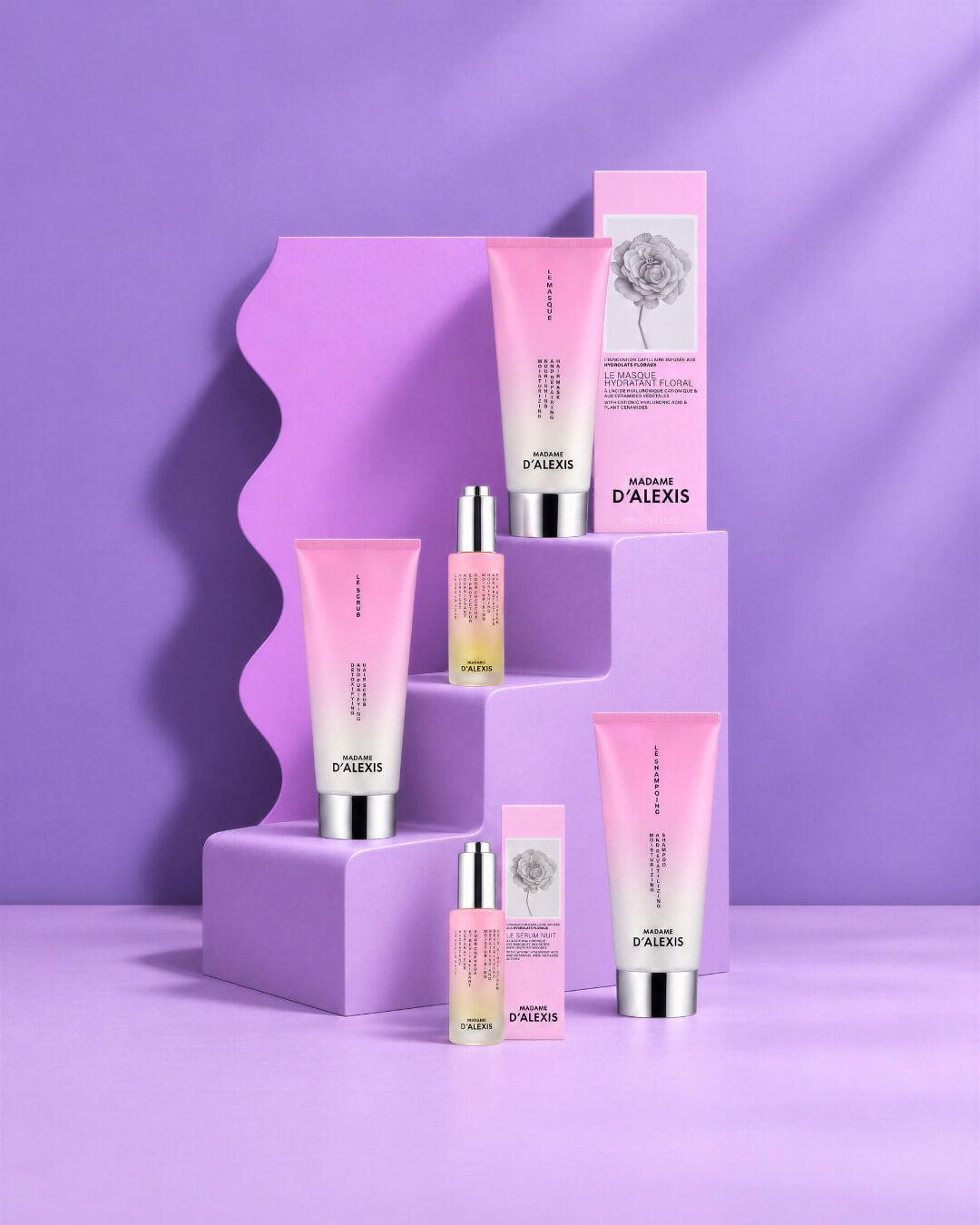
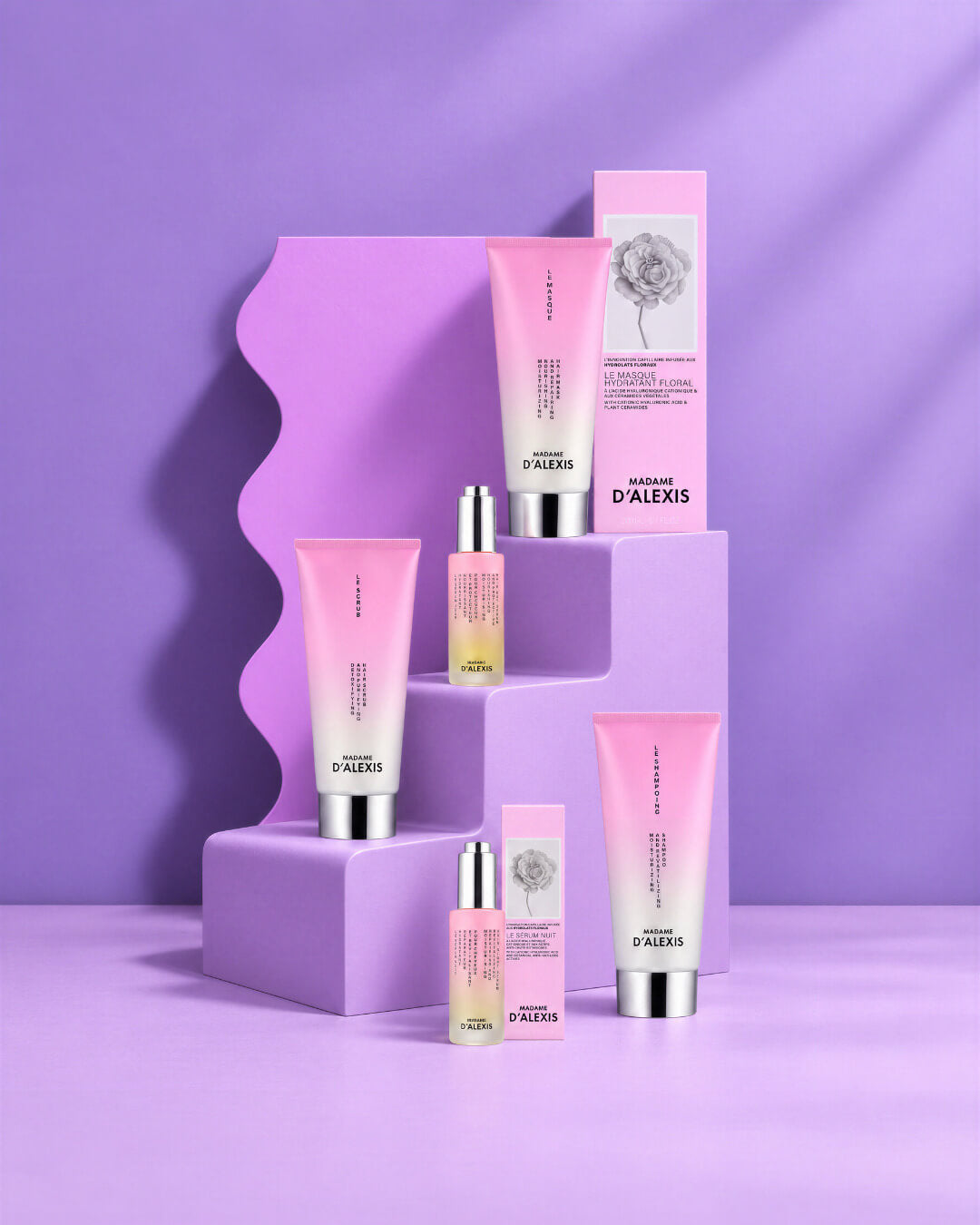
Fighting charge sustainably means nourishing the hair and protecting its surface. Madame d'Alexis treatments are formulated without added water: the usual aqueous phase is replaced by organic hydrosols of Damask rose, matricaria chamomilla, and orange blossom, combined with actives from skincare. Made in France, in Brittany, they are free of sulfates, silicones, and parabens. Here is the role of each in an anti-static hair routine.
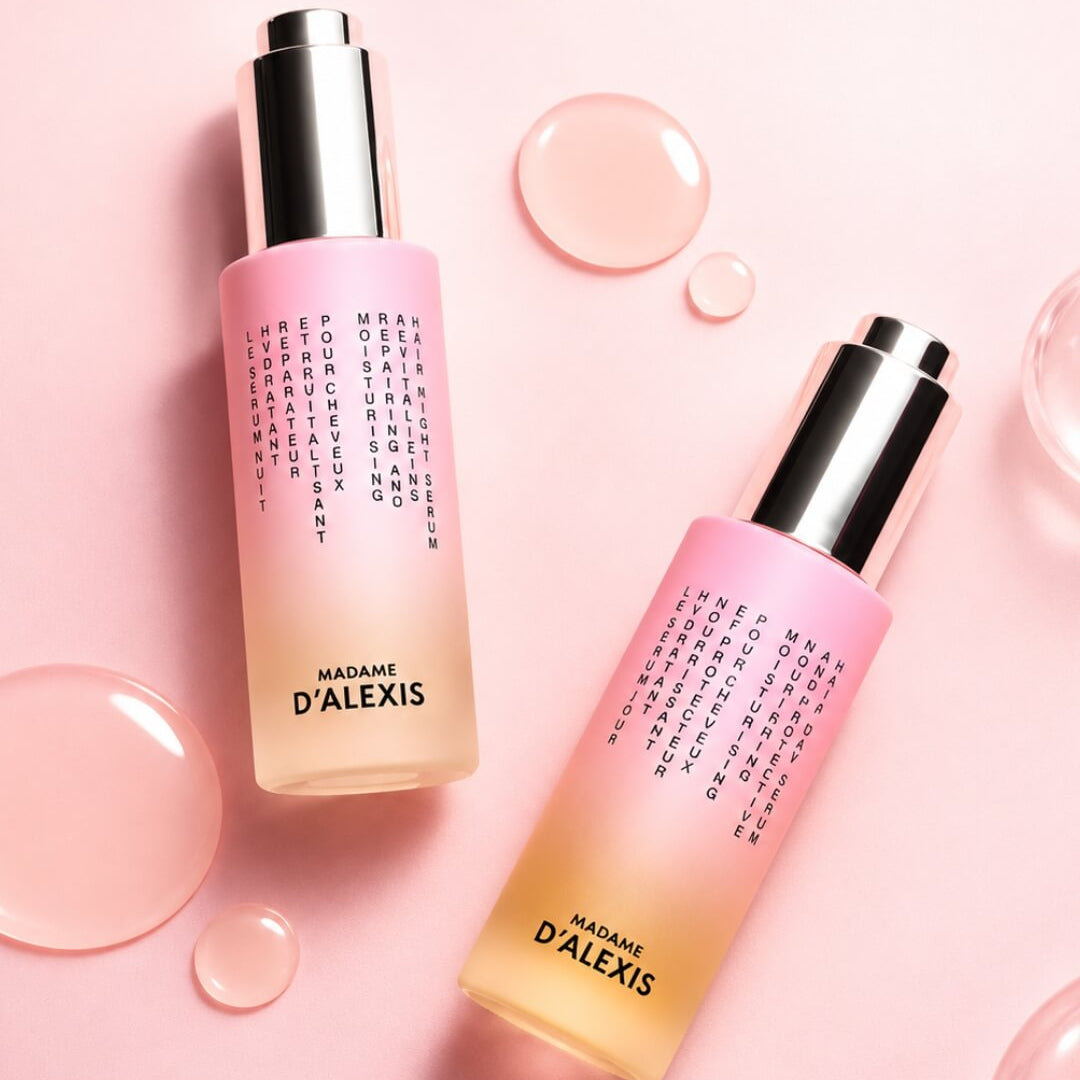
The Day Serum, the anti-static gesture of the day. This dry oil with 99% natural origin combines organic jojoba oil, plant ceramides, antioxidants, and natural heat protectors up to 200 °C. Place 1 to 3 drops in your palms, warm them, and smooth them over the lengths and ends, on dry or slightly damp hair. It coats the surface without weighing hair down, reduces friction with clothing, and protects the hair fiber while drying. You can add another drop during the day when the strands start to stand up again, for example after taking off your hat. To learn more about this texture, consult our guide to dry oil for hair.

The Mask, deep hydration. Formulated with 97% natural origin with plant ceramides, cationic hyaluronic acid, orange blossom wax, and organic apricot and jojoba oils, it repairs, nourishes, and softens dry, damaged, colored, or bleached hair. Supple and nourished hair retains less charge. Apply it to towel-dried hair: 2 to 5 minutes to facilitate detangling, 5 to 10 minutes for regular use, 20 to 30 minutes as a deep treatment, or as an overnight treatment once a week if your hair is sensitized. Always rinse thoroughly.
The Shampoo, a base that respects the lengths. With 98% natural origin, it hydrates, soothes, and illuminates thanks to cationic hyaluronic acid, prebiotics, and plant keratin. It cleanses without drying out, which avoids maintaining the cycle of dehydrated hair, charged hair. Do a double shampoo on a thoroughly wet scalp, massage, then rinse very thoroughly. It is also suitable for daily use.
The Wide-Tooth Pink Detangling Comb. Its wide cellulose acetate teeth detangle gently, on damp hair after the mask as well as on dry lengths, by limiting friction and breakage. It's the ideal tool to replace a plastic brush during the cold months.
To create the most suitable routine according to the nature of your hair, the simplest thing is to take our hair diagnosis: a few questions are enough to know which product to start with.

The Day Serum

The Mask

The Shampoo

Hair Hydration Routine

The Wide-Tooth Pink Detangling Comb
Does your hair become charged as soon as the heating turns on?
A few questions about your scalp and lengths, and we will compose your ritual from our 5 organic hydrosol treatments, formulated without added water.
Do you recognize yourself?
- You answer
- You discover your ritual
- You adjust your selection
Frequently asked questions about static hair
Is static hair necessarily dry hair?
Not necessarily, but the link is frequent. A dehydrated hair retains charge better, because its surface is rougher and less protected. A healthy head can however become static in an overheated room or in contact with a synthetic sweater. Hydration limits the phenomenon, the choice of materials does the rest.
Which product to use against static hair?
The most effective daily is a light serum or a leave-in styling cream, applied in small quantities on the lengths. It combines with a gentle shampoo and a regular hydrating mask, which treat the cause rather than the symptom.
Should I stop using the hair dryer?
No. Set it to a moderate temperature, keep a reasonable distance, protect the lengths with a few drops of serum, and finish with a blast of cool air. It's the combination of very hot air and vigorous brushing that damages hair the most.
Are frizzy hair and hair loss linked?
No. Static electricity affects the appearance and styling of the lengths, not the growth cycle. If you notice unusual hair loss, that's a different issue, one that concerns the scalp and deserves professional advice.
Is an anti-static spray enough?
An anti-static spray can be a lifesaver before heading out, but it works on the surface and only temporarily. To prevent frizzy hair from returning every morning, opt for a routine that provides deep hydration and natural materials.
Tame your frizzy hair all winter long
Frizzy hair is not a sign of a difficult nature: it is hair that lacks moisture and is subjected to too much friction. By understanding the interplay of charges, choosing natural materials, moderating heat, and establishing regular hydration, you take control of the season. Quick fixes have their place, but it is a solid routine that tames the strands for good. A gentle shampoo, a nourishing mask, a few drops of serum: winter can become a season of soft, brilliantly shiny, and easy-to-style hair again.