Conseils
Porous hair: how to test it and care for it
What is porous hair? Learn how to test your hair porosity at home, spot the signs of high porosity and build a routine that helps your hair absorb and retain moisture.

Porous hair: what it means and how to care for it
What is porous hair, how do you determine hair porosity at home, and which routine helps your hair absorb and retain moisture? This guide covers the hair porosity test, the types of hair porosity and the right steps for each one, with organic hydrosols, cationic hyaluronic acid and plant-based ceramides.
Porous hair: the essentials in 30 seconds
- Identify the porosity level of your hair (low, medium or high) with a quick hair porosity test, such as the water glass test or the slide test.
- Choose a gentle sulphate-free shampoo to cleanse without stripping the hair and to protect the cuticle layer.
- Incorporate a moisturising and nourishing mask with plant-based ceramides, shea butter or plant proteins to support the hair shaft.
- Use suitable oils such as jojoba or coconut, used sparingly, to help lock in moisture.
- Establish a consistent hair care routine: limit heat styling, do not neglect scalp care and alternate between moisturising and protein treatments.

Does your hair look dry, dull and difficult to style, however many products you use? Your hair may be brittle because it is porous. Hair porosity is still poorly understood, yet it plays a direct role in the health and appearance of your hair, from shine to hair breakage.
In this guide, I explain what understanding porosity changes in your haircare routine, how to recognise what your hair type needs, and which simple steps help restore softer, stronger and healthy hair.
What is hair porosity?
What is porous hair? A simple definition
Hair porosity refers to the hair's ability to absorb moisture and hold on to it, along with the products you apply. In hair science, it depends on the condition of the hair cuticle, the outer cuticle layer made of small overlapping scales that protects the cortex, the inner part of the hair shaft.
When these scales lie flat, the hair fibre keeps its moisture. When they are raised or damaged, gaps form and moisture escapes too quickly, leaving the hair dry, rough and brittle.
Porosity is therefore a good indicator of hair health. It explains why some hair seems to drink up every product like a sponge without ever looking nourished, while other hair feels weighed down by the slightest cream or gel.
How to determine hair porosity at home
Two simple tests give you a first answer quickly:
The water glass test
Take a clean strand of hair from your brush (do not pull one out), ideally after washing so that no product buildup distorts the result. Place it on the surface of a glass of water at room temperature and let it sit for 2 to 4 minutes without touching it.
- It floats on the surface: low porosity. The scales are tightly closed, so products struggle to get in.
- It sinks slowly and stays in the middle: medium porosity, often called normal porosity. The scales are balanced.
- It sinks quickly to the bottom: high porosity. The scales are open or damaged, so water and products get in fast but escape just as fast.
The slide test
Pinch a strand of hair between your thumb and index finger, then slide your fingers from the ends towards the roots.
- Very smooth slide: low porosity, flat scales.
- Slight roughness, a few snags: medium porosity.
- Many rough patches and tangling: high porosity, raised or broken scales.
Note: these tests give an indication, not a diagnosis. Porosity often varies along the same strand: the ends are usually more porous than the roots. A stylist can confirm the result in the salon.
The types of hair porosity
The cuticle is tightly closed. Water and products take a while to penetrate, but once they do, the moisture stays sealed inside. This hair can look flat, and oils tend to sit on top of it rather than sink in.
The cuticle is slightly open. This is the ideal balance: products absorb easily and are well retained. Medium porosity hair is usually the easiest to care for.
The cuticle is widely open, often after repeated colour, bleaching, heat styling or other chemical treatments. Water gets in immediately but evaporates just as quickly. This hair is dry, fragile, prone to tangled hair and frizz.
Causes and signs of high porosity hair
What causes high porosity hair?
There are two main causes of high porosity hair. The first is your hair itself: some natural hair textures, such as curly hair, coily hair and other textured hair with a tight curl pattern, have a more raised cuticle, while straight hair is often less porous. Every hair type is different, and so are people’s needs.
The second is everything your hair goes through: repeated colour and bleaching, heat styling tools such as straighteners and hairdryers, chemical processing such as relaxers, UV and other environmental factors, or harsh cleansing products all lead to cuticle damage and, over time, wider hair damage.
The protective cuticle layer becomes permeable, and the hair gradually loses its ability to retain moisture over the long term.
What are the signs of high porosity hair?
Highly porous hair absorbs water and products quickly, then releases them just as fast. Typical signs: it air dries very quickly, swells in humidity, looks dull, tangles easily and turns into frizzy hair that is rough to the touch, even after conditioner.
An unsuitable routine often makes things worse: products that are too light, or too many of them, can increase dehydration instead of correcting it.
Does high porosity mean your hair is damaged?
Not necessarily. High porosity means that moisture escapes easily, but it does not mean the hair fibre is beyond help.
Sensitised hair can look much better with the right care. If hair breakage becomes significant or frizz persists, a professional opinion is worth getting to build a personalised repair routine and prevent further damage.
My view: understanding your hair porosity is an often overlooked step in good haircare. It helps you pick products that genuinely support the hair rather than simply masking dryness.

Which shampoo should you choose for your porosity?
Washing is a key step: it prepares the cuticle to receive, or not, the care that follows.
Shampoo for high porosity hair
The scales are open or damaged. The priority is to avoid lifting them further and to help smooth the cuticle.
- Avoid: harsh sulphates such as SLS and SLES, which lift the scales further.
- Choose: a sulphate-free formula with a slightly acidic pH of 4.5 to 5.5, which respects the hydrolipidic film.
- Key active ingredient: cationic hyaluronic acid, whose positive charge helps it bond to the negatively charged hair fibre.
- Suitable hydrosol: Damask rose, with an acidic pH and gentle astringent properties.
- Rinse water: cool or lukewarm. Very hot water lifts the scales.
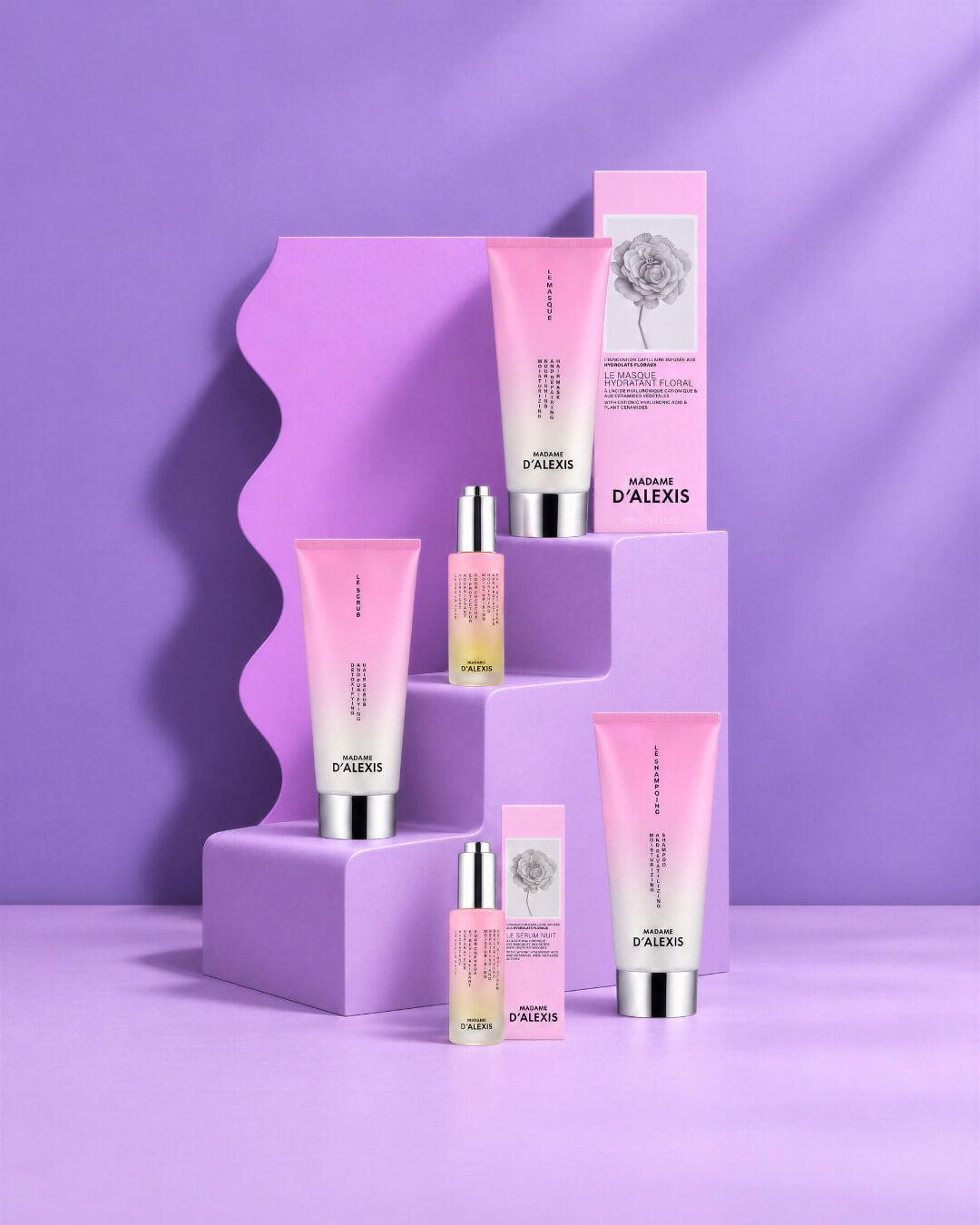
Le Shampoing by Madame d’Alexis: sulphate-free, with cationic hyaluronic acid and a base of organic hydrosols, including Damask rose.
Shampoo for low porosity hair
The scales are tightly closed. The priority is to open them slightly so that active ingredients can get in.
- Use: a clarifying or detox wash occasionally to remove the product buildup that blocks absorption.
- Rinse water: lukewarm to warm, to open the scales and help products penetrate.
- Avoid: rich butters, heavy oils and occlusive products, which form a film.
- Key active ingredient: cationic hyaluronic acid, a lightweight humectant that does not weigh the hair down.
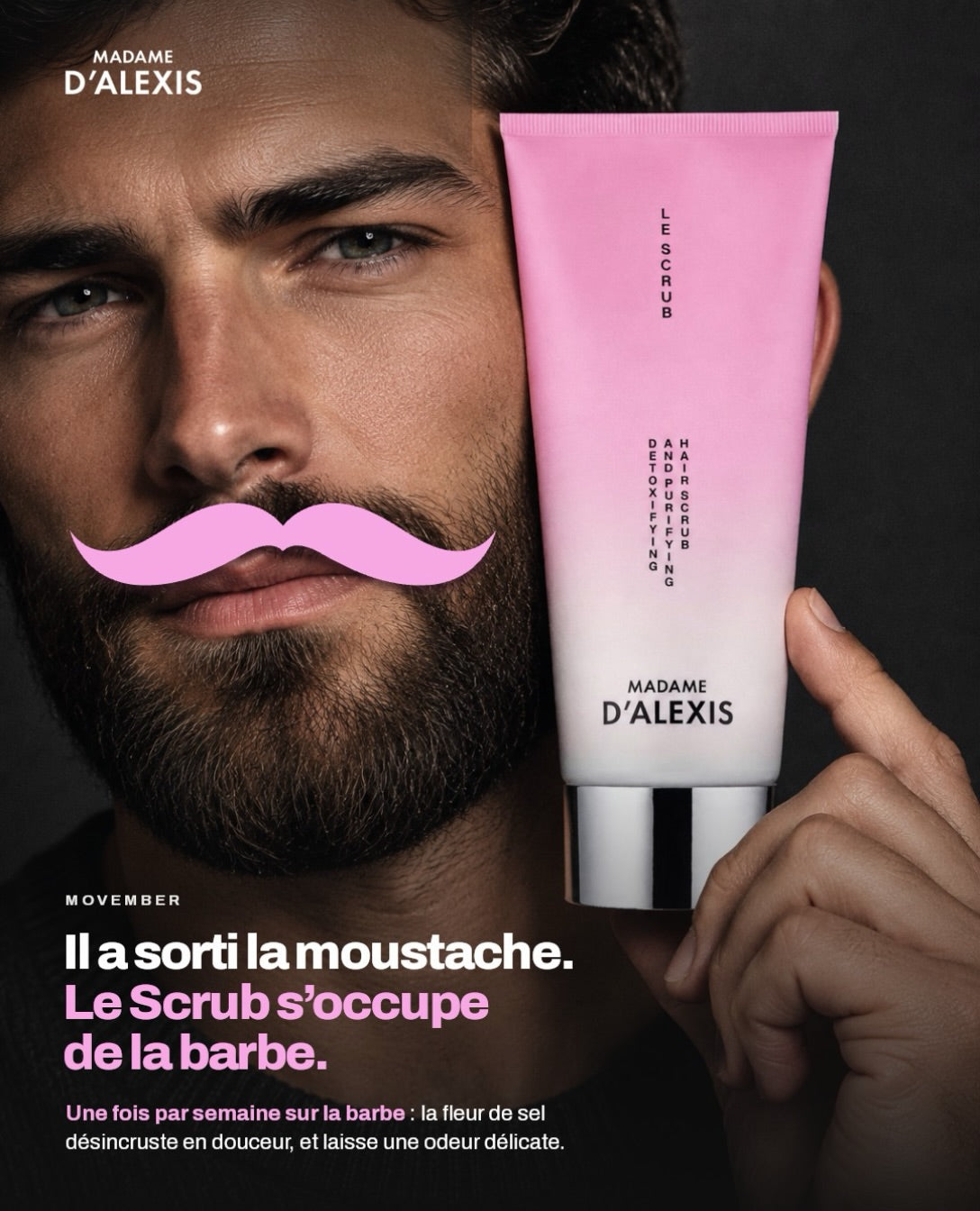
Le Scrub by Madame d’Alexis: an exfoliating shampoo with organic hydrosols. On the day you use it, every 10 to 15 days, it replaces Le Shampoing: apply it in two successive passes, like a double shampoo, then rinse. It removes residue and prepares the scalp.
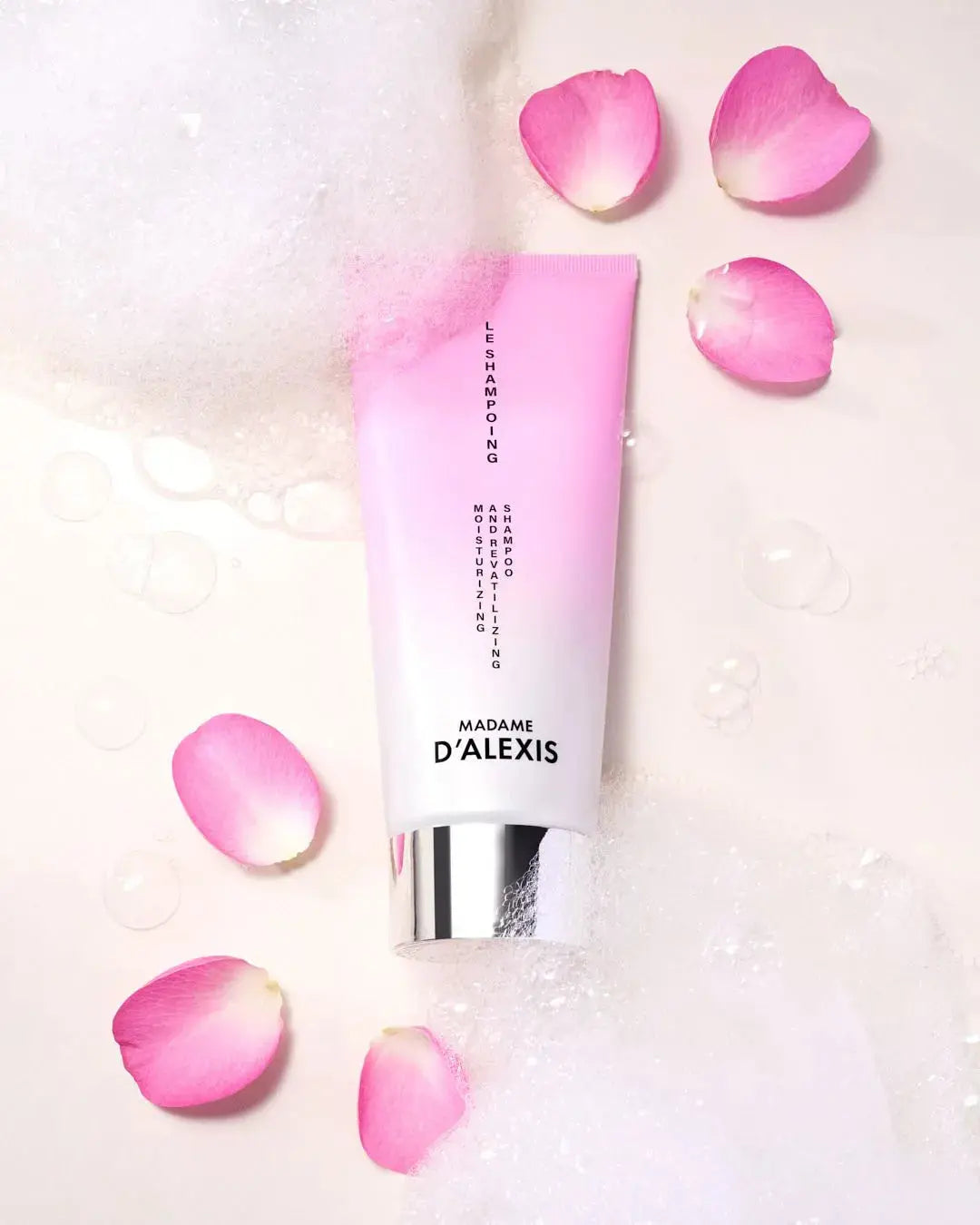
Le Shampoing aux Hydrolats
Organic hydrosols · Cationic hyaluronic acid · Plant-based keratin
- Cleanses without stripping the scales
- Helps preserve shine and suppleness
- Ideal for porous, dry, or colour-treated hair
Complete routine for your porosity: hydrosols and organic active ingredients
Porosity determines the products you choose, but also the order of application, the water temperature and how often you use each step. Here is the routine for each type.
High porosity hair care: damaged or colour-treated hair
The goal is to smooth the scales and lock moisture inside the hair fibre.
- Wash: sulphate-free, lukewarm water, gentle massage, no rubbing. Finish with a cool rinse.
- Hair mask: twice a week on damp hair, from mid-lengths to ends. Leave on for 20 to 30 minutes under a warm towel, then rinse with cool water. Priority active ingredients: plant-based ceramides, plant proteins and German chamomile hydrosol.
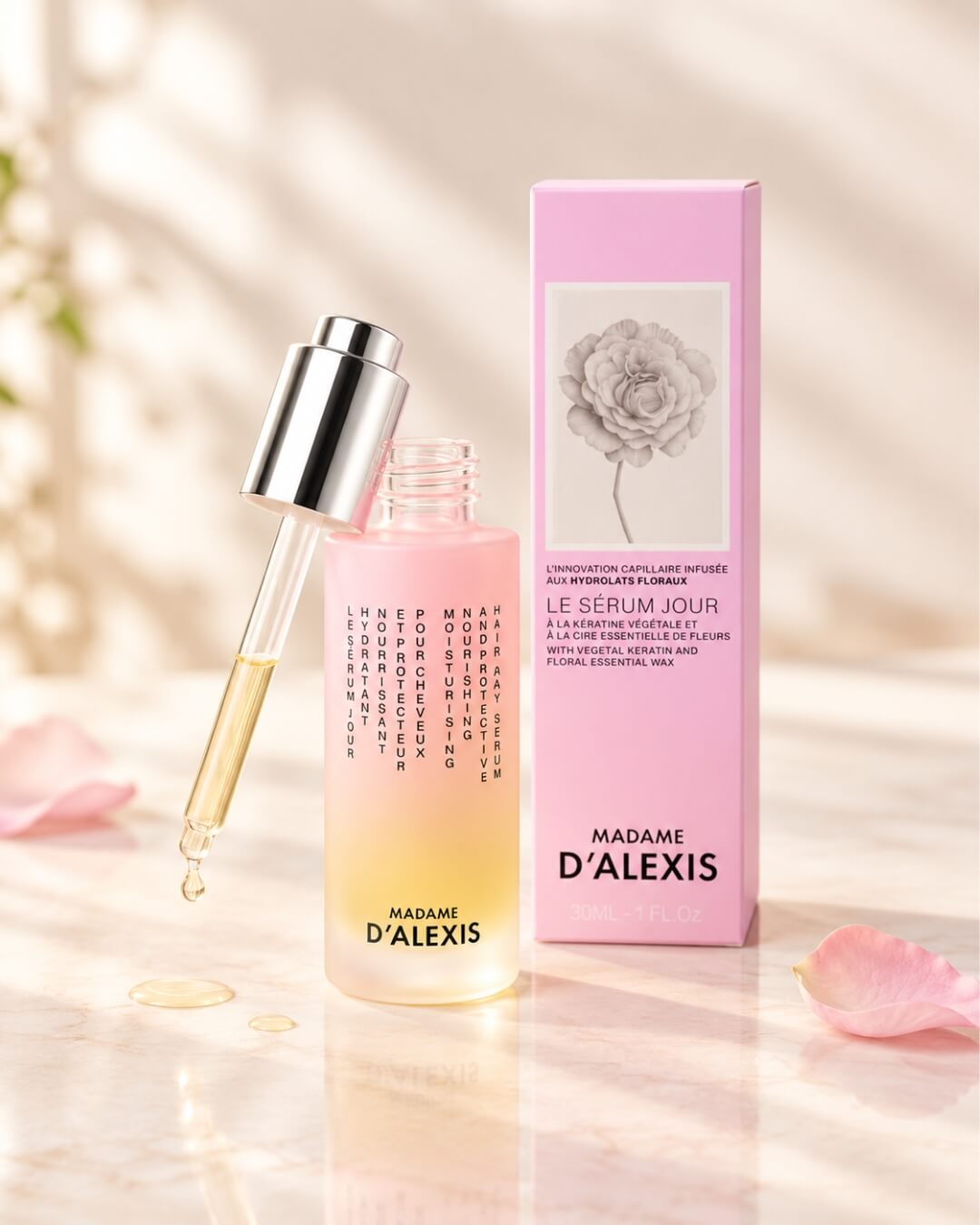
- Leave-in serum: after the mask, on damp hair. Active ingredients: jojoba oil and plant-based ceramides. Le Sérum Jour.
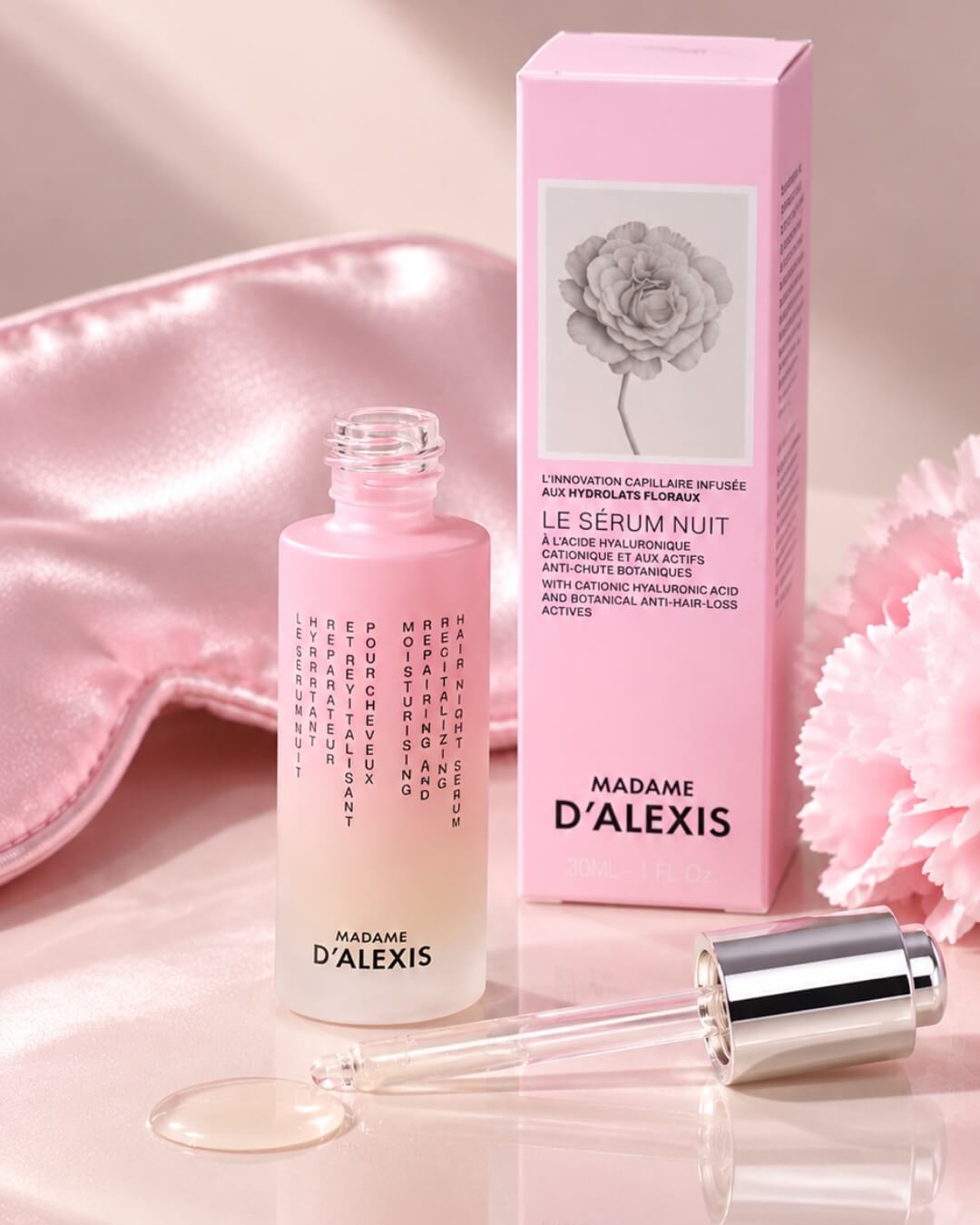
- Night serum: on the scalp, 3 to 5 evenings a week, then 1 to 2 evenings a week. Probiotics, postbiotics and plant extracts of oak, nettle and liquorice. Le Sérum Nuit.
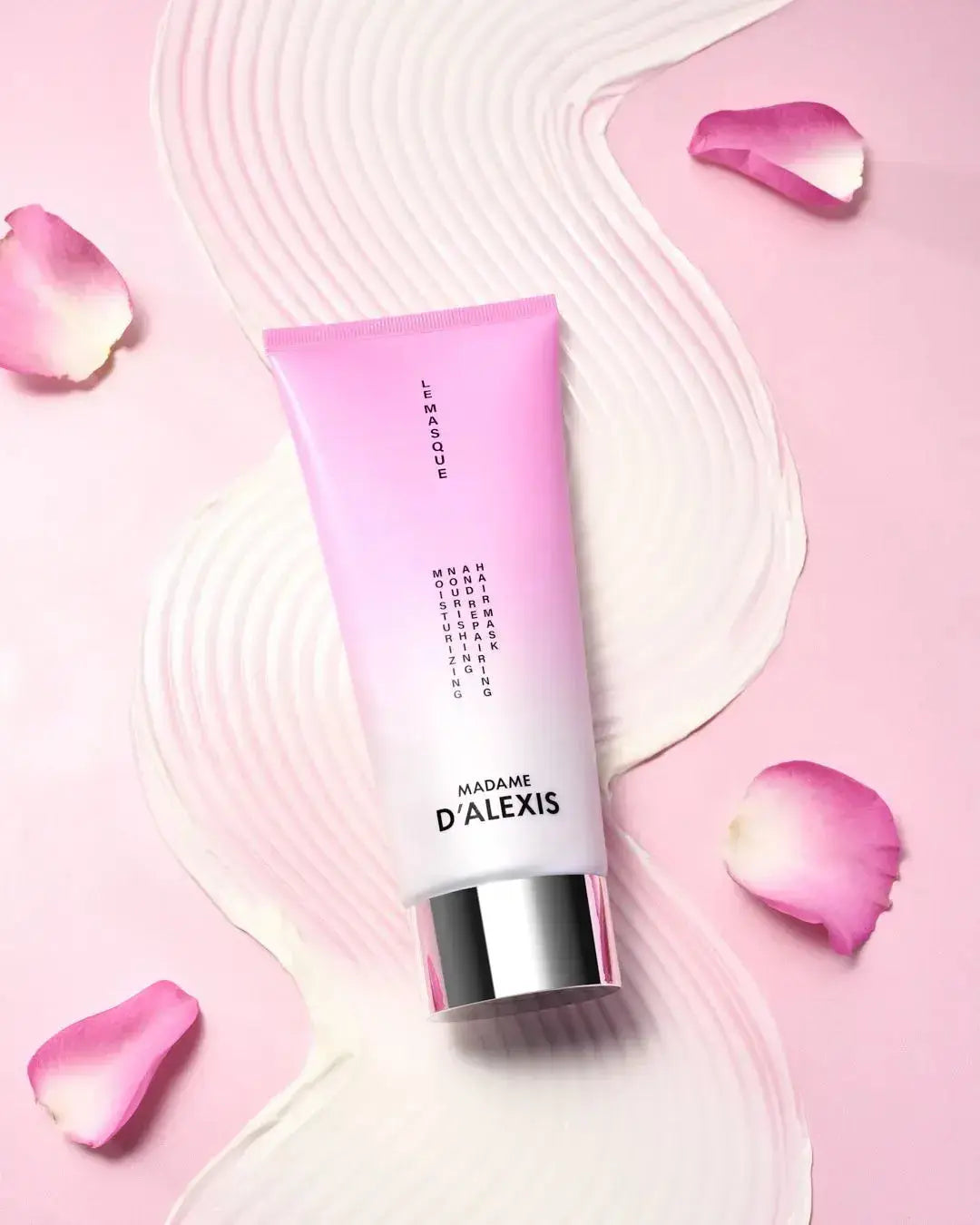
Le Masque aux Hydrolats
Plant-based ceramides · Cationic hyaluronic acid · Precious oils
- Hydrates and plumps the hair fibre
- Helps smooth the cuticle
- Ideal for dry, porous, or damaged hair
Low porosity hair: resistant hair that is hard to hydrate
- Wash: a clarifying wash occasionally, a gentle shampoo otherwise. Lukewarm to warm water to open the scales.
- Hair mask: once a week on damp hair, with a heated cap for 20 minutes. Priority active ingredients: cationic hyaluronic acid and orange blossom hydrosol.
- Leave-in: lightweight and non-occlusive, rather than a rich leave-in conditioner or heavy oil. Le Sérum Jour, a light, non-greasy formula.
- Avoid: long oil baths, which leave a film on scales that are already closed.
Medium porosity hair: balanced hair
- Wash: gentle, sulphate-free, 2 to 3 times a week.
- Hair mask: once a week, for 15 to 20 minutes, rinsed with lukewarm water.
- Serum: depending on your needs: hydration with Le Sérum Jour or density with Le Sérum Nuit.
| Porosity | Key hydrosol | Priority active ingredient | Mask | Rinse water |
|---|---|---|---|---|
| High | Damask rose | Plant proteins + ceramides | Twice a week | Cold |
| Medium | Damask rose | Ceramides + hyaluronic acid | Once a week | Lukewarm |
| Low | Orange blossom | Cationic hyaluronic acid | Once a week + heat | Lukewarm to hot |
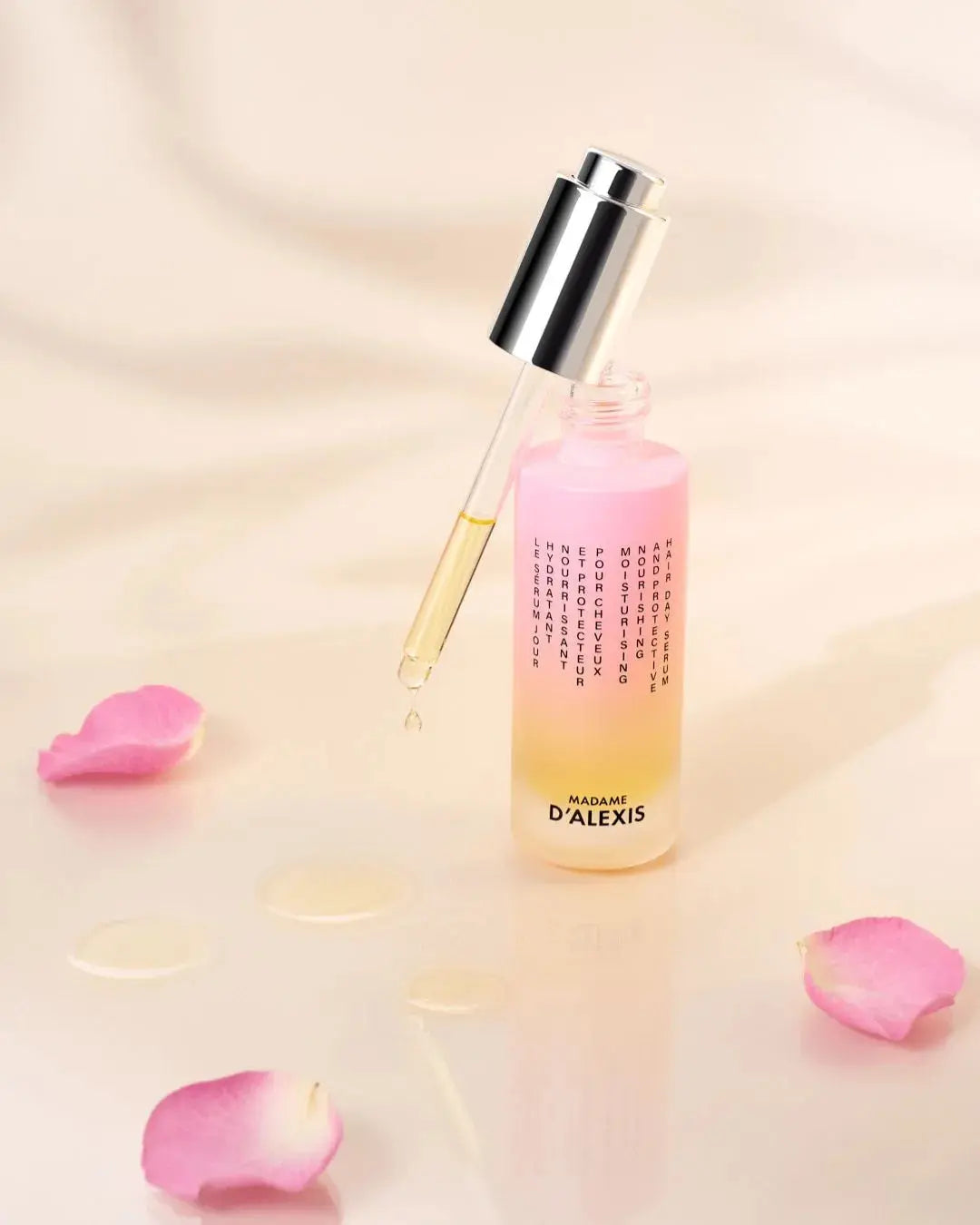
Le Sérum Jour
Jojoba oil · Plant-based ceramides · Heat protection
- Locks in moisture without weighing hair down
- Helps reduce frizz
- Protects the hair fibre up to 200°C
A tailored hair care routine: what to do for porous hair?
Which hair mask is best for porous hair?
Porous hair needs a rich hair mask. Look for generous textures that combine hydration, plant-based ceramides, cationic hyaluronic acid and light oils. Shea butter nourishes with its fatty acids, while plant proteins help fill the gaps along the hair shaft.
Which oil suits porous hair?
The right hair oil depends on your porosity:
- Low porosity: jojoba oil, which is close to the scalp's natural sebum and does not weigh the hair down.
- High porosity and very dry hair: a richer castor oil, used in small amounts on the lengths.
- Olive and coconut oils help keep moisture inside the hair fibre, like a protective layer.
How often should you wash porous hair?
Washing frequency matters. Very porous hair dries out quickly when washed too often, whereas low porosity hair can be washed more often without losing its shine.
- For highly porous hair, two washes a week are usually enough; fine hair may need washing a little more often.
- Alternate a gentle wash with co-washing (washing with conditioner) to keep moisture and structure, and always finish with a moisturising step.
My view: in my experience, a routine that respects your hair's porosity level works like a well-written score: each product has its role, and every step has a purpose.
Care tips to repair porous hair
Simple steps at home
Before buying anything new, adjust your routine. The first of our care tips: help the cuticle lie flat so that moisture stays in.
In much of the United Kingdom, tap water is hard and leaves mineral deposits on the hair. A final cool rinse helps smooth the cuticle and adds shine, and a rinse slightly acidified with apple cider vinegar at the end of the routine also helps balance the pH.
- A cool rinse at the end of washing to smooth the cuticle.
- A lightly diluted apple cider vinegar rinse, only at the end of the routine.
- Homemade masks with aloe vera, shea butter and an oil suited to your hair.
Adapting your daily routine
This hair type improves with consistency, month after month. A warm towel or heated cap for ten to fifteen minutes helps active ingredients penetrate.
Protect the hair fibre from heat styling: keep your hairdryer at a distance, use a heat protectant spray or serum before any blow-dry, and limit harsh sulphates as well as non-volatile silicones that build up.
- Gentle warmth to boost your masks.
- Protection against hot tools and rough towel drying.
- Sulphate-free formulas, few silicones, to avoid buildup.
Can supplements help porous hair?
A balanced diet supports your routine. Biotin plays a part in protein metabolism, zinc contributes to healthy skin and follicles, and essential fatty acids contribute to the suppleness of the hair fibre.
The plant proteins in your diet provide the amino acids your body uses to make keratin. Supplements are not miracle solutions, but they can help if your diet is unbalanced.
My advice: choose regular, reasonable intake and ask your doctor or pharmacist first if you are taking medication or are pregnant.

How to look after highly porous hair over time
When hair is very porous
When porosity is high, the aim is to balance moisture and protein while sealing the fibre. I like to split the week into three steps.
A moisturising step rich in humectants, a light oil step to seal, and a protein step to support the structure. Very damaged ends are best trimmed regularly, as a cuticle that is too open cannot close completely.
- Moisturising care to bring back moisture.
- Light oil care to seal and limit evaporation.
- Protein treatments to support strength and reduce breakage.
Salon and natural solutions for porous hair
A salon diagnosis helps refine your plan. Reconstructive care with hydrolysed proteins, amino acids and ceramides strengthens the cohesion of the cuticle.
Bond repair services target the cortex, the inner structure of the fibre. At home, alternate moisturising and protein care, then finish with a suitable oil.
My view: caring for porous hair is not a sprint but an informed routine. Simple steps, well-chosen active ingredients and a little discipline help the fibre absorb moisture and then retain it, for soft, shiny and resilient hair.
Products for porous hair: the complete routine
Now that you know your porosity, it is time to build your routine. It needs products that moisturise, repair and help retain moisture.
Le Masque aux Hydrolats: the essential repairing care
Le Masque aux Hydrolats by Madame d’Alexis is formulated for dry, damaged and porous hair. It is the key product in a deep conditioning routine.
- No added water: a base of active organic hydrosols, with no unnecessary dilution.
- Cationic hyaluronic acid: helps moisturise deeply and plump the fibre.
- Plant ceramides: help seal in moisture and strengthen the lipid barrier.
- Organic apricot and jojoba oils: nourish and soften without a heavy feel.
Le Sérum Jour: light daily hydration
Le Sérum Jour by Madame d’Alexis complements Le Masque for daily hydration without weighing hair down.
- Light texture: moisturises fine or porous hair without weighing it down.
- Seals in moisture: helps stop water escaping from the fibre.
- Anti-frizz: helps smooth the cuticle and tame frizz.
- Silicone-free: natural shine, no buildup.
Complete routine for porous hair: 30 days
| Phase | Morning | Evening |
|---|---|---|
| Weeks 1-2 | Le Sérum Jour on lengths and ends | Gentle shampoo + Mask for 15 to 20 min, twice a week |
| Weeks 3-4 | Le Sérum Jour as needed | Gentle shampoo + Mask once a week |
| What to look for | Shinier hair, less frizz | More stable hydration, more supple and manageable fibre |
FAQ: your questions about porous hair
What is porous hair?
Porous hair is hair whose cuticle scales are raised, open or damaged. It absorbs water and products very quickly but loses them just as fast. Typical signs: it dries quickly after washing, swells in humidity, frizzes and looks dull despite your care.
How do I determine hair porosity?
Two simple home tests: the water glass test, where a clean strand that sinks quickly points to high porosity, and the slide test, where you run your fingers from the ends to the roots. If it feels rough, the scales are probably raised.
What are the types of hair porosity?
There are three: low porosity (closed cuticle, products sit on the surface), medium or normal porosity (balanced cuticle, the easiest to care for) and high porosity (open cuticle, hair that dries fast and frizzes). Fine, porous hair needs light textures: cationic hyaluronic acid, chamomile hydrosol and Le Sérum Jour rather than heavy butters.
How do you care for high porosity hair?
In short: a sulphate-free wash with a cool rinse, a hair mask twice a week with plant-based ceramides and plant proteins, a leave-in serum with cationic hyaluronic acid, and protection from hot tools. The goal of each step is to smooth the cuticle and keep moisture inside the fibre.
Can very porous hair be repaired?
Partly. The hair fibre does not regenerate, as it is not living tissue. What care can do is fill damaged areas with hydrolysed plant proteins, rebuild the cement between the scales with plant-based ceramides and form a protective film with cationic hyaluronic acid. For very damaged hair, trimming the ends is often still necessary.
How does hair porosity affect hair health?
Porosity determines how well your hair holds on to water. Highly porous hair loses moisture quickly, which makes it drier, more fragile and more prone to breakage. The essential steps: a gentle shampoo, a moisturising and nourishing mask, a light leave-in, a little oil to finish and protection from styling tools.
What should you avoid with porous hair?
Avoid harsh sulphates, very hot water, frequent heat styling without protection, rough towel drying and layering too many heavy products. Favour organic formulas without sulphates or silicones, and alternate moisturising care with protein care.
Which products should I choose for porous hair?
Two products form the base: Le Masque aux Hydrolats, as a deep repairing care, and Le Sérum Jour, for light daily hydration. Together they help moisturise, strengthen and seal in moisture.
How long before you see results on porous hair?
It depends on your hair and on how consistently you follow your routine. For a lasting change in the fibre, keep to a regular routine, with a mask once or twice a week and a light serum on the lengths.
Is Le Masque aux Hydrolats suitable for porous hair?
Yes. It combines cationic hyaluronic acid, plant-based ceramides, organic hydrosols, orange blossom wax and organic apricot and jojoba oils. It helps moisturise, smooth the cuticle, nourish and limit frizz.