Conseils
Hair brushing: the technique for a healthy scalp and protected hair fiber
Brushing your hair is not just a matter of appearance: when done properly, brushing stimulates the scalp, distributes sebum, and protects the hair fiber from breakage.

How to brush your hair properly without breaking it?
Brushing is not just a simple styling reflex. Done properly, it stimulates the scalp, distributes protective sebum, and limits breakage. Done poorly, it weakens the fiber, creates frizz, and accentuates the appearance of damaged hair.
In summary
- Always detangle from the ends toward the roots, never the other way around.
- On wet hair, the fiber is much more fragile: use your fingers or a wide-tooth comb, not a regular brush.
- The right brush depends on your hair type: fine, curly, coily, long, dry, or colored.
- Forget 100 brush strokes: 1 to 2 gentle brushings a day are enough.
- The scalp also benefits from the action: improved microcirculation, better sebum distribution, and a better-supported microbiome.
- At Madame d’Alexis, we combine brushing with bio-active treatments to transform a mechanical action into a true skincare-for-hair ritual.
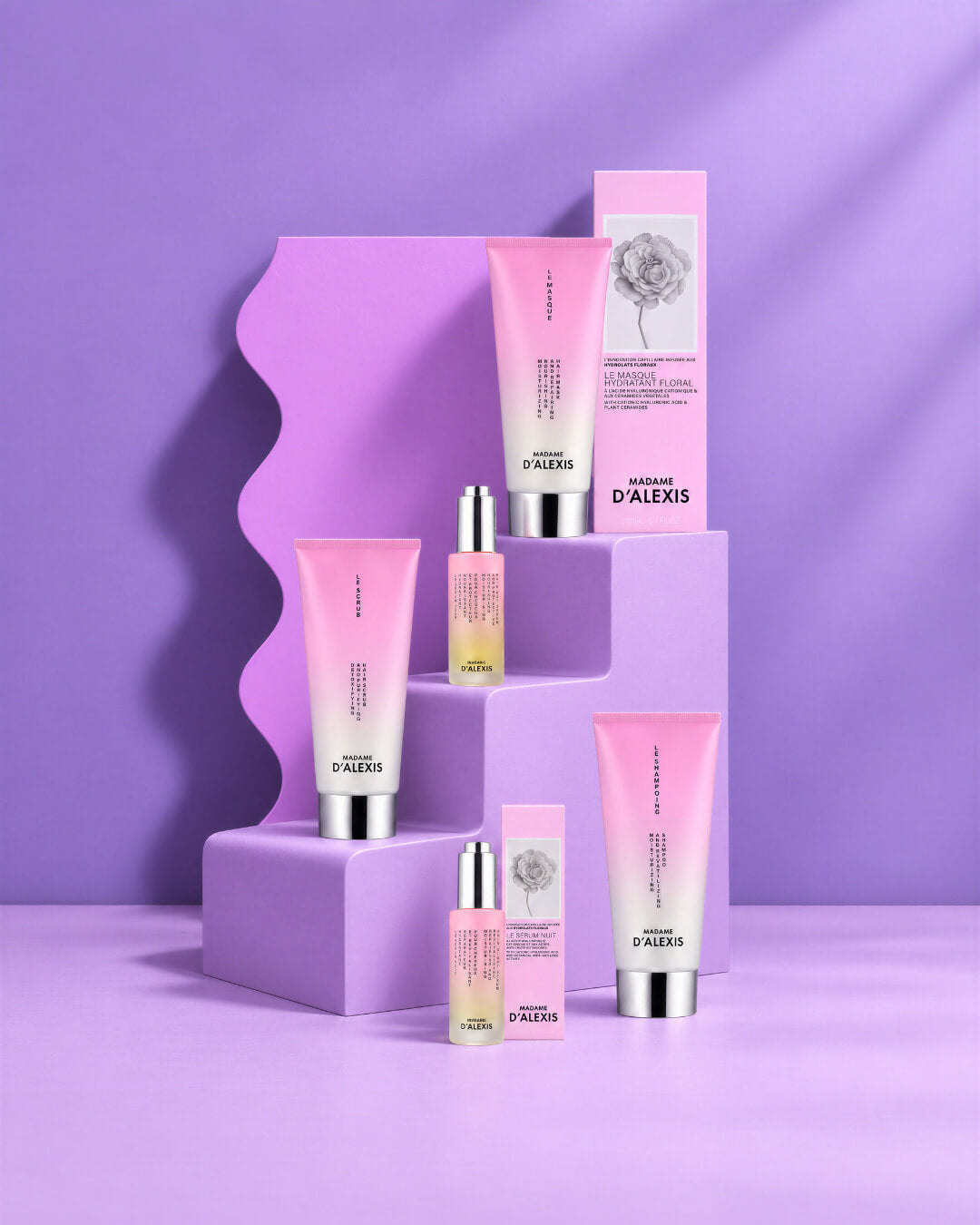
The care routine to combine with brushing
Prepare, wash gently, protect during the day, and support the scalp at night.
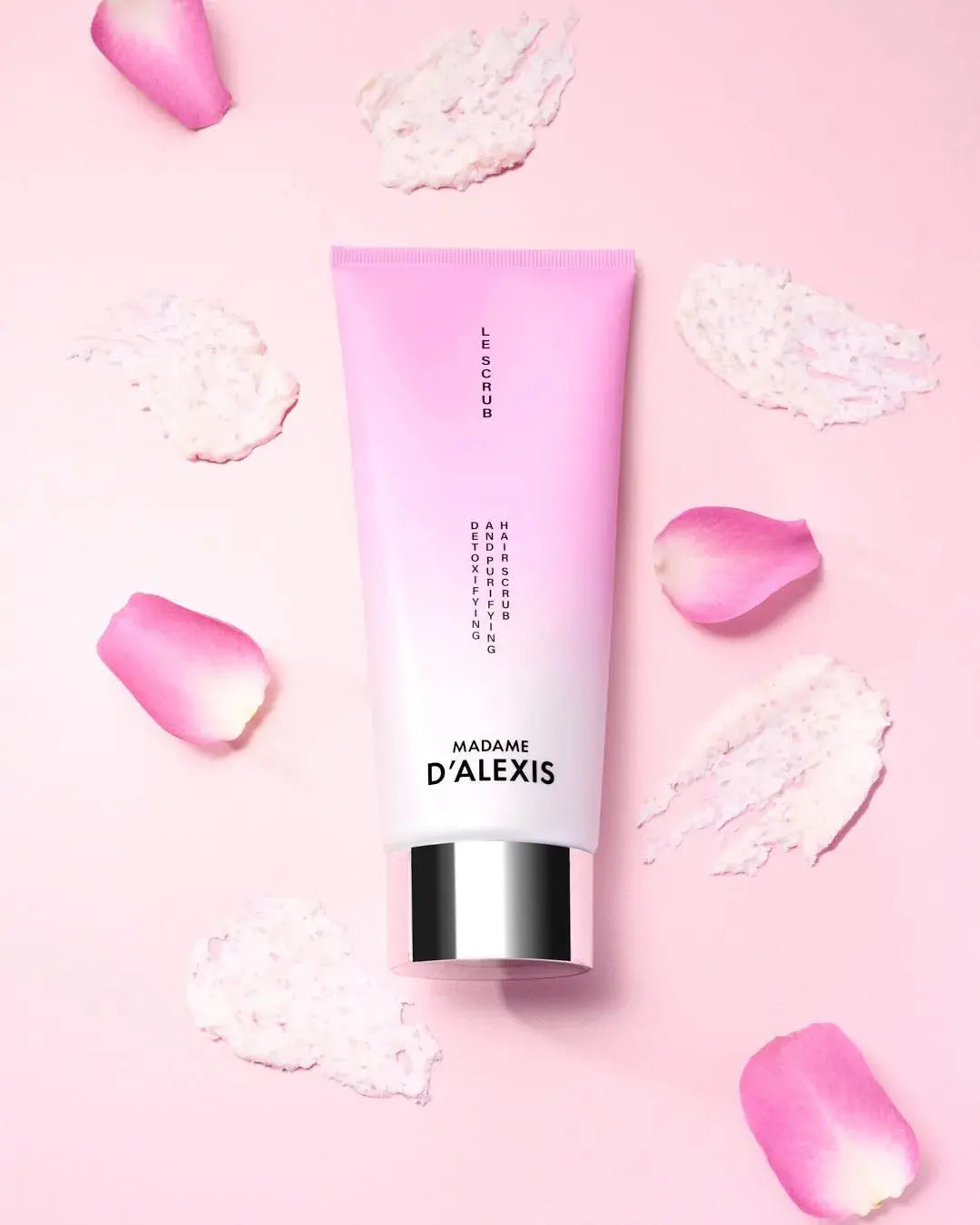
Madame d’Alexis
The Floral Scrub
Scalp detox
- Micronized sea salt
- Bio-active hydrosols
- Prepares the scalp
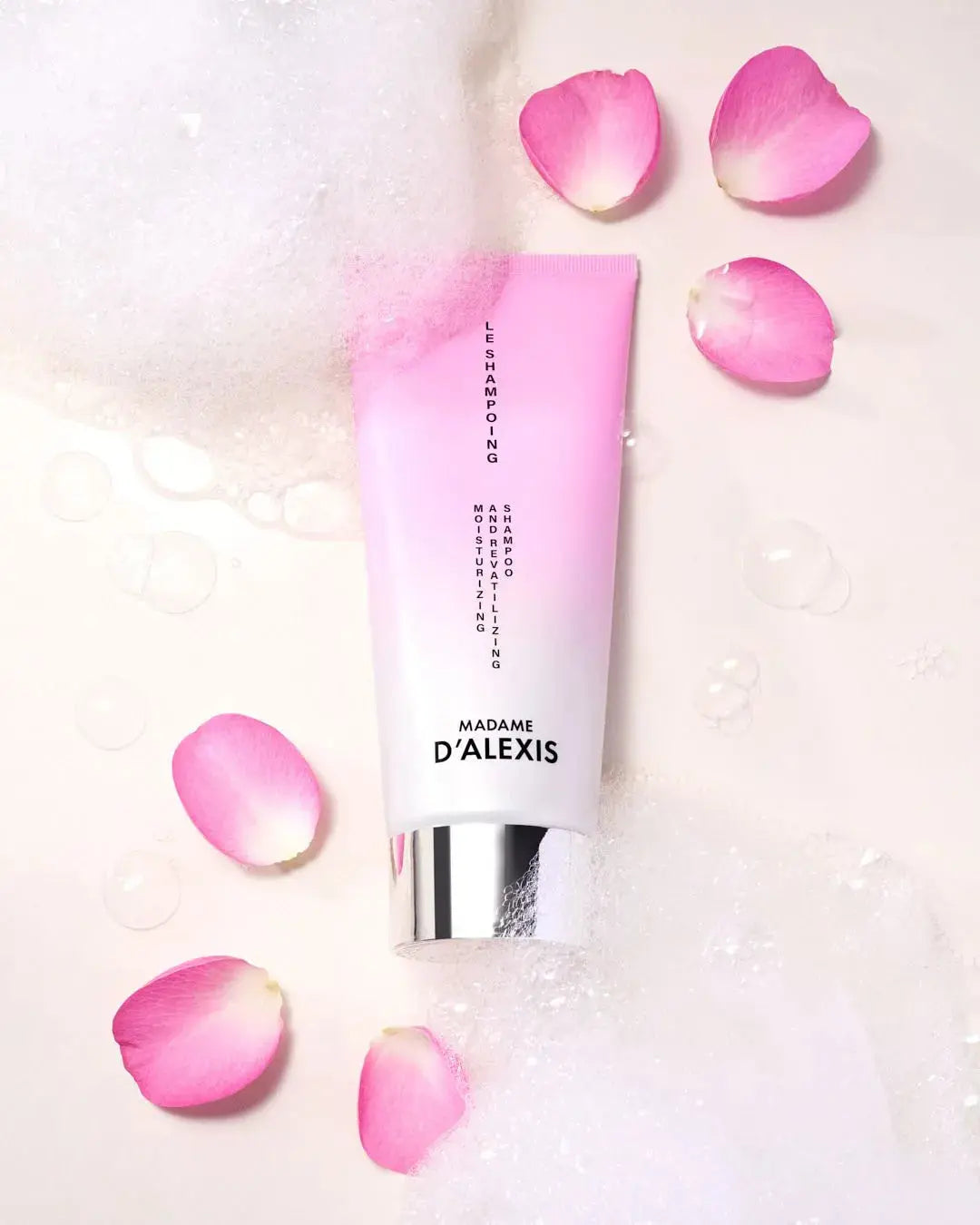
Madame d’Alexis
Sulfate-Free Shampoo
Moisturizing · 98% natural
- Bio hydrosol base
- 3 plant proteins
- Gentle wash without stripping
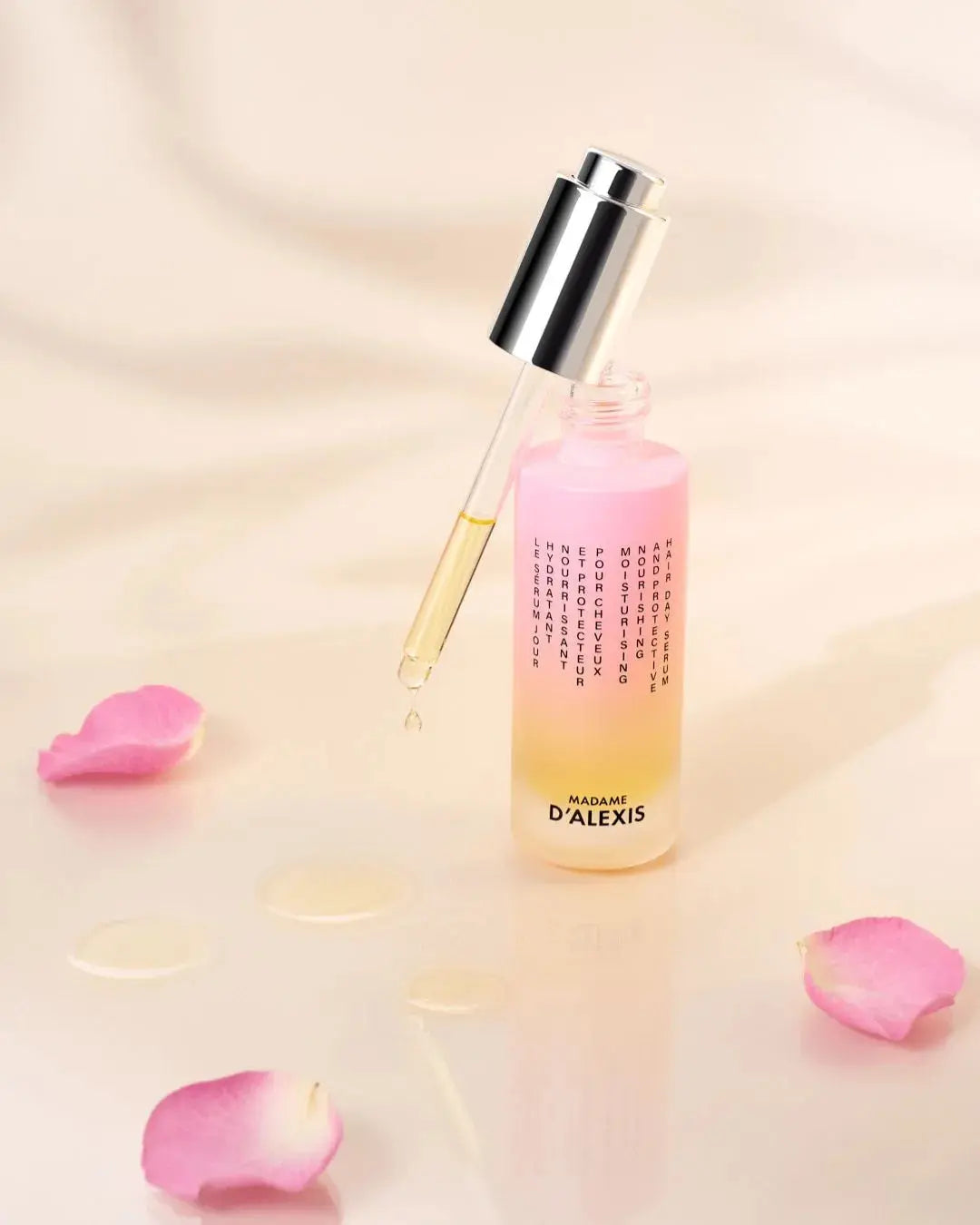
Madame d’Alexis
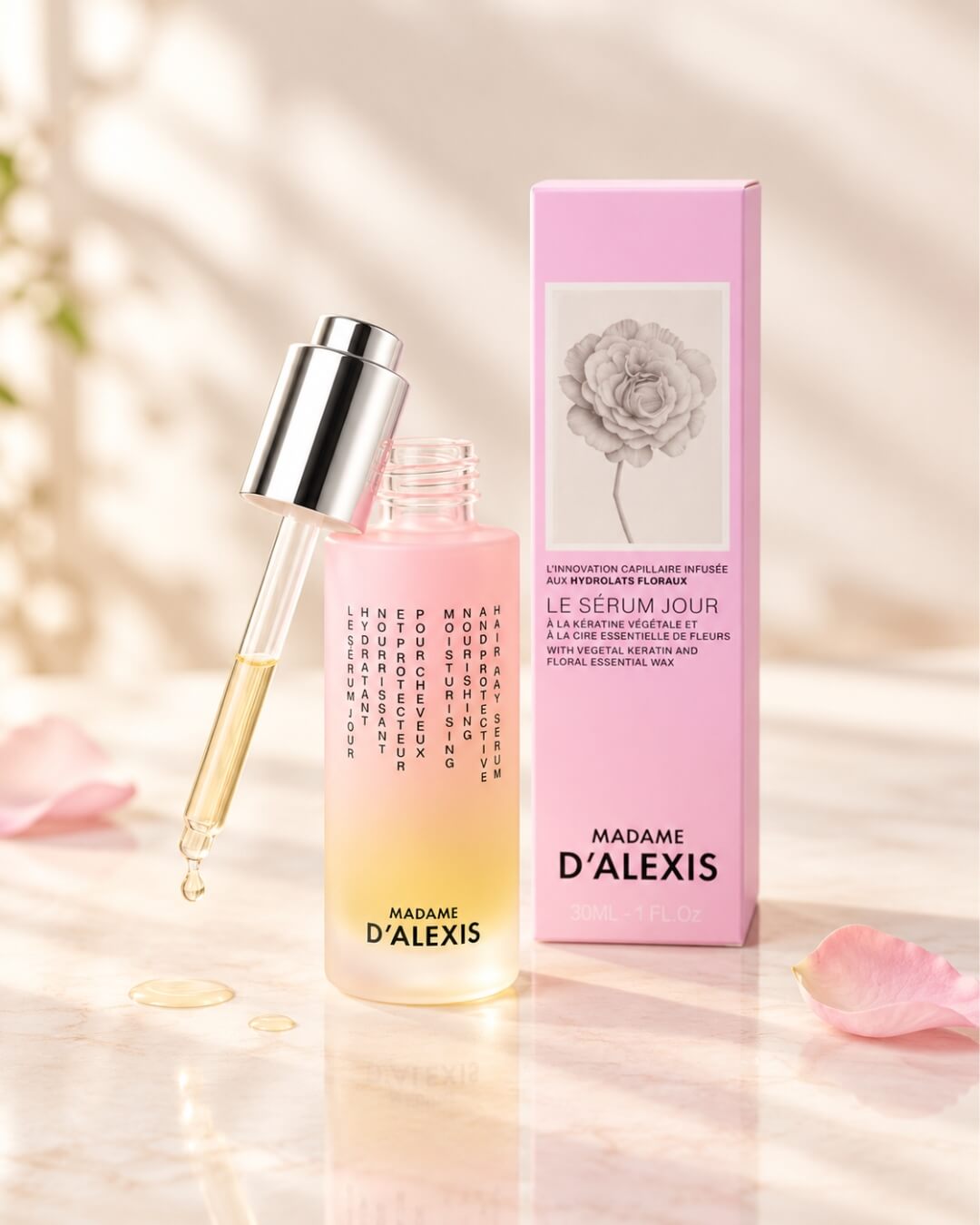
The Day Serum
Protection · shine
- Heat protection
- Plant ceramides
- Smooth finish without weighing down
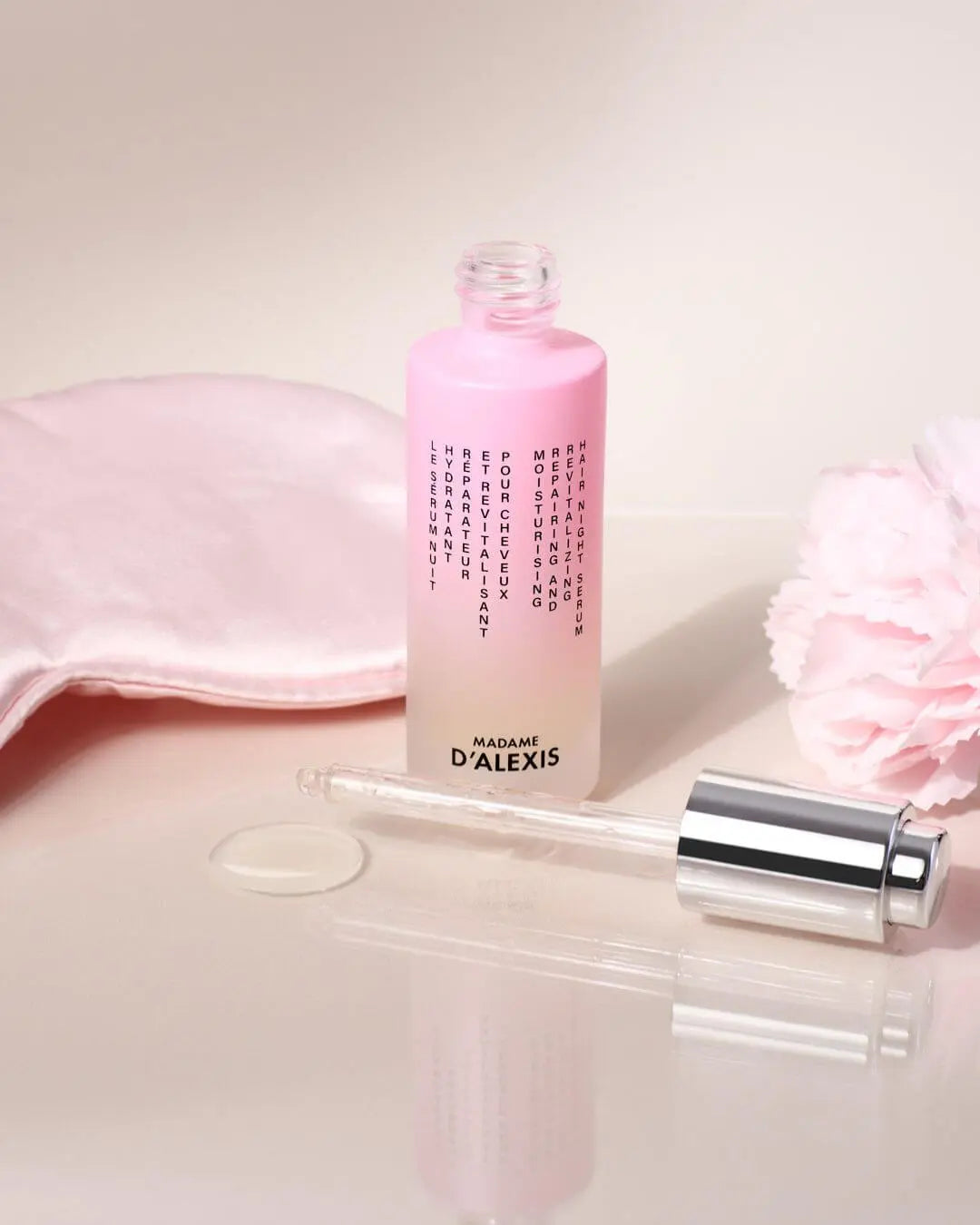
Madame d’Alexis
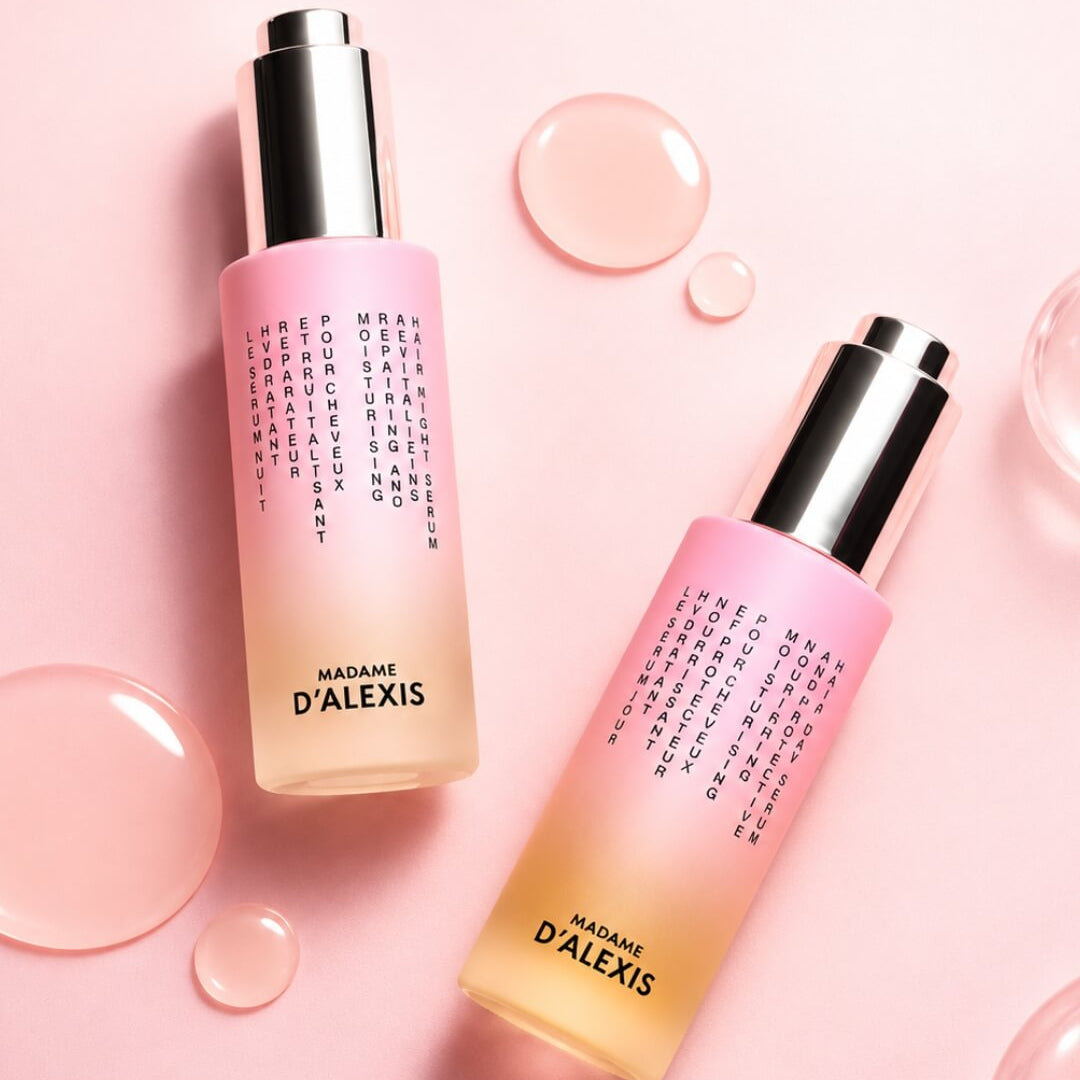
The Night Serum
Microbiome · density
- Probiotics and postbiotics
- Roots and scalp
- Density treatment 3 to 5 nights
Why brushing is a true care action
We often brush our hair without thinking. Two brush strokes before going out, a comb through after a shower, and that’s it. Yet, this automatic action can literally break your hair, or on the contrary, become one of the most effective and affordable treatments in your hair care routine.
The difference between the two? Technique, timing, and the tool.
Each gentle pass exerts a mechanical pressure that stimulates microcirculation around the follicles. More oxygen and nutrients can be delivered to the roots.
The sebum produced at the roots acts as a natural treatment. Brushing spreads it toward the lengths and ends, which are the most fragile areas.
It is this double action, scalp stimulation and sebum distribution, that makes brushing a care action in its own right, not just an aesthetic formality.
How to brush your hair properly: the 2-brush technique
The golden rule for brushing your hair properly: never start at the roots. Proceed in two steps, as a professional hairdresser would before a cut or blowout.
Detangle from the ends
Hold a section halfway down, brush the last 5 to 6 centimeters in small movements, then gradually move up section by section.
Smooth from roots to ends
Once the knots are untangled, pass the brush from the roots to the ends in a fluid motion to distribute the sebum and smooth the cuticle.
Finish without pulling
If a knot resists, stop. Untangle it with your fingers, add a treatment if necessary, then continue without pulling on the root.
If your hair is colored, bleached, or weakened, avoid brushes with bristles that are too close together or with hard balls. The same principle applies to a blow brush that damages hair if it is used too hot or too close to the fiber.
A sensitized fiber needs gentleness, but also active ingredients that strengthen the hair barrier, such as ceramides for the hair fiber.
Wet hair vs dry hair: what you should never do
This is the most common mistake: brushing wet hair with a regular brush.
When hair is wet, the scales of the cuticle open up and the fiber becomes porous. A water-soaked strand can be up to three times more fragile than a dry strand. The slightest overly vigorous brush stroke can break the fiber instead of detangling it.
Detangle with your fingers or a wide-tooth comb, always starting from the ends. Add a detangling treatment or conditioner to reduce friction.
Proper brushing can stimulate the scalp, distribute sebum, and smooth the fiber. This is the right time to use a suitable brush.
Before brushing, also choose a sulfate-free shampoo that cleans without stripping. A fiber washed with a formula that is too aggressive becomes rougher, more porous, and more prone to the straw-like hair effect.
Madame d’Alexis
Sulfate-Free Shampoo
Moisturizing · 98% natural
- Bio hydrosol base
- 3 plant proteins
- Gentle wash without stripping
Which brush to choose according to your hair type?
Not all brushes are created equal. Choosing the right brush, whether made of wood, natural bristles, nylon, or silicone, is already half the work to preserve your hair fiber.
Choose a soft brush with flexible bristles or a boar bristle brush. It detangles without pulling and adds shine without weighing down. For sensitized lengths, combine brushing with products for dry hair.
Opt for a detangling brush with spaced bristles, a Denman brush depending on the texture, or a wooden comb. Brush on damp hair with a treatment instead, to respect the natural bounce of the curl. Also discover our treatments for curly hair.
A wide flat brush, like a paddle brush, goes through the bulk better. Work in sections to avoid pulling on the entire scalp at once.
Choose soft bristles, limit dry brushing, and opt for slow movements. The goal: detangle without opening the cuticle further.
Ideal brushing frequency: the myth of 100 strokes
The idea of 100 brush strokes per night comes from a time when the goal was above all to make hair shine at any cost. Today, we know that it is excessive, especially on fine, curly, colored, or weakened hair.
One brushing in the morning and one in the evening is more than enough.
No need to count the strokes. The action matters more than the quantity.
Curly or thick hair tolerates dry brushing less than fine and straight hair.
The main thing is not the quantity, but regularity and gentleness: brushing hair properly limits breakage, prevents compacted knots, and helps maintain neater lengths.
Brushing and the scalp: the link with the microbiome
The scalp hosts a microbiome: an ecosystem of bacteria and yeast that lives on the surface and in the environment of the hair follicle. This balance plays a role in regulating sebum, preventing irritation, dandruff, itching, and the quality of the growth cycle.
Brushing acts on this level in two ways: it gently stimulates microcirculation around the follicle, and it distributes sebum to limit accumulation at the roots.
When the scalp is uncomfortable, a targeted night treatment can complement this action. The microbiome-support Night Serum is applied section by section to the scalp to support its nighttime balance.
Madame d’Alexis
The Night Serum
Microbiome · density
- Probiotics and postbiotics
- Roots and scalp
- Density treatment 3 to 5 nights
Brushing routine + Madame d’Alexis treatments: the skincare-for-hair action
At Madame d’Alexis, we consider hair as an extension of the skin: it deserves gentle actions, well-chosen active ingredients, and a clear routine. Brushing naturally fits into this skincare-for-hair logic.
Before brushing: prepare the scalp
A Floral Scrub to prepare the scalp removes dead skin cells and excess residue before brushing. To understand the benefit of this action, also see our guide on scalp exfoliation.
During: distribute the active ingredients through the hair
The Day Serum, lightweight and protective, is applied to the lengths and then distributed evenly by brushing. It complements the action of the bioactive hydrosols found in the routine's hair care products.
After: protect and smooth
Hyaluronic acid for hair, ceramides and protective active ingredients help reduce frizz and keep the hair fiber more supple between washes.
Madame d’Alexis
The Floral Scrub
Scalp detox
- Micronized sea salt
- Bioactive hydrosols
- Prepares the scalp
Madame d’Alexis
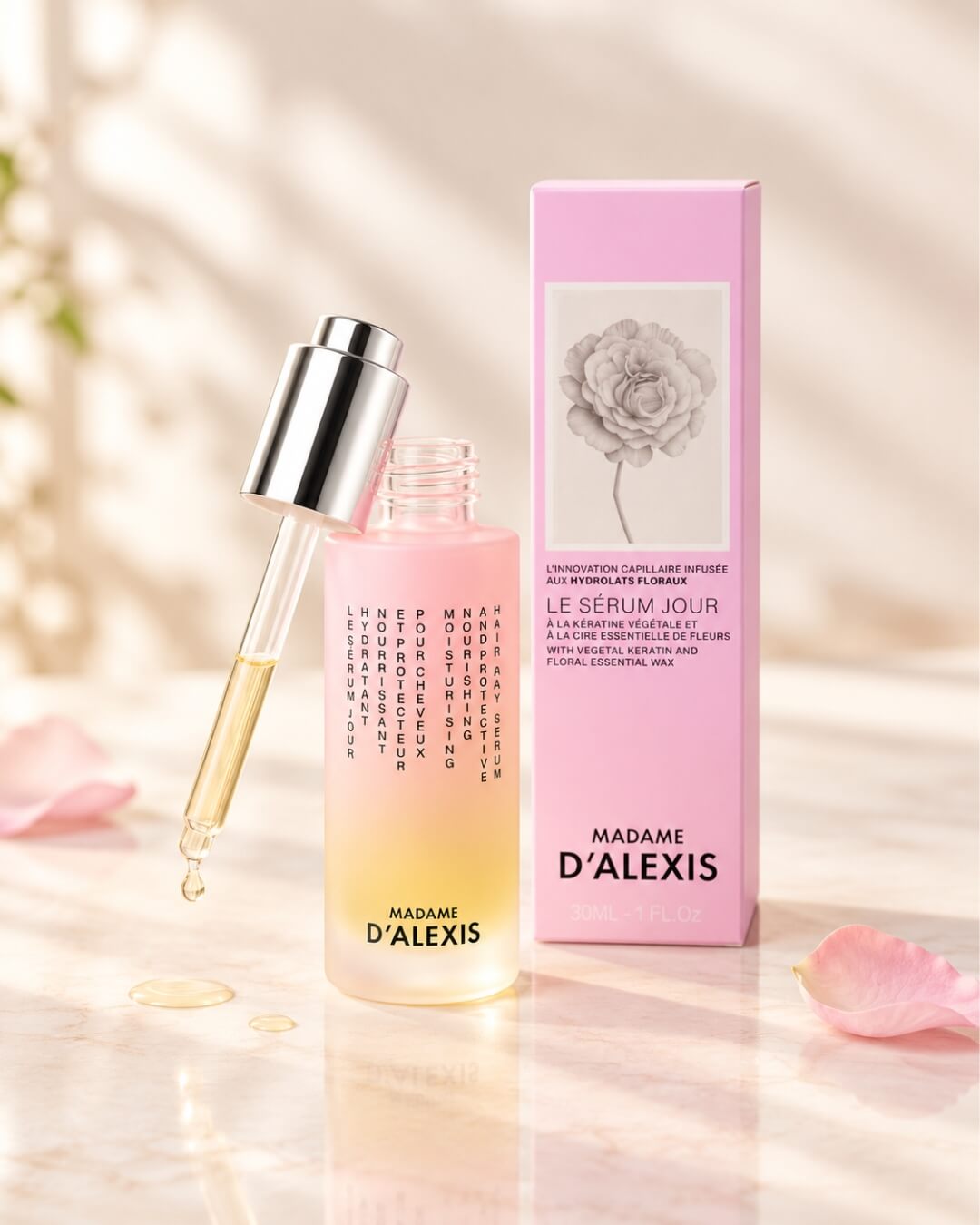
The Day Serum
Protection · shine
- Heat protection
- Plant-based ceramides
- Smooth finish without weighing hair down
FAQ: The most frequently asked questions about brushing hair
Which brush should I choose for my hair?
To choose a brush, always start with your hair type. A boar bristle brush is very suitable for fine or dull hair, as it smooths the fiber and adds shine. A round brush is mainly used for blow-drying and volume. A Denman brush helps define curly or coily hair. A paddle brush is suitable for long, thick, or straight hair. A wooden comb remains ideal for detangling without static electricity.
The ideal brush is therefore the one that respects the fiber: a soft brush, a wooden brush, a professional brush, or a natural bristle brush depending on your needs.
How to brush hair correctly?
To brush your hair properly, always start with the ends, then work your way up to the roots. Hold the section with one hand to avoid pulling on the scalp. Once the knots are undone, pass the brush from the roots to the ends to smooth the cuticle and distribute the sebum.
On wet hair, prefer a wooden comb or a wide-tooth comb. On dry hair, use a suitable brush: a paddle brush for long hair, a soft brush for fine hair, a natural bristle brush for shine. This motion should remain gentle and be part of a consistent hair care routine.
Should you brush your hair every day?
Yes, daily brushing, 1 to 2 times a day, is beneficial. It stimulates the scalp and distributes the sebum. The main thing is to do it gently, not excessively.
Can you brush wet hair?
It is best to avoid a regular brush on wet hair, as the fiber is too fragile. Prefer a wide-tooth comb or your fingers, detangling from the ends. Washing with a gentle shampoo also helps reduce friction.
Which brush should you choose for fine and fragile hair?
A nylon or silicone brush with flexible pins, or a boar bristle brush, which detangles without pulling or breaking the fiber. Fine hair needs a lightweight tool and a slow motion.
Does brushing really make hair grow faster?
It does not make hair grow faster in the literal sense, but it stimulates the microcirculation of the scalp, which promotes an environment conducive to a healthy growth cycle. To learn more, you can consult our guide for thickening hair.
Why brush from the ends toward the roots and not the other way around?
Because starting at the roots pushes the knots downward and compacts them into a single point, which breaks the fiber. Starting from the ends allows you to detangle gradually without forcing it.
Does brushing help reduce oily hair?
Indirectly, yes: by distributing the sebum along the fiber instead of letting it accumulate at the roots, it limits the greasy roots effect. If the scalp gets oily quickly, a routine for oily hair can help restore a better balance.
Is there a link between brushing and hair loss?
Gentle brushing does not cause abnormal hair loss. However, brushing too vigorously or on wet hair can break the fiber, giving the impression of greater hair loss when it is mostly breakage.
What are the benefits of brushing?
Regular brushing helps stimulate blood circulation at the scalp level, promotes a better distribution of sebum, and adds softness and shine to the lengths. It is a natural hair care treatment in its own right.
How often should you brush your hair?
One full brushing in the morning and one in the evening is more than enough. Also remember to clean your brush every week to remove fallen hair, dust, and sebum residue.
How to detangle hair without damaging it?
Use a wide-tooth comb or a soft brush, start with the ends, work your way up gradually, and never insist on a resistant knot. On dry and weakened hair, the fiber does not tolerate traction well.
- René Furterer - Brushing, a forgotten ancestral gesture.
- René Furterer - The scalp microbiome.
- Doctissimo - Fine, curly, or coily hair: the brush to adopt.
- Marie Claire - Brushing hair.
- Centre Clauderer - The scalp microbiome.
Conseils