Why use coconut oil for hair and when does it really work?
- Coconut oil for haircoconut oil for hair protects the hair fiber thanks to lauric acid, which penetrates better than most vegetable oils.
- It is particularly beneficial fordry, curly, frizzy, or damaged hair , but less suitable for fine or easily greasy hair.
- Used alone, its action remains superficial; when incorporated into an enriched formula, it becomes more effective and better tolerated.
- At Madame d'Alexis, coconut oil is combined with skincare active ingredients (organic hydrosols, cationic hyaluronic acid, ceramides) for targeted and long-lasting action.
- Expected result: flexibility, controlled shine, protected ends, and a more balanced scalp, without weighing hair down.

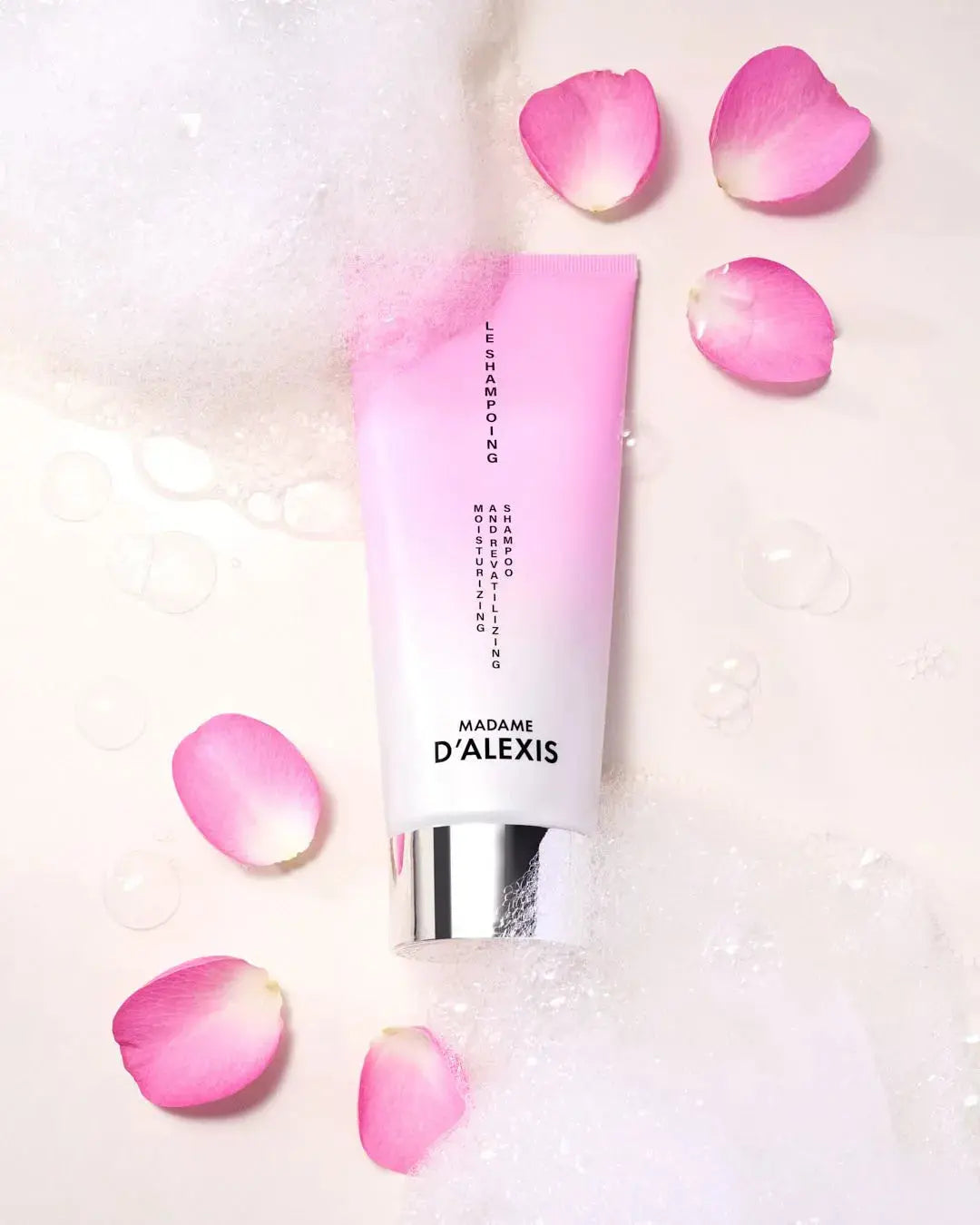
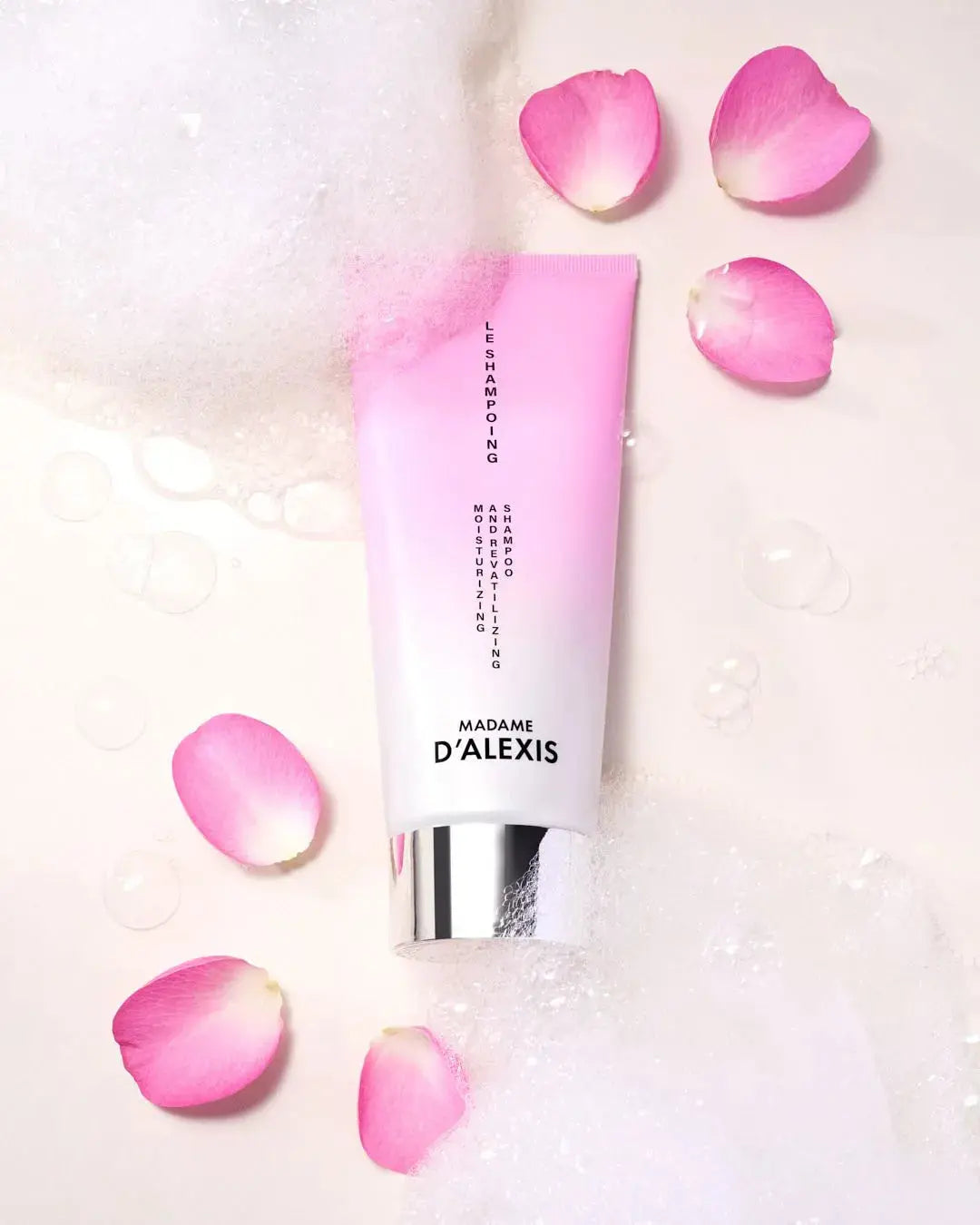
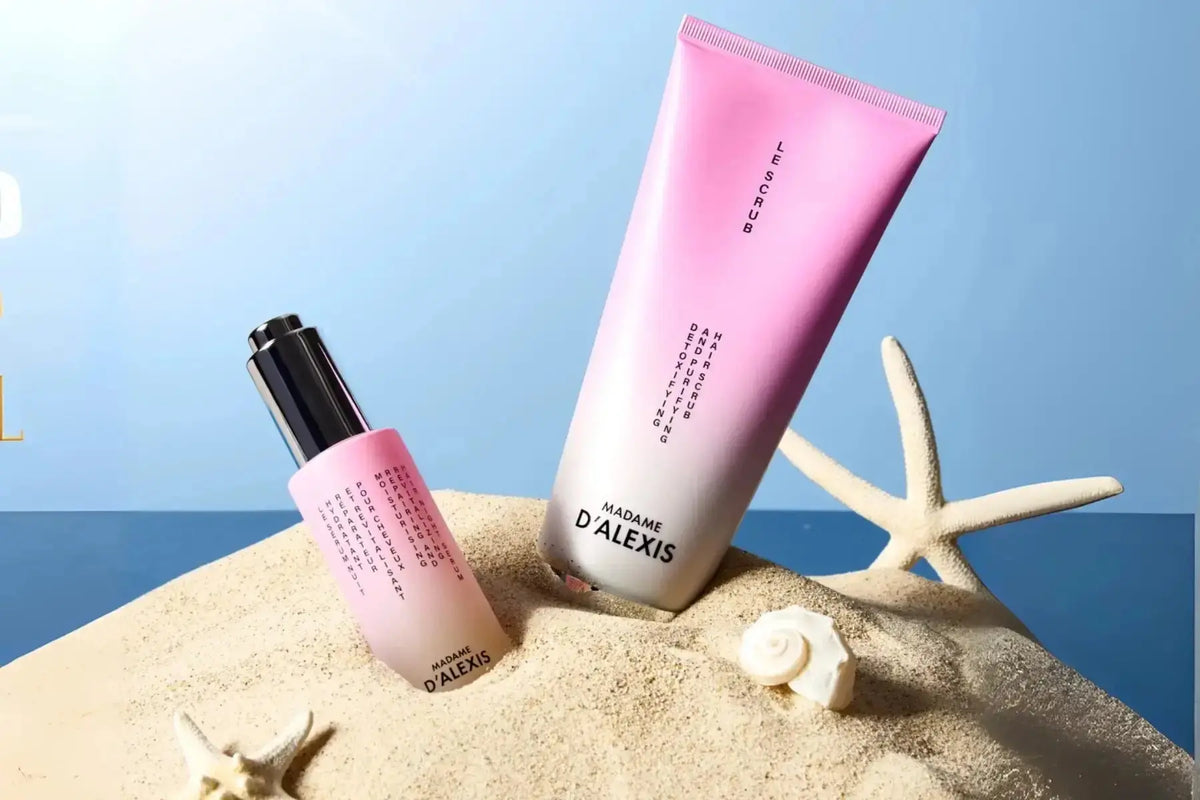
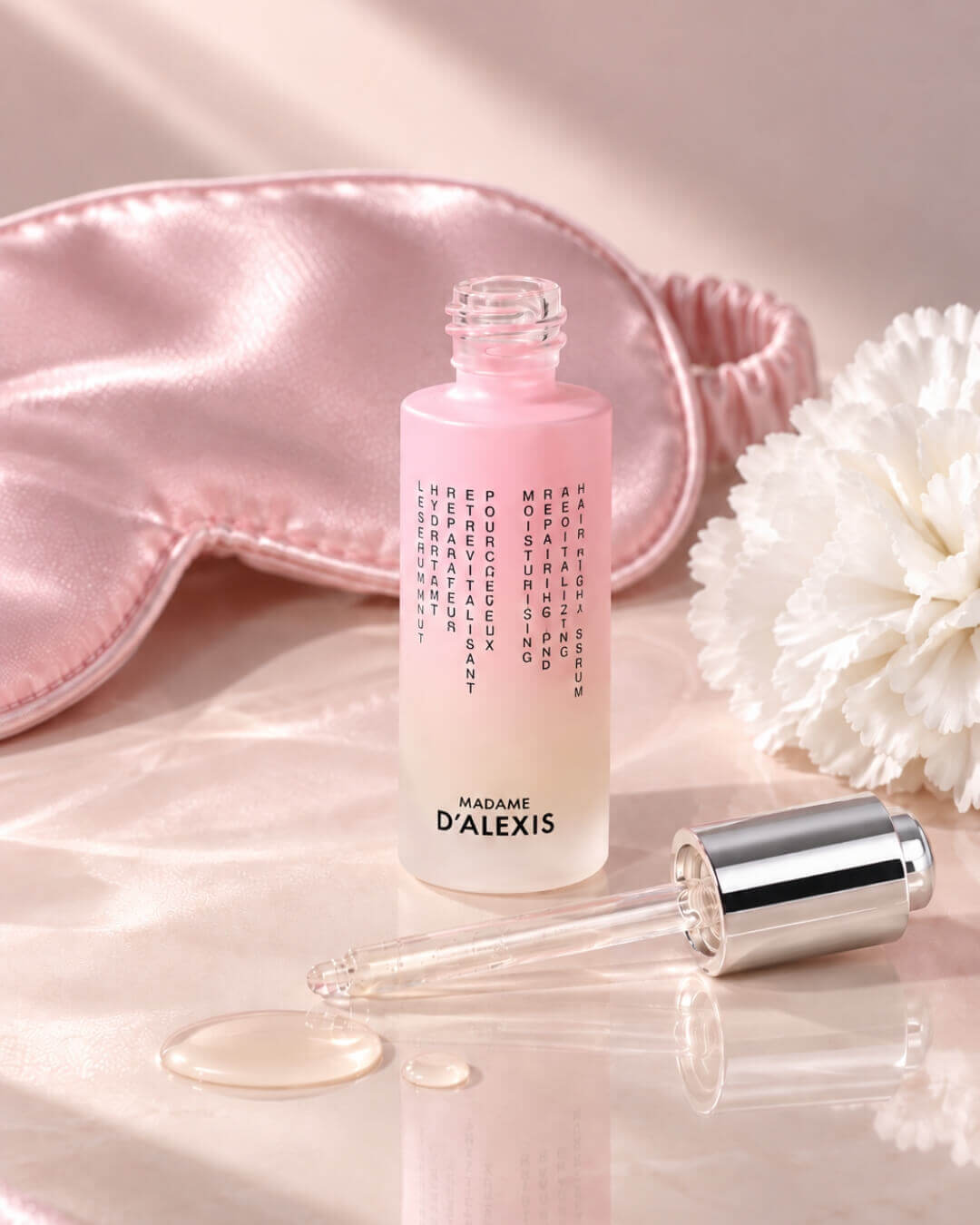
Madame d'Alexis products containing coconut oil
Coconut oil for hair is one of the most popular natural hair care products.
But be careful: its effectiveness is not automatic. Some people achieve shine
and softness, while others find their hair becomes heavy or their roots become greasy.
The difference? The porosity of the hair, the amount applied, and above all, the quality
of the oil. That's why we never present it as a universal solution.
At Madame d'Alexis, we incorporate it into formulas with no added water, enriched with organic hydrosols and skincare actives
, for real and predictable effectiveness.
What is coconut oil for hair?
Coconut oil for hair is a vegetable oil rich in fatty acids, mainly lauric acid. This fatty acid has a particular affinity with the hair fiber, which explains its ability to penetrate more easily than other oils and strengthen the hair surface.
For cosmetic use,cold-pressed virgin coconut oil, ideally certified organic, better retains its nutrients and effectiveness.
Key points to remember:
- Affinity with fiber thanks to lauric acid.
- Suitable for dry, curly, frizzy, and dry hair.
- Use sparingly on fine, oily, or very straight hair.
- Crude oil protects; it does not repair deeply damaged fibers.
My professional approach is to combine it with other active ingredients. That's what we do in Madame d'Alexis skincare products, where organic coconut oil is incorporated into concentrated formulas for a more stable and predictable effect.

The benefits of coconut oil for hair
Coconut oil for hair works thanks to its high fatty acid content, including lauric acid. Lauric acid has a natural affinity with hair fibers and penetrates more easily than most vegetable oils.
This explains why it is beneficial for dry, fragile, or frizzy hair. However, based on my experience, I would like to point out that it is only truly effective if it is applied precisely, to the right areas, and in the right amount.
Moisturize the hair fiber
Lauric acid improves fiber flexibility by strengthening cuticle cohesion. It forms a light protective barrier that limits dehydration.
It is not hydration in the strict sense, but rather better retention of existing moisture. On dry hair, the effect is visible from the very first applications.
Feed and reduce breakage
Applying the product to the ends helps limit split ends and protect the length from daily friction. The oil smooths the surface and improves texture, provided it does not saturate the fiber.
Smooth and control frizz
The smoothing effect provides natural shine and frizz control without weighing hair down. On thick, frizzy, or curly hair, this is often one of the first benefits noticed.
Promote growth with a balanced scalp
A light massage on the scalp can support microcirculation. This does not miraculously make hair grow faster, but it creates a more favorable environment for regular growth.
A natural ally for certain textures
For curly, frizzy, dry, or frequently heat-styled hair, coconut oil offers valuable support thanks to its protective properties.
📌 When to avoid coconut oil
- Fine hair: risk of weighing hair down, minimal dosage.
- Oily hair: avoid the roots, focus on the ends.
- Recently colored hair: caution, preliminary testing recommended.
What hair types should coconut oil be applied to?
| Hair type | Main benefit | Recommended application |
|---|---|---|
| Curly / kinky | Nutrition + definition | Lengths and tips |
| Dry / damaged | Protection + flexibility | Oil treatment before shampooing |
| Purposes | Very light film only | Tip and micro-quantity |
| Fat | Limited support | Never at the root |
| Colorful | Targeted protection | Preliminary test then spikes |
How to use coconut oil on hair?
Coconut oil for hair requires careful application. Its effectiveness depends more on how it is applied than on the amount used.
My general recommendation is simple: start light, observe how the fabric reacts, then adjust. This approach avoids disappointment and heavy fabric.
Oil treatment before shampooing
An oil treatment is the most comprehensive method for dry, curly, or frizzy hair. It is also suitable for hair that has been damaged by heat or previous coloring treatments.
• Heat the oil slightly in a double boiler to make it more fluid.
• Apply to the lengths and ends, never to the roots.
• Wrap in a warm towel to promote penetration.
• Leave on for at least one hour, or overnight if possible.
• Rinse, then use a mild shampoo without excessive lather.
I prefer this method for hair that lacks suppleness. It produces results that are immediately noticeable to the touch.
Homemade coconut and honey mask
For a more nourishing approach, a homemade mask may suffice.
• Two tablespoons of organic coconut oil.
• One tablespoon of honey.
• Apply to the ends of your hair 30 minutes before washing.
This mixture creates a protective film that improves elasticity, without claiming to repair the structure.
Scalp massage
A massage can help maintain scalp balance, but it should only be done occasionally.
• Ten minutes maximum.
• Systematic rinsing to prevent overload.
This method helps to soften the area, without promising a miraculous acceleration of growth.
Daily care for split ends
For maintenance, a minimalist application is sufficient.
• One drop on damp hair.
• Exclusively on the ends.
This limits frizz and adds subtle shine without leaving hair looking greasy.
How to choose a high-quality coconut oil?
The effectiveness of coconut oil depends largely on its quality. A mediocre oil, even when applied correctly, will never deliver the expected results. Choosing the right product is therefore crucial, especially if the goal is to visibly nourish, protect, and smooth the hair.
The 5 essential criteria to check
Before buying, check these items on the label:
- Certified organic: AB, Ecocert, or equivalent label, to guarantee the absence of pesticides and chemical residues.
- Virgin, first cold-pressed: preserves nutrients, fatty acids, and cosmetic effectiveness. Avoid refined or deodorized oils.
- Non-deodorized: the natural coconut scent reveals the presence of active molecules. An odorless oil has often lost its properties.
- 100% pure: a good oil should only list "Cocos Nucifera Oil" on the INCI, without any diluting additives.
- Traceable origin: ideally Southeast Asia (Indonesia, Philippines, Thailand) for consistent quality and a transparent supply chain.
Virgin or refined coconut oil: what really makes the difference
- Virgin oil: natural coconut scent, white to slightly yellow color, maximum effectiveness (intact lauric acid), higher price but superior results.
-
Refined oil: weak or no smell, altered nutrients, reduced effectiveness, and sometimes chemically treated. Less expensive, but significantly less beneficial.
Conclusion: choose virgin oil. Avoid refined oil.
Where to buy and at what price?
Trustworthy brands: Aroma-Zone, Weleda, Dr. Bronner’s, Coco & Co.
Avoid: low-priced supermarket brands, excessively cheap oils (less than €5 for 500ml), sellers without certification.
Realistic price: between €8 and €15 for 500ml of organic virgin oil.
Advice from Madame d'Alexis: why choose a formula over raw oil
You might ask yourself, "Why buy a Madame d'Alexis skincare product when you can use raw coconut oil?"
The truth is simple: raw oil protects, but it's not always enough.
What oil alone cannot do:
- It protects, but does not repair damaged fibers.
- It can be heavy if it is not balanced by other active ingredients.
- It does not rebalance the scalp or its microbiome.
- Results remain unpredictable depending on hair type.
What Madame d'Alexis' formula offers in addition:
- Organic hydrosols (rose, chamomile, orange blossom) to soothe and moisturize the hair.
- Cationic hyaluronic acid to retain water and improve suppleness.
- Plant-based ceramides to strengthen the lipid barrier.
- Skincare active ingredients (plant-based keratin, prebiotics, probiotics) for comprehensive action.
Result: the oil protects, hyaluronic acid moisturizes, hydrosols soothe, ceramides strengthen. The synergy creates an effectiveness that cannot be achieved with raw oil alone.
How to store coconut oil correctly
Properly stored coconut oil retains all its effectiveness. If stored incorrectly, it deteriorates and loses its properties. How you store it directly affects its results on your hair.
Ideal storage conditions
- Opaque glass jar: protects from light. Avoid transparent or plastic jars.
- Cool, dry place: ideal temperature 15 to 20°C. Avoid bathrooms (humidity) or areas close to heat sources.
- Keep away from direct light: cupboard, drawer, closed storage.
- Away from radiators or ovens: heat accelerates oxidation.
- Always keep the lid tightly closed: this limits evaporation and oxidation.
Shelf life and signs of deterioration
Average shelf life: 2 to 3 years, if well preserved.
Signs that it is no longer usable:
- Rancid or unpleasant odor
- Dark or brownish color
- Suspicious grainy texture or separation into two phases
- Presence of mold
If you notice these signs, discard the oil. Degraded oil is no longer effective and can irritate the scalp.
Why coconut oil solidifies
It solidifies naturally below 25°C. This is not a quality issue.
To gently smooth it out:
- Double boiler at 40-50°C for a few minutes
- Hot water from the tap on the potty
- Allow to return to room temperature
To be avoided at all costs:
- Microwave (alters active molecules)
- Boiling water or overheating
Practical tip
Choose small jars (100-200 ml). They oxidize less quickly and better preserve their qualities. A small jar can be used up in 2 to 3 months: it's the best compromise between freshness and effectiveness.
When to see results with coconut oil: realistic timeline
One question comes up often: how long before I see results? It all depends on hair type, frequency of application, and consistency of routine. Here is an honest and realistic view of the process.
Short term: 1 to 2 applications (immediate results)
What can be observed:
- Immediate shine (cosmetic effect)
- Softer and silkier feel
- Better controlled frizz
- More manageable hair
These results are superficial and fade when washed. This is the protective effect formed on the surface.
Ideal for: an event, a photo, a quick touch-up.
Medium term: 2 to 4 weeks (lasting results)
With 1 to 2 oil baths per week, the changes become visible:
- Less dry hair
- Reduction of frizz
- Improved flexibility and elasticity
- More soothed scalp
- Easier to style
Why 2 to 4 weeks? The fiber needs time to strengthen, and hydration becomes more stable.
Ideal for: dry, dull, or heat- and color-damaged hair.
Long term: 2 to 3 months (structural results)
With a consistent routine, the benefits become apparent:
- Reinforced fiber
- Less breakage
- Visibly thicker hair
- More consistent growth
- More stable natural shine
- More balanced scalp
Why the delay? It's related to the hair fiber renewal cycle. The hair you see today reflects your routine over the past few months.
Summary of results by hair type
- Dry/damaged hair: instant shine → strengthened hair fiber
- Curly/kinky: frizz under control → better-defined curls
- Fine hair: light shine → visual thickening effect
- Sensitive scalp: rapid relief → lasting balance
Important to remember
Coconut oil protects and improves appearance, but cannot repair severely damaged hair fibers on its own. For best results, it should be combined with other active ingredients such as cationic hyaluronic acid, plant keratin, and plant ceramides.
This is precisely the approach taken by Madame d'Alexis formulas, which combine coconut oil and skincare active ingredients for a more comprehensive effect.
Tips for maximizing results
- Be consistent: 1 to 2 oil baths per week
- Adjust frequency: fine hair = moderate; dry hair = more frequent
- Do not rely solely on oil if the fiber is damaged.
- Accepting time: profound results come after several weeks
- Observe and adjust according to the hair's response
Coconut oil + other ingredients: the best combinations
Coconut oil works best when combined with other active ingredients. Some combinations enhance its protective action, while others improve hydration, elasticity, or soothe the scalp.
Here are the most effective blends and how to prepare them.
Coconut oil + honey: hydration and nutrition
Why it works:
- Coconut oil protects and smooths the hair fiber.
- Honey moisturizes, soothes, and provides natural antioxidants.
Dosage:
- 2 tablespoons organic coconut oil
- 1 tablespoon of raw honey
Application:
- Apply to lengths and ends
- Leave on for 30 minutes
- Rinse with a gentle shampoo
Ideal for: dry, dull hair lacking shine.
Frequency: once or twice a week.
Coconut oil + aloe vera: soothing and moisturizing
Why it works:
- Oil protects the fiber
- Aloe vera moisturizes without weighing down the skin and soothes irritation.
Dosage:
- 1 tablespoon of coconut oil
- 2 tablespoons of aloe vera gel
Application:
- Apply to scalp and hair lengths
- Massage for 20 minutes
- Rinse with lukewarm water
Ideal for: sensitive scalp, itching.
Frequency: once or twice a week.
Coconut oil + hyaluronic acid: deep hydration and plumping
Why it works:
- The oil nourishes and strengthens the cuticle.
- Hyaluronic acid retains water and improves elasticity.
Dosage:
- 1 tablespoon of coconut oil
- 3 to 5 drops of hyaluronic acid
Application:
- Apply to slightly damp hair
- Leave on for 15 to 20 minutes.
- Rinse thoroughly
Ideal for: dehydrated hair, lack of volume.
Frequency: once or twice a week.
Coconut oil + egg + honey: intensive repair
Why it works:
- Oil protects
- Eggs provide protein to strengthen fiber.
- Honey moisturizes and softens
Dosage:
- 2 tablespoons of coconut oil
- 1 egg yolk
- 1 tablespoon of honey
Application:
- Apply to lengths and ends
- Leave on for 20 minutes
- Rinse with lukewarm water
Ideal for: very damaged and brittle hair.
Frequency: once a week.
Why Madame d'Alexis formulas are more effective than homemade mixtures
Homemade skincare products work, but they have limitations: average stability, approximate dosages, heavy textures, and separation of ingredients.
Madame d'Alexis formulas are based on a masterful cosmetic approach: stable active ingredients, carefully crafted textures, measured concentrations, and real synergy.
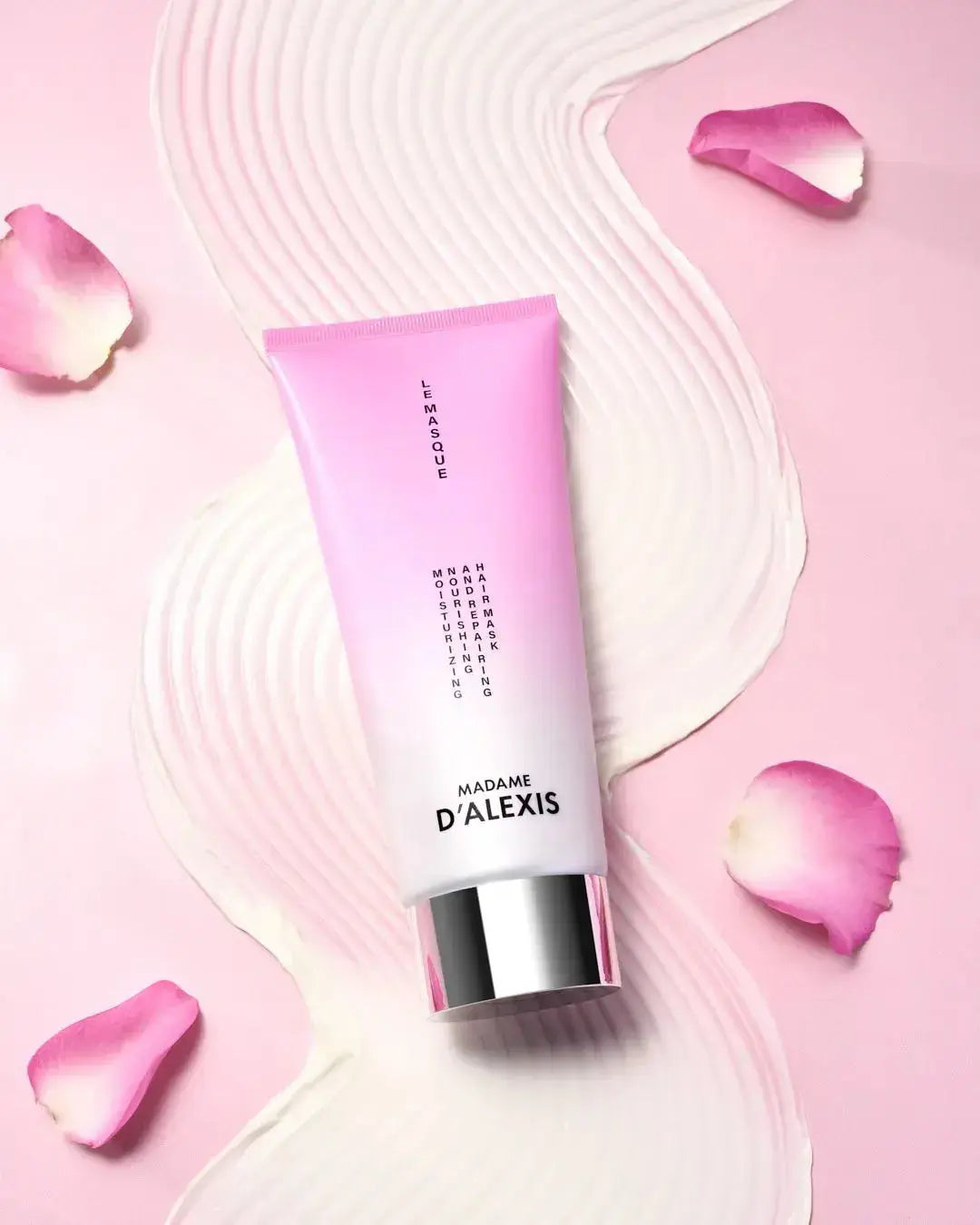
Example: the Floral Mask combines coconut oil, cationic hyaluronic acid, plant ceramides, and organic hydrosols. It is a structured combination that cannot be perfectly replicated at home.
The result: more consistent, durable, and predictable repairs.

Mistakes to avoid with coconut oil
Certain practices are detrimental to results. They should be explicitly ruled out.
• Applying too much oil: the fiber becomessaturated and loses movement.
• Applying to oily roots: risk of sebaceous overload.
• Ignoring the fine texture: micro-application is preferable.
• Not rinsing after an oil treatment: greasy film and dull feel.
• Considering oil as a repair treatment: it protects, it does not rebuild.
My personal stance is consistent: treat hair like skin. Protect, nourish, strengthen; don't promise what the ingredient cannot deliver on its own.
Contraindications and precautions: who should avoid coconut oil?
Coconut oil is generally well tolerated, but it is not suitable for everyone. Certain situations require caution, a preliminary test, or professional advice. Here are the cases in which its use should be limited, adapted, or avoided.
Coconut oil allergy: how to recognize it
Possible symptoms:
- Itchy scalp
- Redness, irritation, burning sensation
- Localized swelling (ears, roots, neck)
- Unusual skin rash
If these signs appear:
- Rinse immediately with lukewarm water.
- Stop applying
- Consult a dermatologist if the reaction persists.
Recommended preliminary test:
- Apply a small amount behind the ear or on the wrist.
- Wait 24 hours
- Use only if no reaction occurs.
Severe scalp irritation or infection
Consult a dermatologist before use if:
- Scalp infections or fungal infections
- Severe seborrheic dermatitis
- Psoriasis or eczema in the active phase
- Open wounds or inflamed areas
Why? Oil can create an unfavorable moist environment and aggravate certain conditions. Seeking medical advice can help avoid complications.
Very fine hair or oily hair: adjust the amount used
Very fine hair:
- Risk: heavy fiber and visible greasy effect
- Solution: micro-quantity (1 to 2 drops), only on tips
- Frequency: once a month maximum
Oily hair:
-
Risk: root overload, dull appearance
-
Solution: apply only to lengths/ends, short application
-
Rinsing: thoroughly to remove any greasy film
Colored or bleached hair
Possible risks:
-
Slight color change
-
Yellowish effect on very lightened strands
Recommendations:
-
Wait 48 hours after coloring your hair.
-
Test on a hidden strand before full use.
-
Moderation recommended during the first few weeks after bleaching
Pregnancy and breastfeeding
External application on hair: generally no known contraindications.
Precaution: do not ingest the oil without medical advice.
Interactions with dermatological treatments
If medical treatment is ongoing:
- Seek the advice of a dermatologist
- Some topical antifungals/antibiotics may interact
- Oil can reduce the effectiveness of certain scalp treatments.
Safety checklist before use
- Known allergy to coconut ➜ avoid
- Infected or severely irritated scalp ➜ seek medical advice
- Very fine or oily hair ➜ preliminary test
- Recent coloring ➜ wait 48 hours
- Ongoing dermatological treatment ➜ seek doctor's approval
If the answer to any of these points is “yes,” caution or professional guidance is recommended.
Coconut oil vs. other hair oils: which one should you choose?
Coconut oil isn't the only option for hair care. It performs very well, but certain oils are better suited to different hair types, scalps, and desired results. Here's how it compares to the most commonly used alternatives.
Comparison table: coconut oil vs. other oils
-
coconut oil Very high affinity with hair fiber thanks to lauric acid, excellent penetration, ideal for dry, frizzy, or curly hair. May weigh down fine hair if used in excessive amounts. Strong coconut scent, affordable price, good shelf life. -
argan oil Good affinity, slower penetration, recommended for colored or fine hair, protects color but can weigh hair down. Light nutty smell, higher price, average shelf life. -
Jojoba oil
Lightweight, regulates sebum, very good for oily scalps or fine hair. Does not penetrate as quickly as coconut oil but balances and cleanses. Discreet scent, moderate price, good shelf life. -
deeply nourishes and is suitable for very dry, thick, or damaged hair. Slow absorption, may weigh hair down, ideal for targeted oil treatments.
Why coconut oil is often the best
- Lauric acid: unique affinity with keratin
- Rapid absorption: visible effects from the first application
- Wide compatibility: works on most hair types
- More affordable than argan or jojoba oil
- Longer shelf life than other oils
When to choose another oil
- Very fine hair → jojoba oil (lighter, less greasy)
- Colored hair → argan oil (best color protection)
- Oily scalp → jojoba oil (regulates sebum without saturating)
- Very thick/very dry hair → avocado oil (intense nourishment)
Can several oils be combined?
Yes, but no more than two at a time to avoid unstable textures.
Effective examples:
- Coconut + jojoba → fine and dry hair
- Coconut + argan → colored and dry hair
- Coconut + avocado → very dry and thick hair
Recommended dosage: 50% of each oil (e.g., 1 tablespoon coconut oil + 1 tablespoon jojoba oil).
Why a Madame d'Alexis formula outperforms oil alone
Oils alone protect, but do not repair deeply. A carefully controlled formula is more effective because it combines several families of active ingredients:
- Cationic hyaluronic acid: deep hydration
- Plant ceramides: repairing the lipid barrier
- Organic hydrosols: soothing the scalp
- Skincare ingredients: keratin, prebiotics, probiotics
This is what allows Madame d'Alexis skincare products to offer a more consistent, controlled, and long-lasting effect than simply applying raw oil.

Coconut oil alone vs. enriched formulas: the difference Madame d'Alexis
Coconut oil for hair has real benefits, but its effects are limited when used alone. It softens, provides light protection for the hair fiber, and improves the feel of the hair.
However, its effect remains essentially superficial: it acts as a protective film and is not sufficient to meet the needs of hair that is fragile, colored, dehydrated, or subject to daily friction.
This is where the distinction between crude oil and an enriched formulation becomes crucial.
My vision is as follows: coconut oil only reaches its full potential when combined with complementary active ingredients capable of acting on several levels.
AtMadame d'Alexis, we incorporate it into treatments with no added water, enriched with organic hydrosols, cationic hyaluronic acid, and active ingredients inspired by skincare.
This combination multiplies effectiveness. The oil protects, hyaluronic acid retains moisture, hydrosols improve scalp responsiveness, and together they create a cosmetic consistency that exceeds the performance of raw oil.
To understand the difference, simply observe how each product acts on a specific issue:
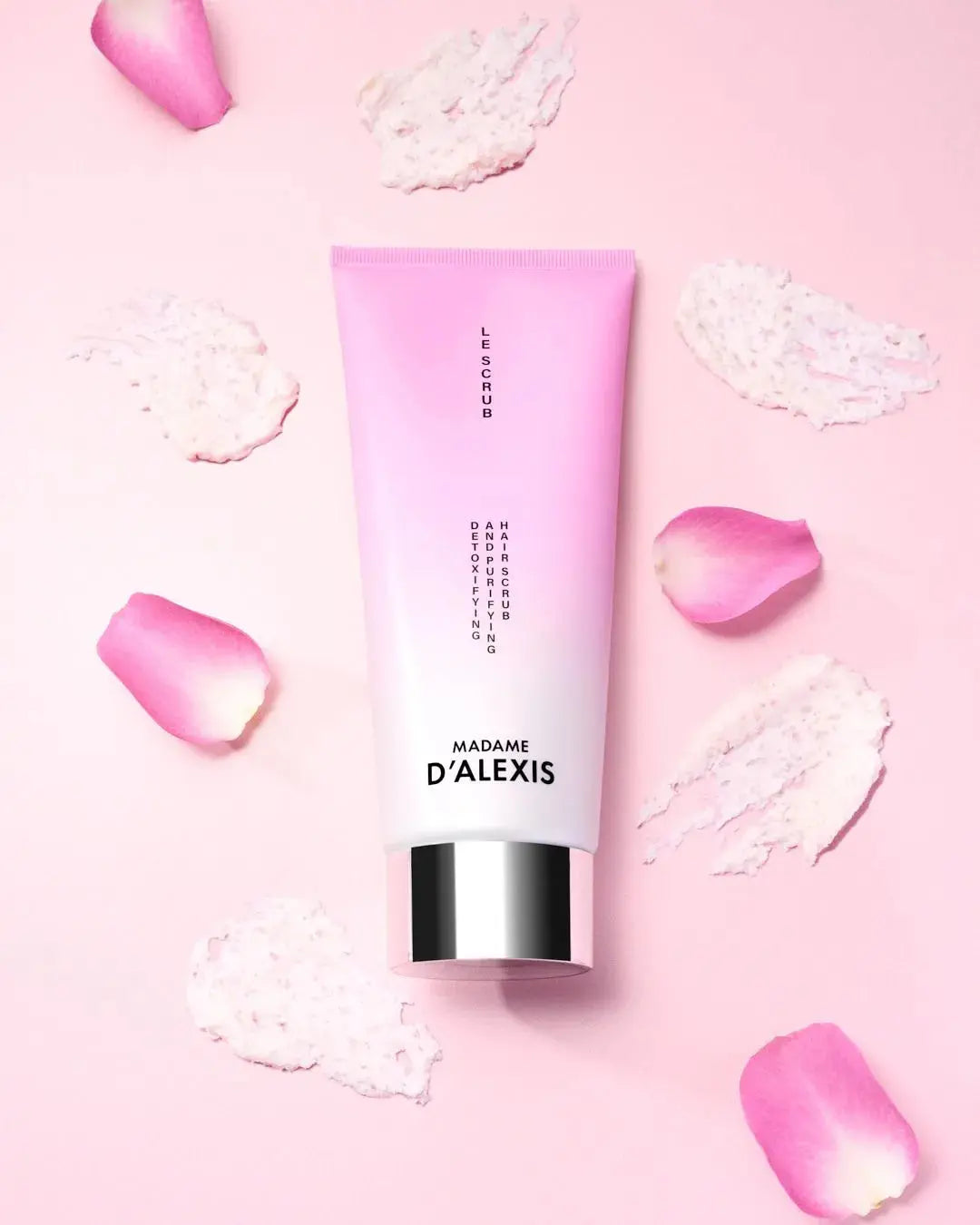
•Floral Scrub: coconut oil and fleur de sel, gentle purification and microcirculation of the scalp.
• Floral Mask: plant ceramides and cationic hyaluronic acid, fiber support and long-lasting protection.
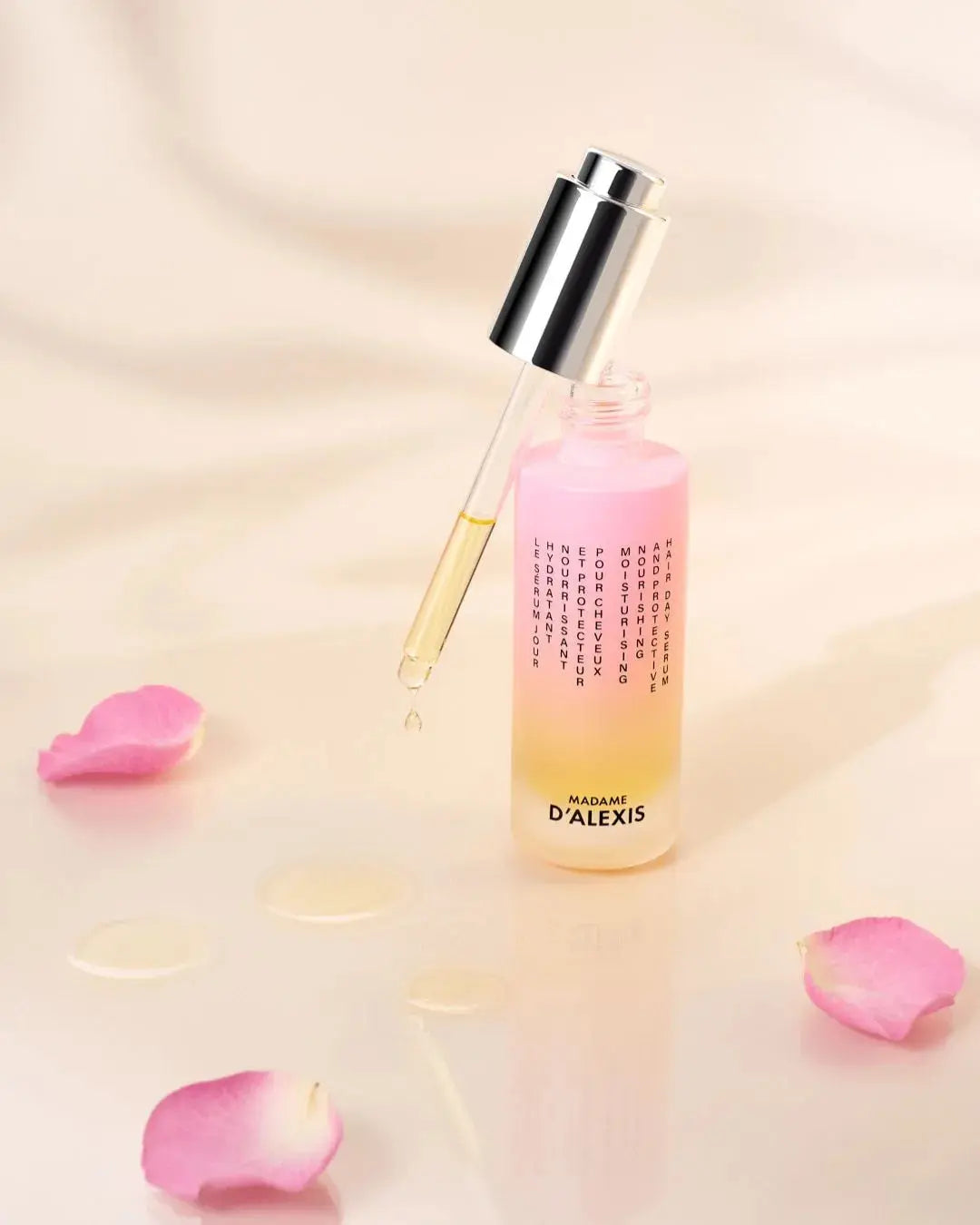
• Day Serum: protective dry oil, light barrier against friction and static electricity, without weighing hair down.
This combination creates a more stable, predictable result that is better supported over the long term. The noticeable difference is there:more manageable hair, less artificial shine, and a fiber that better retains its integrity. It's not a miracle, it's the formulation.
Complete routine according to your hair type
| Hair type | Main objective | Recommended routine |
|---|---|---|
| Curly / kinky | Nourish and define | Floral scrub → mask → day serum |
| Dry / damaged | Protect and soften | Targeted oil bath → mask |
| Purposes | Limiting the burden | Micro-application on fingertips → day serum |
| Fat | Balancing the scalp | Floral scrub only on roots |
| Colorful | Preserve radiance | Hair mask + occasional protective treatment |
Coconut oil for hair is an interesting base, but its full potential is revealed when it is incorporated into a complete formula designed for the hair fiber and scalp. This is what makes Madame d'Alexis hair care products unique: a precise, structured, and concentrated approach.
FAQs about using coconut oil for hair
How to use coconut oil on hair?
Coconut oil should be used on clean, slightly damp hair. Simply apply a small amount to the lengths, focusing on the ends. For a deeper effect, you can make a hair mask and leave it on for 30 minutes to overnight before rinsing.
This method works particularly well ondry, damaged, and frizzy hair, which benefit most from its nourishing properties.
What are the benefits of coconut oil?
The benefits ofcoconut oil are based on its high fatty acid content. It helps nourish the hair fiber, indirectly moisturize by limiting water evaporation, and protect against friction. Hair often appears shinier and more manageable thanks to its coating properties.
How can you reduce frizz with coconut oil?
To reduce frizz, apply a tiny amountof coconut oil to dry or slightly damp hair. The lipid film helps smooth the surface, nourish the fiber, and improveelasticity, allowing for better curl definition without stiffness. Ideal for finishing touches.
Is coconut oil suitable for all hair types?
Coconut oil is suitable depending on hair type:
- Normal hair: occasional use.
- Fine hair: use a very small amount to avoid weighing it down.
-
Curly, dry, frizzy hair: an excellent nourishing ally.
It is less suitable for oily roots or fibers that quickly become saturated.
How much coconut oil should you use?
The amount varies depending on the objective:
- Maintenance: a small amount.
- Mask: 1 to 2 tablespoons.
- Finish: a few drops.
Applying too much can weigh hair down; it is best to adjust gradually.
How to make a hair mask with coconut oil?
For a hair mask, meltthe coconut oil, apply to hair, comb through to distribute, then leave on for 30 minutes to 1 hour before rinsing. This treatment makes detangling easier, helps nourish the hair fiber, and reduces dry ends.
What products combine coconut oil?
Some products combinecoconut oil withjojoba oil,castor oil, or other natural active ingredients. This blend creates a more complete, lighter, and cosmetic treatment than raw oil alone, useful in a balanced routine.