Advice
Which Hair Oil Should You Use? The Complete Guide by Hair Type and Need
Which natural oil to choose according to your hair type: dry, oily, curly or color-treated. An expert guide to a luxurious, made-to-measure hair routine.

Hair oil: which one to choose for your hair type?
With dozens of plant oils available—coconut, argan, castor, jojoba, and avocado—choosing the right oil for your hair is not easy. Each oil has a different composition, texture, and specific benefits depending on your hair type and the issue you want to address.
Dry and brittle hair, oily hair, curly, colored, or fine hair: the same oil does not suit everyone. Applying an oil that is too heavy on fine hair weighs down the roots. Using a heavy oil on an oily scalp worsens oil buildup. The right choice depends on your hair texture, not a trend.
This guide compares the most effective hair oils by hair type, explains how to use them without weighing your hair down, and presents why organic floral water-based serums, like those from Madame d'Alexis, offer a more targeted alternative to pure plant oils for demanding hair. Comparison table, real-life cases, and application tips included.
Two serums to nourish, protect, and enhance your hair
When choosing a hair oil, the goal is to find the right texture for your needs: a light oil for shine and a finishing touch, or an overnight treatment to care for the scalp and enhance your hair care routine.
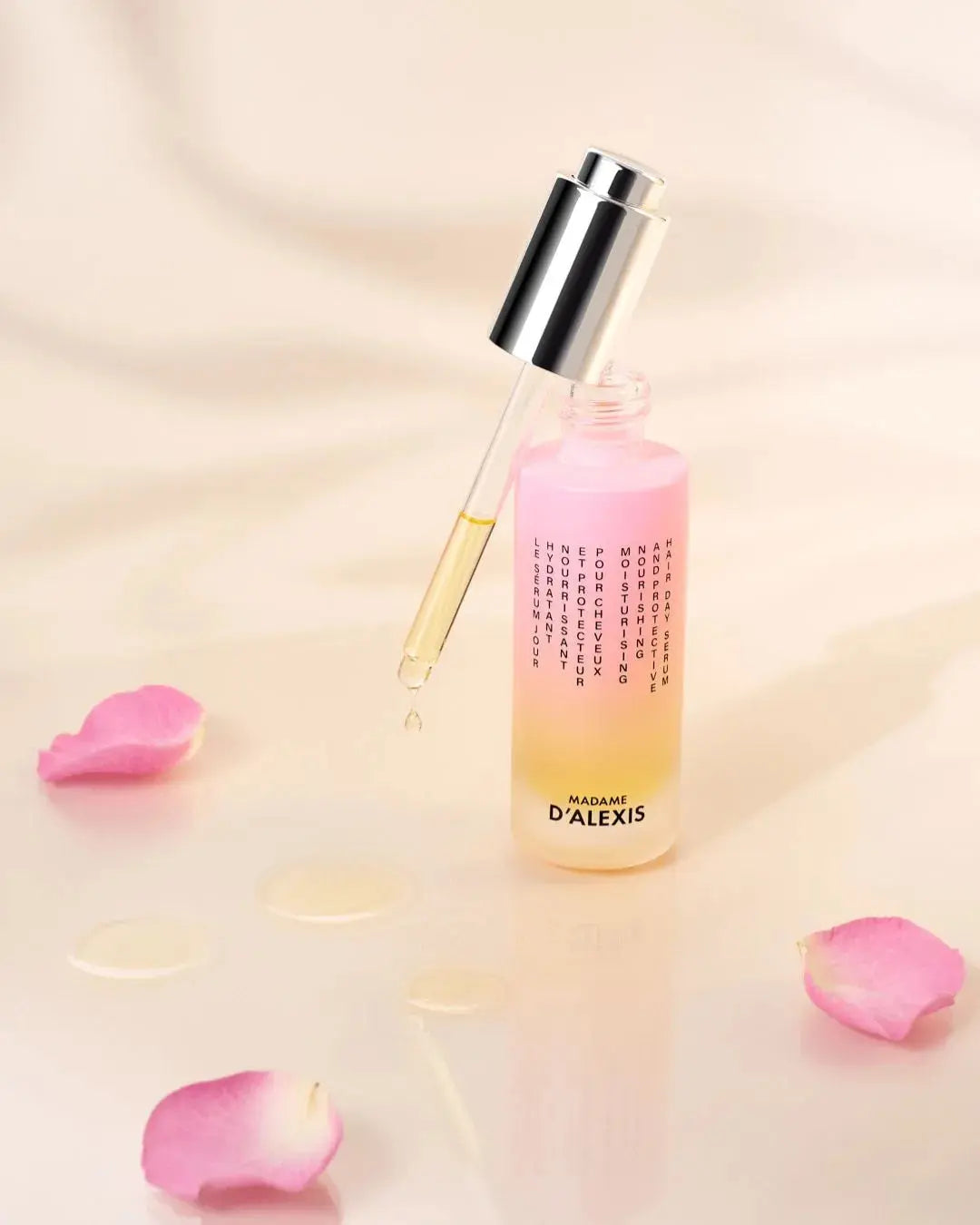
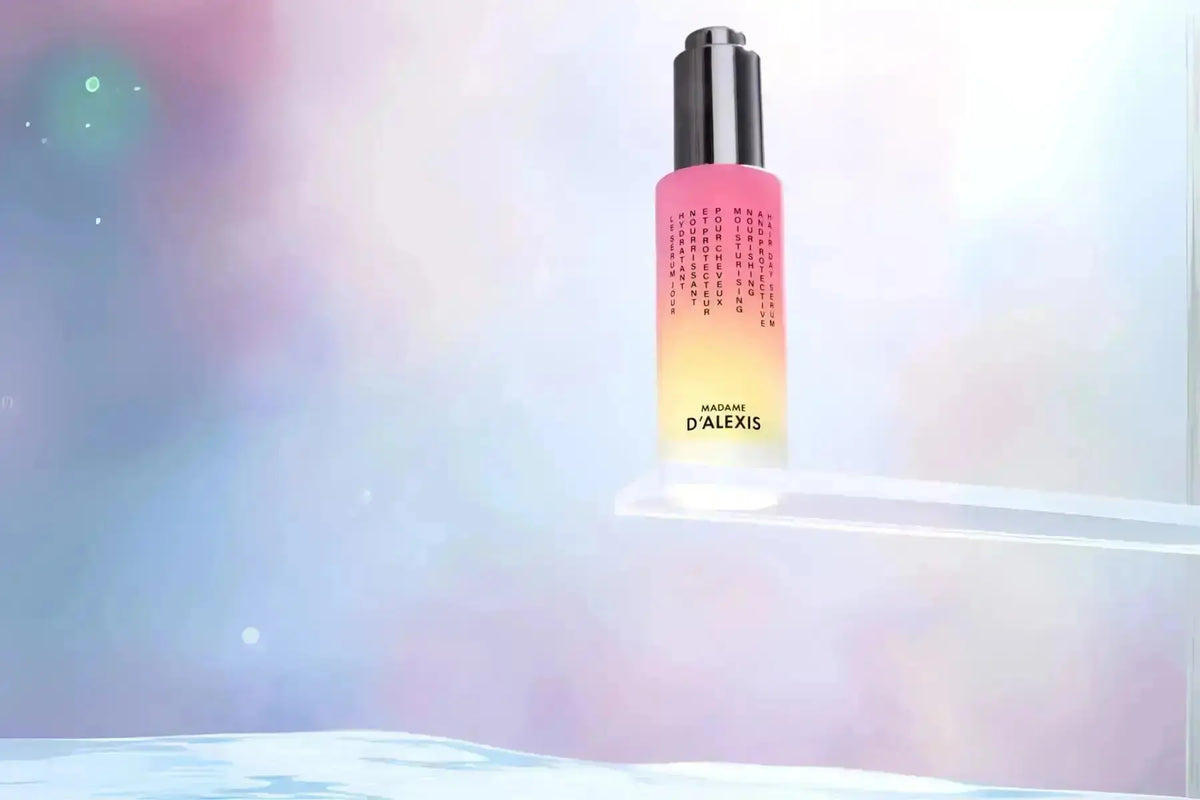
The Day Serum
Jojoba · shine · anti-frizz
- Enriched with jojoba oil
- Helps soften dry lengths
- Enhances shine without weighing hair down
35,00 €
View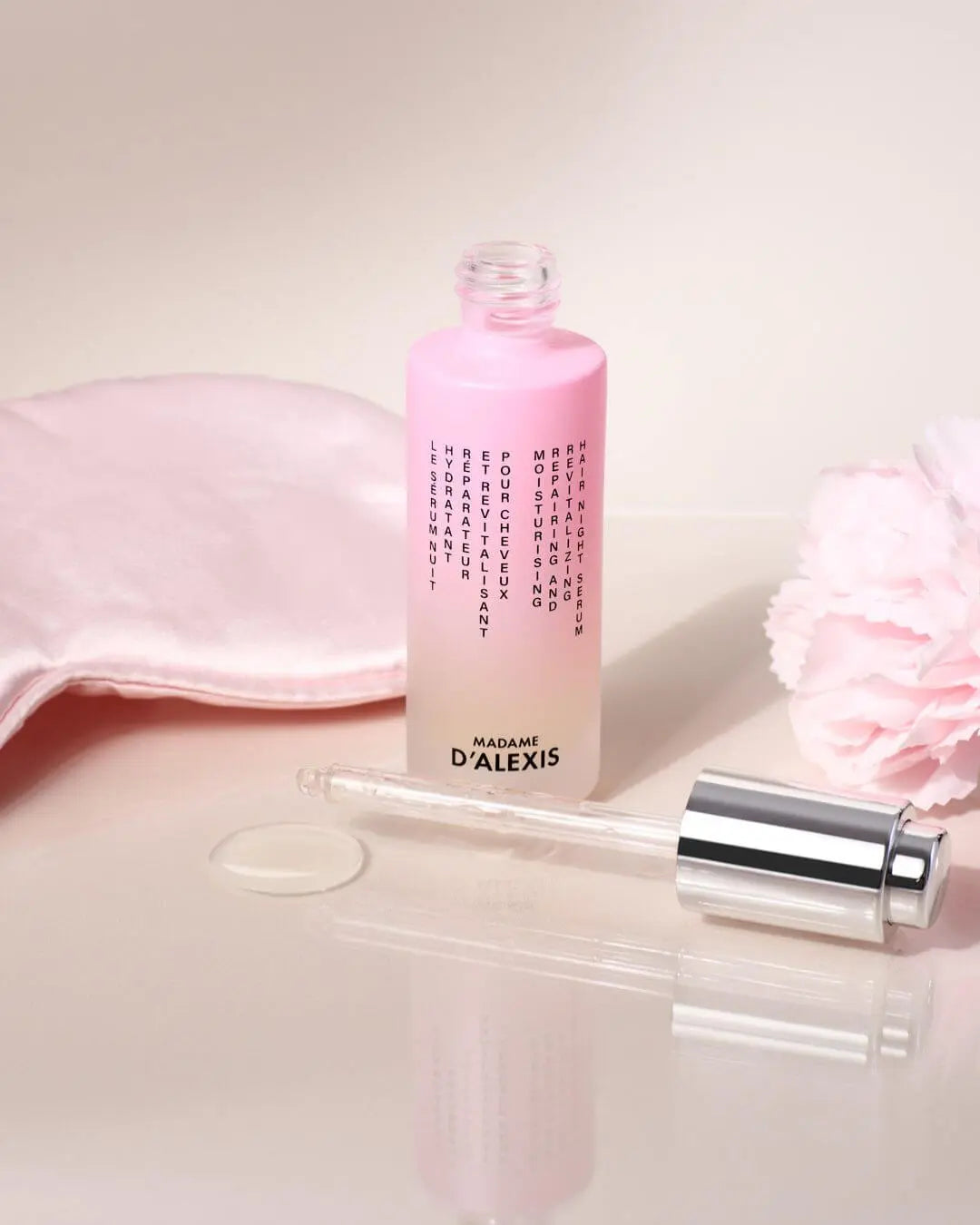
Night Serum with Hydrolats
Scalp · density · nighttime routine
- Targeted scalp care
- Extends your hair care routine overnight
- Ideal for weakened or thinning hair
35,00 €
ViewScroll to compare the two Madame d'Alexis serums
Hair oil: why use it in your hair care routine?
How to choose the right hair oil
A well-chosen hair oil doesn't weigh hair down: it seals in moisture, restores the lipid barrier and enhances the hair's texture.
Unlike heavy, pore-clogging oils, certain oils, such as avocado or broccoli oil, act as a deep treatment.
- Strengthen the hair fiber and prevent split ends with essential fatty acids.
- Preserve suppleness and shine without any greasy residue.
- Protect against external damage: UV rays, pollution, and hard water.

Moisturize the scalp, stimulate growth
What you apply to the roots is just as crucial as what you apply to the lengths. Certain oils, such as castor oil and mustard oil, are known for their stimulating effect on microcirculation, promoting growth while soothing sensitive scalps.
Hair oil, serum or oil bath: what's the difference?
- The hair serum acts as a finishing touch and is often based on silicones in conventional formulas.
- Daily hair oil lightly nourishes and protects.
- The oil bath is a more intensive ritual left on before washing.
To the question "Is it good to put oil on your hair?", the answer is unambiguous: yes, as long as you choose a quality vegetable oil suited to your hair type, and use it judiciously.
Hair oil vs. leave-in serum: Which one should you choose?
Pure plant oil and leave-in serum serve the same apparent purpose—nourishing and protecting the hair fiber—but how they work is fundamentally different. Confusing the two risks weighing down your hair or failing to treat the root of the problem.
Pure plant oil works on the surface. It coats the hair fiber, reduces porosity, and limits moisture loss. It is a protective and glossy treatment, ideal for dry ends and thick hair. However, it does not penetrate deeply and can quickly weigh down fine hair or an oily scalp.
The leave-in serum, formulated with skincare actives like hyaluronic acid, floral waters, and ceramides, works from within the fiber. It provides deep hydration, repairs keratin, and regulates without buildup. It is suitable for all hair types, even the finest.
| Criterion | Pure plant oil | Leave-in serum with floral waters |
|---|---|---|
| How it works | Surface, coating | Deep, active hydration |
| Ideal for | Thick, dry hair, ends | All types, including fine and oily |
| Risk of weighing hair down | High on fine hair | Low |
| Frequency | 1 to 2 times a week maximum | Daily use possible |
| Targeted active ingredients | Fatty acids | Hyaluronic acid, ceramides, floral waters, proteins |
Madame d'Alexis Day and Night Serums combine both approaches: carefully selected lightweight plant oils and hydrating skincare actives in an organic floral water base, without weighing hair down or clogging pores.
How to choose the right hair oil for your hair type and needs?
The art of choosing the right oil for your hair is not a matter of chance, or a passing trend. It's a personalized, almost intimate process, based on a detailed knowledge of your hair and its real needs.
In beauty as in perfumery, the perfect match between material and nature is the key to excellence.
Which oil is best for dry hair?
Avocado, coconut, sweet almond, or argan oil: rich, enveloping oils with nourishing, moisturizing, and repairing benefits.
Which oil for oily hair?
Jojoba, black seed, or mustard oil: lighter textures that help balance oil production, best used as a pre-shampoo treatment.
Which oil for curly or frizzy hair?
Castor, shea, or avocado: nourishment, definition, and frizz control.
Which oil for color-treated hair?
Jojoba, argan, or hibiscus: protection, shine, and color preservation.
What is the best oil for hair growth?
If you are looking to stimulate hair growth and promote faster, thicker hair, certain oils are particularly effective.
Castor oil is undoubtedly the best oil for hair growth. Rich in ricinoleic acid, it stimulates microcirculation in the scalp and strengthens hair follicles. It is known to promote thicker hair growth and reduce hair loss.
How to use: massage castor oil into your scalp 2 to 3 times a week before shampooing. Leave it on for at least 30 minutes, or even overnight.
Night Serum with Hydrolats
Organic floral waters · Scalp · Leave-in routine
- Targeted scalp care, complementing length-nourishing oils
- Ideal for supporting fragile or thinning hair
- Extends your hair care routine throughout the night
Other oils effectively complement this ritual:
- Mustard oil: warming, it stimulates hair follicles and accelerates growth.
- Broccoli oil: lesser-known yet effective, it improves hair structure while encouraging growth.
- Rosemary essential oil, diluted in a plant oil: its positive effect on microcirculation is scientifically proven.
To maximize results, combine these oils with a daily 5-minute scalp massage, which naturally stimulates blood circulation.
Summary table: which oil for which hair type?
To help you choose the best hair oil for your needs, here is a detailed comparison of the most effective plant oils.
| Hair type / needs | Recommended oils | Key benefits |
|---|---|---|
| Dry hair | Coconut, avocado, sweet almond, argan oil | Nutrition, repair, shine, suppleness |
| Greasy hair | Jojoba, black cumin, mustard oil | Sebum regulation, lightness, purification |
| Curly / frizzy hair | Castor oil, avocado, shea butter | Definition, flexibility, frizz control |
| Colored hair | Jojoba, argan, hibiscus oil | Protection, radiance, color preservation |
| Encourage growth | Castor, mustard, broccoli, and rosemary oil | Growth stimulation, fortification, density |

Before and After: 3 real-life cases using the right hair oils
Case 1: dry and dull hair transformed into shiny, supple locks
Before: coarse, dull, and brittle hair. Straw-like texture. Severe frizz. Lifeless appearance even after washing.
- Jojoba oil treatment once a week, 30 minutes before shampooing.
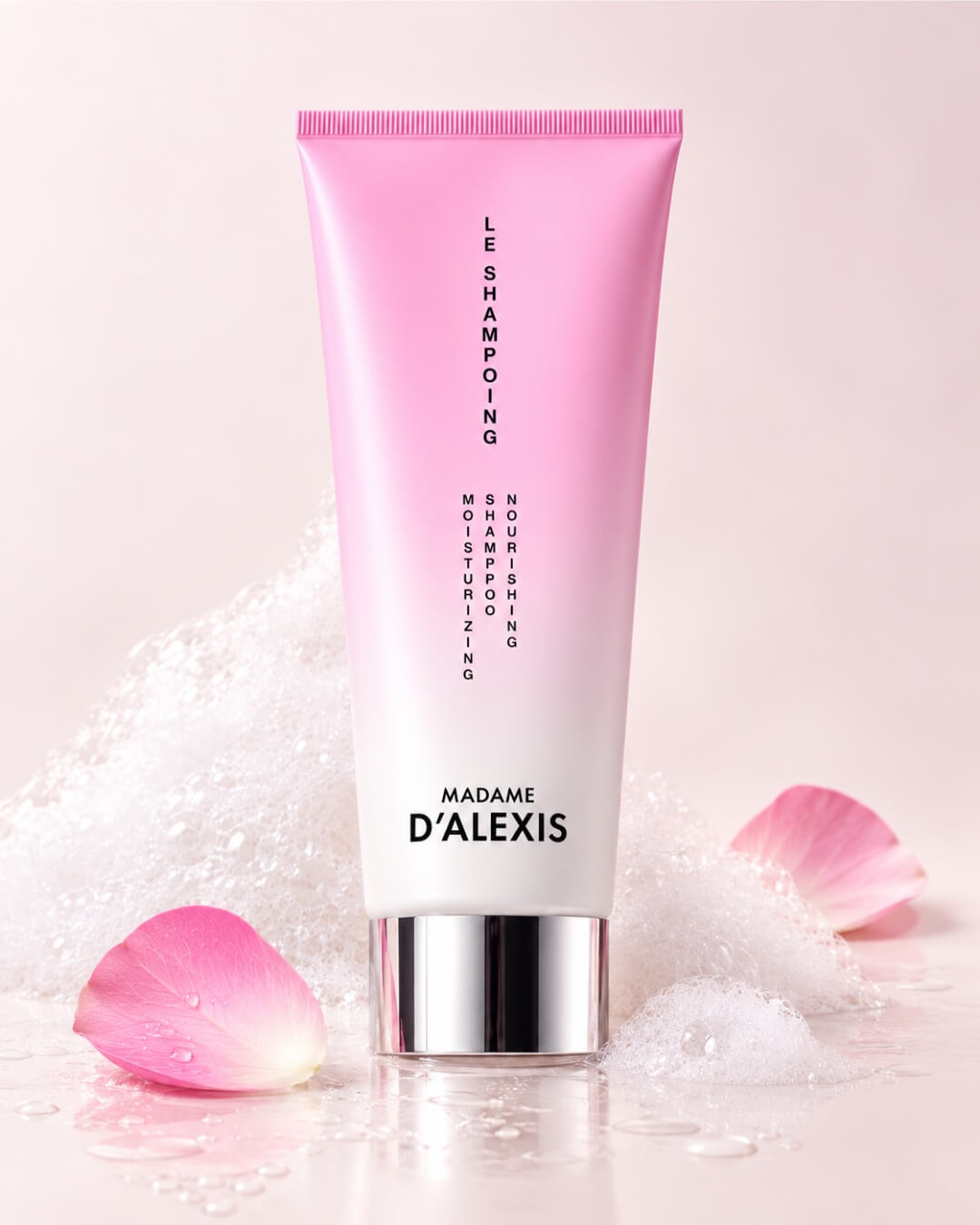
- Hydrolate Shampoo by Madame d'Alexis twice a week, sulfate-free.
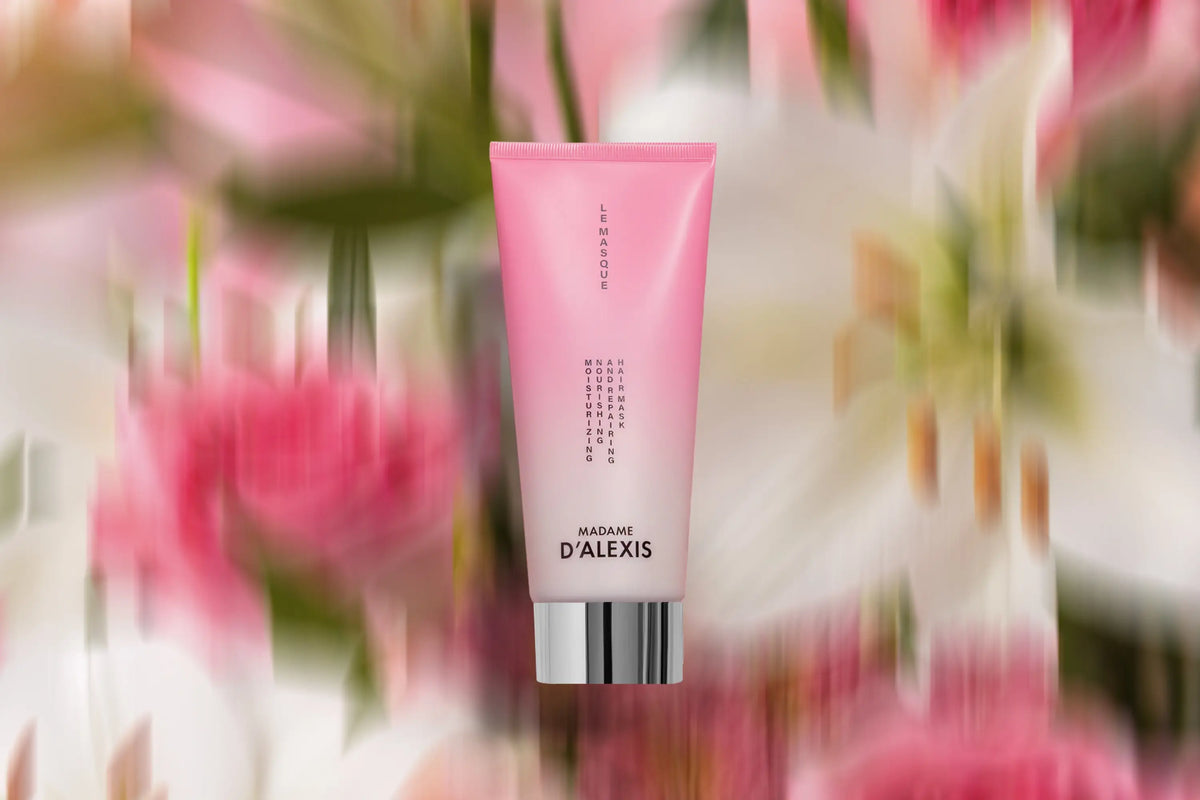
- Hydrolate Mask twice a week, for 15 minutes under a warm towel.
- Day Serum applied daily to the ends.
After 4 weeks: shiny, soft, and manageable hair. Frizz reduced by 70%. The straw-like texture is gone.
Case 2: Very dry curly hair transformed into defined and shiny curls
Before: very dry curly hair, uncontrollable frizz, lack of definition, dull and brittle appearance.
- Baobab oil treatment once a week, 1 hour before shampooing.
- Hydrolate Shampoo twice a week.
- Hydrolate Mask twice a week.
- Day Serum applied to lengths after every shampoo.
- Night Serum applied daily to the scalp.
After 4 weeks: defined and shiny curls. Frizz reduced by 80%. Natural shine restored.
Case 3: Fine hair with oily roots and dry ends, balance restored
Before: fine hair, oily roots, dry and brittle ends. Impossible to style. Straw-like effect on the ends only.
- Jojoba oil treatment once a week on the ends only, for 30 minutes.
- Hydrolate Shampoo twice a week.
- Hydrolate Mask once a week on the ends only.
- Day Serum applied daily to the ends, maximum 2 drops.
After 4 weeks: less oily roots, hydrated and shiny ends, and hair that is easier to style.
Comparison: the best oils for hair
There's no such thing as the "best" hair oil in the universal sense. It all depends on the nature of your hair fiber, your scalp, and the effects you're looking for.
| Vegetable oil | Hair type | Main function | Texture / absorption | Price guide |
|---|---|---|---|---|
| Avocado | Dry, curly | Intense hydration | Rich, penetrating | €€ |
| Coco | Dry, damaged | Repair, shine | Strong when cold, light | € |
| Jojoba | Bold, colorful | Regulation, protection | Dry, fluid | €€ |
| Ricin | Fine, brittle | Growth, fortification | Thick, viscous | € |
| Argan | Colorful, mature | Anti-oxidant, radiance | Medium, quickly absorbed | €€€ |
| Broccoli | Frizzy, thick | Natural smoothing, sheathing | Medium, dry feel | €€ |
The oil that penetrates best is coconut oil, thanks to its lauric acid content. The most hydrating? Avocado oil, rich in oleic acid and vitamins A, D, and E. The most nourishing is undeniably castor oil, to be used diluted. For silky hair, choose argan or broccoli oil.
Hair oil treatment: complete instructions
The oil bath is a ritual I rediscovered while observing Indian and Moroccan hair routines. Applied with care, this gesture transforms the material. It soothes the scalp, nourishes the fiber and acts as a preventive serum against breakage.
Who is this treatment for?
- After coloring or bleaching.
- In case of winter dryness.
- For hair exposed to salt, chlorine, or UV rays.
How to do an effective oil bath?
- Choose the plant oil according to your needs.
- Apply a few drops to the scalp and lengths.
- Leave on for at least 30 minutes, or even overnight for very dry hair.
- Avoid overloading: a small amount is more than enough.
A successful oil bath begins with measurement. The finesse of the gesture always prevails over the abundance of the product.
Which shampoo eliminates an oil bath?
A gentle yet cleansing shampoo is essential. This is where Madame d'Alexis comes in. Its water-free formula, infused with floral hydrolats and enriched with highly cleansing active ingredients, dissolves oil without aggressing the scalp.
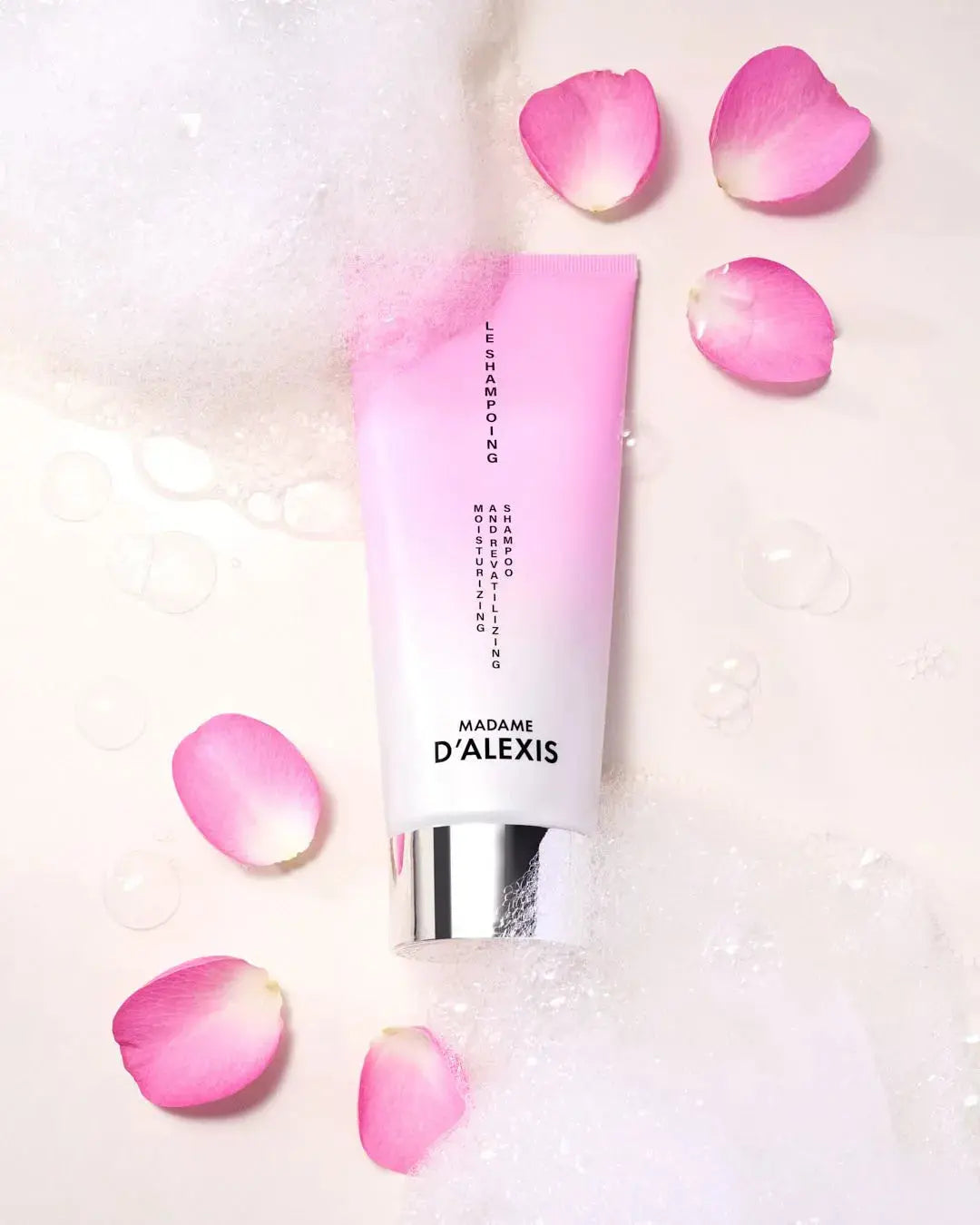
Hydrolat Shampoo
Organic hydrosols · Gentle cleansing · Plant keratin
- Cleanses gently without stripping the hair fiber
- Prepares the lengths to receive a treatment or oil
- Free from sulfates and silicones, ideal for dry hair
It purifies while leaving the fiber feeling light, supple, and perfectly clean. A personal tip: rinse with lukewarm water, never hot, and finish with a blast of cool water to seal the cuticles.

Which oil should you use for an oil hair treatment?
- Repairing oil bath: coconut or avocado oil for dry and damaged hair.
- Growth oil bath: castor oil diluted in jojoba oil.
- Gloss oil bath: argan or broccoli oil.
- Balancing oil bath: pure jojoba oil for oily hair.
Product focus: Madame d'Alexis hair oils
A hair oil inspired by facial care
At Madame d’Alexis, the line between hair care and high-end beauty rituals fades away. Here, hair oil is not just a product; it is a formula crafted with the same refinement as the finest facial serums.
Two serums to nourish, protect, and enhance your hair
When choosing a hair oil, the goal is to find the right texture for your needs: a light oil for shine and a finishing touch, or an overnight treatment to care for the scalp and enhance your hair care routine.
The Day Serum
Jojoba · shine · anti-frizz
- Enriched with jojoba oil
- Helps soften dry lengths
- Enhances shine without weighing hair down
35,00 €
ViewNight Serum with Hydrolats
Scalp · density · nighttime routine
- Targeted scalp care
- Extends your hair care routine overnight
- Ideal for weakened or thinning hair
35,00 €
ViewScroll to compare the two Madame d'Alexis serums
What sets this oil apart? An exemplary composition: 97 to 99% naturally derived ingredients, cruelty-free, with zero added water.
Water is replaced by premium, organic hydrosols: Damask Rose, German Chamomile, and Orange Blossom, known for their soothing, antioxidant, and softening properties.

Why it is suitable for all hair problems
- For dry hair, it nourishes intensely without weighing it down.
- For a sensitive scalp, it soothes, balances, and restores the skin's microbiome.
- For fine hair, it adds shine and hold without any greasy residue.
Recommended routine
- As an oil bath, before shampooing, for deep hair care.
- For daily application, on dry or damp hair.
- As a finishing touch, to smooth fiber and enhance natural shine.
Mistakes to avoid with hair oils
Excess product
A well-chosen oil should be used sparingly. Too much will saturate the hair fiber and weigh it down.
The wrong oil
Pure castor oil is too thick to be used on its own. Some pore-clogging oils can cause irritation.
Confusing plant-based and mineral oils
Petroleum-derived oils coat the hair without nourishing it and can suffocate the hair fiber.
Apply at the wrong time
For oily hair, apply oil before shampooing. For colored hair, use it after washing.
Frequently asked questions about hair oils
Can I put oil on my hair every day?
Yes, but it all depends on the type of oil, your hair type, and the amount used. On dry hair, a few drops of a lightweight oil applied daily to the ends can restore shine and softness. On oily hair, it is best to use it as a weekly treatment.
Which oil is right for my scalp?
Sensitive scalps will benefit from jojoba or chamomile oil. To stimulate hair growth or combat hair loss, prefer mustard or castor oil, applied with gentle massages.
What oil should I avoid putting on my hair?
Avoid mineral oils derived from the petrochemical industry. Similarly, pure castor oil is too thick to be used alone. It is best combined with a lighter oil such as jojoba or avocado.
Do dermatologists recommend the use of hair oils?
Yes, provided you choose pure, cold-pressed plant oils that are suited to your scalp.
Which oil for dry ends?
Argan oil is a classic choice. It protects, softens, and nourishes without weighing hair down. Avocado or broccoli oil also work very well.
When should you use an oil in your hair routine?
Before shampooing as an oil bath, after washing as a finishing touch to seal in moisture, or as an occasional treatment depending on your needs.
Is it necessary to systematically rinse the oil?
No. An oil used as a bath must be thoroughly rinsed out, whereas a small amount on the ends requires no rinsing at all.
Which oil makes hair grow quickly?
Castor oil is the most effective for stimulating hair growth. Rich in ricinoleic acid, it boosts scalp microcirculation and strengthens hair follicles.
How to use coconut oil for hair?
Coconut oil can be used as a pre-shampoo oil treatment, a repairing mask for the lengths, or a daily treatment for dry ends.
What is the best oil for very dry hair?
For very dry hair, avocado oil is the most nourishing. Coconut oil and shea butter are also excellent choices.

Which oil should you use for very dry, straw-like hair?
Avocado oil is the most effective. Recommended routine: avocado oil treatment once a week, repairing mask twice a week, and a daily protective serum.
How long does it take to see results with a hair oil?
- Quick fixes: visible results in 1 week.
- Regular routine: noticeable improvement in 2 to 3 weeks.
- Complete repair: 30 days with a daily routine.
Coconut oil or argan oil: which one should you choose?
Coconut oil for intense repair and fast shine. Argan oil for protection and antioxidant benefits, especially for colored hair.
Can you mix different hair oils?
Yes. Examples: castor + jojoba, avocado + coconut, argan + jojoba, baobab + castor.
How many drops of oil should you use for your hair?
- Short hair: 2 to 3 drops.
- Medium-length hair: 3 to 5 drops.
- Long hair: 5 to 8 drops.
Conclusion: which hair oil should you choose?
Choosing the right hair oil transforms your hair care routine. Whether you are looking for the best oil for dry hair, the best hair growth oil, or simply a versatile oil, always choose organic, cold-pressed vegetable oils suited to your hair type.
Hair oil is not just a cosmetic product: it is a true treatment that nourishes, protects, and enhances your hair every day.
Summary table: ideal oils by need
| Hair problems | Ideal oil |
|---|---|
| Dry or dull hair | Avocado, coconut, argan |
| Sensitized scalp | Jojoba, chamomile |
| Greasy hair | Nigella, mustard, jojoba |
| Loops to redefine | Ricin, shea, broccoli |
| Decline or slow growth | Ricin, rosemary, mustard |
| Colored hair | Argan, hibiscus, jojoba |
| Damaged tips | Broccoli, avocado, argan |
Recommendation: use organic, cold-pressed vegetable oils.
It may seem like a minor detail, but the extraction method changes everything. Cold-pressed oil retains all of its active ingredients: vitamins, antioxidants, and essential fatty acids. Choose unrefined, fragrance-free, and organic for optimal results.
Why add an oil to your hair routine?
Because no mask or conditioner can match the lipid richness of raw plant oil. It seals in moisture, protects against external aggressions, and reveals hair's natural beauty over the long term.
Madame d'Alexis: skin-care excellence inspired by the skin
With its water-free formulation, organic floral waters, and sensory texture, Madame d'Alexis oil does more than just beautify: it deeply cares for your hair.
- Ultra-concentrated.
- Natural.
- Multi-purpose.
- Gentle on the scalp.
An oil designed for skin care, for hair that exudes health and elegance.