


Key points about homemade overnight hair masks
- Un masque cheveux maison nuit nourrit surtout en surface, avec des huiles et beurres naturels, mais reste limité sans actifs réparateurs ciblés.
- It can be used on dry, curly, or frizzy hair, provided that it is used in the right amount and applied to the lengths rather than the roots.
- It is not necessary to leave it on overnight: 30 minutes to 1 hour is often sufficient. Any longer than that risks weighing down the hair or upsetting the sebum balance.
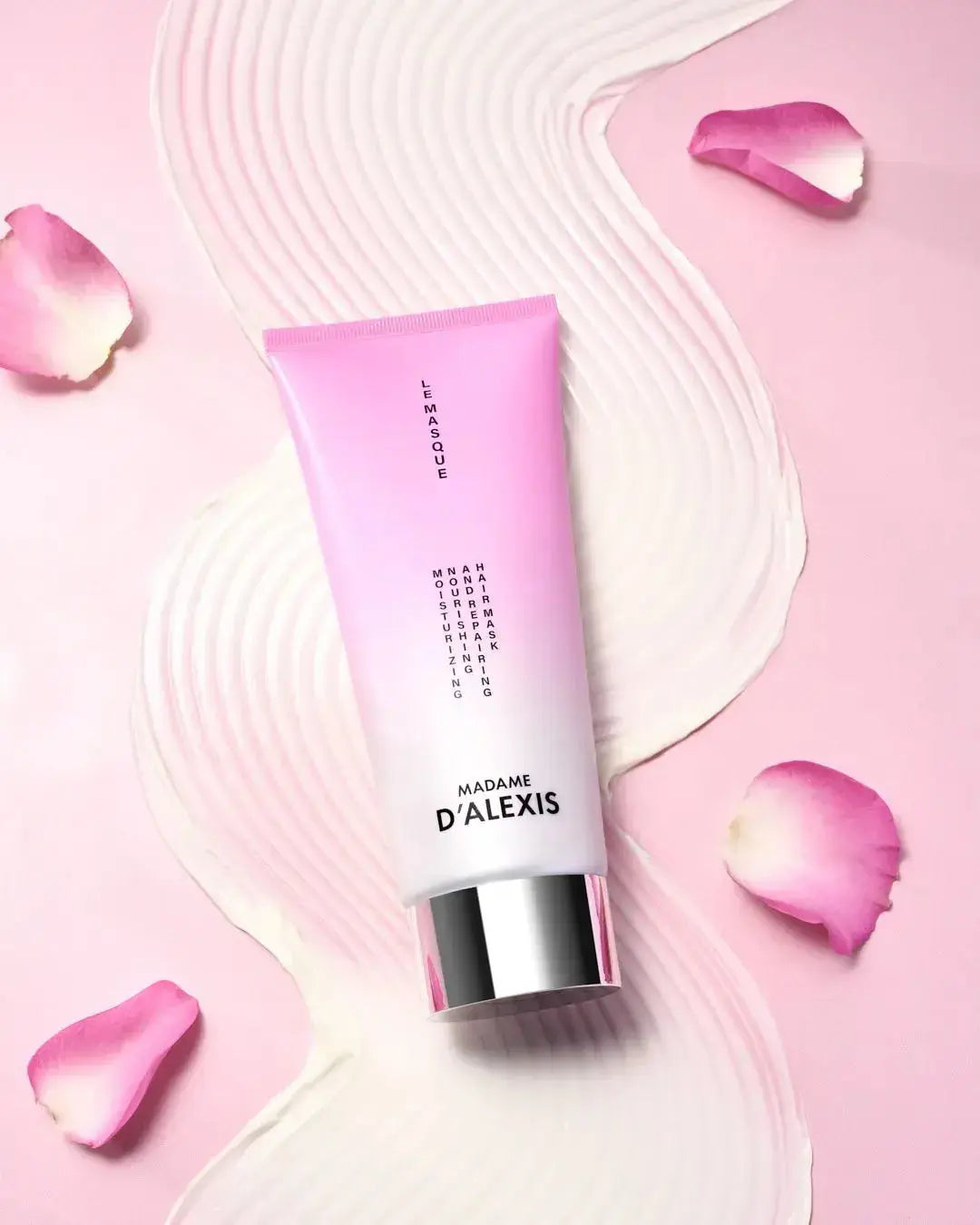
- Professional masks such as Alexis' Masque Madame, enriched with organic hydrosols, ceramides, and cationic hyaluronic acid, offer deeper repair and more reliable results.
- The best strategy is to use the homemade overnight hair mask occasionally and rely on a consistent professional routine on a daily basis to repair, moisturize, and protect your hair over the long term.

Night mask and serum: the essential duo for repairing your hair
Homemade overnight hair mask: a good idea for your locks?
Le masque maison appliqué avant de dormir repose sur un principe simple. On dépose un mélange nourrissant sur cheveux secs ou légèrement humides, puis on laisse agir plusieurs heures. La fibre reste enveloppée, ce qui limite la perte d’hydratation et adoucit les longueurs.
This type of treatment can provide some comfort to dry, frizzy, curly, or damaged hair. The nighttime offers a long application time, which is useful for these textures that lack nourishment.
But we must remain realistic. Homemade masks contain no repairing active ingredients, no plant ceramides, no hyaluronic acid, and no agents capable of restructuring the fiber. They work on the surface. They soften, but they do not repair.
That's why I consider these recipes to be temporary solutions. They help in a pinch, but they don't constitute a sustainable hair care routine. They are suitable for certain types of hair. Others, especially fine or oily hair, will quickly become weighed down.
Can you really leave a homemade mask on overnight?
Expected benefits: hydration and nutrition
The most commonly used ingredients have a simple and predictable effect:
- vegetable oils (olive, coconut, castor, avocado)
- melted shea butter
- honey to slightly retain moisture
- protective effect against friction
- detangling aid upon waking
These materials provide softness and a more supple feel. Their appeal remains mainly external.
The limits you need to know to avoid damaging your hair
A homemade mask can become counterproductive if its scope of action is exceeded:
- oil saturation that prevents the fiber from breathing
- oily film that is difficult to remove even with double shampooing
- complete absence of active repair molecules
- risk of sensitizing the roots if the mixture is too rich
- Possible irritation if the dosage of honey or essential oils is not controlled.
This is where my opinion is confirmed: effectiveness depends largely on hair type and mastery of ingredients.
Why is a fancy hair mask always better than a homemade one?
A product formulated by professionals addresses challenges that home cooking cannot meet.
Le Masque hydratant Madame d’Alexis, par exemple, repose sur :
- organic hydrosols (Damask rose, chamomile, orange blossom) to moisturize and soothe
- a cationic hyaluronic acid that retains water at the heart of the fiber
- plant ceramides to strengthen the lipid barrier
- balanced vegetable oils that nourish without weighing down the skin
- a texture designed to penetrate the fiber and rinse out easily
The result is immediately noticeable, as each active ingredient targets a specific hair function: hydration, repair, shine, and suppleness.
A homemade mask simply coats the lengths.

How to prepare a homemade hair mask for overnight use?
Preparing a homemade hair mask for overnight use first requires selecting ingredients that are appropriate for your hair type, its needs, and its reactivity to oils. Not all hair absorbs oils and butters in the same way, and the success of an overnight treatment largely depends on this compatibility.
This is a point I often emphasize to people who imagine that a universal mixture would do the trick. In reality, hair fiber reacts like a living material: it absorbs what suits it and rejects the rest.
Choosing the right ingredients for your hair type
Dry, brittle, or very dehydrated hair responds well to rich ingredients. Plant-based oils penetrate slowly and soften the hair fiber overnight. For these textures, we recommend:
- slightly warmed coconut oil
- melted shea butter
- ripe avocado flesh
- honey to retain a minimum amount of moisture
Curly hair, which often lacks moisture and definition, responds better to gentle, film-forming ingredients. A mixture based on:
- jojoba oil
- shea butter
- aloe gel
- blended banana
provides elasticity and support at the curl.
Les cheveux crépus, naturellement secs et fragiles, profitent davantage de matières très riches en acides gras. Le beurre de karité fondu, l’huile de ricin ou une huile végétale dense agissent comme un baume nocturne protecteur.
Oily hair, on the other hand, requires extreme caution. A tiny amount of oil can be applied to the lengths, but the roots must be avoided at all costs so as not to stimulate sebum production. In this case, the use of homemade masks remains marginal.
Recipes for homemade night masks (simple and effective)
Each recipe must remain legible, easy to apply, and above all, suitable for long-term use without irritation. The key is always the same: simple ingredients, controlled application, and thorough rinsing the next day.
Nourishing coconut and shea butter mask (for very dry hair)
Ingredients:
- 1 tablespoon of warm coconut oil
- 1 tablespoon melted shea butter
- 1 tablespoon of honey
Instructions: Mix in a bowl until smooth.
Application: Apply strand by strand to the lengths.
Overnight: Use a shower cap and warm towel to optimize the treatment.
Rinsing: Use lukewarm water and a mild shampoo, repeating if necessary.
Natural yogurt + honey moisturizing mask (for dull hair)
Ingredients: plain yogurt, 1 teaspoon honey, vegetable oil (optional).
Application: apply a thin layer to the lengths only.
Precaution: the mixture may drip, so always wear a shower cap.
Rinsing: warm water, then wash as usual.
Avocado + olive oil mask (damaged hair / split ends)
Ingredients: mashed avocado + 1 tablespoon of olive oil.
Texture: thick, well suited to dry hair.
Result: adds softness and shine to dull ends.
Rinsing: rinse thoroughly before shampooing.
Castor oil + coconut growth mask (hair growth)
Ingredients: equal parts castor oil and coconut oil.
Use: very rich, limit to once a week.
Application: only on the ends and lengths to avoid suffocating the roots.
Rinsing: often requires two shampoos.
How to apply and keep a homemade hair mask on overnight?
Applying a homemade hair mask overnight requires more precision than you might think. Most recipes only work if the product is evenly distributed throughout the hair, without saturating the scalp.
This is an essential step: a good mask can never compensate for poor application. Over time, I have found that technique is almost as important as the formula.
Steps for applying the overnight hair mask
To optimize the adhesion of the ingredients, it is best to work on slightly damp hair. Water facilitates distribution and prevents the oils from forming a layer that is too compact. The mask should then be distributed strand by strand, focusing on dry areas and the ends.
It is important to avoid the roots, especially if your hair is oily or tends to become weighed down easily. Applying the product too close to the scalp disrupts natural sebum production and can make rinsing difficult.
Finally, gently massaging the fiber helps the butters and oils to penetrate. This improves effectiveness without damaging the material.
How can you protect your pillow?
Sleeping with a homemade mask requires a few precautions. The recipes often contain oily ingredients that can permanently stain your bedding. There are three solutions:
- a soft hairnet that prevents friction
- a thin towel wrapped around the head
- a silk pillowcase, ideal for reducing friction and moisture
Silk has another advantage: it reduces the risk of breakage during the night.
How to rinse properly the next day?
Effective rinsing determines the final result. Warm water dissolves grease better than cold water. Next, use a mild shampoo that is powerful enough to remove residue but gentle on the fibers.
If the recipe contained very thick oils (castor oil, solid coconut oil), a second shampoo may be necessary. The final step is to rinse with cold water to close the cuticles.
Why does Night Serum transform hair fibers overnight? Nighttime hair care that complements the nighttime hair mask.
How long should you leave a homemade mask on?
Leaving it on overnight is possible, but rarely necessary. The application time depends on the needs of the hair: sometimes, one hour is more than enough. Prolonging the application does not improve the results and can even upset the sebum balance or suffocate the hair fiber.
For sensible use,once a week is generally sufficient.Any more than that and your hair may become heavy and difficult to style.
The unavoidable limitations of homemade night masks
Homemade masks have their advantages, but their limitations must be clearly understood. They contain no repairing active ingredients, no molecules capable of restructuring the fiber or permanently strengthening the cuticle. Their effectiveness remains mainly superficial.
Rinsing can sometimes be difficult, especially with thick oils, and hair can end up feeling heavy or greasy. Results vary greatly depending on the recipe and hair type, making these treatments unpredictable.
People with sensitive scalps should also be cautious: certain natural ingredients can cause irritation when left in contact for several hours.
When should you choose a professional mask over a homemade mask?
A homemade mask helps temporarily, but its limitations become apparent as soon as the hair fiber really lacks strength or shine. At this point, a professional formula becomes more suitable.
When the fiber is damaged, brittle, or dull
When hair is damaged, extremely dry, or lacks shine, the oils and butters used at home are no longer sufficient. They nourish the hair, but do not act on its internal structure.
This is where a professional mask comes into its own.
Alexis' Madame Mask is based on several key active ingredients:
- organic hydrosols of Damask rose, chamomile, and orange blossom
- plant ceramides to strengthen the lipid barrier
- cationic hyaluronic acid to retain water at the heart of the fiber
- carefully selected fine oils to nourish without weighing down the skin
These ingredients target mechanisms that homemade recipes cannot achieve. They improve the cohesion of the scales, increase flexibility, and restore shine.
When you want visible results from the very first use
A professional mask offers immediately noticeable results.
A homemade mask, on the other hand, acts on the surface and requires several applications for a limited effect.
The difference comes from:
- the delicacy of the textures
- molecular weight of active ingredients
- their ability to penetrate the fiber
- with a formula designed to avoid a greasy effect
For those looking for a quick change, the professional formula remains more reliable.
Alexis' Madame Mask: the professional alternative to homemade night masks
An elaborate mask penetrates the fiber better, as each active ingredient is selected to target a specific area of the hair. This precision prevents the heavy effect that often follows homemade recipes.

Alexis' Madame Mask combines:
- intense hydration
- deep repair
- lasting shine
- color protection
- frizzy hair reduction
- increased flexibility
- soothing the scalp
Its professional texture rinses out easily. It is suitable for dry, damaged, curly, or colored hair.
Using itonce or twice a week gives more stable results than leaving a homemade mask on overnight.
Masque nuit maison vs Sérum Nuit professionnel : quel est le meilleur ?
Vous avez essayé les recettes maison. Elles fonctionnent, mais avec des limites. Voici pourquoi un Sérum Nuit professionnel surclasse les solutions maison.
Masque nuit maison : avantages et limites réelles
Advantages:
- Très économique (1-3€)
- Ingrédients simples et naturels
- Zéro conservateur synthétique
- Facile à préparer
Limites :
- Formule instable (séparation, oxydation)
- Efficacité imprévisible selon les proportions
- Pas d'actifs hydratants professionnels (acide hyaluronique, kératine)
- Difficile à rincer le matin (résidus gras)
- Durée de conservation très courte (2-3 jours max)
- Résultats décevants sur cheveux colorés ou très abîmés
- Pas de pH équilibré = risque d'irritation cuir chevelu
- Pas de texture optimisée pour la nuit (colle sur l'oreiller)
Verdict : À utiliser occasionnellement pour un soin d'urgence, mais pas comme routine régulière.
Sérum Nuit professionnel : pourquoi c'est supérieur
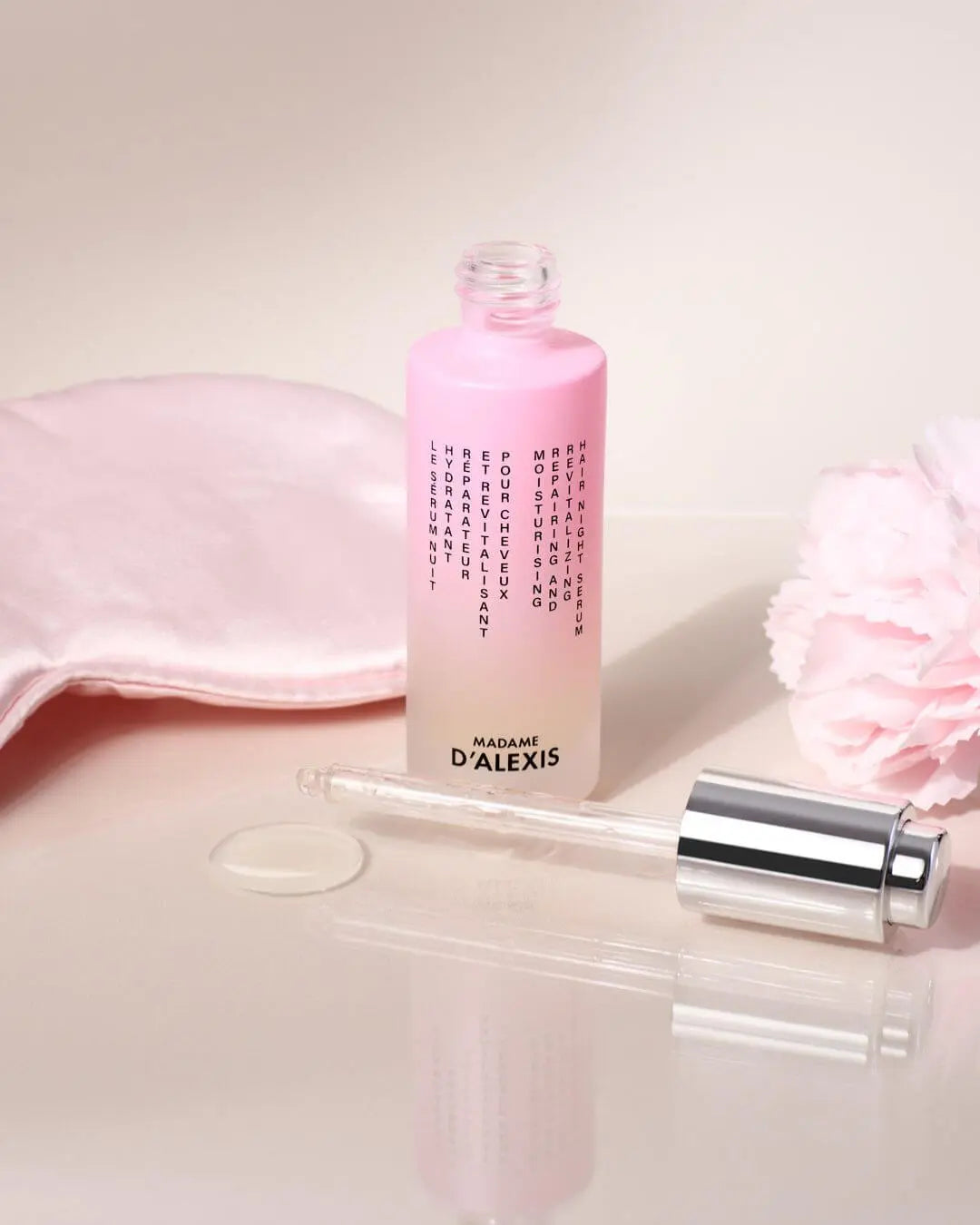
Le Sérum Nuit Madame d'Alexis est formulé spécifiquement pour la régénération nocturne. C'est bien plus qu'un simple masque : c'est un soin actif qui travaille pendant que vous dormez.
Advantages:
- Formule équilibrée et testée dermatologiquement
- Actifs hydratants et réparateurs intégrés (acide hyaluronique, kératine, hydrolats)
- pH adapté au cuir chevelu et à la fibre
- Efficacité garantie et reproductible
- Convient à tous les types de cheveux
- Facile à appliquer et à rincer le matin
- Durée de conservation longue (12-24 mois)
- Visible and lasting results
- Texture légère, ne colle pas sur l'oreiller
- Concentration active maximale
Disadvantages:
- Coût plus élevé (35€)
- Nécessite un achat
Verdict : Meilleur choix pour une efficacité réelle, durable et adaptée à votre type de cheveux.
Comparatif détaillé : Masque maison vs Sérum Nuit
| Criterion | Masque maison | Sérum Nuit Madame d'Alexis |
|---|---|---|
| Cost | 1-3€ | 35€ |
| Stabilité formule | ✗ Instable | ✓ Stable |
| Effectiveness | ✗ Imprévisible | ✓ Garantie |
| Hyaluronic acid | ✗ NO | ✓ YES |
| Plant keratin | ✗ NO | ✓ YES |
| Active Hydrosols | ✗ NO | ✓ YES (3 hydrosols) |
| Prebiotics | ✗ NO | ✓ YES |
| pH équilibré | ✗ NO | ✓ YES |
| Texture optimisée nuit | ✗ NO | ✓ OUI (ne colle pas) |
| Preservation | ✗ 2-3 jours | ✓ 12-24 mois |
| Visible results | ✗ 3-4 semaines | ✓ Dès 1ère nuit |
| Convient tous types | ✗ NO | ✓ YES |
| Customer Reviews | N/A | ✓ 4,78/5 (82 avis) |
Verdict : Le Sérum Nuit offre un meilleur rapport qualité-prix et efficacité réelle.
Pourquoi le Sérum Nuit Madame d'Alexis surclasse les solutions maison
1. Formulated without added water
Là où un masque maison contient 60-90% d'eau inerte (qui dilue les actifs), le Sérum Nuit remplace chaque goutte par des hydrolats bio actifs.
Résultat : Concentration active maximale et efficacité réelle dès la première nuit.
2. Bioactive hydrosols: the key to effectiveness
La phase aqueuse du Sérum Nuit est composée de trois hydrolats floraux bio :
- Damask rose hydrosol: rich in antioxidants, soothes irritation, restores natural radiance
- Chamomile Hydrosol: anti-inflammatory, reduces sensitivity, naturally brightens the skin
- Hydrolat de fleur d'oranger : tonifiant, stimule la régénération cellulaire, apporte de l'énergie aux cheveux
Ces hydrolats ne sont pas juste des parfums : ce sont des vecteurs bioactifs qui interagissent réellement avec la kératine et la structure du cheveu.
3. Actifs skincare appliqués au cheveu
Le Sérum Nuit applique les standards du skincare premium aux cheveux :
- Cationic hyaluronic acid: deeply hydrates without drying out the skin, with an immediate plumping effect
- Plant-based keratin: strengthens the internal structure, improves elasticity, and reduces breakage
- Prebiotics: nourish the skin's flora and stabilize the scalp's microbiome
4. Texture optimisée pour la nuit
Contrairement aux masques maison qui collent sur l'oreiller, le Sérum Nuit a une texture légère et soyeuse :
- Ne colle pas sur l'oreiller
- Pénètre rapidement
- Laisse les cheveux légers le matin
- Pas de résidus gras
5. Ultra-natural formula
- Sans sulfates : respectueux du cuir chevelu
- Silicone-free: real shine, not artificial
- Sans parabènes : composition clean
- Microplastic-free: environmentally friendly
- 98% natural ingredients
6. Made in France, in Brittany
Every Madame d'Alexis product is made with the same level of excellence as premium skincare products.
7. Efficacité visible après 3 semaines de cure
Un effet visible dès les premières nuits, amplifié avec le temps :
- Cheveux plus brillants et souples le matin
- Cuir chevelu apaisé et régénéré
- Cheveux moins cassants
- Hydratation stable
Protocole 30 nuits : transformer vos cheveux avec le Sérum Nuit
Voici comment utiliser le Sérum Nuit pour des résultats optimaux en 30 nuits.
Semaine 1-2 : Phase de régénération intensive
Fréquence : Chaque nuit (7 nuits/semaine) Quantité : 3-5 gouttes par section Application : Sur cheveux secs ou légèrement humides, du milieu jusqu'aux pointes
Étapes :
- Appliquez le Sérum Nuit sur cheveux secs après votre routine du soir
- Répartissez uniformément du milieu jusqu'aux pointes
- Massez légèrement pour favoriser la pénétration
- Laissez agir toute la nuit
- Rincez le matin avec un shampoing doux
Résultats attendus semaine 1-2 :
- Cheveux plus brillants dès la 1ère nuit
- Souplesse augmentée après 3-4 nuits
- Cheveux moins cassants après 1 semaine
- Cuir chevelu apaisé et régénéré
Semaine 3-4 : Phase d'entretien
Fréquence : 4-5 nuits par semaine Quantité : 3-5 gouttes par section Application : Identique à la semaine 1-2
Résultats attendus semaine 3-4 :
- Cheveux visiblement transformés
- Brillance naturelle stable
- Long-lasting hydration
- Cheveux renforcés et élastiques
- Balanced scalp
Après 30 nuits : résultats visibles et durables
- Cheveux transformés : plus brillants, plus souples, plus volumineux
- Fibre capillaire renforcée : moins de casse, plus de résistance ✓ Cuir chevelu rééquilibré : moins irrité, moins gras ou sec
- Cheveux colorés : couleur préservée, brillance retrouvée
- Cheveux abîmés : réparation visible, texture lisse
- Cheveux bouclés : boucles définies, frizz réduit
- Après 30 nuits : routine d'entretien
Une fois que vos cheveux sont transformés, maintenez les résultats avec :
- 4-5 nuits par semaine : Sérum Nuit (entretien)
- Quotidien : Shampoing doux sans sulfates
- 1-2x par semaine : Masque aux Hydrolats pour un soin profond
FAQ – Answers to questions about night hair masks
Is it okay to leave a mask on overnight?
Leaving a mask on overnight can be beneficial for very dry, thick, or curly hair. These textures absorb oils slowly, and a few extra hours will improve suppleness and softness.
However, this technique is not suitable for all hair types. On fine or oily hair, prolonged application can weigh down the hair fiber, stimulate sebum production, or create a film that is difficult to remove.
Effectiveness also depends on the formulation. A homemade mask nourishes the surface, but does not repair the hair. A professional mask generally provides more benefits in less time, as it contains penetrating active ingredients.
In summary: nighttime can help, but it is never a requirement, and the actual needs of the fiber must be respected.
Which hair mask should you use overnight?
A night mask should be simple and non-irritating. Homemade mixtures based on coconut oil, shea butter, or jojoba oil are suitable as long as they are applied only to the lengths.
For more precise care, a professional mask is still more appropriate. Its texture is designed to remain stable for several hours without running, sticking, or suffocating the hair fiber. The moisturizing active ingredients, ceramides, and cationic hyaluronic acid in Masque Madame d'Alexis, for example, work deep down without creating any overload.
Sleeping with a professional mask is not essential, but it is often safer than an incorrectly measured oil mixture.
How can you moisturize your hair overnight?
Nighttime hydration is based on two principles: preventing dehydration and keeping the fiber supple until morning. To do this, you can:
- use a light treatment on damp hair
- Use a hair cream or aloe gel rather than oil if you have fine hair.
- protect your hair with a satin cap or bonnet
- sleep on a silk pillowcase to reduce friction
True hydration comes from molecules that can retain water in the hair fiber. Products enriched with cationic hyaluronic acid work much better than homemade recipes, which rely mainly on fatty substances.
Can you sleep with a homemade mask?
Yes, provided you follow a few rules. Always avoid the roots, protect the pillow, and choose simple, non-irritating, and non-occlusive ingredients. Essential oils should not be used at night because their dosage must be precisely measured.
Very thick, frizzy, or severely dehydrated hair tolerates long exposure well. Fine hair, on the other hand, quickly becomes saturated.
It is also important to note that rinsing in the morning can be tedious, especially with castor oil or shea butter. Two shampoos are often necessary.
What is the ideal duration for a homemade mask?
Contrary to popular belief, leaving the treatment on overnight does not necessarily make it more effective. For most hair types, 30 minutes to 1 hour is enough for the oils to work on the surface of the hair fiber.
Extending the application time does not provide any significant benefits. The fiber does not absorb indefinitely. Applying it for too long can even cause:
- an imbalance in sebum
- oil overload
- frizz when rinsing
- discomfort for sensitive scalps
The recommended frequency is once a week maximum, even for very dry hair. The effectiveness depends more on the regularity of the treatment than on the length of time it is left on.
How long should I leave the mask on?
The application time depends on the richness of the mixture and the hair type. For a homemade hair mask, leaving it on for 30 minutes to 1 hour is often enough to allow the nourishing ingredients to take effect.
If the mask is very oily,leaving it on longer will not help: the fiber will not absorb any more than a certain threshold.
You can leave it on longer for very dry or thick hair, but leaving it on for too long can sometimes upset the balance of the scalp. The aim is to tailorthe application of the mask to your actual needs, not to leave it on indefinitely.
What are the benefits of hair masks?
A hair mask provides several key benefits for the health and appearance of your hair. Masks act as a targeted hair treatment that:
- deeply moisturize the fiber
- to achieve shiny hair when rinsing
- to strengthen weakened hair
- nourish the lengths with a nourishing formula
- maintain flexibility and reduce frizz
A well-formulated or well-dosed moisturizing mask provides immediate improvement in comfort and fiber quality.
How to apply a mask to your hair?
To apply a mask properly, you need to work carefully strand by strand to distribute the product evenly. On slightly damp hair, the mask glides on more easily and covers each area evenly.
Avoid the roots, except in cases of very dry scalp, and concentratethe application of the mask on the lengths and ends. Gently massaging helps the formula penetrate the hair fiber.
This simple method ensures better performance of the hair mask, whether homemade or professional.
How to make a homemade hair mask?
To make a homemade hair mask, simply combine a few natural ingredients suited to your hair type. A classic mask recipe combines a vegetable oil, a nourishing butter, and a moisturizing agent.
A basic mixture for a natural hair mask could contain:
- an oil (coconut, jojoba, olive)
- butter (shea butter or mashed avocado)
- a moisturizing ingredient such as honey
Mix until you obtain a smooth texture, apply to the lengths, then leave on.
This type ofnatural mask effectively nourishes the surface of the skin, but has limited depth due to the absence of specific active ingredients.
Combien de temps avant de voir les résultats avec le Sérum Nuit ?
Le Sérum Nuit est une cure progressive, pas un soin express. Voici la timeline réelle :
- Semaine 1-3 : Phase d'adaptation — les actifs commencent à travailler en profondeur. Vous pouvez ressentir une légère amélioration de la souplesse, mais les résultats visibles arrivent après.
- Semaine 3 : Premiers résultats visibles — cheveux plus brillants, moins cassants, cuir chevelu plus apaisé.
- Mois 1-2 : Amélioration progressive — hydratation plus stable, fibre renforcée, cheveux plus souples.
- Mois 3 : Cure complète — transformation visible et durable. C'est à ce stade que les résultats sont pleinement installés.
La clé : régularité sur 3 mois. Le Sérum Nuit agit en profondeur sur la structure du cheveu, pas en surface. Plus vous êtes régulier, plus les résultats sont durables.
Le Sérum Nuit convient-il à tous les types de cheveux ?
Oui. Grâce à sa formule légère mais efficace et ses actifs hydratants, le Sérum Nuit convient à tous les types de cheveux :
- Cheveux fins : hydrate sans alourdir
- Cheveux épais/bouclés : nourrit et définit les boucles
- Cheveux secs/abîmés : répare en profondeur sur la durée
- Cheveux gras : régule sans assécher
- Sensitive hair: soothes irritation
- Cheveux colorés : préserve la couleur, restaure la brillance
Puis-je utiliser le Sérum Nuit si j'ai un cuir chevelu très sensible ou irrité ?
Oui, c'est même recommandé. Le Sérum Nuit est particulièrement adapté aux cuirs chevelus sensibles grâce à ses hydrolats apaisants (camomille, rose), ses propriétés anti-inflammatoires naturelles, et l'absence de sulfates, parabènes et silicones.
Appliquez le Sérum du milieu jusqu'aux pointes, en évitant les racines si votre cuir chevelu est très irrité.

