


Jojoba Oil for Hair: Benefits, Daily Use, and the Best Serum Routine
Jojoba oil is one of the most effective natural oils for hair—and one of the most misunderstood. Unlike most plant oils, jojoba is technically a liquid wax, structurally similar to the sebum your scalp naturally produces. That’s why it moisturizes without weighing hair down, absorbs without leaving residue, and works on all hair types without clogging the scalp.
When used correctly, jojoba oil for hair reduces frizz, soothes scalp irritation, promotes healthy growth, and repairs damaged or brittle strands. It can be applied daily, used as a pre-shampoo treatment, or incorporated into a leave-in routine, depending on your hair type and specific concerns.
This guide covers the 7 science-backed benefits of jojoba oil for hair, how to apply it based on hair type—fine, curly, oily, or color-treated—and why combining jojoba with active bio-hydrosols, as in the Madame d'Alexis formulas, delivers results that pure jojoba oil alone cannot. It includes a comparison table, application methods, and FAQs.
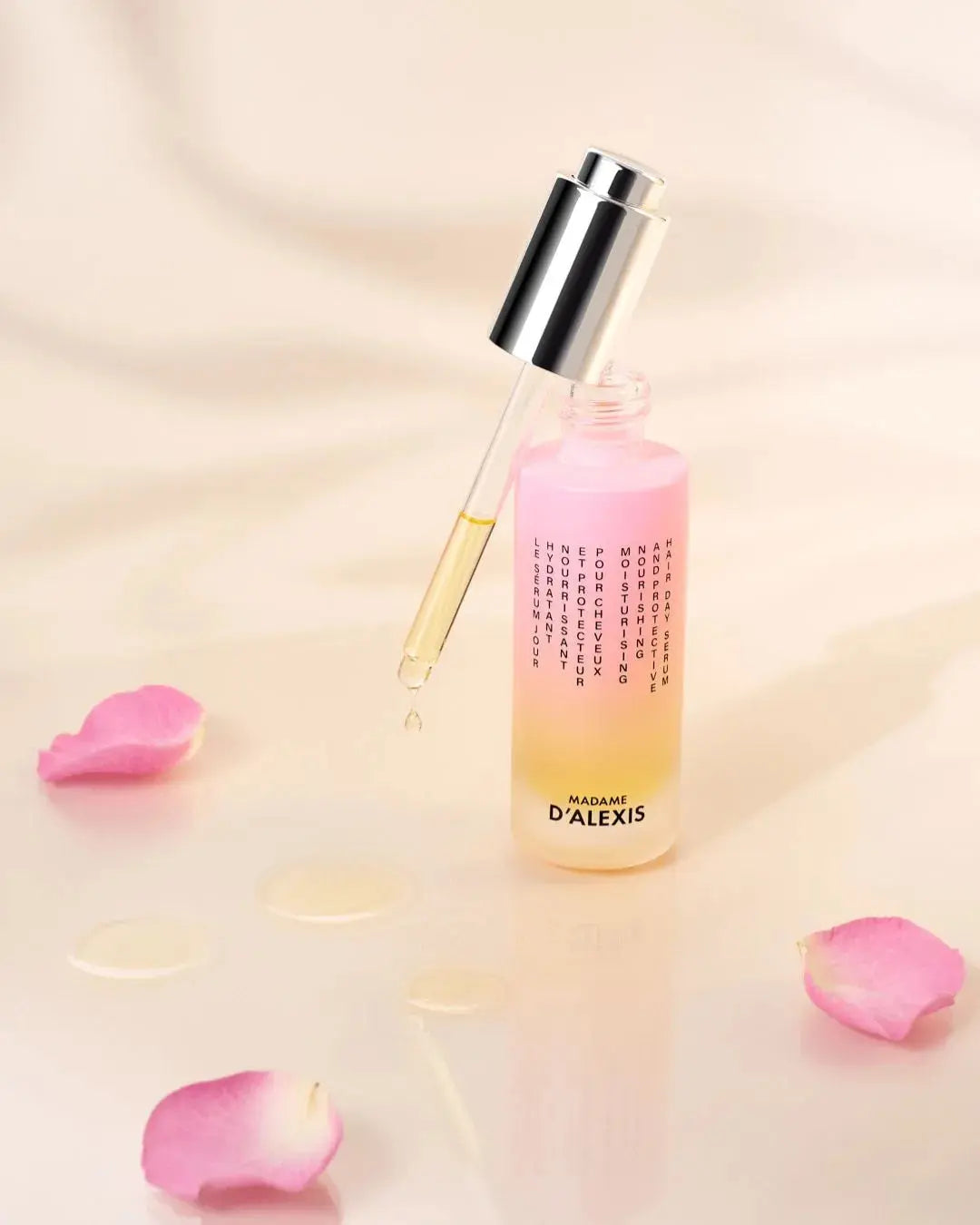
The Day Serum with Jojoba Oil
Jojoba oil · Shine · Heat protection
- Jojoba oil helps soften and smooth dry hair
- Adds shine without weighing the hair down
- Ideal for use before blow-drying or daily styling
What Is Jojoba Oil?
Jojoba oil comes from the seeds of the jojoba plant (Simmondsia chinensis), which is native to the deserts of Arizona and Mexico. Despite its name, jojoba oil isn't technically an oil—it's a liquid wax ester that closely resembles the sebum your scalp naturally produces.
This similarity is key: because jojoba oil's molecular structure matches your skin's natural oils, it penetrates deeply without leaving a greasy residue. It has been used in traditional medicine for centuries and is now a staple in premium hair care formulations worldwide.
Key fact: Jojoba oil is stable, non-comedogenic, and works for all hair types—from fine to thick, curly to straight.

Is Jojoba Oil Good for Hair?
Yes, jojoba oil is widely considered one of the best natural oils for hair care. Unlike heavier plant oils, jojoba oil closely mimics the structure of the scalp’s natural sebum. This allows it to nourish and protect hair without leaving a greasy or heavy finish.
Because its composition is similar to the oils naturally produced by the scalp, jojoba oil spreads easily along the hair shaft and helps maintain a healthy moisture balance. It smooths the cuticle, reduces roughness, and improves the overall appearance of the hair.
When used regularly, jojoba oil can help moisturize dry hair, reduce frizz, enhance natural shine, and protect the hair shaft from environmental stress. It also helps keep the scalp comfortable by maintaining the hydrolipidic barrier.
Another advantage is its versatility. Jojoba oil works well for nearly all hair types, including fine hair, thick hair, curly hair, and color-treated hair. Its lightweight texture nourishes without weighing hair down, making it ideal for daily use.

7 Science-Backed Benefits of Jojoba Oil for Hair
1. Deep Hydration Without a Greasy Feel
Jojoba oil quickly penetrates the hair cuticle, delivering moisture to the cortex (the inner layer of the hair shaft) without sitting on the surface. This means:
- Intense hydration for dry, dehydrated hair
- No heavy buildup or flatness at the roots
- Improved elasticity and suppleness
Why it works: Jojoba oil's small molecular size allows it to penetrate the cuticle barrier efficiently, unlike heavier oils that simply coat the surface.
2. Repairs Damaged and Brittle Hair
Jojoba oil is rich in:
- Vitamin E: A powerful antioxidant that protects against oxidative stress
- Fatty acids: Restore the fiber's lipid barrier
- Minerals: Support structural integrity
For chemically treated, bleached, or heat-damaged hair, jojoba oil helps seal micro-breaches in the cuticle and restore elasticity.
Timeline: Visible improvement in softness and shine within 1–2 weeks of regular use.
3. Soothes Scalp Irritation & Reduces Itching
Jojoba oil has natural anti-inflammatory properties. It:
- Soothes redness and irritation
- Reduces itching and discomfort
- Supports a balanced scalp microbiome
- Helps manage dry, flaky scalps
Clinical note: Studies show that jojoba oil's sebum-like composition helps restore the scalp's natural pH and protective barrier.
4. Controls Frizz & Enhances Shine
By smoothing the cuticle and locking in moisture, jojoba oil:
- Reduces frizz and flyaways
- Enhances natural shine without silicones
- Improves the way hair reflects light
- Adds body to curly and wavy hair
5. Strengthens Hair and Reduces Breakage
Regular use strengthens the fiber from within:
- Improves tensile strength (resistance to pulling)
- Reduces split ends and breakage
- Promotes healthier regrowth
- Protects against mechanical damage caused by styling
6. Regulates Sebum Production
Contrary to what you might expect, jojoba oil can help balance oily scalps. Because it mimics natural sebum, it signals to your scalp that it has enough oil, which may reduce overproduction.
Best for: Combination hair (oily roots, dry ends) and scalps prone to overcompensation.
7. Natural Heat Protection
Jojoba oil provides a protective barrier against heat-styling tools:
- Reduces moisture loss during blow-drying
- Protects against UV damage
- Works best when combined with heat-protective ingredients
Can I use jojoba oil as a heat protectant?
Jojoba oil offers some natural heat protection, but with an important caveat. Its heat resistance stems from its wax-ester structure, which forms a light barrier on the hair shaft that reduces moisture loss during blow-drying or straightening. Studies suggest it can withstand temperatures of up to approximately 200°C before breaking down.
However, jojoba oil is not a substitute for a dedicated heat protectant when using very high heat above 200°C. It works best as a complementary treatment: apply 1–2 drops to damp hair before blow-drying for added shine and frizz control, or use it as a finishing oil after styling to seal the cuticle.
Is Jojoba Oil Good for Hair Growth?
Jojoba oil does not directly stimulate hair growth in the same way that certain medical treatments or active botanical extracts do. However, it plays an important role in creating the optimal conditions for healthy hair growth.
Hair growth depends largely on the condition of the scalp and the health of the hair follicles. Because jojoba oil closely resembles natural sebum, it helps maintain a balanced scalp environment that supports normal follicle activity.
Regular use of jojoba oil can promote healthier hair growth by moisturizing the scalp, reducing irritation, and protecting the hair shaft from breakage. By improving elasticity and strengthening the hair structure, it helps prevent the damage that often causes hair to appear thinner or shorter over time.
In practical terms, jojoba oil doesn't necessarily make hair grow faster, but it helps hair grow stronger, healthier, and more resistant to breakage. Over time, this can result in fuller, longer-looking hair.

Jojoba Oil vs. Other Hair Oils: A Quick Comparison
| Oil | Penetration | Weight | Best For | Scalp-Friendly |
|---|---|---|---|---|
| Jojoba | Fast | Light | All types | Yes |
| Coconut | Slow | Heavy | Thick, dry | No (may clog) |
| Argan | Medium | Medium | Frizz Control | Yes |
| Olive | Slow | Heavy | Thick hair only | No |
| Almond | Medium | Medium | Shine | Moderate |
The winner for daily use: Jojoba oil. It's the most versatile and least likely to weigh hair down.
How to Apply Jojoba Oil: Best Methods & Techniques
Can You Use Jojoba Oil on Your Hair Every Day?
Yes, jojoba oil is one of the few hair oils suitable for daily use, precisely because of its unique molecular structure. As a liquid wax rather than a true oil, it mimics the scalp's natural sebum without triggering excess production or building up on the scalp over time.
That said, daily use works best when done correctly:
If your hair feels heavy or looks dull after daily use, you're probably applying too much or too close to the roots. Start with 1–2 drops and adjust as needed. A clarifying wash every 3–4 weeks will remove any buildup.
Method 1: Daily Serum (Lengths & Ends)
Best for: Frizz control, daily protection, heat styling prep
- Warm 1–3 drops between your palms
- Apply to the mid-lengths and ends of dry or slightly damp hair
- Avoid the scalp (unless you have a dry scalp)
- Use before blow-drying to protect against heat damage
- Can be used daily without causing buildup
Pro tip: Less is more. Start with 1 drop and adjust based on your hair's thickness.
Method 2: Scalp Treatment (Direct Application)
Best for: Scalp irritation, itching, dandruff, dry scalp
- Divide your hair into 4–6 sections
- Apply a few drops directly to the scalp
- Gently massage with your fingertips for 2–3 minutes to stimulate circulation
- Leave on for 15–30 minutes (or overnight for an intensive treatment)
- Wash thoroughly to remove
Frequency: 1–2 times per week, or as needed to keep your scalp comfortable.
Method 3: Deep Conditioning Mask
Best for: Damaged hair, repair, intensive hydration
- Apply jojoba oil generously to damp hair, focusing on the mid-lengths and ends
- Leave it on for 20–30 minutes (or overnight)
- Wrap your hair in a warm towel to help the product penetrate better
- Rinse thoroughly with shampoo
Frequency: Once a week for damaged hair; every two weeks for maintenance.
Method 4: Pre-Shampoo Treatment
Best for: Protecting hair during washing, reducing dryness
- Apply jojoba oil to dry hair before shampooing
- Leave it on for 10–15 minutes
- Wash your hair as usual (you may need to wash it twice to remove it completely)
Why it works: Creates a protective barrier that prevents shampoo from stripping away natural oils.
How Does Jojoba Oil Treat Dandruff?
Dandruff and itchy scalp are often caused by dryness, inflammation, or an imbalance in the scalp's microbiome. Jojoba oil addresses all three:
The Science Behind Dandruff Relief
1. Moisturizes the Scalp
- Jojoba oil penetrates the outer layer of the scalp, restoring moisture
- Reduces flaking caused by dryness
- Prevents the scalp from producing excess sebum in response to dehydration
2. Soothes Inflammation & Irritation
- Contains natural anti-inflammatory compounds
- Soothes redness and discomfort
- Reduces itching within days of consistent use
3. Scalp Microbiome Balance Products
- Jojoba oil's sebum-like composition helps restore the scalp's natural pH (4.5–5.5)
- A balanced pH environment supports healthy bacteria and limits yeast overgrowth
- Reduces the conditions that cause dandruff
How to Use Jojoba Oil for Dandruff
- Scalp massage: Apply 5–10 drops directly to the scalp and massage for 3–5 minutes
- Leave on for at least 20–30 minutes (overnight for intensive treatment)
- Frequency: 2–3 times per week until improvement is seen, then once a week for maintenance
- Wash your hair thoroughly: Use a gentle, moisturizing shampoo to remove all the oil
Timeline: Most people notice an improvement in itching within 1 week and a visible reduction in flaking within 2–3 weeks.
Important: If dandruff persists for more than 4 weeks or worsens, consult a dermatologist—it may be a sign of seborrheic dermatitis or another scalp condition that requires medical treatment.
What Are the Effects of Jojoba Oil on Damaged Hair?
Damaged hair—whether from heat styling, chemical treatments, bleaching, or environmental stress—has a compromised cuticle structure. Jojoba oil works on multiple levels to repair and restore:
How Jojoba Oil Repairs Damaged Hair
1. Seals the Cuticle
- Fills micro-breaches in the cuticle layer
- Smooths raised cuticles that cause roughness and dullness
- Restores the hair's natural light reflection
2. Rebuilds the Lipid Barrier
- Damaged hair loses its natural protective oils
- The fatty acids in jojoba oil (oleic, linoleic, and palmitic) restore this barrier
- Prevents further moisture loss and environmental damage
3. Strengthens Internal Structure
- Vitamin E penetrates the cortex, protecting against oxidative stress
- Minerals support the fiber's structural proteins
- Results: improved tensile strength, reduced breakage
4. Conditions & Smooths
- Reduces friction between strands of hair
- Improves combability and reduces mechanical damage
- Adds visible shine and softness
5. Protects Against Further Damage
- Acts as a barrier against heat, UV rays, and pollution
- Reduces moisture loss during styling
- Slows the progression of damage
Timeline for Visible Results
| Week | Expected Changes |
|---|---|
| 1-2 | Improved softness, reduced frizz, and better shine |
| 3–4 | Visible reduction in split ends, improved elasticity |
| 6–8 | Stronger, more resilient fiber; reduced breakage |
| 12+ | Healthier regrowth; long-term structural improvement |
Best Practices for Damaged Hair
- Use as a daily serum on the lengths and ends of your hair
- Apply a deep conditioning mask 1–2 times a week
- Use as a pre-shampoo treatment to protect your hair during washing
- Combine with other repairing ingredients (hyaluronic acid, ceramides, keratin) for synergistic results
Jojoba Oil + Hydrosols: The Superior Combination
While jojoba oil is effective on its own, combining it withbioactive hydrosols(rose, chamomile, orange blossom) creates a more powerful treatment:
The Day Serum with Jojoba Oil
Jojoba oil · Shine · Heat protection
- Jojoba oil helps soften and smooth dry hair
- Adds shine without weighing the hair down
- Ideal for use before blow-drying or daily styling
Why Hydrosols Matter
Hydrosols are the water-soluble byproducts of essential oil distillation. Unlike regular water, they contain:
- Aromatic molecules: Interact with keratin to improve penetration
- Minerals & antioxidants: Support scalp health and hair strength
- Natural pH (4.5–5.5): Compatible with the cuticle and scalp microbiome
- Anti-inflammatory compounds: Enhance soothing effects
The Synergy Effect
When jojoba oil is blended with hydrosols (not water), you get:
- Better penetration: Hydrosols act as bioactive carriers, improving how active ingredients reach the fiber
- Scalp microbiome support: Hydrosols' natural pH and compounds support healthy bacteria
- Zero dilution: No inert water means maximum active concentration
- Enhanced efficacy: Jojoba oil and hydrosols work together more effectively than either one alone
Example: A serum containing jojoba oil and rose hydrosol provides hydration, antioxidant protection, and soothing benefits all in one step.
Jojoba Oil for Different Hair Types
Fine Hair
- Use sparingly (1 drop) to avoid weighing it down
- Apply only to the ends
- Best used as a pre-shampoo or overnight treatment
Thick, Curly Hair
- Use 2–3 drops daily to control frizz and enhance definition
- Apply to damp hair for even distribution
- Ideal for curl-defining routines
Oily Hair
- Use only on the ends; avoid the scalp
- Apply to damp hair to minimize greasiness
- Use it 1–2 times a week instead of every day
Dry, Damaged Hair
- Use daily as a serum and 1–2 times a week as a deep mask
- Can be applied to the scalp if it is very dry
- Use with moisturizing shampoos and hair masks
Color-Treated Hair
- Use daily to protect color and prevent fading
- Jojoba oil's antioxidants help preserve the vibrancy of color
- Apply before heat styling to protect your hair
Is Jojoba Oil Good for Curly Hair?
Yes, jojoba oil is particularly beneficial for curly and wavy hair. Curly hair tends to be naturally drier than straight hair because the scalp’s natural oils have a harder time traveling down the spiral structure of the hair strand.
Jojoba oil helps counteract this by providing lightweight nourishment that spreads easily along the hair shaft. Its texture allows curls to retain moisture without feeling heavy or greasy.
When applied to curly hair, jojoba oil can help reduce frizz, improve softness, and enhance curl definition. It smooths the cuticle, making curls appear more defined and more lustrous.
For best results, apply a few drops of jojoba oil to damp hair and work it evenly through the lengths. This helps lock in moisture and protect curls from humidity, heat styling, and environmental stress.
FAQ: Answers to Your Questions About Jojoba Oil
Can I use jojoba oil every day?
Yes. Because it mimics natural sebum, it won't cause buildup. Start by applying 1–2 drops to the lengths and ends of your hair daily. If your hair feels heavy, reduce the frequency to 3–4 times a week.
Will jojoba oil make my hair greasy?
Not if applied correctly. Use sparingly (1–3 drops), apply to damp hair, and avoid the scalp unless it is very dry. Jojoba oil is a dry oil that absorbs quickly.
How long does it take to see results?
Softness and shine improve within days. Structural repair (reduced breakage, improved elasticity) takes 3–4 weeks of consistent use.
Can I use jojoba oil on a wet scalp?
Yes, but it works better on a dry or damp scalp. Excess water can prevent it from penetrating properly. For scalp treatments, apply to dry hair and leave on for 20–30 minutes.
Is jojoba oil safe for color-treated hair?
Absolutely. The antioxidants in jojoba oil actually help protect hair color from fading. It's ideal for maintaining the vibrancy of dyed or highlighted hair.
What's the difference between jojoba oil and jojoba wax?
Jojoba oil is the liquid form (the kind you use on your hair). Jojoba wax is the solid form, used in skincare and cosmetics. For hair, always use jojoba oil.
Can jojoba oil help with hair loss?
Jojoba oil strengthens the hair shaft and soothes the scalp, promoting healthier growth conditions. However, it is not a treatment for androgenetic alopecia (pattern baldness). For hair loss, combine jojoba oil with active ingredients such as probiotics, botanicals that help prevent hair loss, and scalp-stimulating treatments.
How do I remove jojoba oil from my hair?
Use a clarifying or regular shampoo. You may need to wash your hair twice to remove it completely, especially if you applied a lot. Rinsing your hair with warm water before shampooing can help loosen the oil first.
Is organic jojoba oil better?
Organic jojoba oil is free of pesticides and chemical residues, making it a cleaner choice. For hair, organic is preferable, especially if you have a sensitive scalp.
Can I mix jojoba oil with other oils?
Yes. Jojoba oil blends well with argan, coconut, and almond oils. However, mixing it with heavier oils may make it feel greasier. Jojoba oil on its own is usually sufficient.
Why Madame D'Alexis Jojoba Formulas Are Different
Most jojoba oil products are simple: jojoba oil + water + preservatives.Madame D'Alexis takes a different approach.
The Madame D'Alexis Difference
"No added water"means:
- No loss of jojoba oil's benefits
- Maximum active concentration
- Fewer preservatives are needed
- Improved stability and efficacy
Jojoba oil + bioactive hydrosolsmeans:
- Jojoba oil's nourishing power + the bioactive molecules in hydrosols
- Better penetration into the fiber
- Scalp microbiome support (hydrosols' natural pH + anti-inflammatory compounds)
- Synergistic results that neither ingredient alone can achieve
Skincare-grade active ingredientscombinedwith jojoba oil:
- Ceramides: Rebuild the hair fiber's lipid barrier with jojoba oil
- Cationic hyaluronic acid: Deep hydration that enhances the moisturizing effect of jojoba oil
- Heat protectants: Boost jojoba oil's protective barrier up to 200°C
- Antioxidants: Work together with the vitamin E in jojoba oil to provide superior protection
Madame D'Alexis Day Serum: Jojoba Oil Reimagined
The Day Serum combines:
- Organic jojoba oil(nourishing, protective, anti-frizz)
- Natural heat protectants(up to 200°C protection)
- Plant ceramides(strengthen the hair fiber's barrier)
- Essential Orange Blossom Wax(seals in moisture, adds shine)
- Antioxidants(protect against UV rays, pollution, and oxidation)
The Day Serum with Jojoba Oil
Jojoba oil · Shine · Heat protection
- Jojoba oil helps soften and smooth dry hair
- Adds shine without weighing the hair down
- Ideal for use before blow-drying or daily styling
Result: A lightweight serum that nourishes, protects, and adds shine without ever weighing hair down.
How to Use Jojoba Oil for Hair : Warm 1–3 drops between your hands, then apply to the mid-lengths and ends of dry or slightly damp hair. Use before blow-drying for heat protection, or as a finishing touch to add shine.
Useful Resources
- Cleveland Clinic: Jojoba Oil for Hair- Evidence-based information on the benefits of jojoba oil
- PMC/NIH: Jojoba Oil in Cosmetics- Scientific research on the composition and effects of jojoba oil
- Healthline: Benefits of Jojoba Oil- A Comprehensive Guide to the Uses of Jojoba Oil
- Madame D'Alexis: The Science Behind No-Added-Water Formulas- Learn why hydrosols and active ingredients outperform conventional formulas
Jojoba oil is a lightweight, versatile oil that moisturizes, repairs, protects, and strengthens hair without causing buildup. Its sebum-like composition makes it ideal for all hair types, from fine to thick, and from oily to dry.
For best results, use jojoba oil as part of a complete skincare routine:
- Daily serumforthe mid-lengths and ends to provide protection and shine
- Weekly scalp treatmentformicrobiome balance and scalp health
- Deep Conditioning MaskforIntensive Repair
When combined withbioactive hydrosols and skincare-grade active ingredients(as in Madame D'Alexis's formulas), the benefits of jojoba oil are enhanced through superior penetration, support for the scalp microbiome, and synergistic repair.
Start with 1–3 drops daily and adjust the amount based on your hair type. Within 2–4 weeks, you'll notice softer hair, less frizz, and stronger, healthier-looking hair.

