Conseils
Jojoba oil for hair: benefits, growth and how to use it
Natural and balancing, jojoba oil looks after the scalp and coats the hair fibre. It will not make hair grow faster, but it helps limit breakage so your lengths stay healthy for longer.

Jojoba oil for hair: the essentials
Before you put jojoba oil into your hair care routine, it helps to know what it can and cannot do. In short:
- It supports, it does not force: jojoba oil will not make hair grow faster, but it keeps the conditions right for healthy hair to hold on to its length.
- A balanced scalp: jojoba oil closely resembles the natural oils produced by your skin, so it helps with preventing dryness without clogging pores.
- A relaxing massage: worked in with your fingertips, a few drops make a simple scalp treatment that gets the circulation going.
- Stronger lengths: with its fatty acids, vitamin E and minerals such as zinc and copper, it coats the fibre, helps limit breakage and split ends, and adds shine.
- Patience pays: used two or three times a week, it leaves hair softer, glossier and easier to manage over the months.
In other words, jojoba is a balancing ingredient rather than a growth booster: it looks after your hair and scalp, and good scalp health can lead to healthier hair growth over time.

What is jojoba oil? A plant wax that mimics sebum
Jojoba oil is a seed oil pressed from the jojoba plant, Simmondsia chinensis, a hardy shrub native to the deserts of the south-western United States and northern Mexico.
Strictly speaking, it is not an oil at all but a liquid wax. Rich in wax esters, unsaturated fatty acids and vitamin E, it stays stable for a long time and is suitable for most skin and hair types.
What makes it special is its close match with human sebum. That similarity lets it help keep oil production in check while supporting the scalp's protective barrier.
It softens and protects the fibre without leaving it heavy, which is why it is so common in skin and body care as well as hair care.
Jojoba oil suits every hair type:
- Dry hair: it restores suppleness and limits breakage.
- Greasy roots: a light touch helps rebalance things, so you can go longer between washes.
- Curly hair and coils: it nourishes the lengths and makes curls easier to define.
- Coloured or fine hair: it keeps colour radiant and fine lengths light.
Over the years I have come to see it as a balancing oil: gentle, effective and respectful of the hair's nature.
Our hair care made with organic jojoba oil
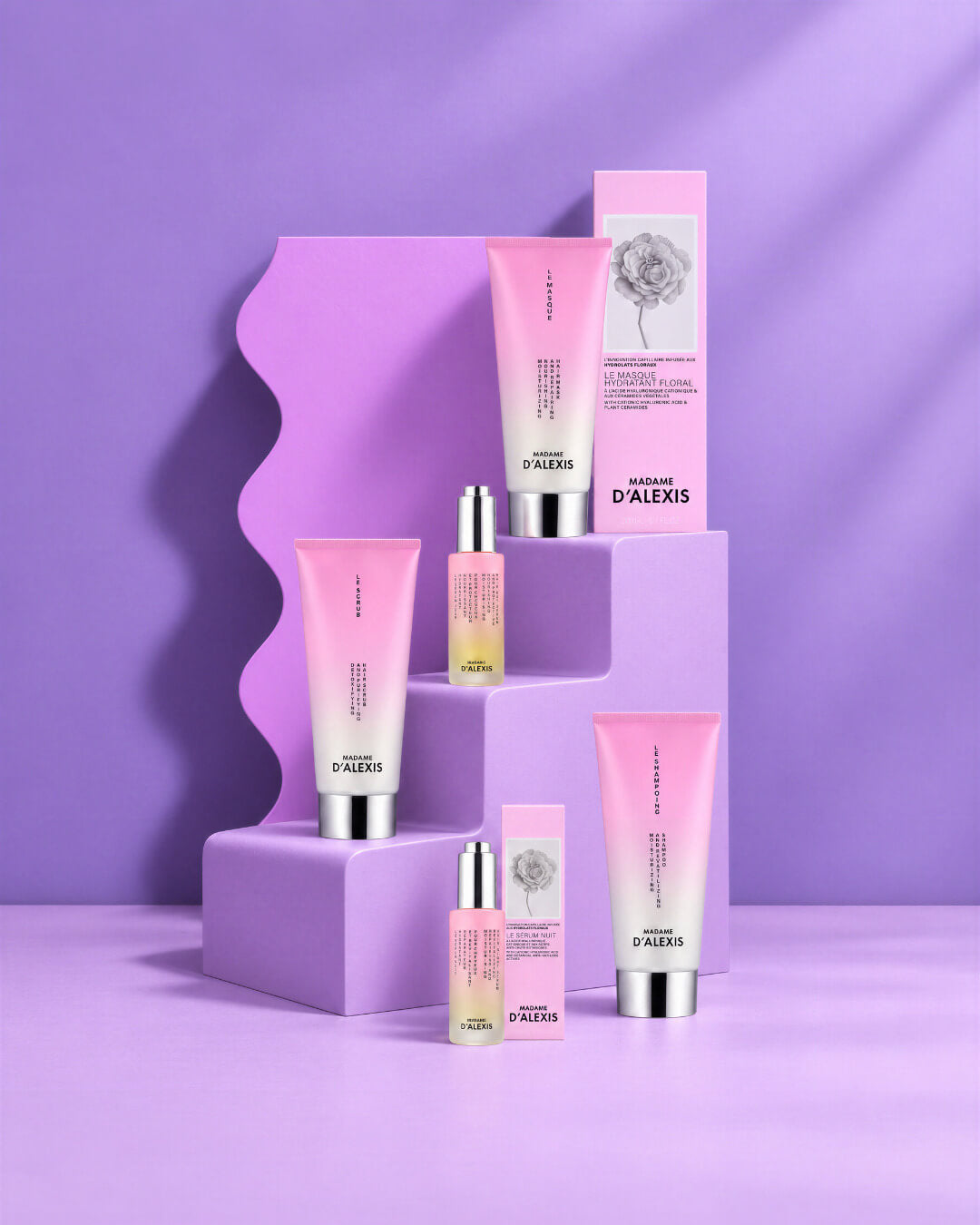
The Madame d’Alexis duo to nourish, protect and enhance
Pair Le Masque with hydrosols and Le Sérum Jour for a complete routine: deep care, nutrition, gloss and everyday protection.
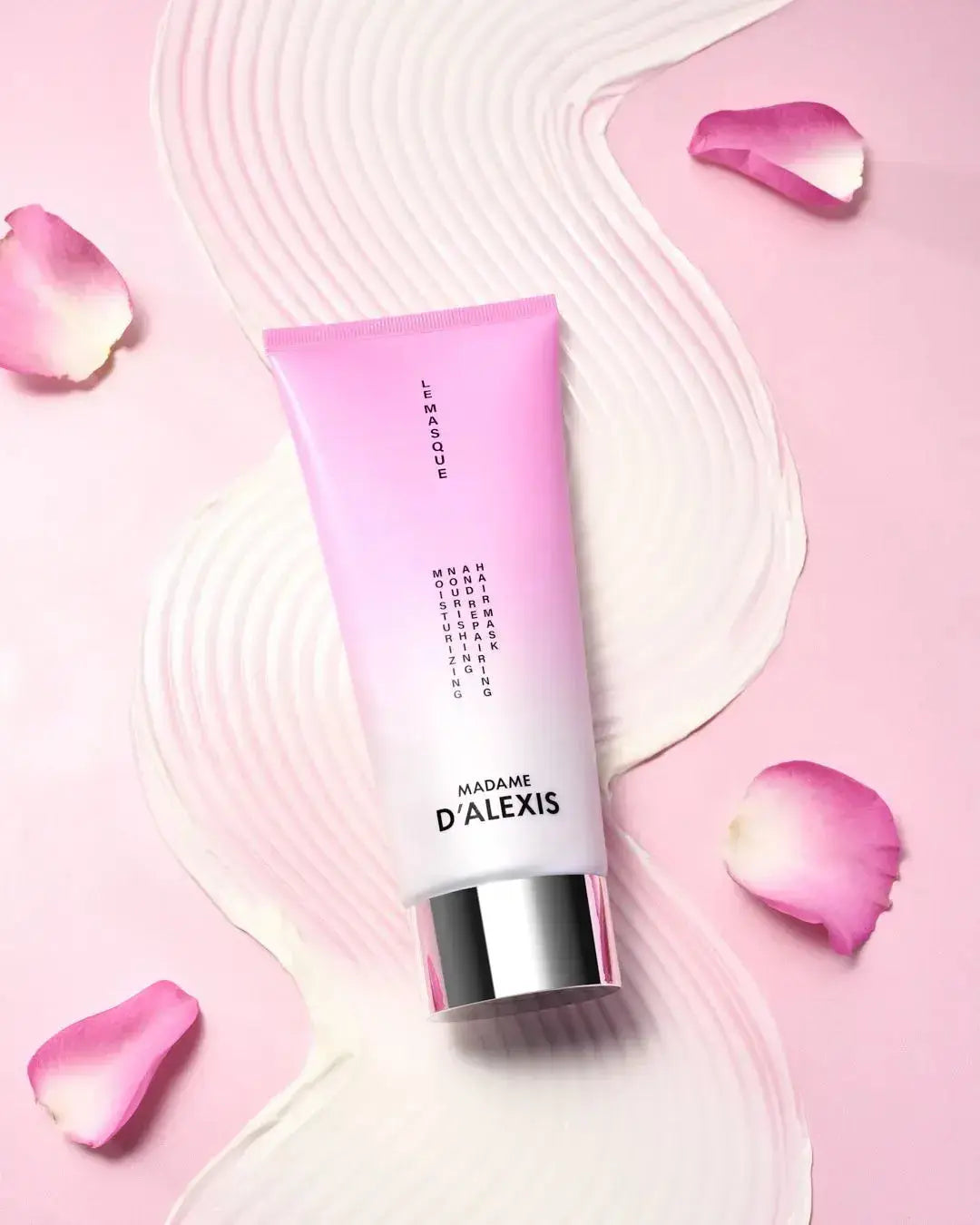
Le Masque with Hydrosols
Deep care · nourishment
- Plant ceramides and organic oils
- Deeply nourishing, never heavy
- Provides softness, suppleness, and shine
€49.00
View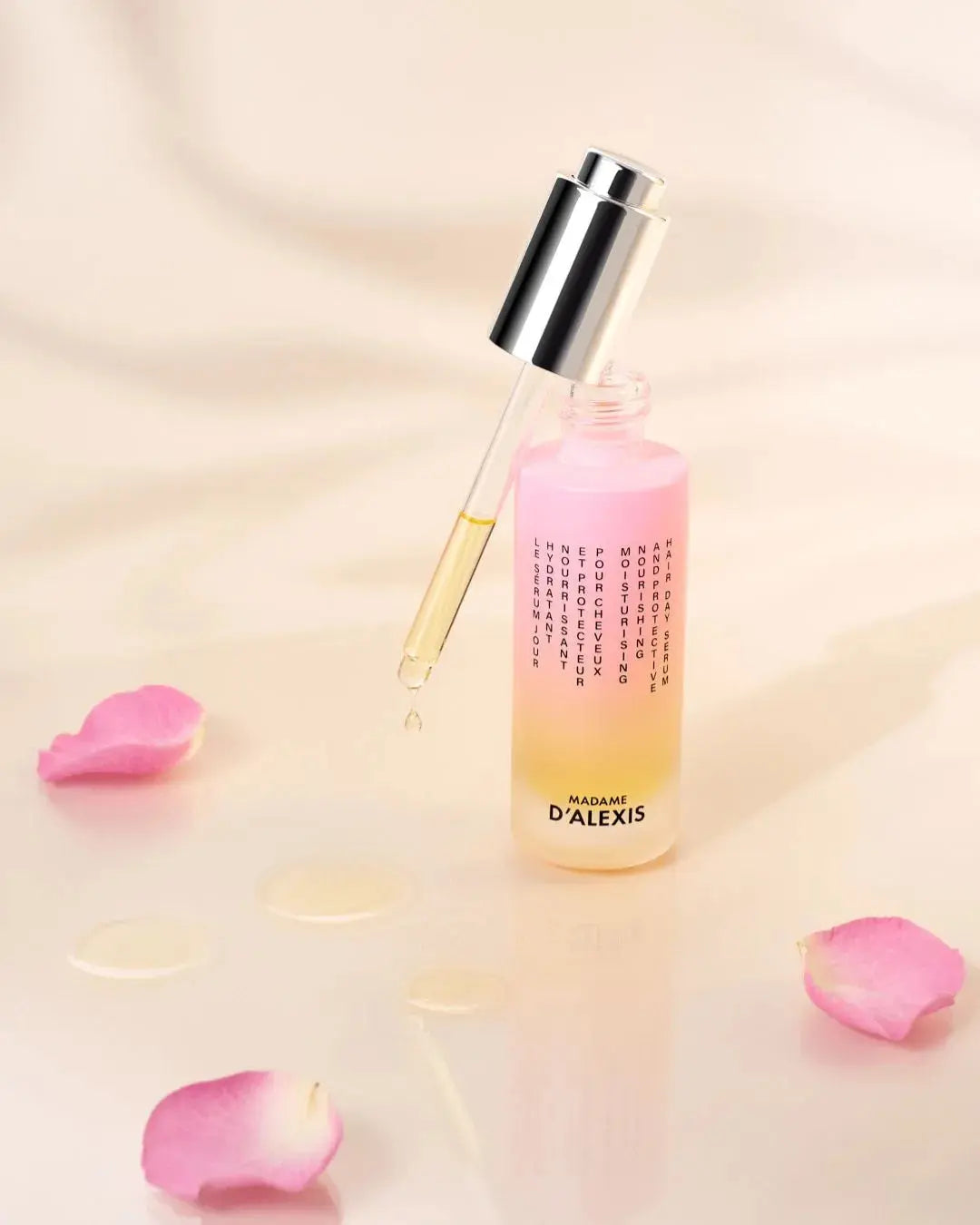
Le Sérum Jour
Shine · heat protection
- Enriched with organic jojoba oil
- Natural heat protectants up to 200 °C
- Provides shine without weighing down
€35.00
ViewScroll to discover the deep care and finishing duo
Is jojoba oil good for hair growth?
An indirect role, and an honest one
To be clear, jojoba oil does not speed up hair growth.
What it does is create the right conditions for healthy hair to keep its length.
Its main benefits for hair:
- Moisturises tight, thirsty skin on the scalp.
- Balances excess sebum so the follicles stay clear.
- Stimulates circulation when worked in with your fingertips.
- Protects the fibre and helps reduce breakage.
Put together, these effects support length retention: hair looks longer because less of it snaps along the way.
Sebum, the microbiome and hair health
A comfortable scalp depends on a fine balance between sebum, moisture and its microbiome.
When that balance holds, the hair follicles work in good conditions and hair grows as nature intended.
Modern formulas, such as those from Madame d’Alexis, pair jojoba oil with plant ceramides and cationic hyaluronic acid.
Together they hydrate, protect the fibre and make each application more pleasant.
The result: jojoba oil comforts the scalp and the lengths become more resilient, so hair holds on to its length more easily.
Used regularly, jojoba oil becomes a genuine maintenance step for growing your hair rather than a passing trend.
Le Sérum Jour
Organic jojoba oil · Shine · Heat protection
- Organic jojoba oil to soften the fibre
- Natural heat protectants up to 200 °C
- Shine without a greasy feel or weight
How to use jojoba oil for hair: three methods
Before shampoo or overnight: the scalp massage
Warm three or four drops between your palms and apply them to a dry or slightly damp scalp, section by section. It is the simplest option.
My tips:
- massage gently with your fingertips for 5 to 10 minutes,
- then leave it on for 30 minutes to an hour as a pre-shampoo step, or overnight under a cap if your ends are parched.
In the morning, lather up on dry hair before rinsing: it lifts the oil far more easily.
As a daily leave-in with Le Sérum Jour by Madame d’Alexis
For everyday use, a ready-made formula is easier than a pipette: Le Sérum Jour by Madame d’Alexis pairs organic jojoba oil with natural heat protectants that protect up to 200 °C, and it is free from silicones and parabens.
What it does:
- nourishes the lengths without weighing them down,
- smooths the cuticle,
- limits breakage,
- acts as a protective shield against heat styling and the elements, from hairdryers to wind and sun.
In my view, it is the easiest daily step for anyone growing their hair who wants to keep breakage to a minimum.

As a weekly mask with Le Masque by Madame d’Alexis
To improve softness and strength, plan a weekly ritual: Le Masque combines organic apricot and jojoba oils, orange blossom wax, plant ceramides and cationic hyaluronic acid.
Best moment: after a gentle scalp scrub (Le Scrub replaces your shampoo on those days, every 10 to 15 days) or simply after your usual wash.
What you can expect:
- deep conditioning for the lengths,
- softer, more manageable hair,
- help after colouring, heat styling or pollution.
Personally, I find this kind of ritual turns the vague idea of "growing longer hair" into concrete, regular care.
Le Masque with Hydrosols
Nutrition · Plant ceramides · Organic oils
- Plant ceramides to help strengthen the fibre
- Organic apricot and jojoba oils to soften the lengths
- Ideal as a deep treatment after shampooing
Which hair types benefit most from jojoba oil?
- Dry and damaged hair: it softens without weighing hair down. Is jojoba oil good for dry hair? Yes, it is one of the best options to start with.
- Hair that gets greasy quickly: used sparingly before washing, it helps you go longer between washes.
- Curly hair and coils: it defines curls and helps with frizz control while staying lightweight.
- Sensitive or flaky scalps: its gentle texture and properties that can soothe dryness and flakiness make it a comfortable choice. It is no cure for dandruff, though: persistent flakes, itching or other scalp issues deserve a word with your pharmacist.
Jojoba is a versatile ingredient I happily add to routines for growing hair. Used well, it promises no miracle, but it sets the right conditions for hair to grow in the best shape.
Does jojoba oil help with hair loss or thinning?
Jojoba oil is not a hair loss treatment, but keeping the scalp in good condition is part of looking after thinning hair. It can help to:
- support the skin barrier with a light film around the base of the hair follicles,
- ease tightness and discomfort thanks to its soothing texture,
- protect against oxidative stress: its vitamin E is an antioxidant, strengthening the lengths and helping prevent breakage.
In my experience, hair loss is not always what it seems: often the hair is breaking along the lengths, so the length never shows.
Used as a finishing oil within a considered routine, jojoba helps keep the lengths in good shape for fuller-looking hair.
Let me be clear, though: jojoba oil is not a remedy for baldness or androgenetic alopecia. Research on skin suggests jojoba oil has anti-inflammatory properties, but no direct effect on the growth phase (anagen) has been confirmed in humans. If you notice sudden shedding, see your GP or a dermatologist.
Is jojoba oil safe? Side effects and precautions
Jojoba oil is generally well tolerated, but even a natural product deserves a little care:
- Keep to 2 to 3 applications a week to avoid build-up.
- If you have oily roots, skip the overnight version: a short pre-shampoo application of 20 minutes is enough.
- Choose a 100% pure, organic, cold-pressed oil, or a formula made by professionals, rather than a cheap blend of unknown quality.
- For your safety, do a patch test on your inner arm 24 hours before first use, especially if you have sensitive skin, psoriasis or eczema, or are on medical treatment. Reactions are rare, but possible. Keep it away from your eyes.
Think of jojoba oil as a helpful addition, not a cure-all. Hair is made of protein, so food matters too: a balanced diet, good sleep and gentle styling are just as essential.

Jojoba oil in Madame d’Alexis hair care
The Madame d’Alexis range gives jojoba a starring role:
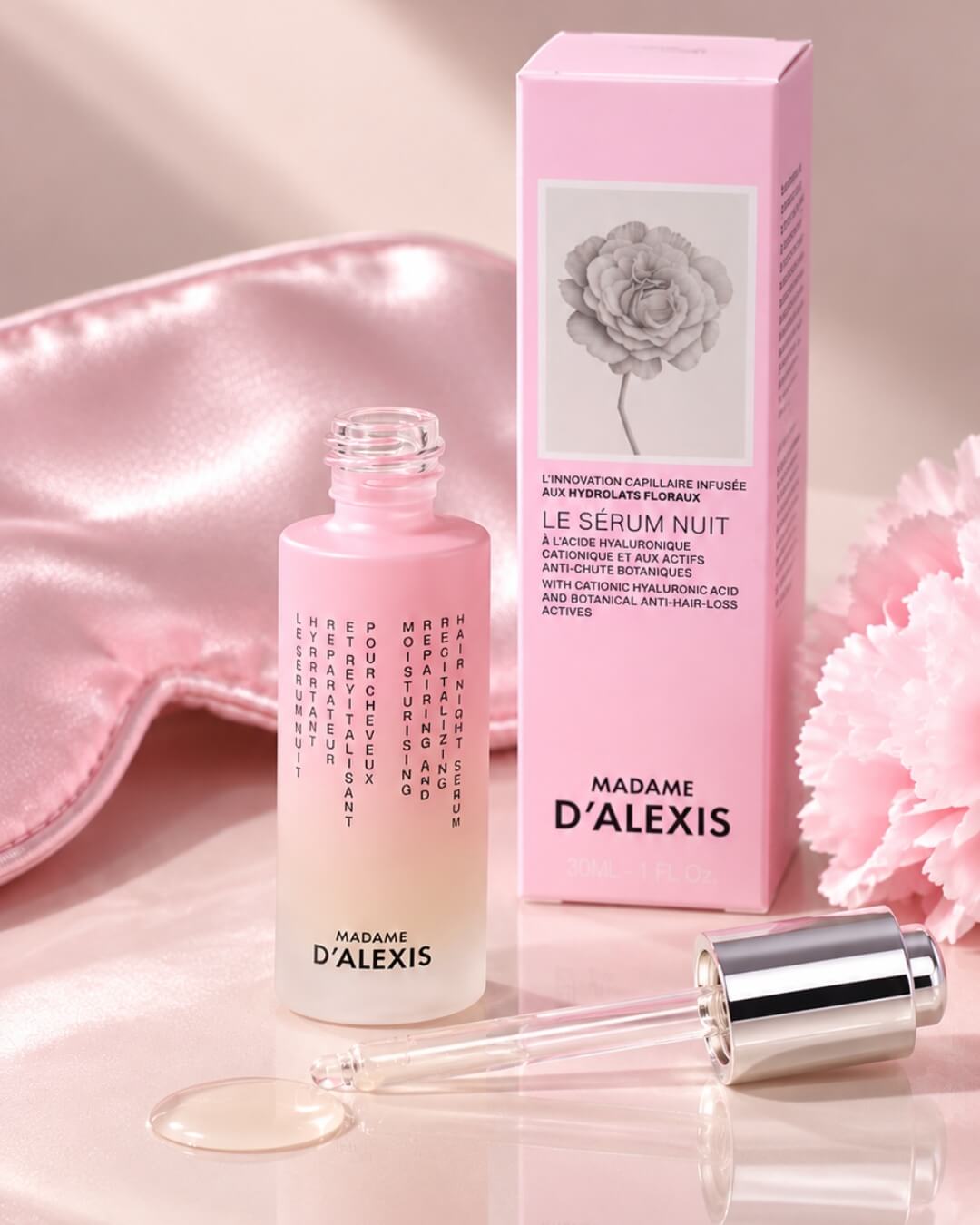
- Le Sérum Jour (99% ingredients of natural origin) combines organic jojoba oil with natural heat protectants that protect up to 200 °C, for shine and less breakage when you style.
- Le Masque, nourishing and repairing (97% natural origin), brings together organic apricot and jojoba oils, orange blossom wax, plant ceramides and cationic hyaluronic acid to repair the fibre in depth.
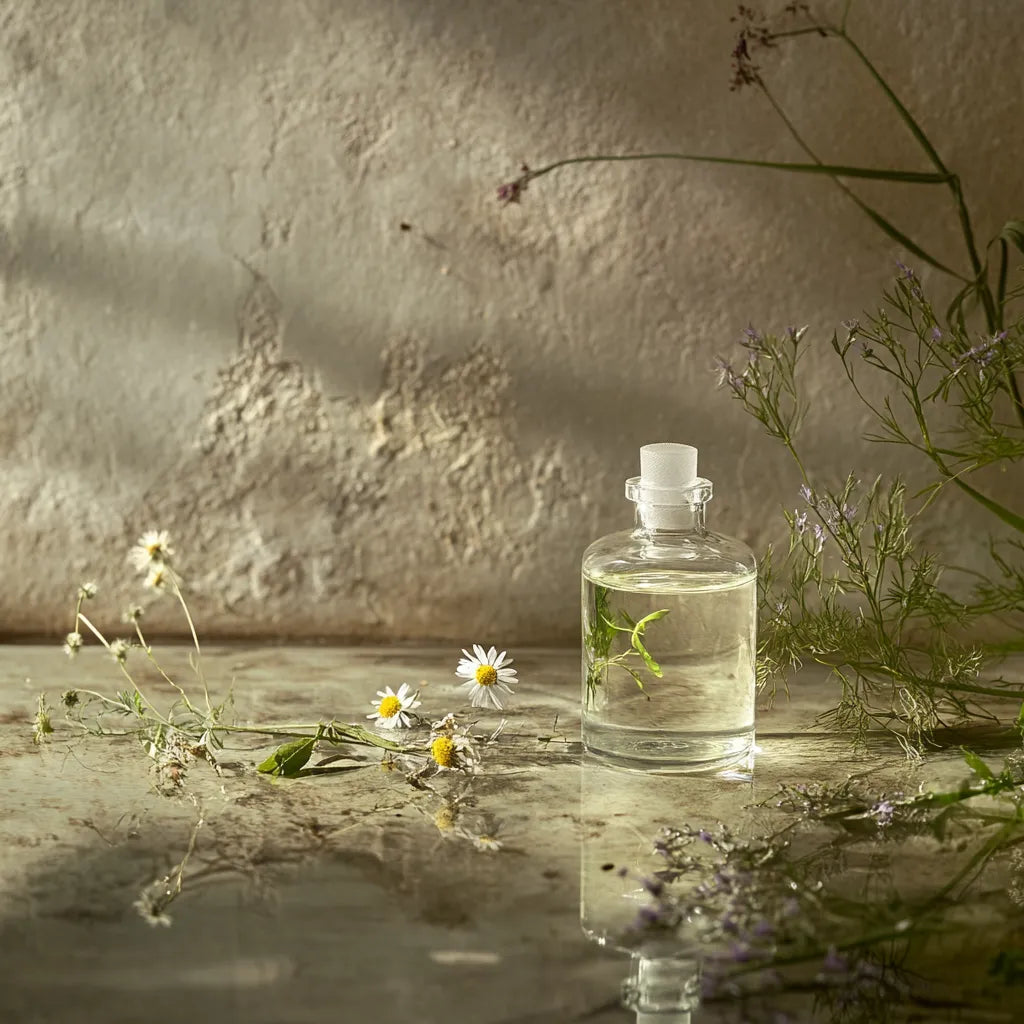
- Every formula is made in France around organic ingredients, starting with organic hydrosols, with no added water. The approach borrows from skin care beauty rituals and stays kind to the scalp.
You will find jojoba in many care products, from a jojoba shampoo to leave-in serums, but expert formulas like these show where it really belongs: at the heart of a routine for long, healthy hair.
Why use jojoba oil for hair?
Jojoba oil does not make hair grow faster on its own, but it takes care of the basics: moisture, a balanced scalp and less breakage.
Within a well-built routine, for example with Le Sérum Jour and Le Masque by Madame d’Alexis, it works in synergy for stronger, shinier hair that keeps its length.
Conseils