Hair oil: why use it in your hair care routine?
Hair oil has become an essential part of modern hair care routines. But with such a wide variety of plant oils available—coconut, argan, castor, jojoba—how can you choose the best hair oil for your needs?
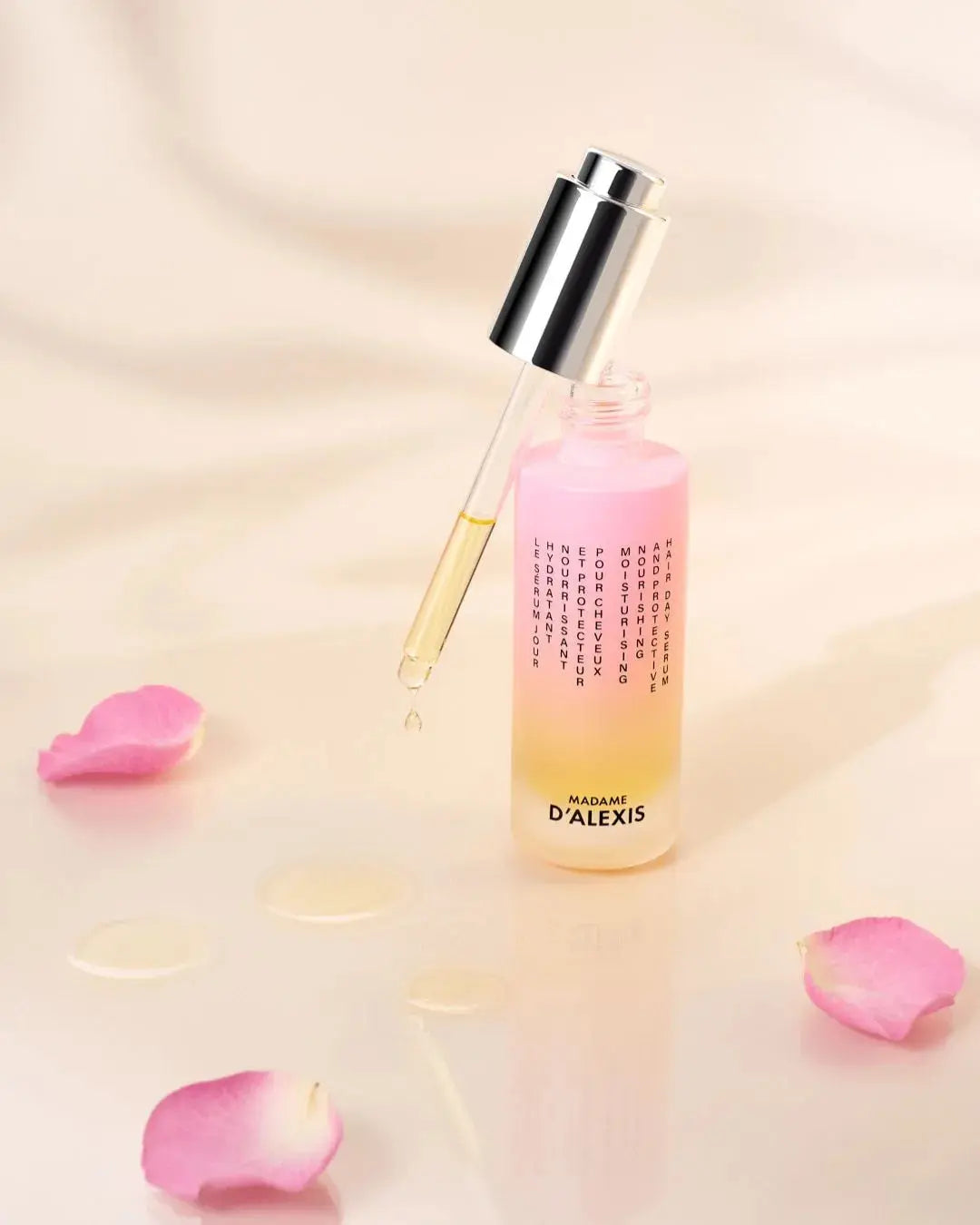
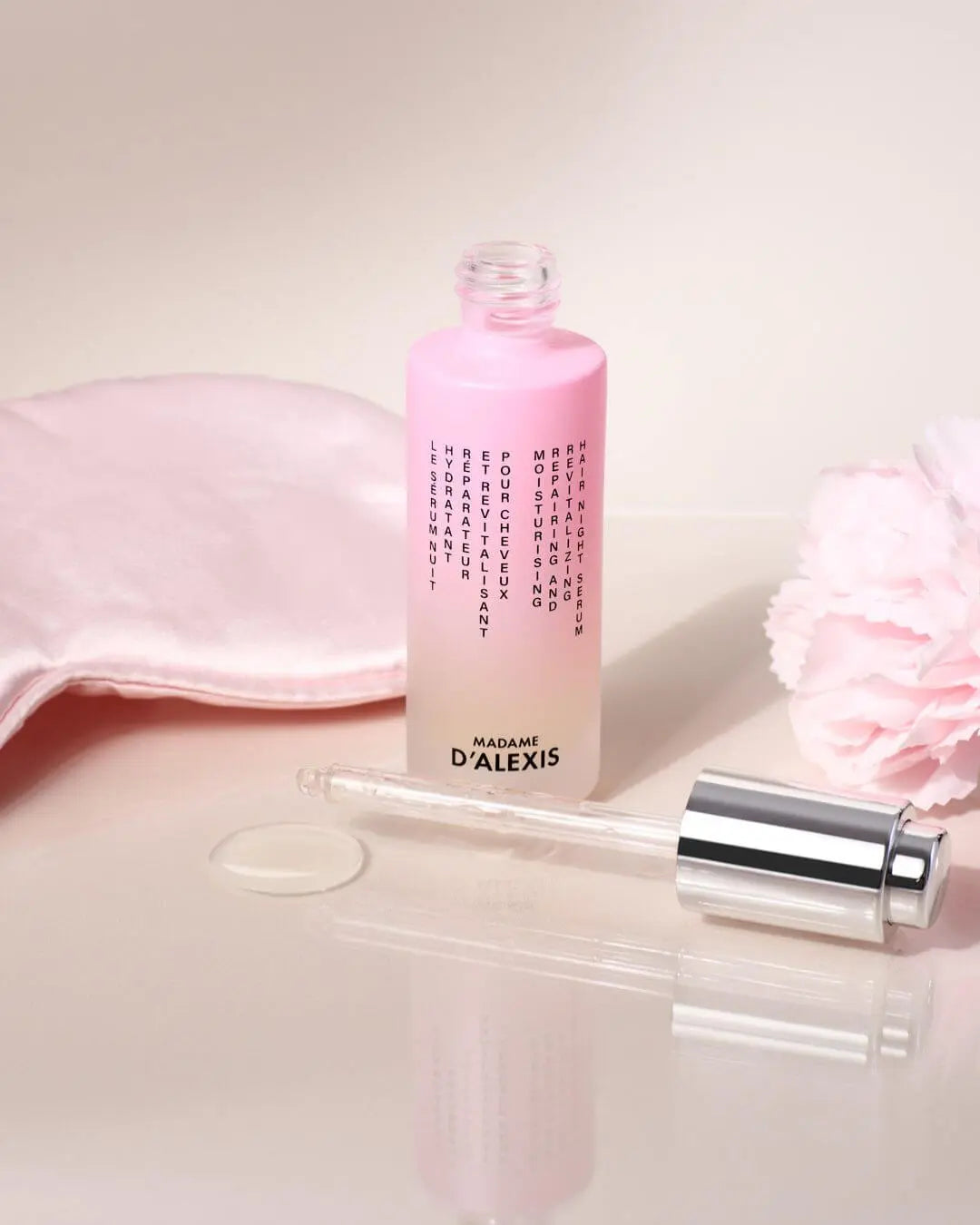
Whether you're looking to nourish dry hair, stimulate growth, or simply restore shine to your hair, each oil has unique properties. In this comprehensive guide, discover which hair oil suits your hair type, how to use it effectively, and the mistakes to avoid for visible results.
The targeted benefits of plant oils for the hair fiber
A well-chosen hair oil doesn't weigh hair down: it seals in moisture, restores the lipid barrier and enhances the hair's texture.
Far from comedogenic fats, certain oils - such as avocado oil or broccoli oil - act as deep skin care.
In particular, they allow you to :
- strengthen fiber and prevent split ends thanks to essential fatty acids;
- preserves suppleness and shine without a sticky effect;
- protect against external aggressions (UV, pollution, limescale).

Moisturize the scalp, stimulate growth
What you apply to the roots is just as crucial as what you apply to the lengths. Certain oils, such as castor oil and mustard oil, are known for their stimulating effect on microcirculation, promoting growth while soothing sensitive scalps.
Hair oil, serum or oil bath: what's the difference?
- The hair serum acts as a finishing touch, often based on silicones (in conventional versions).
- Daily hair oil lightly nourishes and protects.
- The oil bath, on the other hand, is a more intense ritual, to be left on, often before shampooing.
To the question "Is it good to put oil on your hair?", the answer is unambiguous: yes, as long as you choose a quality vegetable oil suited to your hair type, and use it judiciously.
How to choose the right hair oil for your hair type and needs?
The art of choosing the right oil for your hair is not a matter of chance, or a passing trend. It's a personalized, almost intimate process, based on a detailed knowledge of your hair and its real needs.
In beauty as in perfumery, the perfect match between material and nature is the key to excellence.
Which oil for dry hair ?
Dry hair, often dull, rough or brittle, calls for rich, enveloping oils that nourish, moisturize and repair. Among the most renowned:
- Avocado oil: rich in oleic acid, it penetrates the hair fiber and improves elasticity.
- Coconut oil: used for centuries in Asia, it is one of the few oils to penetrate deep into the skin.
- Sweet almond oil: gentle, soothing, suitable for sensitized scalps.
- Argan oil: packed with vitamin E, it protects and regenerates damaged ends.
Which oil for oily hair?
Contrary to popular belief, oil is far from being outlawed. As long as you choose dry, sebum-regulating textures:
- Jojoba oil: its composition is close to that of human sebum, enabling it to naturally regulate its production.
- Black cumin oil: purifying, antioxidant, particularly appreciated by oily scalps.
- Mustard oil: invigorating, it stimulates without suffocating the roots.
Which oil for curly or frizzy hair?
This type of hair requires special attention: nutrition, definition and shine are essential.
- Castor oil: fortifying, it redensifies curls.
- Shea oil: ideal for very dry hair, it restores suppleness and softness.
- Avocado oil: tames frizz and smoothes scales.
Which oil for color-treated hair?
Hair coloring weakens the fiber. The key is to combine protection and radiance:
- Jojoba oil: seals in color without weighing it down.
- Argan oil: preserves pigmentation while strengthening.
- Hibiscus oil: renowned for reviving color and adding mirror-like shine.
What is the best oil for hair growth?
If you are looking to stimulate hair growth and promote faster, thicker hair, certain oils are particularly effective.
Castor oil is undoubtedly the best oil for hair growth. Rich in ricinoleic acid, it stimulates microcirculation in the scalp and strengthens hair follicles. It is known to promote thicker hair growth and reduce hair loss.
Directions for use: Massage castor oil into the scalp 2 to 3 times a week before shampooing. Leave on for at least 30 minutes, or even overnight.
Other oils effectively complement this ritual:
• Mustard oil: warming, it awakens the hair follicle and accelerates growth
• Broccoli oil: little known but effective, it improves hair structure while stimulating growth
• Rosemary essential oil (diluted in vegetable oil): its effect on microcirculation is scientifically documented
To maximize results, combine these oils with a daily 5-minute scalp massage, which naturally stimulates blood circulation.
Summary table: which oil for which hair type?
To help you choose the best hair oil for your needs, here is a detailed comparison of the most effective vegetable oils. Each oil has been evaluated according to its target hair type, main function, texture, and value for money.
| Hair type / needs | Recommended oils | Key benefits |
|---|---|---|
| Dry hair | Coconut, avocado, sweet almond, argan oil | Nutrition, repair, shine, suppleness |
| Greasy hair | Jojoba, black cumin, mustard oil | Sebum regulation, lightness, purification |
| Curly / frizzy hair | Castor oil, avocado, shea butter | Definition, flexibility, frizz control |
| Colored hair | Jojoba, argan, hibiscus oil | Protection, radiance, color preservation |
| Encourage growth | Oil of Castor bean, mustard, broccoli, rosemary | Growth stimulation, fortification, density |

Avant/Après : 3 cas réels avec les bonnes huiles capillaires
Cas 1 — Cheveux secs et ternes devenus brillants et souples
Avant : cheveux rêches, ternes, cassants. Texture paille. Frisottis importants. Aspect mat même après lavage.
Routine appliquée :
- Bain d'huile de jojoba 1x/semaine, 30 min avant shampooing
- Shampoing aux Hydrolats Madame d'Alexis 2x/semaine (sans sulfates)
- Masque aux Hydrolats 2x/semaine, 15 min sous serviette chaude
- Sérum Jour quotidien sur pointes
Après 4 semaines : cheveux brillants, souples, doux au toucher. Frisottis réduits de 70 %. Effet paille disparu. Texture lisse et lumineuse.
Clé du succès : huile légère (jojoba) + shampooing sans sulfates + masque réparateur + constance dans la routine.
Cas 2 — Cheveux bouclés très secs devenus définis et brillants
Avant : cheveux bouclés très secs, frisottis incontrôlables, manque de définition, aspect terne et cassant.
Routine appliquée :
- Bain d'huile de baobab 1x/semaine, 1h avant shampooing
- Shampoing aux Hydrolats 2x/semaine
- Masque aux Hydrolats 2x/semaine
- Sérum Jour après chaque shampooing sur longueurs
- Sérum Nuit quotidien sur cuir chevelu
Après 4 semaines : boucles définies et brillantes. Frisottis réduits de 80 %. Cheveux plus denses et résistants. Brillance naturelle retrouvée.
Clé du succès : huile riche (baobab) + routine complète jour/nuit + sérums pour sceller l'hydratation.
Cas 3 — Cheveux fins gras aux pointes sèches : équilibre retrouvé
Avant : cheveux fins, racines grasses, pointes sèches et cassantes. Impossible à coiffer. Effet paille aux pointes uniquement.
Routine appliquée :
- Bain d'huile de jojoba 1x/semaine sur pointes uniquement, 30 min
- Shampoing aux Hydrolats 2x/semaine
- Masque aux Hydrolats 1x/semaine sur pointes uniquement
- Sérum Jour quotidien sur pointes (2 gouttes maximum)
Après 4 semaines : racines moins grasses. Pointes hydratées et brillantes. Cheveux plus faciles à coiffer. Équilibre cuir chevelu/longueurs retrouvé.
Clé du succès : application ciblée (pointes uniquement) + huile légère (jojoba) + dosage minimal.
Comparison: the best oils for hair
There's no such thing as the "best" hair oil in the universal sense. It all depends on the nature of your hair fiber, your scalp, and the effects you're looking for.
It's a bit like choosing a perfume: what enhances one can weigh down another. Experience has taught me that you have to learn to listen to your lengths, to observe how they react to touch, humidity and the seasons.
A well-chosen oil can transform tired hair into a living, supple, luminous substance.
Here is a comparison of the most effective oils according to different criteria:
| Vegetable oil | Hair type | Main function | Texture / absorption | Price guide |
|---|---|---|---|---|
| Avocado | Dry, curly | Intense hydration | Rich, penetrating | €€ |
| Coco | Dry, damaged | Repair, shine | Strong when cold, light | € |
| Jojoba | Bold, colorful | Regulation, protection | Dry, fluid | €€ |
| Ricin | Fine, brittle | Growth, fortification | Thick, viscous | € |
| Argan | Colorful, mature | Anti-oxidant, radiance | Medium, quickly absorbed | €€€ |
| Broccoli | Frizzy, thick | Natural smoothing, sheathing | Medium, dry feel | €€ |
The oil that penetrates best is coconut oil, thanks to its lauric acid content.
The most moisturizing? Avocado, rich in oleic acid and vitamins A, D and E.
The most nourishing is undoubtedly castor oil, to be used diluted.
For silky hair, turn to argan or broccoli, which are true light revelators.
Hair oil treatment: complete instructions
The oil bath is a ritual I rediscovered while observing Indian and Moroccan hair routines. Applied with care, this gesture transforms the material. It soothes the scalp, nourishes the fiber and acts as a preventive serum against breakage.
Who is this treatment for?
For all those whose hair lacks softness, shine or hold. Particularly recommended for :
- after coloring or bleaching,
- in the event of winter drought,
- for hair exposed to salt, chlorine or UV rays.
How to make an effective oil bath
A well-executed oil bath provides a deep treatment that restores vitality and radiance to the hair fiber. To reap the full benefits, follow these essential steps:
- Choose thevegetable oil according to your needs (see comparison chart above).
- Apply a few drops, massaging gently with fingertips, to scalp to stimulate microcirculation, then to lengths and ends to repair and protect.
- Leave on for at least 30 minutes, or overnight for very dry or damaged hair.
- Avoid overloading: a dab is more than enough. Too much will weigh down the fiber and make rinsing more difficult.
A successful oil bath begins with measurement. The finesse of the gesture always prevails over the abundance of the product.
Which shampoo eliminates an oil bath?
A gentle yet cleansing shampoo is essential. This is where Madame d'Alexis comes in. Its water-free formula, infused with floral hydrolats and enriched with highly cleansing active ingredients, dissolves oil without aggressing the scalp.
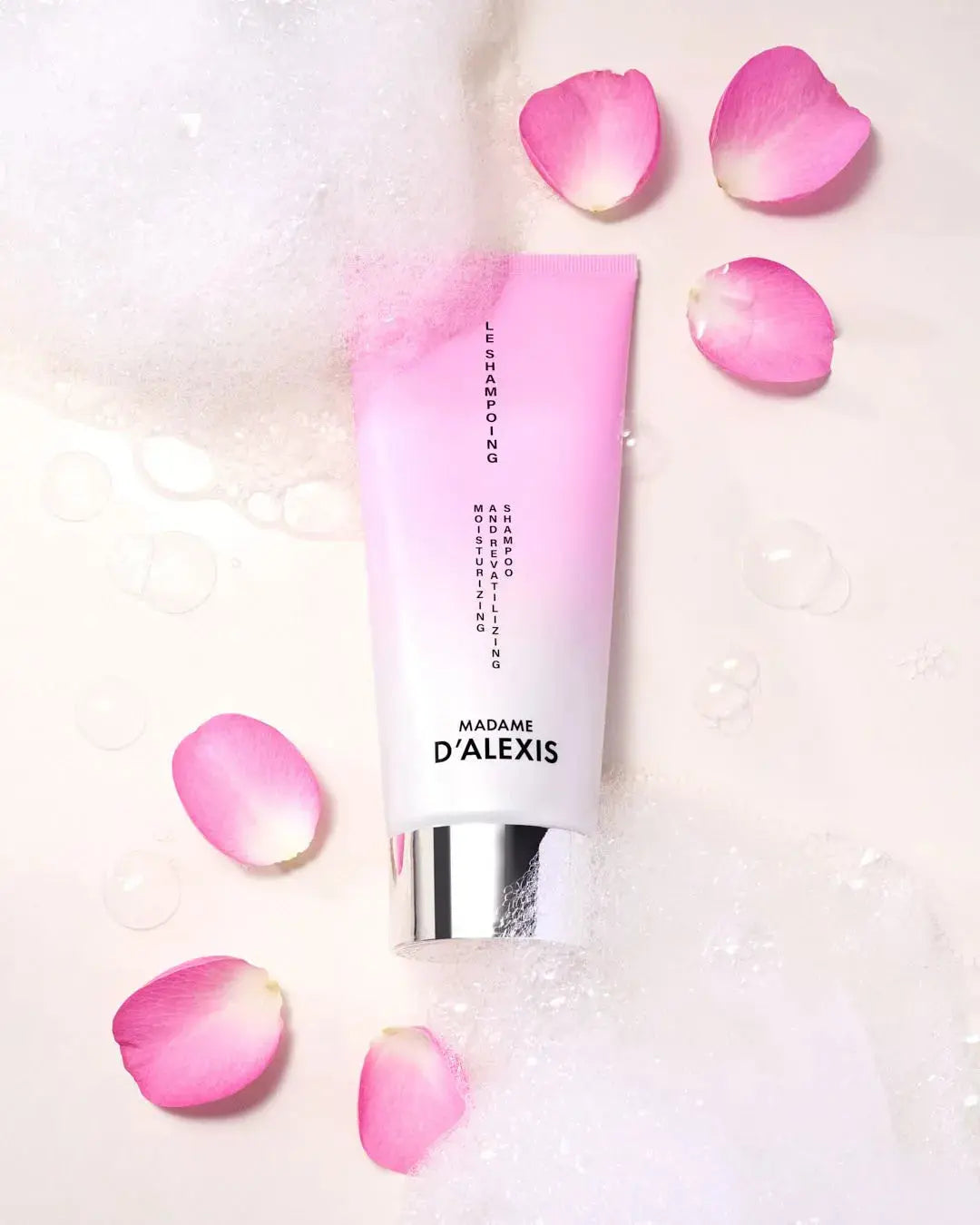
It purifies, leaving the fiber light, supple and perfectly clean.
A personal tip: rinse with lukewarm water, never scalding, and finish with a cool spray to close the scales. This simple gesture enhances hair's natural radiance.

Which oil should you use for an oil hair treatment?
The choice of oil for your oil bath depends on your goal:
• Bain d'huile réparateur : huile de coco ou d'avocat (cheveux secs et abîmés)
• Bain d'huile pousse : huile de ricin diluée dans du jojoba (stimulation)
• Bain d'huile brillance : huile d'argan ou de brocoli (cheveux ternes)
• Bain d'huile régulateur : huile de jojoba pure (cheveux gras)
You can also create custom blends by combining 2 to 3 oils according to your needs.
Product focus: Madame d'Alexis hair oils
A hair oil inspired by facial care
At Madame d'Alexis, the line between hair care and high-end beauty rituals is blurred. Here, hair oil is not just a product; it is a formula designed with the same refinement as the most demanding facial serums.
What sets this oil apart? An exemplary composition:
- 97 to 99% ingredients of natural origin,
- no animal cruelty,
- zero water added.
Water is replaced by noble organic hydrolats: Damask Rose, Chamomile Matricaria and Orange Blossom, all recognized for their soothing, antioxidant and softening properties.
This choice is not insignificant: in hair cosmetics, effectiveness begins with the quality of the base.

Why it is suitable for all hair problems
Each Madame d'Alexis oil is designed as a targeted yet universal response.
- For dry hair, it intensely nourishes without weighing down, thanks to its richness in essential fatty acids.
- On a sensitive scalp, it soothes, balances and restores the skin microbiome thanks to prebiotics.
- For fine hair, it offers shine and hold, without greasy film or heavy effect.
Personally, I use it in the morning, before drying my hair. Just a few drops are enough. The subtle, botanical fragrance transforms this gesture into a moment of sensory care.
Recommended routine
This oil can be integrated into any routine:
- As an oil bath, before shampooing, for deep hair care.
- Apply daily to damp or dry hair to tame frizz or protect lengths.
- As a finishing touch, to smooth fiber and enhance natural shine.
Its fine texture, delicate plant fragrance and silky feel make it a must-have for elegantly groomed hair.
Mistakes to avoid with hair oils
Even the best oils require rigor and knowledge. When it comes to hair care, luxury is in the detail. Here's what to avoid:
- Too much product: a well-chosen oil should be used sparingly. Too much will saturate the fiber, weigh it down and make rinsing more difficult.
- Use of unsuitable oils: pure castor oil is too thick to be used on its own. Some comedogenic oils can irritate fragile scalps.
- Confusing vegetable oil with mineral oil: petrochemical oils (found in many conventional products) don't nourish - they coat without penetrating. In the long term, they asphyxiate the fiber.
- Apply at the wrong time: for oily hair, use oil as a pre-shampoo treatment. On color-treated hair, use after washing to protect color.
Respecting these principles guarantees the nobility and effectiveness of our hair oil.
Frequently asked questions about hair oils
Hair oil is both ancient in its use and modern in its formulation. But even when it's natural, it raises many questions. Here are the answers to the most common questions - precise, practical and validated by experience.
Can I put oil on my hair every day?
Yes, but it all depends on the type of oil, hair type and dosage. On dry hair, a few drops of a light oil (jojoba, argan, grapeseed) applied daily to the ends can restore shine and softness.
On oily hair, on the other hand, a daily application would unnecessarily weigh down the fiber. Better to opt for a weekly treatment.
Which oil is right for my scalp?
Sensitive scalps will appreciate jojoba or chamomile oil, which soothe and regulate. To stimulate growth or combat hair loss, opt for mustard or castor oil, to be applied with gentle massages. Once again, it's all about listening carefully to your scalp.
What oil should I avoid putting on my hair?
Avoid mineral oils (derived from petrochemicals): they form an occlusive film with no nourishing benefits. Similarly, pure castor oil is too thick to be used on its own. It is best combined with a more fluid oil such as jojoba or avocado.
Do dermatologists recommend the use of hair oils?
Yes, as long as you choose pure, cold-pressed plant oils suited to your scalp. They are particularly useful for relieving itching, dry dandruff or supporting the hydrolipidic barrier.
Which oil for dry ends?
Argan oil is a classic. It protects, softens and nourishes without greasing. Avocado or broccoli oil also work well to close scales and prevent split ends.
When should you use an oil in your hair routine?
One oil fits all:
- before shampooing (as an oil bath),
- after washing (as a finish or to seal in moisture),
- or as a one-off treatment, depending on your needs at the time.
Is it necessary to systematically rinse the oil?
No. It all depends on the quantity applied. An oil used in a bath needs to be rinsed thoroughly, while a dab on the tips needs no rinsing at all.
Which oil makes hair grow quickly?
Castor oil is the most effective oil for stimulating hair growth. Rich in ricinoleic acid, it activates microcirculation in the scalp and strengthens hair follicles. For optimal results, massage it into the scalp 2 to 3 times a week, diluting it with jojoba oil to make it easier to apply.
How to use coconut oil for hair?
Coconut oil can be used in three ways: as an oil treatment before shampooing (leave on for 30 minutes to 2 hours), as a repairing mask on the lengths (once or twice a week), or as a daily treatment on dry ends (a small amount is enough). Choose virgin, organic, cold-pressed coconut oil to preserve all its benefits.
What is the best oil for very dry hair?
For very dry hair, avocado oil is the most nourishing. Rich in fatty acids and vitamins A, D, and E, it penetrates deep into the hair fiber and restores its elasticity. Coconut oil and shea butter are also excellent for this type of hair.

Quelle huile pour les cheveux très secs avec effet paille ?
L'huile d'avocat est la plus efficace (95 % d'efficacité). Riche en acides gras et vitamines A, D, E, elle pénètre profondément et restaure l'élasticité. L'huile de coco et le beurre de karité complètent idéalement ce soin. Routine recommandée : bain d'huile d'avocat 1x/semaine (1h avant shampooing) + masque réparateur 2x/semaine + sérum protecteur quotidien.
Combien de temps pour voir les résultats avec une huile capillaire ?
- Solutions rapides (bain d'huile + masque) : résultats visibles en 1 semaine
- Routine régulière (2–3x/semaine) : amélioration notable en 2–3 semaines
- Réparation complète : 30 jours avec une routine quotidienne
Peut-on utiliser une huile tous les jours sur les cheveux ?
Oui, selon le type d'huile et de cheveux :
- Cheveux secs : 2–3 gouttes d'huile légère (jojoba, argan) quotidiennement sur pointes = bénéfique
- Cheveux gras : 1x/semaine en bain d'huile (jojoba uniquement) = suffisant
- Cheveux normaux : 3–4x/semaine en soin quotidien = idéal
What is the best oil for hair growth?
L'huile de ricin est la plus efficace pour stimuler la pousse. Riche en acide ricinoléique, elle active la microcirculation du cuir chevelu et renforce les follicules pileux.
Mode d'emploi : diluer dans du jojoba (50/50), appliquer en massage sur cuir chevelu 2–3x/semaine, laisser poser 30 min à 2h. Résultats attendus : pousse plus rapide et cheveux plus denses en 4–6 semaines.
Huile de coco ou huile d'argan : laquelle choisir ?
Cela dépend de votre objectif :
- Huile de coco : meilleure pour la réparation intense et la brillance rapide. Idéale pour cheveux très secs et abîmés. Résultats en 1 semaine.
- Huile d'argan : meilleure pour la protection et l'anti-oxydation, notamment sur cheveux colorés. Résultats en 2–3 semaines.
Pour cheveux très secs paille : préférez l'avocat ou la coco. Pour cheveux colorés : préférez l'argan.
Faut-il rincer l'huile après l'avoir appliquée ?
Cela dépend de la quantité et du type d'application :
- Bain d'huile (application généreuse) : rincer systématiquement avec un shampooing sans sulfates
- Soin quotidien (quelques gouttes sur pointes) : pas besoin de rincer
- Masque d'huile (application modérée) : rincer à l'eau tiède après 15–20 min
What oil should I avoid putting on my hair?
Évitez absolument :
- Huiles minérales (paraffine, vaseline) : forment un film occlusif sans aucun bienfait nutritif
- Huile de ricin pure (non diluée) : trop épaisse, difficile à rincer, peut étouffer la fibre
- Huiles raffinées ou désodorisées : perdent leurs principes actifs à l'extraction
Privilégiez toujours des huiles végétales bio, pressées à froid, non raffinées.
Huile avant ou après le shampoing ?
Les deux sont efficaces selon l'objectif :
- Avant le shampoing (bain d'huile) : réparation intense, protection pendant le lavage
- Après le shampoing (sur cheveux humides) : scelle l'hydratation, facilite le coiffage
- Sur cheveux secs (quotidien) : protection et brillance
Pour cheveux très secs : combinez les deux — bain d'huile 1x/semaine + soin quotidien après shampooing.
Peut-on mélanger plusieurs huiles capillaires ?
Oui, c'est même recommandé. Exemples de mélanges efficaces :
- Ricin + Jojoba (50/50) : stimulation pousse + légèreté
- Avocat + Coco (60/40) : réparation intense + pénétration profonde
- Argan + Jojoba (70/30) : protection couleur + légèreté
- Baobab + Ricin (50/50) : nutrition + stimulation (idéal cheveux bouclés)
Which oil for curly or frizzy hair?
Les cheveux bouclés et crépus ont besoin d'huiles riches et pénétrantes :
- Huile de ricin : redensifie les boucles et stimule la pousse
- Huile de baobab : riche en acide stéarique, renforce les boucles
- Huile d'avocat : dompte les frisottis et lisse les écailles
- Beurre de karité : nutrition intense, définition des boucles
Routine recommandée : bain d'huile 1x/semaine (baobab ou avocat) + masque 2x/semaine + sérum quotidien pour sceller l'hydratation.
Which oil for oily hair?
Contrairement aux idées reçues, l'huile n'est pas proscrite pour cheveux gras. Privilégiez des huiles légères et séborégulatrices :
- Huile de jojoba : composition proche du sébum, régule naturellement sa production
- Huile de nigelle : purifiante, antioxydante, apaise les cuirs chevelus gras
- Huile de moutarde : tonifiante, stimule sans étouffer la racine
Mode d'emploi : 1x/semaine en bain d'huile (jojoba uniquement), 30 min avant shampooing. Pas d'application quotidienne.
Comment utiliser l'huile de ricin sans que ce soit trop lourd ?
L'huile de ricin est très épaisse. Pour l'utiliser sans alourdir :
- Diluer dans une huile plus fluide : ricin + jojoba (50/50) ou ricin + coco (40/60)
- Appliquer uniquement sur cuir chevelu et racines, pas sur longueurs
- Laisser poser 30 min à 2h (pas toute la nuit pour cheveux fins)
- Rincer avec 2 shampoings doux sans sulfates
Which oil for color-treated hair?
Les cheveux colorés sont fragilisés. Privilégiez des huiles protectrices et anti-oxydantes :
- Huile d'argan : préserve la pigmentation, renforce la fibre
- Huile de jojoba : scelle la couleur sans alourdir
- Huile d'hibiscus : ravive la couleur, apporte brillance miroir
Routine recommandée : bain d'huile 1x/semaine (argan) + soin quotidien (jojoba) sur pointes + shampooing sans sulfates.
Combien de gouttes d'huile pour les cheveux ?
- Cheveux courts (< 20 cm) : 2–3 gouttes
- Cheveux mi-longs (20–40 cm) : 3–5 gouttes
- Cheveux longs (> 40 cm) : 5–8 gouttes
Commencez par peu et augmentez progressivement. Une noisette chauffée entre les paumes suffit souvent pour les pointes.
Which oil for dry ends?
L'huile d'argan est le classique : protège, assouplit et nourrit sans graisser. L'huile d'avocat ou de brocoli fonctionne aussi très bien pour refermer les écailles et prévenir les fourches. Mode d'emploi : 2–3 gouttes sur pointes sèches, sans rinçage.
Conclusion: which hair oil should you choose?
Choosing the right hair oil can transform your hair care routine. Whether you're looking for the best oil for dry hair (avocado, coconut), the best oil for hair growth (castor, mustard), or simply a versatile oil (jojoba, argan), always choose organic, cold-pressed vegetable oils that are suited to your hair type.
Hair oil is not just a cosmetic product: it is a genuine treatment that nourishes, protects, and enhances your hair every day. Incorporate it into your routine and watch the transformation.
In winter, fiber needs more fat. In summer, it needs protection and lightness.
Summary table: ideal oils by need
| Hair problems | Ideal oil |
|---|---|
| Dry or dull hair | Avocado, coconut, argan |
| Sensitized scalp | Jojoba, chamomile |
| Greasy hair | Nigella, mustard, jojoba |
| Loops to redefine | Ricin, shea, broccoli |
| Decline or slow growth | Ricin, rosemary, mustard |
| Colored hair | Argan, hibiscus, jojoba |
| Damaged tips | Broccoli, avocado, argan |
Recommendation: use organic, cold-pressed vegetable oils.
It may seem like a detail, but the extraction method changes everything. A cold-pressed oil retains all its active ingredients: vitamins, antioxidants, essential fatty acids. For best results, choose unrefined, unscented and organic oils.
Why add an oil to your hair routine?
Because no mask or conditioner can match the lipid richness of raw plant oil. It seals in moisture, protects against external aggressions, and reveals hair's natural beauty over the long term.
Madame d'Alexis: skin-care excellence inspired by the skin
With its water-free formulation, organic floral hydrosols and sensorial texture, Madame d'Alexis oil doesn't just beautify: it deeply cares. It ticks all the boxes:
- ultra-concentrated,
- natural,
- multi-purpose,
- scalp-friendly.
An oil designed for skin care, for hair that exudes health and elegance.