Conseils
Scalp mask: how to choose one and apply it

Your face has its leave-on masks, and so do your lengths. But what about the skin your hair grows from? Scalp care is slowly finding its place in the weekly routine, and the same question keeps coming up: do you need a scalp mask, and what should it contain to be useful without weighing hair down? In winter, between woolly hats, central heating and dry air, the skin on your head feels tight more quickly and the hair loses its shine at the base. So what is a scalp mask? It is a leave-on product applied to the scalp skin to hydrate, soothe or purify depending on what it needs, for better scalp health and healthy hair. Here is how to choose the right formula for your scalp type, how to use it, what a homemade recipe is really worth, and how to build a simple ritual with Madame d'Alexis hair care, for comfortable hair from top to tip. On this subject, the right gesture matters more than the number of products.
What are the benefits of a scalp mask?
The scalp is skin like any other: it produces sebum, it hosts a microbiome, it dries out when the air is dry and it gets clogged when you sweat. Yet it often gets nothing more than a quick shampoo. A mask designed for the scalp adds what is missing: a leave-on time, a texture that stays in contact with the skin, and key ingredients chosen for the hair follicles and the base of the hair shaft rather than for the ends. A dedicated product for the scalp and hair means you no longer ask your shampoo to do everything. As with your face, think of this cosmetic care as part of a beauty routine, not as an emergency fix.
In practice, a good scalp routine can help you to:
- deeply hydrate skin that feels tight, especially in winter, with a hydrating formula that helps it absorb and hold moisture;
- soothe discomfort and occasional itching with a soothing mask, which helps a dry, itchy scalp feel calmer;
- purify when sebum, sweat, dead skin cells and product build-up accumulate, with a detox mask that removes the excess and keeps oil production in check;
- protect the skin barrier with a protective mask;
- prepare the ground so that hair grows back in a comfortable environment: a healthier scalp is the best base for hair growth.
To understand what your scalp is telling you, our complete scalp guide explains its anatomy, its microbiome and the routine that suits it.
How do you choose a scalp mask for your scalp type?
The right choice starts with an honest diagnosis: is your scalp dry, oily, reactive, or a bit of all three depending on the season? The table below sums up the most common needs.
| Scalp type | What you notice | What it needs |
|---|---|---|
| Dry | Tightness, a feeling of tension, a flaky scalp, small flakes or dry dandruff | Hydration, gentle textures, ingredients that hold on to moisture |
| Oily | Hair that gets greasy quickly, flat by the next day | Regular purifying to remove excess oil, light textures, nothing too rich |
| Reactive | Redness, heat, itching, reactions to strong fragrances | Soothing formulas, hydrosols, few harsh ingredients |
| Combination | Oily at the base but occasionally tight | Balance: purify without stripping, hydrate without weighing down |
The more reactive the scalp, the fewer products you should pile on. A hydrating or soothing mask, used regularly, is worth more than a stack of treatments. If the itching keeps coming back, read our article on itchy scalp to find the causes.
Your hair type matters too. On dry, damaged or colour-treated hair, choose a nourishing hair mask or a deep conditioning formula for the lengths and something light for the scalp. A dry scalp, on the other hand, mainly needs hydration, not oil: the best scalp mask for a dry scalp is a hydrating one, while a flaky, itchy scalp with dandruff calls first for gentle cleansing and, if it persists, an anti dandruff shampoo.
Curly hair follows its own logic: the curls slow down the journey of sebum along the hair shaft, so the base can be oily while the ends stay dry. Curly hair is therefore cared for in two separate steps: a light product at the base, a rich one on the rest of the curl. Our advice: never mix the two.
Which ingredients make an effective natural scalp mask?
An effective mask can be read in its ingredient list. Here are the ones that deserve your attention, and the ones that call for caution.
Ingredients that suit the scalp
Hydrosols such as Damask rose or chamomile hydrate and calm without weighing hair down. Cationic hyaluronic acid holds moisture on the surface of the skin and the hair fibre, much like glycerin. Plant ceramides support the skin barrier, and antioxidant fruit and leaf extracts help protect it. Prebiotics, probiotics and postbiotics help keep the microbiome in balance. On an oily scalp, salicylic acid is often used in scalp masks to loosen dead skin, and green clay absorbs excess sebum. Aloe vera gel, jojoba oil, which is close to natural sebum, argan oil and sweet almond oil, which is very softening, are also classics. For sensitive skin, stick to short ingredient lists, because every extra ingredient increases the risk of a reaction, and check that the formula is free from drying alcohol and sodium lauryl sulphate.
Ingredients to handle with care
Every essential oil, tea tree oil included, is highly concentrated and can irritate a reactive scalp: avoid it if in doubt. Lemon, bicarbonate of soda and neat apple cider vinegar alter the pH and can weaken the skin barrier. As for very rich oils and butters, such as shea butter, castor oil or too much coconut oil, they make the base of the hair greasy and are hard to wash out. A badly measured pre-shampoo oil bath has the same effect, as does a conditioner applied too close to the scalp.
A homemade scalp mask recipe: a good idea?
The DIY scalp mask has its fans: clay, honey, aloe vera, a few drops of plant oil. The idea is appealing because it is simple and you control what goes on your head. But a homemade mix has no preservative, no pH control and no stability testing: kept too long, it can grow bacteria. If you are set on DIY, here are three simple recipes to make in small quantities and use the same day.
- Hydrating recipe: mix two tablespoons of pure aloe vera gel with one tablespoon of jojoba oil. Leave on for ten minutes, then rinse.
- Purifying recipe for oily hair: blend one tablespoon of white clay with two tablespoons of Damask rose hydrosol and one tablespoon of sweet almond oil. Do not let the clay dry, then rinse thoroughly.
- Nourishing recipe for the lengths: mix one tablespoon of honey, one tablespoon of sweet almond oil and one tablespoon of aloe vera gel to get a texture that is easy to spread, then apply the mixture to the ends only, before you wash your hair.
Always do a patch test in the crook of your elbow before the first use: each recipe should remain an occasional option. For more ideas, see our homemade hair mask recipes and their limits. By contrast, a formula with measured active ingredients and a base of organic hydrosols offers a consistency that the kitchen cannot guarantee, and it is safe to keep for months.
How do you apply a scalp mask?
How you use it matters almost as much as the formula. Here is the method for a rinse-off product, to adapt to the instructions on your pack.
- Start with detangled hair. Gentle brushing or a light detangler spreads the sebum and prepares the skin.
- Work section by section. Divide your hair into four sections to reach the scalp, not just the surface.
- Apply close to the skin for even coverage. Apply the mask parting by parting, with your fingertips, never your nails.
- Massage for two minutes. Massage gently: small, slow circles stimulate blood circulation, create a feeling of comfort and spread the product evenly.
- Respect the leave-on time. It is often ten to fifteen minutes for a rinse-out mask. Follow the instructions.
- Rinse thoroughly. Any leftover residue weighs hair down and can cause irritation.
As for frequency, once a week is enough for most people, a couple of times a month for very oily or reactive skin. Never combine a mask, a scrub and a clarifying shampoo in a single session.

Which Madame d'Alexis products should you choose for the scalp?
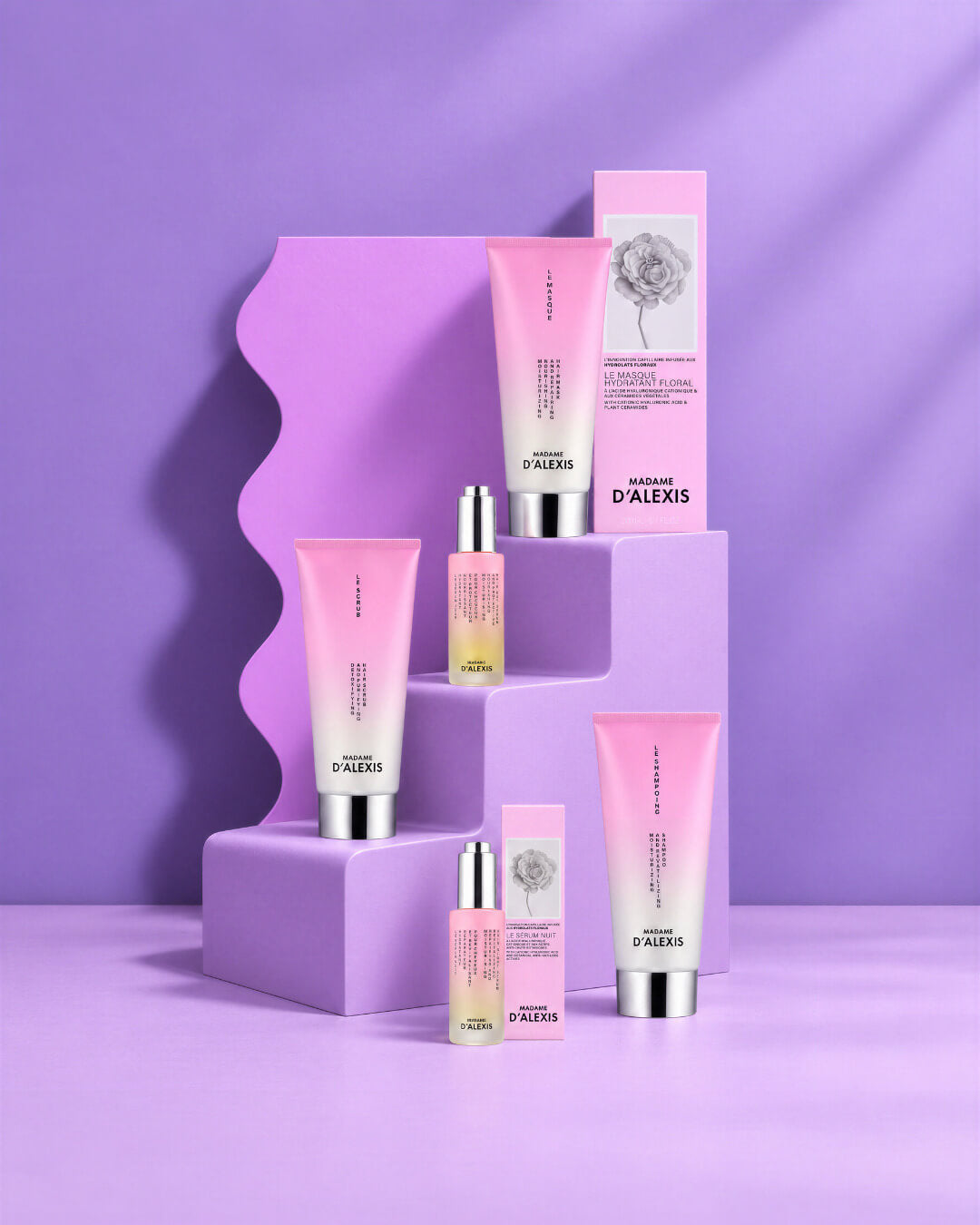
Our brand does not offer a rinse-off scalp mask, but a ritual in several steps, where each product plays a precise role. Prices range from €35 to €49. All of them are formulated with no added water, on a base of organic hydrosols, with 0 parabens, 0 sulphates and 0 silicones, and made in France, in Brittany.
Le Scrub, to purify. It works as a scalp detox. This exfoliating shampoo with fleur de sel, hydrosols, organic coconut oil and cationic hyaluronic acid clears excess sebum and residue from the scalp, and is rinsed out very thoroughly. Use it every 10 to 15 days: on Scrub day, it replaces Le Shampoing, with two successive applications like a double shampoo. This frequency suits sensitive scalps. Our guide to scalp exfoliation explains why regular but spaced-out exfoliation makes all the difference.
Le Shampoing, to cleanse gently. Formulated with 98% ingredients of natural origin, cationic hyaluronic acid, prebiotics and plant keratin, it hydrates, soothes and brings radiance. Do a double shampoo on thoroughly wet hair, massage, then finish with a very generous rinse. It is suitable for daily use, or in rotation with Le Scrub.
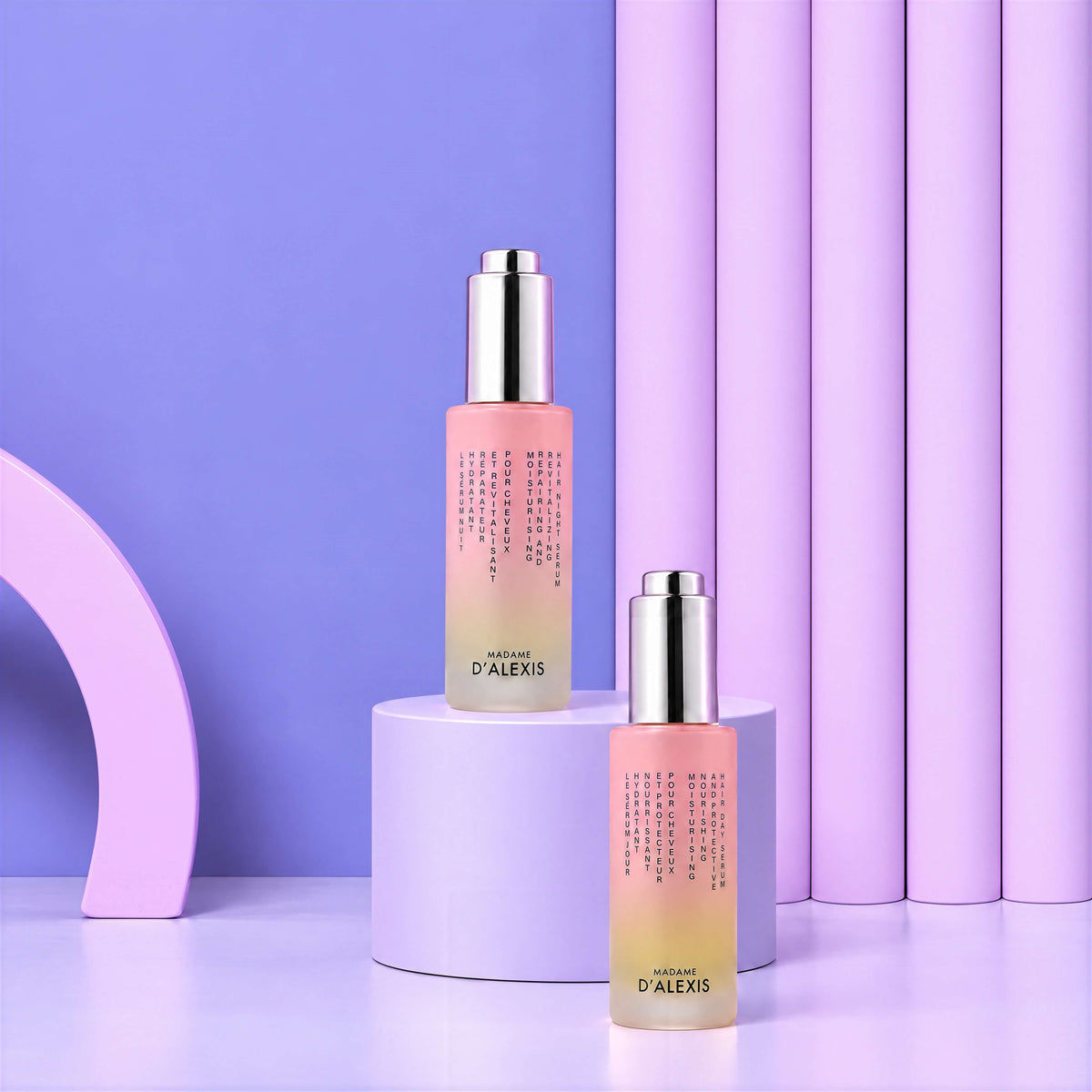
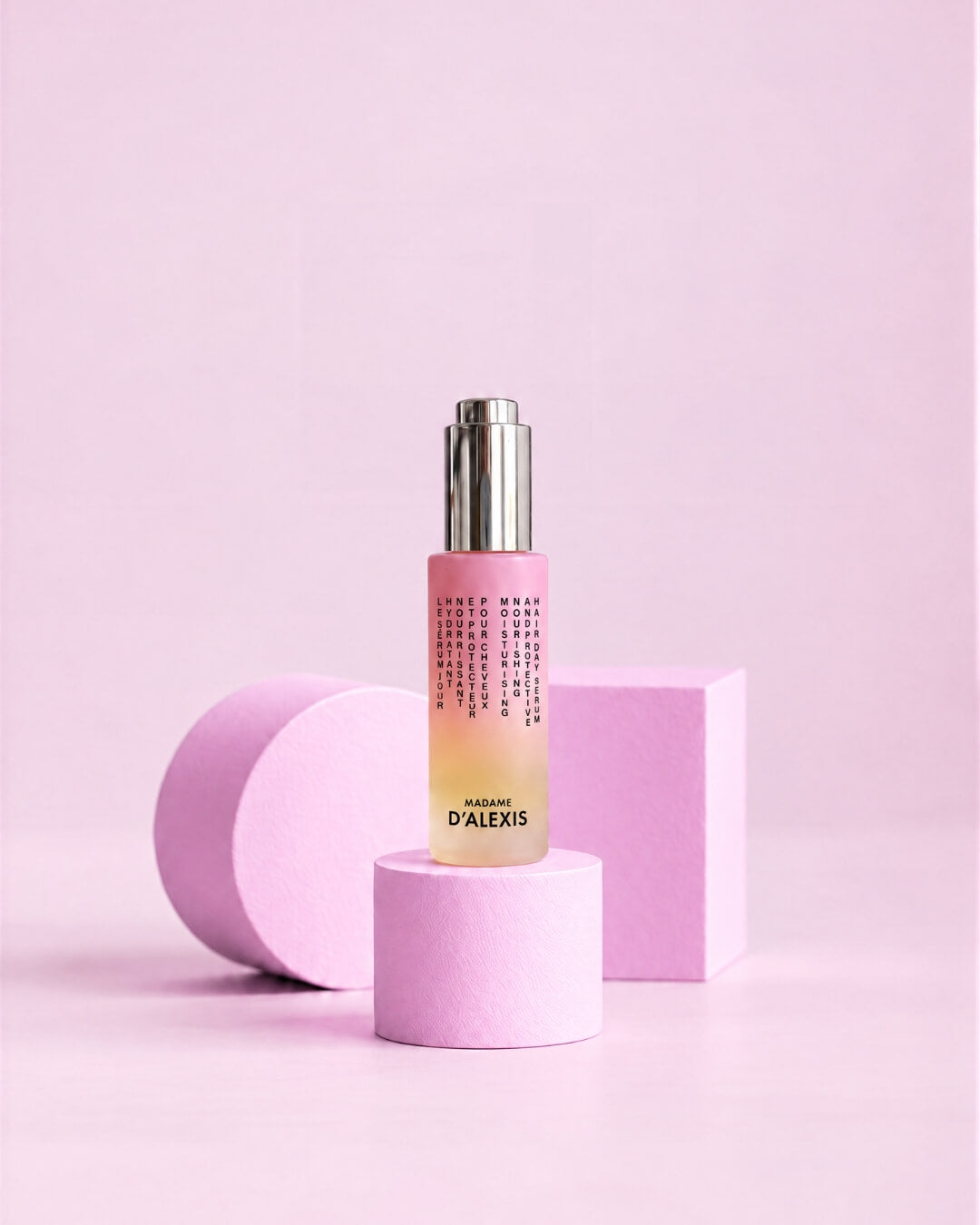
Le Sérum Nuit, the leave-in step. This leave-in scalp serum is the closest thing to a scalp mask in our range. It combines probiotics, postbiotics, fermented extracts, cationic hyaluronic acid and natural anti-hair loss actives: oak, nettle and liquorice. Apply one pipette in the evening, parting by parting, massage, and do not rinse. Use it three to five times a week as a course, then once or twice a week for maintenance. If you are torn between several scalp serums, our comparison will help you decide.
Le Masque, to nourish the lengths. With plant ceramides, cationic hyaluronic acid, orange blossom wax and organic apricot and jojoba oils, it repairs, nourishes and softens the hair fibre with a creamy texture. Keep it for the lengths, as a classic or deep conditioning step, or overnight once a week for sensitised hair.


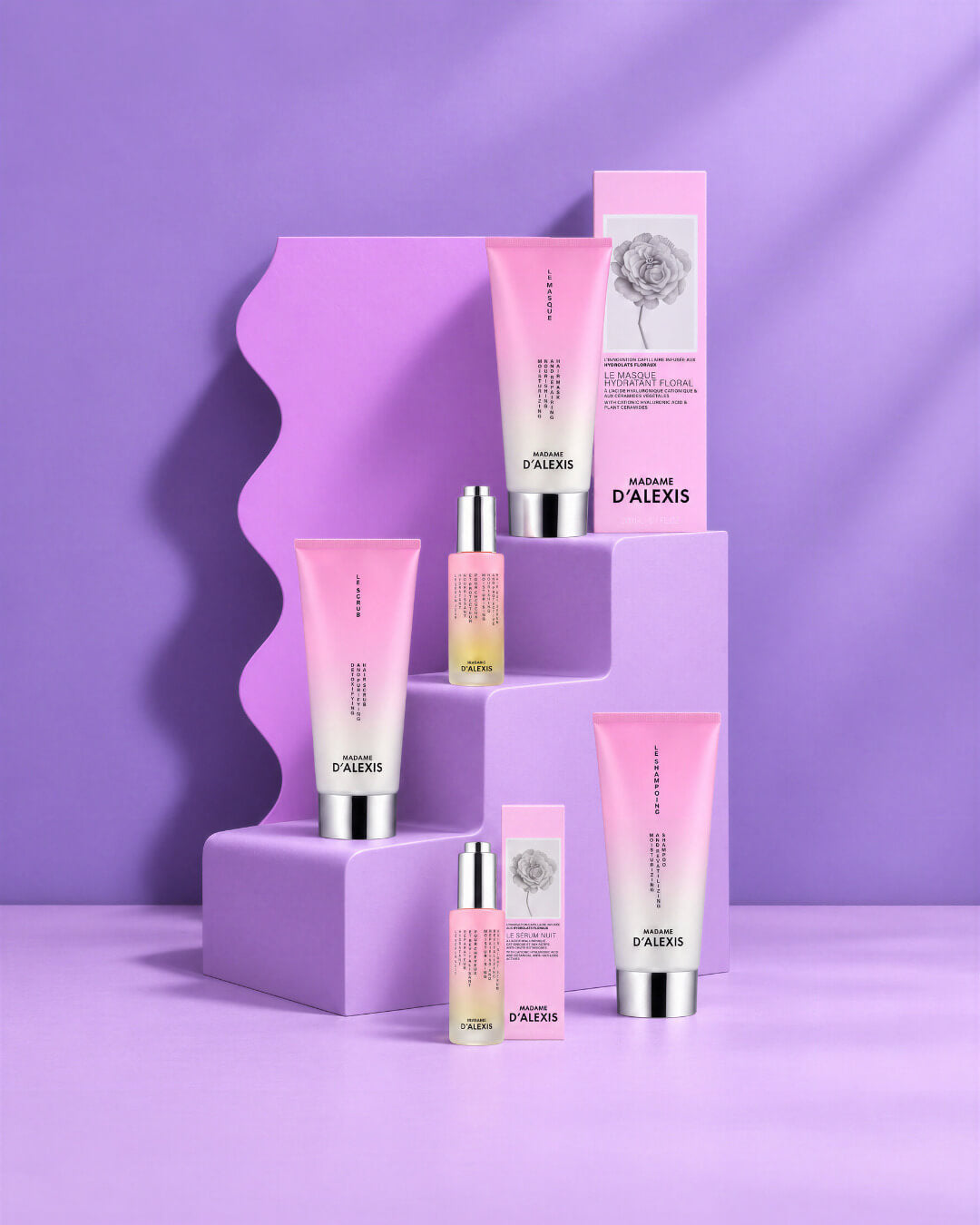
Together, these four products cover every step of the ritual: purify, cleanse, care for the scalp and deeply nourish the hair. With Christmas coming, they also make a lovely gift idea, or even a gift set. Tempted by a ready-made duo for a reactive scalp? Discover our selection for irritated scalps.
WHICH RITUAL FOR YOUR SCALP?
A few questions about your scalp and your lengths, and we build your ritual from our 5 products with organic hydrosols, formulated with no added water.
Sound familiar?
- You answer
- You discover your ritual
- You adjust your selection
Anti-hair loss and strengthening masks: what can you expect?
The question comes up mostly in autumn, when hair falls out more than usual. This seasonal shedding is common, and it is managed first of all with consistency. Products sold to strengthen or restore hair support the ritual, but none of them replaces medical treatment: if hair loss is heavy or long-lasting, talk to a GP or a dermatologist.
To support regrowth and density, Le Sérum Nuit is used as a course over several weeks, in the evening. Regular scalp care mainly brings comfort and a little more body at the base of the hair. For the season, our article on winter hair care completes this ritual with the right habits against cold weather and central heating.
Scalp mask FAQ
Can you put a regular hair mask on your scalp?
It is generally not recommended. A product designed for the lengths contains butters, waxes and oils that weigh hair down at the base and are hard to wash out. Keep it for your lengths, and give the scalp a dedicated formula.
How often should you use a scalp mask?
Once a week suits most scalps for a rinse-out mask. In the Madame d'Alexis ritual, Le Scrub is used every 10 to 15 days, and Le Sérum Nuit three to five times a week as a course, then once or twice a week for maintenance.
How long should you leave a scalp mask on?
Allow around fifteen minutes for a rinse-out mask, following the instructions, and wash your hands afterwards. A leave-in serum such as Le Sérum Nuit stays on all night.
Is a scalp mask suitable for a sensitive scalp?
Yes, as long as you choose a gentle formula without strong fragrance or essential oils, and start with a patch test on a small area. Space out your scrubs and choose soothing hydrosols such as chamomile and Damask rose.
Does a scalp mask make hair grow faster?
A scalp product alone does not change how fast your hair grows, but it creates a healthy environment for it. Combined with a growth and density serum used regularly, it fits into a course lasting several weeks.
In short: a ritual rather than a single mask
The best scalp mask is the one you use regularly, suited to your hair type and backed up by simple habits: purify now and then, cleanse gently, care for the scalp and nourish the lengths. In a word: choose a dedicated formula and stick with it. If in doubt, the diagnosis above will quickly point you to the right ritual.
Conseils