Conseils
Can you use a scalp scrub on a sensitive scalp?
Can you exfoliate a sensitive scalp? Which treatments are best, which ingredients should you avoid, and how often should you exfoliate for gentle, effective results?

Can you exfoliate a sensitive scalp?
Yes, but not just any way. On a reactive scalp, exfoliation must be gentle, spaced out, soothing, and designed as a skincare treatment, not a mechanical stripping.
The essential points to remember
A treatment formulated like the Scrub by Madame d’Alexis provides gentle exfoliation, respects the microbiome, and provides a real sensation of freshness and comfort.
The gentle routine to exfoliate without irritation
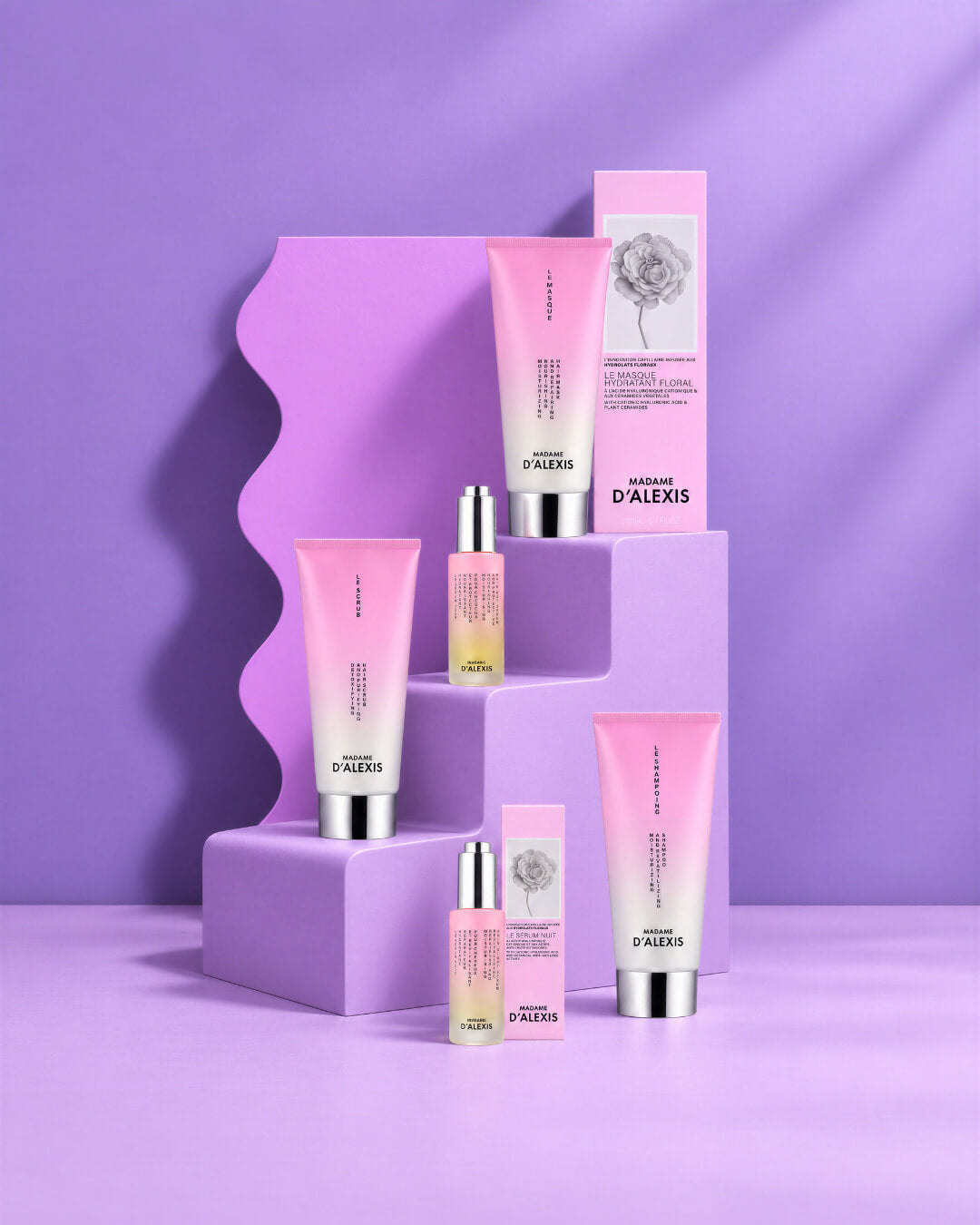
We keep a simple logic: prepare the scalp, wash without sulfates, then restore comfort with targeted treatments.
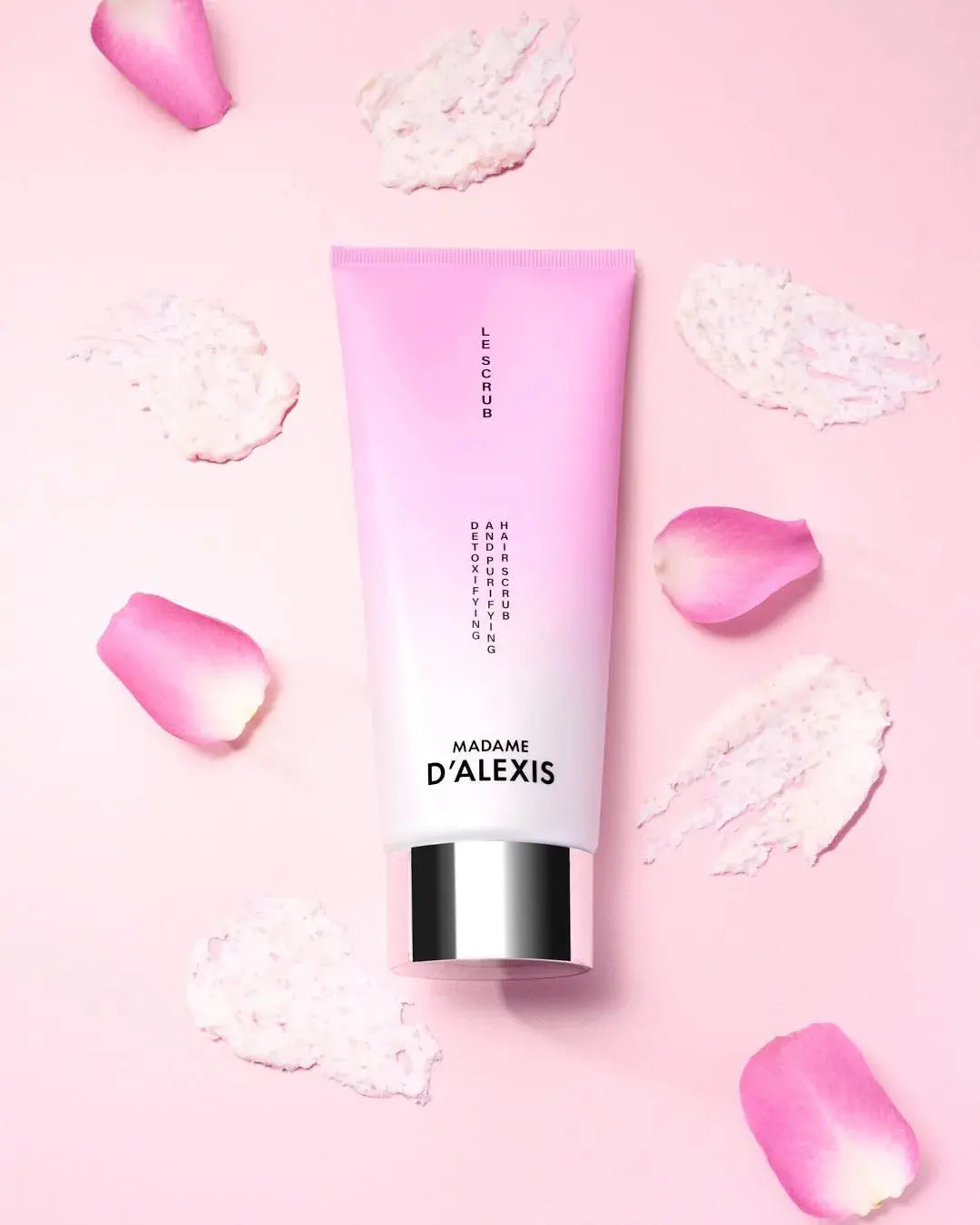
The Scrub - Exfoliating scalp shampoo with organic hydrosols
Reset scalp · flakes · sebum
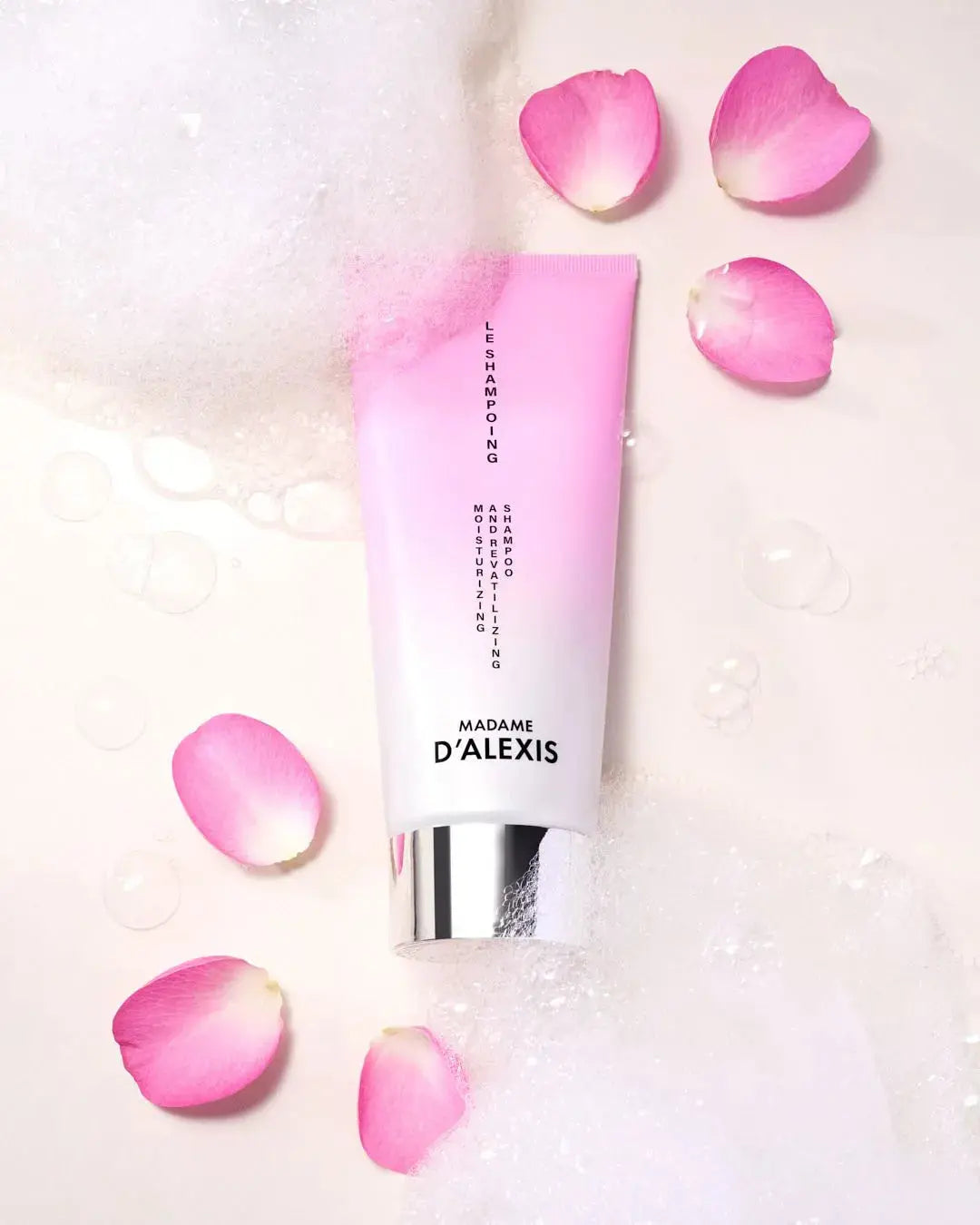
The Shampoo - Organic hydrosols and hyaluronic acid
Gentle wash · sulfate-free · balanced pH
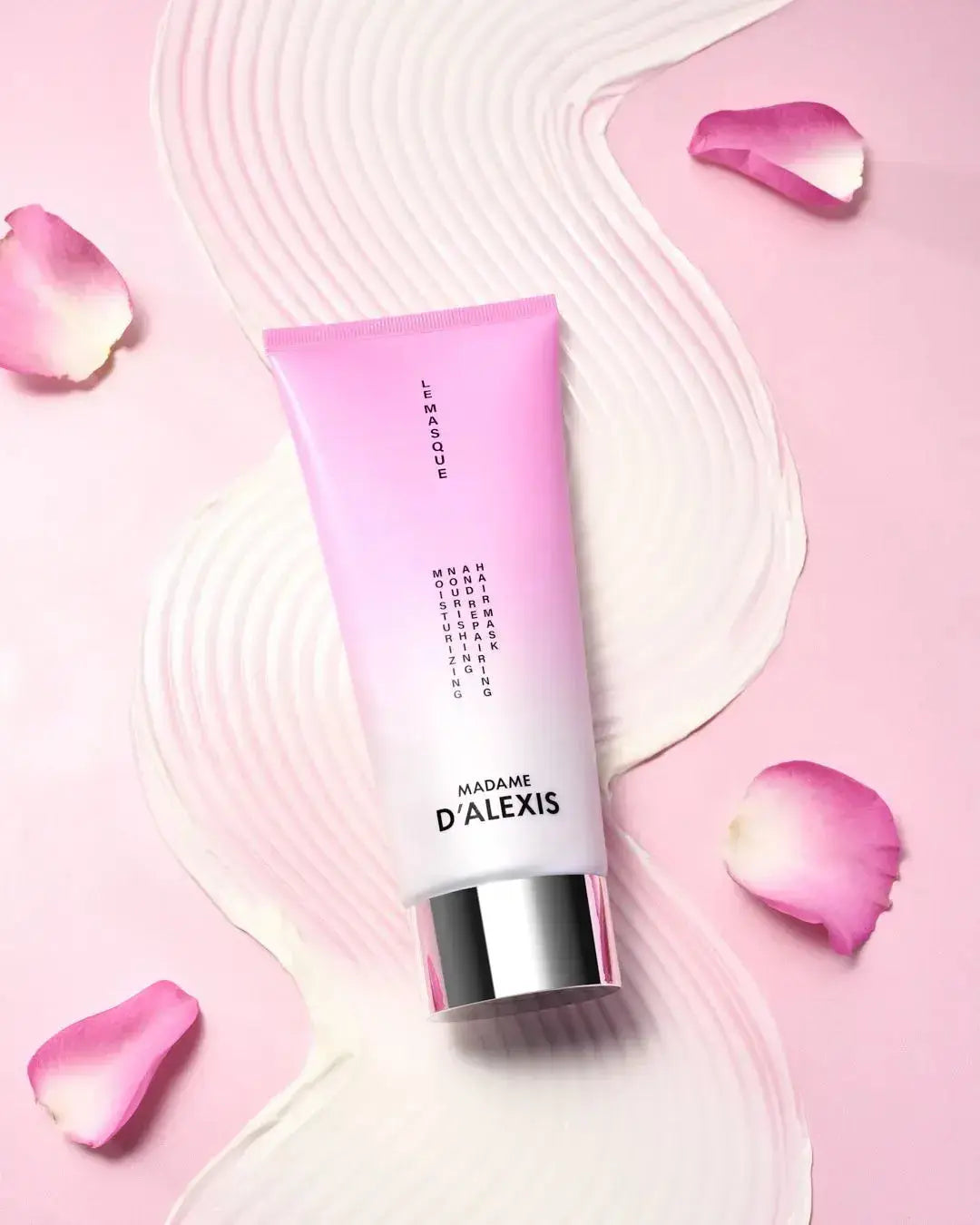
The Mask - Deep hydration with organic hydrosols
Lengths · softness · ceramides
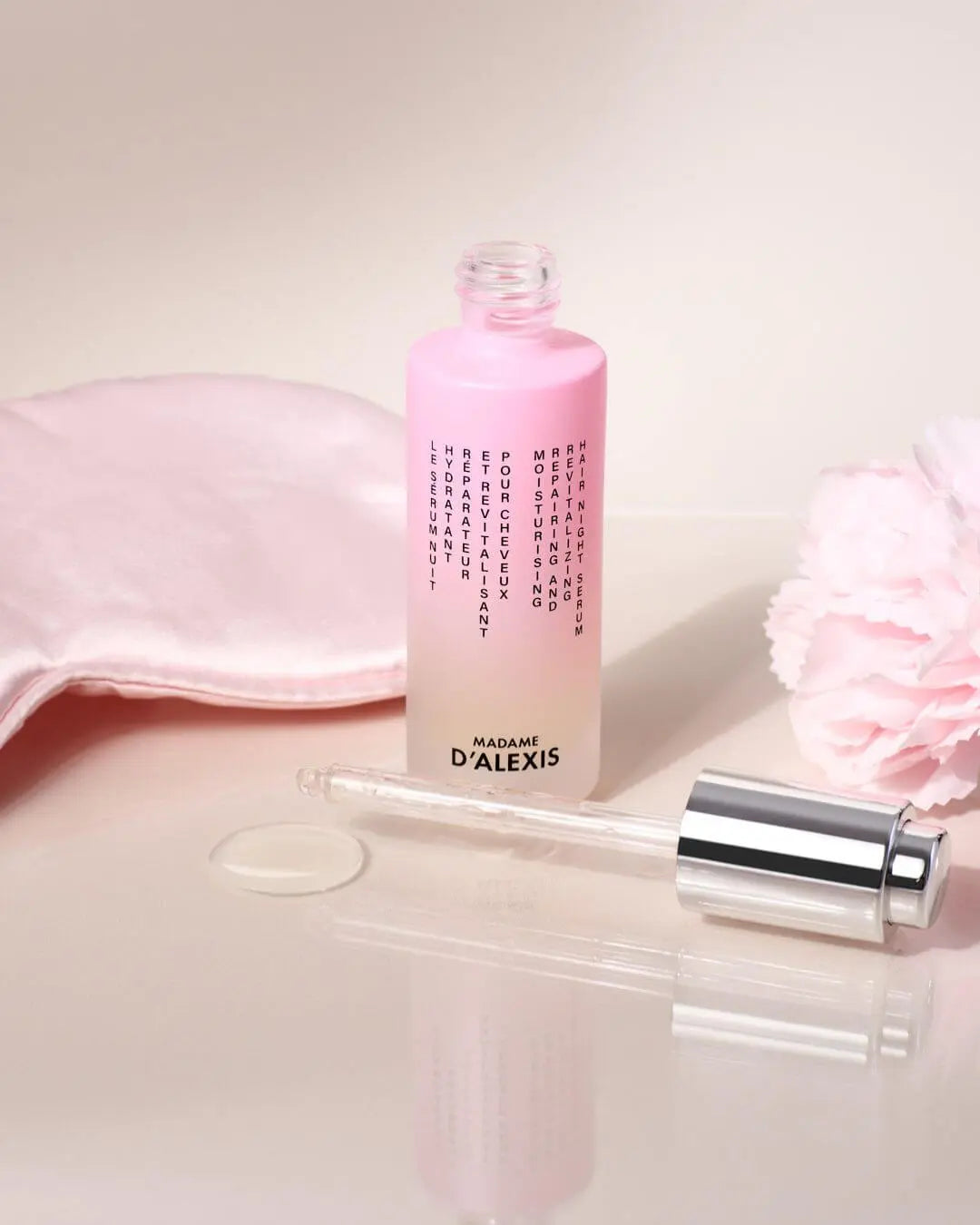
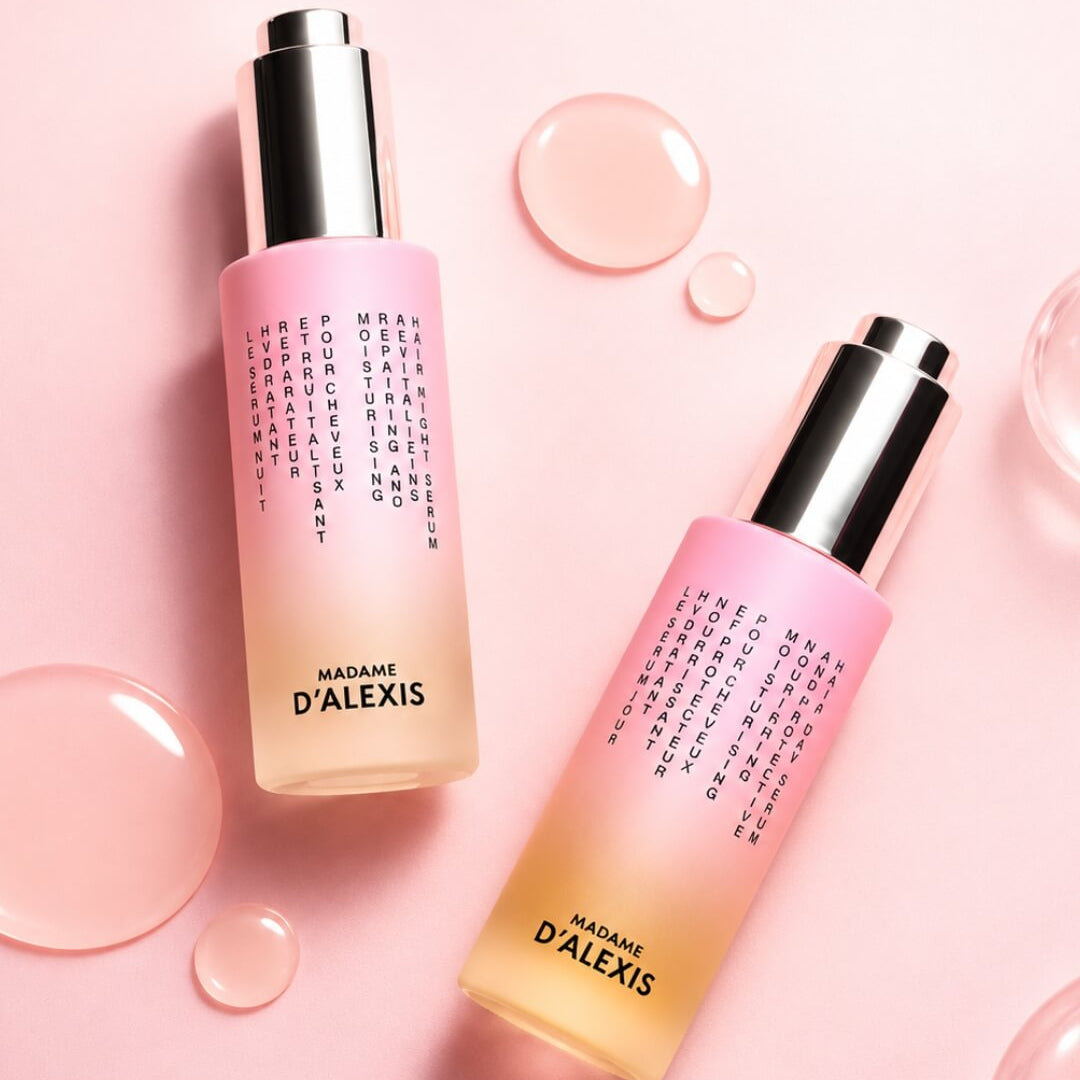
The Night Serum Anti-Hair Loss & Thickening with prebiotics
Microbiome · comfort · density

1Why is exfoliating your scalp useful, even if it is sensitive?
The scalp works like facial skin: it naturally produces sebum, retains pollution residue, and accumulates dead cells. Without care, this excess can suffocate the hair follicles and weaken the hair fiber.
What the scrub removes
- Dead cells and surface impurities.
- Styling product residue.
- Excess sebum oxidized at the roots.
What it helps stimulate
- Better oxygenation of the scalp.
- More stimulated microcirculation.
- A cleaner environment for growth.
Even in the case of sensitivity, exfoliation can therefore provide a real benefit. The key is to choose a gentle scalp scrub, suited to the fragility of the scalp. Where a normal or oily scalp more easily tolerates textures rich in grains, a sensitive scalp requires soothing formulas, with fine particles and hydrating active ingredients.
2The risks of a bad scrub on a sensitive scalp
Doing a scrub on a sensitive scalp is not without precaution. In some cases, it is better to refrain.
| Ingredient or action | Why it is risky | Gentler alternative |
|---|---|---|
| Coarse sea salt or unmelted brown sugar | Can create micro-irritations. | Finely ground sea salt or very fine grains. |
| Baking soda | Alkaline, it changes the natural pH of the scalp. | Formula with a pH designed for the scalp. |
| Coffee grounds | If not rinsed well, it can get stuck at the roots. | Formulated scrub, easy to rinse. |
| Concentrated essential oils | Can irritate very reactive scalps. | Soothing organic hydrosols, better tolerated. |
3How to choose a suitable scrub for a sensitive scalp?
A sensitive scalp requires targeted care. Many hesitate to introduce scalp exfoliation into their routine for fear of worsening irritation. Yet, when done with the right ingredients and the right techniques, it can purify, soothe, and stimulate growth.
The ingredients to favor for an effective scalp scrub
Organic hydrosols
Rose, chamomile, or orange blossom: they help calm discomfort and provide softness.
Hyaluronic acid
It helps retain water in the hair fiber and protect against dehydration.
Fine sea salt
Light mechanical exfoliation, sufficient to remove impurities and dead cells without irritating.
Some active ingredients are particularly recommended when it comes to exfoliating a sensitive scalp. The ideal combination combines purification, hydration, and comfort.
The recommended choice: a formulated treatment, not an approximate recipe
The Madame d’Alexis Scrub combines organic hydrosols, sea salt, and cationic hyaluronic acid in a formula with no added water, 98% of natural origin. Its benefit: to exfoliate delicately while providing lasting hydration and a sensation of freshness.


4How often should you exfoliate a sensitive scalp?
The question of frequency is essential. For a sensitive scalp, the ideal is to limit the scrub to once every two weeks. This is enough to remove impurities without triggering irritation.
| Profile | Recommended frequency | Point of vigilance |
|---|---|---|
| Oily hair | Up to once a week occasionally. | Regulate sebum without stripping. |
| Dry hair | About once a month. | Do not further weaken the fiber. |
| Sensitive scalp | Once every two weeks. | Space out applications to preserve skin comfort. |
A scrub should always be part of a consistent and gentle routine: a sulfate-free hydrating shampoo to wash, a soothing mask to nourish and protect, and suitable serums to strengthen the fiber and maintain scalp balance.
5How to use a hair exfoliant or scrub?
The way a scrub is applied is just as important as its composition. On a fragile scalp, gentleness is imperative.
Wet thoroughly
Always apply the scrub to wet hair to limit friction.
Massage without scratching
Massage in circular motions with the pads of your fingers, never with your nails.
Rinse thoroughly
Rinse abundantly with lukewarm water until the product is completely gone.
6Homemade recipes vs formulated hair treatments
For several years, homemade recipes for hair scrubs have been widely circulating. Their success lies in their simplicity, but their tolerance is not always suited to sensitive scalps.
Homemade recipes
- Sea salt and coconut oil.
- Brown sugar and honey.
- Coffee grounds and vegetable oil.
They are accessible, but the grains can be too large, the pH poorly balanced, and the rinsing imperfect.
Formulated treatment
- Controlled and easy-to-rinse grains.
- Complementary active ingredients, hydrosols, hyaluronic acid.
- Texture designed for scalp tolerance.
A formulated treatment makes the experience safer and limits dosing errors.
The salt or sugar grains contained in the scrub can be too large and cause micro-irritations. Conversely, the Madame d’Alexis Scrub combines organic hydrosols with soothing properties, finely ground sea salt for gentle exfoliation, and cationic hyaluronic acid to hydrate and protect.
An initial approach to hair exfoliation can be interesting with simple recipes, but a sensitive scalp benefits from choosing a more reliable formula.
7The hair scrub: a complete beauty treatment
Beyond simple exfoliation, the scalp scrub is a beauty treatment in its own right. It removes dead cells, frees the skin from styling product residue, stimulates microcirculation, supports hair growth, and restores lightness to the hair.
The key step: the hair scrub becomes a real ritual when it combines health, beauty, and well-being. Well chosen and well dosed, it helps maintain a healthy scalp and more radiant hair.
8FAQ on exfoliating a sensitive scalp
How to make a homemade scrub?
It is possible to make a scrub at home with simple ingredients. A classic recipe consists of mixing one tablespoon of fine sugar or fine salt with a little vegetable oil. The important thing is to take care with the preparation and application: apply to wet scalp, massage gently, then rinse thoroughly. A mild essential oil can be added with caution, but the dosage must remain very low.
How often should you use a scrub?
The frequency depends on the type of scalp. A dry scalp should be exfoliated sparingly, about once a month. For a normal scalp, once every two weeks is a good pace. On an oily scalp, a scrub once a week can occasionally help regulate excess sebum, provided a mild scrub is used.
Which ingredients should be avoided for a sensitive scalp?
To preserve the skin's balance, abrasive scrubs should be avoided: baking soda, sea salt with grains that are too large, unmelted sugar, coffee grounds that are difficult to rinse, and highly concentrated essential oils. Any chemical scrub not formulated for a sensitive scalp should also be avoided.
How to soothe an irritated scalp?
To soothe a sensitive scalp or irritated scalp, opt for soothing treatments rich in hydrosols and moisturizing active ingredients. A nourishing hair mask can help the lengths, but avoid applying rich oils directly to the roots if they become greasy quickly.
Which scrubs are recommended?
The best scrubs for a sensitive scalp are those that prioritize gentleness: fine grains, soothing active ingredients, a formula without sulfates or silicones, and an easy-to-rinse texture. Formulas with hydrosols and hyaluronic acid are particularly interesting for purifying without drying out.
Conseils