Conseils
Straw hair: causes and how to restore very dry hair
Hair that feels like straw? Understand the causes, follow a moisture and nourishment routine, protect your hair from heat and choose the right shampoo.

Straw hair: restore softness, moisture and shine to very dry hair
A complete guide to understanding why hair feels like straw, how to bring dry and brittle lengths back to health with a 30-day routine, and which hair products truly suit dehydrated hair.
Does your hair feel rough, dry and brittle, with no shine? Do you describe it as straw? Plenty of people do: it is one of the most common signs of very dry hair.
Be careful, though: very dry hair is not the same as simply dry hair, and the difference matters when you choose your hair care.
Very dry hair vs dry hair: what's the difference?
Dry hair lacks moisture, but the fibre is still fairly intact. Regular care and light oils are usually enough.
Straw hair, on the other hand, is both dehydrated and damaged. The damaged cuticles stay open and the hair strands can no longer hold water, so the hair feels rough to the touch and looks dull in the light.
Why this difference?
Very dry hair usually comes from a double problem:
- A lack of sebum: your scalp produces too little natural oil to coat the lengths
- A lack of moisture: the hydrolipidic film, the protective barrier of each strand, is damaged
The result: your hair cannot hold on to moisture, which creates that typical straw feel.
The good news? With gentle hair care and the right natural products, you can restore softness step by step. Here is how.

Key points for tackling the straw-like effect
- Diagnose the cause: hot tools, harsh sulphates, chemical processing or a poor diet; change your habits before adding more products.
- Hydrate then seal: aloe vera mist morning and evening, a nourishing mask twice a week, three drops of light oil after rinsing.
- Choose a suitable shampoo: sulphate-free and gentle, with plant actives, like Le Shampoing by Madame d'Alexis.
- Style gently: wide-tooth comb, low-heat styles (braids, plopping) and a heat protectant spray before any hot tool.
- Nourish from within: a balanced diet with omega-3, vitamin E and zinc, and plenty of water, supports elasticity and shine over time.
The Madame d'Alexis routine to turn straw hair back into supple lengths
A short, clear routine: cleanse without stripping, smooth the cuticle, protect by day and care for the scalp by night.
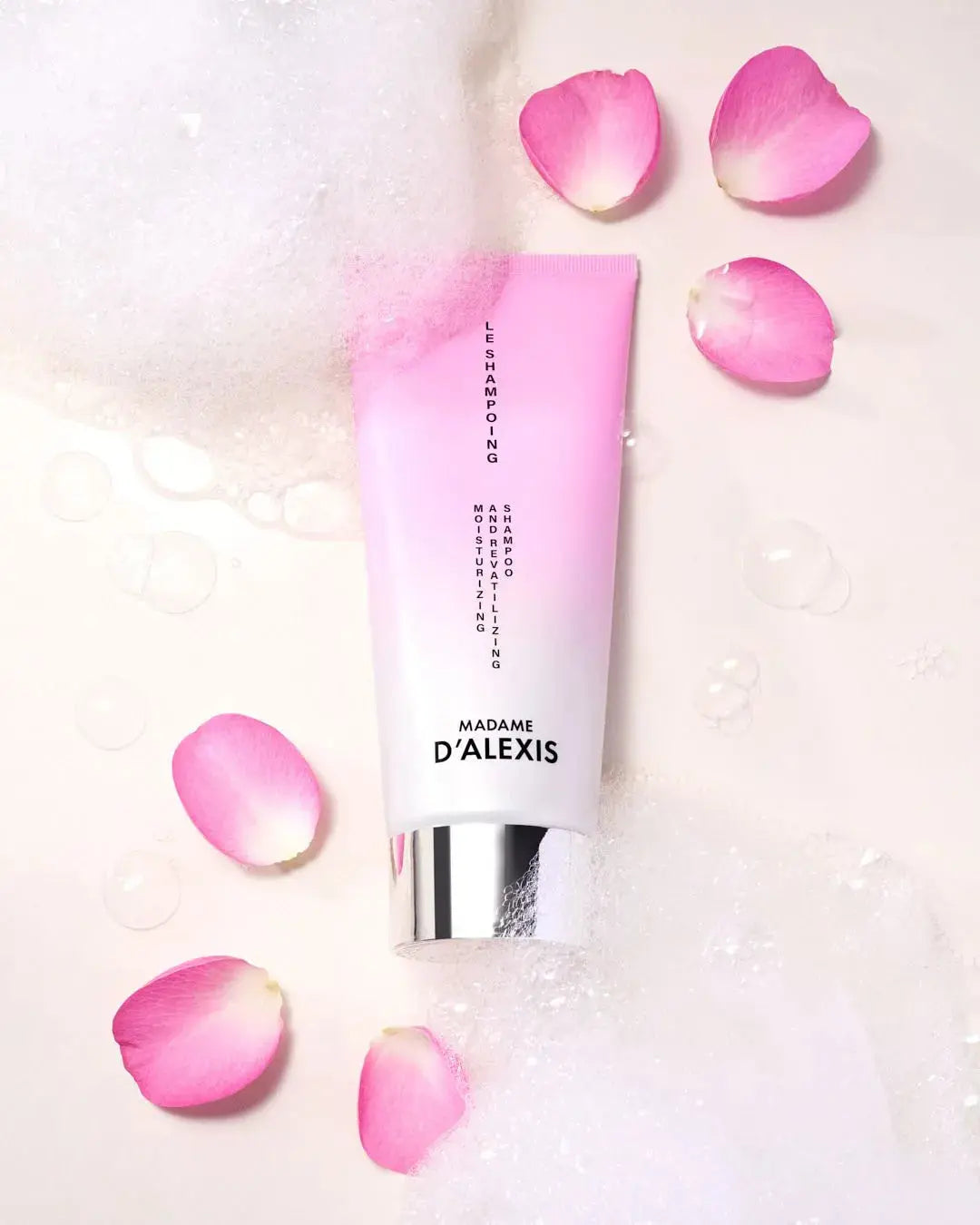
Le Shampoing aux Hydrolats
Straw hair · gentle cleansing · 98% natural
- Organic hydrosols, sulphate-free
- Plant keratin and prebiotics
- Helps restore shine and suppleness
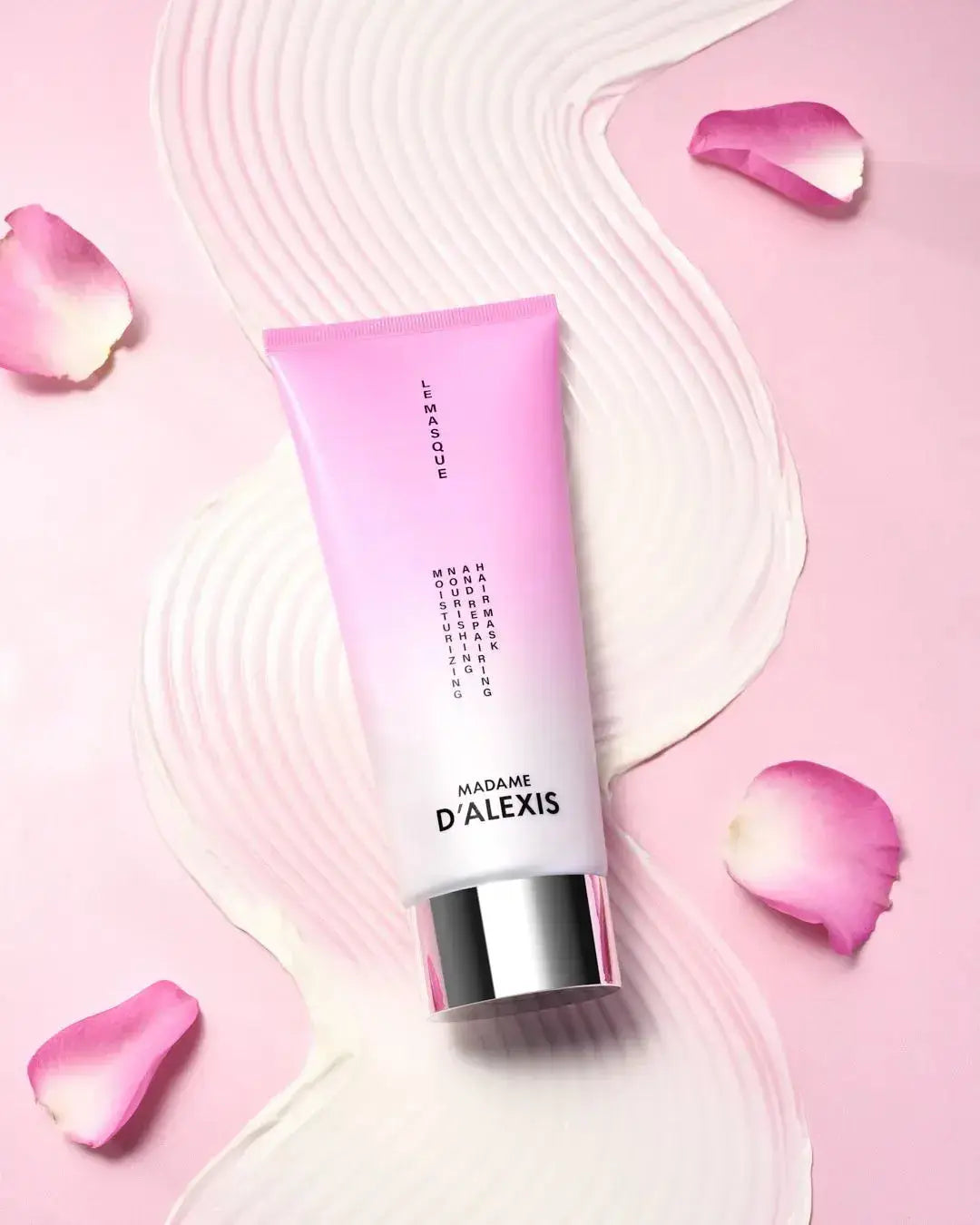
Le Masque aux Hydrolats
Very dry lengths · ceramides · deep conditioning
- Plumps and smooths the cuticle
- Plant ceramides against breakage
- Repairs, nourishes and reduces frizz
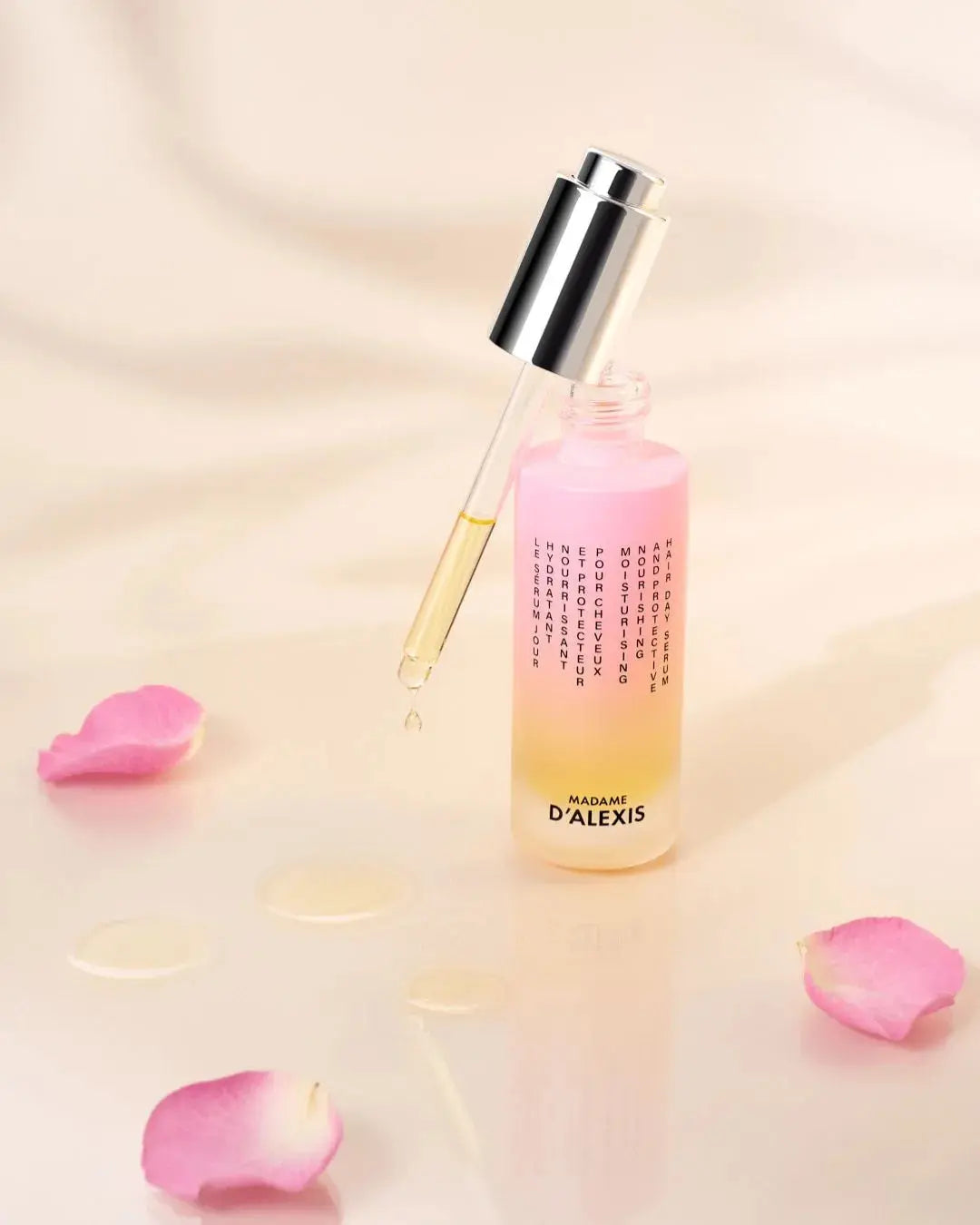
Le Sérum Jour
Heat protection · shine · anti-breakage
- Protects from heat up to 200 °C
- Ceramides to seal in moisture
- Smooth finish without weighing down
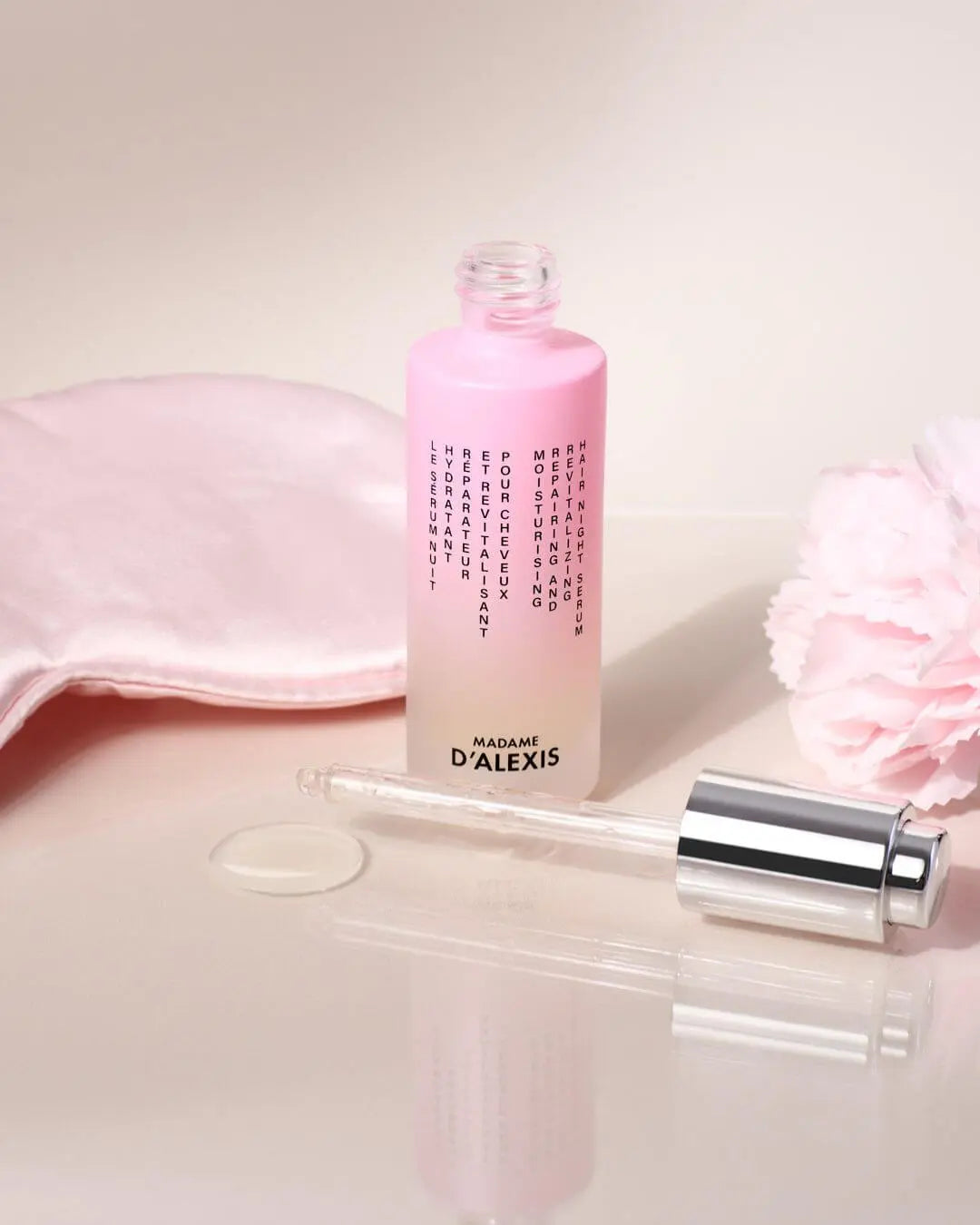
Le Sérum Nuit aux Hydrolats
Scalp · hydration · density
- Soothing organic hydrosols
- Strengthening probiotics
- Scalp care while you sleep
The "straw effect" describes the moment the hair fibre, cracked and dehydrated, loses its cohesion: the cuticles lift and the keratin weakens, so the hair turns dull, brittle and hard to style.
Understanding why it happens comes first. In this article you will find a clear diagnosis, how to build a moisture and nourishment routine, advice on hair products and a few simple home recipes. The aim: bring back water, seal in lipids, protect the cuticle.

Why does hair become dry and feel like straw?
Knowing the causes is the first step towards effective treatments. Here are five common reasons why hair ends up feeling like straw.
Lack of natural sebum (internal cause)
Your scalp skin produces too little sebum. This is often genetic, but it can also be linked to:
- Age (sebum production slows down over time)
- Hormone changes (menopause, pregnancy, after giving birth)
- A diet low in fatty acids
Lack of water in the fibre (dehydration)
Even when you moisturise, damaged cuticles stay open and the hair strands cannot hold water, so it evaporates quickly. This is the classic picture of dehydrated hair.
Chemical processing (colouring, bleaching, straightening)
Colour, bleach and relaxers open the cuticles and weaken the keratin. After several colourings or straightening treatments, hair becomes fragile.
Heat styling (hair dryer, straightener, curling irons)
High temperatures open the cuticles and draw water out of the fibre. Using heat tools every day without a heat protectant makes the straw feel worse.
Environmental factors (sun, chlorine, hard water)
- Pool chlorine and salt water strip the hair
- Hard water, common in much of the United Kingdom, leaves mineral residues on the lengths
- Pollution and UV rays dull the surface of the hair
Diagnosis: is your hair really very dry?
Check these signs:
- ✓ Rough texture to the touch
- ✓ Dull appearance and lack of shine
- ✓ Brittle hair that breaks easily
- ✓ Frizzy lengths even after moisturising
- ✓ Sensation of "straw" or "hay"
If you tick three or more of these signs, your hair is very dry and needs a dedicated routine.
Why does my hair feel like straw?
Environmental factors: heat, UV rays, salt, harsh surfactants
Straighteners and curling irons reach very high temperatures, well above what keratin tolerates. Add frequent blow-drying, summer sun and swimming without protection: water evaporates and the hydrolipidic film oxidises.
Shampoos with harsh sulphates strip it of natural oils and make the problem worse.
Warning signs:
- rough ends after every blow-dry;
- matte surface under grazing light;
- multiple tangles right from washing.
How do you stop your hair feeling like straw?
30-day plan to bring the fibre back to health
Restoring dull hair takes consistency. For one month:
- Weeks 1 to 4: space out washes; two gentle shampoos a week give the hydrolipidic film time to rebuild.
- Less direct heat; keep your hair dryer and straightener on a low setting, or let your hair air-dry whenever you can.
- Sun protection: a hat or scarf, a UV spray, and a quick rinse in the shower after every swim in the sea or pool.
Targeted daily hydration
A well-moisturised strand reflects light and resists breakage better; use a light, non-greasy trio:
- Mist your lengths morning and evening with aloe vera juice mixed with a little vegetable glycerin.
- Apply a leave-in conditioner with cationic hyaluronic acid on damp lengths; it plumps the raised cuticle.
- Seal in the moisture with 3 drops of jojoba or olive oil warmed between your palms; hair stays silky without being weighed down.
Nutrition: what to eat for healthy hair
Hair is built from within. Incorporate foods rich in omega-3 EPA-DHA (oily fish, walnuts) and vitamin E (almonds, seeds) and other vitamins and minerals such as zinc, and drink plenty of water, because hydration starts inside the body. If dryness comes with hair loss or brittle nails, talk to your doctor before taking any supplement.
What is the best shampoo for straw hair?
Read the label before buying
Look for three things:
- Sulphate-free to preserve protective sebum;
- A slightly acidic pH, to help close the cuticles;
- Nourishing plant oils or butters high in the ingredients list, a sign of real nourishment.
Internal causes: nutrition and hormones
A lack of essential fatty acids, zinc or B vitamins can slow down sebum production. At menopause, falling hormone levels can leave hair finer and more porous.
Very restrictive diets, if not medically supervised, can deprive the hair of micronutrients it needs to stay strong.
Curly, coily and wavy hair: natural porosity
The spiral shape of the hair shaft stops sebum from reaching the ends. The result: chronically dry lengths, often with a normal scalp.
The cuticle of curly and wavy hair also has more natural micro-cracks, so moisture escapes faster than from straight hair.
A good habit for straw hair:
- choose rich plant butters such as shea butter or mango;
- seal in moisture with a light oil (jojoba, olive) after rinsing.
Once you know the source of the dryness, whether heat damage, a deficiency or simply your hair type, you can adjust the balance between moisture and nourishment and give your hair the chance to regain shine, softness and strength.

The best oils for very dry hair
Argan oil
Rich in fatty acids and vitamin E, it softens the fibre and restores elasticity. A good choice for very dry, thick lengths.
- How to use: oil bath 30 minutes before washing your hair
- How frequently: twice a week
- Result: softer, more supple lengths with regular use
Coconut oil
Rich in lauric acid, it limits protein loss and coats open cuticles. It can be too heavy for fine hair and suits thick, very dry hair best.
- How to use: as a pre-wash mask
- How frequently: once or twice a week
- Result: softer lengths after a few treatments
Jojoba oil
Close to natural sebum, light and easily absorbed, it suits every hair type. Read our complete guide to jojoba oil for hair for more details.
- How to use: a few drops on the ends or as an oil bath
- How frequently: daily on the ends, or twice a week as an oil bath
- Result: more supple lengths with regular use
How to repair straw hair?
“Oil treatment + ceramide mask” routine
Hair recovers when its balance of water, lipids and protein returns. Start with a plant oil bath: jojoba for fine hair, shea butter or olive oil for thick hair.
Leave it on for an hour under a warm towel; the gentle warmth softens the cuticle and helps the oils penetrate. Rinse briefly.
Then apply Le Shampoing Madame d’Alexis, made with Damask rose hydrosol and free from sulphates; it cleanses without stripping, while its prebiotics respect the scalp microbiome.
Follow with Le Masque Madame d’Alexis, rich in plant ceramides; its texture clings to porous areas, fills the gaps and restores elasticity.
Leave on for fifteen minutes, then rinse with lukewarm water. Let your hair air-dry, pressing the lengths gently in a microfibre towel rather than rubbing.

Key steps: pre-wash, gentle cleansing, deep conditioning, night serum
- Pre-wash: a weekly oil bath and a gentle scalp massage to stimulate microcirculation.
- Gentle cleansing: a double wash with Le Shampoing Madame d'Alexis; the first lather lifts residues, the second cares for the fibre with its plant keratin.
- Deep conditioning: deep conditioning mask twice a week until shine returns, then every two weeks for maintenance.
- Night serum: a few drops of Le Sérum Nuit Madame d'Alexis on the dry scalp, 3 to 5 evenings a week as a course, then once or twice a week; its probiotics and plant actives (nettle, liquorice, oak) care for the scalp while you sleep.
These four steps answer a common question: can you really repair dry hair and damaged hair? Yes, by combining lasting moisture, plant proteins and protection from heat.
Curly and wavy hair: how to care for curls that feel like straw?
Curls hold sebum poorly, so every layer of moisture needs sealing. After your mask, apply an aloe vera leave-in cream, then a few drops of Le Sérum Jour Madame d'Alexis.
Style with your fingers using the scrunch method, then let dry naturally or with a cool diffuser. To keep the moisture in:
- Refresh in the morning with a mist of filtered water and a little plant glycerin.
- Sleep on a silk pillowcase to limit friction.
- Plan a warm oil bath every two weeks to soften curls and smooth frizz.
Over the month, this approach leaves curls softer and shinier while keeping their natural movement.
How to stop hair feeling like straw for good?
Four-week plan for healthy hair
Bringing dull hair back takes consistency. For one month:
- Every week: two gentle washes are enough; between them, a simple rinse or a co-wash will do.
- Protect your hair from hot tools; apply a heat protectant before blow-drying, use a low setting, and book regular haircuts to remove split ends.
- Sun and sea: a hat, UV protection for hair and a rinse in the shower after swimming.
Moisture every day
Hair strands that hold moisture reflect light and break less; try a light, non-greasy trio:
- In the morning, a mist of aloe vera and water.
- On damp lengths, a light leave-in conditioner.
- On the ends, two drops of dry oil warmed between your palms; keep scalp oil for a pre-wash massage.
Diet and very dry hair
Healthy hair starts on your plate: a balanced diet with EPA-DHA omega-3 (oily fish, walnuts), vitamin E (nuts, seeds) and enough water to stay hydrated. Good hydration from within supports supple lengths.
If you are considering supplements, or if dryness comes with hair loss or brittle nails, ask your doctor or pharmacist for advice.
Which shampoo for straw hair?
A gentle, sulphate-free shampoo with botanical actives is the first step towards hair that no longer feels like straw.
Here is what to look for, with our own formula as an example: a high natural-origin content, a gentle cleansing base and no harsh chemicals.
What makes a good shampoo for very dry hair
1. Le Shampoing Madame d’Alexis: hydrosols and prebiotics
- 98% of natural origin, with no added water; organic floral waters (Damask rose, chamomile, orange blossom).
- Plant keratin (hydrolysed plant proteins) and prebiotics to smooth the fibre and boost shine.
- Sophisticated floral fragrance; rich yet non-stripping lather.

2. A shampoo rich in plant oils
- Nourishing plant oils rich in omega-9 and vitamins A, C and E.
- Humectant sugars that help water reach the core of the hair shaft.
- A recyclable bottle and a short, readable ingredient list.
3. A creamy formula for thick hair
- A high natural-origin content and humectants for progressive hydration.
- A creamy texture inspired by spa rituals; ideal for thick, dull or brittle hair.
4. A light formula for frequent washing
- Aloe vera extract and plant amino acids to restore suppleness and shine.
- A gentle cleansing base that limits breakage during detangling.
- Suited to frequent use: light lather, quick rinsing, a subtle herbal fragrance.
5. A cream wash for very dry lengths
- Plant butters such as shea and rich oils; no silicones.
- A creamy, low-lather texture: a small amount emulsified is enough to nourish long hair.
- Helps define curls and tame dry frizzy hair without weighing it down.
How to get the most from your shampoo
- Dilute: mix a little product with warm water in your palm, massage the scalp only, then let the lather run down the lengths.
- Double wash: the first lather lifts residues, the second cares for the fibre.
- Cool final rinse: cool water helps smooth the cuticle and adds shine.
- Frequency: twice a week is usually enough, as washing your hair too frequently strips it; in between, a co-wash or a plain rinse.
Choose a gentle shampoo and conditioner, wash with care, and rough lengths gradually give way to soft, shiny hair.
How to style straw hair?
Very dry hair needs gentle handling; any tension adds to breakage. Start with the right tools:
The right tools: wide-tooth comb, boar bristle brush
- Wide-tooth comb: detangles wet hair coated with conditioner, separating knots without snapping the strands.
- Boar bristle brush: on dry hair (or oily hair), it spreads sebum along the lengths and smooths a dull surface.
- Clean your tools every week in soapy water to avoid build-up that dulls the hair.
Low-heat styles: braids, loose buns and plopping for curly hair
- Fishtail braid: limits friction at night and helps prevent split ends.
- High loose bun: holds the roots without pulling on fragile ends.
- Plopping on curly hair: a cotton T-shirt dries and defines curls without heat.
Heat protectant and serum before styling
- Apply a heat protectant spray before using any hot tool to prevent further damage.
- Then seal with two drops of dry oil serum (jojoba and ceramides) warmed between your palms and pressed onto the ends: the hair reflects light and feels smoother.
Targeted solutions: home recipes and treatments for straw hair
How to moisturise hair with a simple home remedy?
In a warm bowl, mix:
- 1 tablespoon of raw honey to attract moisture;
- 2 tablespoons of virgin coconut oil to seal it in.
Apply section by section, cover with a warm towel for twenty minutes, then rinse; the sugars and fatty acids leave the cuticle smoother.
Keratin, amino acids and ceramides: filling the gaps in the fibre
- Hydrolysed keratin: helps fill weak spots in the protein chain.
- Arginine and serine: support internal cohesion and elasticity.
- Plant ceramides: rebuild the intercellular cement and reduce porosity.
A weekly mask combining these actives gradually strengthens the fibre. Too much protein can cause protein overload, though, so alternate with moisturising masks.
Does heat-damaged hair grow back?
The hair fibre is not alive, so burnt lengths cannot be undone. However:
- The hair cycle keeps renewing; a healthy root keeps producing a new shaft.
- Trim the burnt ends to stop splits travelling up the strand.
- Massage your scalp regularly; a well-cared-for scalp is a healthier base for new hair.
Our selection for straw hair
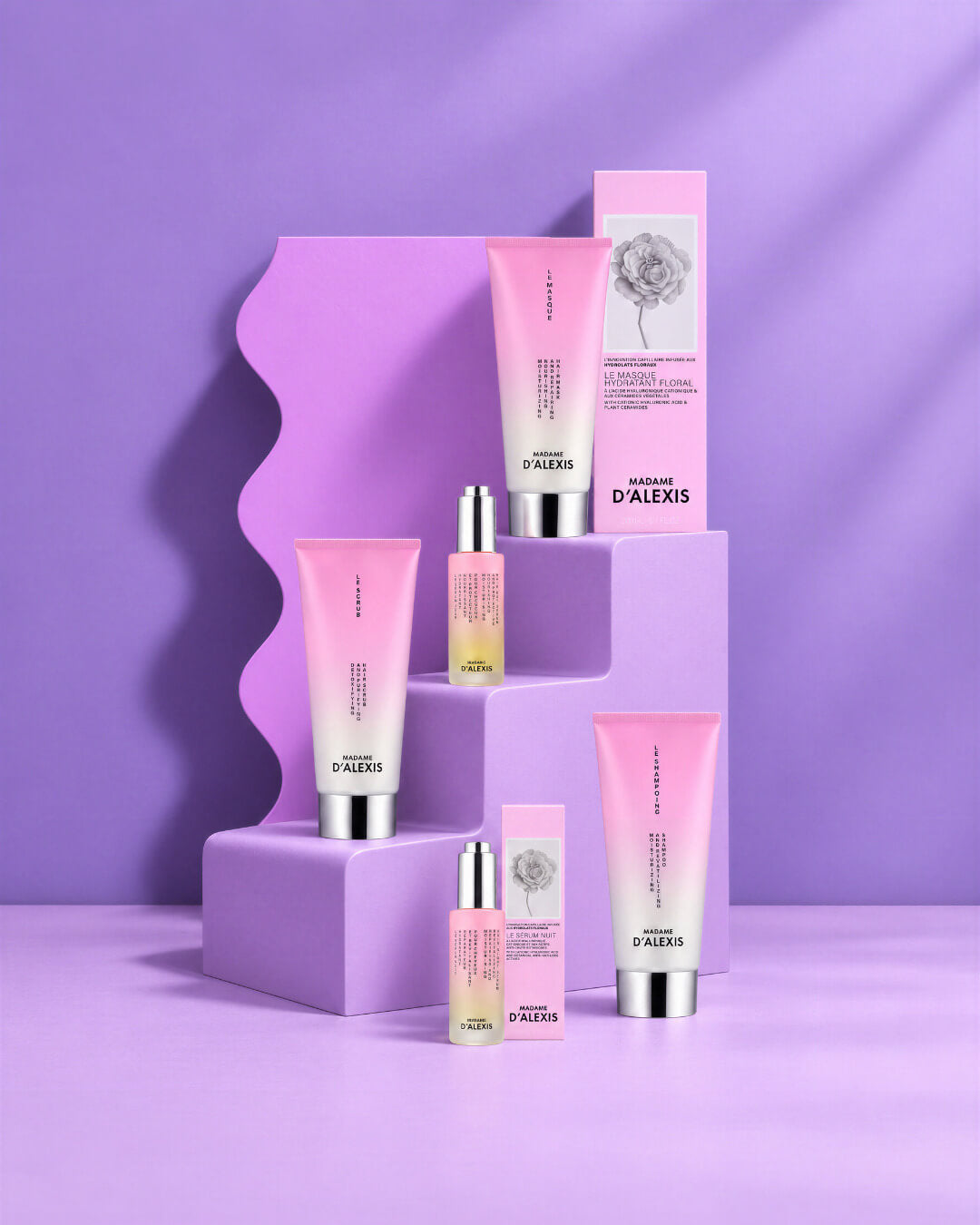
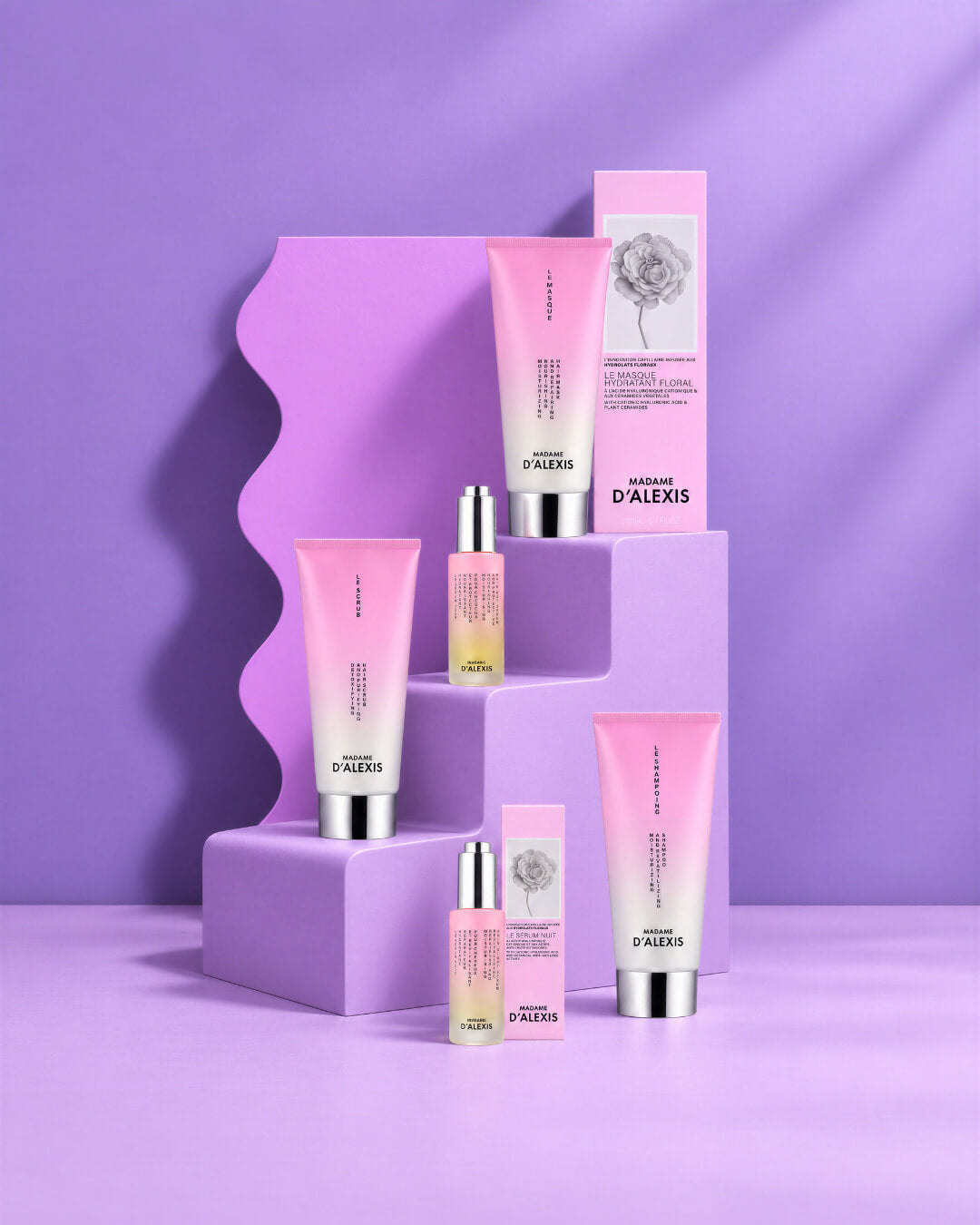
Four Madame d'Alexis products, each matching a key step. Use them together over a 30-day routine.
Le Shampoing aux Hydrolats - Gentle Cleansing & Hydration (€35)
Why it helps with the straw effect:
- Sulphate-free: preserves the natural protective sebum
- Plant keratin + prebiotics: smooth the fibre and respect the scalp
- Gentle formula: helps smooth the open cuticles
- 98% natural, based on organic hydrosols (Damask rose, chamomile, orange blossom)
- What to expect: hair feels softer and shinier wash after wash. The straw effect fades with regular use.
- How to use: double wash, twice a week.
- First lather = cleansing.
- Second lather = nourishment. Cold rinse to seal.
Le Masque aux Hydrolats - Intense Repair & Shine (€49)
Why it helps with the straw effect:
- Plant ceramides: reconstitute the intercellular cement, reduce porosity
- Cationic hyaluronic acid: plumps and smooths the raised cuticle
- Apricot and jojoba oils: deep nourishment without weighing hair down
- Reduces frizz and breakage
What to expect: softer, shinier lengths; use it twice a week during the routine.
Directions for use: apply after shampooing to lengths and ends. Leave on for 15 minutes under a warm towel. Rinse with warm water.
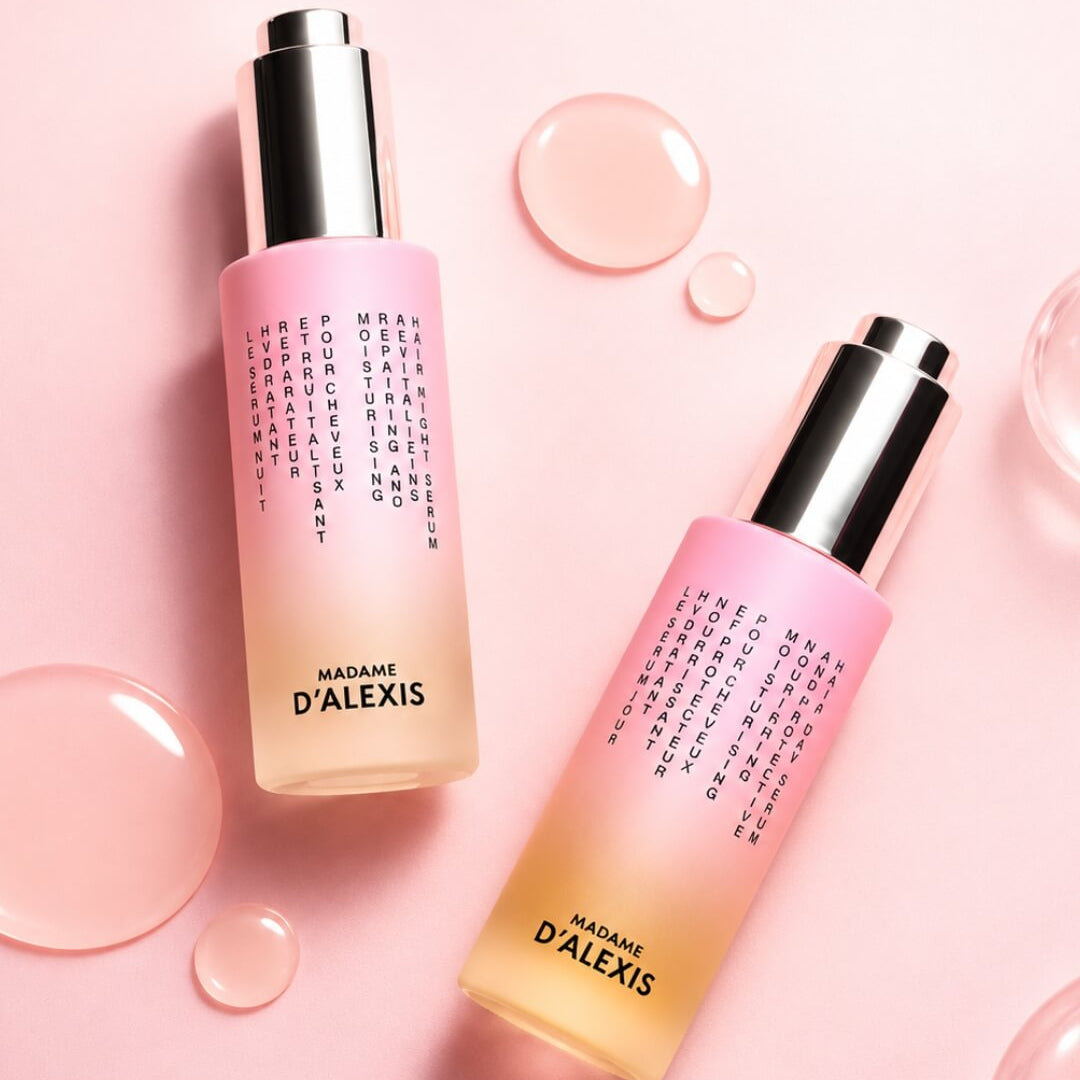
Le Sérum Nuit - Regeneration During Sleep (€35)
Why it helps with the straw effect:
- Scalp probiotics: rebalance the microbiome and soothe the scalp
- Nettle, liquorice and oak: plant actives selected for the scalp
- Organic flower hydrosols: soothing and light nourishment
- Supports density
What to expect: a cared-for, comfortable scalp. The straw effect fades as the whole routine is followed.
How to use: a few drops on the dry scalp in the evening, 3 to 5 times a week as a course, then once or twice a week. Massage lightly and leave on overnight.
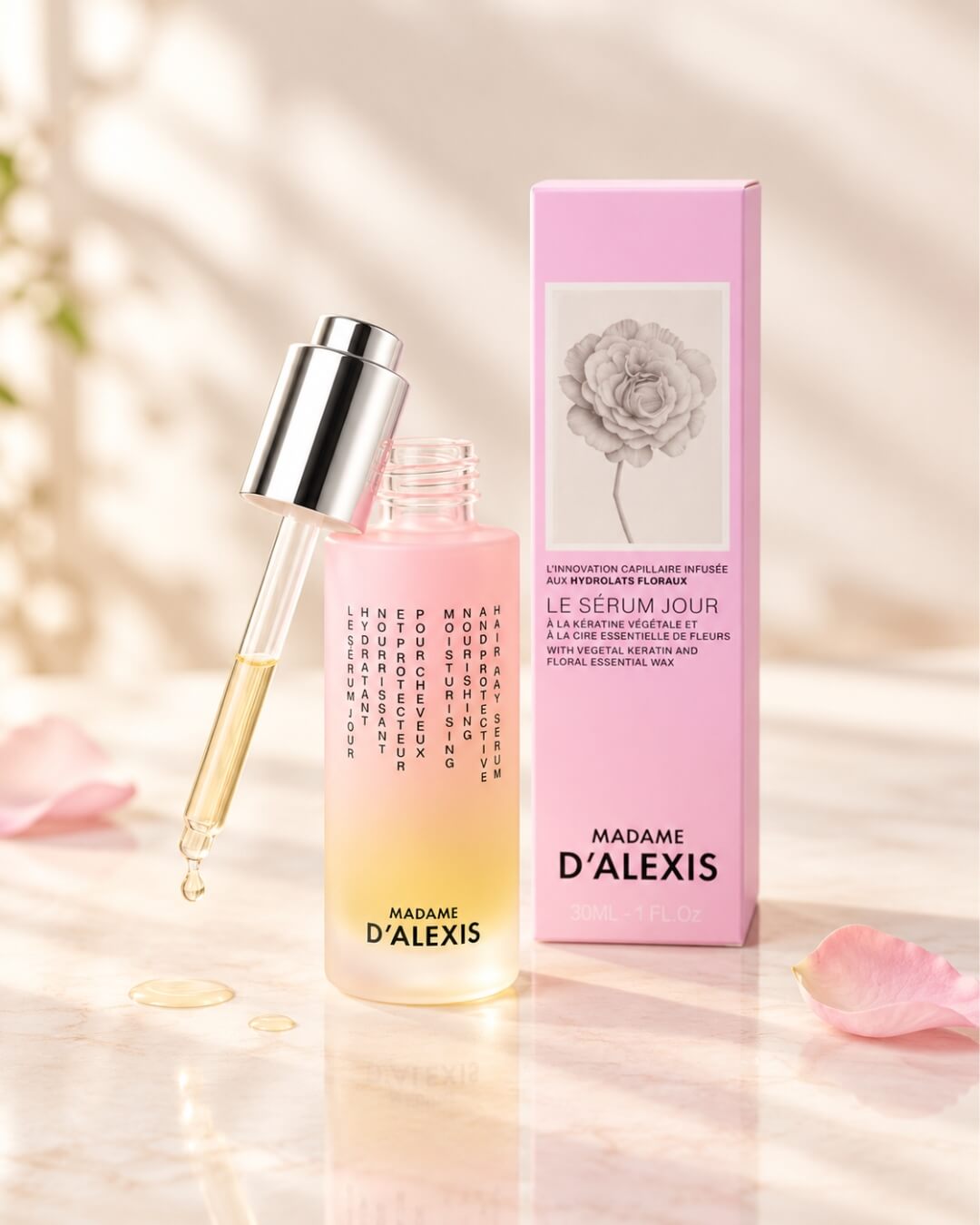
Le Sérum Jour - Daily Protection & Shine (€35)
Why it helps with the straw effect:
- Plant ceramides: seal hydration, anti-breakage
- Natural heat protection up to 200 °C against hot tools
- Smooth finish without weighing hair down: lengths look and feel smoother
- Jojoba dry oil: light daily nourishment
What to expect: shiny, protected lengths. The straw effect looks smoother once applied.
How to use: 2 to 3 drops warmed between your palms, pressed onto lengths and ends, daily or as needed.
The complete 30-day routine

Wash after wash, the routine leaves hair softer, shinier and more supple, and the straw effect fades.
FAQ: straw hair, what to do?
What can I do about straw hair?
Moisturise, then seal:
- rich mask with shea butter once a week;
- jojoba oil treatment before each shampoo;
- a protective serum on the lengths.
Add low-temperature styling to stop the straw effect on damaged hair.
How to repair very dry hair?
Combine an oil bath (for example a few drops of ylang-ylang essential oil diluted in a plant oil), a gentle shampoo and a strengthening mask with plant proteins. Repeat twice a week; the fibre becomes more compact and brittle hair regains elasticity and shine.
What are the best tips for straw hair?
- Warm coconut oil, left on overnight under a shower cap.
- Apple cider vinegar rinse to close the cuticle.
- Sulphate-free moisturising shampoo.
- Avoid too much heat and choose loose styles. These simple treatments often help normal hair that needs extra care.
How do you get rid of the straw effect on dry hair?
Avoid harsh chemicals and sulphates, use an oil and protein mask, and rinse with cool water. Smooth the surface with three drops of dry oil, then let it air-dry: with a consistent routine, the straw effect fades over the weeks.
Why does hair become straw-like?
The cuticle lifts under the combined effect of dehydration, excessive heat and unsuitable products. The fibre loses its lipid film, dryness sets in and the lengths turn rough.
What treatment for damaged hair?
Choose a gentle shampoo with plant proteins, add a nourishing mask rich in oils (argan, avocado) and a ceramide leave-in before styling. This trio nourishes and strengthens dry and damaged hair.
How to care for brittle hair?
Alternate oils and proteins: a castor oil bath one day, a protein mask a few days later. Brush only damp hair coated with conditioner and avoid pulling. Over the months, breakage becomes less frequent.
Which hair routine should I follow?
Morning: aloe vera mist and three drops of light oil.
Evening: a scalp serum.
Each week: a moisturising shampoo, a deep conditioning mask and a cool rinse.
Every 10 to 15 days: Le Scrub, which replaces the shampoo that day, to purify the scalp. This natural routine moisturises, nourishes and protects straw hair.
How to avoid the straw effect after colouring?
Alkaline colour lifts the cuticle; the fibre becomes porous and sensitive, so the first two days matter.
Right after colouring, rinse thoroughly with lukewarm water, then apply an acidic conditioner to close the cuticle.
Two days later, apply a repairing mask: melted mango butter with a few drops of plant oil, twenty minutes under a warm towel.
Maintenance rules
- no more than three washes a week, with a gentle sulphate-free shampoo;
- a heat protectant before every blow-dry;
- a hat or UV hair mist when you spend time in the sun.
This keeps breakage down and helps your colour stay vibrant until your next appointment.
Why does hair become dry?
Dry hair is rarely down to chance; several defences give way one after another.
First the environment: UV rays, wind, central heating and pollution oxidise the hydrolipidic film and let water evaporate. Then heat: very hot tools weaken the keratin, the cuticle cracks and the tips turn white.
Then come internal factors: a lack of omega-3, zinc or B vitamins, a thyroid problem or hormone changes at menopause. The shaft becomes finer and more porous.
Cosmetic habits finish the job: harsh sulphates, daily washing, repeated colouring without a conditioning step.
Early signs
- rough ends after each blow-dry;
- matte surface under grazing light;
- tangles as soon as you wash.
- First steps: lower the temperature of your heat tools, switch to a gentle sulphate-free shampoo and add oily fish and seeds to your diet. Gradually, the lengths hold moisture better and the base for lasting repair is in place.
How long does it take to repair straw hair?
It depends on the damage and on your routine. An oil bath or a mask brings softness straight away, and lasting change comes with regular care; our routine is planned over 30 days.
What oil for very dry hair?
Argan oil is a rich choice for very dry hair. Coconut oil suits thick hair and jojoba oil suits every hair type. You can also combine them.
Should you cut very dry, straw-like hair?
Not necessarily. If the damage is moderate, a good routine helps. Cut only the very brittle ends, then keep up regular trims and a caring routine so the problem does not come back.
Very dry hair: moisture or nourishment?
Very dry hair needs both. Moisture brings water (moisturising masks, leave-in conditioner), nourishment brings lipids (oils). Alternate the two to keep the moisture balance right.
Conseils