Conseils
Scalp irritation: causes, solutions and natural remedies
Scalp irritation: causes, symptoms, and effective solutions. Discover how to quickly soothe redness, itching, and dandruff with a gentle, tailored routine.

How to soothe scalp irritation without further irritating the skin?
Itching, redness, tightness, or a burning sensation can be caused by a weakened skin barrier, a buildup of residue, a product that is not well tolerated, or a dermatological condition. The priority: simplify the routine, wash gently, and do not exfoliate a scalp in the midst of active irritation.
- An irritated scalp can be linked to dryness, washing, heat, hair products, an allergy, or a dermatological condition.
- During an active redness or burning phase, opt for a short routine: gentle shampoo, lukewarm water, minimal handling.
- Le Scrub is reserved for a congested but comfortable scalp: every 10 to 15 days, and it replaces shampoo that day.
- The Madame d’Alexis Mask should only be used on the lengths and ends, never on the scalp.
- Le Sérum Jour is also used on the lengths and ends; its heat protection goes up to 200°C.
- Thick patches, oozing, pain, swelling, bleeding, or unusual hair loss require medical advice.
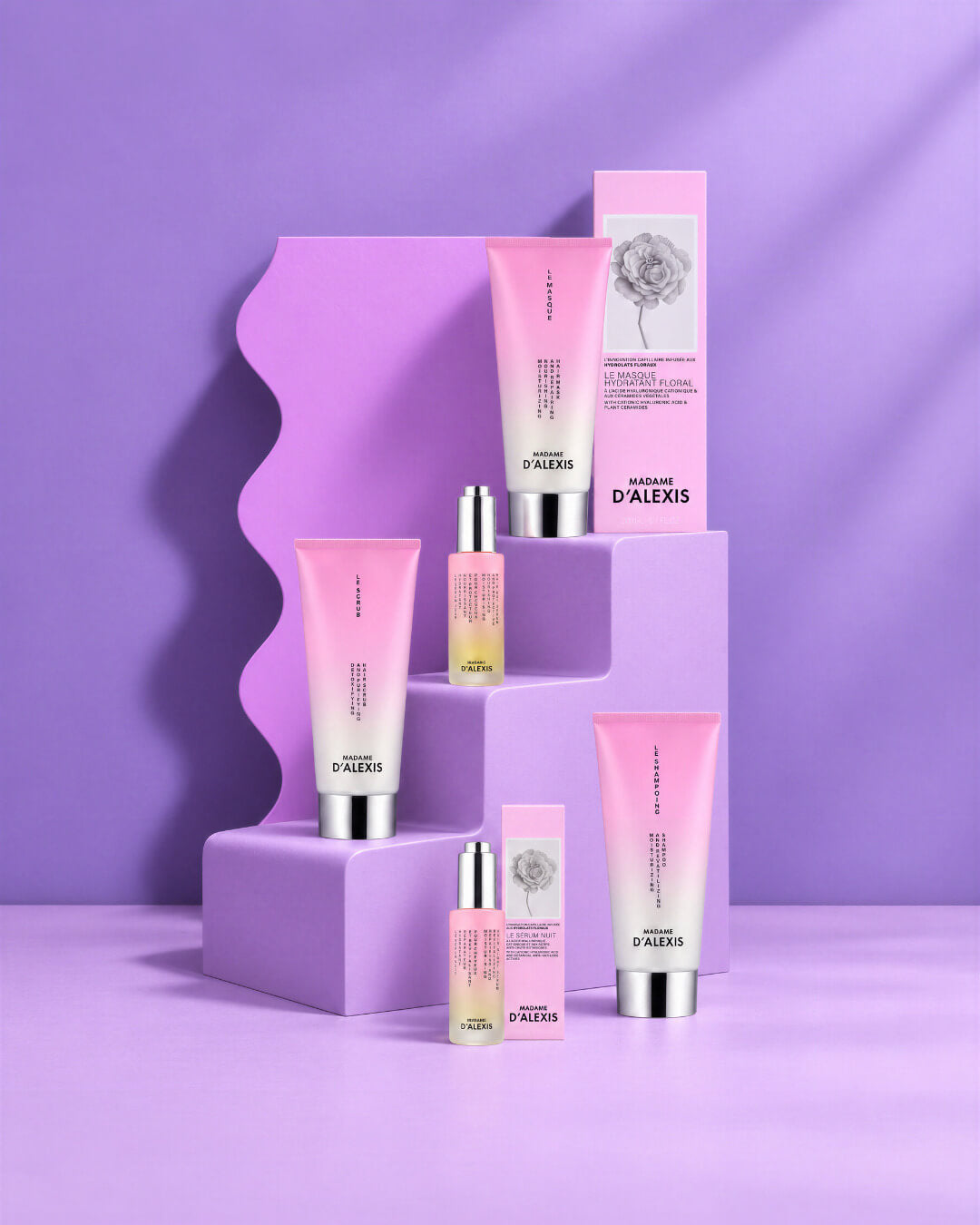
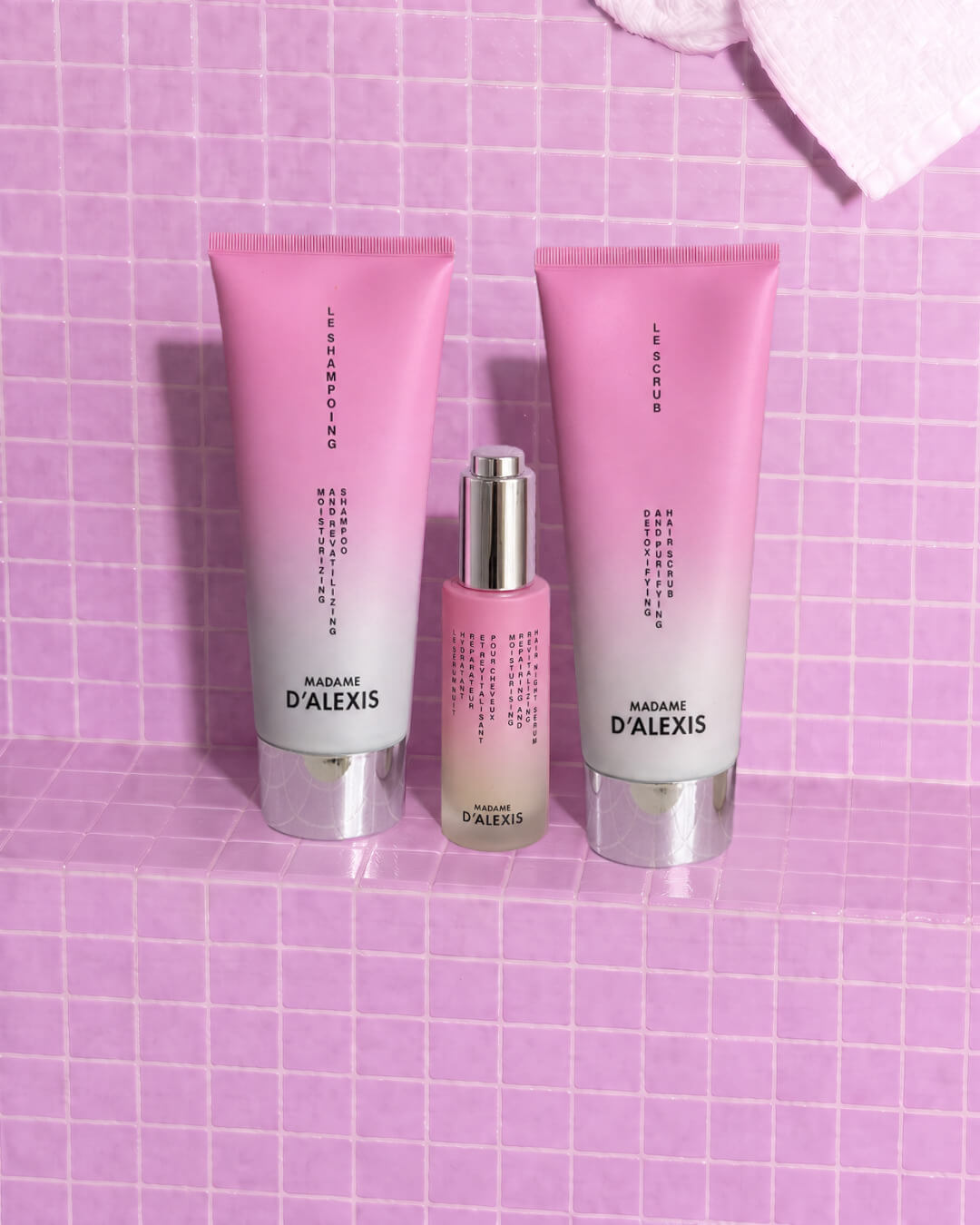
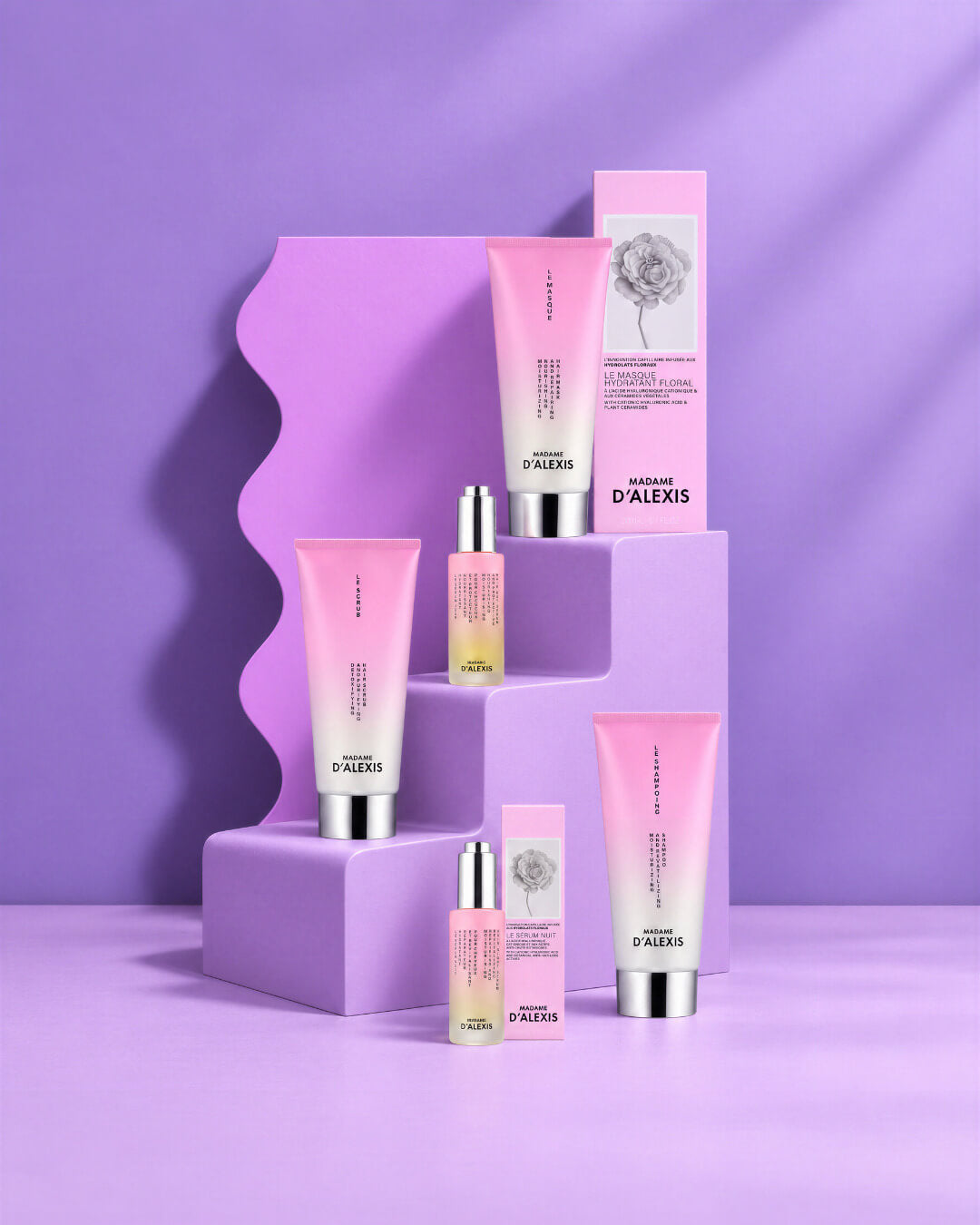
Madame d’Alexis products to incorporate according to the state of the scalp
The products do not all have the same application area. To avoid overloading or further irritating, keep a simple logic: scalp on one side, lengths on the other.
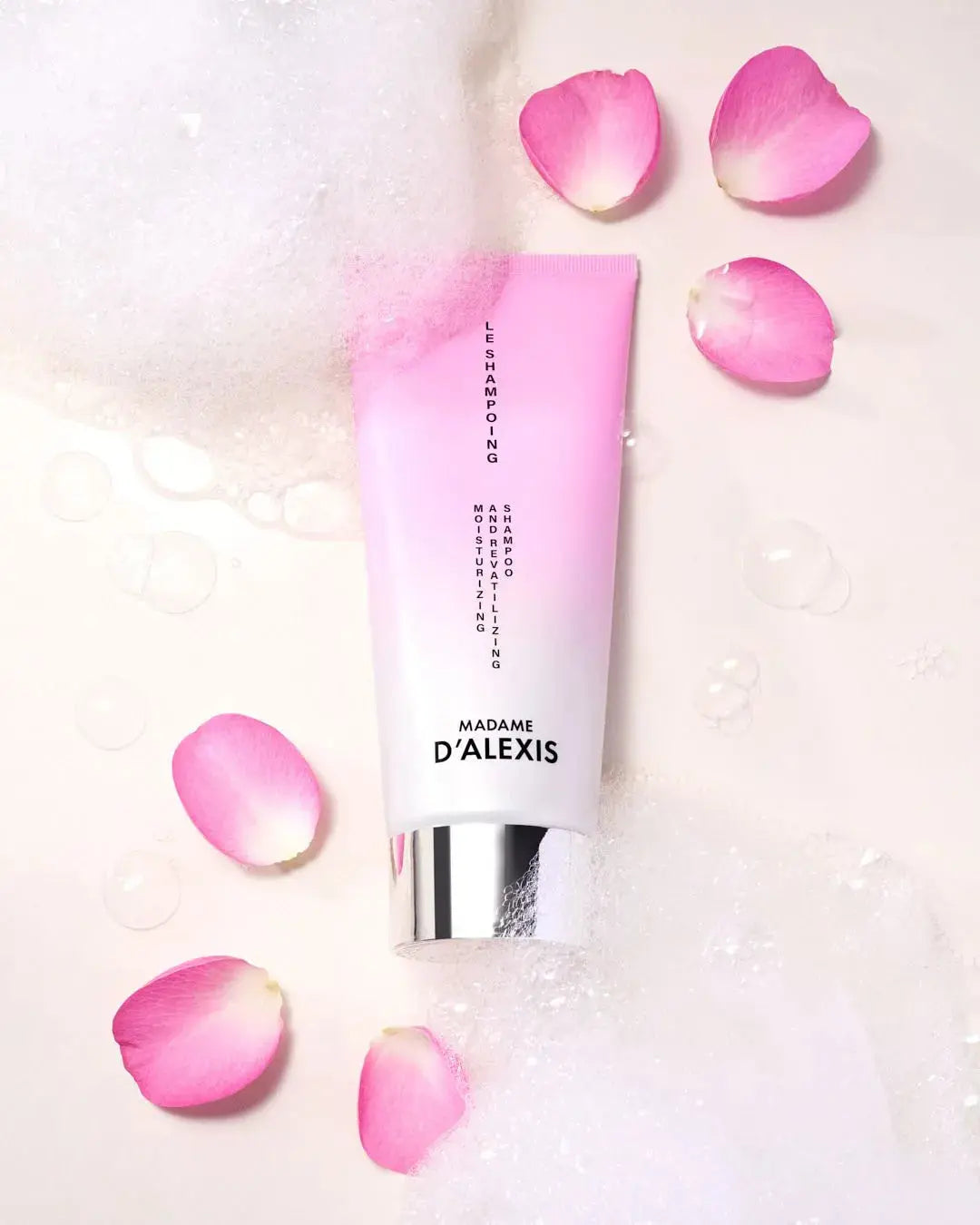
Le Shampoing
- Cationic hyaluronic acid
- No SLS/SLES or silicones
- Scalp and roots
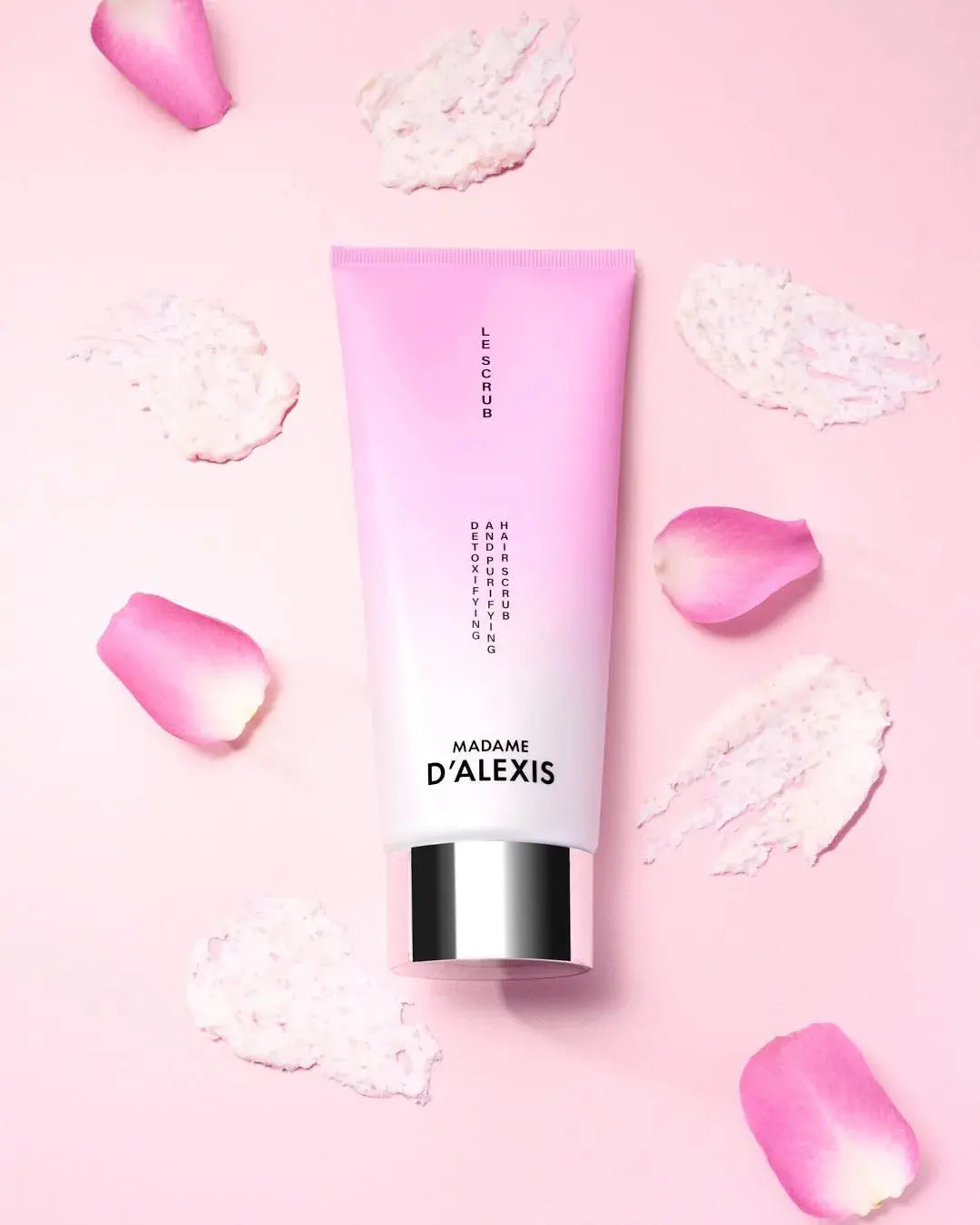
Le Scrub
- Cationic hyaluronic acid
- Organic coconut oil
- Every 10 to 15 days
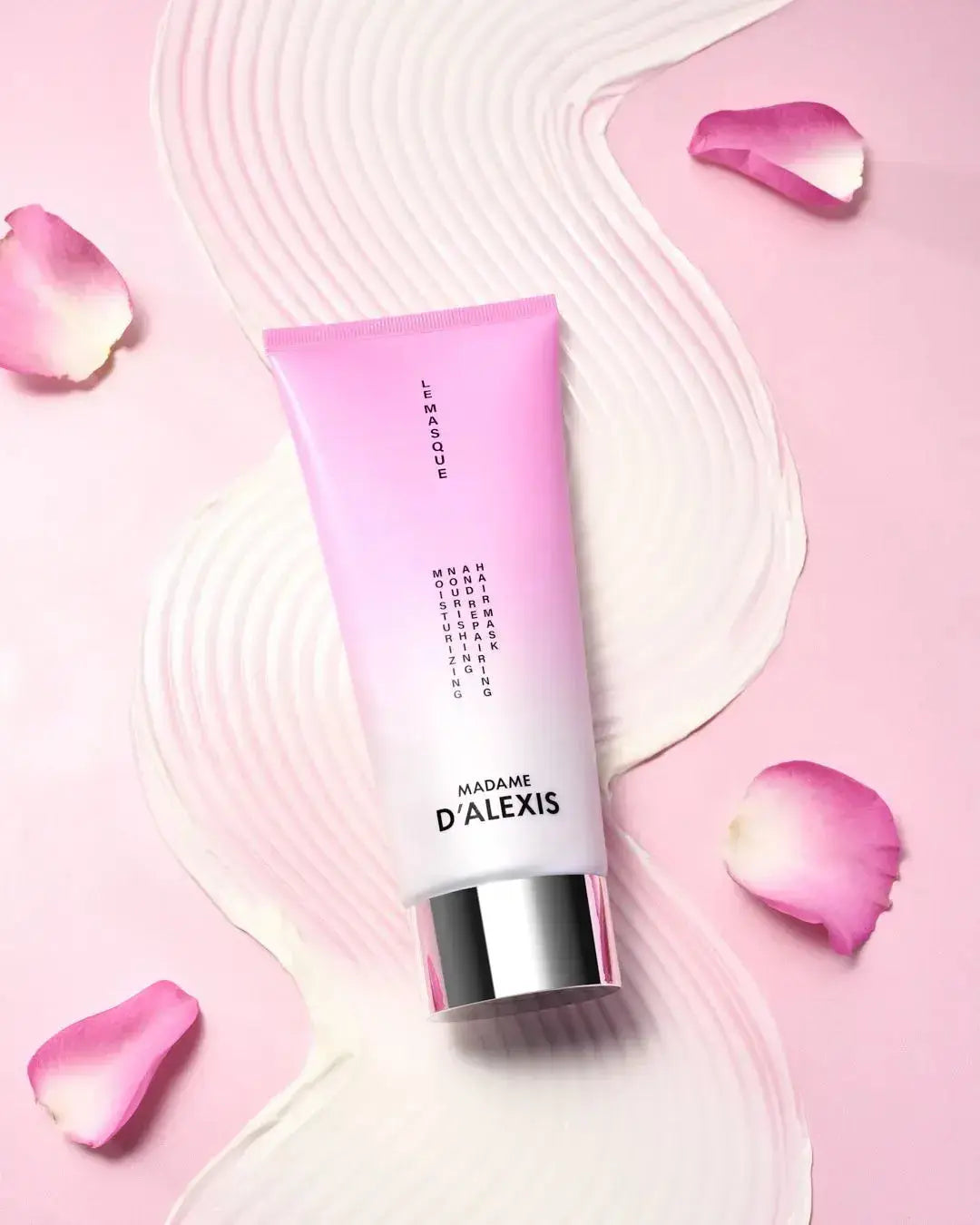
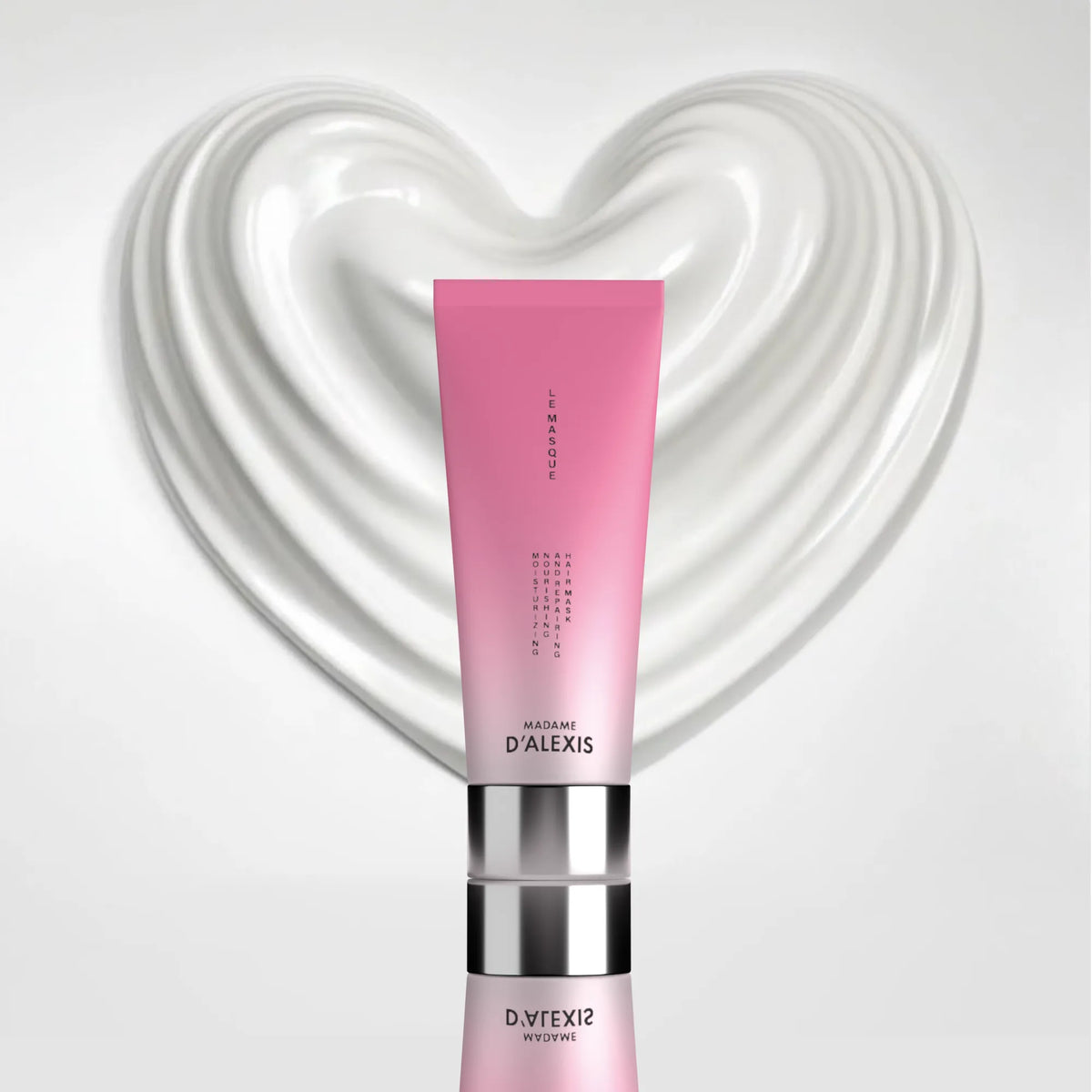
Le Masque
- Lengths and ends only
- Organic apricot and jojoba oils
- Leave on for 5 to 10 minutes
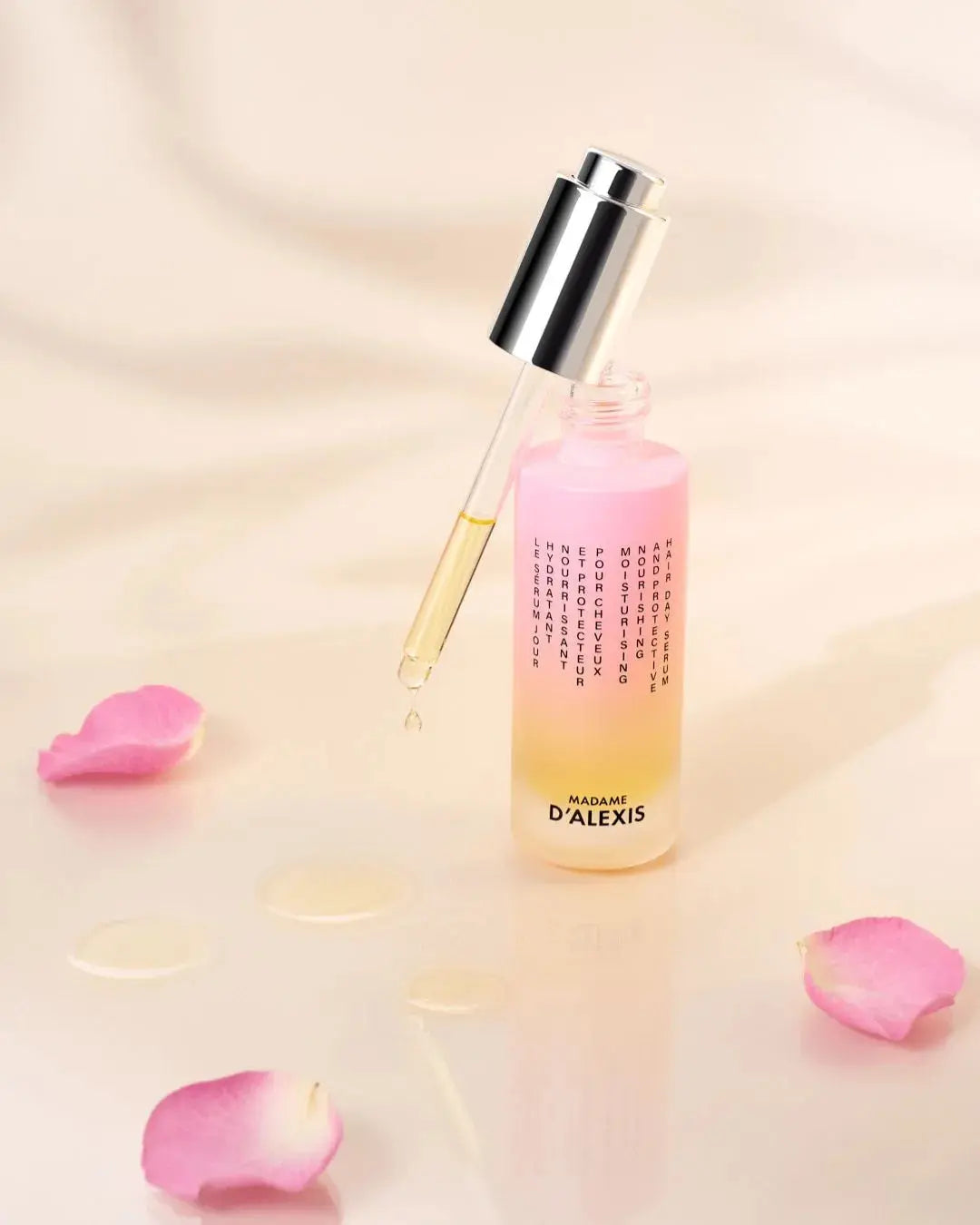
Le Sérum Jour
- Lengths and ends only
- Anti-frizz and shine
- Heat protection up to 200°C
What are the symptoms of an irritated scalp?
Scalp irritation can manifest as itching, tightness, redness, small flakes, a hot sensation, or sensitivity to the touch. The roots may also appear greasier or, conversely, very dry. If you experience regreasing, our guide on oily hair after shampooing helps distinguish sebum, residue, and scalp reaction.
Frequent discomfort
- Occasional itching
- Tightness
- Small flakes
- Sensitivity to brushing
Signs to have evaluated
- Thick or very red patches
- Oozing or scabs
- Significant pain
- Unusual hair loss
To better understand how the skin of the roots works, also consult our complete scalp guide.
Why does the scalp become irritated?
Products or overly aggressive washing
A poorly tolerated shampoo, insufficient rinsing, or accumulated styling products can contribute to discomfort. SLS/SLES sulfates are not problematic for everyone, but a gentler cleansing base may be preferable for an already sensitive scalp. Our article on sulfates in shampoos details this point.
Heat, perspiration, and environment
Sports, helmets, beanies, pollution, or heat can keep moisture, sweat, and sebum at the roots. Discover the link between perspiration and scalp buildup.
Coloring or bleaching
Chemical techniques can temporarily sensitize the skin. After an intense technique, wait for comfort to return before any exfoliation. Find our natural hair care after bleaching routine.
Dermatological conditions
Seborrheic dermatitis, eczema, psoriasis, or contact allergy can look like simple irritation. Malassezia is a yeast naturally present on the scalp and plays a role in seborrheic dermatitis; irritation should not be reduced to a “Malassezia infection”.

How to naturally soothe an irritated scalp?
1. Simplify the routine during the irritation phase
When the scalp burns, turns red, or itches severely, do not try to “detoxify” further. Use a gentle shampoo for an itchy scalp, lukewarm water, and avoid rubbing.
2. Reserve Le Scrub for congested but comfortable scalps
Le Scrub Madame d’Alexis combines sea salt, organic hydrosols, cationic hyaluronic acid, organic coconut oil, and essential orange blossom wax. It helps remove residue and excess sebum, but it should not be used on active irritation. In a routine, use it every 10 to 15 days; it replaces Le Shampoing on the day of its use.
3. Distinguish scalp and lengths
The Mask is not used to soothe scalp irritation: it is applied to the lengths and ends for 5 to 10 minutes. Le Sérum Jour is also used on the lengths and ends. For an uncomfortable scalp, stick to a gentle wash and, if necessary, a specific root routine.
4. Avoid irritating remedies
On reactive skin, avoid pure essential oils, baking soda, abrasive scrubs, or improvised acid mixtures. Our article how to soothe an itchy scalp details the gentlest steps.
Video: how to use Le Scrub?
This demonstration shows the application technique. However, keep the essential rule: no Scrub on active irritation, and a frequency of about every 10 to 15 days when useful.
Complete routine to regain a comfortable scalp
Observe before exfoliating
If the scalp is red, painful, or very reactive, skip exfoliation. If the problem comes mainly from residue and congested roots without active irritation, Le Scrub can be incorporated occasionally.
Wash gently
Le Shampoing combines organic hydrosols, cationic hyaluronic acid, prebiotics, and plant-based keratin. Massage with the pads of your fingers, then rinse thoroughly.
Treat the lengths separately
If the lengths are dry or sensitized, apply Le Masque only to the mid-lengths and ends for 5 to 10 minutes.
Protect before heat
Warm 1 to 3 drops of Le Sérum Jour between your hands and apply to the lengths and ends. It protects from heat up to 200°C.
When to consult a dermatologist?
Consult when irritation persists or recurs despite a very gentle routine, but do not rely on an arbitrary two-week timeframe if the symptoms are significant. A faster consultation is indicated in case of pain, swelling, oozing, scabs, bleeding, thick patches, strong reaction after coloring, or itching associated with hair loss.
For persistent dandruff, also see our guides what to do naturally against dandruff and dandruff and dry scalp.
Which Madame d’Alexis routine to choose?
Le Shampoing
The basic step: gentle cleansing, organic hydrosols, prebiotics, and cationic hyaluronic acid.
See Le ShampoingLe Scrub
Only when the scalp is comfortable, every 10 to 15 days, as a replacement for shampoo.
See Le ScrubMask + Le Sérum Jour
Two treatments intended for the lengths and ends, not the scalp.
See Le MasquePrevent scalp irritation
- Rinse the shampoo and styling products thoroughly.
- Avoid very hot water and heating tools directly against the scalp.
- Do not scratch with your nails.
- Avoid letting perspiration and styling products accumulate for too long.
- Do not multiply clarifications and scrubs.
- Identify the products that trigger symptoms when they appear after a new coloring, fragrance, or treatment.
Read also on sensitive, irritated, or uncomfortable scalp
Itching, hydration, and microbiome
Dandruff, sebum, and external aggressions
FAQ - Scalp irritation
How to quickly soothe an irritated scalp?
Simplify your routine: use a gentle shampoo, lukewarm water, fewer products, and no exfoliation while irritation is active. If symptoms are severe or unusual, seek medical advice.
Which shampoo should you choose for an irritated scalp?
Opt for a gentle cleansing formula, rinse thoroughly, and avoid harsh handling. The Madame d’Alexis Shampoo contains organic hydrosols, prebiotics, cationic hyaluronic acid, and plant-based keratin.
Can Le Scrub be used on an irritated scalp?
Not during an active flare-up of redness, burning, or pain. Use it instead on a comfortable but congested scalp every 10 to 15 days. It replaces shampoo on that day.
Can the Mask be applied to the roots?
No. The Madame d’Alexis Mask is intended for lengths and ends only, for 5 to 10 minutes.
What treatment is recommended for seborrheic dermatitis?
Seborrheic dermatitis may require a suitable antifungal shampoo or treatment. The choice depends on the severity and context; a pharmacist or dermatologist can recommend the appropriate treatment. A cosmetic routine is not a substitute for this treatment.
Are essential oils recommended for an irritated scalp?
Not generally. They can be irritating or cause allergic reactions, especially on already reactive skin. Avoid applying them undiluted and opt for a simpler routine.