Conseils
Haircut for fine hair without blow-drying: which style to choose?

Fine hair, little time in the morning and no desire to go through the whole blow-drying process: in this case, the cut becomes your best ally. A well-thought-out cut creates the illusion of volume, structures the hair and maintains its hold when the hair dries naturally. Conversely, a poorly chosen cut flattens everything, with or without a hairdryer. Good news: choosing a cut for fine hair without blow-drying is entirely possible, provided you choose the right shape and take care of the hair fiber.
In this beauty guide, we bring together our best styling tips: cuts for fine hair that work without blow-drying, hairstyling techniques that add volume, how to choose a cut suited to your face, and the treatments that help the cut stay neat between appointments. Fall 2026 hair trends are also heading in the right direction: soft shags, short bobs and shoulder-length styles are making a strong comeback.
What cut to choose for fine hair without volume?
The rule can be summed up in one sentence: with fine hair, you want full ends and subtle movement, never stretched-out lengths. The longer and finer the hair, the more it falls flat under its own weight, and the more the roots appear to stick to the scalp. A cut that brings the length closer to the face, with a clean line or a few light movements, instantly gives it more presence, even when you let it dry without doing anything.
The second principle concerns structure: a blunt cut concentrates the hair at the bottom of the hair, while a too-pronounced layered cut removes mass and leaves it transparent. Without blow-drying, the cut must do the work that a round brush would do in your place. To accentuate the effect of density, remember this: the cleaner the cut line, the fuller fine hair appears. The perfect cut is the one that highlights your natural texture instead of fighting it.
What are the trending cuts for fine hair in 2026?
The bob and the inverted bob
This is the safe bet. The bob, the star cut of the season, cut clean at the jaw or chin, creates a dense line that provides an immediate volume effect. The inverted bob, slightly longer in the front, elongates the face while keeping weight at the nape. In both cases, the cut holds almost on its own: air-drying is enough, and the shape remains structured.
The light layers on mid-lengths
Shoulder-length styles remain highly sought after because they retain femininity without flattening the roots. The secret is to ask for subtle layers that add movement without removing mass. If you are hesitating between several lengths, our guide on the mid-length cut and its maintenance details the options according to your hair type.
The pixie cut and short cuts
The shorter the cut, the less weight the hair has to carry, and the more the roots stand up naturally. The pixie cut, with a slightly fuller top and clean sides, is very suitable for fine hair that doesn't like to be styled. However, it requires regular visits to the hairdresser to maintain its shape. In terms of trending hair, short hair is also coming back to the forefront, and the pixie is the clearest example.
The curtain bangs
Open in the middle, curtain bangs frame the face and add movement without requiring styling. They work well on fine hair provided they remain light and are not cut too short, so as not to create a gap in the hair.
The soft shag and wolf cut
These layered cuts give relief and swing to flat hair. On fine hair, the soft version is preferable: few layers, concentrated around the face and at cheekbone level, so as not to thin out the ends. A good hairdresser adapts the number of layers to the actual density of your hair.
What flattering cuts to rejuvenate fine hair?
Some flattering cuts highlight the features and give an effortless chic look. The cuts that rejuvenate have one thing in common: they avoid heavy lengths that pull the face down, and favor lightness and movement. A short women's cut, like a bob that grazes the chin, visually lifts the gaze, while very soft layered cuts give a fuller appearance without removing mass.
The choice of a short women's cut also depends on your style. A more assertive boyish look requires a very precise cut, while a more natural result is satisfied with a slightly textured bob. For inspiration, keep a simple example in mind: the cut you like in a photo must also suit your density, otherwise the problem will return as soon as you wash it.
What hairstyle without blow-drying for fine and flat hair?
The cut sets the foundation, but a few simple gestures make all the difference on fine and flat hair.
Among the easy hairstyles, three ideas often come up with hairdressers: the light half-up, the side twist and the low and loose bun. These hairstyles ideal for flat hair can be done in two minutes. A good hairstyle for fine hair above all avoids weighing the hair down: no excess hairspray, no thick cream, no accessory that is too heavy. Here are a few tricks and tips to add volume to fine hair without a brush.
Start by squeezing without rubbing: pat the lengths with a microfiber towel or an old cotton t-shirt, then let it air dry, head tilted forward to lift the roots. Then shift your parting by a few centimeters: a side or zigzag parting immediately adds height, where a marked center parting flattens. A very simple hairdresser technique is then to dry the roots first, head tilted: it is one of the best ways to add volume where it is lacking, without excessive heat.
For days when you want to tie your hair up, prefer a low and loose ponytail, or a loose braid the night before, which leaves a light wave in the morning. Hair clips placed at the roots add volume during drying and easily give an impression of volume. To wear your hair naturally with a beautiful look, always let the cut do most of the work. To deepen these gestures, our article on giving volume to fine hair explains them step by step.
Finally, keep a light hand on products and washing: a poorly rinsed scalp gives roots that fall flat in a few hours, like on limp hair.
What cuts for fine and thin hair?
When the hair is both fine and sparse, the goal is to reduce the contrast between the full areas and the transparent areas. Short to mid-length cuts, clean and without too much thinning, are the most flattering: a short bob, a textured bob or a full pixie on top. A soft balayage also adds visual relief. If your hair suddenly seems less dense, talk to a healthcare professional.
How to choose a cut suited to your face and your hair?
Three criteria help choose the best cut: the shape of your face, your hair type and your lifestyle. An elongated face loves bobs and bangs that add width. A round face prefers a length that goes below the chin, with a little height on top. A square face is softened with light movements around the cheeks.
Your hair type matters as much as your face. Fine and straight hair calls for clean cuts, while fine and wavy hair benefits from more flexible cuts: our guide on hair types and the adapted routine helps you identify yours. Your lifestyle finally weighs in the balance: if you refuse to style it every morning, choose a cut that can be worn naturally and agree to refresh it every six to eight weeks or so.
Before cutting the hair, ask your hairdresser for an update on your density and your needs: it is the best advice to avoid a disappointing cut change. At the salon, bring two or three photos of cuts you like and specify that you will not blow-dry. A professional hairdresser will know how to adapt the cut to your texture, the direction of your cowlicks and your density.
What treatments to choose so that the cut holds without blow-drying?
A successful cut relies on a healthy fiber. On fine hair, the ends are the first to get damaged: they split, they crack, and the clean line from the start ends up fading. This is where the treatment routine takes over from the cut. Madame d'Alexis formulates her hair treatments without added water, based on organic hydrolats, without sulfates, without silicones and without parabens, and made in France, in Brittany. Here is how each can help your fine hair.
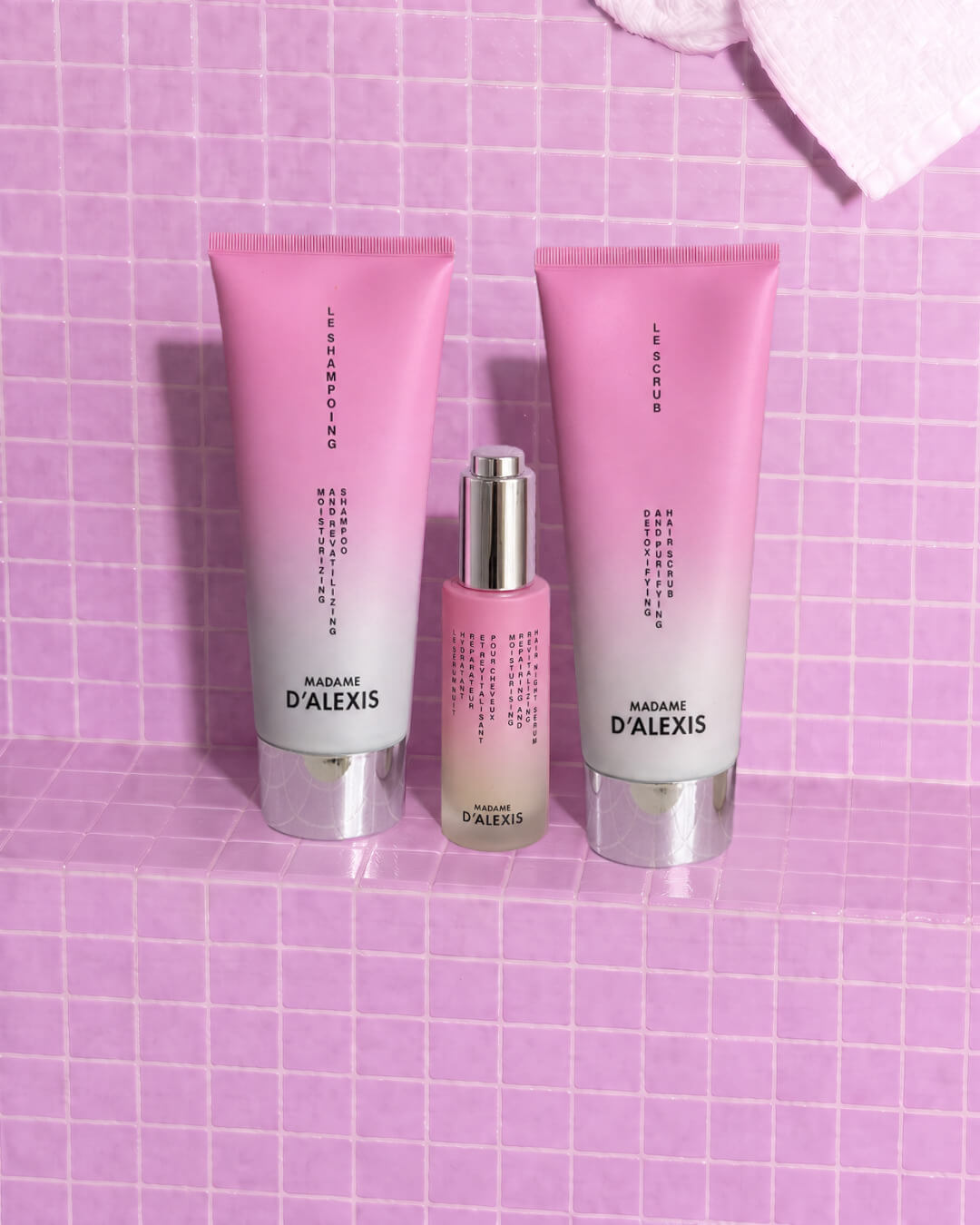
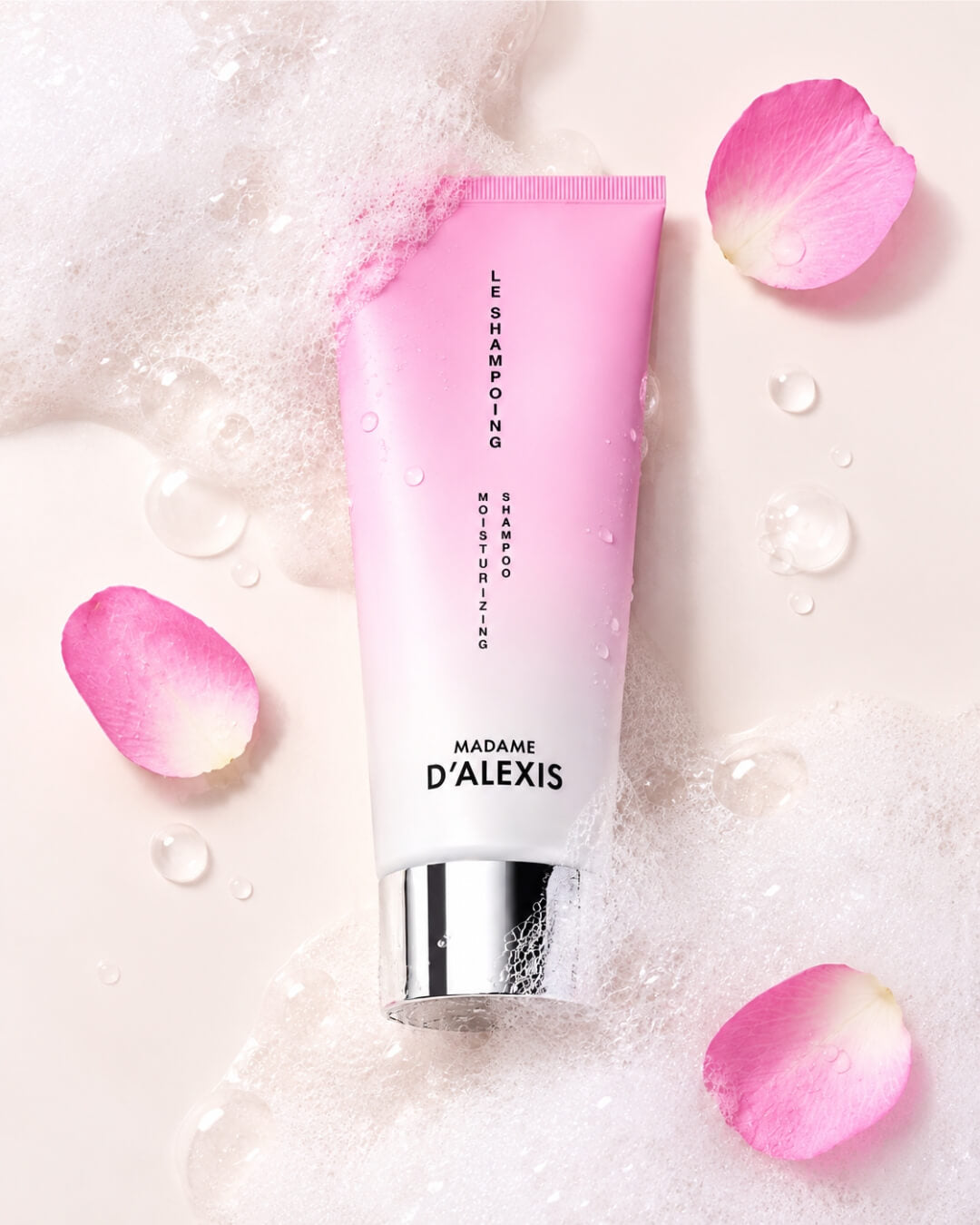
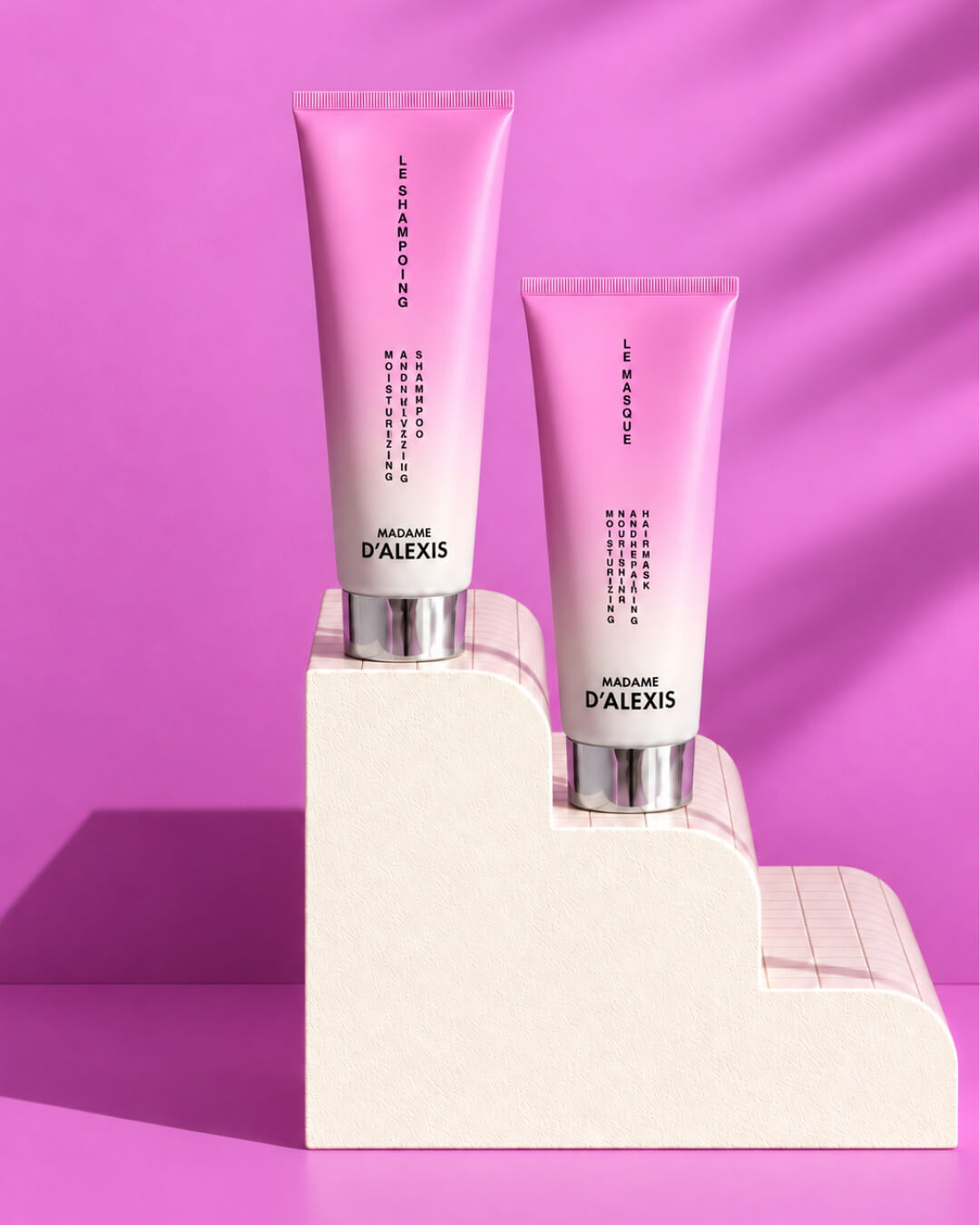
The Shampoo lays the foundation. It hydrates, soothes and illuminates, thanks to its cationic hyaluronic acid, its prebiotics and its plant-based keratin. It is formulated without silicones or sulfates: no heavy film comes to weigh down the roots. It is used in a double shampoo on a well-moistened scalp, massaging with the fingertips, then rinsed very thoroughly to keep the roots light. It can be used daily or alternately with the Scrub.
The Scrub is the exfoliating shampoo that resets the counters. With its sea salt and its hydrolats, it purifies the scalp and leaves neater roots. It is used every 10 to 15 days, instead of the Shampoo: two successive passes, like a double shampoo, then a careful rinse. This frequency is suitable for sensitive scalps, precisely because it remains spaced out.

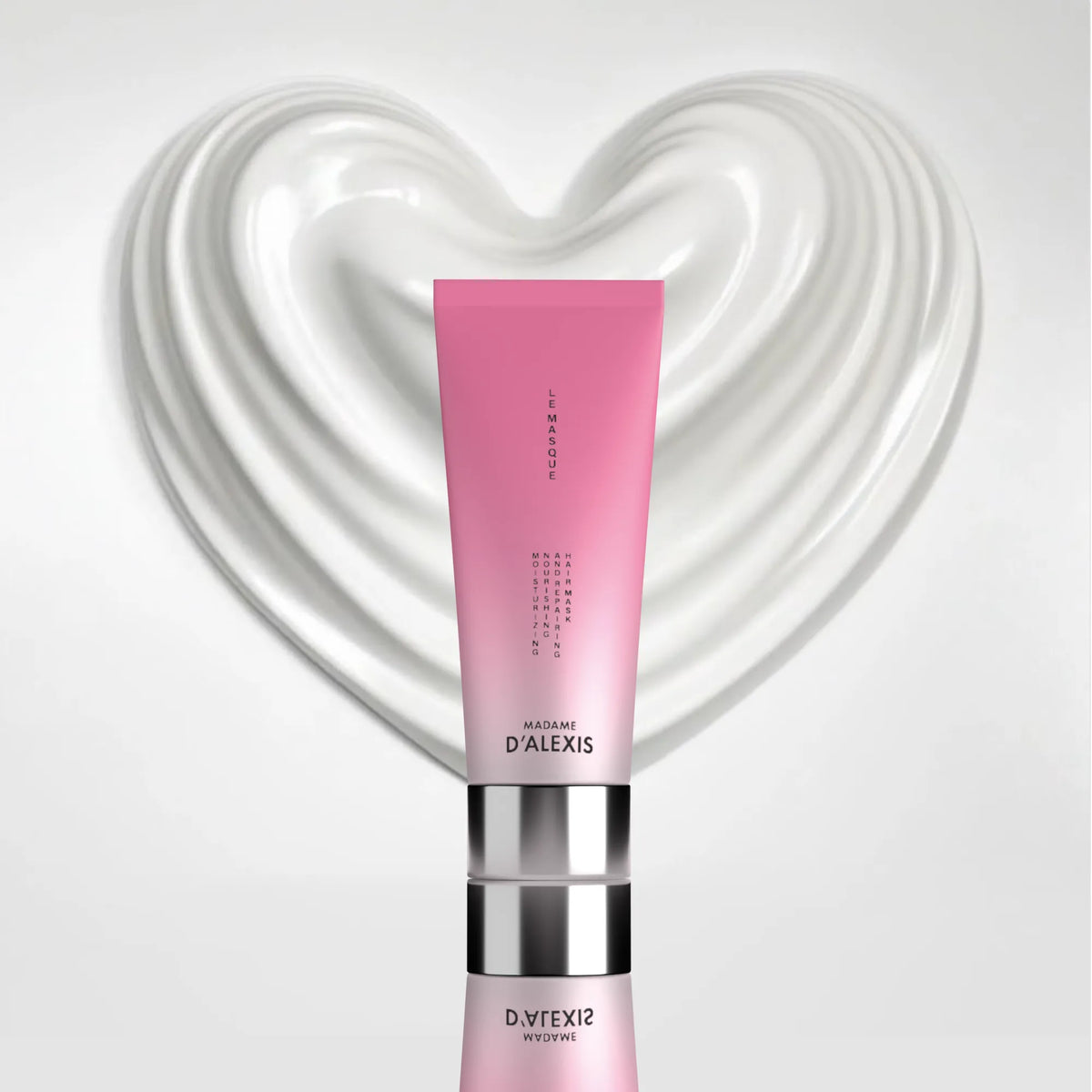
The Mask maintains the lengths and the ends, so that the cut keeps its neatness. It repairs, nourishes and softens thanks to plant ceramides, cationic hyaluronic acid, orange blossom wax and organic apricot and jojoba oils. For fine hair, apply it preferably on the lengths and the ends, staying away from the roots: 5 to 10 minutes on towel-dried hair for a classic treatment, then rinse well.
The Day Serum is a dry oil that is 99% of natural origin, with organic jojoba, plant ceramides and antioxidants. One to three drops on the lengths and the ends, on dry or slightly damp hair, are enough to smooth the fiber without weighing it down. Its natural heat protectors, effective up to 200 °C, serve the days when you use a hairdryer.
The Night Serum is aimed at the scalp. With its probiotics and postbiotics, its fermented extracts and its natural anti-hair loss actives like oak, nettle and licorice, it accompanies growth, regrowth and density. It is applied in the evening, one pipette row by row on the scalp, then massaged without rinsing: 3 to 5 times a week as a treatment, then 1 to 2 times for maintenance. For fine hair, it is the basis of a hairstyle that appears denser.

You will find the entire selection designed for your hair in our fine and flat hair collection, and complementary ideas in our article on treatments for fine hair. Here is our selection:

The Shampoo


The Day Serum

The Night Serum
Fine hair: what ritual for your hair ?
A few questions about your scalp and your lengths, and we compose your ritual from our 5 treatments with organic hydrolats, formulated without added water.
Do you recognize yourself ?
- You answer
- You discover your ritual
- You adjust your selection
If you prefer to be guided, the hair diagnosis takes about two minutes and composes a selection from our five treatments.
Your questions about cutting fine hair
What is the best cut for fine hair without volume?
A bob or a clean inverted bob, at the jaw or chin, gives the most visual density without blow-drying. Mid-lengths with subtle layers also work, provided you keep full ends.
How to add volume to fine hair without blow-drying?
Squeeze without rubbing, dry by air with the head tilted forward, shift your parting and choose a clean cut that concentrates the mass at the bottom of the hair. A very thorough rinse of the shampoo also keeps the roots lighter.
Should fine hair be cut often?
About every six to eight weeks for short cuts and bobs, a little less often for mid-lengths. Fresh ends help the cut keep its shape and its volume effect.
Can hair care help a cut for fine hair last longer?
Yes: well-cared-for ends keep a line looking sharp for longer. A mask on the lengths, a small amount of dry oil and a healthy scalp help the cut stay in shape between appointments.
A good cut and well-cared-for hair
For fine hair without a blowout, the right cut provides structure and the right techniques provide height. Choose a clean cut, suited to your face, let it air dry and care for your ends as well as your scalp: your fine hair will gain presence without the round brush.