Conseils
Best Hair Oil for Your Hair Type: The Complete Guide
Which is the best hair oil for dry, curly, fine, oily or colour-treated hair? Our guide compares the key oils and shows how to apply them for shine without weight.

Best Hair Oil: How to Choose the Right One for Your Hair Type
Walk down the haircare aisle at Boots or scroll through any online beauty store and you will find dozens of hair oils: coconut, argan, castor, jojoba, avocado, rosemary. Finding the best hair oil for your strands is no easy task, because each one has its own lipid profile, feel and key benefits depending on your hair type and the concern you want to address.
Dry and brittle lengths, oily roots, curls, colour-treated or fine strands: the same oil does not suit everyone. A heavy oil weighs fine hair down at the roots, and an occlusive oil on an oily scalp makes it look greasy sooner. The right choice depends on your hair fibre, not on the latest cult product.
This guide compares the best hair oils by hair type, explains how to apply them without weighing your hair down, and shows why serums made with organic hydrosols, such as those from Madame d'Alexis, offer a more targeted alternative to pure plant oils for demanding hair. Comparison tables, example routines and application tips included.
Two Serums to Nourish, Protect, and Enhance Your Hair
When choosing a hair oil, the key is to find the right texture for your needs: a lightweight oil for shine and a polished finish, or a night-time treatment to support your scalp and enhance your hair care routine.
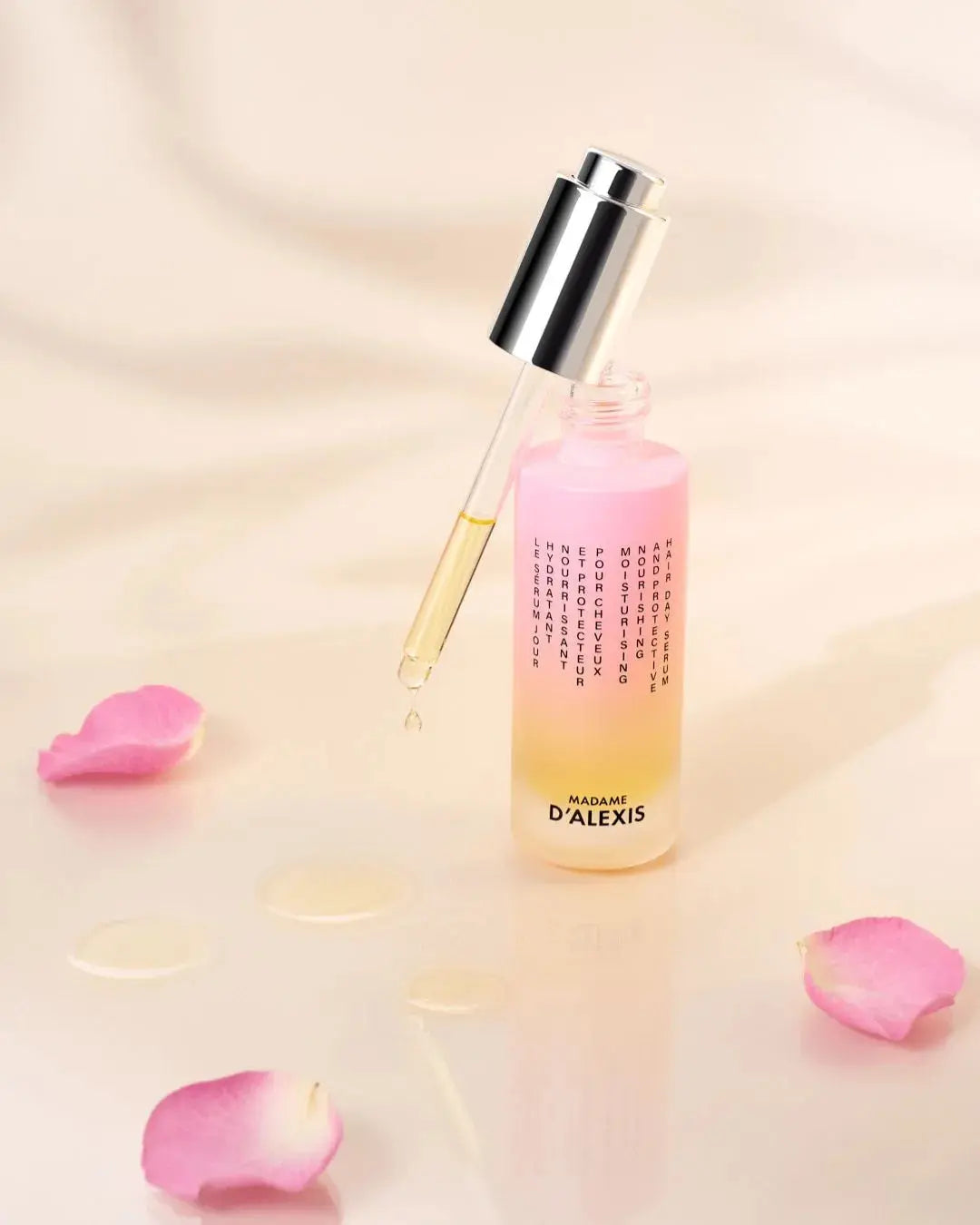
Le Sérum Jour
Jojoba · shine · anti-frizz
- Enriched with jojoba oil
- Helps soften dry lengths
- Enhances shine without weighing hair down
€35.00
View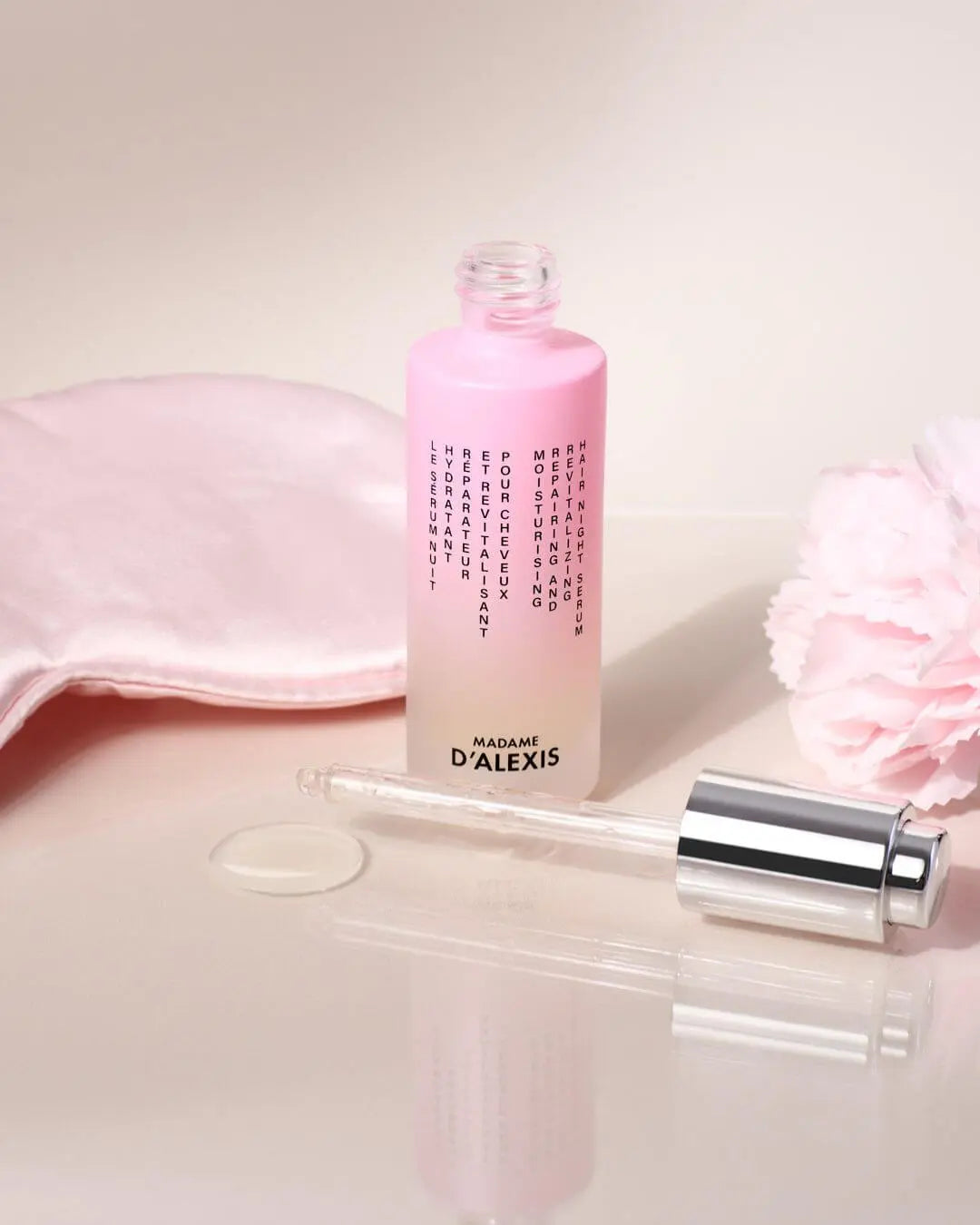
Le Sérum Nuit aux Hydrolats
Scalp · density · night-time routine
- Targeted scalp treatment
- Extends your hair care routine through the night
- Ideal for weakened hair or hair lacking density
€35.00
ViewScroll to compare the two Madame d’Alexis serums
Hair oil benefits: why use one in your routine?
How to choose hair oil: the key criteria
A well-chosen hair oil does not weigh strands down: it helps lock in moisture, supports the lipid barrier and smooths the hair shaft for a glossy finish.
Unlike heavy, greasy substances, some natural oils, such as avocado or broccoli seed oil, work as a deep conditioning ritual.
- Strengthen the hair fibre and help reduce breakage and split ends thanks to fatty acids and vitamin E.
- Preserve suppleness and shine without a sticky residue.
- Protect against external aggressors: UV rays, pollution, heat styling and the hard water found across London and the South East.

Scalp and hair: nourish the roots too
What you apply to the roots is just as important as what you apply to the lengths. Oils such as rosemary, castor or mustard are traditionally massaged into the scalp for their stimulating effect on microcirculation, which supports healthy growth, while gentler oils soothe sensitive scalps.
Hair oil, serum or oil bath: what is the difference?
- The hair serum acts as a finishing product and is often made with silicones in conventional versions.
- The daily hair oil, or finishing oil, lightly nourishes, tames frizz and protects.
- The oil bath is a more intensive ritual, left on for a few hours or overnight before you wash your hair.
When asked, "Is it good to put oil in your hair?", the answer is unequivocally: yes, provided you choose a high-quality plant oil suited to your hair type and use it thoughtfully.
Hair oil vs leave-in serum: which one to choose?
Pure plant oil and leave-in serum appear to meet the same need: to nourish and protect the hair fibre, but their modes of action are fundamentally different. Confusing the two risks weighing down your hair or failing to address the real cause of the problem.
Pure plant oil works on the surface. It coats each strand, reduces porosity, and limits water evaporation. It protects and adds shine, which works well on dry ends and thick hair. But it does not penetrate deeply and can quickly saturate fine hair or oily scalps.
The leave-in serum formulated with skincare actives, hyaluronic acid, hydrosols, and ceramides works inside the fibre. It deeply hydrates, repairs keratin, and regulates without clogging. It is suitable for all hair types, including the finest.
| Criterion | Pure plant oil | Leave-in serum with hydrosols |
|---|---|---|
| Mode of action | Surface, occlusion | Deep, active hydration |
| Ideal for | Thick, dry hair, ends | All types, including fine and oily |
| Risk of weighing hair down | High on fine hair | Low |
| Frequency | Maximum 1 to 2 times per week | Daily use possible |
| Targeted actives | Fatty acids | Hyaluronic acid, ceramides, hydrosols, proteins |
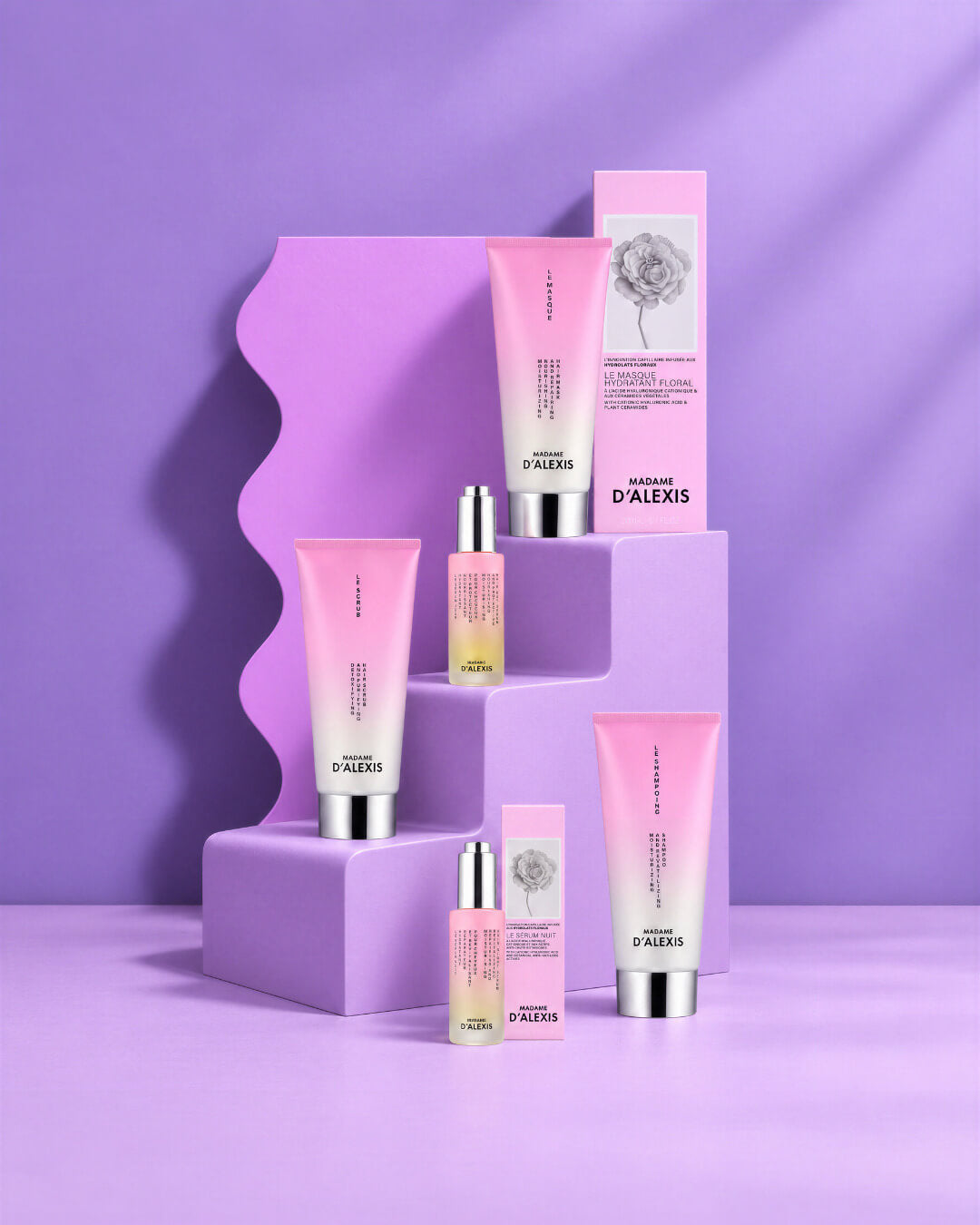
Le Sérum Jour and Le Sérum Nuit by Madame d'Alexis combine both approaches: carefully selected lightweight plant oils and hydrating skincare actives in an organic hydrosol base, without weighing hair down or clogging.
How to choose the best hair oil for your hair type
Choosing the right oil for your hair is neither a matter of chance nor a passing trend. It is a personalised, almost intimate process that relies on a thorough understanding of your hair and its real needs.
In beauty as in perfumery, the perfect match between substance and nature is the key to excellence.
Which oil for dry hair?
Avocado, coconut, sweet almond, or argan oil: rich, enveloping oils with nourishing, hydrating, and repairing properties.
Which oil for oily hair?
Jojoba, black seed or mustard: drier, sebum-balancing textures that are best used before you wash.
Best hair oil for curly or coily hair
Castor, shea butter or avocado oil: rich hair oils for curly hair that nourish each strand, define each curl and reduce frizz.
Which oil for colour-treated hair?
Jojoba, argan, or hibiscus: protection, shine, and colour preservation.
Top hair oils for growth
If you are looking for the best oils for hair growth, a few stand out, especially when combined with a regular scalp massage. If you notice sudden or patchy hair loss, see your GP or a dermatologist first: no oil will treat the underlying cause.
Castor oil is one of the most popular choices. Rich in ricinoleic acid, it is traditionally used to stimulate microcirculation in the scalp and give the lengths a thicker feel. Rosemary oil, diluted in a carrier oil, is the other favourite on UK shelves.
Directions: massage diluted castor oil into the scalp 2 to 3 times a week before you wash your hair. Leave on for at least 30 minutes, or a few hours or overnight.
Le Sérum Nuit aux Hydrolats
Organic hydrosols · Scalp · Leave-in routine
- Targeted scalp treatment that complements length oils
- Ideal for supporting weakened hair or hair lacking density
- Extends your hair care routine through the night
Other oils effectively complement this ritual:
- Mustard oil: warming, it is used in Ayurvedic scalp massage to support growth.
- Broccoli seed oil: little-known but effective, it smooths the hair shaft and adds gloss without weight.
- Rosemary oil (the essential oil diluted in a plant oil) or peppermint oil: both are prized for the refreshing, stimulating feel they bring to a scalp massage.
To maximise results, combine these oils with a daily 5-minute scalp massage, which naturally stimulates blood circulation.
Summary table: which oil for which hair type?
To help you choose the best hair oil for your needs, here is a detailed comparison of the most effective plant oils.
| Hair type / need | Recommended oils | Main benefits |
|---|---|---|
| Dry hair | Coconut, avocado, sweet almond, argan oil | Nourishment, repair, shine, suppleness |
| Oily hair | Jojoba, black seed, mustard oil | Sebum regulation, lightness, purification |
| Curly / coily hair | Castor, avocado oil, shea butter | Definition, suppleness, frizz control |
| Colour-treated hair | Jojoba, argan, hibiscus oil | Protection, shine, colour preservation |
| Promote growth | Castor, mustard, broccoli, rosemary oil | Growth stimulation, strengthening, density |

Three example routines with the right hair oil
Routine 1: dry, dull hair
Starting point: rough, dull, brittle hair with a straw-like texture and frizz, even straight after washing.
- Jojoba oil bath 1x/week, 30 min before shampooing.
- Le Shampoing 2x/week, sulphate-free.
- Le Masque 2x/week, 15 min under a warm towel.
- Le Sérum Jour daily on ends.
What to look for over the following weeks: shinier, more supple lengths that feel softer, with less frizz and less of that straw-like texture.
Routine 2: very dry curly hair
Starting point: very dry curls, frizz that is hard to control, little definition, a dull and brittle look.
- Baobab oil bath 1x/week, 1h before shampooing.
- Le Shampoing 2x/week.
- Le Masque 2x/week.
- Le Sérum Jour after every shampoo on lengths.
- Le Sérum Nuit daily on the scalp.
What to look for over the following weeks: better defined, shinier curls with less frizz.
Routine 3: fine hair, oily roots, dry ends
Starting point: fine strands, oily roots, dry and brittle ends that make styling difficult.
- Jojoba oil bath 1x/week on ends only, 30 min.
- Le Shampoing 2x/week.
- Le Masque 1x/week on ends only.
- Le Sérum Jour daily on ends, maximum 2 drops.
What to look for over the following weeks: roots that stay fresh for longer, softer ends and hair that is easier to style.
Comparison: the best hair oils and oil types
There is no single "best" hair oil in a universal sense. It all depends on the nature of your hair fibre, your scalp, and the effects you are looking for.
| Plant oil | Hair type | Main function | Texture / absorption | Approximate price |
|---|---|---|---|---|
| Avocado | Dry, curly | Intense hydration | Rich, penetrating | ££ |
| Coconut | Dry, damaged | Repair, shine | Solid when cold, light | £ |
| Jojoba | Oily, coloured | Regulation, protection | Dry, fluid | ££ |
| Castor | Fine, brittle | Growth, fortification | Thick, viscous | £ |
| Argan | Coloured, mature | Antioxidant, shine | Medium, quickly absorbed | £££ |
| Broccoli | Coily, thick | Natural smoothing, coating | Medium, dry feel | ££ |
The best-penetrating oil remains coconut oil, thanks to its lauric acid content. The most hydrating? Avocado, rich in oleic acid and vitamins A, D, and E. The most nourishing is undoubtedly castor oil, which should be used diluted. For silky hair, turn to argan or broccoli.
Hair oil treatment: complete instructions
An oil treatment is a ritual I rediscovered by observing Indian and Moroccan hair care routines. When applied with care, it transforms the hair. It soothes the scalp, nourishes the hair fibre, and acts as a preventative serum against breakage.
Who is an oil bath for?
- After colouring or bleaching.
- In winter, when central heating dries out your lengths.
- For hair exposed to salt, chlorine, or UV rays.
How do you make an effective oil treatment?
- Choose the plant oil according to your needs.
- Apply a few drops to damp hair, on the scalp and the lengths.
- Leave on for at least 30 minutes, or even overnight for very dry hair.
- Avoid overdoing it: a small amount is more than enough.
A successful oil treatment begins with moderation. A delicate touch always prevails over an abundance of product.
Which shampoo washes out an oil bath?
A gentle yet cleansing shampoo is essential. This is where Le Shampoing by Madame d’Alexis comes in. Its formula with no added water, infused with floral hydrosols and made with gentle cleansing agents, lifts the oil without irritating the scalp.
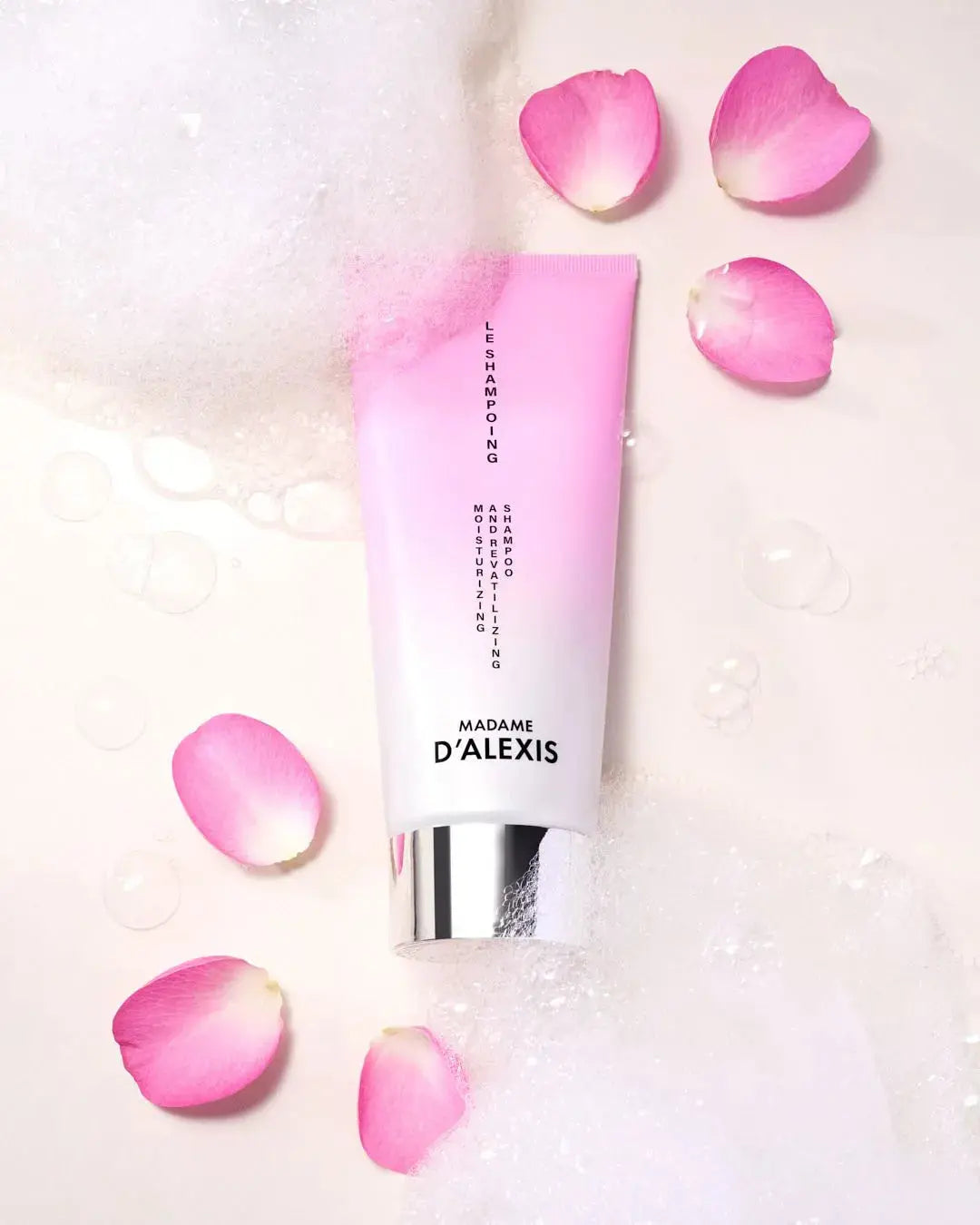
Le Shampoing aux Hydrolats
Organic hydrosols · Gentle cleansing · Plant-based keratin
- Gently cleanses without stripping the hair fibre
- Prepares the lengths to receive a treatment or oil
- No sulfates or silicones, ideal for dry hair
It purifies while leaving the hair fibre light, supple, and perfectly clean. A personal tip: rinse with lukewarm water, never hot, and finish with a cold rinse to close the cuticles.

Which oil to use for a hair oil bath?
- Repairing oil bath: coconut or avocado oil to repair hair that is dry and damaged.
- For growth: castor oil diluted in jojoba, massaged into the scalp.
- For shine: argan or broccoli seed oil.
- To rebalance: pure jojoba for oily hair.
Product spotlight: the Madame d’Alexis serums
A hair serum inspired by skincare
At Madame d’Alexis, the line between hair care and high-end beauty ritual blurs. Here, the serum is not just a product; it is a formulation designed with the same refinement as the most demanding face serums.
Two serums to nourish, protect, and enhance hair
To choose a hair oil, the challenge is to find the right texture according to your needs: a light oil for shine and finishing, or a night treatment to support the scalp and enhance the hair care routine.
Le Sérum Jour
Jojoba · shine · anti-frizz
- Enriched with jojoba oil
- Helps soften dry lengths
- Enhances shine without weighing hair down
€35.00
ViewLe Sérum Nuit aux Hydrolats
Scalp · density · night routine
- Targeted scalp treatment
- Extends the hair care routine overnight
- Ideal for weakened or thinning hair
€35.00
ViewScroll to compare the two Madame d’Alexis serums
What sets these serums apart? A carefully chosen formula: 97 to 99% ingredients of natural origin depending on the product, cruelty-free, with no added water.
Water is replaced by premium organic hydrosols: Damask Rose, German Chamomile, and Orange Blossom, known for their soothing, antioxidant, and softening properties.

Why it is suitable for all hair concerns
- For dry hair, it nourishes intensely without weighing it down.
- On a sensitive scalp, it soothes and helps keep the scalp balanced.
- For fine hair, it provides shine and hold, without a greasy film.
Recommended routine
- As a hair oil treatment, before shampooing, for a deep hair treatment.
- For daily application, on dry or damp hair.
- As a finishing touch, to smooth the hair fibre and enhance its natural shine.
How to apply hair oil without weighing it down
Start with less than you think: one or two drops of a lightweight hair oil for fine strands, a little more for thick or curly hair. Warm it between your palms, then smooth it over the mid-lengths and ends of damp or wet hair, never straight onto the roots. If you prefer an oil mist, spray it from a distance for an even veil. For a scalp ritual, part the hair section by section and massage into the scalp with your fingertips for a few minutes.
Before heat styling, a light oil helps smooth hair and limits frizz, but it is no substitute for proper heat protection: use a dedicated heat protectant first, then finish with a drop on dry ends. A nourishing hair oil also works as a pre-wash mask: coconut or olive oil left on for an hour helps to moisturise very dry lengths and limit protein loss during washing.
What to check on the label before you buy
Hair oil ingredients vary hugely from one bottle to the next. A short INCI list with cold-pressed oils at the top is a good sign; mineral oil, heavy silicones or a strong synthetic fragrance near the top are not. If scent matters to you, look for oils infused with botanical extracts rather than added perfume. Vegan and cruelty-free labels are easy to check, and organic certification tells you how the plants were grown.
Oiling the hair has a long history, from Indian champi rituals to Mediterranean olive oil and Moroccan argan traditions. That history is a useful reminder: the best hair oil is the one matched to your strands, your skin and your routine, not the one with the biggest price tag.
Mistakes to avoid with hair oils
Excess product
A well-chosen oil should be used sparingly. An excess will saturate and weigh down the hair fibre.
Unsuitable oil
Pure castor oil is too thick to be used alone. Some comedogenic oils can cause irritation.
Confusing plant-based and mineral oils
Petrochemical oils coat without nourishing and can suffocate the hair fibre.
Applying at the wrong time
For oily hair, use the oil as a pre-shampoo treatment. On coloured hair, use it after washing.
Frequently asked questions about hair oils
Can you put oil in your hair every day?
Yes, but it depends on the type of oil, hair, and dosage. On dry hair, a few drops of light oil applied daily to the ends can restore shine and softness. For oily hair, it is better to opt for a weekly treatment.
Which oil is suitable for my scalp?
Sensitive scalps will appreciate jojoba or chamomile oil. To support growth, rosemary oil or diluted castor oil, applied with a gentle massage, are popular choices.
Which oil should not be put in your hair?
Avoid mineral oils derived from petrochemicals. Similarly, pure castor oil is too thick to be used alone. It pairs ideally with a lighter oil such as jojoba or avocado.
Do dermatologists recommend using hair oils?
Yes, provided you choose pure, cold-pressed plant oils that are suitable for your scalp.
Which oil is best for dry ends?
Argan oil is a classic. It protects, softens, and nourishes without greasing. Avocado or broccoli oil also works very well.
When should an oil be used in the hair care routine?
Before shampooing as an oil treatment, after washing as a finishing touch or to seal in moisture, or as a targeted treatment according to your needs.
Should the oil always be rinsed out?
No. An oil used as a treatment must be carefully rinsed out, while a small amount on the ends requires no rinsing.
What is the best oil for hair growth?
Castor oil is the most popular choice to support growth. Rich in ricinoleic acid, it is used in scalp massages to boost microcirculation; rosemary oil is the other classic.
How to use coconut oil for hair?
Coconut oil can be used as an oil treatment before shampooing, as a repairing mask on the lengths, or as a daily treatment on dry ends.
What is the best oil for very dry hair?
For very dry hair, avocado oil is the most nourishing. Coconut oil and shea butter are also excellent.

Which oil is best for very dry hair with a straw-like effect?
Avocado oil is the most effective. Recommended routine: avocado oil treatment 1x/week, repairing mask 2x/week, and daily protective serum.
How long does it take to see results with a hair oil?
- Shine and softness: often noticeable from the first use.
- Texture and frizz: give a regular routine a few weeks.
- Damaged lengths: be patient, and trim the most damaged ends.
Coconut oil or argan oil: which one to choose?
Coconut oil for intense repair and quick shine. Argan oil for protection and antioxidant benefits, especially on coloured hair.
Can you mix several hair oils?
Yes. Examples: castor + jojoba, avocado + coconut, argan + jojoba, baobab + castor.
How many drops of oil for hair?
- Short hair: 2 to 3 drops.
- Medium-length hair: 3 to 5 drops.
- Long hair: 5 to 8 drops.
Which hair oils reduce frizz?
Argan, avocado and broccoli seed oil are among the best hair oils for frizz. A drop or two smoothed over the lengths seals the cuticle, so a damp British day is less likely to puff your hair up. Apply to damp hair before styling, or use as a finishing oil on dry strands.
What are the key ingredients in hair oils?
Look for fatty acids and vitamin E (argan, avocado, jojoba, sweet almond oil), light seed oils such as grapeseed oil for fine hair, and stimulating extracts such as rosemary or peppermint oil for the scalp. If you want a natural formula, avoid mineral oils and heavy silicones.
What are the benefits of hair oils?
Hair oils help lock in moisture, smooth the hair shaft, reduce breakage, add shine and gloss, and soften the effect of heat styling. Massaged into the scalp, they also make a relaxing ritual.
Where to buy the best hair oils in the UK?
High street chemists such as Boots, health shops and online beauty stores all stock hair oils. Before you buy hair oils online, compare the ingredient list rather than the price alone: a pure, cold-pressed, vegan and cruelty-free oil is worth more than a heavily scented blend.
Conclusion: which hair oil to choose?
Choosing the right oil for hair transforms your hair care routine. Whether you are looking for the best oil for dry hair, the best hair growth oil, or simply a versatile oil, always choose organic, cold-pressed plant oils that are suitable for your hair type.
Hair oil is not just a cosmetic product: it is a true treatment that nourishes, protects, and enhances your hair every day.
Summary table: ideal oils by need
| Hair concern | Ideal oil |
|---|---|
| Dry or dull hair | Avocado, coconut, argan |
| Sensitised scalp | Jojoba, chamomile |
| Oily hair | Black seed, mustard, jojoba |
| Curls to redefine | Castor, shea, broccoli |
| Thinning or slow growth | Castor, rosemary, mustard |
| Coloured hair | Argan, hibiscus, jojoba |
| Damaged ends | Broccoli, avocado, argan |
Recommendation: choose organic, cold-pressed plant oils
It may seem like a minor detail, but the extraction method makes all the difference. A cold-pressed oil retains all its active ingredients: vitamins, antioxidants, essential fatty acids. Choose it unrefined, unscented, and organic for optimal results.
Why incorporate an oil into your hair care routine?
Because no mask or conditioner can match the lipid richness of a raw plant oil. It seals in moisture, protects against external aggressors, and reveals the natural beauty of the hair over the long term.
Madame d’Alexis: the excellence of a skincare-inspired treatment
With their formula with no added water, their organic floral hydrosols and their sensory texture, the Madame d’Alexis serums do not just beautify: they provide deep care.
- Ultra-concentrated.
- Natural.
- Multi-use.
- Respectful of the scalp.
Serums designed like skincare, for healthy, elegant hair.