
Conseils
Bleached hair care routine: how to repair and protect bleached hair
Damaged bleached hair? Follow this step-by-step bleached hair care routine: a gentle sulphate-free wash, a ceramide hair mask, heat protection and scalp care, with tips from a hair expert.


Bleached hair care: what you need to know
- Good aftercare matters from the start: bleach is a chemical process that breaks down melanin and pigment, lifts the cuticle and leaves the hair permanently weaker.
- Bleached hair turns porous, dry and fragile; only targeted care can rebuild the inside of your strands and their protective lipid layer.
- Caring for bleached hair relies on a complete regime: a mild, non-stripping wash, a ceramide mask in place of a standard conditioner, a lightweight leave-in conditioner that shields against heat and, ideally, an overnight step for the roots.
- Moisture must be intense but measured: ingredients such as hyaluronic acid and ceramides help strands stay supple and feel stronger without weighing them down.
- Consistency is key: a well-applied aftercare plan over several weeks helps reduce snapping, keeps your blonde shade vibrant and leaves your locks softer, stronger and visibly healthier.
5 Madame d’Alexis steps to repair hair after bleaching
A full regime for lightened, sensitised or brittle hair: clarify the roots, cleanse softly, nourish intensely, shield the lengths and keep the repair going at home.
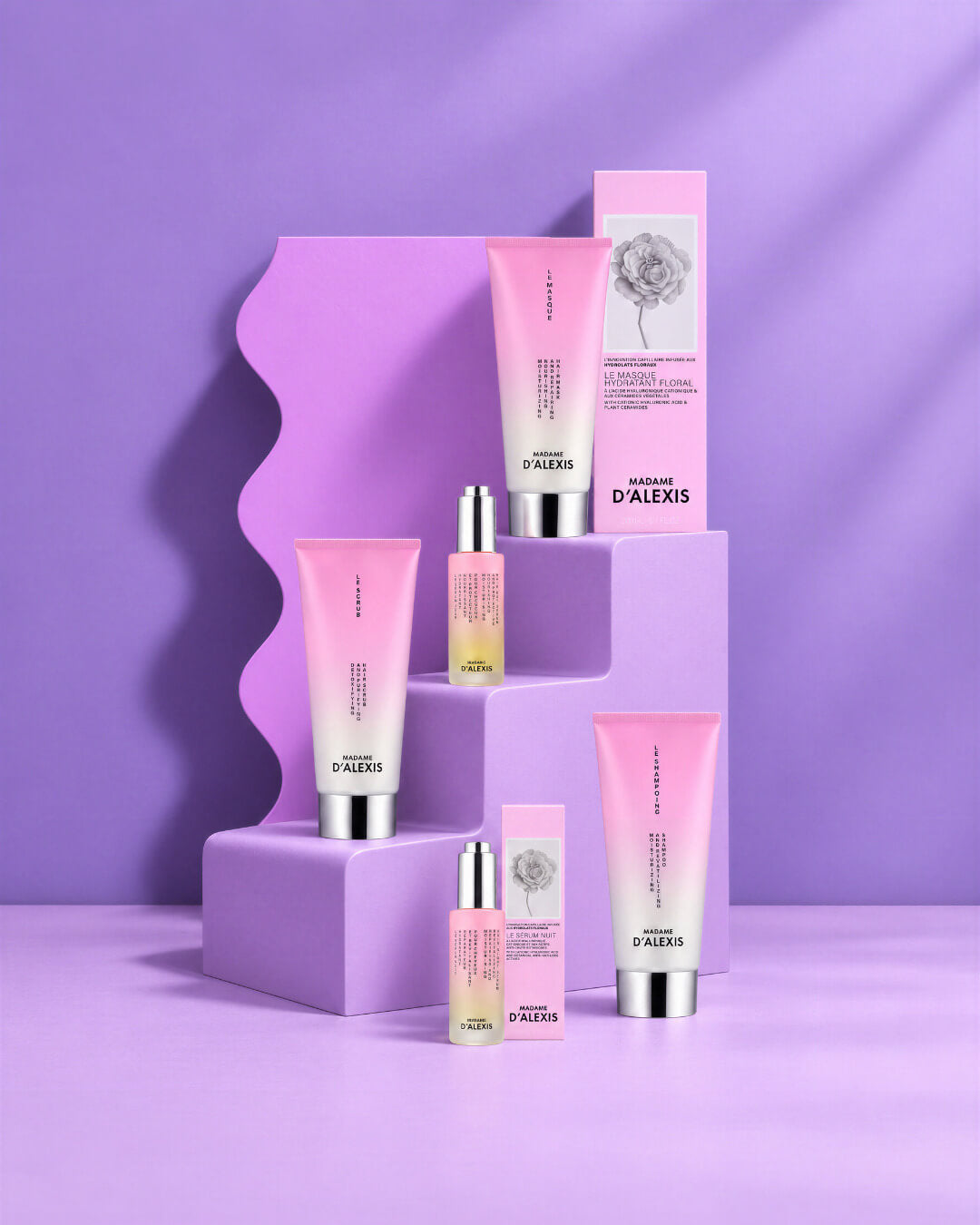
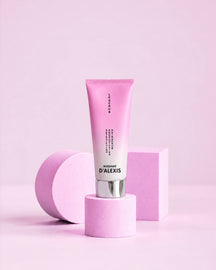
Le Shampoing
Soft cleanse · sensitised hair
- 0 sulphate, 0 silicone, 0 paraben
- Cleanses without roughening the lengths
- Ideal after bleach
€35.00
View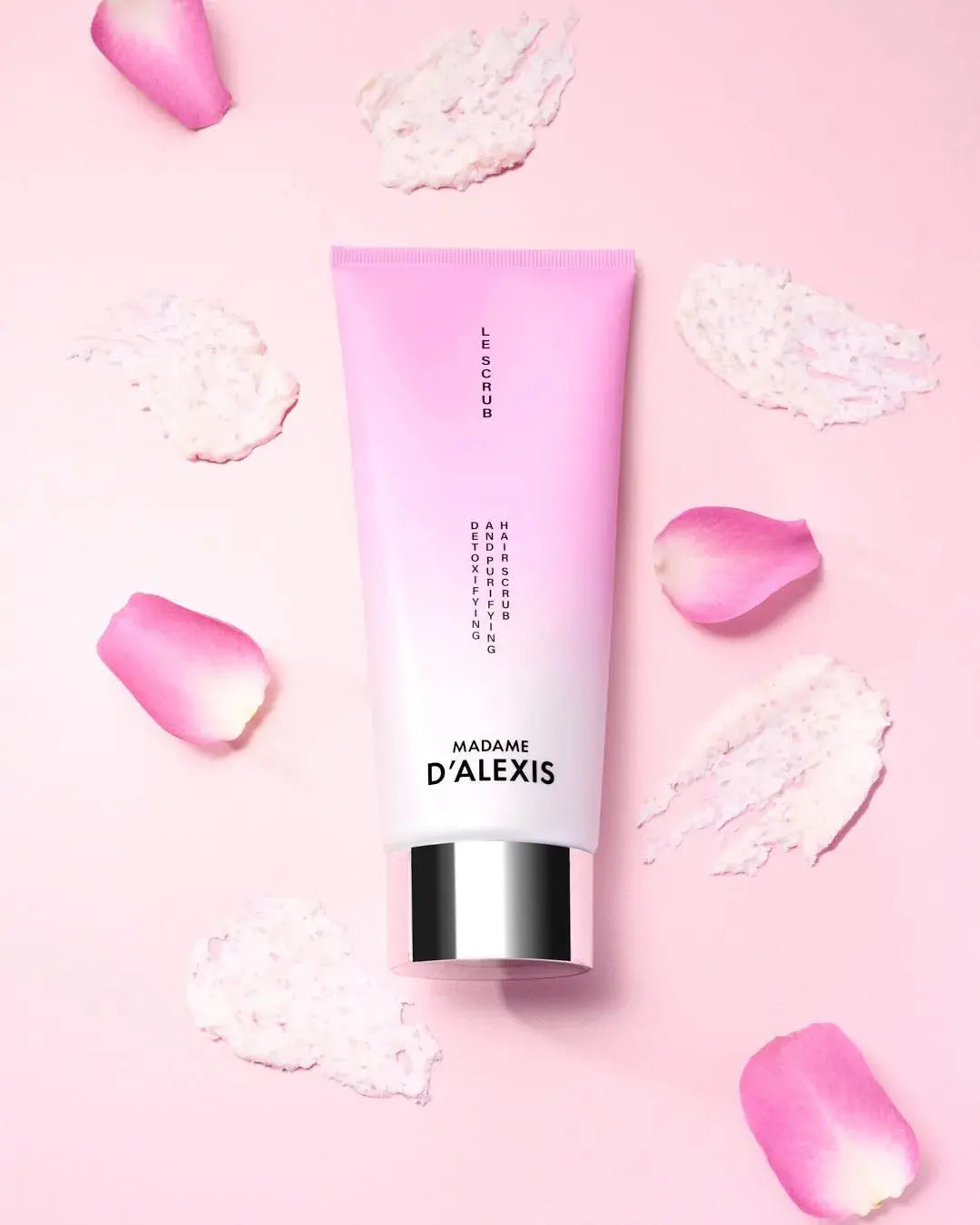
Le Scrub
Exfoliating shampoo · detox
- Lifts residue and build-up
- Preps your hair for the repair steps
- Every 10 to 15 days, replaces your wash
€39.00
View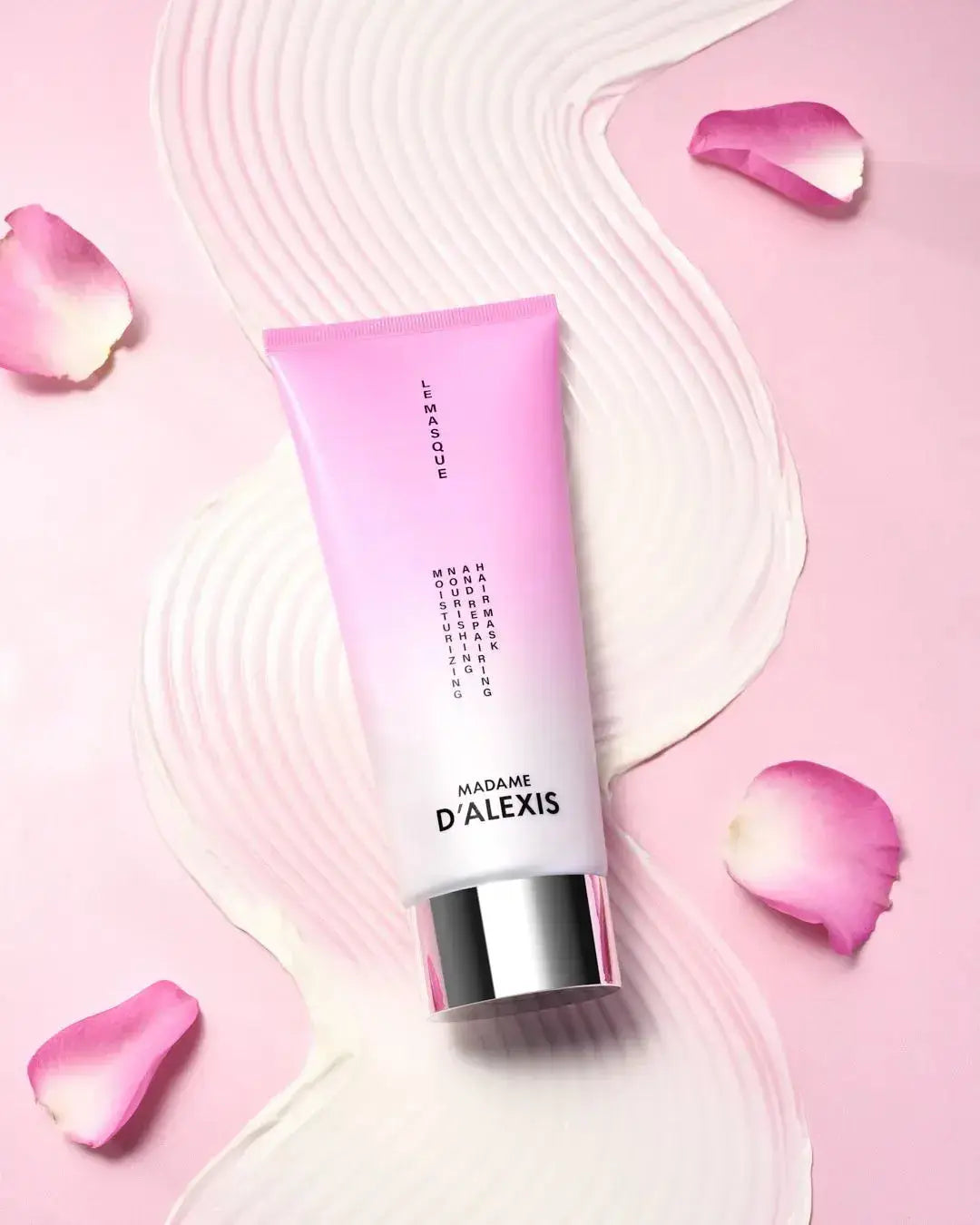
Le Masque
Repair · deep nourishment
- Plant ceramides, apricot and jojoba oils
- Nourishes weakened lengths
- Restores suppleness
€49.00
View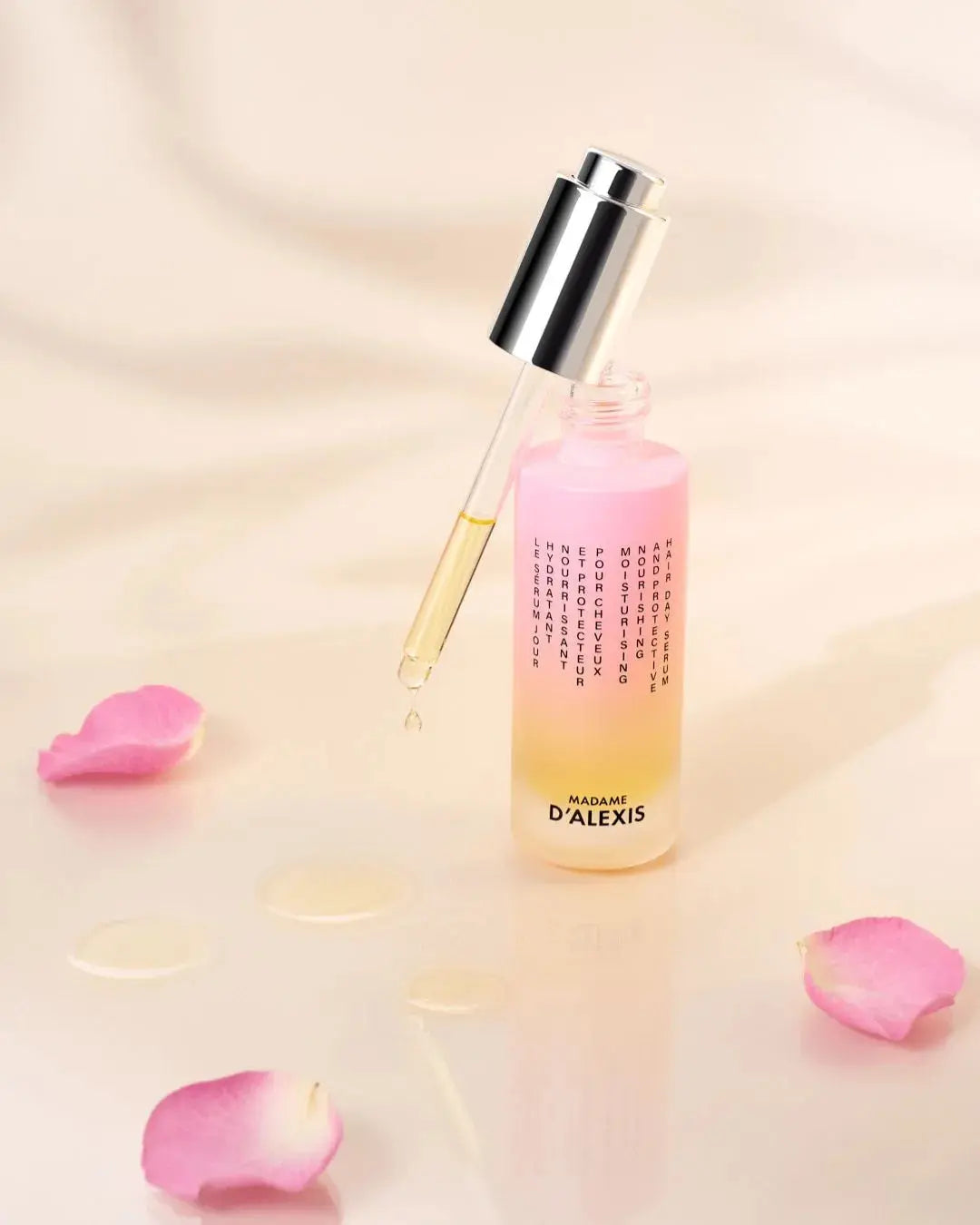
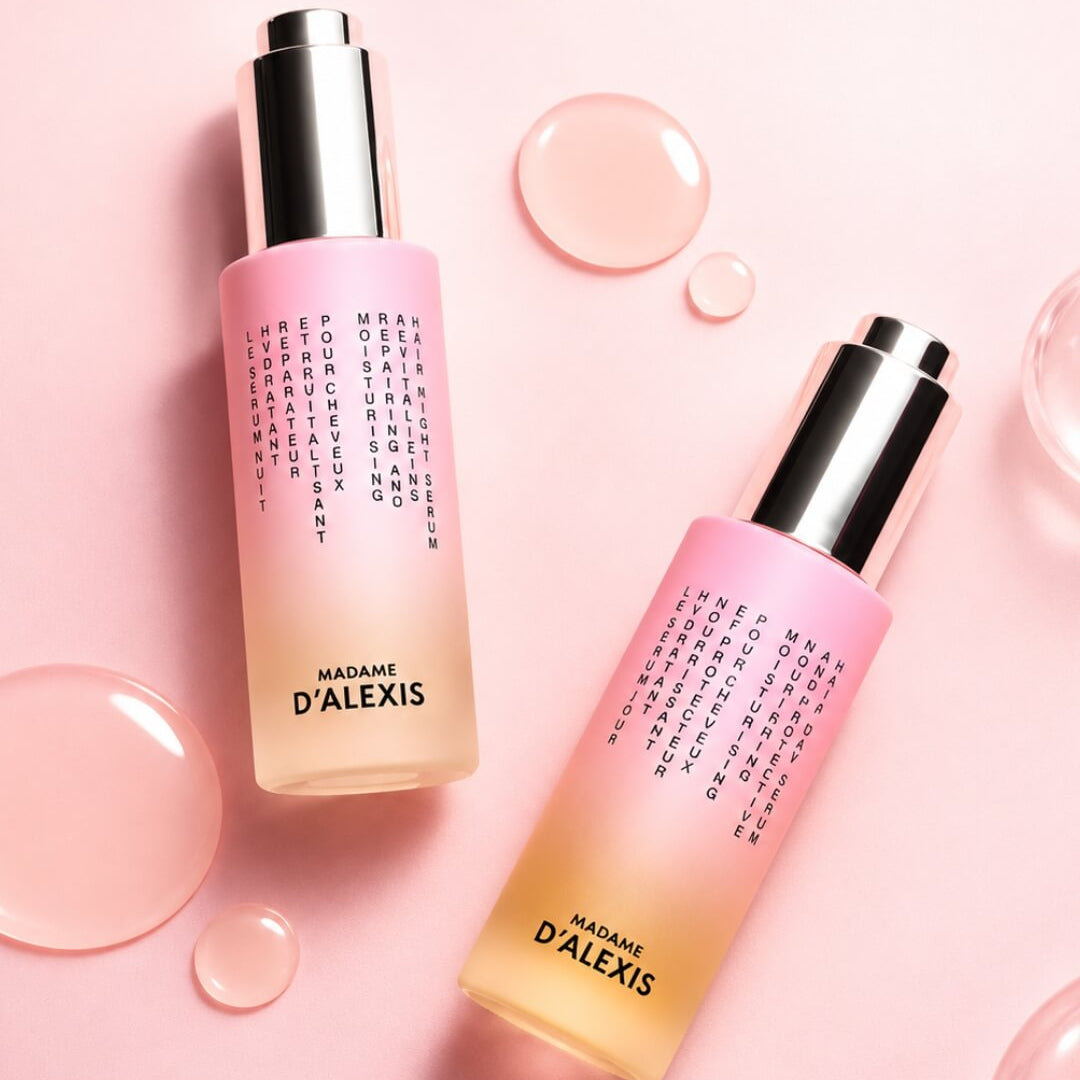
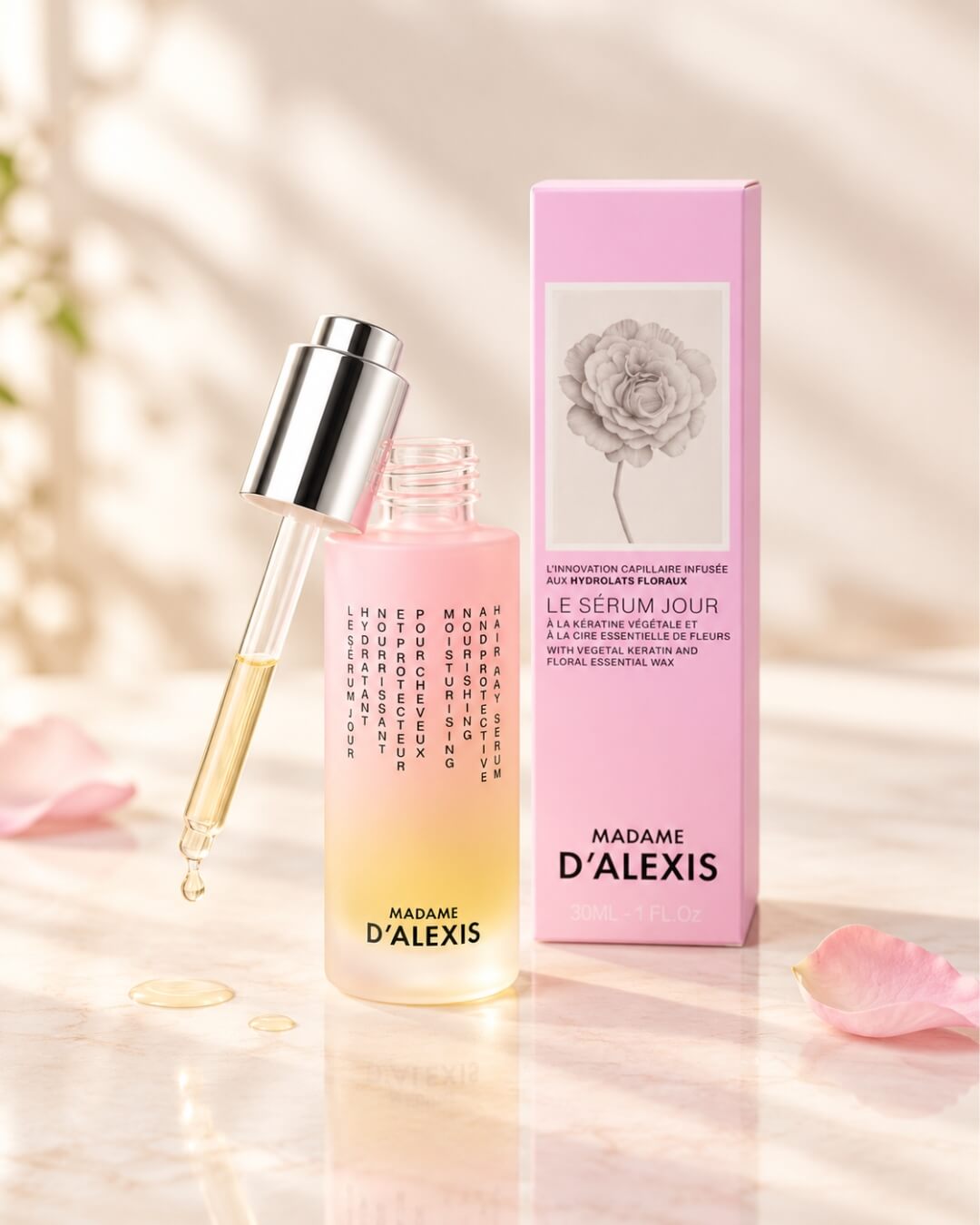
Le Sérum Jour
Finish · heat protection
- Enriched with organic jojoba oil
- Helps protect before blow-drying
- Leaves hair glossy, never heavy
€35.00
View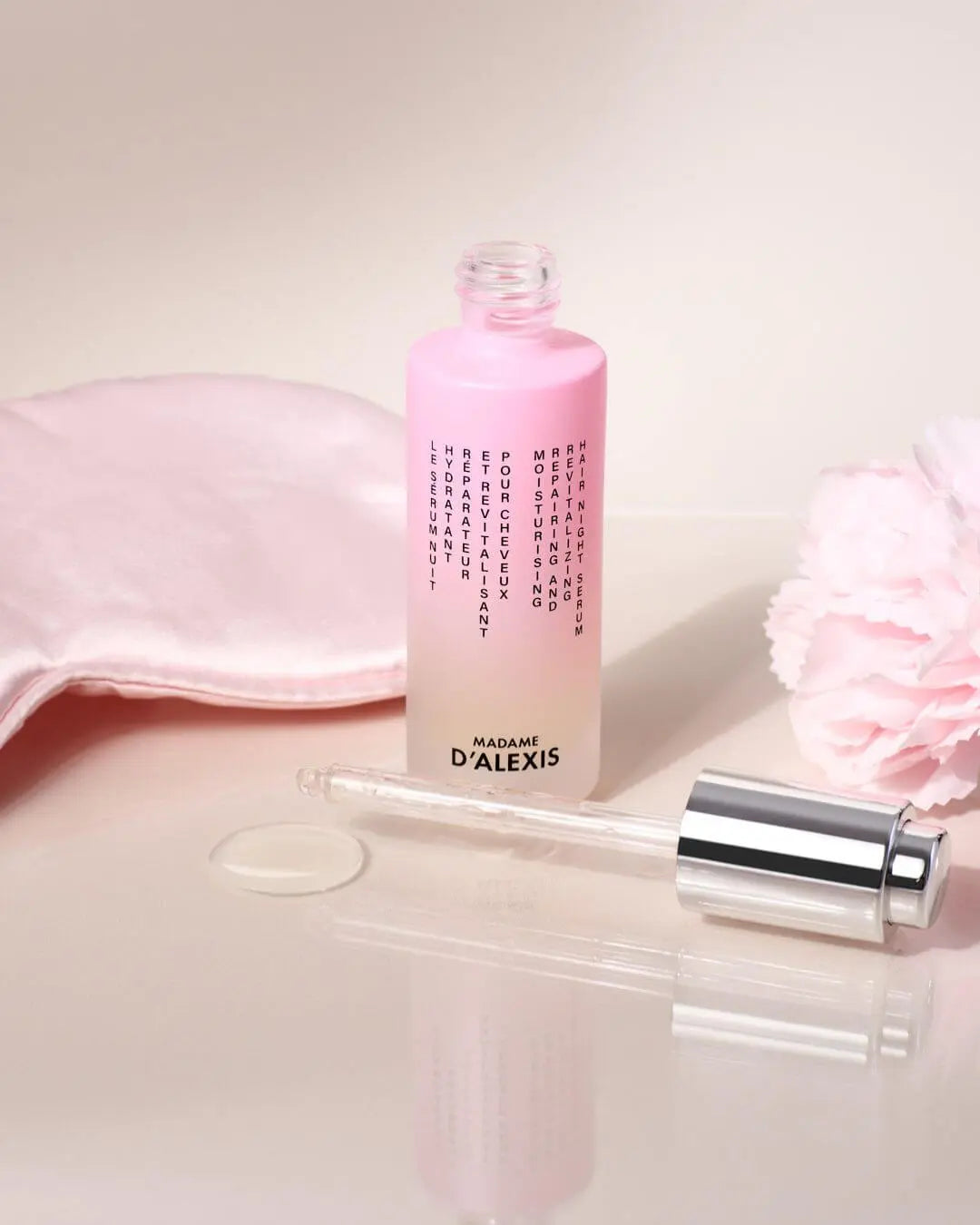
Le Sérum Nuit
Roots · overnight care
- Leave-in, applied at night
- Supports fragile roots
- Completes your aftercare
€35.00
ViewScroll to see every step
Bleach is one of the most transformative services a salon offers. It lifts your natural shade, takes you blonde and creates contrast and highlights.
But it is never harmless. Behind the result lies an aggressive chemical reaction that profoundly alters the inside of the hair.
Without proper aftercare, the effects show quickly: snapping, dryness, higher porosity, dull lengths and locks that are hard to style.
Lightened hair cannot be looked after like hair that has simply been coloured. It needs special care, built step by step, inspired by what a stylist would recommend in the salon and designed to repair without overloading.

Why does bleach damage hair so deeply?
Lightening hair relies on bleaching powder working together with an oxidising developer. The aim is precise: lift the cuticle to reach the hair shaft and break down melanin, the natural pigment that gives hair its colour.
Lightened hair turns porous, sometimes gummy, or even fried when the lightening has been too strong.
This leads to several major imbalances:
- The cuticle is lifted too far and never fully closes again
- The hair shaft is altered and weakened from within
- The protective lipid layer is lost
- The keratin structure is modified
It then becomes porous, sometimes stretchy when wet, often dry and fragile. Strands lose their cohesion, moisture escapes fast and everyday stressors such as sun, chlorine and friction get in more easily.
That is why hair damaged by lightening needs targeted, consistent care.
Mistakes to avoid after bleaching
Damage does not come only from the salon technique, but also from what you do at home afterwards. Some habits make things much worse:
- Overwashing, which dries the lengths out further
- Using a harsh shampoo, full of stripping sulphates
- Using heat styling tools (straightener, curling iron, hair dryer) without a heat protectant
- Believing that a purple wash is enough to repair your hair
- Forgetting the scalp, which lightening often leaves sensitised
Our first tips: cut out these mistakes. Repairing also means knowing what to skip.

The ideal bleached hair care routine: a step-by-step guide
Learn how to care for lightened hair: the video by Madame d'Alexis
Step 1: cleanse softly without weakening your hair
This is the most underestimated step. Yet the way you cleanse lightened hair sets the tone for everything else.
The goal is clear:
remove chemical residue, sebum and product build-up without stripping natural oils.
Classic formulas full of sulphates clean too harshly. They lift the cuticle even more and increase snapping. A moisturising shampoo, made without sulphates and with a slightly acidic pH, smooths the cuticle and keeps your strands supple.
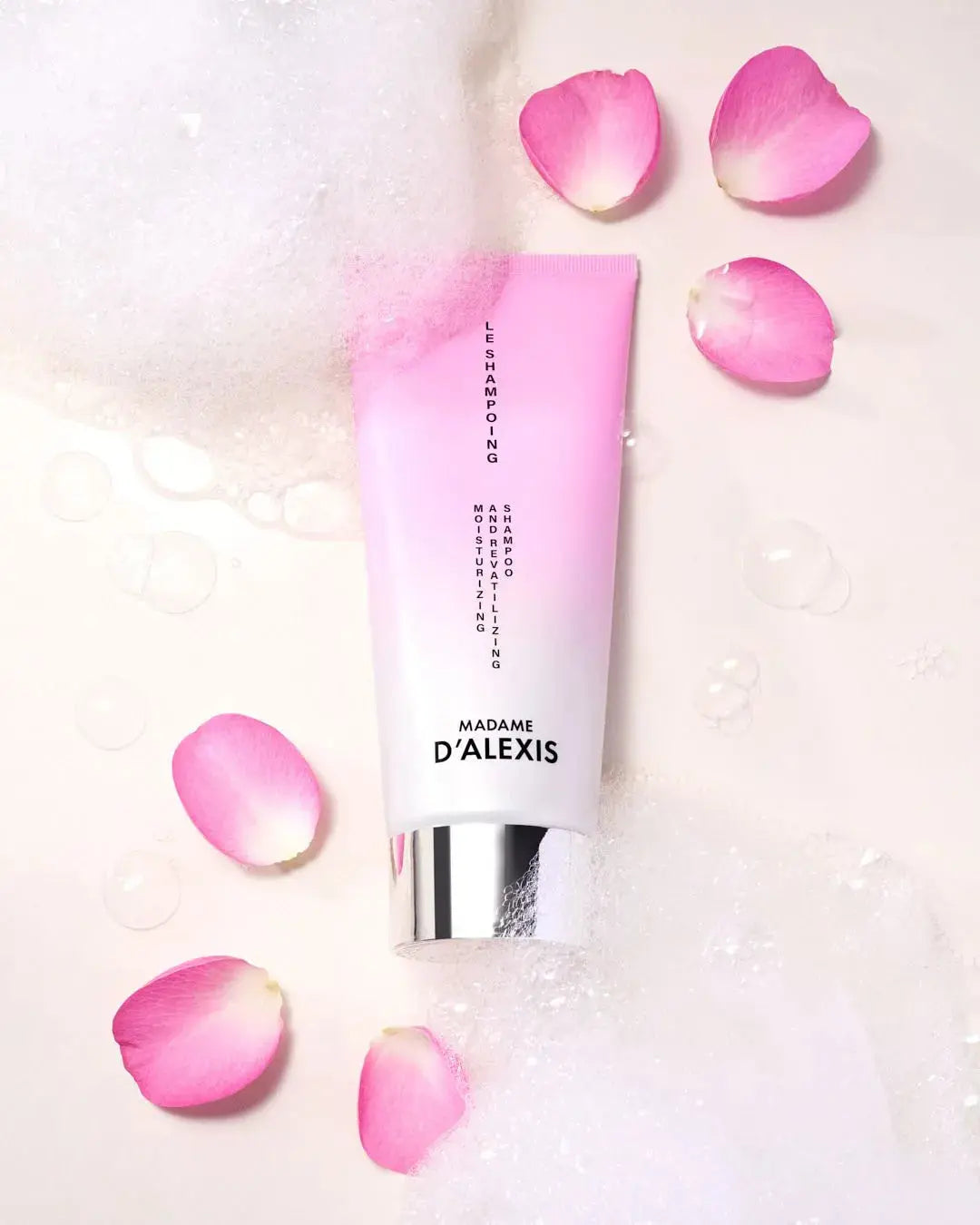
That is exactly the approach of Le Shampoing by Madame d’Alexis. What sets it apart is a formula with no added water, with organic hydrosols at its heart, combined with prebiotics, plant keratin and cationic hyaluronic acid.
Le Shampoing
Soft cleansing · Organic hydrosols · Plant keratin
- Washes sensitised hair softly
- 0 sulphate, 0 silicone to preserve the fibre
- Ideal after bleach or highlights
This kind of gentle shampoo respects weakened lengths, brings moisture from the first use and gets your hair ready for the repair steps.
Good aftercare always starts with the right cleanse. Not too much, not too little. Above all, smart.
Step 2: repair the hair in depth
After bleaching, the hair is structurally weakened. The cuticle stays partly open, the keratin chains are damaged and your hair loses its inner cohesion.
At this stage, a repair mask is not optional, it is a must.
Le Masque
Plant ceramides · Organic oils · Nourishment
- Deeply nourishes sensitised lengths
- Brings back softness, suppleness and shine
- Ideal after bleach or highlights
A repairing intensive mask picks up where cleansing leaves off. It works inside the hair to rebuild, strengthen and nourish. The key ingredients at the heart of a good mask:
- plant ceramides rebuild the lipid barrier, vital for limiting snapping;
- cationic hyaluronic acid clings to damaged areas and keeps them supple;
- organic apricot and jojoba oils add softness and resilience.
Le Masque by Madame d’Alexis answers exactly these needs and can replace your usual conditioner. Its concentrated formula, with no added water, delivers intensive repair without weighing hair down.
Think of it as your weekly conditioning session: it really changes how your hair feels, as long as you use it consistently and patiently.
Step 3: shield and nourish without weighing hair down
Lightened hair stays vulnerable. Heat, friction, sun and colour fading keep weakening it. This is where a leave-in comes in.
Le Sérum Jour
Organic jojoba oil · Gloss · Heat protection
- Enriched with organic jojoba oil to soften the lengths
- Helps protect sensitised hair up to 200°C
- Glossy finish, no greasy feel
A well-formulated leave-in for blonde hair helps to:
- keep moisture in between washes;
- smooth the cuticle to reduce snapping;
- keep your shade bright and shiny;
- act as a heat protectant before applying heat to curl or straighten.
Le Sérum Jour by Madame d’Alexis acts as a light protective veil. It tames lengths, controls frizz and helps protect from heat up to 200°C, with no greasy feel. Smooth a few drops onto towel-dried strands before you blow-dry.
Personally, I see this step as essential: it is what separates repaired hair… from hair that snaps again.
Step 4: use the night to strengthen and thicken
Evenings are a key moment: a leave-in applied before bed has hours to work while you sleep. After bleaching, this phase is worth planning.
Le Sérum Nuit
Roots · Density · Leave-in
- Completes your aftercare at home
- Left on overnight, no rinsing
- Supports fragile roots
A targeted overnight root treatment applied section by section helps to:
- support healthy growth;
- strengthen hair from the root;
- improve the quality of new growth.
Le Sérum Nuit by Madame d’Alexis follows this logic. With natural anti-hair-loss actives (oak, nettle, liquorice), probiotics and organic hydrosols, it is left on the roots overnight to support the repair of a weakened head of hair. It is a step people often skip, yet it pays off in the medium term.
Step 5: rebalance the scalp after bleaching
Lightening does not only affect the lengths. The skin on your head is often sensitised, sometimes irritated and clogged with chemical residue. A gentle exfoliating wash, used every 10 to 15 days, gives you a clean, healthy base.
Le Scrub
Exfoliating shampoo · Fleur de sel · Organic hydrosols
- Helps release residue at the roots
- Gets your hair ready for the repair steps
- Replaces your usual wash that day
Le Scrub by Madame d’Alexis, used in place of your usual wash (two passes, like a double cleanse), helps to:
- clarify without irritating;
- stimulate microcirculation;
- help the next product you use work better.
How often should you use each product?
A simple weekly plan:
- wash your hair 2 to 3 times a week, less often if you can, with dry shampoo in between;
- repair mask: 1 to 2 times a week;
- daily leave-in: before any heat styling;
- overnight root care: 2 to 4 evenings a week;
- Le Scrub: once every 10 to 15 days, instead of your usual wash.
Platinum blonde or long lengths usually need extra nourishment. Fine hair needs light textures and a light hand.
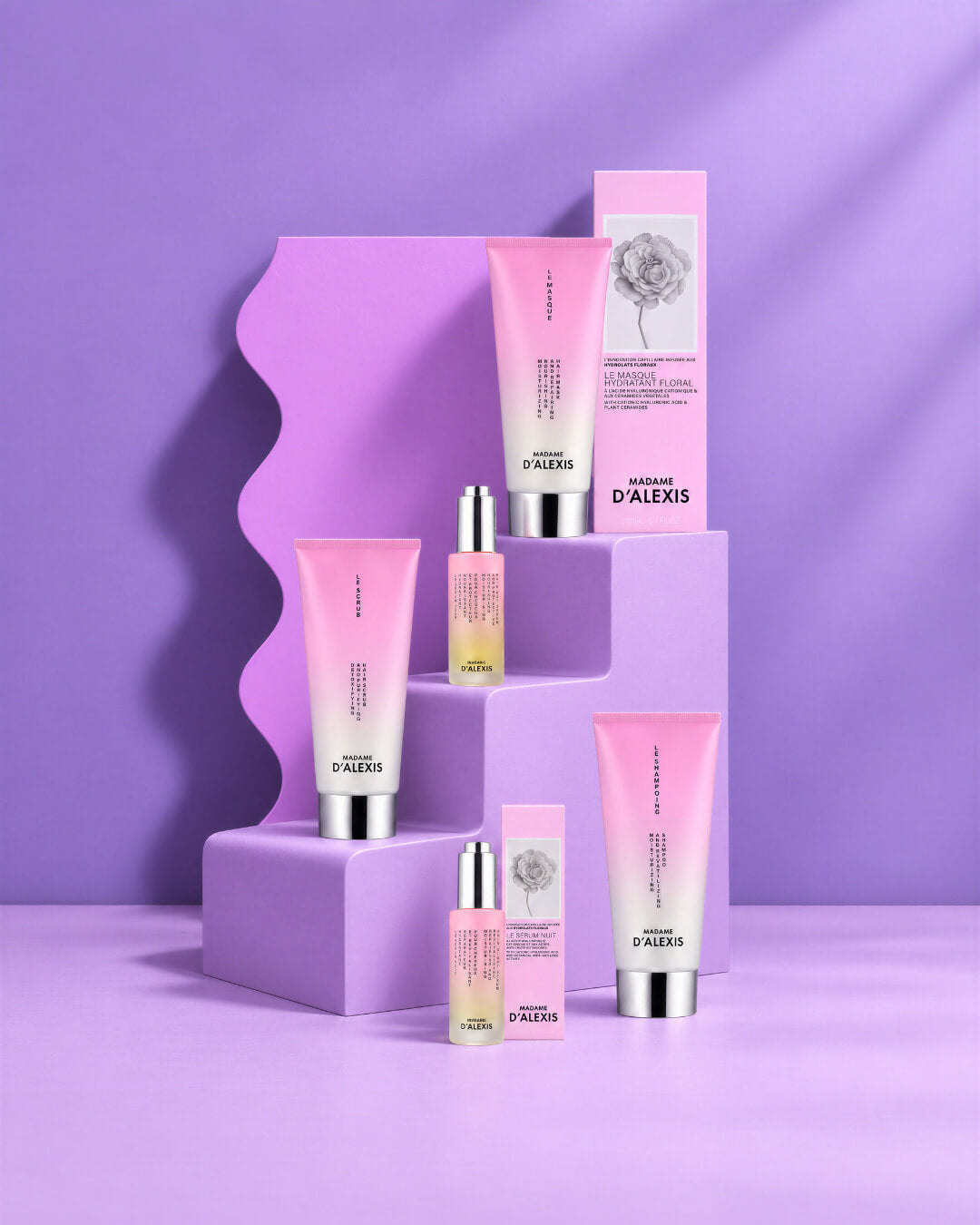
5 Madame d’Alexis steps to repair hair after bleaching
A full regime for lightened, sensitised or brittle hair: clarify the roots, cleanse softly, nourish intensely, shield the lengths and keep the repair going at home.
Le Shampoing
Soft cleanse · sensitised hair
- 0 sulphate, 0 silicone, 0 paraben
- Cleanses without roughening the lengths
- Ideal after bleach
€35.00
View
Le Scrub
Exfoliating shampoo · detox
- Releases residue and build-up
- Preps the repair steps
- Replaces your usual wash
€39.00
View
Le Masque
Repair · deep nourishment
- Plant ceramides, apricot and jojoba oils
- Nourishes weakened lengths
- Restores suppleness
€49.00
View
Le Sérum Jour
Finish · heat protection
- Enriched with organic jojoba oil
- Helps protect before blow-drying
- Leaves hair glossy, never heavy
€35.00
View
Le Sérum Nuit
Roots · overnight care
- Leave-in, applied in the evening
- Supports fragile roots
- Completes your aftercare
€35.00
ViewScroll to see every step
Should you trim your ends after bleaching?
Yes, and the sooner the better. Regular trims help to:
- remove split ends before they travel up the strand;
- save your lengths and instantly improve how your hair looks;
- make every product you apply work better.
A haircut does not replace care. It complements it. Together, they help bring back healthier, stronger-looking and visibly more beautiful hair after bleaching.

FAQ: caring for bleached hair
What is the best treatment after bleaching?
There is no single miracle product, but rather a complete, consistent plan. After bleach, hair needs repair, steady moisture and daily defence.
The best aftercare combines a mild shampoo that avoids stripping natural oils, a ceramide repair mask and a leave-in to limit snapping. Consistent care, rather than the odd intensive session, brings visible results.
How long does it take to repair bleached hair?
Be realistic. Lightening permanently changes the inside of the hair shaft and cannot be undone in a few days. With the right products, most people notice softer, shinier lengths after a few weeks.
Making hair genuinely stronger and less prone to snapping usually takes a few months. Be patient: it rebuilds gradually.
Can you hydrate lightened hair without weighing it down?
Yes, as long as you choose formulas designed for blonde hair. This hair is often fine and porous, so overly rich textures quickly flatten it.
Good hydration relies on ingredients such as hyaluronic acid, and on ceramides that strengthen without a greasy finish. Apply with a light hand, mainly on the lengths and ends.
Should you use purple shampoo all the time?
No. Purple shampoo corrects tone, it does not repair. Its job is to neutralise yellow or brassy tones on blonde hair. Used too often, it can dry out your lengths and increase snapping.
Use it every week or ten days at most, alternating with a moisturising formula. If your shade drifts a lot, ask your colourist about a toner to adjust the level.
How do you prevent breakage after bleaching?
Cut down on mechanical and heat stress. Limit heat styling tools and always apply a heat protectant spray or cream first, with your tools on a lower temperature setting.
Rough towel-drying, tight hairstyles and aggressive brushing weaken strands further: wrap your hair in a microfibre towel, use a wide-tooth comb or soft brush on wet hair and sleep on a silk pillowcase for silky, smoother lengths. A conditioning mask and regular trims help hair hold up better.
How do you fix damaged bleached hair?
To fix damaged bleached hair, you need to treat hair that lightening has weakened in depth. It calls for targeted haircare that can rebuild the inside of your strands.
A regularly used hair mask is the heart of the best aftercare for this hair type.
This conditioning step repairs progressively, strengthens your hair and reduces snapping. Repair is an ongoing job that relies on steady, coherent habits.
What products to use on bleached hair?
The products to use on bleached hair deserve careful thought. Start with a cleanser made for weakened hair, alongside mild formulas that respect your hair.
A nourishing conditioner or repair mask brings moisture back, while a leave-in conditioner shields the lengths.
A smart haircare plan favours kind, simple products within a complete aftercare approach, often built around a repairing range designed to rebuild the hair. If your hair feels gummy, ask your stylist whether a bond repair treatment suits you.
How do you hydrate bleached hair?
To hydrate bleached hair, think measured, natural moisture. Dry hair needs nourishment without being saturated.
A light hair oil, an occasional pre-wash oil bath with argan oil, coconut oil or shea butter, or a rich deep conditioner or cream mask can be used depending on your needs. Products containing hyaluronic acid suit long-lasting hydration. Hydrating also means nourishing and preserving your hair's elasticity.
How do you keep bleached hair healthy?
Expert advice is clear: avoid back-to-back chemical services and protect your hair from everyday stressors.
Wear a hat in strong sun, put on a swim cap before chlorinated pools, and cut down on hot styling tools. Keep to a suitable haircare plan and look after your hair consistently. Eat a balanced diet rich in vitamins and minerals and drink plenty of water: healthy hair starts on the inside too.
Trimming damaged ends limits breakage and improves how your hair looks overall. Good hair care is what keeps your hair colour looking perfect for longer. Bleached hair requires special care to maintain its health and vibrancy: these habits keep your hair looking healthy between salon visits.
How do you choose a shampoo for lightened hair?
A shampoo for blonde hair must cleanse without weakening. Purple shampoo is useful for neutralising yellow tones, but it does not repair and should not be used constantly.
For regular use, opt for a mild cleanser, moisturising formula or sulphate-free shampoo, ideally a formula made for bleached hair. The right choice respects your hair and gets your strands ready for the next steps.
Which ingredients are best for damaged hair?
Restorative and repairing ingredients are key for damaged hair. Plant keratin and other proteins help strengthen the hair structure, while amino acids support the cohesion of the hair.
Plant oils, ceramides and moisturising ingredients bring nourishment and suppleness. These repairing ingredients, when well formulated, help repair the hair in the long run without weighing it down.
Why is my hair stretchy after bleaching?
Hair turns stretchy after bleaching when its internal protein structure has been badly damaged. This is called over-elasticity: the bonds that hold the keratin together have been broken by the chemical reaction.
Healthy hair has a little natural elasticity: it stretches slightly and springs back. Over-stretched hair, on the other hand, stretches too far when wet, loses its shape and eventually snaps.
This extreme fragility shows very high porosity: the hair has lost protein and no longer holds on to nourishing ingredients. Stretchy hair after bleaching needs intensive rebuilding based on:
- Protein treatment (plant keratin, silk proteins) to fill structural gaps
- Ceramides to rebuild the lipid barrier and reduce porosity
- Measured moisture, because moisture without protein structure makes elasticity worse
Keep heat to a minimum (hair dryer, straightener) and handle wet hair gently. In the most severe cases, cutting off the most damaged lengths is still the best way to stop the snapping spreading. If in doubt, consult a professional.
How often should I wash bleached hair?
Washing less often than before you went blonde is key. Aim to wash two to three times a week: every wash removes some natural oils, and lightened strands cannot afford to lose them. In between, a little dry shampoo at the roots is enough. Use lukewarm rather than hot water, and squeeze, never rub, the lengths.
What is the best hair routine for bleached hair?
The best hair routine for bleached hair is simple: a sulphate-free shampoo, a ceramide mask instead of a light conditioner, a leave-in with heat protection before styling, and Le Scrub every 10 to 15 days. Add a purple toning wash once a week if brassy tones appear. Give it several weeks before you judge the results.
How do you keep blonde hair healthy in summer?
Sun, salt and chlorine all dry out lightened strands. Wet your hair with tap water and apply a leave-in before swimming, rinse straight after, and cover up with a hat. A rich mask once a week helps restore moisture, and a silk scarf wrap or loose braid limits friction. Protect your skin and hair from strong sun. These expert tips save your colour and your lengths.
Do you need a bond builder after bleaching?
A bond builder is a salon service that works on the broken bonds inside the hair. It can help very damaged or gummy hair, but it does not replace good care of bleached hair at home. Ask your colourist whether it suits you, then keep up a gentle wash, a repair mask and a heat protection product. The same logic applies to post-colour care.
Conseils