Conseils
Fine hair: why it falls flat and how to give it body

You wash your hair in the morning and by the afternoon it has fallen flat. Roots plastered against your scalp, limp lengths, a hairstyle that won't hold: limp hair gives the impression of tired, dull hair that neither a blowout nor styling products can truly fix. With autumn, the dry air of heated interiors, outdoor humidity and beanies, the problem can become more pronounced. Good news: in most cases, it can be explained by a few simple causes and corrected by adjusting your routine rather than piling on products.
What is limp hair, and how does it differ from frizzy hair?
Limp hair lacks body, bounce and hold. It falls flat at the roots, slips through your fingers, lies flat after a few hours and retains little shape, even after a careful blowout. It is also described as flat, tired, depleted, lifeless or lacking tone: these are different words for the same sensation, with causes that vary from one person's hair to another.
It should not be confused with frizzy hair, which is the opposite: it puffs up, frizzes and goes in every direction. Limp hair falls flat. One lacks hold, the other lacks discipline, and the treatments to prioritize are therefore not the same.
Why is my hair limp and flat?
Hair that lacks body is almost never the victim of a single cause. Here are the most common causes, from the most frequent to the least obvious.
- Product buildup. Styling products, masks that are too rich and applied to the roots, silicones that leave a film: the hair becomes weighed down and loses its movement. If your hair also feels sticky after washing, our article on sticky hair after washing explains this mechanism in detail.
- A congested scalp. Sebum, sweat, pollution and product residue mix at the base of the hair. The roots can no longer lift and the hairstyle collapses.
- Insufficient rinsing. A poorly rinsed shampoo or mask leaves a veil that pulls the hair down. This is one of the most common mistakes, and one of the easiest to correct, as shown in our guide to washing your hair perfectly.
- A dehydrated or sensitized hair fiber. Dyeing, bleaching, flat irons, heat: a fiber lacking water and lipids loses its suppleness and hold. It appears dull, flat, and lifeless, even if the scalp is perfectly clean.
- Naturally fine hair. Fine hair has less substance per strand, and therefore less spontaneous volume. It is more easily weighed down by a treatment that is too dense, and our guide to adding volume to fine hair provides useful additional information on this point.
- The seasons and accessories. Heating, cold, scarves, friction, static electricity and beanies worn on still-damp hair fatigue the fiber and flatten the roots.
Tired, depleted, lifeless hair: how to tell the difference?
Before choosing a treatment, observe where the problem lies. Dull hair, for example, has an issue with shine that is addressed in our article on dull hair, while limp hair is primarily a question of hold and lightness. This table helps you identify the most likely cause.
| What you observe | Probable cause | Recommended approach |
|---|---|---|
| Roots flat after just a few hours, lengths look fine | Congested scalp or product buildup | Exfoliate, then double shampoo and rinse thoroughly |
| Lengths lack bounce, dry ends, dull appearance | Dehydrated or sensitized hair fiber | Mask on the lengths and dry oil on the ends |
| Fine hair that won't hold any style | Fine fiber, treatments that are too rich | Light routine, mask limited to the lengths |
| Dull hair during cold weather or when using heating | Dry air, friction, beanies | Regular hydration and evening scalp care |
If, in addition to this lack of hold, you notice unusual hair loss or a painful scalp, speak to a healthcare professional: no cosmetic treatment can replace medical advice.
What to do for limp hair: the five-step routine
Restoring body to limp hair is less about a miracle product than a coherent sequence of steps. Here is the routine we recommend.
- Start with a clean base. Every 10 to 15 days, use Le Scrub instead of Le Shampooing: two consecutive applications, like a double shampoo, then rinse completely. It frees the roots from the buildup that weighs them down.
- Wash properly. The rest of the time, double shampoo with Le Shampooing on a thoroughly wet scalp, massage with your fingertips and rinse very thoroughly. It is often this rinsing that makes all the difference.
- Nourish the lengths, not the roots. Apply Le Masque to towel-dried hair from the mid-lengths to the ends, leave on for 5 to 10 minutes, then rinse thoroughly.
- Treat the scalp in the evening. One dropper of Sérum Nuit, section by section, a massage, and no rinsing. For a treatment course, use 3 to 5 times a week, then 1 to 2 times for maintenance.
- Seal the ends. Finish with 1 to 3 drops of Sérum Jour on the lengths and ends, on dry or slightly damp hair.

When drying, lift the roots with your fingertips, or dry them first with your head tilted slightly forward: the shape your hair takes as it dries determines how well it will hold until your next wash.
Which treatments to choose for limp hair?
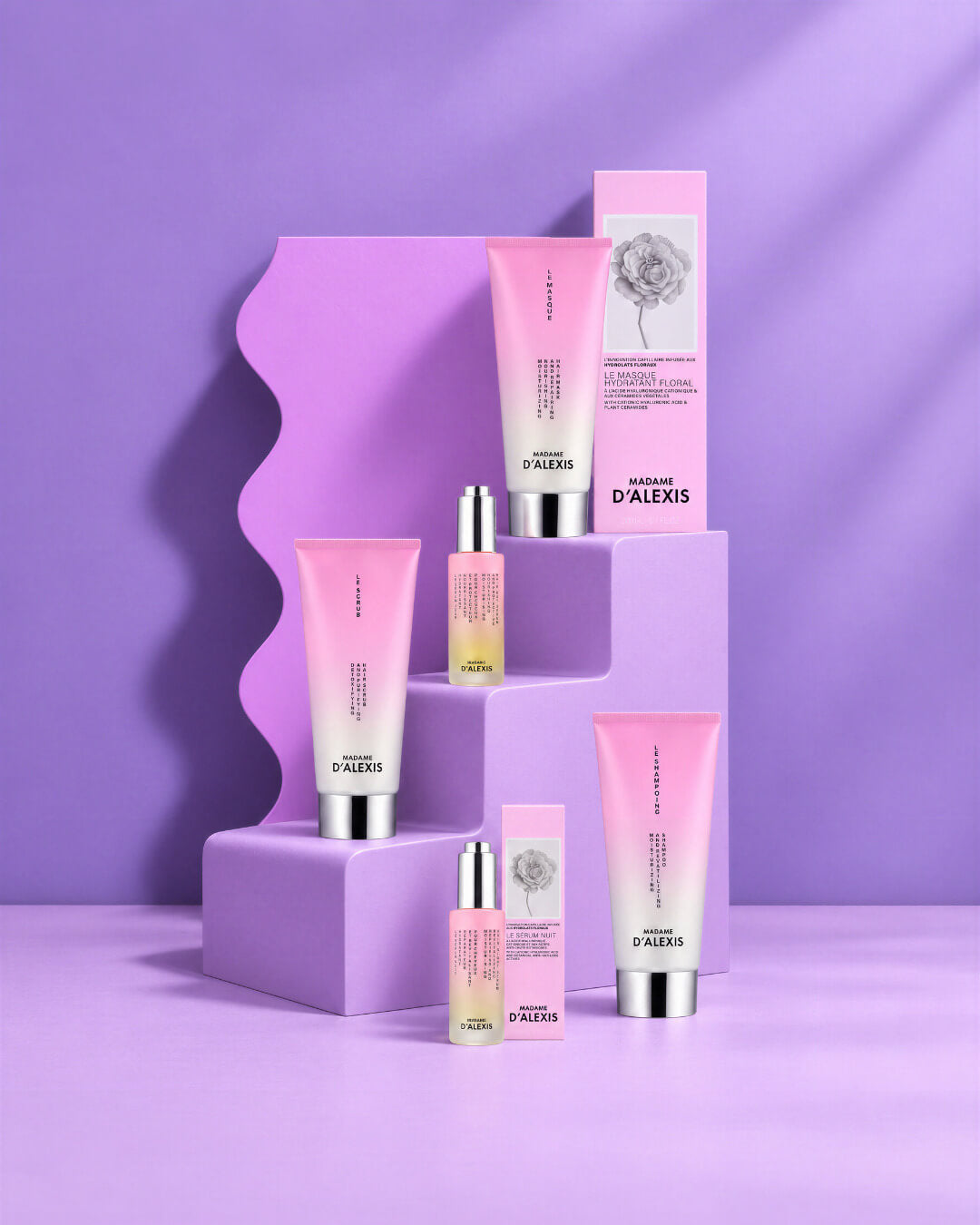
Madame d'Alexis treatments are formulated without added water, with an organic hydrosol base (Damask rose, matricaria chamomilla, orange blossom) combined with skincare-inspired active ingredients, without sulfates, silicones or parabens. This lack of silicones matters when you are looking for lightness: nothing leaves a film on the hair fiber. Here is what each treatment brings to limp hair.
Le Shampooing: start with a light base
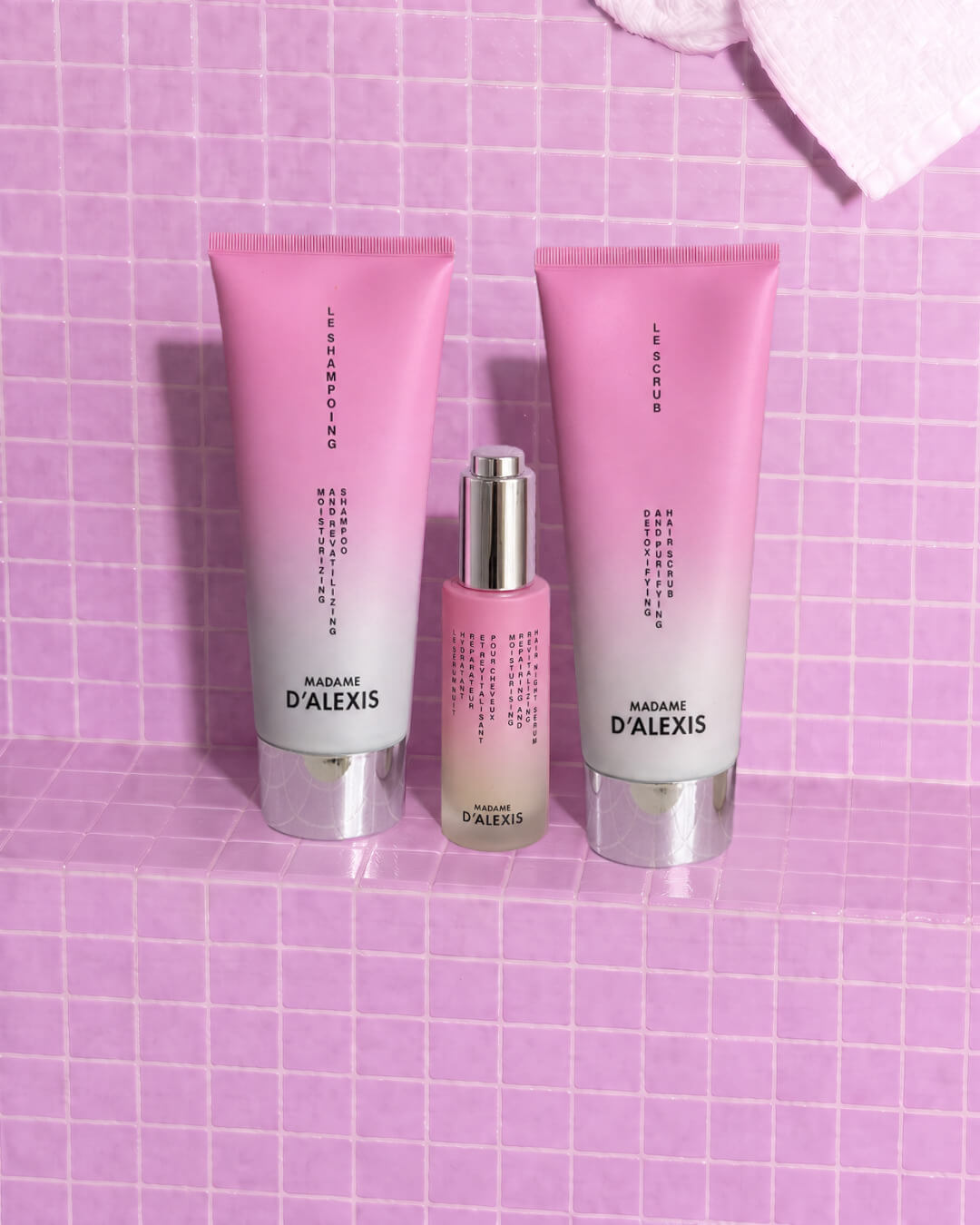
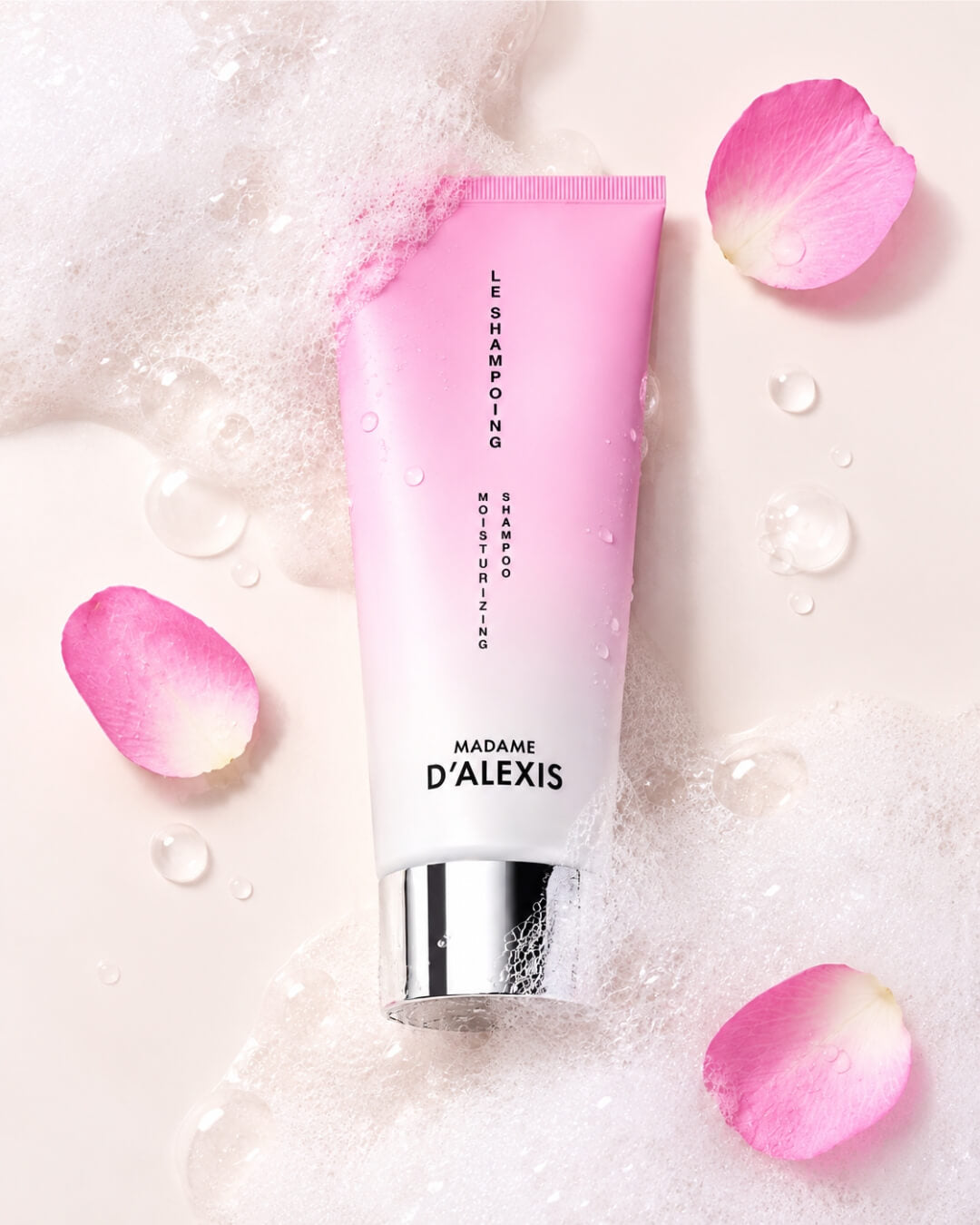
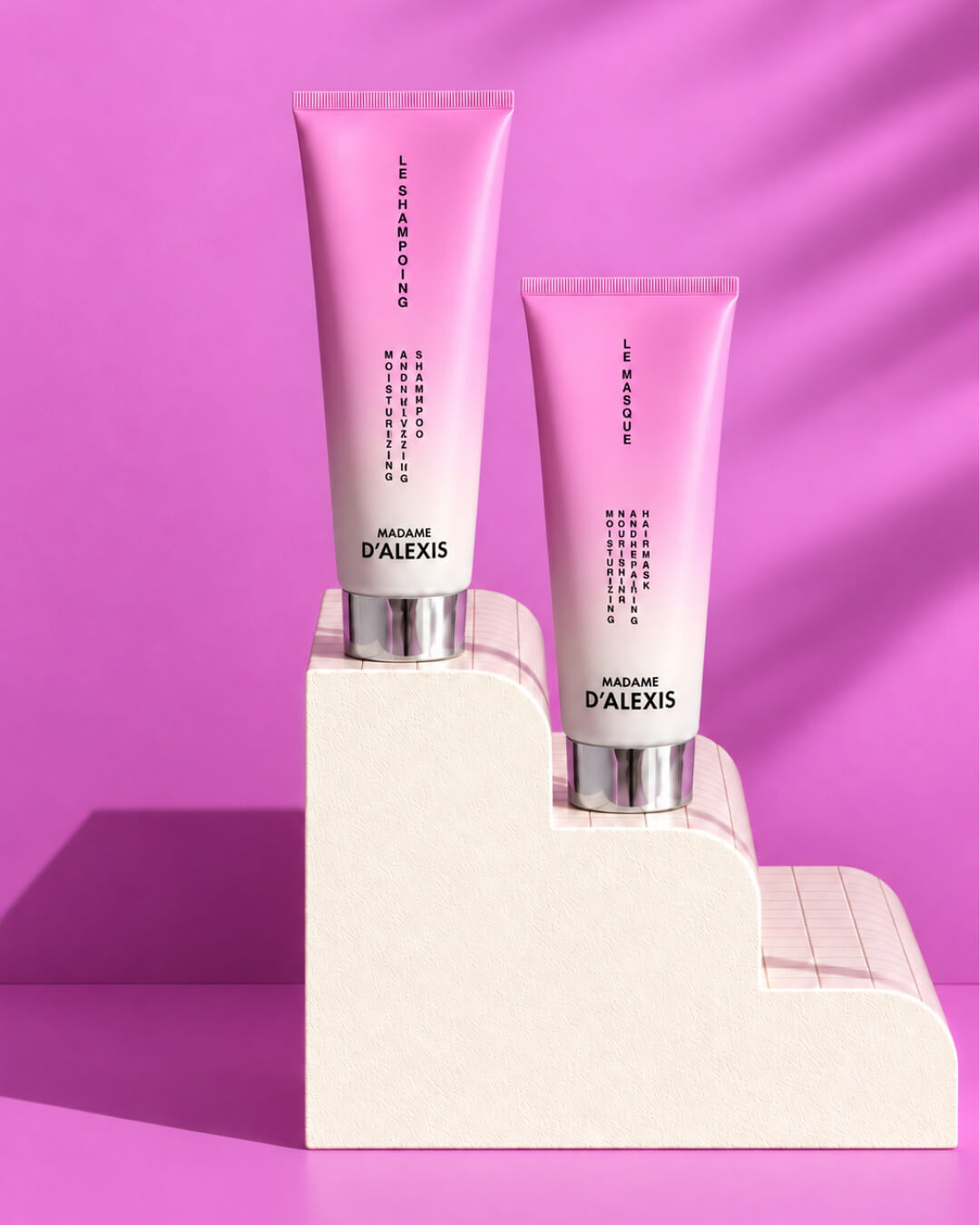
Le Shampooing, formulated with 98% ingredients of natural origin, hydrates, soothes and adds shine. Its cationic hyaluronic acid, prebiotics and plant-based keratin nourish the fiber without weighing it down, and its hydrosol base cleanses without irritation. Used as a double shampoo, it gently cleanses the scalp, leaving the roots free to lift. It can be used daily or alternated with Le Scrub.
Le Scrub: free the roots
Le Scrub is an exfoliating shampoo with 98% ingredients of natural origin, made with sea salt, hydrosols, organic coconut oil and cationic hyaluronic acid. Used every 10 to 15 days instead of Le Shampooing, it removes the buildup at the base of the hair. It is also suitable for sensitive scalps, precisely because it is used less frequently.
Le Masque: soften the lengths
Le Masque, with 97% ingredients of natural origin, repairs, nourishes and softens. Its plant-based ceramides, cationic hyaluronic acid, orange blossom wax and organic apricot and jojoba oils restore suppleness to a fiber fatigued by dyeing, heat or cold. On limp hair, it should be reserved for the lengths and ends, and rinsed thoroughly.

Sérum Nuit: support the roots
Sérum Nuit, with 98% ingredients of natural origin, combines prebiotics, postbiotics, fermented extracts and natural active ingredients (oak, nettle, licorice) with cationic hyaluronic acid. Applied to the scalp in the evening, it cares for the area where root hold is determined and supports density, without weighing down the lengths since it is not applied to them.
Sérum Jour: seal the ends without weighing them down
Sérum Jour is a dry oil with 99% ingredients of natural origin, made with organic jojoba, plant-based ceramides, antioxidants and natural heat protectants (up to 200°C). A few drops are enough to protect and smooth the ends without a greasy or heavy feel, even before applying heat.


Le Scrub

Le Masque


Sérum Jour
Are your lengths as dry as they are limp? Our selection of shampoo and mask for dry hair brings together the most suitable treatments for a fiber lacking hydration.
Is your hair always falling flat?
Answer a few questions about your scalp and lengths, and we will create your routine from our 5 treatments with organic hydrosols, formulated without added water.
Do you recognize yourself?
- You answer
- You discover your routine
- You adjust your selection
What simple steps restore body to limp hair?
Beyond treatments, a few natural habits change the hold of your hair without costing anything.
- Brush before washing. Gently detangling dry hair distributes sebum and avoids washing tangled hair, which is harder to rinse.
- Rinse thoroughly. Take the time to rinse until the water is perfectly clear, especially after the mask.
- Do not apply the mask to the roots. The lengths need it, not the base of the hair.
- Avoid piling on styling products. Each additional layer weighs down the fiber and requires a more thorough wash.
- Remove the beanie from dry hair. A beanie worn on damp hair, or too tightly, flattens the roots and promotes static electricity.
- Rely on hydrosols. Orange blossom tones and energizes the roots, Damask rose hydrates and soothes, chamomile soothes and adds shine to the hair: three gentle allies that form the base of our treatments.
Frequently asked questions about limp hair
Why is my hair limp right after washing?
Most often, it is a problem of buildup or rinsing: a poorly rinsed shampoo, a mask applied too close to the roots, or accumulated styling products leave a veil that weighs down the fiber. A congested scalp or a dehydrated fiber can also be the cause. A scalp exfoliation, followed by a thoroughly rinsed double shampoo, is a good first test.
How to naturally restore body to limp hair?
Focus on a complete wash, thorough rinsing, a mask limited to the lengths, and drying that lifts the roots. Add evening scalp care and a light dry oil on the ends. Silicone-free treatments avoid the film that flattens the hair.
Which shampoo to choose for limp hair?
Choose a gentle formula, without sulfates or silicones, that cleanses without drying out or leaving residue. Madame d'Alexis Shampoo, made with organic hydrosols and cationic hyaluronic acid, meets these requirements. Use it as a double shampoo, on a thoroughly wet scalp, and rinse very thoroughly.
Is limp hair necessarily oily hair?
No. Hair can be limp because the scalp is congested, but also because the fiber lacks hydration, is naturally fine, or is weighed down by a treatment that is too rich. Observing your roots and lengths, with the table above, helps you decide.
How long does it take to get holdable hair back?
It depends on the cause of the problem. Better rinsing and scalp exfoliation often change the sensation from the first washes. For the fiber itself, hydration and scalp care require a regular routine over several weeks.
In summary: falling hair can be fixed
Limp hair is not inevitable. Product buildup, a congested scalp, insufficient rinsing, tired or naturally fine hair fibers: identify your cause, start with a clean base, nourish the lengths without touching the roots, and support your scalp in the evening. If you are unsure about the order of steps, the free hair quiz guides you in two minutes to the routine best suited to your hair.
Conseils