Conseils
Does dry shampoo damage hair? Risks, hair loss and safe use
Dry shampoo absorbs sebum and adds volume in one step, but excessive use can irritate the scalp, clog follicles, and increase breakage. Directions for use and key precautions.

In short: does dry shampoo damage hair?
- Once or twice a week, little risk: sprayed once or twice a week, dry shampoo does not weaken the hair fibre or the roots, and dermatologists generally see it as safe for hair at that frequency.
- Daily application is where problems start: product buildup on the scalp, itchy irritation and, on fragile scalps, more hair shedding when washing your hair with water is put off for too long. Those are the main dry shampoo risks.
- Formula and technique matter: a rice-based formula without propellant, sprayed from 20 cm and brushed out carefully, leaves far less behind.
- A stopgap, never a substitute: a gentle liquid shampoo and a scalp scrub every 10 to 15 days remain essential to clear sebum, pollution and buildup.
- Healthier hair with a complete hair care routine: hydrating the ends, a nourishing hair mask and heat protection keep your hair and scalp healthy between two quick sprays, for better hair health and healthy hair overall.

What is dry shampoo?
A dry shampoo is a haircare product designed to refresh your hair between washes, without stepping into the shower. The earliest versions came as a powder of clay or rice starch dusted onto the roots. It soaks up oil at the roots and gives lift: dry shampoo absorbs oil from the sebum film while the fine particles add body, and many people find dry shampoo adds volume to flat roots. That is why it became such a convenient alternative to everyday washing.
Modern formulas, popular since the 1970s, mostly come as an aerosol: a blend of micronised starch, denatured alcohol to speed up evaporation, and a propellant gas (butane, propane or isobutane) that delivers it all as a fine mist.
The key ingredients in dry shampoo, whether you pick a supermarket brand or a natural label, usually include the following, and it is worth checking each ingredient on the label:
- Rice, oat or corn starch: instantly absorbs excess oil;
- Talc or white clay: adds grip and volume to fine hair;
- Alcohol: thins the formula and speeds up drying;
- Fragrance and sometimes volatile silicones, to mask the smell of greasy roots and smooth the look of the hair fibre;
- Propellant gas: delivers the product but can dry out the scalp or irritate sensitive skin. As with skin care, a sensitive scalp needs gentler formulas.
Non-spray versions in jars or shaker bottles are making a comeback, as a way to reduce the impact of propellants on the environment and on the air you breathe at home. It is a detail many careful shoppers in the UK now check on the label.
How does dry shampoo work on your hair and scalp?
An instant blotting effect
The particles of fine powder behave like blotting paper: they cling to the base of the root, absorb oil from the lipid film and, helped by the volatile alcohol, leave the hair matte and airy. In a few seconds your hair looks clean and fresh, even though nothing has actually been washed away.
A result that is mostly visual
- Instant: you see the difference as soon as you brush.
- Short-lived: the clean look usually lasts around 24 hours, a little longer on hair that is not oily.
- Cosmetic only: sweat, pollution, dead skin cells and residue stay on the hair fibre and scalp until your next wash.
When dry shampoo builds up on the scalp
Over time, if the product is not cleared away by a regular wash, it can clog hair follicles, causing dandruff and itchy patches, and on sensitive scalps it can lead to more noticeable hair shedding. Some dermatologists also link heavy buildup to folliculitis, an infection or inflammation of the follicle, and to an upset in the scalp's natural balance.
Good to know: the fine particles cling firmly to keratin, so a quick rinse rarely clears them all. A proper lather, with your fingertips working at the roots, does a far better job.
How alcohol dries out the scalp and lengths
The alcohol and propellants, when sprayed more than twice a week, make the dryness of the ends worse, especially on coloured or already fragile hair. Shine fades and the hair loses flexibility, leading to dryness and, in time, hair breakage, unless you compensate with a hydrating treatment and a good conditioner. A weekly repair treatment on the lengths helps prevent breakage.
Sensible habits for a healthy scalp
So dry shampoo is not bad for your hair in itself. It remains a useful way to stretch the time between washes with water, rescue a rushed morning or give lift to a flat fringe.
Kept for touch-ups and followed by a gentle shampoo and a careful scalp massage to loosen the particles, it respects the natural equilibrium of the scalp while giving you the convenience you are after.

What are the benefits of dry shampoo?
When every day is packed with back-to-back plans, dry shampoo is a practical solution. Its fine powder absorbs oil and leaves your hair looking fresh without the water step.
People with oily hair, who would otherwise wash their hair every day, like being able to space out washes; those with fine hair get instant volume, and people with curly hair can refresh their roots without disturbing their curls. Those are the main dry shampoo benefits, and they explain its success.
- Time saving: a couple of quick sprays in the morning are enough to bring body and freshness back to the roots.
- Travel size: a mini can or sachet fits in any handbag, ready to rescue a flat fringe before a meeting or after-work drinks.
- No rinsing: handy for travel, after the gym, or in hard water areas such as London and much of the South East.
- Fewer washes: less mechanical stress from regular washing on the scalp, while your hair looks cleaner for longer.
- Texture: stylists often borrow it to hold a twist or style an updo, or to create that "just back from the beach" look that is so popular.
I first appreciated it on a long-haul flight from Paris to Tokyo: three sprays on my ponytail and the dry cabin air barely showed. That knack for saving a hairstyle at the last minute is what gave the product its slightly "magical" reputation.
Dry shampoo side effects: can it damage hair or cause hair loss?
Product buildup and clogged follicles
The product, mixed with talc or clay, sticks to the root because of the alcohol in the aerosol. Applied again and again, it ends up clogging the opening of the hair follicle. Sebum trapped under this film oxidises, the hair fibre looks flat and the surface turns dull. Clogged pores and clogged follicles are the main reason dermatologists advise against daily dry shampoo. A blocked follicle is also more prone to irritation.
Scalp imbalance
Spraying too often can disrupt natural sebum production: the scalp reacts and produces more. The result: the greasy shine comes back, along with dry or irritated dandruff. Some sensitive scalps become red or itchy after a few weeks of spraying every other day, and some people notice small spots along the hairline, similar to acne. If you have scalp concerns, such as an itchy, flaky or sore scalp, eczema or psoriasis, get medical advice from your doctor or a dermatologist before carrying on.
Can dry shampoo cause hair loss?
Dermatologists agree: dry shampoo is not a direct cause of hair loss, but the chronic inflammation it can sustain (residue, disrupted scalp flora, small tugs while brushing) weakens the root. On a scalp already under stress, or with a deficiency, thinning hair and shedding become more visible. Dry shampoo does not cause alopecia, but overusing dry shampoo can make existing thinning look worse. A clean, healthy scalp remains the best base for hair growth, so a follicle should never stay blocked for long. Good scalp care is the first step towards healthy hair.
Ingredients in dry shampoo worth checking
- Drying solvents: needed for fast evaporation, they dry out the lengths over time.
- Propellants (butane, propane): criticised for their impact on indoor air and the planet.
- Benzene: found in 2022 in several mass-market aerosols, this carcinogenic solvent led to large product recalls. The affected batches were withdrawn, but the episode is a reminder that any spray can carries a chemical risk if the formula is not flawless. A propellant-free, organic formula without harsh chemicals limits that risk. Benzene is not an ingredient but a contaminant, which is why recalls can happen even with well-known brands.
Summary and best practice
Dry shampoo is not inherently harmful; it becomes a problem when it replaces a proper cleanse instead of complementing it. To enjoy the benefits without compromising scalp health:
- Keep to one or two applications a week at most;
- Keep washing your hair with a gentle shampoo and lukewarm water to clear any build-up;
- Brush thoroughly to loosen the particles before bed;
- Choose propellant-free formulas or ones based on pure rice starch if your scalp is sensitive.
Kept as an occasional extra in your haircare routine, dry shampoo is a handy ally: it saves your style, adds volume, spares you a shower and keeps up with the busiest weeks.

How to use dry shampoo without damaging your hair
Applied well, dry shampoo is a real help; applied badly, it dulls the hair and irritates the scalp. The difference comes down to technique and a sensible frequency.
Dry shampoo application tips in five steps:
- Spray from 20 centimetres. This distance spreads the product more thinly and prevents white patches.
- Section your hair: aim only at the roots, never at the lengths, which are already drier.
- Go easy. Two seconds of spraying are enough for the whole head; the aim is to absorb oil, not to coat your hair.
- Massage, then wait a minute. This gives the product time to absorb excess sebum and settle evenly.
- Brush thoroughly to clear away the excess and lift the roots: this keeps the follicles clear.
Most dermatologists recommend moderation: once or twice a week, never more than two days in a row. That dry shampoo frequency suits most hair types.
Between two sprays, choose a proper wash: a gentle liquid shampoo and, every 10 to 15 days, a scalp scrub to lift stubborn particles.
This simple routine keeps the scalp healthy, protects shine and supports hair health in the long run. Add a conditioner after every wash and a deep treatment once a week.
Gentler, natural alternatives to dry shampoo
If you want a more eco-friendly option or have a sensitive scalp, there are effective homemade options. They work the same way, absorbing oil, but rely on plant ingredients, with no gas and no unnecessary chemicals.
Easy DIY options:
- Rice or corn starch: ultra-fine texture, neutral colour, very well tolerated.
- Bicarbonate of soda (baking soda): deodorising, best mixed with cornflour to soften the feel.
- White or green clay: ideal for oily scalps; it helps regulate sebum while adding minerals. If your scalp feels tight afterwards, a little aloe vera gel massaged in will soothe it, thanks to the well-known soothing properties of aloe vera.
Add a drop of lavender essential oil for a subtle scent. Dust the mix onto the roots, massage, leave for two minutes and brush out carefully. On dark hair, a pinch of cocoa powder in the blend stops a grey cast showing.
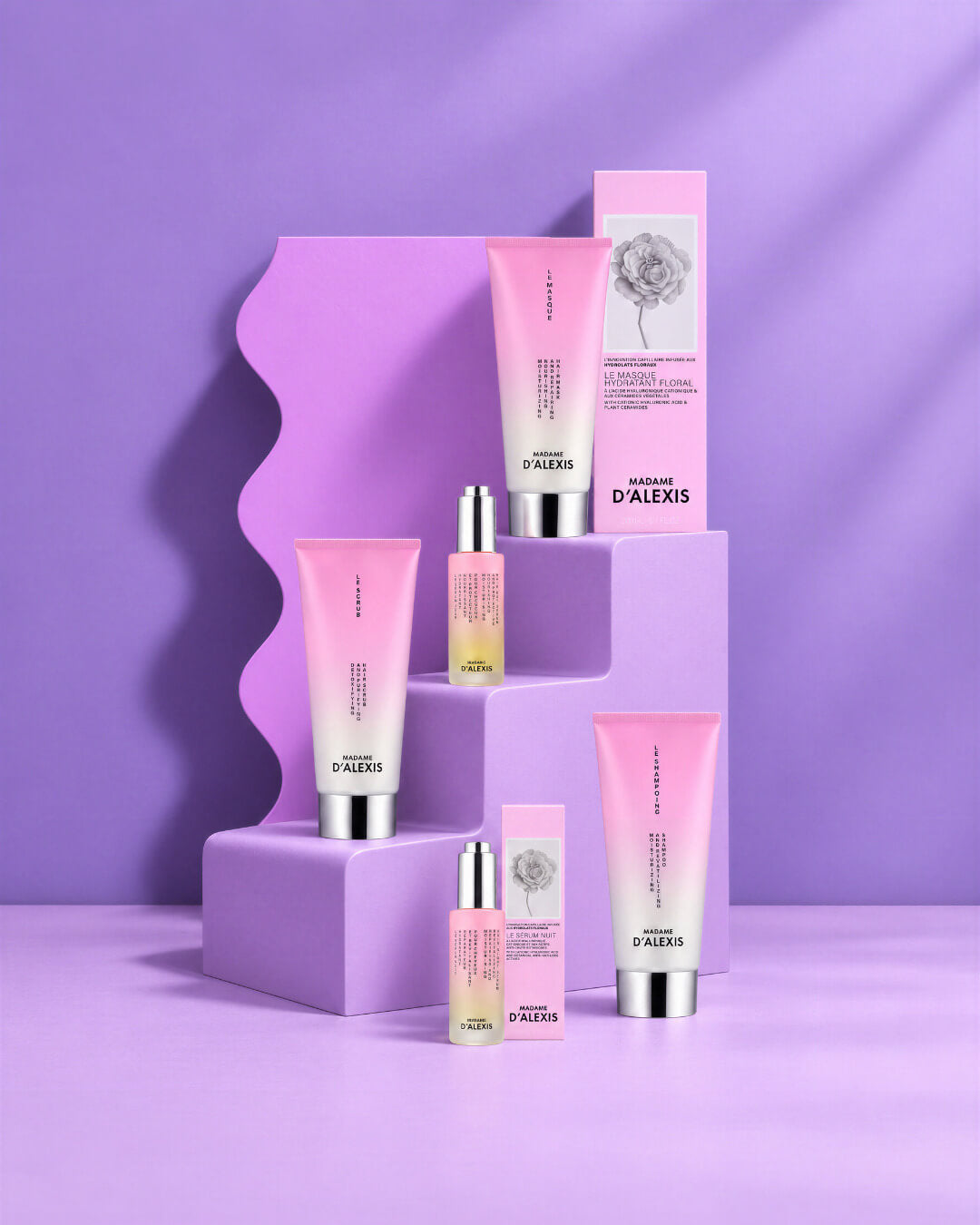
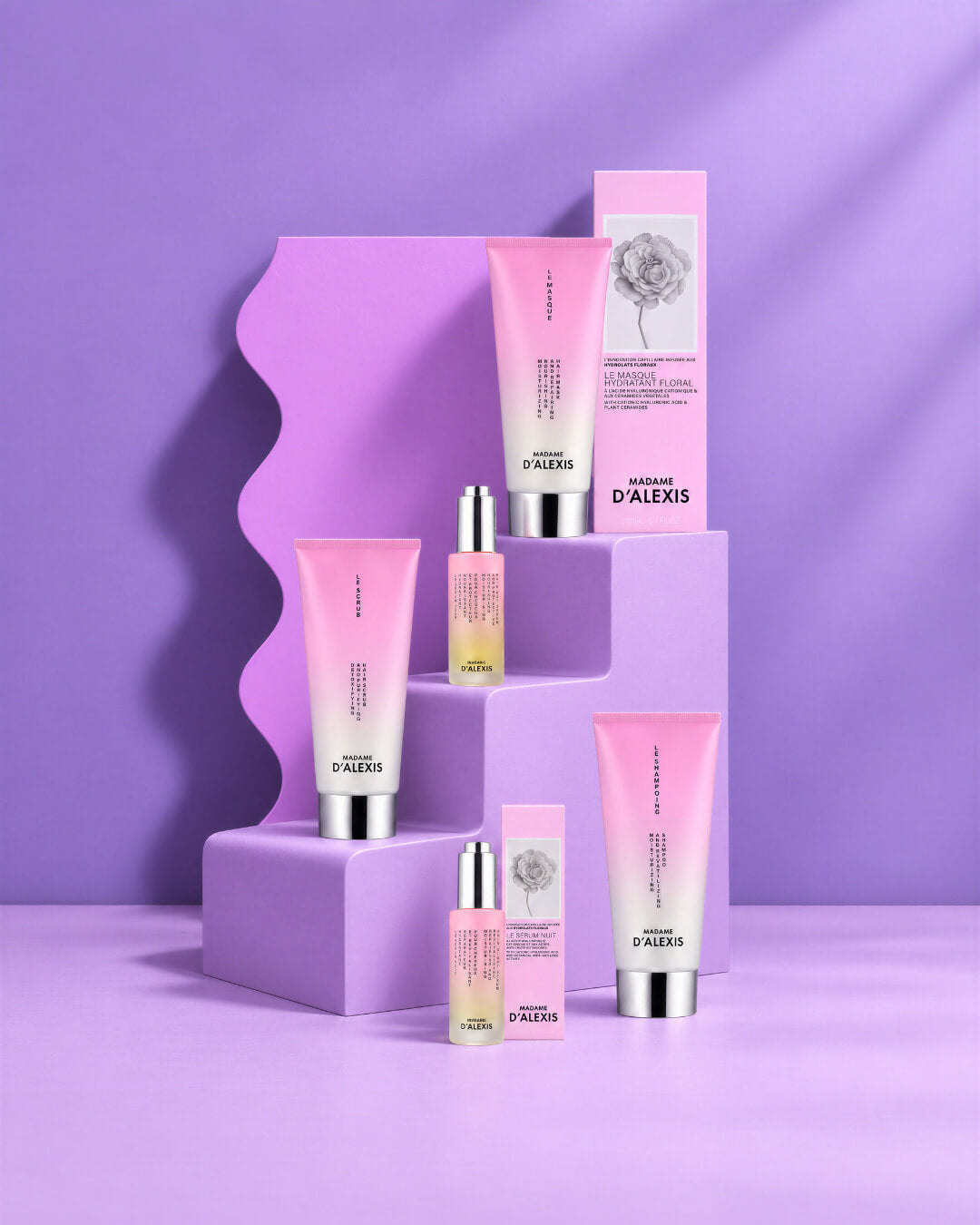
Another natural alternative: a liquid shampoo rich in hydrosols (rose, chamomile, peppermint). Gentle plant-derived surfactants cleanse without stripping, respect the skin barrier and rinse out without leaving a film. This is the idea behind Le Shampoing by Madame d'Alexis, made in France with organic hydrosols, prebiotics and plant-based keratin, with no sulphates, silicones or parabens. A natural shampoo like this cleans the scalp without stripping its natural oils. Each ingredient was chosen to respect the scalp.
Between two washes, a simple rinse with lukewarm water followed by a scalp massage refreshes your hair without any extra product.
These habits combine personal comfort and respect for the environment: fewer aerosol cans and propellants, but still that touch of freshness on busy mornings.

Dry shampoo: your questions answered
Does dry shampoo make your hair fall out?
No, dry shampoo does not directly cause hair loss; however, if it builds up and is not properly washed out, it can clog the follicle, causing mild but repeated inflammation.
This is not alopecia, but it weakens the root: hair that is already fragile, or thinning with age or stress, may then shed more easily, and regrowth takes time, as hair does not grow back overnight. Moderation, followed by a gentle liquid shampoo, keeps that risk low.
Can you straighten your hair after dry shampoo?
Yes, as long as you set your straightener to a moderate temperature and brush thoroughly before straightening.
Dry shampoo contains starch; heated too much, it bakes onto the hair shaft and dulls shine. For the best result: spray, wait two minutes, brush out the excess, then run the straightener over completely dry strands.
How long does dry shampoo last?
The clean look usually lasts about a day. After that, the duration depends on how much oil your scalp produces: very oily roots may need a proper wash the same evening, while a drier scalp will keep the fresh look until the next morning.
Either way, do not go more than 48 hours without washing your hair with water.
Regular shampoo or dry shampoo: which is better for your hair?
A traditional shampoo remains the healthiest way to remove dirt, pollution and styling product. Dry shampoo is a cosmetic touch-up, useful for spacing out washes and protecting your hair colour.
The ideal is to combine the two: dry shampoo as a back-up, and a hydrating wash with shampoo and conditioner to keep your scalp clean.
How do you get dry shampoo out of your hair?
- Wet your hair thoroughly with lukewarm water;
- Massage your whole head with your fingertips to loosen the particles;
- Pick a gentle shampoo based on hydrosols or mild coconut-derived surfactants;
- Rinse well, then apply a light conditioner or an aloe vera treatment to the ends.
A scalp scrub every 10 to 15 days, in place of shampooing, helps clear any particles left around the follicles.
Which dry shampoo mistakes should you avoid?
- Spraying from closer than 10 cm, which leaves a white cast.
- Layering several coats without brushing in between.
- Swapping every wash for dry shampoo: it does not clean your hair.
- Forgetting to protect your airways: a scarf over your face limits how much spray you breathe in.
Does dry shampoo damage hair?
Occasional use does not cause damaged hair; daily application, however, carries a real risk. When product builds up, it clogs the follicle, a harmful effect that, combined with inflammation, can contribute to hair loss on scalps that are already fragile. Keep it to two days in a row at most, then wash your hair with lukewarm water to clear what is left. So is dry shampoo bad for your hair? Not when it stays occasional.
How do you use dry shampoo correctly?
To apply dry shampoo safely, follow these steps: shake the can, spray from 20 cm section by section, then massage gently so the particles bind to the sebum. Wait a minute and brush thoroughly. This technique is a simple tip that gives a matte finish with no white cast. One last dry shampoo tip: protect your clothes with a towel while you spray.
What are the effects of dry shampoo on hair?
The effects of dry shampoo fall into two parts: an instant visual benefit and, with overuse, a less welcome impact on your hair. In the short term it mattifies the roots, adds texture and neutralises odour. In the long term, it can cause scalp irritation, boost sebum production through a rebound effect and leave a film of sebum mixed with particles, which dulls the hair.
Is dry shampoo good for your hair?
It depends on your hair type and what you want. On oily hair, the verdict on dry shampoo leans towards good: it absorbs excess oil and works as a back-up between washes. On dry hair, though, it makes dehydration worse unless you pair it with a nourishing treatment. Bear the trade-off in mind and adjust how often you reach for it. Your hair condition and style also matter: a textured, undone style holds better with a little dry shampoo than sleek, straight hair.
How often should you use dry shampoo?
Among the most common dry shampoo mistakes are spraying too close, layering coats and, above all, overuse. To keep it in check, set yourself a sensible weekly limit: twice at most, and never more than 48 hours without a liquid shampoo. These simple habits protect the shine of your hair and the health of your scalp.
Can dry shampoo cause scalp problems?
Yes, heavy use can cause a range of hair and scalp issues. Particles can irritate the scalp, trigger side effects such as itching and dry patches and, in some hormonal profiles, accelerate hair shedding. There is also a risk of dryness: the solvents and propellant strip natural moisture from the hair shaft. So keep it occasional and always build a proper hydrating wash into your routine. If irritation lasts for weeks or months, see your GP or a dermatologist.
Conseils