


Hair Masks for Curly Hair: How to Choose, Apply, and Bring Out the Best in Your Curls
Curly hair is as fascinating as it is unpredictable. One day it’s soft and well-defined; the next, it’s dry, unruly, or dull. The right hair mask does more than just soften hair—it helps hydrate, nourish, define, and protect the hair shaft over time.
Key takeaways
- Curly, wavy, or kinky hair is naturally more prone to dehydration, external damage, and breakage.
- The right hair mask plays a key role in the health, suppleness, and beauty of your curls.
- The right hair care product should deeply moisturize without weighing the hair down, provide just the right amount of nourishment, and respect the hair’s natural balance.
- The ideal routine starts with a gentle shampoo, followed by a rich yet balanced hair mask, and then a leave-in treatment to maintain definition.
Curly hair is as fascinating as it is confusing. One day it is supple and well-defined, the next day it is dry, unruly, or dull. Many people try multiple treatments without understanding why they are not getting the results they want. However, the problem does not always lie with the products, but often with a misunderstanding of the real needs of the hair fiber.
Curly hair, whether wavy, frizzy, or kinky, is naturally more demanding. Its unique structure makes it more susceptible to dehydration, external damage, and breakage. The result: frizz, lack of definition, dry ends, and curls that quickly lose their bounce.

In this context, a hair mask isn’t just an “extra” step in your routine. It plays a central role in the health, suppleness, and beauty of your curls. However, it’s important to choose a mask that’s truly suited to your needs—one that can deeply moisturize without weighing your hair down and that respects its natural balance.
Not all masks for curly hair are created equal. The formula, the quality of the ingredients, and the way the product works deep within the hair fiber make all the difference. It is precisely this vision of hair care—demanding and sustainable—that guides Madame d'Alexis's approach, with formulas designed to meet the specific needs of curly hair, deeply and over time.
The Madame d’Alexis trio to nourish, define, and enhance curls
A routine designed for curly hair in need of hydration, nourishment, and definition: a gentle shampoo, a rich mask, and a finishing serum to minimize frizz and reveal soft, shiny curls.
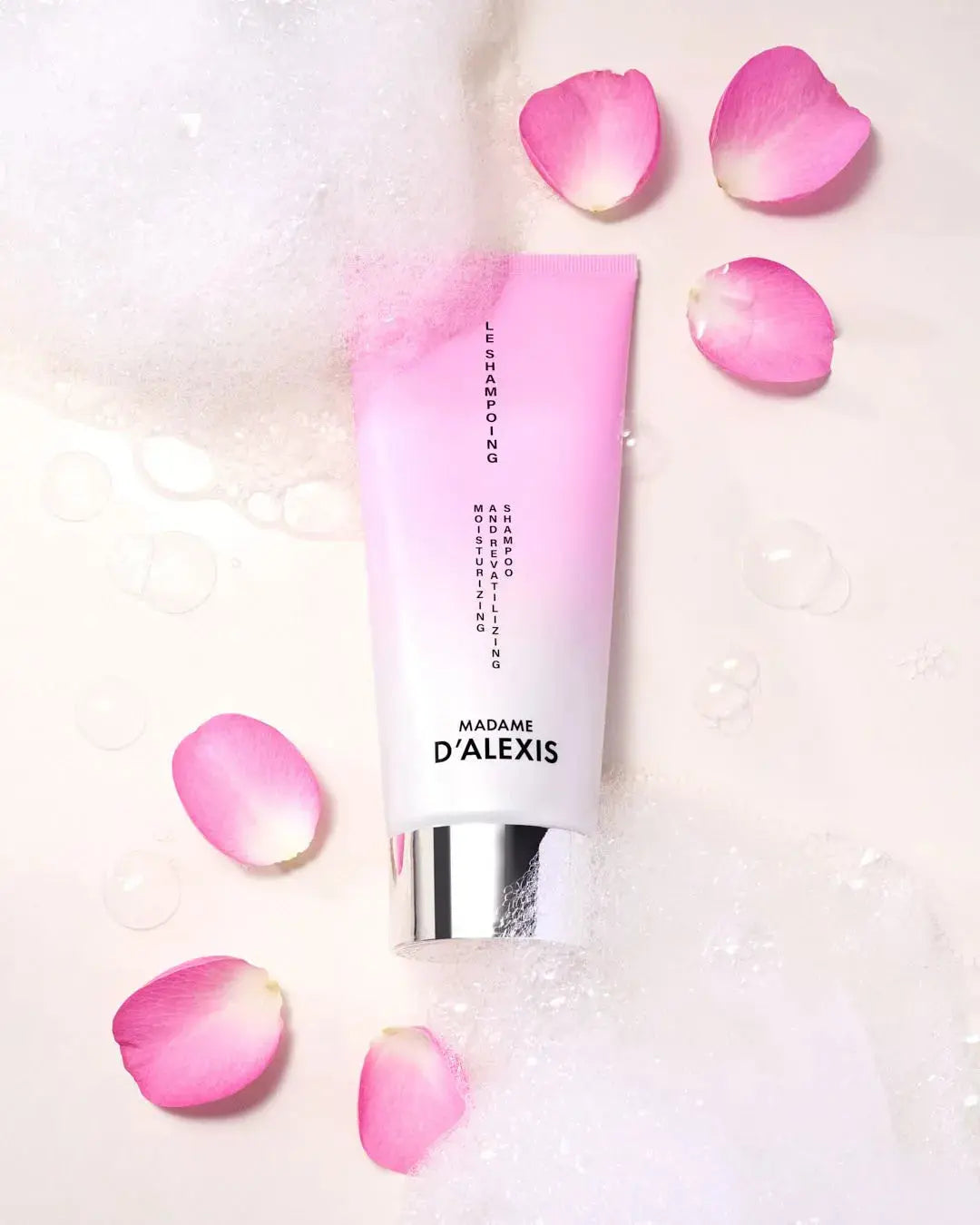
Hydrolat Shampoo
Gentle hydration · supple curls
- Cleans without drying out curls
- Free from sulfates and silicones
- Helps maintain bounce
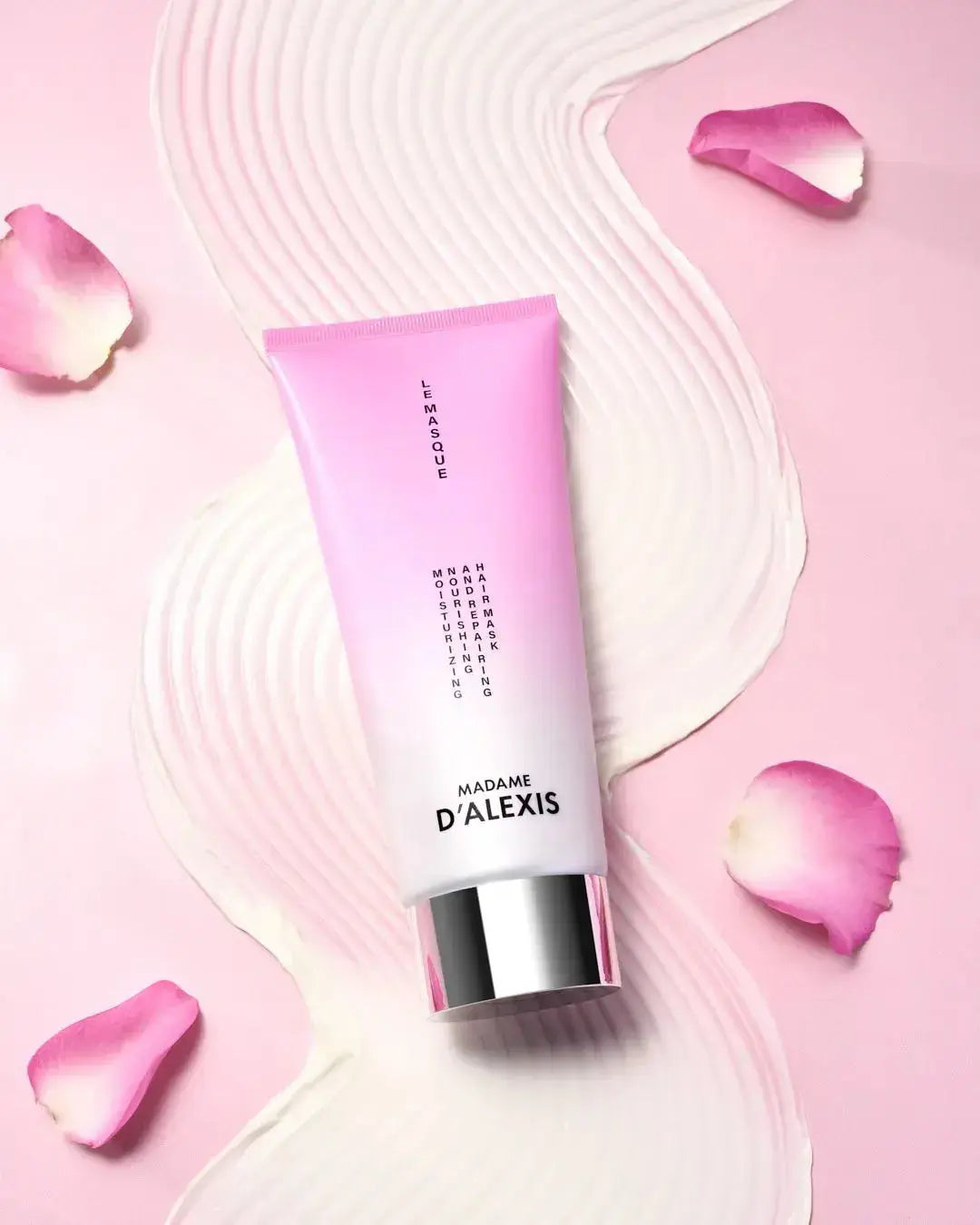
The Hydrolat Mask
Intense Nutrition · Definition
- Nourishes without weighing down the curls
- Helps restore softness and elasticity
- Ideal for preventing foaming
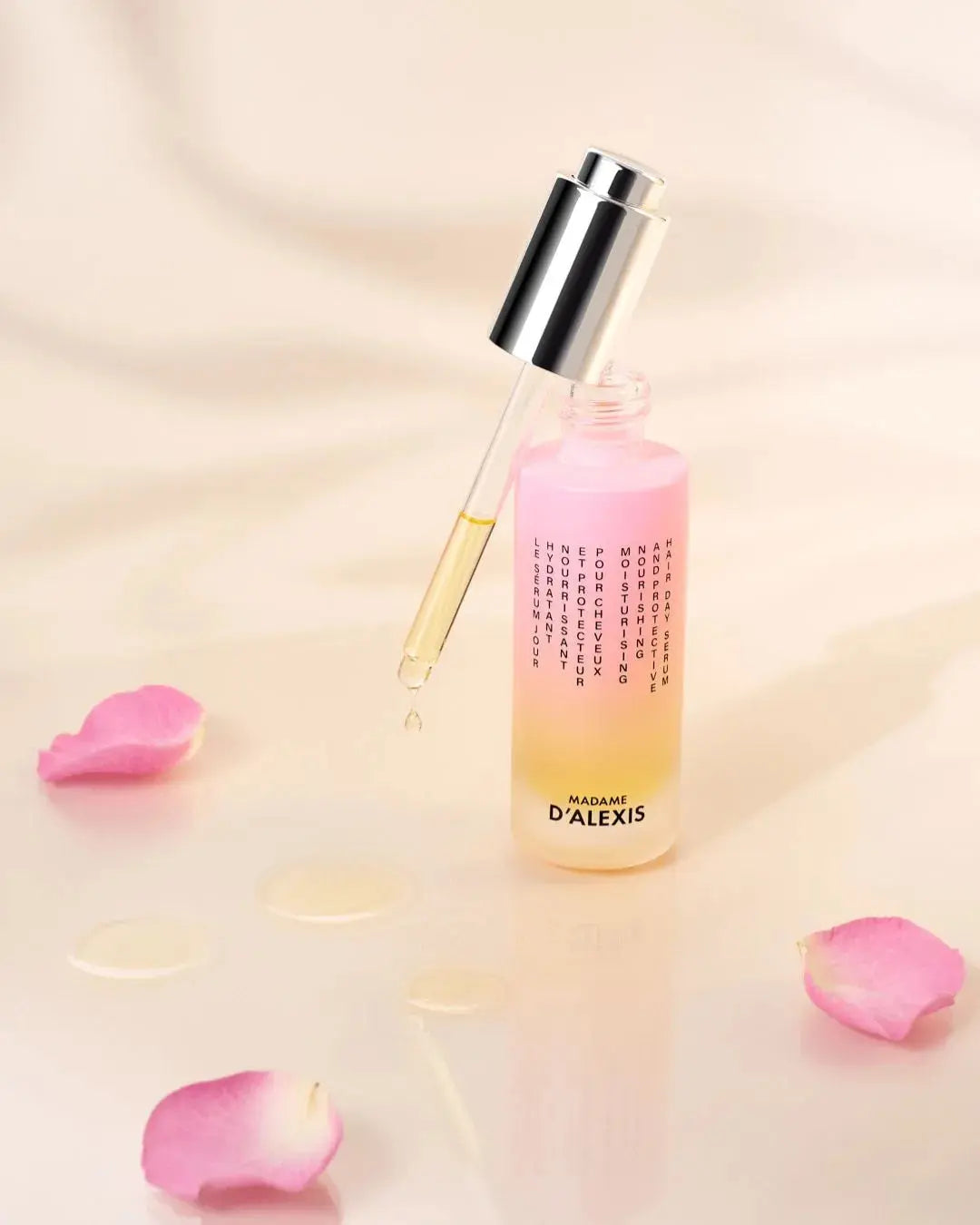
The Day Serum
Finish · curls · jojoba
- Enriched with jojoba oil
- Helps tame frizz
- Gorgeous without feeling greasy
Why curly hair needs a hair mask
Curly hair fibers often have high porosity. The cuticles are less aligned than on straight hair, allowing water and nutrients to escape more easily.
This structure makes curly, frizzy, or very curly hair particularly vulnerable to dehydration and breakage.
It is important to distinguish between different types of textures:
- Wavy hair needs lightness and hydration without weighing it down.
- Curly hair requires regular hydration and conditioning.
- Curly and frizzy hair requires deep hydration and fiber reinforcement.
Even a gentle shampoo mainly acts on the surface. It removes impurities, excess sebum, and residue, but cannot compensate for structural moisture loss. Hair masks work on a different level.
It penetrates deeper into the fiber and acts as a deep conditioner.
A mask suitable for curly hair allows you to:
Deeply moisturize the hair shaft.
Nourish the hair without weighing it down.
Minimize breakage and split ends.
Improve the definition and bounce of the curls.
When properly formulated, the mask becomes a true tool for transformation. Curls regain bounce, softness, and consistency, not just for a day, but for the long term.
It is this vision of hair care, demanding and respectful of the nature of the hair, that guides Madame d'Alexis' approach.
What's the best hair mask for curly hair?
The Hydrolat Mask
Soft Curls · Plant-Based Ceramides · Premium Oils
- Nourishes the hair without weighing down the curls
- Helps restore softness, suppleness, and elasticity
- Ideal for reducing frizz and the fluffy look
How to choose a good mask for curly hair
Choosing a mask for curly hair isn't just about picking the richest or most popular one. Curls need precision above all else. A good mask must address a specific need without creating imbalance. This approach is what allows you to achieve soft, defined, and long-lasting curls, even on dry hair.
Hydration or nutrition: understanding the difference
This is the most misunderstood point, and yet the most decisive one.
Hydration refers to the supply of water and agents capable of retaining it in the hair fiber. It is essential for curly hair, which is naturally prone to dehydration.
Nutrition, on the other hand, is based on lipids. Oils and butters nourish the hair fiber, coat it, and limit breakage.
A common mistake is to over-nourish hair that is already dehydrated. Too much nourishment without sufficient hydration results in heavy, dull curls that paradoxically feel dry to the touch. A good mask for curly hair always starts by hydrating, then nourishes in a targeted manner.
Key ingredients to look for
The quality of a mask can be seen in its formula. Certain active ingredients are particularly suited to curly and dry hair:
- Organic hydrosols, which provide fine, bioavailable hydration
- Aloe vera, known for its moisturizing and softening properties
- Plant proteins, useful for strengthening weakened fibers
- Light vegetable oils that nourish without weighing down the skin
- Humectants, capable of retaining water within the hair shaft
These ingredients deeply moisturize the hair fiber while respecting the specific structure of curls.
Ingredients to avoid
Some ingredients give the illusion of immediate softness, but are harmful to the long-term health of curly hair:
- Silicones, which coat without treating and promote the accumulation of residue
- Sulfates, too harsh for already dry hair
- Formulas that are too occlusive, which suffocate the hair
- Residue buildup, responsible for limp, undefined curls
An effective mask should improve the quality of the hair, not simply mask its weaknesses.
What mistakes should you avoid with curly hair?
Madame d'Alexis mask: an expert solution for curly hair
The Madame d'Alexis mask takes a different approach, designed to meet the real needs of curly hair. Its formula, with no added water and based on organic hydrosols, provides direct, deep hydration where the hair fiber needs it most.
This natural hair care product works deep within the hair. It is suitable for curly, frizzy, and kinky hair.
Hydration is a priority, nutrition is controlled, which prevents any feeling of heaviness. Curls gain flexibility, definition, and texture, without compromise.
Designed for regular use, this moisturizing mask for curly hair provides long-lasting care for dry hair. It does not promise immediate, artificial results, but rather a gradual, visible improvement in hair quality, wash after wash.
The right hair mask for curly hair shouldn't make the curls stiff. It should help them regain their natural movement, suppleness, and definition.
Comparison: Madame d'Alexis mask vs. other curly masks
When looking for the best mask for curly hair, it's tempting to rely on the most visible brands. However, the differences rarely lie in the marketing rhetoric, but rather in the formulation, the approach to care, and how the mask works over time.
Here is a concise and objective comparison to help you understand what really sets curly hair masks apart.
| Criteria | Mrs. Alexis | Loly's Secrets | The Beautiful Curl | Kérastase |
|---|---|---|---|---|
| Type of ingredients | Organic hydrosols, targeted active ingredients | Rich formulas, butters, and oils | Natural ingredients, marked nutrition | Technical assets, synthetic |
| Approach to care | Hydration at the heart of the fiber | Hydration + styling | Nutrition and definition | Corrective cosmetic treatment |
| Scalp | Taken into account, respected | Not very focused | Not very focused | Not very focused |
| Silicones | No | Varies depending on product | Generally no | Present according to ranges |
| Rendering on loops | Flexible, lightweight, defined | Very rich, sometimes heavy | Marked definition | Disciplined but sheathed loops |
| Price positioning | Premium with a purpose | Mid-range | Mid-range | Premium |
This comparison highlights a key difference: Madame d’Alexis focuses on deep, long-lasting hydration without leaving a film on the skin, whereas other masks emphasize immediate richness or cosmetic correction. The results are often more gradual but more consistent over time.
How to use a mask for curly hair
Even the best mask for curly hair will not deliver results if it is used incorrectly. Effectiveness depends as much on the formula as on the method.
1 to 2 times per week
- Once or twice a week, depending on the dryness and porosity of the hair
- There is no need to apply it with every wash, as this may saturate the fiber.
Strand by strand
- On washed and towel-dried hair, never dripping wet
- Apply strand by strand for even distribution.
- Focus on the lengths and ends, which are the driest areas.
- Avoid roots unless specifically indicated
5 to 10 minutes
- A well-formulated mask only takes 5 to 10 minutes to apply.
- Unnecessary prolongation does not increase effectiveness.
In lukewarm water
- Rinse with lukewarm water to preserve moisture.
- Do not overload: too much product will smother the loop.
- Adapt the mask to the porosity of the hair
- Observe the reaction of the curls over several washes.
- Adjust the frequency rather than multiplying products
What are some anti-frizz tips for curly hair?
Homemade mask or professional mask: which one should you choose for curly hair?
The homemade mask for curly hair is appealing for its simplicity and natural look. Honey, yogurt, aloe vera, and vegetable oil are among the most common ingredients.
These preparations can provide a temporary boost and meet an immediate need, especially when curls are slightly dehydrated.
The benefits of DIY masks are real:
- raw ingredients, often already available at home
- natural and minimalist skincare experience
- low short-term cost
However, these recipes quickly show their limitations as soon as curly hair becomes drier, more porous, or more fragile.
The main problem lies in stability and precision. Homemade formulas are not designed to penetrate the hair shaft long-term or to work consistently.
The most common limitations are clear:
- instability of preparations, which oxidize or degrade rapidly
- random dosage, difficult to reproduce from one application to another
- limited effectiveness over time, often superficial
- lack of synergy between ingredients
A well-formulated professional mask is based on a different logic. Active ingredients are selected for their bioavailability, their complementary properties, and their ability to act at the heart of the fiber. The concentration is controlled, the textures are designed to adhere to the hair without suffocating it, and the effect is long-lasting.
It is precisely this reliability that makes the difference. The Madame d'Alexis mask was designed as a deep treatment, capable of providing long-lasting hydration to curly hair without relying on a misleading immediate effect. The goal is not to mask imbalances, but to gradually restore the quality of the hair fiber.
When used correctly, the mask becomes a real catalyst for transformation. It improves the definition, suppleness, and strength of curls, without relying on a misleading immediate effect. It is this consistency, rather than quick fixes, that makes all the difference to curly hair.
Ideal routine for curly hair
An effective routine for curly hair is based on consistency. Using multiple products for curly hair does not improve results. On the other hand, following the right steps will give you softer, more defined, and stronger curls.
A gentle shampoo
Shampoo should cleanse without damaging. It prepares the hair fiber to receive treatment without stripping or drying out the scalp.
Alexis's "Madame" Mask
Applied once or twice a week, the mask deeply moisturizes and strengthens the hair fiber. It is the core of the routine for dry, curly, or frizzy hair.
A leave-in treatment
This treatment helps maintain moisture between washes and promotes curl definition on a daily basis.
A light oil, if needed
Used in small amounts on the ends, it provides protection and shine without weighing hair down.
The Madame d’Alexis trio to nourish, define, and enhance curls
A routine designed for curly hair in need of hydration, nourishment, and definition: a gentle shampoo, a rich mask, and a finishing serum to minimize frizz and reveal soft, shiny curls.
Hydrolat Shampoo
Gentle hydration · supple curls
- Cleans without drying out curls
- Free from sulfates and silicones
- Helps maintain bounce
The Hydrolat Mask
Intense Nutrition · Definition
- Nourishes without weighing down the curls
- Helps restore softness and elasticity
- Ideal for preventing foaming
The Day Serum
Finish · curls · jojoba
- Enriched with jojoba oil
- Helps tame frizz
- Gorgeous without feeling greasy
FAQ: Hair Mask for Curly Hair
Hair mask or conditioner for curly hair?
The two do not have the same function. Conditioner acts mainly on the surface. It makes hair easier to comb and provides immediate softness.
The curly hair mask, on the other hand, is a moisturizing and nourishing treatment that works longer and penetrates deeper.
For dry curly hair, conditioner alone is not enough. A mask deeply moisturizes, strengthens the hair fiber, and improves definition over time. The ideal solution is to use both, each in its own place in your hair care routine.
Can you leave a mask on overnight?
This is generally not necessary. A well-formulated hair mask delivers its active ingredients in just a few minutes. Leaving it on overnight can weigh down curly hair or cause frizz due to excess moisture.
For a moisturizing mask, a leave-on time of 5 to 10 minutes is sufficient. On very dry or frizzy hair, you can leave it on for up to 20 minutes, but do not exceed this time limit.
Which mask is best for very dry curly hair?
Very dry curly hair needs a moisturizing mask above all else. It should hydrate the hair and then nourish the hair shaft without weighing it down.
- deeply moisturizes
- nourishes without leaving a greasy residue
- strengthens the hair fiber
A well-balanced moisturizing treatment restores suppleness and limits breakage, even on very textured hair.
Hair mask for colored curly hair: which one to choose?
Colored curly hair is often more porous. The mask should be both moisturizing and color-safe.
- without harsh chemicals
- able to deeply nourish the hair
- which preserves shine and suppleness
A gentle hair care routine helps maintain curl definition without dulling the color.
How long does it take to see results?
The first effects are visible after the first application: softer hair and more supple curls. However, lasting results appear after several weeks of regular use.
A moisturizing mask incorporated into a consistent hair care routine gradually transforms the quality of curly hair.
How to moisturize curly hair?
To moisturize your hair, apply a curly hair mask generously to washed and towel-dried hair.
- apply the mask strand by strand
- leave on for the recommended time
- rinse thoroughly
- complete with a leave-in treatment
This method deeply moisturizes and reduces frizz over the long term.
What ingredients are needed for a homemade mask?
A homemade mask can contain simple moisturizing ingredients:
- honey mask
- coconut milk mask
- shea butter
- suitable essential oil
These remedies can provide relief, but their effectiveness is limited in time. Dosages are random and the action is rarely profound.
How do you define loops?
The process begins in the shower. A nourishing mask adds softness and strengthens the hair shaft.
- use a mask suitable for textured hair
- follow a routine with care
- avoid product overload
Long or short hair gains bounce when the fiber is well hydrated.
Which mask for frizzy hair?
Kinky hair requires a more intensive hair mask for kinky hair. It should deeply nourish the hair and repair damaged strands.
An intensive or restorative mask helps restore elasticity, reduces breakage, and provides long-lasting comfort.
How to use a hair mask?
Applying the hair mask is simple but essential:
- Apply to clean, towel-dried hair.
- leave on for the indicated time
- rinse thoroughly
- Incorporate the mask into your hair care routine.
A good moisturizing mask reduces frizz and improves curl hold.
What are the best masks for curls?
The best masks for curly hair are those that respect the nature of the hair. Whether it's a homemade product or a professional treatment, it must be suited to the hair type and fit into a consistent range of appropriate treatments.
How to care for curly hair?
Caring for curly hair requires a regular hair care routine:
- a mild shampoo
- a moisturizing or nourishing mask
- intensive care if necessary
This approach brings shine, softness, and lasting health to textured hair.
A Simple Routine for Better-Defined Curls
This simple but structured routine respects the natural rhythm of curly hair. It is part of a sustainable approach to hair care, where each product has a specific function. To take it a step further, other Madame d'Alexis products can complement this base, depending on the nature of the curls and the specific needs of the hair fiber.
Discover the Hydrosol Mask
