


Vos cheveux ont une texture rêche, cassante et terne ? Vous les décrivez comme "de la paille" ? Vous souffrez probablement de cheveux très secs avec effet paille.
Mais attention : les cheveux "très secs" ne sont pas les mêmes que les cheveux "simplement secs". Cette distinction est importante pour choisir les bons soins.
Cheveux très secs vs cheveux secs : quelle différence ?
Les cheveux secs manquent d'hydratation, mais leur fibre reste relativement intacte. Vous pouvez les réparer avec des soins réguliers et des huiles légères.
Les cheveux très secs avec effet paille, eux, ont une fibre complètement déshydratée ET endommagée. Leurs écailles sont ouvertes, cassantes et ne retiennent plus l'eau. C'est pourquoi ils paraissent rêches au toucher et ternes à la lumière.
Pourquoi cette différence ?
Les cheveux très secs résultent d'un double problème :
- Un manque de sébum : vos glandes sébacées ne produisent pas assez d'huile naturelle
- Un manque d'eau : votre film hydrolipidique (la barrière protectrice) est endommagé
Résultat : vos cheveux ne peuvent pas retenir l'hydratation, d'où cet effet paille caractéristique.
La bonne nouvelle ? Avec la bonne routine et les bons produits naturels, vous pouvez réparer vos cheveux très secs en 30 jours. Découvrez comment ci-dessous.

What you need to know to take care of the straw effect
- Diagnose the cause: excessive heat, sulphates or nutritional deficiency; adjust your habits first, before increasing the number of treatments.
- Moisturize then seal: aloe vera spray morning and night, keratin mask twice a week, three drops of light oil after each rinse.
- Choose an appropriate shampoo: sulfate-free, acid pH, enriched with plant butters; Alexis' Shampoo Madame leads the way, followed by Rahua or Rossano Ferretti options for variety.
- Gentle styling: wide-tooth comb, low-heat styles (braids, plopping) and thermo-protective spray before any heat source.
- Nourish from within: omega-3, vitamin E, zinc-biotin and daily moisturizing ensure long-term elasticity, shine and resilience.
L’ «effet paille » désigne le moment où la fibre capillaire, craquelée et déshydratée, perd sa cohésion : les écailles se soulèvent, la kératine se délite, la chevelure devient terne, cassante, difficile à coiffer.
Understanding the phenomenon is the first step to effective action. Here you'll find: a precise diagnosis, the method for building a moisturizing-nutrition routine, product advice and a few tried-and-tested recipes. Key words: restore water, seal in lipids, protect the cuticle.

Pourquoi les cheveux deviennent très secs avec effet paille ?
Comprendre les causes de vos cheveux très secs est essentiel pour les réparer efficacement. Voici les 5 principales raisons pour lesquelles vous avez développé cet effet paille.
-
Manque de sébum naturel (cause interne)
Vos glandes sébacées produisent trop peu d'huile naturelle. C'est souvent génétique, mais peut aussi être lié à :
- L'âge (les glandes sébacées produisent moins après 40 ans)
- Des déséquilibres hormonaux
- Une alimentation pauvre en acides gras
-
Manque d'eau dans la fibre (déshydratation)
Même si vous hydratez vos cheveux, la fibre ne retient pas l'eau. Pourquoi ? Parce que vos écailles capillaires sont ouvertes et endommagées. L'eau s'évapore rapidement.
-
Dommages chimiques (colorations, défrisages, lissages)
Les traitements chimiques ouvrent les écailles et endommagent la kératine. Si vous avez fait plusieurs colorations ou défrisages, vos cheveux sont fragilisés.
-
Chaleur excessive (sèche-cheveux, lisseur, soleil)
La chaleur ouvre les écailles et évapore l'eau de la fibre. Utiliser un sèche-cheveux tous les jours sans protection thermique aggrave l'effet paille.
-
Causes externes (pollution, chlore, eau dure)
- Le chlore de la piscine assèche les cheveux
- L'eau calcaire (dure) laisse des résidus qui étouffent la fibre
- La pollution urbaine crée une barrière qui empêche l'hydratation
Diagnostic : avez-vous vraiment des cheveux très secs paille ?
Vérifiez ces signes :
- ✓ Texture rêche au toucher
- ✓ Aspect terne et sans brillance
- ✓ Cheveux cassants qui se cassent facilement
- ✓ Frisottis importants même après hydratation
- ✓ Sensation de "paille" ou de "foin"
Si vous avez 3 ou plus de ces signes, vous avez bien des cheveux très secs avec effet paille.
Why is my hair turning to straw?
External causes: heat, UV, salt, aggressive surfactants
Keratin denatures at 130°C, and straightening plates go up to 200°C. Add frequent drying, sun exposure and unprotected bathing: water evaporates and the hydrolipidic film oxidizes.
Shampoos rich in sulfates aggravate lipid loss.
Warning signs:
- rough tip after each blow-dry;
- matt surface under grazing light ;
- multiple knots in the wash.
How to get rid of strawberry hair?
30-day fiber restoration plan
Rehabilitating dull hair requires rigor and consistency. For one month:
- D 1 - D 30: space out washings; two gentle shampoos a week are enough to give the hydrolipidic film time to reconstitute itself.
- Zero direct heat; set hair dryers and straighteners below 120°C, or better still, air-dry.
- Systematic sun protection: scarf, UV filter spray and rinse with clean water after every swim.
Targeted daily moisturizing
A well-moisturized strand reflects light and resists breakage better; adopt a light, non-greasy trio:
- Morning and evening, mist with a homemade spray: aloe vera hydrolate + vegetable glycerine (2%).
- Apply a leave-in enriched with cationic hyaluronic acid to damp lengths; it plumps up lifted cuticles.
- Seal the water with 3 drops of virgin jojoba or baobab oil warmed between the palms; the touch remains silky without weighing it down.
Essential nutritional supplements
Keratin is synthesized from within. A daily capsule ofomega-3 EPA-DHA promotes elasticity; 15 mg of vitamin E protects against oxidation, and a dose of low-molecular-weighthyaluronic acid keeps the follicle hydrated. A blood test may confirm the usefulness of a zinc-biotin complex if nail loss is accompanied by nail fragility.
Which shampoo for straw hair?
Read the label before you buy
Look for three guarantees:
- Sulfate-free to preserve protective sebum ;
- Acidic pH (4.5-5.5) to tighten scales;
- Shea butter or mango oil among the first five ingredients, a guarantee of real nutrition.
Internal causes: nutrition and hormonal balance
A deficiency in essential fatty acids, zinc or vitamin B slows sebaceous secretion. At menopause, the drop in estrogen reduces bulb vascularization; hair becomes thinner and porous.
Restrictive diets such as high-protein or strict gluten-free, if not medically monitored, deprive the capillary matrix of micronutrients essential for disulfide bridge synthesis.
Curly, frizzy hair: structural porosity
The spiral stem prevents sebum from sliding down to the ends. The result: chronic dryness despite an often normal scalp.
What's more, the cuticle naturally has more micro-cracks, and the hydrolipidic film evaporates three times faster than in straight hair.
Good reflex to have in case of straw effect hair:
- Choose vegetable butters (shea, mango) rich in stearic acid;
- seal in moisture with a light oil (baobab, jojoba) after each rinse.
By identifying the exact source of dryness - thermal aggression, deficiency or simple morphology - you can direct your routine towards the right hydration/nutrition ratio and give your hair the chance to regain its shine, suppleness and strength.

Les meilleures huiles pour cheveux très secs paille
Huile d'argan (★★★★★ - 95% d'efficacité)
La plus riche en acides gras et vitamine E. Pénètre profondement dans la fibre et restaure l'élasticité. Idéale pour les cheveux très secs paille.
- Utilisation : bain d'huile 30 minutes avant shampoing
- Fréquence : 2-3 fois par semaine
- Résultat : cheveux réparés en 2-3 semaines
Huile de coco (★★★★ - 88% d'efficacité)
Protéine naturelle qui scelle les écailles ouvertes. Très riche mais peut être étouffante sur cheveux fins. Idéale pour cheveux épais et très secs.
- Utilisation : masque 1-2 fois par semaine
- Fréquence : 1-2 fois par semaine
- Résultat : cheveux plus doux en 1 semaine
Huile de jojoba (★★★★ - 85% d'efficacité)
Similaire au sébum naturel, elle régule la production d'huile. Légère et pénétrante, idéale pour tous les types de cheveux très secs. Découvrez notre guide complet sur l'huile de jojoba et la pousse des cheveux pour plus de détails.
- Utilisation : sérum quotidien ou bain d'huile
- Fréquence d'utilisation : quotidienne ou 2-3 fois par semaine
- Résultat : cheveux hydratés en 1-2 semaines
How to repair hair like straw?
Oil bath + plant keratin-rich mask" routine
Hair repairs itself when the water-lipid-protein balance is restored. Start with a vegetable oil bath: jojoba for fine fibers, baobab or shea for thick strands.
Leave for an hour under a warm towel; the heat softens the cuticle and prepares the keratin to penetrate. Rinse thoroughly.
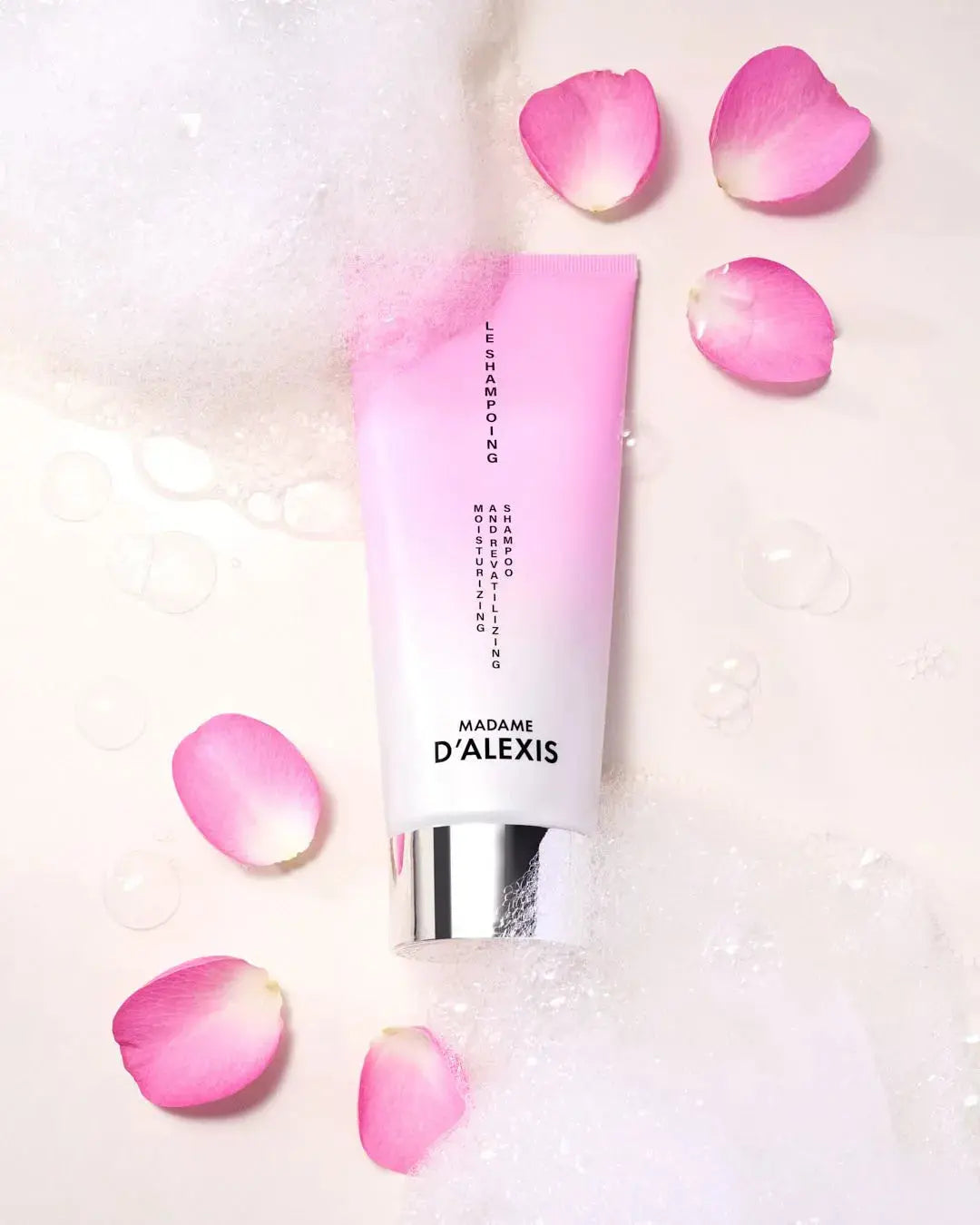
Next, apply Le Shampoing Madame d'Alexis, formulated with Damask rose hydrolate and sulfate-free; it washes without stripping, rehydrates and deposits a fine layer of cationic hyaluronic acid on each scale.
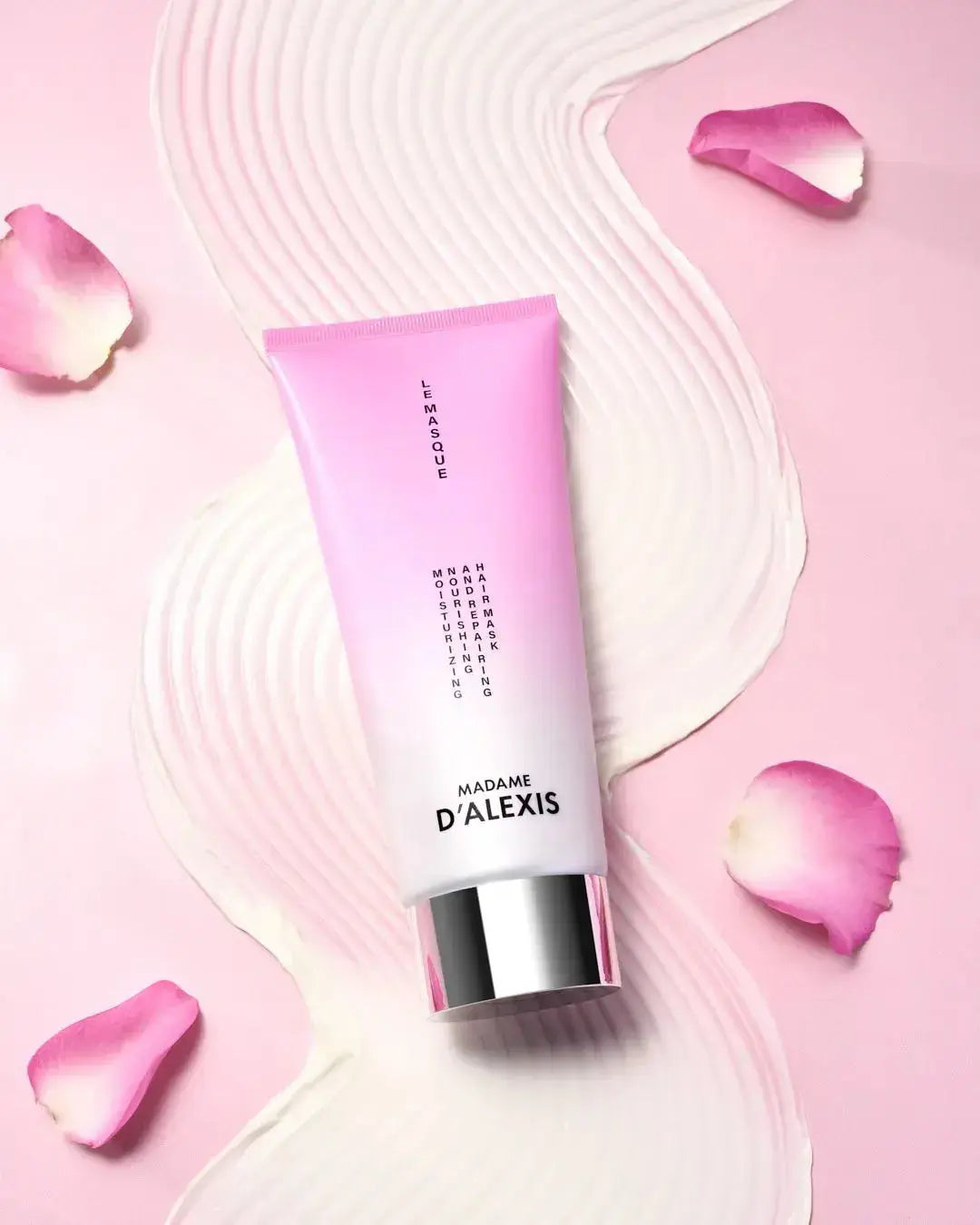
Follow with Le Masque Madame d'Alexis, concentrated in plant ceramides; the anhydrous texture adheres to porous areas, filling gaps and restoring elasticity.
Leave on for 15 minutes, then rinse with warm water to seal in the active ingredients. Air dry, pressing lengths into a microfiber towel - don't rub.

Key steps: pre-shampoo, gentle wash, deep care, night serum
- Pre-shampoo: weekly oil bath, light scalp massage to activate micro-circulation.
- Gentle cleansing: a double shampoo with Le Shampoing Madame d'Alexis; the first removes particles, the second nourishes thanks to integrated plant keratin.
- Deep care: nourishing mask twice a week until shine is restored, then once a fortnight for maintenance.
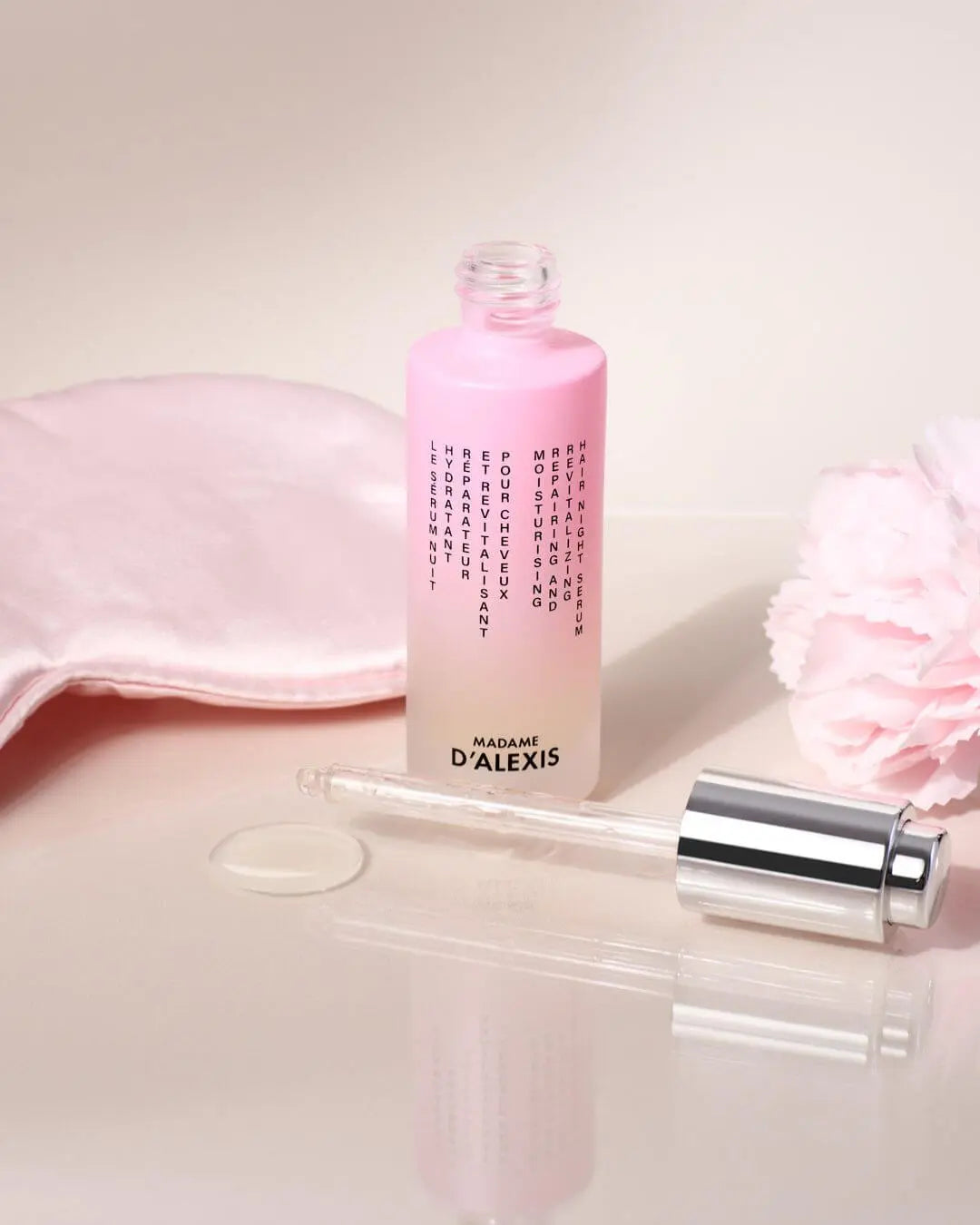
- Night serum: three drops of Sérum Nuit Madame d'Alexis on a dry scalp; probiotics and hyaluronic acid rebalance the microbiome and moisturize the roots while you sleep.
These four successive steps provide the answer to the question: can dry and damaged hair really be repaired? Yes, if you combine long-lasting hydration, plant proteins, and heat protection.
Curl special: how to repair curly hair like straw?
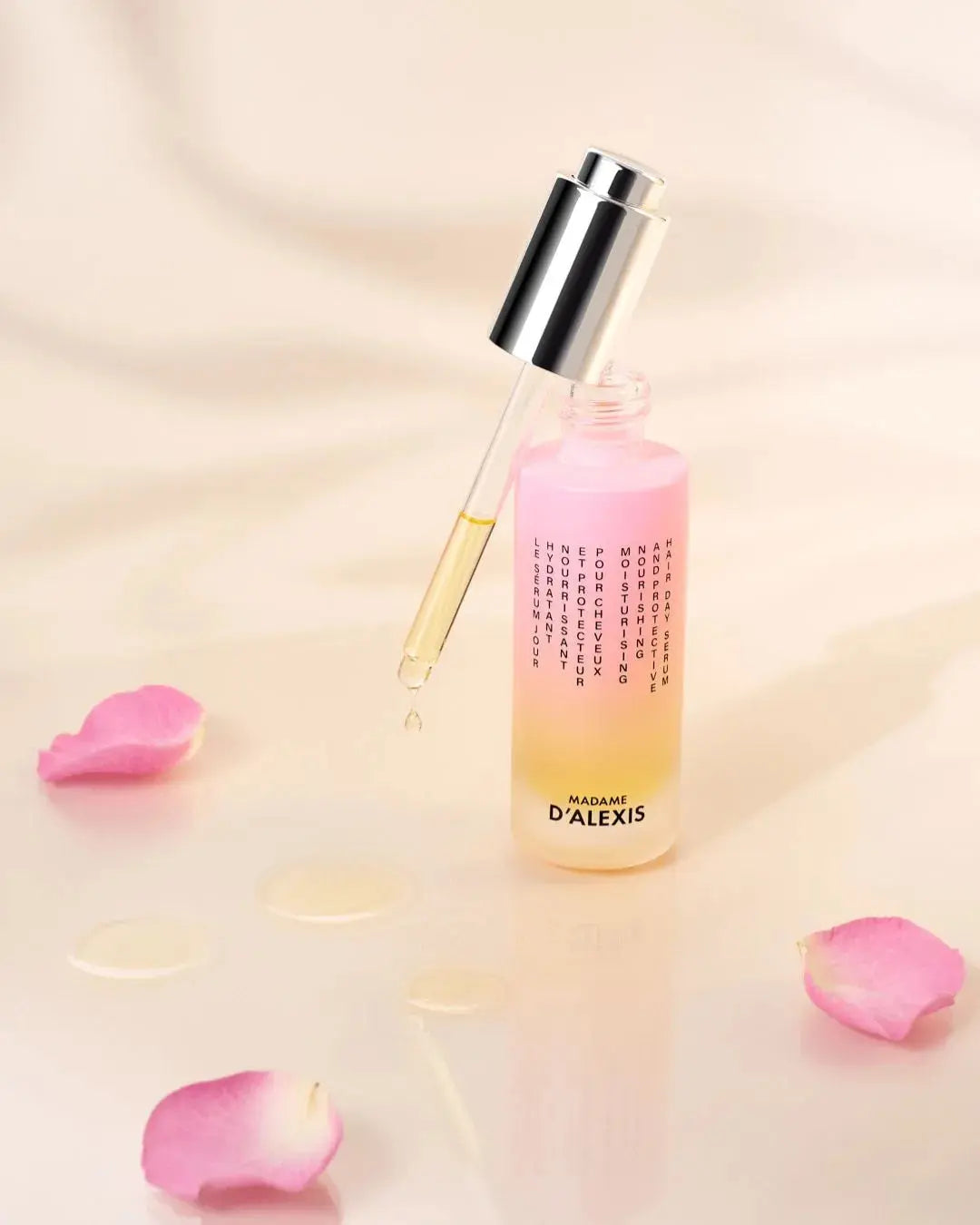
The spiral of curls doesn't hold sebum very well, so you need to seal in every addition of water. After your mask, apply an aloe vera-based leave-in cream, followed by a few drops of Sérum Jour Madame d'Alexis.
Style with fingers, using the scrunch method, then leave to dry naturally or with a cold diffuser. To lock in moisture:
- Refresh each morning with a spray of filtered water + vegetable glycerine.
- Sleep on a silk pillowcase to limit breakage.
- Schedule a warm baobab oil bath every two weeks; its rich stearic acid strengthens curls and smoothes frizz.
In just thirty days, this comprehensive approach leaves hair silky, shiny and strong, while preserving the lightness of natural movement.
How to get rid of strawberry hair?
30-day fiber restoration plan
Rehabilitating dull hair requires rigor and consistency. For one month:
- D 1 - D 30: space out washings; two gentle shampoos a week are enough to give the hydrolipidic film time to reconstitute itself.
- Zero direct heat; set hair dryers and straighteners below 120°C, or better still, air-dry.
- Systematic sun protection: scarf, UV filter spray and rinse with clean water after every swim.
Targeted daily moisturizing
A well-moisturized strand reflects light and resists breakage better; adopt a light, non-greasy trio:
- Morning and evening, mist with a homemade spray: aloe vera hydrolate + vegetable glycerine (2%).
- Apply a leave-in enriched with cationic hyaluronic acid to damp lengths; it plumps up lifted cuticles.
- Seal the water with 3 drops of virgin jojoba or baobab oil warmed between the palms; the touch remains silky without weighing it down.
Essential nutritional supplements for very dry hair
Keratin is synthesized from within. A daily capsule ofomega-3 EPA-DHA promotes elasticity; 15 mg of vitamin E protects against oxidation and a dose of low-molecular-weighthyaluronic acid maintains follicle hydration.
A blood test can confirm the usefulness of a zinc-biotin complex if the fall is accompanied by nail fragility.
Which shampoo for straw hair?
Choosing a truly moisturizing shampoo, free of sulfates and rich in botanical active ingredients, is the first step towards straw-free hair.
Here are five niche, top-of-the-range references that are the authority in the most demanding hairdressing studios; all are distinguished by a formulation of over 90% natural origin and a strict "clean beauty" commitment.
Top 5 best moisturizing shampoos
1. Madame d'Alexis Shampoo - hydrolats & hyaluronic acid
- 98% natural, with no added water; only organic floral waters (Damask rose, chamomile, orange blossom).
- Plant-based keratin and cationic hyaluronic acid to fill gaps, plump fiber and enhance shine.
- Sophisticated floral fragrance; rich but non-detergent foam.

2. Rahua Hydration Shampoo - Amazonian oils
- Duo rahua / morete loaded with omega-9 and vitamins A - C - E.
- Protein-binding sugars help water penetrate the hair shaft.
- Vegan, carbon neutral, recyclable bottle.
3. Rossano Ferretti Parma Dolce Nourishing Shampoo
- 94% natural ingredients: grape, ginseng and hyaluronic acid deliver gradual hydration for 48 hours.
- Creamy texture inspired by Italian spa rituals; perfect for thick, dull or brittle hair.
4. Christophe Robin Hydrating Shampoo with Aloe Vera
- 98.6% natural; aloe vera and plant-based amino acids restore suppleness and radiance.
- Acidic pH (4.8) instantly closes scales and reduces breakage when detangling.
- Perfect for frequent use: light foam, quick rinse, elegant herbaceous fragrance.
5. Innersense Hydrating Cream Hairbath
- Certified organic raw shea butter, tamanu and avocado oil; zero silicone.
- Low-water" creamy texture: a dab of emulsion is all it takes to nourish long hair.
- Regenerates curls and smoothes frizz without weighing them down.
Instructions for maximizing efficiency
- Clever dilution: mix a dab of product in 50 ml of warm water, massage into the scalp only, then let the foam glide onto the lengths.
- Reasoned double wash: the first lather removes particles, the second actually treats the fiber.
- Cold final rinse: a spray at 18°C closes the cuticle, locks in moisture and enhances light reflection.
- Rythm: two shampoos a week are sufficient; in between, opt for a co-wash or a simple rinse with clear water if necessary.
Adopt one of these exceptional moisturizing shampoos, follow a gentle routine, and the rough texture will gradually give way to smooth, shiny lengths worthy of a studio blow-dry.
How to style straw hair?
Dried-out hair requires delicate handling; the slightest tug increases breakage. Start with the right material:
Suitable tools: wide-tooth comb, boar bristle brush
- Wide-tooth comb: detangles damp hair saturated with conditioner, removing knots without breaking the fiber.
- Brosse en poils de sanglier : sur cheveux secs (ou sur cheveux gras), elle répartit le film sébacé jusque sur les longueurs et lisse instantanément l’aspect terne.
- Weekly tool maintenance: a soapy bath, followed by a vinegar rinse, prevents the build-up of residues that dull hair.
Low-heat styles: braids, loose chignons, plopping for curly hair
- Herringbone braid: limits night-time rubbing, prevents fork.
- Flou chignon haut perché: maintains the root without pulling on the fragile tip.
- Plopping on curly hair: microfiber or cotton T-shirt, air-dries and defines the curl without heat.
Protective spray and shine serum before each styling session
- Spray on a polyphenol-rich thermo-protective spray before any source of heat; it forms an anti-drying veil.
- Seal in moisture with two drops of dry oil serum (jojoba + ceramides) warmed between palms, then pressed onto ends: light is reflected, the straw effect fades to the eye and to the touch.
Targeted solutions: homemade recipes and hair care products for dry hair with a straw effect
How to moisturize your hair with a grandmother's recipe?
In a warm bowl, emulsify :
- 1 tablespoon raw honey for moistening ;
- 2 tablespoons of virgin coconut oil to seal in the water.
Apply strand by strand, cover with a heating cap for twenty minutes, then rinse; the combined effect of sugars and fatty acids will re-weld the cuticle.
Zoom keratin, amino acid and ceramide: filling fiber gaps
- Hydrolyzed keratin: penetrates the cortex, repairs the protein chain.
- Arginine and serine: strengthen internal cohesion, increase elasticity.
-
Plant ceramides: reconstitute intercellular cement, reduce porosity.
A weekly mask combining these three families of active ingredients restores up to 85% of initial resistance after four applications.
Does burnt hair grow back?
The fiber is not alive; a burnt hair is irreversible. However:
- The hair cycle renews itself every two to seven years; a healthy bulb produces a new, uninjured stem.
- Systematically cut the carbons to prevent the crack from spreading.
- Stimulate microcirculation with a daily massage; a well-irrigated scalp accelerates regrowth and ensures optimal keratinization of future hair strands.
FAQ "Straw hair, what can I do?
What to do about straw hair?
Moisturize, then seal:
- mask rich in shea butter once a week;
- jojoba oil bath before each shampoo;
- daily protective serum on lengths.
Complete with a low-temperature hair routine to counter the straw effect on damaged hair.
How to repair very dry hair?
Opt for a keratin protocol: thirty-minute ylang-ylang essential oil bath, gentle shampoo, then fortifying mask with plant keratin. Repeat twice a week; fiber recompacts, brittle hair regains elasticity and shine.
What tips are there for straw hair?
- Heated vegetable coconut oil, wrapped in cellophane overnight.
- Rinse with cider vinegar to close the cuticle.
- Sulfate-free moisturizing shampoo.
- Avoid excessive heat and opt for a supple bun. These natural treatments are often sufficient for normal hair in need of deep care.
Comment enlever l'effet paille sur des cheveux secs ?
Eliminate aggressive sulfates, introduce an oil + protein mask every time you wash, and rinse with cool water. Smooth the surface with three drops of dry oil, then leave to air-dry: the straw effect disappears in four to six weeks of continuous routine.
Pourquoi les cheveux deviennent paille ?
The cuticle lifts under the combined action of dehydration, excessive heat and unsuitable hair care. The result: the hair fiber loses its lipidic film, the scalp struggles to compensate, dryness sets in and lengths become rough.
How to care for damaged hair?
Choisissez un shampooing réparateur enrichi en kératine hydrolysée, complétez par un masque nourrissant bourré d’huiles (argan, avocat) et appliquez un leave-in céramide avant le coiffage. Ce trio nourrit, hydrate et consolide les cheveux secs et abîmés.
How to treat brittle hair
Alternate oils and proteins: a castor oil bath on Sundays, a keratin mask on Wednesdays. Brush only on damp hair coated with conditioner, and limit pulling. In three months, breakage is reduced by 60% and the fiber gains in density.
What hair routine should you adopt?
Morning: aloe vera spray + three drops of light oil.
Evening: nourishing night serum.
Weekly: moisturizing shampoo, deep mask, cold rinse.
Monthly: scalp scrub to boost oxygenation. This natural routine moisturizes, nourishes and protects strawberry hair while respecting its biological rhythm.
Post-colour care to avoid the straw effect?
Une coloration alcaline soulève la cuticule ; la fibre devient poreuse et sensible. Les quarante-huit premières heures décident de l’avenir de votre brillance.
Immediately after application, rinse thoroughly with lukewarm water, then apply a pH 4 treatment to close the scales.
Deux jours plus tard, offrez-lui un masque réparateur : deux cuillerées de beurre de mangue fondu mêlées à une dose de kératine hydrolysée, vingt minutes sous serviette chaude.
Maintenance rules
- maximum three washes per week, sulfate-free shampoo enriched with antioxidants ;
- thermo-protective spray with grape seed oil before each blow-dry;
- daily UV serum with raspberry and wheat germ oils.
This sequence reduces post-technical breakage by 40% and preserves pigment vibrancy right through to root touch-up.
Why does hair become dry?
A dry hair is never a matter of chance; three lines of defense give way one after the other.
First, the environment: UV rays, wind, central heating and fine particles oxidize the hydrolipidic film, allowing water to evaporate. Then heat: from 180°C, keratin loses half its cohesion; the cuticle cracks, the tip whitens.
Finally, there are internal deficiencies: deficiencies in omega-3, zinc or vitamin B6, thyroid imbalances or a drop in estrogen during the menopause. The stem grows thinner, and therefore more porous.
Cosmetic errors finish the job: scouring sulfated surfactants, daily washing, successive coloring without acid cure.
Warning signs
- Rough ends after each blow-dry;
- matt surface under grazing light ;
- immediate knots when washed.
- First steps: reduce styling temperature to 120°C, switch to a sulfate-free pH 5 shampoo and enrich the diet with oily fish and pumpkin seeds. In just four weeks, transcuticular water loss dropped by a third, laying the foundation for lasting repair.
Cheveux très secs paille : combien de temps pour réparer ?
Avec une routine régulière et les bons produits, vous verrez des résultats en 2-3 semaines. Une réparation complète prend généralement 30 jours. Les solutions rapides (bain d'huile, masque) donnent des résultats visibles en 1 semaine.
Quelle huile pour cheveux très secs ?
L'huile d'argan est la plus efficace pour les cheveux très secs paille (95% d'efficacité). L'huile de coco convient aux cheveux épais, et l'huile de jojoba est idéale pour tous les types. Vous pouvez aussi les combiner pour une efficacité maximale.
Cheveux très secs paille : faut-il couper ?
Pas nécessairement. Si vos cheveux ne sont pas trop endommagés, une bonne routine peut les réparer. Coupez seulement les 2-3 cm de pointes si elles sont très cassantes. Associez la coupe à une routine réparatrice pour éviter que le problème ne revienne.
Cheveux très secs : hydratation ou nutrition ?
Les cheveux très secs ont besoin des DEUX. L'hydratation apporte l'eau (masques hydratants), la nutrition apporte les lipides (huiles). Alternez : 1 jour hydratation, 1 jour nutrition pour des résultats optimaux.

