Conseils
Causes of oily hair: understanding the root of the problem to better address it
Oily hair? Discover the hormonal, dietary, and cosmetic causes to restore a healthy scalp without irritating it.

Why do some people have oily hair?
It’s a familiar image: hair that seems greasy upon waking, even though it was barely washed the day before. This unpleasant sensation of a heavy scalp, shiny roots, or a hairstyle that loses its hold after just a few hours.
Many people experience this daily, sometimes from adolescence, often without understanding the cause. It is not uncommon for some clients, even those who are very attentive to their hair care routine, to almost apologize: “I wash my hair every two days, I don’t understand...”.

This feeling of helplessness is common. And yet, it is most often based on a misunderstanding of what oily hair really is.
First and foremost, we must dispel a persistent myth: no, having oily hair is neither a lack of hygiene nor an inevitability. It is the result of an imbalance, often subtle, sometimes temporary, between the scalp, its secretions, and the products we use.
Understanding the causes of oily hair is already a smart first step. And in our house, intelligence always goes hand in hand with elegance.
What are the causes of oily hair?
A. An imbalance in sebum secretion
It all starts here: in this tiny sebaceous gland, located in the heart of the hair follicle. This gland secretes a substance, sebum, whose mission is simple: to protect the hair fiber, keep it supple and strong, and moisturized.
In itself, this sebum secretion is a natural phenomenon. But as is often the case, it is the excess that becomes problematic.
When the body produces too much sebum, we speak of excessive sebum production or sebum overproduction.
The result? Hair becomes greasy quickly, sometimes as early as the day after washing. It loses its silky appearance, develops an oily shine, and feels permanently heavy.
Several factors can exacerbate this sebaceous activity. Starting with androgenic hormones, which are particularly active during puberty or during certain hormonal peaks. They directly stimulate the sebaceous gland and can explain a greasy tendency from adolescence onward, regardless of the quality of hair care.
B. Hormonal imbalances and their effects on hair
There are periods in a woman's life when her hormonal balance is disrupted: adolescence, pregnancy, postpartum, menopause. At these key moments, sebum secretion can change abruptly.
This hormonal imbalance can not only make hair greasy, but also cause hair loss, sometimes localized, sometimes diffuse.
This link between hormones and the scalp is no coincidence. It explains why some women, at the same point in their cycle, complain of hair becoming greasy again quickly in the week before their period.
In our experience, this phenomenon is often misinterpreted, even though it is physiologically well-founded.
C. An unbalanced diet and an unhealthy lifestyle
The skin and scalp are mirrors of our excesses. An unbalanced diet, rich in simple sugars and saturated fats, and lacking in vitamins and minerals, can increase sebum production.
Conversely, a healthy diet, rich in vitamin B6, zinc, and essential fatty acids, contributes to a more balanced scalp and softer hair.
A personal anecdote: after a month-long magnesium course and a more plant-based diet, one of our loyal clients noticed, without changing her hair care routine, that she could finally space out her washes to every four days. As you can see, hair beauty very often begins… on your plate.
D. Stress and pollution: aggravating factors
We often underestimate the impact of chronic stress on the skin. Yet it has been shown that stress promotes sebum secretion, just like certain hormones. An oily scalp then becomes a direct expression of a body under tension.
Add to this constant urban pollution, fine particles, and stagnant humidity, and you get the ideal environment for chronic external aggression on the scalp. The result: hair becomes greasy quickly, dull, heavy, and flat.
E. Hair care routine mistakes and unsuitable products
Here is one cause we encounter every week: a poorly chosen product, applied too often, or not rinsed out properly.
Among the most common mistakes:
- Washing your hair every day with a shampoo that is too stripping
- Using dry shampoo repeatedly (masking the oil without treating it)
- Applying a styling gel without rinsing it out properly afterward
- Rinsing with water that is too hot, which stimulates the sebaceous gland
In any case, it is the washing frequency, the intensity of the products, and the lack of targeted care that end up creating a vicious cycle: the more the scalp is irritated, the more it secretes an oily substance to defend itself.

Why does my hair become greasy again so quickly? Understanding the vicious cycle
This question comes up again and again in our conversations with our clients: “Why does my hair become greasy again so quickly, sometimes as early as the day after washing it?”. We need to move beyond ready-made answers.
This phenomenon of hair becoming greasy again quickly is very often linked to a vicious cycle of repeated irritation, unintentionally initiated by everyday habits.
Every wash—especially when it is too frequent or done with an aggressive shampoo—weakens the protective hydrolipidic film naturally present on the skin’s surface.
Deprived of its barrier, the scalp reacts immediately. It secretes an oily substance, sebum, in an attempt to self-regulate.
This mechanism, both healthy and instinctive, becomes counterproductive when it is overstimulated.
The result? An oily scalp that overproduces sebum as early as the day after shampooing. The cycle is complete. This is what we call a vicious cycle:
- washing too frequently ➔ irritation of the skin barrier
- scalp reaction ➔ excessive sebum production
- greasy sensation ➔ another wash… and so on
It is essential to become aware of this. To restore healthy hair, you sometimes need to unlearn before you can learn better.
How to combat oily hair?
Breaking this cycle requires simple but targeted steps, and above all, a hair care routine adapted to your needs, respectful, and never intrusive.
Here are our expert recommendations:
- Choose a gentle, low-poo shampoo, formulated without sulfates, without silicones, and ideally enriched with plant hydrosols. These products cleanse gently without stimulating the sebaceous gland.
- Gradually space out your washes. Reduce to 3, then 2 washes per week. It is normal to experience a transition phase. It is temporary, and your hair will adapt.
- Clean your accessories: brushes, pillowcases, combs. They accumulate sebum, hair products, and dust, contributing to making your hair greasy without you even realizing it.
- Avoid constantly running your hands through your hair: this seemingly harmless habit transfers sebum from the roots to the lengths.
Finally, keep one golden rule in mind: the ideal washing frequency is two to three times a week. Going beyond that risks unnecessarily stimulating a scalp that only wants to regain its natural balance.
What natural remedies are there for oily hair?
When it comes to treating oily hair with elegance, it is clear that nature offers solutions of remarkable effectiveness, provided they are applied with rigor and discernment. Sophistication is not opposed to simplicity; quite the contrary. In our approach to hair care, we value the finest qualities that plant-based ingredients have to offer.
Botanical allies with purifying properties
Among the most effective natural remedies for oily hair, certain ingredients stand out for their gentle yet targeted action:
- Apple cider vinegar: used for generations, it helps to rebalance the scalp’s pH and remove mineral or styling product residue. A simple mixture of one tablespoon of vinegar in a glass of warm water, applied as a final rinse, restores lightness and shine to the hair.
- Green clay: absorbent and mineralizing, it acts like a sponge on excess sebum. Applied as a mask, it purifies without irritation.
- Purifying nettle: used as a decoction or powder, it regulates sebum secretion and tones the scalp.
- Essential oils: due to their aromatic concentration, they make it possible to create active synergies. Tea tree essential oil, lemon, or palmarosa are particularly renowned for their rebalancing effect. Two to three drops are enough, diluted in a neutral base or a dose of shampoo.
These simple steps, integrated into your hair care routine, make it possible to treat oily hair without irritation or compromise on refinement.

How to cleanse the scalp without irritating it?
Cleansing does not mean stripping. The scalp, like facial skin, requires a delicate balance between purity and protection. Too aggressive, and it stimulates the excessive production of sebum; too gentle, and impurities are allowed to accumulate.
Here are our recommendations for purifying while respecting:
- Use a plant-based shampoo for oily hair, ideally formulated without sulfates or silicones. The Maison Madame d’Alexis gentle shampoo, enriched with floral hydrosols, is a perfect example.
- Avoid greasy and occlusive substances in your hair care. They suffocate the scalp and cause the appearance of oily dandruff.
- Rinse with lukewarm water so as not to stimulate the sebaceous gland, or even with cold water for more resistant hair: the thermal contrast promotes shine without irritation.
- Once a month, perform a scalp scrub using fine clay or plant powder. This treatment, still rarely incorporated into classic routines, helps remove residue, deeply cleanse the scalp, and restart microcirculation.
A healthy head of hair begins with a clean and balanced foundation. It is a truth we rediscover, with grace, by returning to the essentials.
Which shampoo for oily hair should you choose? The criteria for a truly effective treatment
Choosing a shampoo for oily hair is often a journey fraught with illusions. Behind the marketing promises, few formulas combine effectiveness, respect for the scalp, and sensory elegance.
Yet, the solution exists, and it lies neither in the aggressiveness of a stripping surfactant nor in the overuse of drying purifying agents.
The best shampoo for oily hair is not the one that gets rid of sebum at all costs, but the one that regulates it moderately, while preserving the skin's natural barrier. That is the entire difference between a temporary treatment and a sustainable approach.
What a good shampoo suitable for oily hair must imperatively offer:
- A gentle cleansing base, without harsh sulfates, respectful of the scalp level
- A formula free of silicones and occlusive substances that suffocate the hair follicle
- Plant-based active ingredients with purifying properties: hydrosols, plant extracts, rebalancing essential oils
- A light texture, easy to rinse, which leaves no greasy film or oily appearance
The Madame d’Alexis shampoo: an elegant and botanical answer
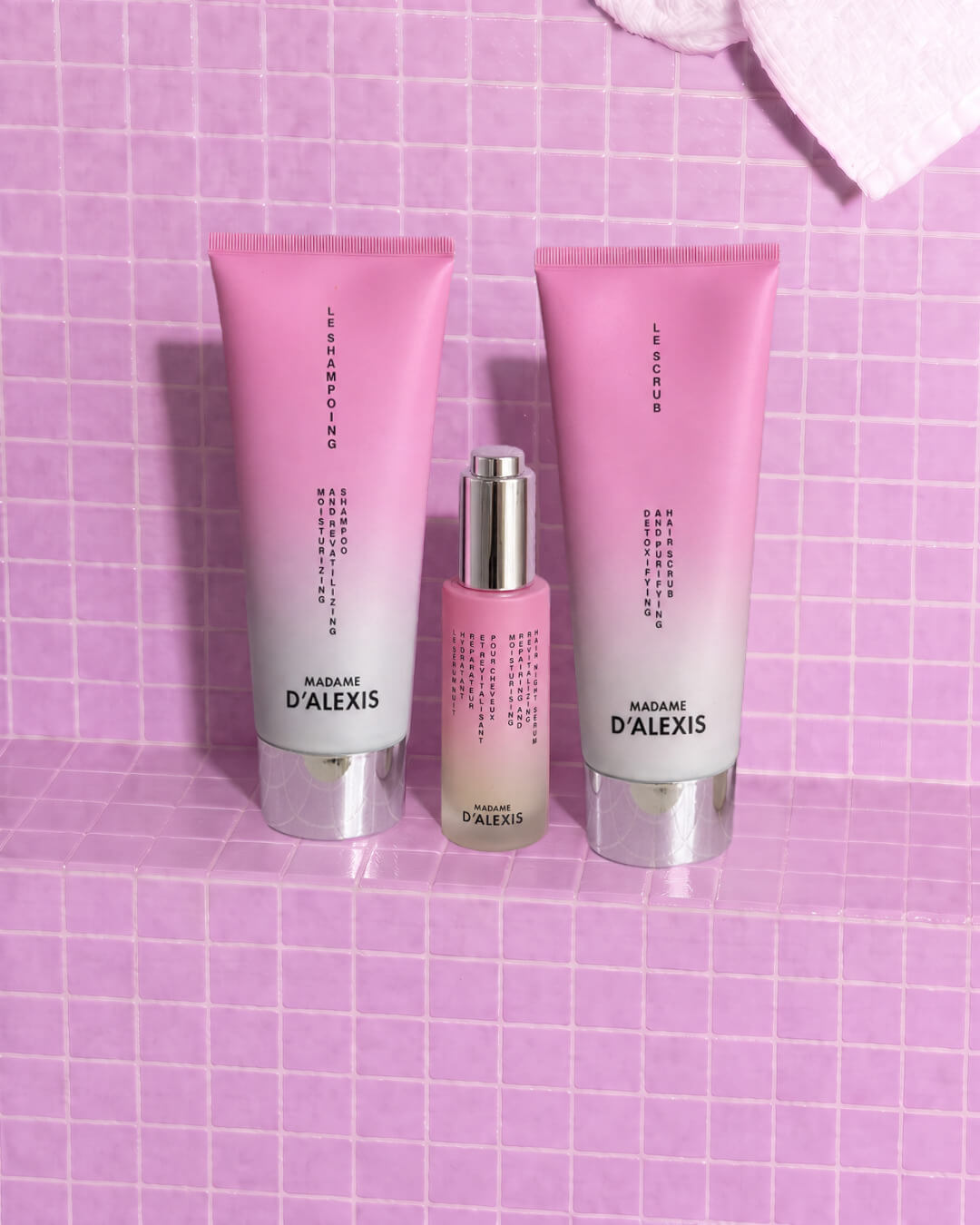
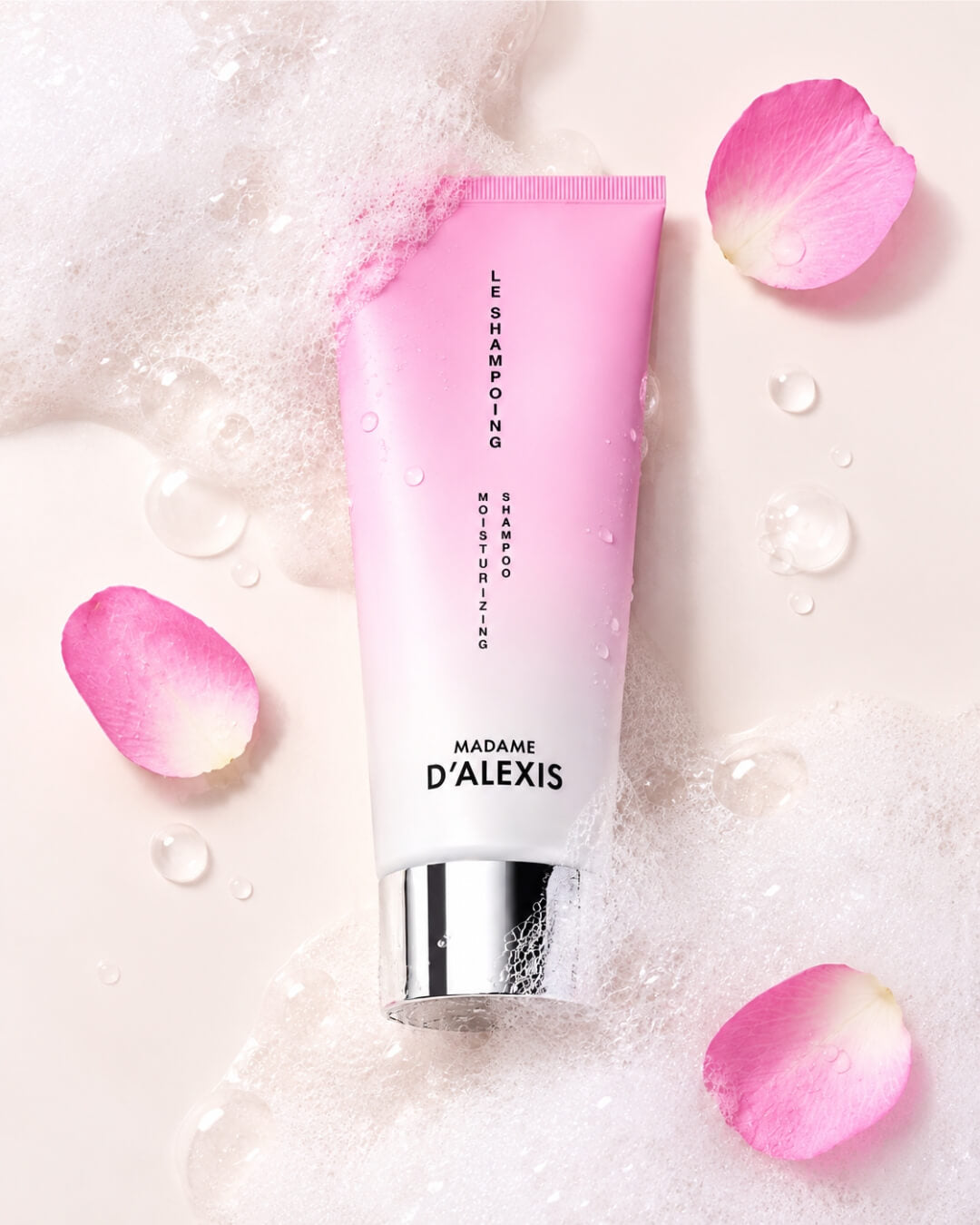
The result of rare formulation standards, the Madame d’Alexis shampoo was designed to support hair that gets greasy quickly without irritating it. Its base of orange blossom hydrosols, combined with gentle plant-based surfactants, respects the sebum secretion of the scalp, without ever stimulating it.
The foam is fine, delicate, airy. The natural floral fragrance evokes a luxurious and soothing hair care routine. The result? Soft and silky hair, lighter roots, visibly healthier hair.
Reconciling care, nature, and balance
It is advisable to avoid anti-sebum shampoos with overly aggressive formulas, which perpetuate the vicious cycle of excessive sebum production. It is better to invest in a shampoo suitable for oily hair, designed as a skin treatment: intelligent, precise, respectful.
Each wash then becomes a moment of rebalancing, not an irritation. It is within this philosophy that our approach is rooted. Because making hair more beautiful is not just washing it, it is listening to it.
Towards a more conscious hair care routine
Understanding the cause of oily hair means recognizing that there is no universal solution, but a plurality of factors — hormonal, dietary, environmental, behavioral — that must be identified.
What we offer at Madame d’Alexis is a return to the essentials. A hair care routine respectful of the scalp, where each ingredient is selected for its relevance, each texture designed to soothe, not mask.
With an approach that combines botanical science, sensoriality, and effectiveness, we guide each woman towards what her hair has of most precious: its natural balance. And in this fast-paced world, rediscovering this harmony is already a luxury in itself.