Conseils
Do beanies damage your hair? Effects, myths and good habits

As soon as the cold weather sets in, the beanie comes out of the drawer, along with the same questions: why does hair crackle with static when you take it off, why do the roots get greasy faster, why do the lengths look dull? Do beanies damage your hair, or is the cold the only culprit? The answer needs some nuance: a hat is not the enemy, but the material, how tight it is, how long you wear it and the condition of your scalp change everything.
This guide explains what a beanie really does to the hair fibre, unpicks the baldness myth, compares wool, polyester, cotton, satin and silk, explains how to protect your hair at night, then presents the products to use to get through the cold season without sacrificing your hair. A simple haircare routine is enough, as long as friction stays under control.
Do beanies really damage your hair?
A well-designed beanie, worn properly, does not damage hair in itself. Three factors weaken it: repeated friction between the fabric and the fibre, a warm, enclosed environment that encourages sweat and sebum, and tightness that pulls on the roots. A rough knit worn for hours over long, dry hair produces exactly what you dread: breakage at the ends, frizz, static. The same hat, lined with satin and worn over clean, well-hydrated hair, causes far fewer problems. Hydrated hair creates less friction, and that is what caring for your hair in cold weather is all about.
Damaged hair is the most exposed. Coloured, bleached or very dry hair has a more open cuticle, which catches on fabric more easily, so friction quickly turns into breakage. If your lengths are at that stage, the formula that softens them matters as much as your choice of hat, as we will see below. Protecting your hair means doing both. On TikTok, Instagram and YouTube, as well as Facebook and Pinterest, tips for protecting your hair spread fast: some are useful, others less so, which is why it helps to go back to how things actually work.
What effects do beanies have on hair and scalp?
The effects of a beanie, cap or hat on your hair vary with the material, how long you wear it and your hair type. Here are the main ones, from the most common to the most subtle.
Friction that weakens the lengths
Every time you move your head, the fabric rubs against your hair, especially at the nape. On fine or damaged hair, this constant friction lifts the cuticle, encourages split ends and leaves the lengths dull. It is the number one problem, the one the right material reduces most, and the real driver of breakage.
Static when you take it off
Wool, acrylic and polyester charge hair with static when the air is dry and the heating is on. The result: strands standing on end, frizz on top, ends that are hard to tame. If this sounds familiar, our guide to static hair explains why hair gets charged and how to calm it.
Sweat and greasy roots
Under a hat, heat and lack of air make you sweat; heat and hair do not mix well when air stops circulating. Sebum and sweat build up on the scalp, the roots go flat and look greasy sooner, while the ends stay dry. A breathable material limits this; a gentle shampoo, used whenever needed, stops residue from settling in, especially on greasy hair.
Irritation and itching
A scratchy knit, a dirty hat worn for too long, a scalp that is already sensitive: all of these can trigger tingling and itching. If you recognise these signs, our article on scalp irritation explains the causes and the soothing habits to adopt.
Tightness and marks
A hat that is too tight leaves a mark on your forehead and pulls on the roots. Choose a size that stays put without squeezing. The same goes for a bike helmet or headphones: anything that presses for a long time marks the skin and the hair. Also avoid a high, very tight ponytail under your beanie: the tension adds to the friction.
Do beanies, caps and hats cause baldness?
It is one of the most frequently asked questions, and the myth is persistent. No solid evidence links simply wearing a beanie, cap or hat to baldness, which is mainly down to hormonal and genetic factors. The myth rests on intuitive reasoning: a hat supposedly squeezes the scalp, restricts blood circulation and stops it from breathing. In practice, a beanie or cap that does not squeeze does not cut off blood supply: moderate pressure does not affect circulation, and the beanie myth does not hold up. So there is no solid evidence linking beanies and baldness.
What a cap or beanie can cause, on the other hand, is a greasier or more irritated scalp, as well as hair that breaks through friction: this is sometimes mistaken for hair loss or shedding. A cap in summer, a beanie in winter, a hat in town: the principle is the same, as long as the accessory is clean and fits well. If you notice significant or lasting hair loss, talk to your GP or a dermatologist rather than blaming your cap.
A simple tip: take off your cap or beanie indoors, and wash it regularly, whether it is a knit or a cotton cap. A cap that is too tight, like a beanie that is too tight, leaves a mark on your forehead. If you love wearing one every day, alternate between two and let each one dry out between outings.
Which material is best for a hair-friendly beanie?
Material is the simplest way to reduce friction and heat. The table sums up the main options.
| Material | Advantages | Drawbacks for hair |
|---|---|---|
| Wool | Very warm, natural | Can be scratchy and charge hair with static |
| Acrylic or polyester | Light, easy to care for | Not very breathable, encourages heat, sweat and static |
| Cotton | Soft, absorbent | Not very warm, also absorbs moisture from the hair |
| Satin or silk | Glides over the fibre, limits friction | Less warm on its own, ideal as a lining or for sleeping |
The best beanie for fragile hair: a fine knit in wool or cotton, lined with satin or silk. You stay warm, and the lining glides over your hair instead of catching on it. The fabric should stay breathable, because a hat that traps heat makes sweating worse. In countries and regions where winter drags on, a satin lining really makes a difference to comfort.

Satin or silk sleep bonnet: should you sleep in one?
A sleep bonnet does not play the same role as a winter hat: it does not keep you warm, it protects your hair at night. In satin or silk, it reduces friction between your hair and the pillow, which helps limit breakage, frizz and tangles on fragile lengths. Natural silk is more expensive and very soft; satin, often made from polyester, is more affordable: what matters is a smooth surface and a bonnet that does not squeeze. To protect your hair at night, a satin bonnet is a simple ally, and you can also slip one on after applying a hair mask in the evening.
A silk scarf tied loosely does the same job: bonnet and scarf are equally good, as long as the surface is smooth. A silk pillowcase also gives part of the benefit without putting anything on your head. To choose the right option for your curls, see our guide to satin or silk sleep bonnets for curly hair. Whichever you choose, wash it often, because it is in contact with your skin all night.
Mistakes to avoid so your beanie does not damage your hair
A few habits are enough to limit the effect of a beanie on your hair. Here are the best ones to adopt from your very first winter outing, to keep your lengths in good shape and avoid broken ends. Suitable haircare during the cold months also helps.
- Put it on dry hair: damp hair swells, rubs more and takes longer to get back into shape.
- Choose a size that stays on without squeezing, and avoid pulling on the roots when you put it on.
- Opt for a satin or silk lining, or a fine, breathable fabric, rather than a rough knit.
- Gather long hair into a loose plait or soft bun rather than letting it rub freely.
- Take it off indoors to let your scalp breathe, and never sleep in a winter hat. Wearing a tight hat for long periods remains the main source of discomfort.
- Wash your hat regularly: it holds on to sebum, sweat and styling product residue.
- Keep your lengths supple with a suitable formula, so friction does less damage.
To find out more about the cold, central heating and dry air, our winter haircare guide sets out the routine to follow all season. And if a problem persists, advice from a professional, whether a hairdresser or a dermatologist, is always valuable, as they can look at your hair and scalp up close.
How should you style your hair under a beanie without damaging it?
Your hairstyle matters as much as the material, and the way you style your hair changes the amount of friction. On short hair, friction mainly affects the roots; on long hair, it damages the ends. To keep volume at the crown, avoid flattening your hair: split it into two sections, gather each into a soft plait, then pull your hat on without tugging. For curly or afro hair, which dries out quickly, a satin lining stops curls from being crushed: it is the gentlest beanie option for curly hair. With a little practice, styling your hair before heading out takes less than a minute, without sacrificing your style or your volume. A clean beanie and a clean scalp go well together.
Which products help protect your hair and scalp under a beanie?
A good routine does not replace a soft material, but it helps the fibre cope better with friction and keeps the scalp clean, supple and comfortable. Madame d'Alexis haircare is formulated with no added water, on a base of organic hydrolats (Damask rose, German chamomile, orange blossom), free from sulphates, silicones and parabens, and made in France, in Brittany. Here is why each one has its place in a cold-weather routine, for a healthy scalp as well as for the care of your hair.
Le Shampoing: gently washing away what your beanie traps
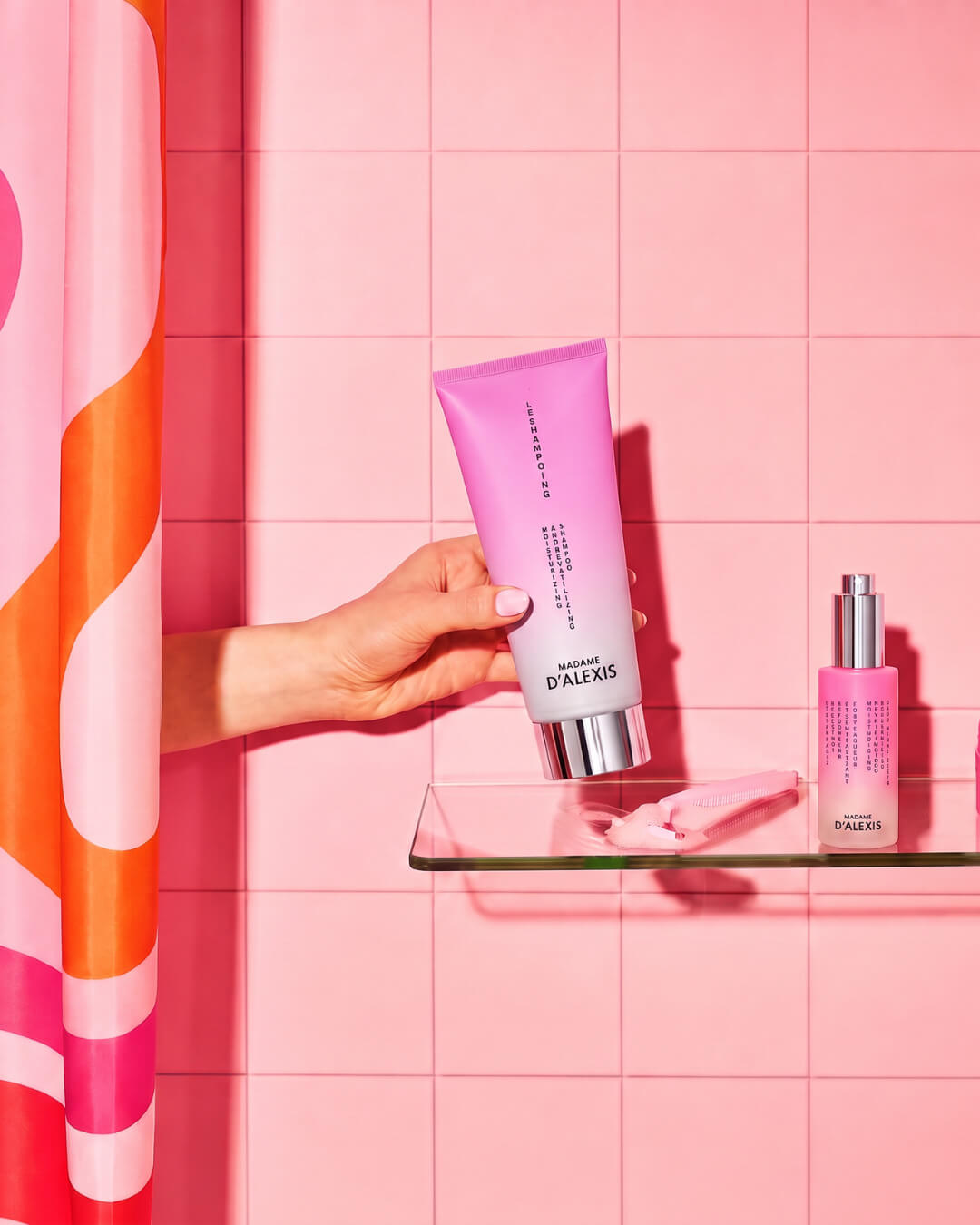
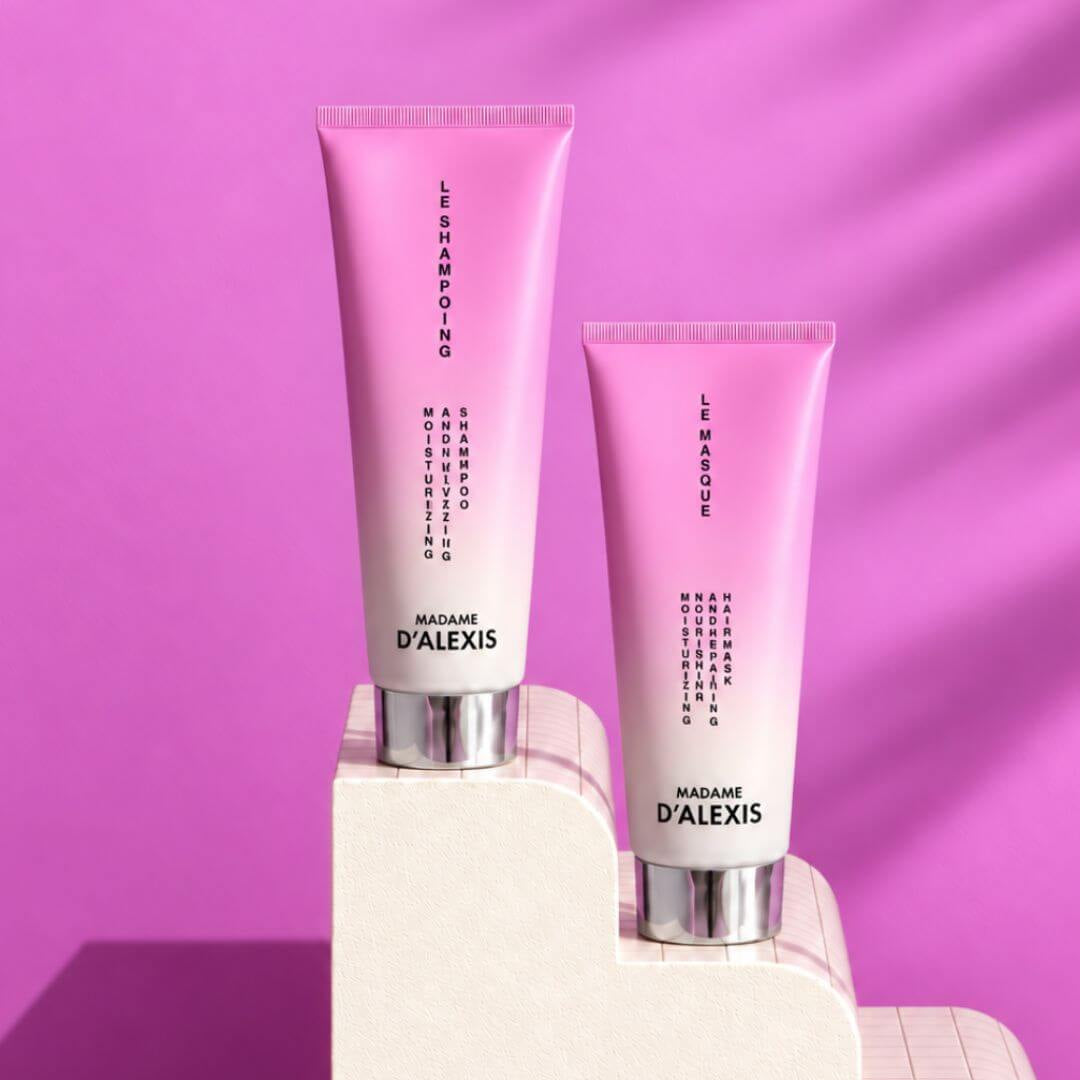
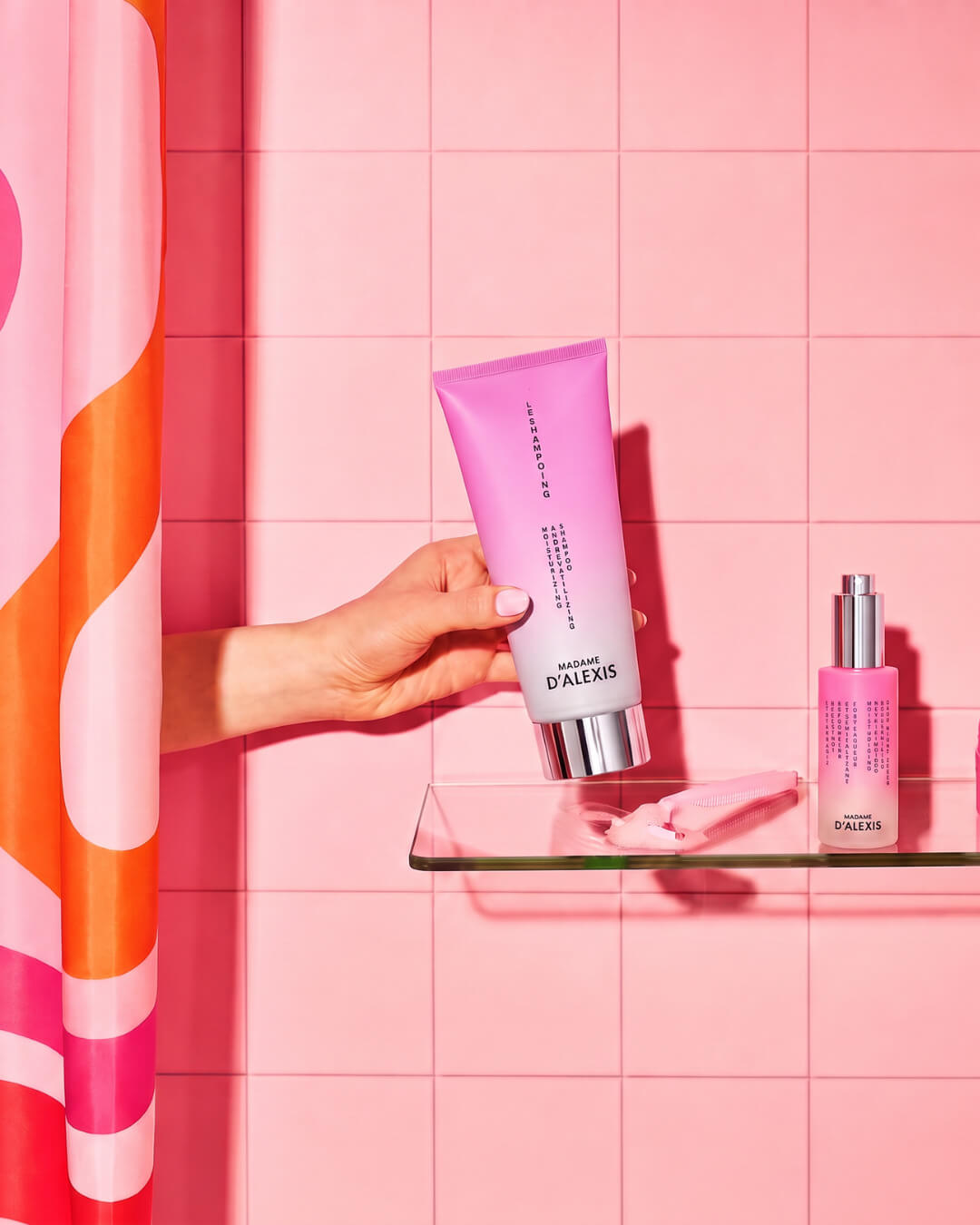
Under a beanie, sweat and sebum stay in contact with the skin. Le Shampoing, 98% natural origin, hydrates, soothes and brightens with cationic hyaluronic acid, prebiotics and plant keratin. Use it as a double shampoo on a thoroughly wet scalp: massage, then rinse very thoroughly. It can be used every day, or alternated with Le Scrub, which suits the weeks when your beanie is out.
Le Scrub: lifting accumulated residue
Le Scrub is a 98% natural origin exfoliating shampoo with fleur de sel, hydrolats, organic coconut oil and cationic hyaluronic acid. Use it every 10 to 15 days: on that day it replaces Le Shampoing, in two successive rounds like a double shampoo, then rinse. It helps lift the sebum, sweat and residue your beanie traps, and it is suitable for sensitive skin precisely because of this spaced-out rhythm. To understand how it works, read our guide to exfoliating and purifying the scalp.
Le Masque: softening lengths weakened by friction
Le Masque, 97% natural origin, repairs, nourishes and softens. This hydrating mask combines plant ceramides, cationic hyaluronic acid, orange blossom wax, organic apricot oil and jojoba oil. On towel-dried hair, allow 2 to 5 minutes to detangle, 5 to 10 minutes for regular use, 20 to 30 minutes for an intensive treatment, with a weekly overnight treatment for sensitised hair. Always rinse well. It is the choice for dry, damaged, coloured or bleached lengths, the ones that suffer most from friction.
Le Sérum Jour: coating the lengths before you go out
This serum is a dry oil, 99% natural origin, made with organic jojoba, plant ceramides, natural heat protectants (up to 200 °C) and antioxidants. One to three drops on the lengths and ends, on dry or slightly damp hair, are enough: it helps soften and smooth the fibre without weighing it down, so your beanie glides more easily. To hydrate without rinsing between washes, also read our article on moisturising hair sprays.
Le Sérum Nuit: caring for your scalp in the evening
Le Sérum Nuit, 98% natural origin, combines probiotics, postbiotics, fermented extracts, natural anti hair loss actives (oak, nettle, liquorice) and cationic hyaluronic acid. One pipette in the evening, section by section, on the scalp: massage in, do not rinse. As a course, 3 to 5 times a week, then 1 to 2 times a week to maintain, it supports growth, regrowth and density, while giving you a moment to unwind after a long day under a beanie.

Le Shampoing


Le Sérum Jour

Le Sérum Nuit
Which routine for your hair in winter?
Answer a few questions about your scalp and lengths, and we will build your ritual from our 5 organic hydrolat treatments, formulated with no added water.
Sound familiar?
- You answer
- You discover your ritual
- You fine-tune your selection
Which routine should you follow all winter if you wear a beanie?
There is no need for a complicated routine: a regular rhythm is enough. To help you choose yours, here is a simple example, to adjust to your needs, your hair type and how often you wear a beanie.
- Wash your hair with Le Shampoing as often as needed, as a double shampoo on a thoroughly wet scalp.
- Every 10 to 15 days, replace Le Shampoing with Le Scrub to exfoliate the scalp.
- Apply Le Masque after shampooing, every week, with an occasional overnight treatment if your lengths are sensitised.
- In the morning, apply a few drops of Le Sérum Jour to the lengths and ends before putting on your beanie.
- In the evening, apply Le Sérum Nuit section by section and massage in without rinsing.
If your hair stays dry despite everything, discover our products for dry hair, or take the hair diagnosis above to create a tailor-made routine.
Frequently asked questions about beanies and hair
Can you sleep in a satin bonnet every night?
Yes, as long as it is smooth, fits without squeezing and is washed regularly. It protects against friction with the pillow. Avoid, however, sleeping in a knitted or polyester winter hat, which gets hot and traps sweat.
Should you wash your hair more often when you wear a beanie?
Often, yes: heat and lack of air make the roots greasy more quickly. A gentle shampoo, used whenever needed, is the answer. Le Shampoing by Madame d'Alexis can be used every day, alternating with Le Scrub.
How do you avoid static after wearing a beanie?
Choose a hat lined with satin or silk, keep your lengths hydrated, then gently run your fingers or a wide-tooth comb through your hair rather than brushing it dry. Avoid synthetic materials when the air is very dry, especially on greasy hair that falls flat.
Can a beanie make your scalp itch?
Yes, if the material is scratchy, the hat is dirty or your skin is already sensitive. Wash it, choose a soft lining and adopt soothing habits. If the itching persists, ask a health professional for advice, for your health as well as your comfort.
Which beanie is best for fragile hair?
If your beanie is damaging your hair, try a fine knit in wool or cotton instead, with a satin or silk lining, in a size that does not squeeze. Avoid chunky knits that catch on the fibre, especially if your hair is long, coloured or bleached.
Beanies and hair: the key points
A beanie does not damage hair by nature: friction, trapped heat and tightness are the problems, and they can all be fixed. Choose a soft, breathable material, ideally lined with satin or silk, put it on dry hair, take it off indoors and wash it often. As for products, a simple rhythm between Le Shampoing, Le Scrub, Le Masque, Le Sérum Jour and Le Sérum Nuit helps your hair get through the cold season without losing suppleness or comfort, whether you prefer a beanie or a cap.