Conseils
Moisturising hair spray: hydrate between washes without the weight

A bottle that releases a cool mist over your lengths, and suddenly your hair seems to come back to life. A moisturising hair spray is appealing because it promises a quick step between washes, without getting in the shower. But does it really hydrate, or does it just give a feeling of freshness that evaporates in ten minutes? The answer depends on what is in the bottle, and on what you do straight afterwards. Here is how to choose, use and complete a moisturising hair spray without weighing the fibre down, especially in November, when central heating and dry air put your lengths through their paces.
What does a moisturising hair spray really do?
A moisturising spray is a leave-in treatment that comes as a fine mist. Its job is to bring a little water and some active ingredients to the lengths and ends when they look dry, rough or full of static, without redoing a full routine. It is a refresher: you mist it on in the morning to soften a style that has been slept on, or during the day when your hair feels tight after hours of central heating.
What it does not do is replace a mask or a deep treatment. A light mist works on the surface, for a short time. For truly dehydrated hair, it complements the routine; it does not carry it. If you are wondering how often to hydrate, our guide should you moisturise your hair every day sets out the right rhythm for your hair type.
Spray, mist or leave-in: what is the difference?
The three words overlap on the shelves, and they do not mean quite the same thing.
A mist is the lightest format, often based on water or floral water, with few actives. It refreshes and softens briefly. A moisturising spray goes a step further: it adds hydrating ingredients, sometimes a detangling agent, and can be sprayed onto dry or damp hair. A leave-in, finally, is a richer no-rinse treatment, in cream, milk or serum form, which leaves a nourishing veil on the lengths. To compare leave-in formats and choose according to your hair, see our article on leave-in treatments and serums.
The much sought-after detangling spray is a moisturising spray whose formula focuses on slip. It helps a comb glide through wet or tangled hair. To detangle without breakage, the method matters as much as the product: we explain it in our guide to natural detangling for knotted hair.
Water, hydrolat or oil: what actually hydrates in a spray?
This is the question that changes everything, because a spray's ingredients determine how long its effect lasts.
Water alone gives an instant feeling of freshness, but it evaporates quickly. Without an ingredient able to hold moisture in the fibre, the softness is short-lived. A spray based on ordinary water therefore depends entirely on what is added to it: humectants, light film-forming ingredients, sometimes silicones that add slip without caring for the hair.
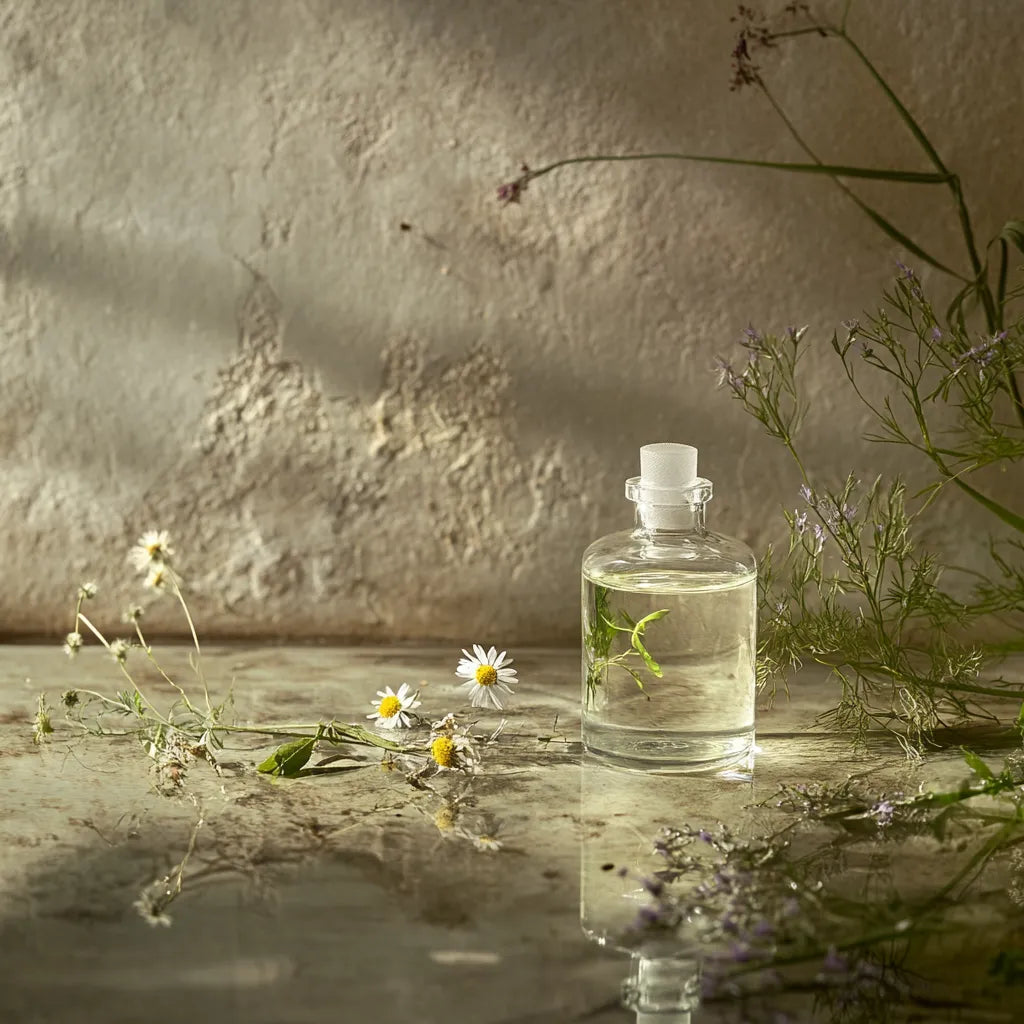
A hydrolat, on the other hand, is the distillation water of a plant. It contains the flower's water-soluble compounds: Damask rose hydrolat is associated with hydration, soothing and shine, chamomile hydrolat soothes and brightens the hair, and orange blossom hydrolat tones. If you want to understand how a hydrolat base differs from plain water, read our comparison hydrolats versus water, or our complete guide to hydrolats for hair.
Oil, finally, does not hydrate: it seals. A dry oil applied to slightly damp lengths holds in the water that is already there and helps control frizz. That is the logic of a good pairing: a dose of moisture, then a step that keeps it in.

How do you use a moisturising spray without weighing your hair down?
The number one worry with a spray is a greasy or sticky film, especially on fine hair. A few simple habits are enough to avoid it.
Spray from twenty to thirty centimetres away, in short bursts, rather than in one continuous cloud. Focus the product on the lengths and ends, which are the driest areas, and avoid the roots, which do not need dampening and will get greasy faster. Then work it through with your fingertips, without rubbing.
Start with two or three sprays, see how it feels, then add more if needed. Hair that looks flat or sticky after spraying almost always means too much product, not a bad formula. And if you feel sprays building up over the weeks, it is a sign that a proper wash is needed: they do not rinse themselves out.
On dry or wet hair: which is right?
Both work, for different purposes.
On dry hair, the spray refreshes and softens a style that is already done. It is the morning or midday step, before running your fingers or a wide-tooth comb through.
On wet or towel-dried hair, it prepares for styling and makes detangling easier. The moisture in the fibre helps the product spread, and the water already absorbed by the hair becomes the hydration you can then seal in. Our Peigne Démêlant Large Rose, a wide-tooth comb, is designed for this step: detangle wet lengths from the ends up to the roots, without pulling.
Which moisturising spray for fine, curly or afro hair?
The same bottle does not suit every hair type.
Fine hair needs lightness: a very fluid mist, little oil, and a sparing application on the ends only. Curly, coily or afro hair, which is thirstier because sebum struggles to travel along the curl, can take richer formulas and a more generous application, preferably on damp hair so the curls clump together. Coloured or bleached hair, which is more porous, absorbs quickly and dries quickly: it benefits from a spray followed by a sealing step.
If you are unsure, start from your hair texture rather than the promise on the bottle. Our selection of products for dry hair helps you spot the right formulas.
How can you hydrate your hair between washes?
A spray is only one piece of the puzzle. Here is a simple routine to keep your lengths supple from one wash to the next.
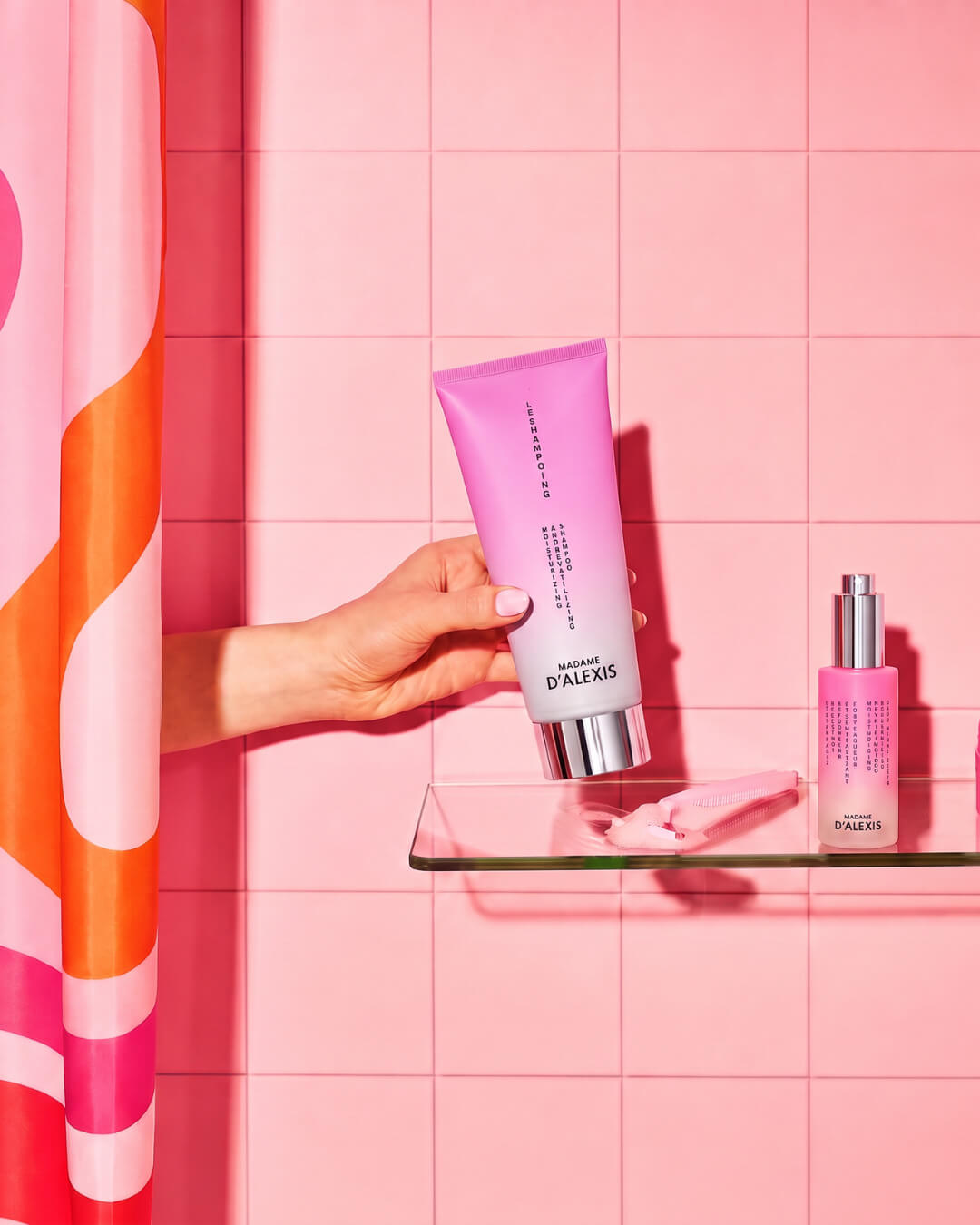
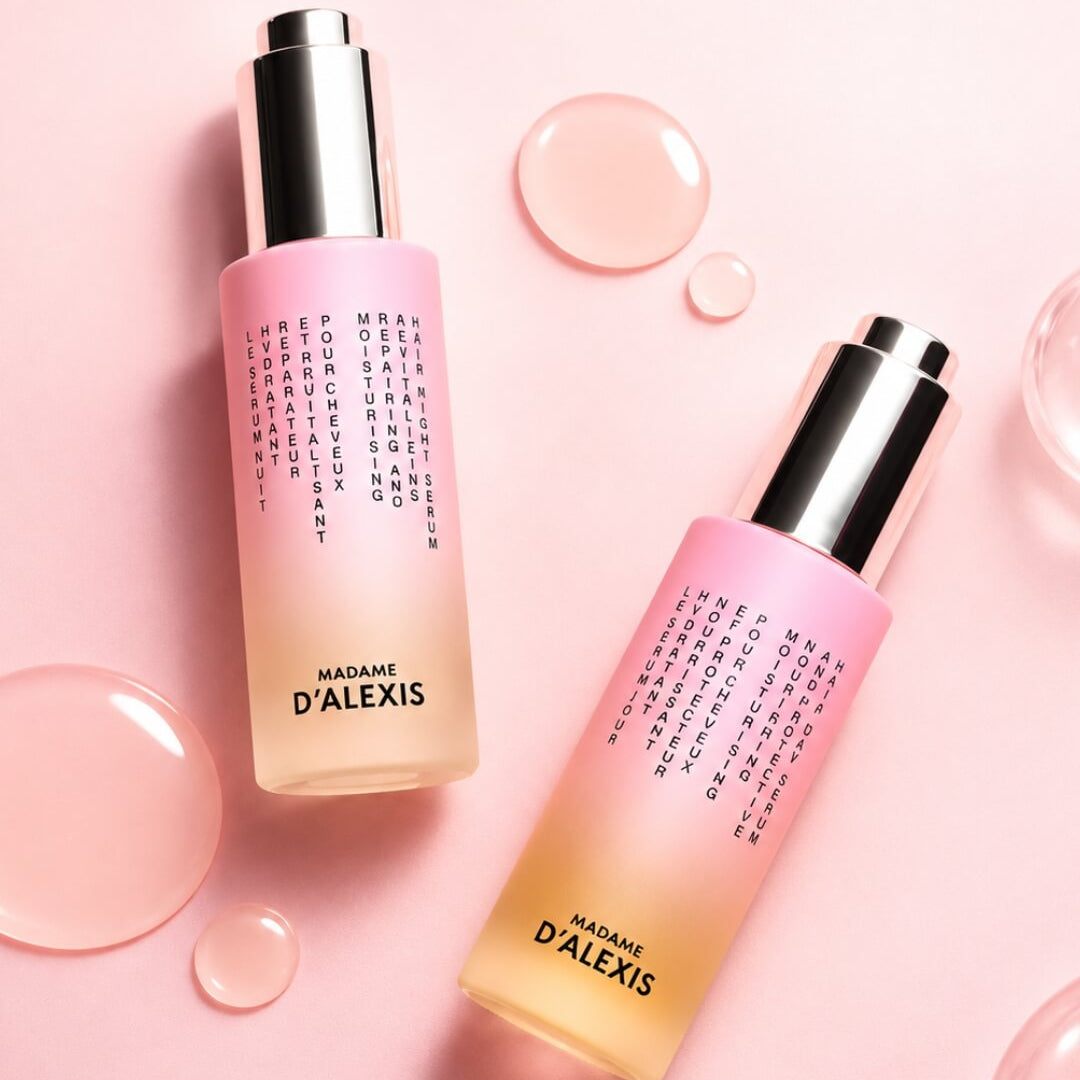
On wash day, Le Shampoing cleanses gently while adding cationic hyaluronic acid, then Le Masque, applied to towel-dried hair, softens and nourishes the fibre. Over the following days, a light mist can refresh the lengths in the morning. On dry or slightly damp hair, one to three drops of Le Sérum Jour on the lengths and ends, never on the roots, help hold in moisture without weighing hair down. It is not a spray, it is a dry oil, but it plays the role of the sealing step.
In the evening, loosely braid or tie back your lengths, and sleep on a smooth pillowcase to limit the friction that dries out the fibre.

Can you make a moisturising hair spray at home?
Yes, and the simplest version is also the safest: a pure hydrolat, such as Damask rose or chamomile, poured into a clean spray bottle. You get a light mist that refreshes the lengths, with nothing to measure out. For more ideas, our recipes for homemade hair masks with organic hydrolats show how to work with these ingredients.
A few points to watch. A hydrolat is a water-based product: the bottle must be clean and completely dry, stored away from heat and light, and used fairly quickly. If the smell or appearance changes, replace it. Avoid mixing oil and water in the same bottle: the two separate and the mist comes out unevenly. Also avoid plain tap water, which does nothing for the fibre and can leave deposits depending on how hard it is.
Which products should you choose to hydrate your hair for longer?
A spray refreshes, but lasting hydration is built into your core routine. At Madame d'Alexis, we do not make a spray: our products are formulated with no added water, with organic hydrolats as their base, so that every drop delivers active ingredients rather than dilution water. Here are the ones that best meet the need for hydration between washes.
Le Shampoing hydrates from the wash onwards thanks to cationic hyaluronic acid, combined with prebiotics and plant keratin. Use it as a double shampoo on a thoroughly wet scalp, then rinse very thoroughly. Le Masque, rich in plant ceramides, cationic hyaluronic acid and organic apricot and jojoba oils, softens and nourishes the lengths: applied to towel-dried hair, it is left on for five to ten minutes for a regular treatment, and always rinsed out. Le Sérum Jour, a dry oil with organic jojoba and plant ceramides, seals the lengths in one to three drops, on dry or slightly damp hair, without weighing it down. Finally, Le Peigne Démêlant Large Rose makes a great alternative to a detangling spray: its wide teeth detangle wet hair without breakage.


Le Masque

Le Sérum Jour

Le Peigne Démêlant Large Rose
Lengths lacking hydration?
Answer a few questions about your scalp and lengths, and we will build your ritual from our 5 organic hydrolat treatments, formulated with no added water.
Sound familiar?
- You answer
- You discover your ritual
- You fine-tune your selection
Which mistakes make a moisturising spray ineffective?
The first mistake is spraying onto hair loaded with product: the spray cannot get through and simply adds to the residue. The second is using too much, which leaves lengths flat and sticky. The third is relying on a spray alone for dehydrated hair: a mist does not replace a mask or a sealing oil.
Add to that choosing a formula that has nothing to do with your hair texture, applying it to the roots, which makes them greasy faster, and skipping the final step. Hydrating without sealing is like filling a leaky jug: the water escapes straight away. Finally, in winter, avoid going out with wet or very damp hair in freezing weather, and keep your lengths protected under a hat in a soft material.
Frequently asked questions about moisturising hair sprays
Can you use a moisturising spray every day?
Yes, in small amounts, on the lengths and ends, if your hair tolerates it well. If it feels flat, sticky or weighed down, use it less often and wash your hair more regularly.
Does a moisturising spray replace conditioner?
No. A conditioner or mask works in depth after washing and is rinsed out. A spray remains a leave-in extra, useful between washes to refresh and soften.
What is the difference between a moisturising spray and a detangling spray?
A detangling spray focuses on slip to help the comb glide through, while a moisturising spray aims to deliver water and active ingredients. Many formulas do a bit of both, but their purpose differs.
Which floral water should you choose for a homemade moisturising spray?
Damask rose hydrolat is associated with hydration and shine, chamomile soothes and brightens, and orange blossom tones. Choose according to your needs, and pick an organic hydrolat, stored somewhere cool and away from light.
What if my hair stays dry despite the spray?
That is a sign the spray is not enough. Focus on a gentle wash with Le Shampoing, regular treatment with Le Masque, then a sealing step with Le Sérum Jour. The free hair diagnosis helps you build this routine.
In short: hydrate, then lock in moisture
A moisturising spray is a good refresher, as long as you see it for what it is: an extra, not a routine. Lasting hydration comes from the basics: a gentle wash, a mask that softens, then a step that holds moisture in the fibre. If your routine is solid, a hydrolat mist is often enough to refresh your lengths between washes without weighing them down. And if you want to know where to start, the two-minute hair diagnosis works out the rhythm that suits your hair.