Conseils
Peeling scalp: why the skin flakes and how to soothe it

Little white flakes on your shoulders, a scalp that feels tight, sometimes a few crusty patches under your fingers: when your scalp starts peeling, you want an explanation fast. Dandruff, dryness, a reaction to a product, water that is too hot? Flaking does not always have the same cause, which is why the right answer is more subtle than simply reaching for an anti-dandruff shampoo.
In this guide, you will learn why the skin on your scalp sheds, how to tell a peeling, flaky scalp from true dandruff, which habits to adopt from tonight, which products to choose and when it is better to see a dermatologist. The aim: to soothe your scalp without irritating it further.
Why does the scalp peel?
The scalp is skin like any other, with one difference: it is rich in sebaceous glands, covered in hair, and exposed every day to our shampoos, hairstyles, woolly hats and central heating. Like all skin, it renews itself constantly: surface cells detach discreetly, without you noticing.
A peeling scalp is when this shedding becomes visible. Dead skin then comes away in small flakes, thin sheets or patches, often because the surface barrier is weakened or the balance of the scalp is disrupted. It may come with tightness, itching or a feeling of warmth, but not always.
What matters is understanding what your skin is trying to tell you. A flaky scalp is a signal, not a diagnosis: it can come from simple dryness as well as from product build-up, a shampoo that is too stripping or temporary sensitivity.
Peeling scalp or dandruff: how can you tell the difference?
This is the question that comes up most often. The two look alike, because in both cases white particles appear in the hair. Yet their appearance and context help tell them apart. The table below gives some pointers, but it is no substitute for advice from a health professional.
| What you notice | Dry, peeling scalp | Dandruff | Product residue |
|---|---|---|---|
| What the flakes look like | Fine, white, light like bran | Larger, sometimes yellowish and sticky | Gritty, like tiny grains |
| Scalp | Dry, feels tight | Often oily or combination | Normal, sometimes dull |
| Hair | Often dry or full of static | Roots that get greasy quickly | Heavy hair with no movement |
| When it appears | Winter, central heating, hot water | All year round | A few days after a rushed wash |
If you mostly recognise yourself in the second column, our article on dandruff and natural solutions covers that situation in detail. Here, we focus on skin that peels without necessarily being oily.
What causes a peeling scalp?
Several factors can add up. Spotting them is the first step to acting in the right place.
Cold weather, central heating and dry air
In autumn and winter, indoor air dries out and temperature swings multiply. The skin on your scalp loses water more easily, becomes uncomfortable and comes away in fine flakes.
Water that is too hot and insufficient rinsing
A scalding shower strips away the skin's protective film. Conversely, shampoo that is not fully rinsed out leaves residue that irritates and forms small patches. Either way, the scalp reacts by flaking.
Products that are too stripping or too rich
Shampoos with harsh sulphates, built-up styling products or oils left on for too long upset the balance of the scalp. Leaving too long between washes also lets sebum, pollution and products build up and mix with dead cells.
Colouring, bleaching and tight hairstyles
Colouring, bleaching or straightening treatments can temporarily sensitise the skin. Very tight buns, helmets and hats worn for long periods also create areas of friction and heat. If your scalp reacts after colouring, our article on scalp irritation will help you understand what is going on.
The scalp microbiome
Like the skin on your face, the scalp is home to a community of micro-organisms. When this balance is upset, the skin can become more reactive and renew itself less smoothly. That is why our products combine organic hydrolats, prebiotics and probiotics.
Peeling, itchy scalp: what should you do?
When flakes come with itching, the urge to scratch is strong, but it is the worst thing you can do. Fingernails weaken the skin barrier, create micro-abrasions and keep the cycle going: the more you scratch, the more the skin peels. It is better to massage with the pads of your fingers, using a gentle product.
If itching is the main issue, our guide to an itchy scalp covers the causes, and our article on shampoo for an itchy scalp explains how to choose a gentle formula.
What habits can you adopt today?
Before changing products, a few simple adjustments often bring relief. They cost nothing and fit with any routine.
- Wash with lukewarm water. Finish with a slightly cooler rinse, which is gentler on the skin.
- Wet your hair thoroughly before applying shampoo. The product spreads more easily and you use less of it.
- Double shampoo. The first round removes residue, the second cleanses gently. Massage with the pads of your fingers, without rubbing.
- Rinse very thoroughly. It is the most overlooked step, and the most useful against small patches of residue.
- Do not pick at the flakes. Even if they lift, pulling them off by hand irritates the skin and drags the process out.
- Cut back on styling products and wash your hats, brushes and pillowcases regularly.
When it comes to brushing, a soft brush avoids catching the skin. Our article on hydrating the scalp adds everyday tips to this advice.

Which products should you choose for a peeling scalp?
A peeling scalp calls for a gentle, regular routine without excess. At Madame d'Alexis, our products are formulated with no added water: organic Damask rose, chamomile and orange blossom hydrolats replace water and are combined with skincare actives such as cationic hyaluronic acid, prebiotics and probiotics. The formulas are free from sulphates, silicones and parabens, and made in France, in Brittany. Here is what each product brings to a flaky scalp.


Le Shampoing, to cleanse without stripping
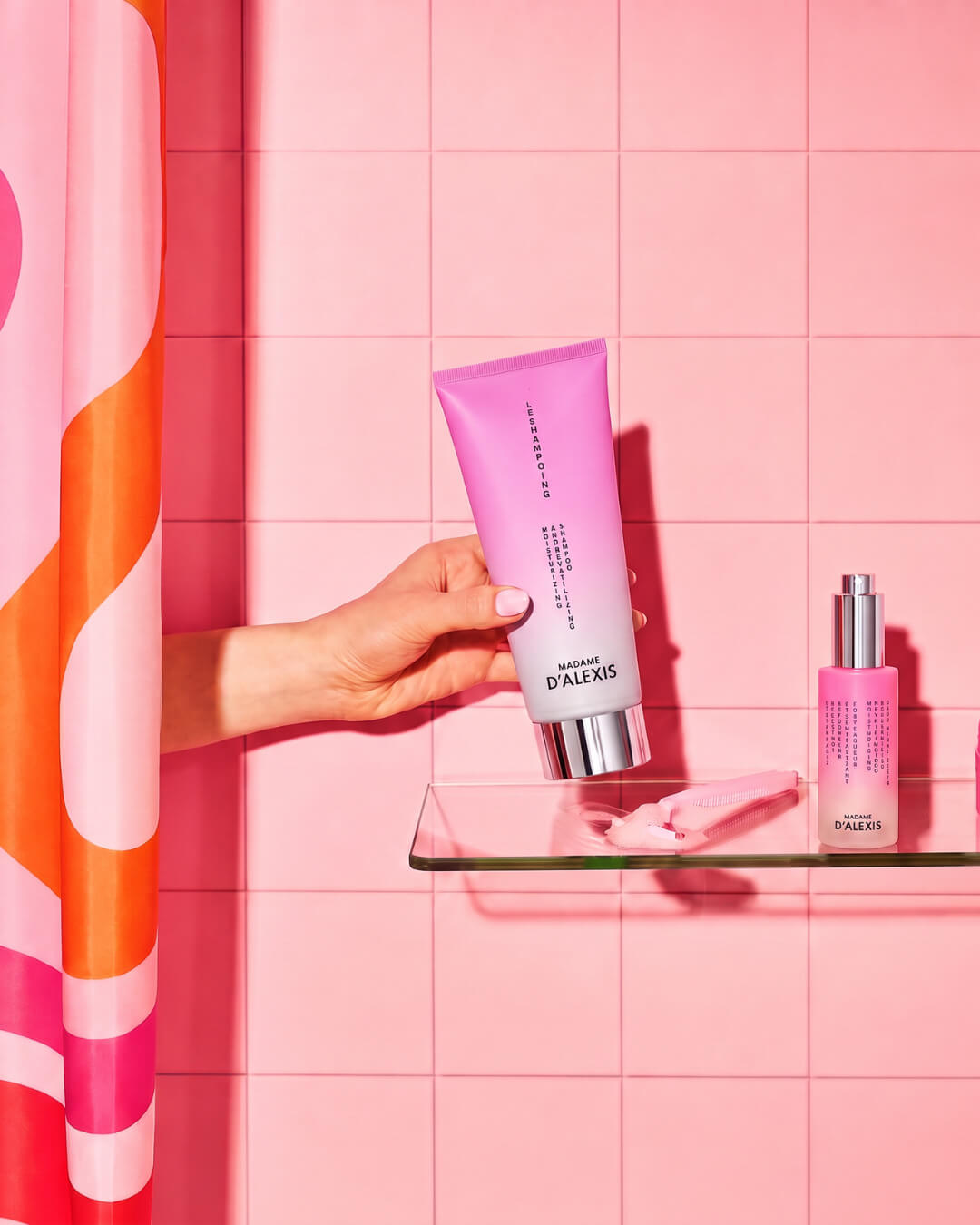
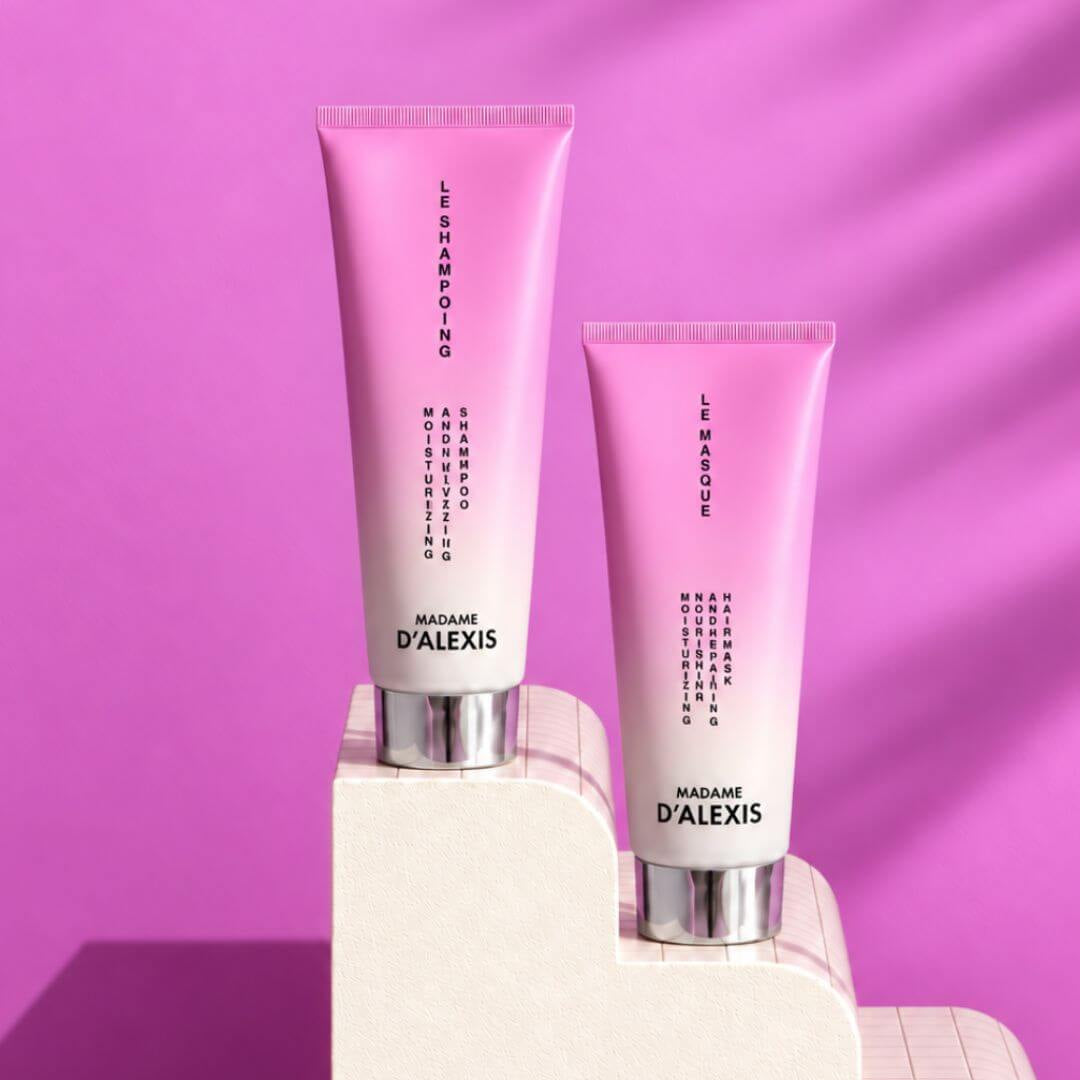
Le Shampoing is 98% natural origin. It hydrates, soothes and brightens thanks to cationic hyaluronic acid, prebiotics and plant keratin. It cleanses while respecting the skin's surface film, which suits a scalp that feels tight. Apply it as a double shampoo on a thoroughly wet scalp, massage, then rinse very thoroughly. It can be used every day or alternated with Le Scrub.
Le Scrub, to clear residue from the scalp
Le Scrub is a 98% natural origin exfoliating shampoo with fleur de sel, hydrolats, organic coconut oil and cationic hyaluronic acid. It helps lift the build-up of products and sebum that mixes with dead cells. Use it every 10 to 15 days: on that day it replaces Le Shampoing, in two successive rounds like a double shampoo, then rinse. This spaced-out rhythm makes it suitable for sensitive scalps.
Le Sérum Nuit, to support a balanced scalp
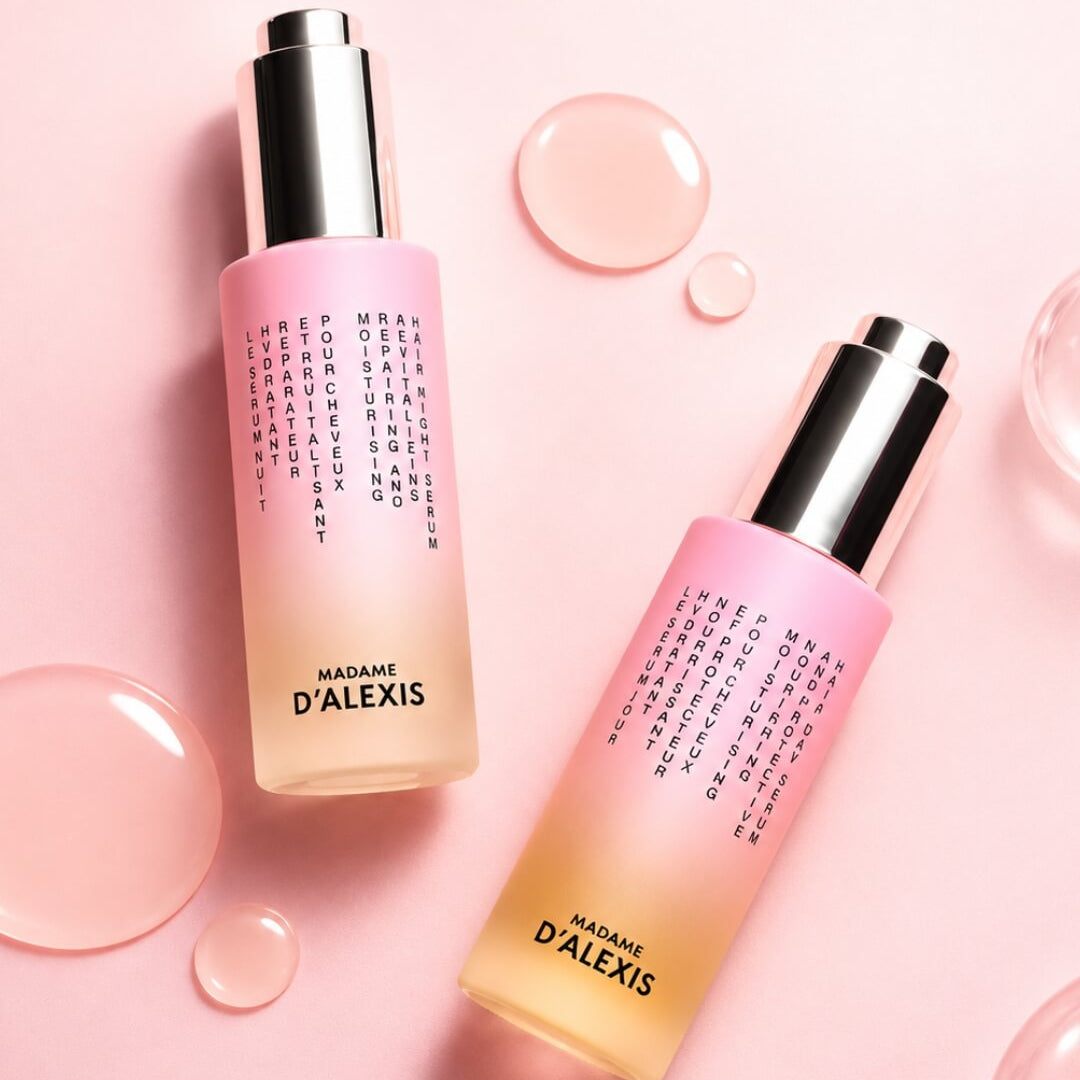
Le Sérum Nuit, 98% natural origin, combines probiotics and postbiotics, fermented extracts and cationic hyaluronic acid. Applied in the evening, section by section, then massaged in without rinsing, it supports the balance and comfort of the scalp overnight. Use it 3 to 5 times a week as a course, then 1 to 2 times a week to maintain.
Le Masque, for dried-out lengths
A dry scalp often goes hand in hand with dry lengths. Le Masque, 97% natural origin, repairs, nourishes and softens thanks to plant ceramides, cationic hyaluronic acid, orange blossom wax and organic apricot and jojoba oils. Apply it to towel-dried lengths, avoiding the roots, and rinse well.
Is your scalp peeling and you don't know why?
Answer a few questions about your scalp and lengths, and we will build your ritual from our 5 organic hydrolat treatments, formulated with no added water.
Sound familiar?
- You answer
- You discover your ritual
- You fine-tune your selection
Should you exfoliate a peeling scalp?
It is a real paradox: exfoliating skin that is already peeling seems counter-intuitive. Yet when the flakes are mostly due to a build-up of products, sebum and dead cells, gentle, spaced-out exfoliation helps you start again from a clean base. On the other hand, if the scalp is red, sore or irritated, do not exfoliate: let the skin calm down first.
Frequency matters just as much as the product. Exfoliating every 10 to 15 days is enough, never more. Our guide to exfoliating a dry scalp explains the method step by step.

For sensitive or reactive scalps, the selection of products for an irritated scalp brings together the gentlest products in our shop.
When should you see a dermatologist?
The advice in this article is about everyday care and does not replace medical advice. See a dermatologist if the flakes are thick, if red patches appear, if your scalp is painful, oozes or bleeds, if you notice hair loss alongside it, or if nothing improves after a few weeks of gentle care. Only a professional can make a diagnosis.
Peeling scalp: your frequently asked questions
Is a peeling scalp serious?
Most of the time, no: it is shedding caused by dryness, hot water or an unsuitable product. However, thick patches, pain, persistent crusts or hair loss call for medical advice.
What is the difference between dandruff and a peeling scalp?
Dandruff flakes are generally larger, sometimes oily or yellowish, and linked to an oily scalp. A dry, peeling scalp produces fine white flakes, with a feeling of tightness. The two can overlap, which is why it is worth observing your scalp for a few days.
Which shampoo is best for a peeling scalp?
Choose a gentle shampoo, free from sulphates and silicones, that cleanses without stripping. Formulas with organic hydrolats and hyaluronic acid, such as Le Shampoing, work well. Use it as a double shampoo and rinse very thoroughly.
Which natural remedies can you try?
Stick to simple habits: lukewarm water, a complete rinse, gentle massage, sulphate-free products. Avoid acidic or irritating mixtures, such as lemon juice or undiluted vinegar, on skin that is already fragile. The chamomile and Damask rose hydrolats in our formulas soothe and hydrate.
My scalp is peeling after colouring my hair: what should I do?
After colouring, the skin can stay sensitive for a few days. Wash with lukewarm water and a gentle shampoo, avoid exfoliating while the scalp is irritated, and wait for it to settle before going back to Le Scrub. If the discomfort persists, ask your colourist or a dermatologist for advice.
In short
A peeling scalp is a signal to listen to rather than a flaw to hide. Lukewarm water, a double shampoo, generous rinsing, sulphate-free products and gentle exfoliation every 10 to 15 days make a simple, effective base for soothing it. And if you are unsure which routine is right for you, the hair diagnosis guides you in two minutes.