Advice
Hair Gloss: The Salon-Quality Shine Treatment and How to Make It Last Longer

You know that moment. The stylist rinses and dries your hair, and it starts to shine like never before: smoother, more supple, almost glossy—even though it’s completely dry. That’s the effect of a hair gloss, a finishing treatment that’s become the hottest trend in hair salons this fall to revitalize color after months of sun exposure.
Then the weeks go by and the magic fades. The lack of shine creeps back in little by little, the shade dulls, and the hair color loses its intensity. This raises the question: How can you make this effect last longer, and do you need to schedule an appointment every month?
A hair gloss is no mysterious potion. It works on a simple principle: the hair cuticle. Understanding this principle helps you choose the right hair gloss, space out your salon visits, and keep your hair shiny with a gentle hair care routine.
What is hair gloss, and how does it work?
Hair gloss, also known as hair gloss treatment, hair glossing, or salon glossing, is a rinse-out coloring treatment used to add shine and even out hair color. It comes in two forms. Clear gloss leaves a shiny, pigment-free veil for a natural look. Tinted gloss, sometimes called repigmenting gloss, adds a subtle shade to revive a faded color or neutralize unwanted tones.
Its function is due to a small architectural marvel: the cuticle. This outer layer of the hair shaft is made up of overlapping scales, like tiles on a roof. When these scales lie flat, light reflects evenly, creating that mirror-like shine. When they lift, the light scatters, and the hair appears dull.
Most hair glosses are formulated with an acidic pH, which helps the cuticle close. A review published inthe *International Journal of Trichology* also notes that an alkaline environment increases the negative electrical charge of the hair shaft and thus the friction between strands, which can damage the cuticle. Hair gloss does not change the nature of the hair: it acts on the surface, and that’s already a big help. That’s what gives hair a smooth feel, making it soft and easier to style.
What are the benefits of lip gloss?
The reason this gentle technique is so appealing is that it checks several boxes at once:
- Instant shine: As soon as you leave the salon, your hair is radiant and smooth to the touch.
- A refreshed color: Tinted lip gloss restores intensity to faded hair color without having to redo the entire color treatment.
- A subtle correction: it tones down the yellow or orange tones that appear in blonde hair and highlights.
- No root line: Since it doesn't lighten the roots, it doesn't create a visible line where regrowth begins.
- A quick appointment: the processing time is short compared to a traditional coloring technique.
What's the difference between a gloss, a patina, and a hair color treatment?
The three of them often run into each other at trade shows, and it's easy to confuse them. Here's how to tell them apart.
- Hair gloss is all about the finish. It visually smooths the hair shaft and can add a very subtle tint. Many products are marketed as ammonia-free glosses with a subtle pigment that fades gradually.
- A patina corrects a color tone. It is often used after bleaching or highlights to neutralize yellow or orange tones. It affects the shade more than the shine.
- Hair coloring permanently changes the natural color. It penetrates the hair shaft and requires ongoing maintenance, especially at the roots.
Semi-permanent gloss falls somewhere between these two treatments: it adds a subtle tint that fades with each wash, without lightening the hair. Remember the key difference: gloss enhances shine, patina affects the tint, and coloring changes the base color. In fact, these three are often used together, with gloss serving to enhance a fresh color.
Gloss or balayage—which option should you choose?
These are two very different services. Balayage is a coloring technique that lightens certain strands to create highlights and dimension: it transforms the hair’s color and requires regular maintenance. A gloss, on the other hand, doesn’t change your base color—it adds shine and refreshes your existing color.
If you’re in the mood for a change, highlights are the way to go. If you like your hair color but feel it lacks intensity, a gloss treatment is the perfect solution. Colorists also often combine the two: highlights followed by a gloss treatment to blend the shade and add shine. Your hairstylist will advise you based on your hair type and the look you’re going for.
How do you apply lip gloss?
At the salon, the procedure is simple. The stylist first washes the hair to remove any residue, then towel-dries it. Next, they apply the product strand by strand, usually from the roots to the ends. The processing time varies depending on the product and the shade chosen, followed by a thorough rinse and blow-dry. To use a gloss properly, the evenness of the application is just as important as the choice of shade—which is why applying a tinted gloss is best left to a professional.
How long does hair gloss last?
The answer depends on three factors: the product you use, the porosity of your hair, and how often you wash it. A clear gloss fades more quickly. A tinted gloss lasts as long as the pigment remains in your hair—until it washes out with each shampoo. Professionals usually say it lasts a few weeks, but there’s no set duration that applies to all hair types.
Porosity makes all the difference. Porous hair—which is often drier and more open—loses the treatment it has received more quickly than smooth, tightly-closed hair. Damaged or bleached hair therefore retains its shine for a shorter time. Similarly, washing your hair daily with a detergent-based shampoo wears down the finish faster than washing it less frequently. That’s why the famous “before-and-after hair shine” photos taken at the salon mainly show the results from the first week.
Good news: Your hair's condition depends just as much on what you do after your appointment as it does during it. Gentle washing, lukewarm water, a nourishing treatment, and controlled heat significantly slow down color fading.
Can you make hair gloss at home?
Yes, as long as you keep two things in mind. Applying tinted lip gloss at a salon is still a technical process: choosing the right shade, the amount to use, the application time, and even distribution all require a professional’s eye. Trying to do it yourself can lead to an uneven result, especially on colored or highlighted hair.
In addition, there’s a perfectly reasonable homemade hair gloss that isn’t meant to change the color but to restore shine. The principle is similar to a shine treatment: apply a rich treatment to towel-dried hair, rinse with cool water to finish, then apply a leave-in treatment to the ends—such as a few drops of dry oil or a shine-boosting serum. It’s the gentle version of a gloss treatment, with no unpleasant surprises.
If you're dreaming of blonde, brown, or copper highlights, let your stylist take care of it and save the maintenance for when you're at home. That way, you'll get the most out of your appointment by spacing out your salon visits.
Does hair gloss damage your hair?
A gloss treatment is generally considered a gentle service: it doesn’t lighten the hair or work deep into the hair shaft. That’s precisely why it doesn’t repair the hair. It enhances the appearance of the hair shaft, but it doesn’t mend a broken cuticle or seal a split end. It’s not a treatment.
The distinction lies elsewhere. Some tinted glosses are applied with a mild developer, meaning they involve a mild chemical reaction. There’s nothing to worry about as long as there’s enough time between applications. However, having treatments done too close together, repeatedly bleaching your hair, and neglecting hydration will eventually weaken the health of your hair, regardless of the product used.
Think of hair gloss as makeup for your hair: it enhances what’s already there. If your hair is very damaged, it needs treatment first, and the gloss comes next, as a finishing touch. If your hair lacks shine for no obvious reason, our guide to reviving dull hair will help you identify the cause before making an appointment.
What hair types are suitable for hair gloss?
The gloss is suitable for all hair types, as long as you choose the right one.
- Colored hair: Hair gloss is a great way to refresh a color that’s fading between color treatments.
- Blonde or highlighted hair: A blonde gloss helps tone down yellow tones, even on the coolest white-blonde shades.
- Brown hair: A brown gloss restores depth to a color that has lost its vibrancy.
- Copper-toned hair: A copper-toned gloss helps maintain the intensity of the shade, which is often the first to fade.
- Natural hair: A clear hair gloss adds shine without altering the natural color.
- Curly hair: It enhances the definition of the curls without weighing them down.
- Long, dry, or porous hair: it’s best to nourish it before your appointment, because well-hydrated hair keeps the results looking fresh longer.
For colored or highlighted hair, our products for colored or highlighted hair prepare the hair shaft before your salon visit and help maintain the results afterward.

How do you maintain your hair gloss between appointments?
Here are our tips for maintaining shine and keeping your hair looking radiant longer.
- Wait before washing your hair for the first time: follow the instructions from your hairstylist, who knows which product was applied.
- Wash gently: A sulfate-free shampoo cleans without stripping the hair. Our guide to shampoo for color-treated hair details the ingredients to look for.
- Rinse with lukewarm water, then finish by running a little cool water over the ends.
- Watch out for hard water, which leaves a dull, mineral-based film on your hair. Find out how to protect your hair from hard water.
- Nourish the mid-lengths and ends every week, as that's where the hair starts to dry out first.
- Detangle your hair without pulling, using a wide-tooth comb, working from the ends toward the roots, to minimize friction that damages the cuticle.
- Control the heat: blow-dry from a distance, use a moderate temperature, and apply a heat-protective product before blow-drying. Our article on protecting your hair from heat explains how to do it.
- Keep winter in mind: the cold outside and the heat inside dry out your hair. In winter, give your hair extra nourishment and cover it when it's very windy.
It's nothing complicated, but consistency pays off: you'll gain precious weeks of shine between appointments.
What products should you use to make your lip gloss last longer?
At Madame d'Alexis, shine is achieved through hair care products designed as a beauty ritual—formulated without added water, using organic hydrosols as a base, made in France, and free of silicones and parabens. Among our hydrosols, Damask rose is known for its moisturizing, soothing, and shine-enhancing properties, while chamomile is known for its ability to brighten hair. Each product plays a specific role.
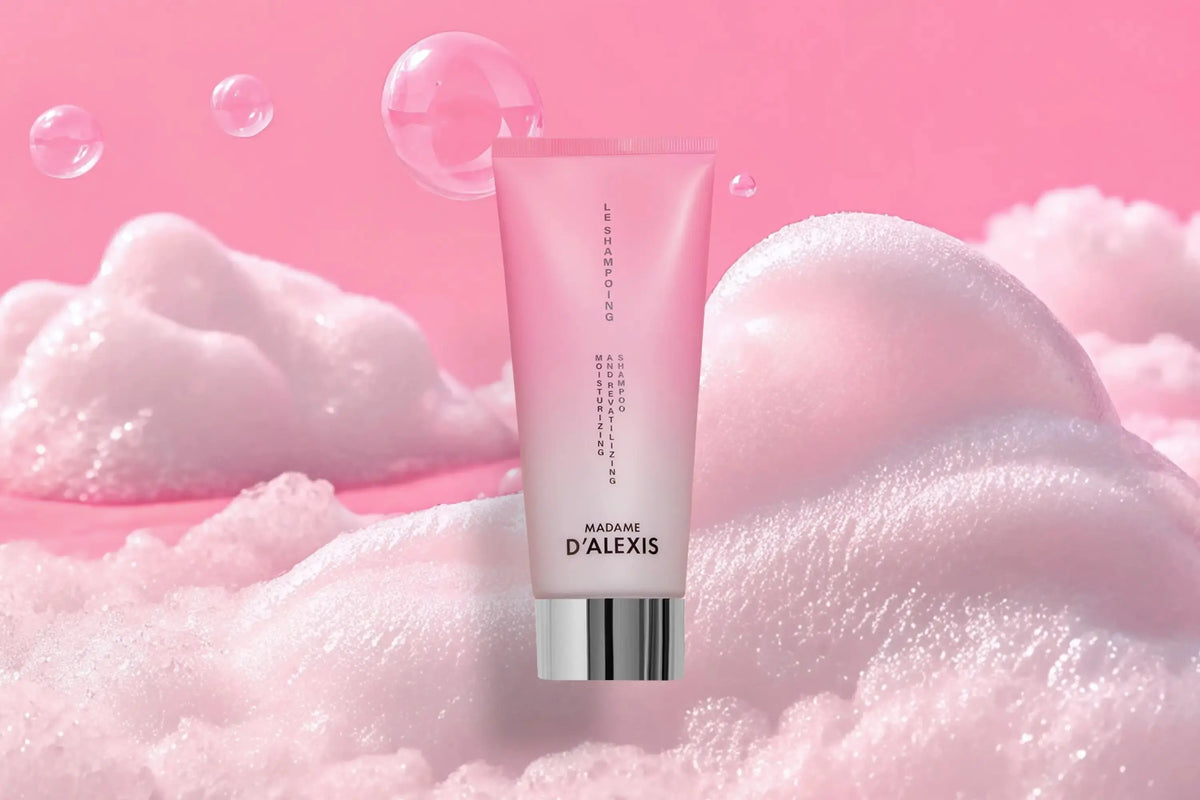
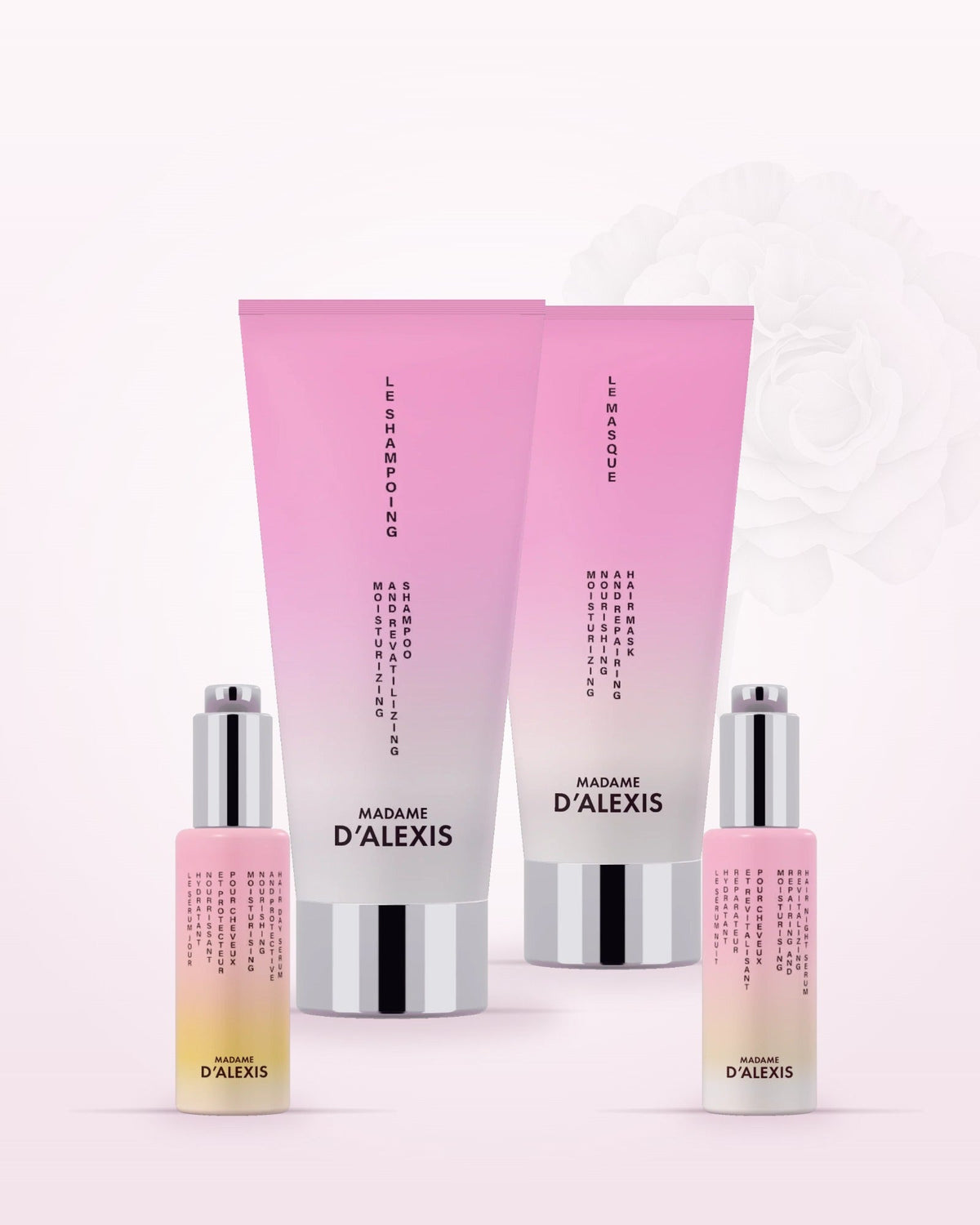
The Shampoo, made with 98% naturally derived ingredients, hydrates, soothes, and adds shine. Sulfate-free, it cleanses without prematurely stripping away the gloss finish. It combines cationic hyaluronic acid, prebiotics, and plant-based keratin. Shampoo twice on a thoroughly wet scalp, massage, then rinse very thoroughly: a thorough rinse prevents residue that dulls the hair.
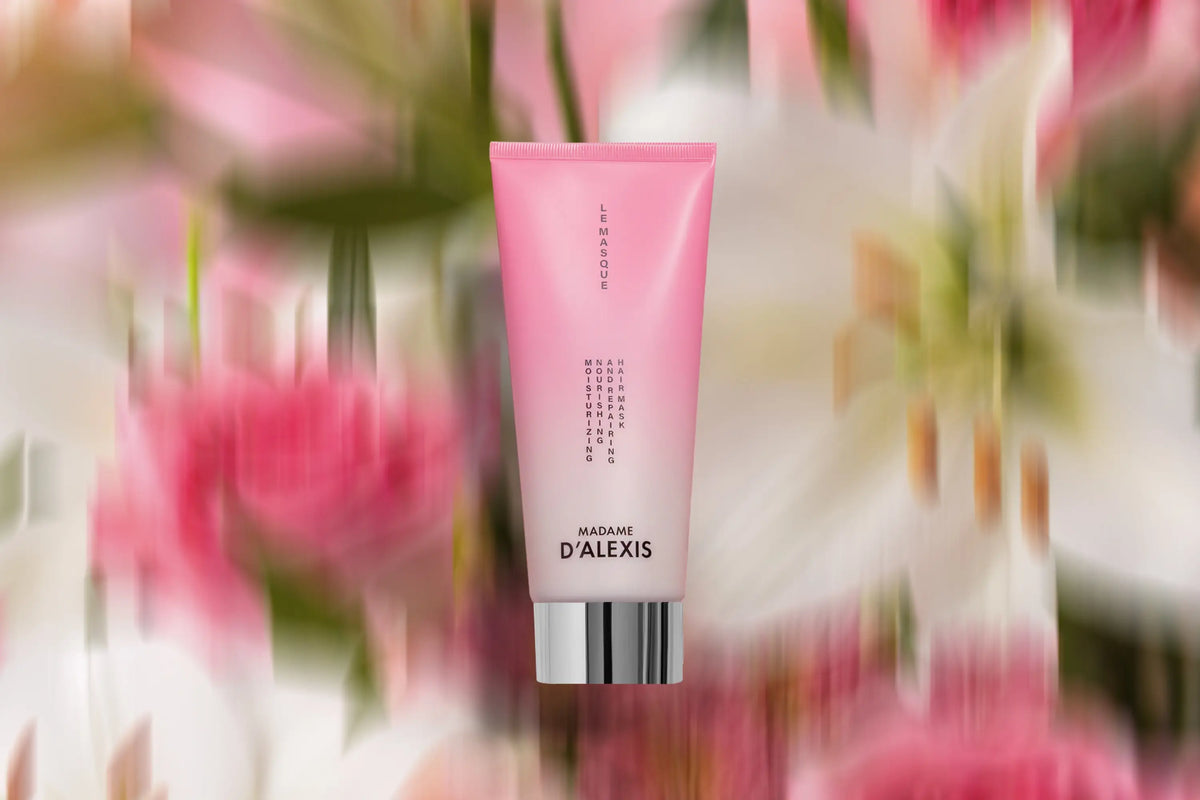
The Mask, 97% naturally derived, repairs, nourishes, and softens. It combines plant-based ceramides, cationic hyaluronic acid, orange blossom wax, and organic apricot and jojoba oils. It’s your at-home shine treatment: leave it on towel-dried hair for 5 to 10 minutes for a standard treatment, or 20 to 30 minutes for a deep treatment, then rinse thoroughly. It’s designed for dry, damaged, colored, or bleached hair.
The Day Serum, 99% naturally derived, is a dry oil that adds the finishing touch. It combines organic jojoba, plant-based ceramides, natural heat protectants effective up to 200°C, and antioxidants. One to three drops on the ends, applied to dry or slightly damp hair, are enough to maintain shine without weighing the hair down. It also protects your hair’s shine from the heat of the hair dryer.

To detangle without rubbing, the Pink Wide-Tooth Detangling Comb, with its wide teeth, is the natural complement to this routine. And if you’d like to combine these two essential steps, the Hydration Routine pairs the Shampoo with the Mask.

The Shampoo

The Mask

The Day Serum

Moisturizing Routine

The Pink Wide-Tooth Detangling Comb
Does your shine fade too quickly after a salon visit?
We'll ask you a few questions about your scalp and hair, and then we'll create a personalized routine for you using our five organic hydrosol treatments, formulated without added water.
Does this sound like you?
- You reply
- Discover your ritual
- You are adjusting your selection
Frequently Asked Questions About Hair Gloss
Does hair gloss work on gray hair?
Yes. A clear gloss restores shine to white or gray hair without altering its shade. A lightly tinted gloss can also help reduce unwanted yellow tones. Ask your hairstylist for advice on choosing the right shade.
Can you apply lip gloss right after dyeing your hair?
At the salon, these two steps often go hand in hand: the gloss enhances the fresh color during the same session. At home, stick to a gloss treatment without pigment or developer, and let your colorist handle the shade.
Does homemade hair gloss replace salon-quality gloss?
Not quite. A salon-quality lip gloss—especially a tinted one—features a shade that a professional knows how to apply just right. The at-home version—a nourishing treatment followed by a dry oil—maintains the shine. The two complement each other more than they conflict.
Is hair gloss suitable for fine hair?
Yes, it adds shine without weighing the hair down. For maintenance, opt for a dry oil applied in a very small amount to the ends: it adds shine without weighing the hair down or making it look flat.
How often should you reapply lip gloss?
It all depends on the product, how often you wash your hair, and the condition of your hair. The easiest thing to do is to observe your hair: as soon as it loses its shine despite a gentle routine, it's time to talk to your hairstylist.
In conclusion, brilliance is also built at home
A hair gloss isn't a miracle—it's the interplay between light and a well-prepared cuticle. A smooth hair strand reflects light, and that light gives you shiny, supple, and vibrant hair. What the salon achieves in a single session, you can maintain at home, step by step.
Wash gently, nourish your ends, protect them from heat, and let the organic hydrosols do their work. And if you don't know where to start, our hair assessment will create a two-minute routine that will keep your shine lasting longer.
Advice