Advice
Long Hair Care: How to Maintain Your Length and Protect Your Ends


October is here, the air turns crisp in the morning, the scarf comes out of the closet, and the heat starts purring through the house again. Your long hair takes it all: the drying cold, the dry heat that saps moisture, the wool and high collars that rub against the ends with every movement of your head. Nothing drastic, nothing visible in a single day, but wear and tear that builds up week after week. Taking care of long hair means accepting a simple fact: the longer the strand, the more it’s been through, and the more its care requires consistency and the right techniques.
In short
- Long hair is damaged mainly by mechanical wear and tear: friction, combing, heat, and washing with too many detergents.
- A simple routine—gentle washing, regular use of a hair mask, and applying a leave-in treatment to the ends—helps protect the hair shaft.
- Detangling with a wide-tooth comb and protecting the ends are better than a dramatic move.
Why does long hair get damaged more quickly?
Hair does not regenerate like skin. Once it emerges from the follicle, it remains as it is, and whatever it undergoes accumulates from the root to the tip. This results in gradual wear and tear on the hair shaft: week after week, the cuticle—the layer of scales that protects the core of the hair—lifts, erodes, and eventually exposes the cortex.
This phenomenon is more noticeable in long hair. The ends have been through more washings, brushings, and friction against clothing. They also receive less sebum: the protective film produced at the roots rarely reaches the ends. The result: dry lengths and a more porous hair shaft that breaks at the slightest brush stroke.
Color and heat amplify everything. Colored or bleached hair already has a weakened cuticle. Hair that is frequently blow-dried or straightened undergoes repeated dehydration.
What routine should you follow to care for long hair?
Proper hair care is based on a simple principle: treat the mid-lengths and ends differently than the roots. Wash the scalp, nourish the mid-lengths, and protect the ends.
First and foremost, understand your hair type. A free hair analysis will help you determine whether your hair lacks moisture, protein, or simply proper care, so you can tailor your routine instead of just piling on products at random.
Next comes the rhythm of the routine. Gentle washing, focusing on the scalp. The mask: left on briefly to detangle after every wash, and as a longer treatment once a week, always on towel-dried hair. A leave-in treatment on the lengths and ends to make detangling easier and reduce friction. And in the evening, a scalp treatment to promote growth and density without weighing the hair down.
Add two habits that cost nothing: detangle your hair while it’s dry before shampooing, and then only while the conditioner is on—never right after getting out of the shower on bare strands—and tie your hair loosely before going to sleep. The rest is a matter of patience: your hair’s length will stay healthy for months.
How do you wash long hair without breaking it?
Shampooing is the most delicate part of the process, because the hair shaft, swollen with water, is more vulnerable. The principle is simple: wash the scalp, let the lather rinse through the lengths of the hair, and never rub the hair against itself.
Start by detangling your hair while it’s dry, then wet it thoroughly. Apply the shampoo in two steps to a thoroughly wet scalp: the first step removes sebum and residue, and the second gently cleanses. Massage with your fingertips—without scratching—focusing on the roots and the nape of the neck. Rinse very thoroughly with lukewarm water until the water runs clear.
When it comes to the formula, opt for a sulfate-free shampoo that respects the scalp’s natural oils and doesn’t damage the cuticle, and one that’s silicone-free, so it doesn’t coat the hair shaft with an artificial film. To compare formulas and selection criteria, our guide to the best shampoos for long hair details which ingredients to look for and which to avoid.
Which hair care product should you choose based on the condition of your hair?
There is no one-size-fits-all routine. The nature of your hair and how it reacts to the weather determine which care products you should prioritize.
Dry hair. The cuticle is open, and the hair shaft lacks moisture and lipids. It needs hydration and nourishment: a rich hair mask, dry oil on the ends, and regular leave-in treatment. Check out our products for dry hair if this sounds like you.
Fine hair. The risk isn’t dryness but weighing the hair down: use lightweight products, apply a treatment from the ears to the ends, and use just a few drops of dry oil. Volume is maintained when the roots remain free. Thick hair. It can handle richer treatments and longer processing times, but it tangles quickly and breaks when pulled.
Curly and wavy hair. Curls and waves require hydration and detangling while damp, strand by strand—never with a fine-toothed comb. A leave-in treatment defines the curl without breaking the hair shaft. Straight hair. It shines easily but shows the slightest sign of damage: apply treatments with long, sweeping strokes, from top to bottom. Colored and bleached hair. Coloring weakens the cuticle: alternate between treatments rich in ceramides and proteins, and keep a close eye on split ends.

How can you protect your hair ends on a daily basis?
The ends are the oldest part of your hair and the part that experiences the most friction. Just three simple steps are all it takes.
First, at night. Hair doesn't glide easily over a cotton pillowcase and can get pulled out on the pillow. A satin or silk pillowcase reduces friction, and a loose braid helps prevent tangles. When you wake up, detangle your hair with a wide-tooth comb before styling it.
Next, clothing. In winter, scarves and coat collars act as silent abrasives. Tuck your hair under the collar or slip it inside your coat. Habits that damage hair are rarely obvious mistakes—it’s that repeated friction, day after day, on the same few centimeters.
Finally, the treatment. Apply one to three drops of a dry oil, such as Le Sérum Jour, to the mid-lengths and ends to coat the hair shaft and make it glide smoothly: this is the most effective leave-in treatment for long hair.
How do you detangle long hair without breaking it?
Forcing your way through tangles can ruin in a matter of seconds what you've spent weeks nurturing. Start at the ends, work your way up in small sections, and never use excessive force.
- Divide the hair into sections—more sections for thick hair—holding each section with one hand so as not to pull out the hair strands.
- Detangle from the bottom up: ends, then mid-lengths, then roots.
- Dab with the towel instead of rubbing, because the fabric is most delicate when wet.
- Finish by combing with a wide-toothed comb, following the grain from top to bottom.

To help the strand slide through, a natural detangler for tangled hair provides slip without silicone: let it sit for a minute before continuing to detangle. A wide-toothed detangling comb, with its widely spaced teeth, lets the strand glide through without pulling. And if a knot won’t budge, stop and try again later rather than forcing it.
Should you trim your split ends regularly?
Yes, but not as much as people think, and not for the reasons often cited. A haircut doesn't make hair grow faster—it simply removes the damaged parts. Split ends, on the other hand, continue to deteriorate. Once a split end has opened up, it travels up the strand, and the hair breaks before reaching the desired length.
Trimming the ends slightly and regularly helps keep your hair thick and shiny. Look at your ends against the light: if you see split ends or rough texture, a quick trim will do more good than three hair masks.
Our guide to split ends and ways to minimize breakage explains the signs to look for between haircuts.
How can you protect your long hair from heat and cold?
Winter is a two-pronged challenge. Outside, the cold and wind take a toll on the cuticle and dry out the ends. Inside, the heat dries out the air and saps away moisture. Long hair, with its larger surface area, is affected by this contrast far more than a short haircut.
The solutions are simple: cover your hair with a lined beanie or tuck it under a soft scarf, without pulling it too tight. Humidify the air in your home if you can, and moisturize your hair to compensate. In the evening, a scalp treatment provides comfort and supports hair growth during the months when your hair is under a lot of stress.
When it comes to heat styling, space out your blow-drying and straightening sessions, lower the temperature, and never use a straightener on a damp strand of hair. A heat protectant applied before blow-drying helps minimize damage—provided it’s actually formulated for that purpose. Our guide to protecting your hair from heat details the right settings and steps to take before each blow-dry. And avoid going outside with damp hair in the winter.
What Madame d'Alexis hair care products should she choose for long hair?
At Madame d'Alexis, heir to the brand’s legacy of beauty rituals, hair care products meet the same high standards as skincare. They are formulated with Damask rose, chamomile, and orange blossom hydrosols—with no added water, sulfates, silicones, or parabens—and are made in France, in Brittany.
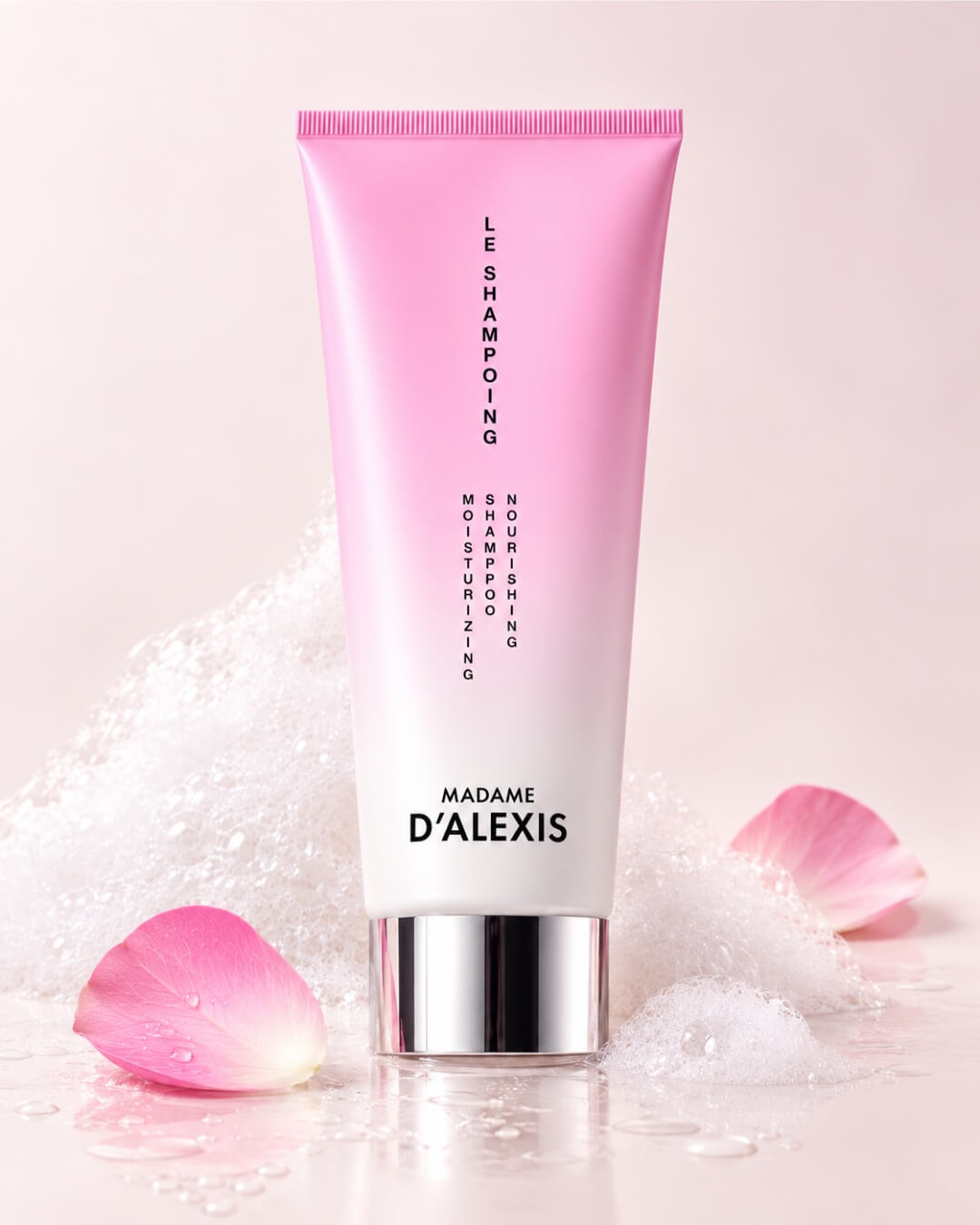
This shampoo, 98% naturally derived, hydrates, soothes, and adds shine. Its formula combines cationic hyaluronic acid, prebiotics, and plant-based keratin. For long hair, it offers a twofold benefit: it cleanses the roots and scalp without drying out the lengths, and allows the plant-based keratin to nourish the hair shaft. Apply shampoo twice to a thoroughly wet scalp, massage with your fingertips, and rinse very thoroughly. It can be used daily or alternated with the Scrub.
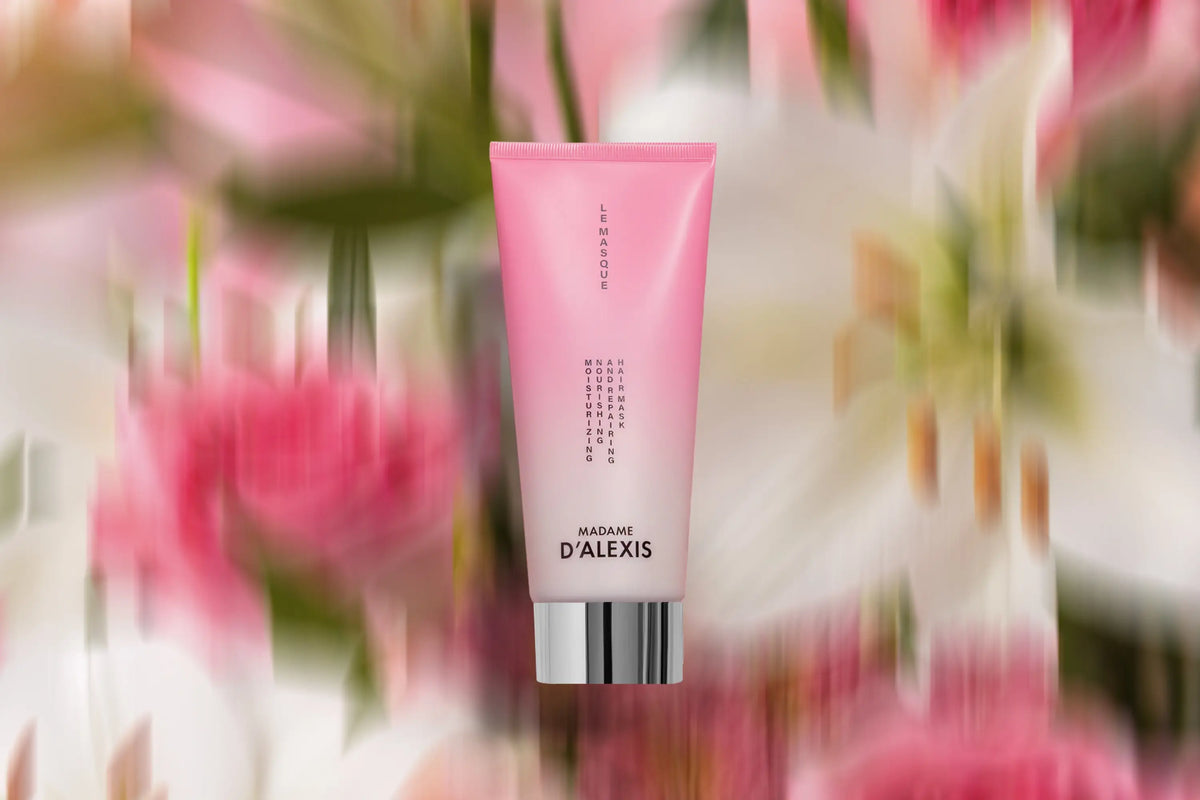
The Mask, 97% naturally derived, repairs, nourishes, and softens. It combines plant-based ceramides, cationic hyaluronic acid, orange blossom wax, and organic apricot and jojoba oils. It’s the cornerstone of a long-hair care routine because it works where the hair fiber needs it most. Allow two to five minutes for simple detangling, five to ten minutes on towel-dried hair for a standard treatment, and twenty to thirty minutes for a deep treatment. Once a week, it can be used as an overnight treatment for sensitized hair. Always rinse thoroughly.
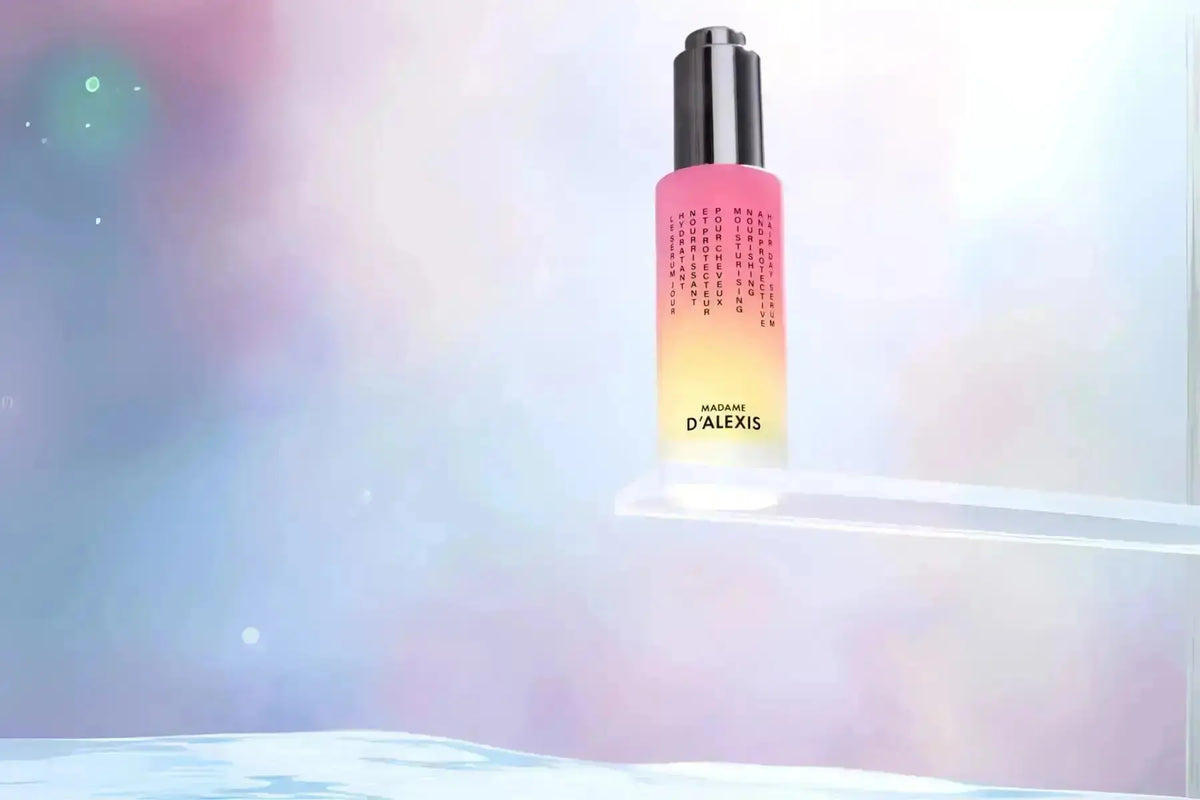
The Day Serum, 99% naturally derived, is a dry oil formulated with organic jojoba, plant-based ceramides, antioxidants, and natural heat protectants effective up to 200 °C. It is free of silicones and parabens. Apply one to three drops to the mid-lengths and ends of dry or slightly damp hair to coat the hair shaft, add shine, and leave hair feeling light. This step protects the ends from friction caused by collars and scarves, as well as from the heat of blow-drying.
The Night Serum, 98% naturally derived, is applied part by part to the scalp: probiotics and postbiotics, fermented extracts, natural active ingredients from oak, nettle, and licorice, and cationic hyaluronic acid. In the evening, apply with a pipette and massage gently; do not rinse. Use as an intensive treatment three to five evenings a week, then once or twice a week for maintenance. It supports hair growth, length, and density, because long hair always starts with a healthy scalp.
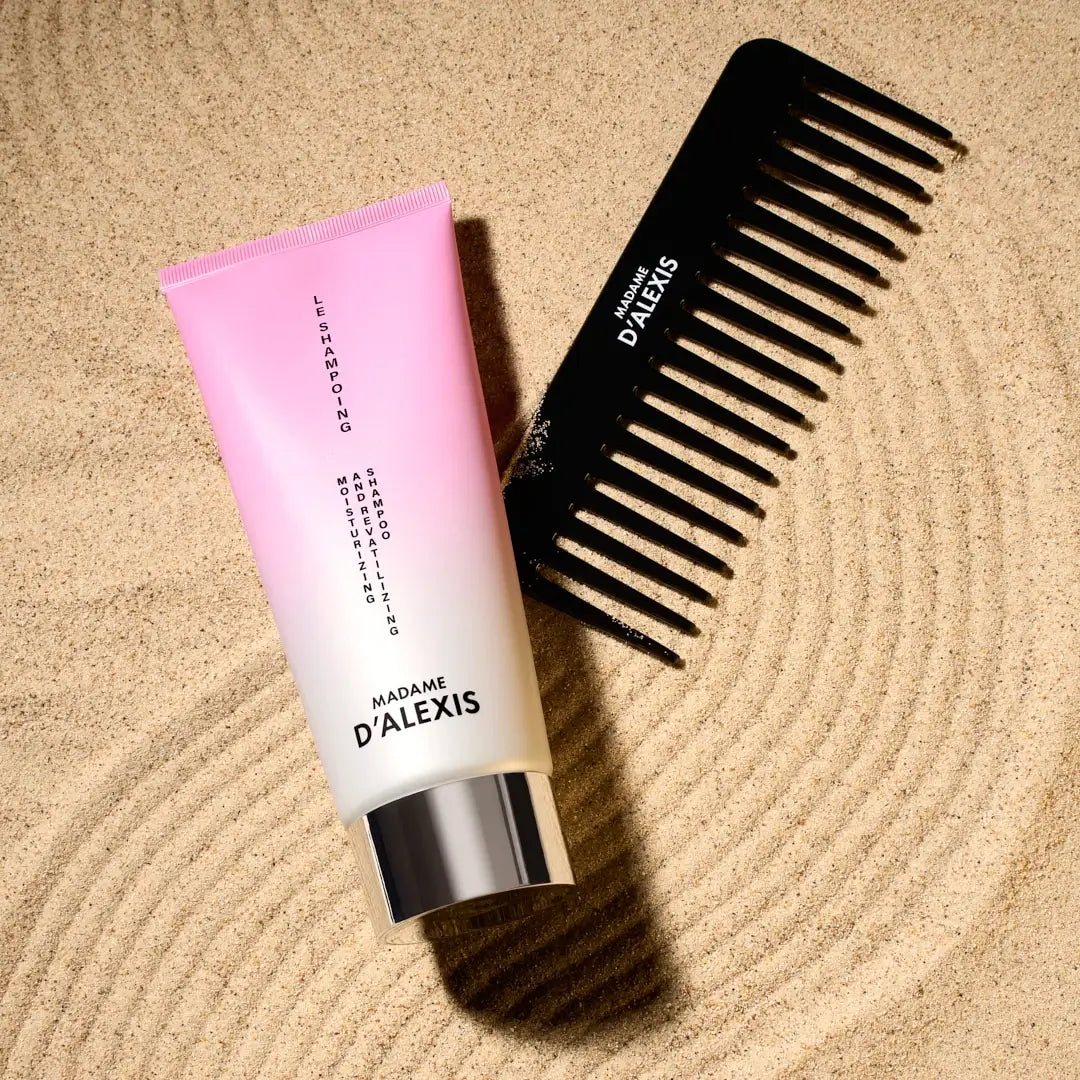
The Pink Wide-Tooth Detangling Comb, made of cellulose acetate, glides through the hair without pulling, thanks to its wide teeth. The Scrub, an exfoliating shampoo, should be used every ten to fifteen days and replaces your regular shampoo on that day; apply it in two successive washes, like a double shampoo, to gently exfoliate the scalp. Do not use on a sensitive scalp.

The Mask

The Day Serum

The Shampoo

The Pink Wide-Tooth Detangling Comb

Moisturizing Routine
Do your split ends start to suffer as soon as the cold weather sets in?
We'll ask you a few questions about your scalp and hair, and then we'll create a personalized routine for you using our five organic hydrosol treatments, formulated without added water.
Does this sound like you?
- You reply
- Discover your ritual
- You are adjusting your selection
Frequently Asked Questions About Long Hair
Can damaged hair ends be repaired?
Split ends cannot be repaired. Hair care products nourish, smooth, and temporarily close the cuticle, which significantly improves the appearance of the hair shafts, but cutting remains the only way to remove a split end. The hair above the split end, however, is very well protected.
Should you wash your long hair every day?
It all depends on your sebum. If your roots get oily quickly, you can wash your hair daily with a gentle, sulfate-free shampoo. If they stay fresh for several days, space out your washes and just apply a treatment to the lengths.
How much product should I apply to long hair?
Less than you might think. Use more if your hair is long, but never so much that it saturates the hair shaft: start with a walnut-sized amount of mask and add more if needed. For dry oil, one to three drops from the mid-lengths to the ends are enough.
Should long hair be tied up at night?
A loose braid or a low, loose bun helps prevent tangles and friction against the pillowcase. Avoid tight hair ties and opt for a soft one, such as a fabric ribbon.
Caring for Your Long Hair, Season After Season
Your hair’s length tells the story of time. Every shampoo, every blow-dry, every winter that passes leaves a small mark on them, and proper care involves making those marks as discreet as possible: a gentle wash that preserves natural oils, a regular nourishing mask, a leave-in treatment on the ends, patient detangling with a wide-tooth comb, and protection against the cold, heating, and the heat from the straightener.
Pay attention to your ends, adjust your hair care routine as the seasons change, and give your hair time to recover: that’s how long hair maintains its softness and shine, one routine at a time.