Advice
Natural Conditioner: What It's For and How to Choose the Right One


Outside, the cold hits you the moment you step out the door. Inside, the heat is on and the air gets dry. Caught in the middle, your hair takes the brunt of it: the hair shaft loses moisture, the cuticle scales lift and snag on each other, and in the morning your comb runs into a knot that wasn’t there the day before. You pull a little, and it snaps. That’s exactly where conditioner comes in. Not as a reflex, but as a thoughtful part of your hair care routine: a step that smooths the cuticle, restores suppleness to the lengths and ends, and turns a painful detangling session into two peaceful minutes. But you still need to choose a natural conditioner suited to your hair—and know how to read what’s really in the bottle.
The Essentials in a Few Lines
- A conditioner detangles, smooths the cuticle, and softens the mid-lengths and ends after rinsing out the shampoo.
- A natural conditioner is best judged by its INCI list, rather than by the word “natural” printed on the label.
- The choice depends on your hair type and porosity: dry, curly, coily, fine, oily, or colored.
- Apply the treatment to the mid-lengths and ends—never to the roots—before rinsing thoroughly.
- A hair mask or a leave-in treatment can complement—and sometimes replace—conditioner.
What is a conditioner used for?
Shampoo cleanses: it lifts the cuticle scales to remove sebum, pollution, and residue. It’s effective, but the process leaves the hair shaft rough on the surface. The scales remain slightly open, the strands get tangled, static electricity sets in, and brushing weakens the lengths. Conditioner comes in right after to seal everything up.
Technically, it’s a conditioning emulsion: fatty substances settle on the surface, conditioning agents smooth and make the hair more manageable, and moisturizing ingredients lock moisture into the hair shaft. The cuticle flattens, the scales close, and the hair becomes supple and shiny.
In practical terms, here's what you gain:
- faster detangling, without pulling or breaking;
- less frizzy lengths and ends;
- fewer strands of hair flying around due to static electricity;
- better protection for the hair during drying and styling;
- a soft feel, coming from a smooth surface rather than a film.
A useful distinction: hydrating and nourishing are not synonyms. Hydrating means delivering and retaining water in the hair. Nourishing means depositing oils that coat the hair fiber. A treatment that only coats the hair leaves the lengths dry; a treatment that only hydrates allows water to escape if the surface isn’t sealed. The best formulas combine both.
What is a truly natural conditioner?
The word “natural” on a bottle doesn’t prove anything. What matters is the INCI list printed on the back. There are three categories of ingredients that deserve your attention.
Silicones
They provide instant shine and spectacular slip by forming a film on the hair shaft. Some build up with repeated washes, weigh down the hair, and interfere with the effectiveness of subsequent hair care products. You can identify them by their “cone,” “siloxane,” or “conol” endings. For a natural hair care routine, it’s best to choose a silicone-free conditioner, especially if you’re layering multiple products. We detail natural alternatives to silicone in a dedicated guide.
Quaternary ammonium compounds
These are effective conditioning agents, valued for their detangling properties. Some weigh down fine hair and may irritate a sensitive scalp. Gentler alternatives are available: plant-based cationic actives, plant-derived ceramides, proteins, and fatty acids that smooth the hair without weighing it down.
Fatty alcohols and plant-based alternatives
Don’t confuse denatured alcohol, which is drying, with fatty alcohols such as cetyl or stearyl alcohol: these are emollients, often derived from vegetable oils, that give the formula its texture. On the plant-based side, you’ll find oils such as coconut oil and jojoba oil, shea butter and other plant-based butters, aloe vera gel, glycerin, plant-derived ceramides, and hyaluronic acid. These form the foundation of a well-formulated organic conditioner.

How to Read the INCI List in Thirty Seconds
- The ingredient listed first is present in the highest concentration: a hydrosol or floral water listed first indicates an active ingredient, not just a filler.
- Look for silicones: dimethicone, amodimethicone, cyclopentasiloxane.
- Consider the role of the fragrance: if it appears before the highlighted active ingredients, those ingredients are present in low concentrations.
- A short ingredient list doesn't mean the product is inferior, whereas a long list often hides filler ingredients.
Which conditioner is right for your hair type?
There is no such thing as a one-size-fits-all conditioner. Porosity—that is, the hair shaft’s ability to absorb and retain water—is just as important as your hair type. If you don’t know your hair’s porosity, our guide to testing it will help you figure it out.
| Hair type | Need for fiber | Suitable texture | To be avoided |
|---|---|---|---|
| Dry hair | Nourish and Retain Water | Rich cream, shea butter, vegetable butter | Textures that are too light, sloppy rinsing |
| Curly and Wavy | Moisturize and define curls | Melt-in-the-skin cream or rich mask | Silicones that set the curl |
| Fine hair | Build Muscle Without Adding Weight | Light, fluid texture; use a small amount | Heavy, oily buildup throughout the hair |
| Greasy hair | Soften the ends only | Targeted treatment for the lengths and ends | Application to the roots |
| Colored hair | Seal the cuticle, preserve the shine | A gentle, sulfate-free formula rich in antioxidants | Water that's too hot, friction |
| Low porosity | Avoid Clutter | Light texture, minimal amounts | Layering Masks and Serums |
| High porosity | Fill and seal the fiber | Nourishing Mask with Extended Application Time | Hair care products that are too mild and wash out when rinsed |
For dry hair, opt for stable, oil-based products and leave them on a little longer: our selection of products for dry hair follows this approach. For curly and coily hair, prioritize hydration first: a nourished curl defines itself, while a dehydrated curl puffs up. For fine hair, the amount you use makes all the difference—too much product weighs it down, and too little leaves it tangled. For oily hair, nourish the lengths and let the scalp breathe. For color-treated hair, every rinse matters, because a tightly sealed cuticle retains a brighter shine: check out our products for color-treated or highlighted hair. With high porosity, the hair shaft absorbs product quickly and loses it just as fast: opt for thin, repeated layers. With low porosity, keep it light.
How do you apply conditioner?
- After rinsing out the shampoo, gently squeeze the water out of your hair with your hands: too much water dilutes the product and causes it to slide right off without taking effect.
- Take a small amount of the product—a little more if you have long or thick hair.
- Apply it to the lengths and ends, working your way up to halfway through the hair; never apply it to the roots, which don't need it and would become weighed down.
- Use a wide-toothed comb to detangle your hair while styling, starting at the ends: this way, you can detangle without putting tension on the hair shaft.
- Follow the recommended processing time: a few minutes to detangle, or longer for deeper conditioning.
- Rinse thoroughly with lukewarm water until your hair no longer feels slippery to the touch.
- Finish by spraying a little cold water on it—if you can stand it—for a smoother surface.

Two details make all the difference: the amount of water left in the hair before application and how thoroughly you rinse it out. A well-rinsed treatment leaves the lengths soft and light; a poorly rinsed treatment leaves a film-like feeling, sticky hair, and roots that get oily faster. To learn more about this step, our article on natural detanglers for tangled hair explains the technique step by step.
Conditioner, hair mask, or leave-in treatment: which one should you choose?
These three steps aren’t mutually exclusive—they complement each other. Conditioner is for daily use: it’s quick, seals the cuticle, and makes detangling easier. The hair mask offers more intensive care, with a richer texture and a longer application time—ideally used weekly or on very dry lengths. The leave-in treatment comes last, to lock in moisture within the hair shaft and protect the ends. If you’re unsure which of the first two to choose, our hair mask vs. conditioner comparison will help you decide.
The process consists of three steps: wash, nourish, and seal. If your hair doesn’t tangle much, a light conditioner is enough. If it breaks, tangles, or dries out while blow-drying, use a hair mask followed by a leave-in treatment, applying just enough product so as not to weigh down the hair shaft.
Homemade Conditioner: Good Idea or Just a Myth?
Making your own skincare products is appealing, and the idea isn't far-fetched: you have control over the list of ingredients, you avoid silicones, and you work with simple ingredients like aloe vera gel, coconut oil, shea butter, or vegetable butter.
Be careful, however, to avoid three pitfalls. Preservation: as soon as a mixture contains water, it becomes a breeding ground for bacteria and mold if no preservative is added. Stability: without an emulsifier, the oil and water separate, and the product is no longer uniform. Finally, pH: an unbalanced mixture can leave the hair cuticles open and make the hair coarse.
The sensible solution is simple: water-free mixtures made from oils and butters, prepared in small batches and used quickly. For regular detangling, a carefully formulated product—with controlled shelf life and pH—will save you a lot of disappointment.
Which Madame d'Alexis products should I choose?
You won’t find any traditional conditioners at Madame d’Alexis, and that’s a conscious choice. True to the beauty ritual journals that inspired the brand, Madame d’Alexis applies the principles of skincare to hair care: formulas with no added water, based on organic hydrosols of Damask rose, German chamomile, or orange blossom—free of sulfates, silicones, and parabens—and made in France. In keeping with this philosophy, the conditioner is not a standalone product but rather a key step in a ritual.
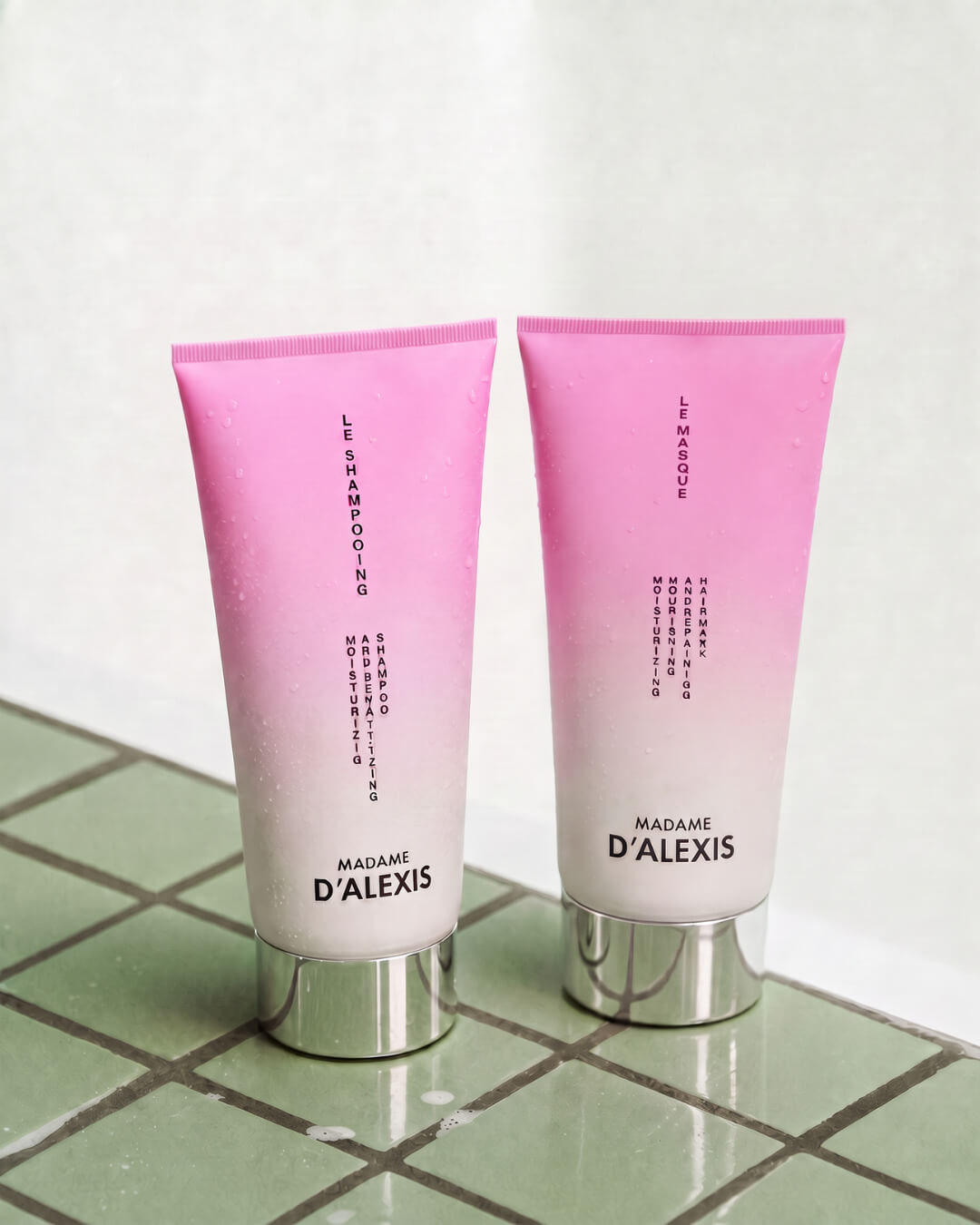
The Mask acts as a conditioner. Formulated with 97% naturally derived ingredients, it combines plant-based ceramides, cationic hyaluronic acid, orange blossom wax, and organic apricot and jojoba oils. The ceramides coat the cuticle, the cationic hyaluronic acid binds to the hair fiber to lock in moisture, and the oils provide slip to make detangling easier. Leave it on for two to five minutes to detangle, five to ten minutes for a standard treatment on towel-dried hair, twenty to thirty minutes for a deep treatment, and use it as an overnight treatment once a week on sensitized hair. In all cases, rinse thoroughly.
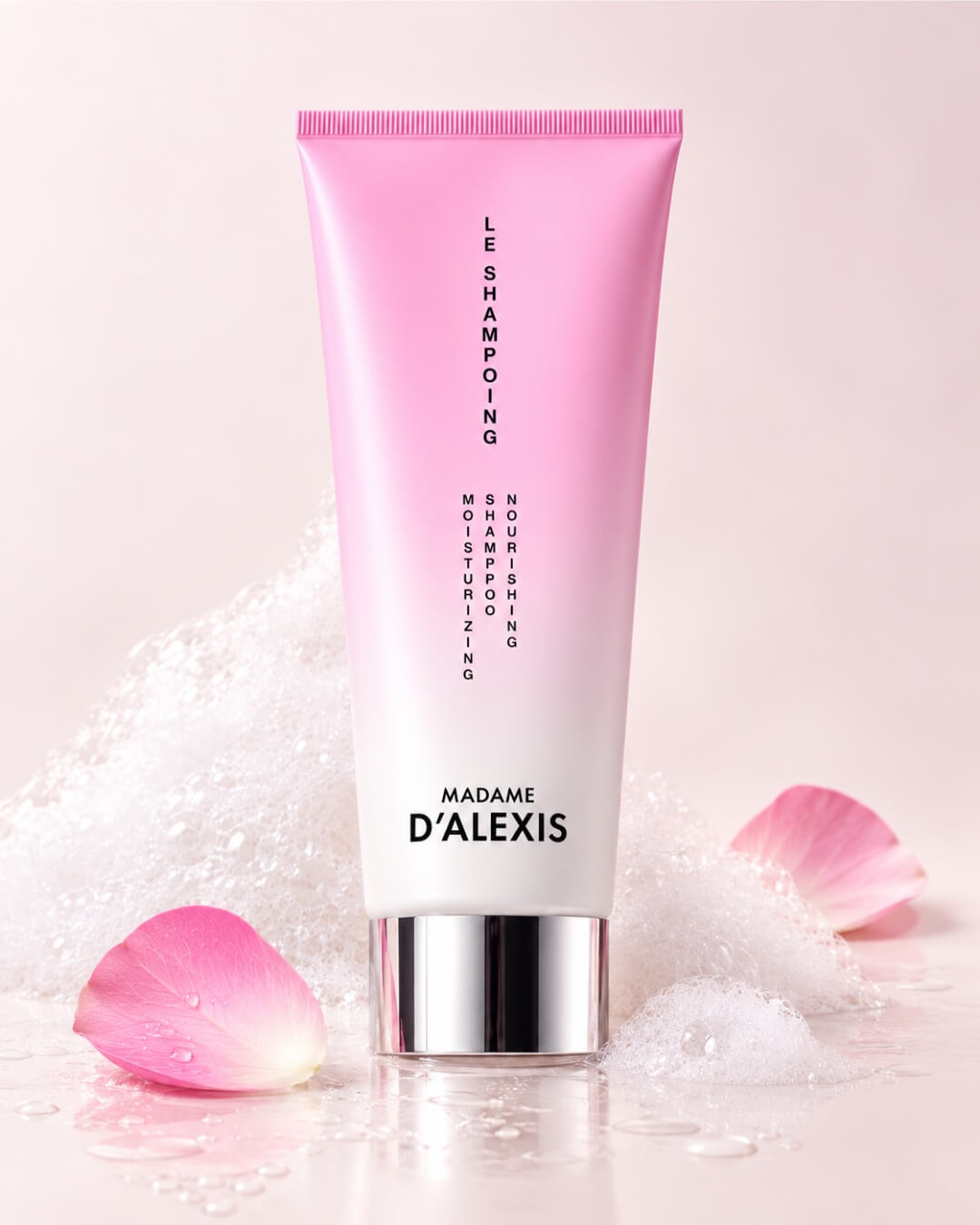
The shampoo, formulated with 98% naturally derived ingredients, prepares the hair with its cationic hyaluronic acid, prebiotics, and plant-based keratin. It cleanses without sulfates, which means there’s less roughness to smooth out afterward. Apply it as a double shampoo to a thoroughly wet scalp, massage it in, then rinse very thoroughly: this is essential for effective detangling.
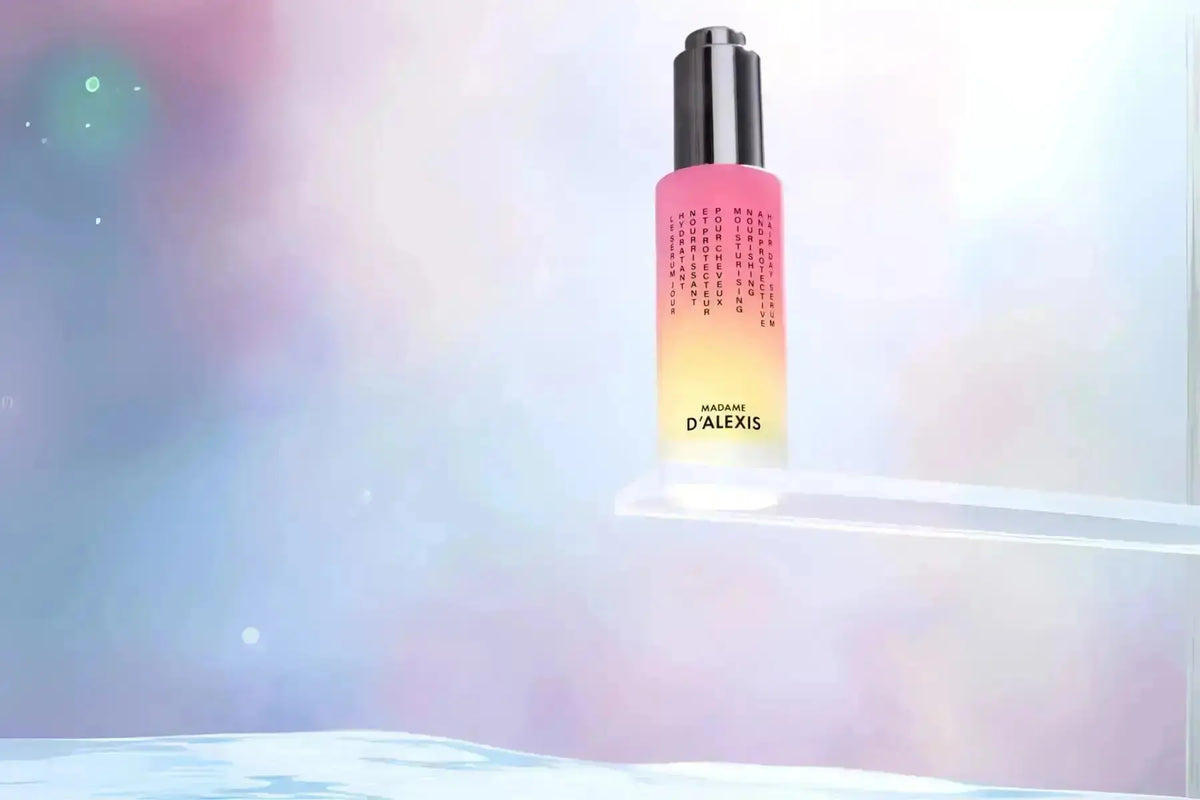
The Day Serum acts as a leave-in treatment. This dry oil, formulated with 99% naturally derived ingredients, combines organic jojoba, plant-based ceramides, antioxidants, and natural heat protectants effective up to 200 °C. Apply one to three drops to the mid-lengths and ends of dry or slightly damp hair: it seals in moisture without weighing hair down, making it a valuable ally for fine hair.
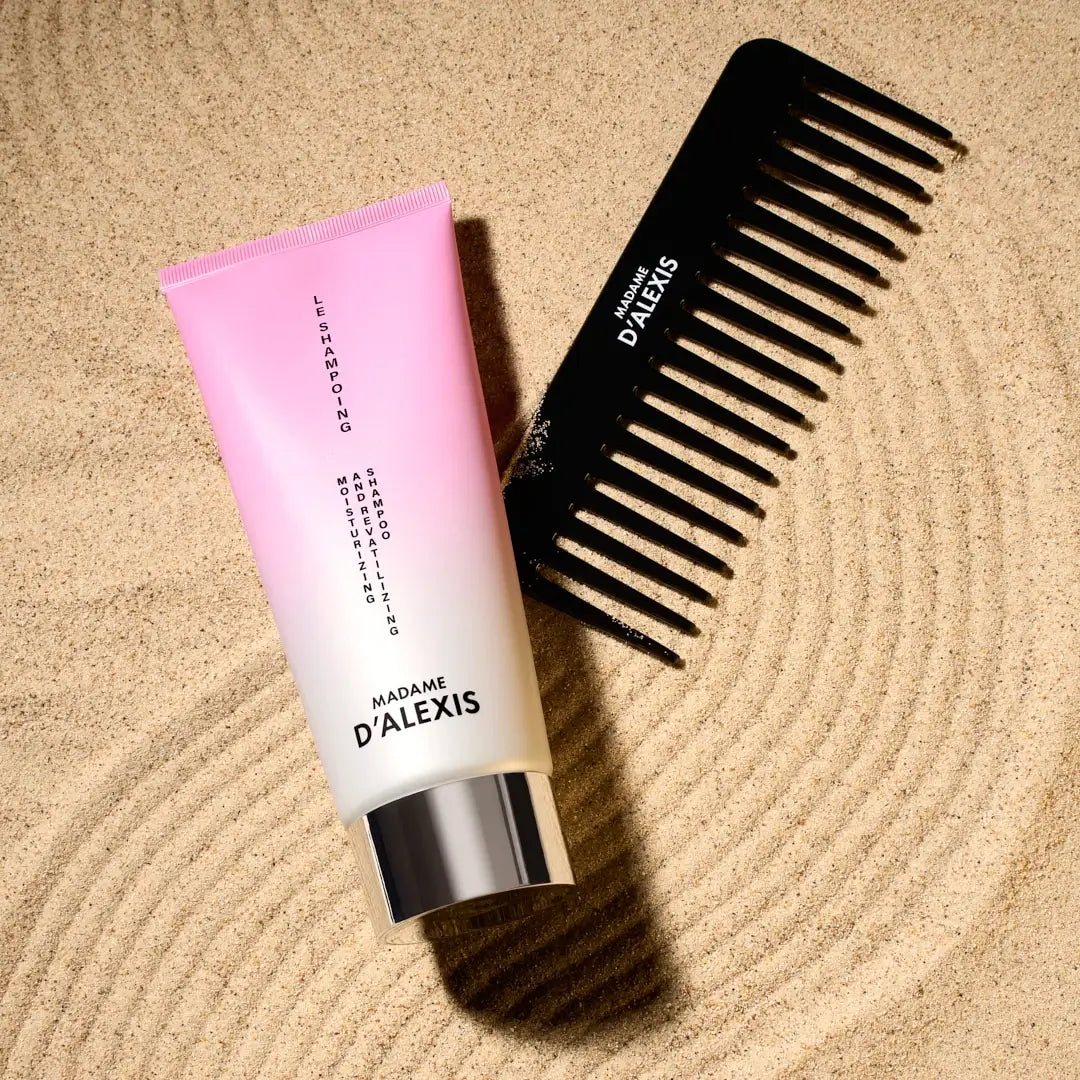
The Pink Wide-Tooth Detangling Comb completes the routine: its wide teeth distribute the treatment and detangle the hair strands coated with the mask without breaking them. To combine the first two steps, the Hydration Routine pairs the Shampoo with the Mask.

The Mask

The Shampoo

The Day Serum

Moisturizing Routine

The Pink Wide-Tooth Detangling Comb
Do your long strands get tangled as soon as you rinse them?
We'll ask you a few questions about your scalp and hair, and then we'll create a personalized routine for you using our five organic hydrosol treatments, formulated without added water.
Does this sound like you?
- You reply
- Discover your ritual
- You are adjusting your selection
Frequently Asked Questions About Conditioner
Can you use conditioner every day?
Yes, as long as the product is suitable for your hair and you rinse it out thoroughly. A very rich treatment applied daily to fine hair can weigh it down. Keep an eye on your hair: if it loses its bounce or gets oily quickly, use a smaller amount or space out your treatments.
Should you apply conditioner before or after shampooing?
Afterward. Shampoo cleanses and lifts the cuticles, while conditioner closes them and protects them. If done the other way around, the shampoo would wash away the conditioner and negate its entire purpose. The only exception is an oil treatment applied before shampooing to very dry lengths, which is a separate step.
What conditioner should I use for oily hair?
A lightweight treatment applied only to the mid-lengths and ends, avoiding the roots. The scalp does not need to be nourished. Rinse thoroughly with lukewarm water to remove all residue.
Is there a leave-in conditioner?
Yes, these are leave-in treatments: creams, serums, and dry oils. They’re applied to towel-dried or dry hair and seal the hair cuticle. A rinse-out treatment is still useful as a first step, especially if your hair tends to tangle easily. Our guide to leave-in treatments will help you choose.
How long should you leave conditioner on?
It usually takes two to five minutes to detangle the hair and close the cuticle. Beyond that, follow the product's instructions: a mask used as part of a regular hair care routine may require five to ten minutes, or even twenty to thirty minutes for a deep treatment.
In conclusion
Your hair doesn't need ten products—it needs a coherent routine. Wash your hair on a thoroughly wet scalp, rinse very thoroughly, then nourish the lengths and ends with a conditioner chosen for your hair’s porosity and type. Opt for natural ingredients, read the INCI list, be wary of silicone-based products, and finish, if needed, with a leave-in treatment that seals in moisture. Detangle with a wide-tooth comb, rinse thoroughly without rushing, and give your hair time to regain its suppleness. This winter, this may be the simplest step to keep your hair soft despite the cold and indoor heating.