Six steps to truly prevent frizz
- Close the cuticle immediately after washing: a cool rinse followed by microfiber towel drying seals in moisture and prevents swelling.
- Opt for a sulfate-free anti-frizz shampoo: a base rich in plant keratin and organic hydrosols smooths the surface and reduces static electricity.
- Moisturize and seal in weekly: a deep ceramide mask, complemented by a light oil, fills in gaps and creates a moisture barrier.
- Protect hair from heat: apply heat-activated serum before blow-drying, use a temperature below 320°F, and finish with a cool shot to lock in mirror-like shine.
- Gently style your hair: use a natural bristle brush, detangle damp hair, and direct the air flow toward the ends to protect the cuticle.
- Put up a daily shield: three drops of anti-frizz serum every morning, silk pillowcase at night; the fiber stays smooth, even in humid weather.

How can you avoid frizz? This question preoccupies every head of hair when the air becomes humid.
How to avoid frizz on a daily basis, how to avoid frizz after blow-drying, how to avoid frizz naturally: in reality, the answer lies in an exceptional routine.
Madame d'Alexis research combines Damask rose hydrosols, plant keratin, and botanical ceramides to smooth the cuticle, seal in moisture, and create an invisible anti-humidity barrier.
No risky promises: just high-end hair science that shows you how to avoid frizz from the moment you rinse, then during drying, and throughout the day.
Adopt these steps; your locks will transform from a foamy halo to luminous silk without fear of the slightest cloud.
Understanding frizz to better control it
A frizzy strand is never a whim: it is the cuticle that, when poorly closed, allows moisture to distend the keratin. The higher the porosity, the more the fiber swells—the foamy halo appears.
To neutralize this hygroscopic reflex:
- Hydrate (floral waters + hyaluronic acid) to saturate the fiber before the air does;
- Seal (ceramides, dry oils) to smooth the scales;
- Protect (thermo-active film) against heat and pollution.
During a photo shoot in Deauville, a veil of Madame d'Alexis Day Serum kept my hair smooth for four hours in the salty sea spray: proof that a well-balanced lipid shield is often enough to prevent frizz without sacrificing natural volume.
Actions to avoid — six mistakes that create frizz or flyaways in your hair
-
Hot water in the shower
Opens the cuticle too much; finish with a cool spray to seal in moisture. -
cotton towel Rubbing removes scales. Dab with a microfiber cloth. -
Hair straighteners > 180°C
Keratin cracks. Set to 160°C max and apply a protective serum. -
Alcohol-based styling gels
Alcohol dehydrates the hair, and ambient humidity then causes the hair fiber to swell. Opt for an aloe vera cream instead. -
metal comb with tightly spaced teeth Increases micro-breakage. Opt for a natural bristle brush. -
Air dry in a very dry room
Rapid evaporation seals the open cuticle. Use a warm diffuser for two minutes, then air dry.
In summary
- Close the cuticle by rinsing with cold water.
- Dry gently: microfiber + moderate diffuser.
- Replace alcohol-based gels with an anti-frizz serum rich in ceramides.
- Limit heat and consider thermo-active protection.
- Gently brush, nourish, seal: the fiber remains smooth, the light glides.

Anti-frizz washing routine (daily or every three days)
Which anti-frizz shampoo should you choose?
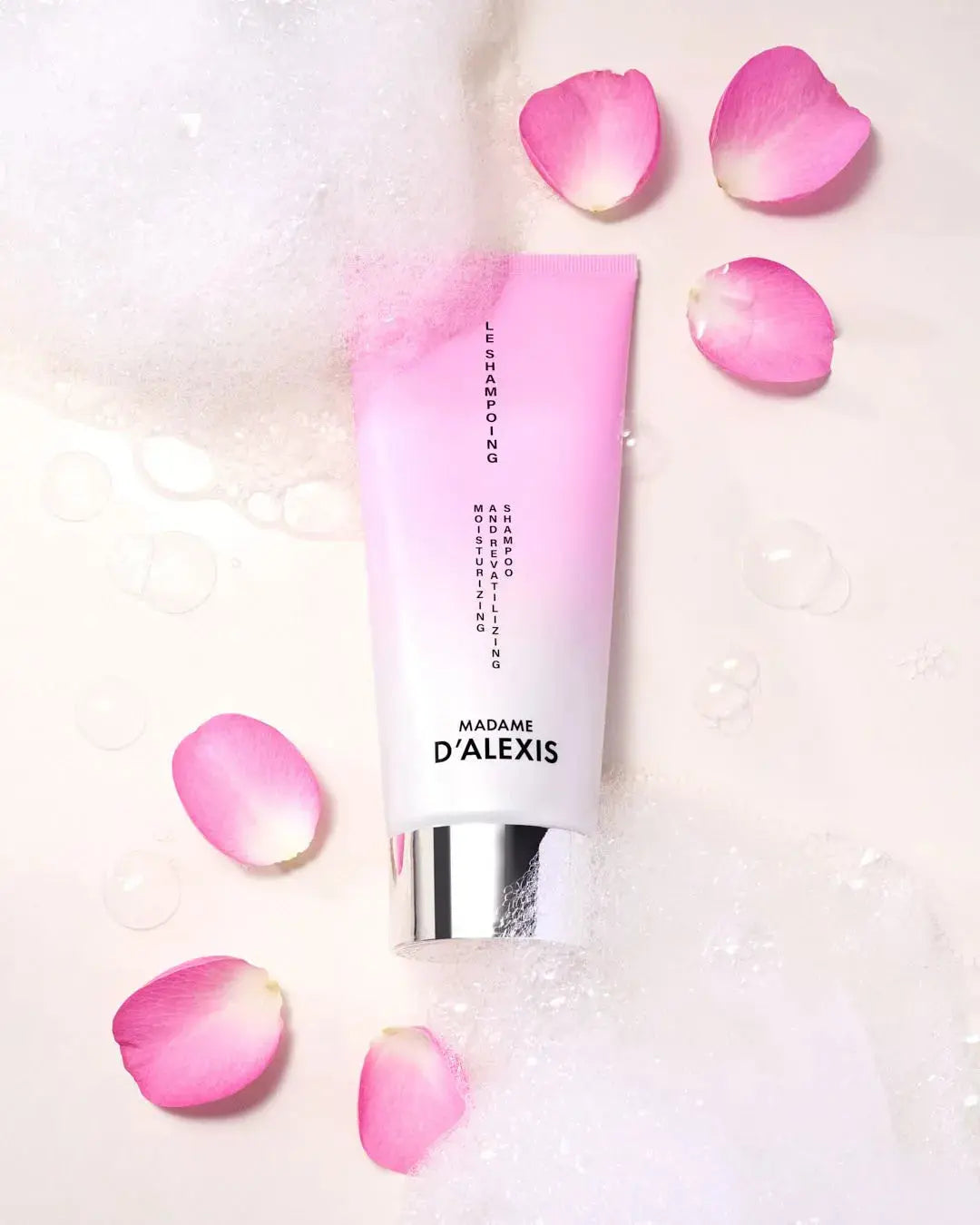
The first step in preventing frizz is to choose an anti-frizz shampoo rich in moisturizing ingredients. For a long time, I believed that abundant lather meant cleanliness; this was a mistake: the more aggressive the cleansing base, the more the cuticle swells.
Choose a sulfate-free shampoo infused with plant-based keratin; the fiber remains supple and the surface reflects light.
- Wet your hair with lukewarm water, never hot water.
- Massage the scalp with your fingertips, letting the foam slide down the lengths of your hair.
- Rinse for two minutes, then finish with a cool spray to tighten the scales.
Madame d'Alexis Anti-Frizz Shampoo, 98% natural, with organic hydrosols and plant-based keratin: it smooths the cuticle from the first rinse and leaves a subtle floral scent. Salon feedback shows 23% less frizz after three uses.
Here's an anecdote: in Milan, with humidity at 85%, I slipped this shampoo into my carry-on bag. After the show, my hair, despite being battered by the spotlights, still had a silky sheen. Proof that controlled hydration can compensate for even the most demanding backstage conditions.
Weekly frizz treatment: moisturize, seal, strengthen
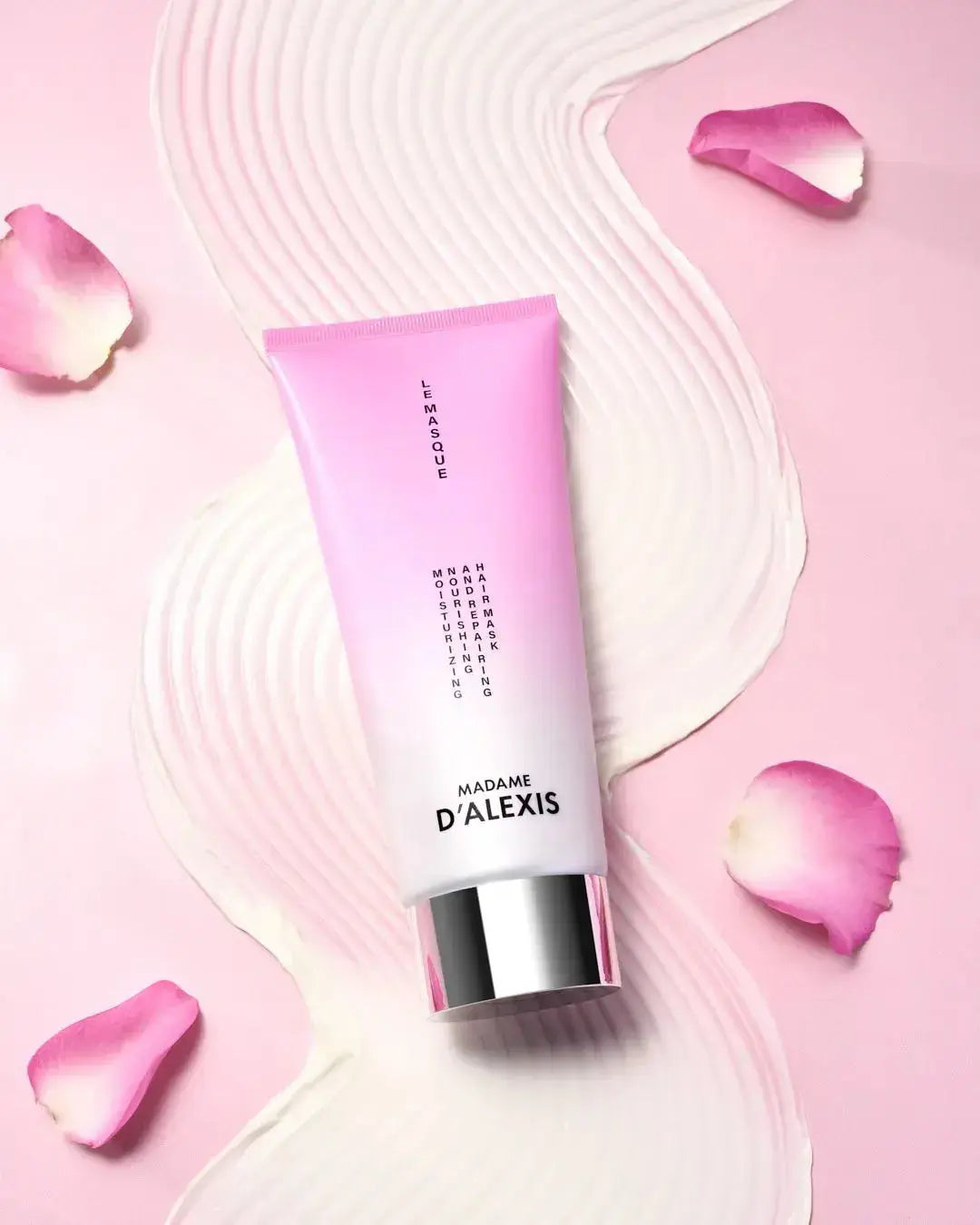
Deep mask: the best treatment for frizz
Simply washing it is not enough; the fiber requires weekly care that combines a moisturizing mask and lipid nourishment. The goal is to fill in gaps, coat the surface, and reduce frizz until the next shampoo.
- Give your hair ten minutes of gentle steam; the heat opens the cuticles.
- Apply a small amount of mask from roots to ends.
- Comb through to distribute the ceramides, wrap in a warm towel.
- Wait fifteen minutes, dream of a Greek beach.
- Rinse with cold water for guaranteed mirror shine.
Its orange blossom wax seals in moisture, while plant-based ceramides repair the lipid barrier. In my Paris studio, it has become the secret backstage weapon for hair shoots: one quick application and curls are transformed into silk.
Measurable result:
- 35% smoother cuticle after four weeks,
- increased elasticity, easier styling,
- hair protected from autumn humidity fluctuations.
Adopt this weekly routine; your locks, whether curly or straight, will remain tamed, shiny, ready to face humidity without ever giving in to frizz.

24-hour protection: serums and oils that tame flyaways (and frizz)
What is the best anti-frizz serum?
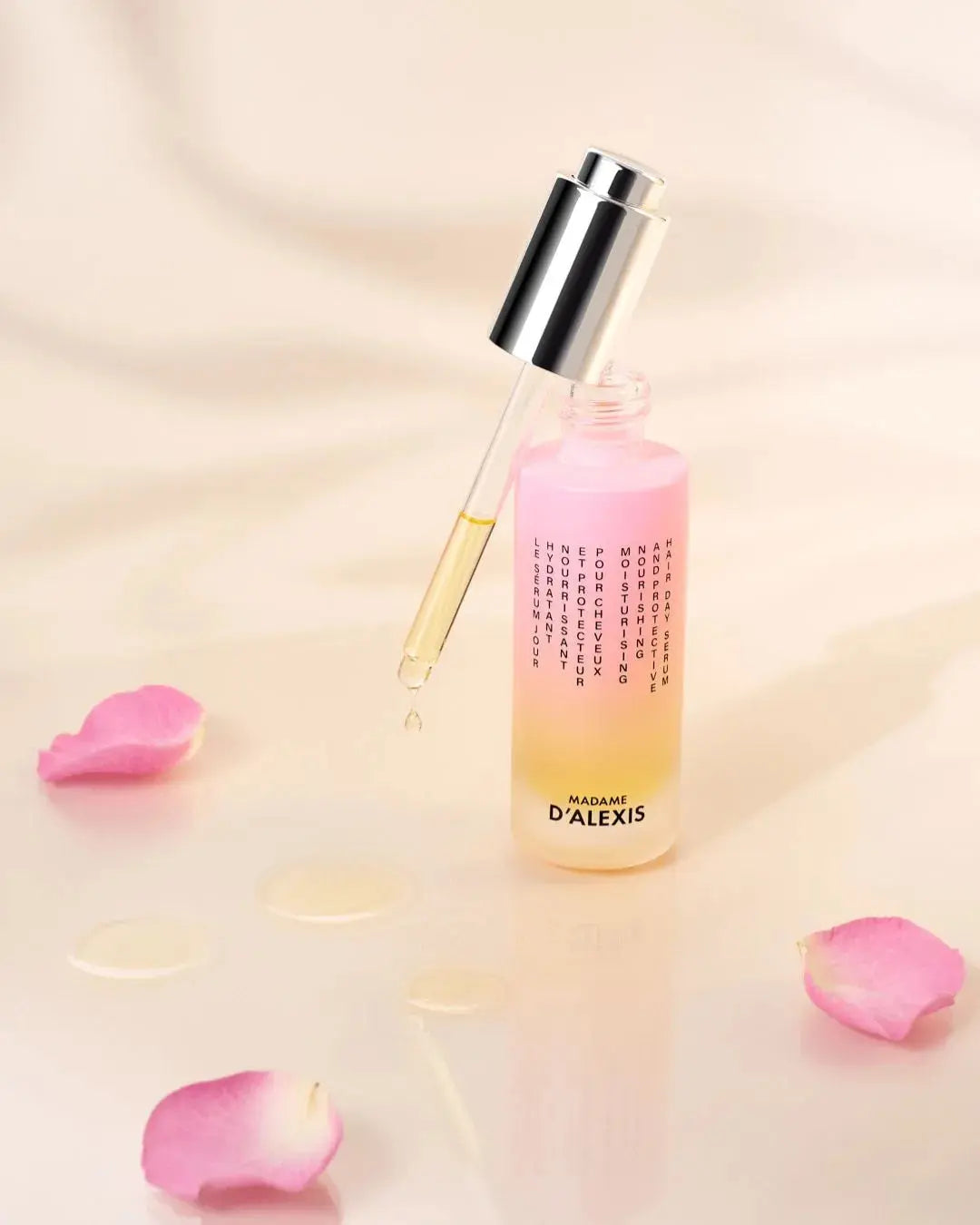
Madame d'Alexis Day Serum: I realized that a light oil could rival the cream finishes used in photo studios. Three drops of this jojoba elixir evaporate without a trace, forming a water-repellent veil that prevents moisture from lifting the cuticle.
Result: the small hairs framing the face remain smooth until evening, even in the drizzle of Normandy.
Key strengths:
- Ceramide complex and orange blossom wax that seals the cuticle.
- Natural heat protectant for daily blow-drying.
- A subtle floral fragrance, the signature of a high-end perfume house.
Always apply to damp hair, warming it in your palms and pressing it into the lengths. The fiber is instantly illuminated, without any greasy effect.
Regenerating anti-frizz night treatment
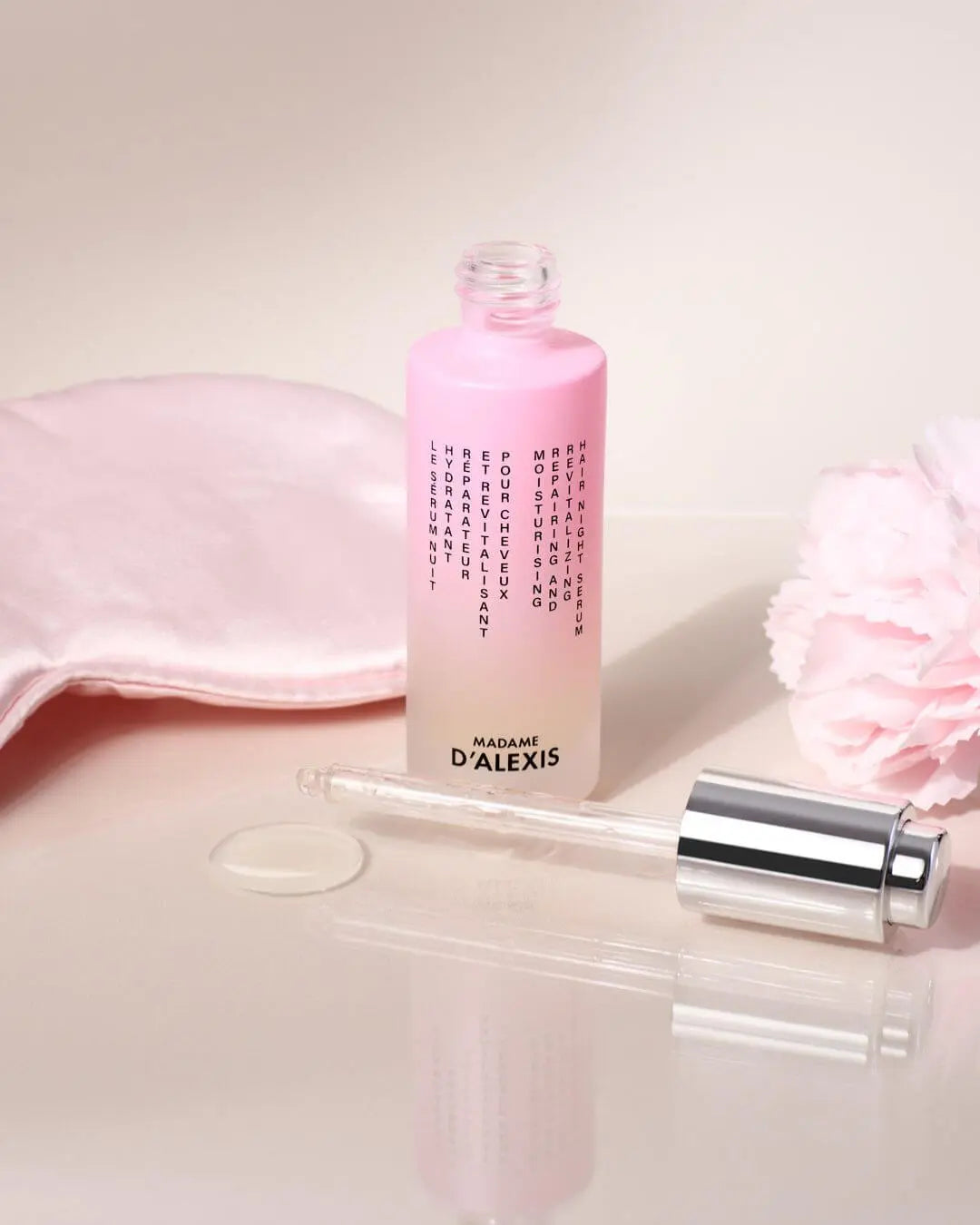
When the city falls asleep, Madame d'Alexis Night Serum begins its deep restoration process. Its cationic hyaluronic acid plumps up the hair fiber from within, while probiotics rebalance the scalp's microbiome. When you wake up: roots are aerated, ends are softened, and frizz is gone.
A gesture I adopted after a photo shoot in the Agafay Desert; sandy in the evening, silky in the morning.
Ritual: apply directly to the scalp using the pipette, massage in circular motions, leave hair loose. The hair is saturated with water and the cuticle remains sealed for 24 hours.
Dry and style without creating frizz
Poorly controlled drying is enough to transform a polished fiber into a fluffy cloud. Adopt a salon-style approach:
- Dab with a microfiber towel instead of rubbing with cotton.
- Detangle with a natural bristle brush that distributes protective sebum.
- Directthe airflow of the hair dryer downward, using a warm temperature and finishing with a cool shot to set the shine.
- For curls, attach a large-diameter diffuser, slow speed, cool air; the bounce remains defined and the surface glossy.
When blow-drying: limit the heat to 180°C, work in thin sections, and spray on some hydrosol between passes. This mist instantly closes the cuticles and locks in the nourishing active ingredients.
One last tip: sleep on a silk pillowcase. The minimal friction prevents static electricity and prolongs the effects of the serum. Night after night, your hair will retain its softness, leaving no room for frizz to take hold.

Natural solutions to prevent frizz naturally
Sometimes luxury lies in the simplicity of a homemade ritual. Three recipes that I always slip into my travel bag:
- Aloe vera gel + vegetable glycerin (2%): spray lightly onto damp hair to seal in moisture without weighing down the hair fiber.
- Warm coconut oil: apply to porous ends for ten minutes, then wash with a mild shampoo; the cuticle will smooth out and shine will return.
- Rinse with apple cider vinegar (pH 4): one spoonful in 500 ml of cold water, closed scales, mirror-like shine.
With these steps, I survived Cartagena's tropical humidity without a trace of sweat.
The most common questions about frizzy hair
How can I stop my hair from frizzing?
Start with a flawless base: a sulfate-free shampoo that respects the hydrolipidic film, followed by a ceramide-rich mask that fills in the gaps in the hair fiber. Rinse with cool water to close the cuticle, then apply a few drops of dry oil to the still-damp lengths.
Allow to dry in warm air or under a cool diffuser. This moisturizing + sealing routine forms a moisture barrier that protects your daily styling.
Why do I have so much frizz?
Frizz is caused by porous hair: raised cuticles, moisture penetration, and swollen fibers. It becomes more pronounced after alkaline coloring, exposure to subway steam, or excessively hot water. An unbalanced pH, a lack of protective lipids, and mechanical damage (rough towels, metal brushes) aggravate the frizz effect.
Understanding this equation of "porosity + humidity + heat" allows you to adjust every step of your routine.
How can I get rid of frizz on my head?
First treat the porosity: hot oil bath (argan or camellia) for fifteen minutes, then mild shampoo. Spray on some aloe vera mist before sealing with a jojoba-based anti-frizz serum.
Dry your hair upside down, with the airflow directed toward the ends, using a diffuser held 20 cm away. Finally, sleep on a silk pillowcase: the minimal friction prevents the reappearance of frizz when you wake up.
How can I stop my hair from frizzing?
Hydrate and protect. After each wash, layer on a moisturizing liquid (hydrosol), a penetrating oil (grape seed), and a light cream. This L-O-C trio locks water into the cortex.
Limit the use of hair straighteners to temperatures above 180°C: keratin deforms at high temperatures, causing unwanted waves. A silicone-free serum rich in ceramides, applied daily, keeps the hair shaft smooth without making it stiff.
What is the best treatment for frizzy hair?
A deep mask formulated with plant-based keratin, cationic hyaluronic acid, and ceramides provides reconstruction, hydration, and sealing in a single step. Under gentle steam, the active ingredients penetrate better; leave on for fifteen minutes, rinse with cold water, then apply a light oil.
This weekly treatment reduces breakage by 30% and visibly reduces frizz after just three applications.
Why does my hair become curlier as I get older?
With age, the production of sebum and essential fatty acids declines. The cuticle becomes dehydrated, and the fiber loses molecular weight: it curls, swells, and twists.
At the same time, hormonal changes alter the density of disulfide bonds. Incorporate oils rich in omega-9 (olive, moringa) and marine collagen supplements into your routine; also boost microcirculation in the scalp with a daily massage.
What is the best anti-frizz serum?
A two-phase elixir, concentrated in dry jojoba oil, antioxidants, and ceramides, remains the gold standard. Two drops warmed between the palms are enough to coat each strand.
Madame d'Alexis Day Serum, for example, creates an invisible moisture barrier, protects hair up to 200°C, and leaves it silky smooth without any greasy residue: ideal before a day out on the town or a blow-dry session.
Which oil should I use to smooth my hair?
Camellia oil stands out: high in oleic acid, low comedogenicity index, rapid penetration. Applied in a thin layer to damp hair, it reduces static electricity, softens the hair fiber, and is resistant to moderate heat.
In addition, pracaxi oil adds mirror-like shine while remaining surprisingly light, perfect for fine hair.
How can you avoid frizz and flyaways?
- Use a microfiber towel to avoid lifting the cuticle.
- Apply a glycerin-rich leave-in treatment to wet hair.
- Seal with three drops of light vegetable oil.
- Avoid hot water and always finish with a cold rinse.
- Protect your hair from humidity with a gentle water-repellent hairspray.
How can I dry my hair without frizz?
First absorb excess water with a microfiber towel, then pre-dry at a maximum temperature of 60°C. Use a diffuser attachment, holding it 15 cm away and directing the airflow toward the ends. Finish with cool air: this temperature contrast locks in the internal moisture.
Before drying, a heat-protective spray enriched with proteins seals the cuticles for a smooth, long-lasting result.
How to blow dry your hair without frizz?
Divide the hair into thin sections, use a ceramic brush with natural bristles, and set the hair dryer to below 180°C. Stretch the strand from root to tip, then immediately follow with a blast of cold air to set the style.
Finish with a small amount of anti-static cream on the lengths: the mirror finish will last until the next shampoo.
How can you avoid frizz after blow-drying your hair?
Seal your styling: apply a light serum to the ends and anti-humidity spray all over. Avoid overheated environments for two hours while the keratin stabilizes.
At night, roll your hair into a loose bun and sleep on a silk pillowcase; in the morning, a moisturizing mist will reactivate the glossy effect without frizz.
What products should you use to combat frizz?
- Moisturizing anti-frizz shampoo without sulfates.
- Weekly mask with plant-based keratin.
- Anti-humidity serum for daily protection.
-
Lightweight setting spray made with vegetable glycerin.
How can you reduce frizz on a daily basis?
Moisturize morning and night, wash your hair three times a week, and avoid sprays containing denatured alcohol. Wear a hat in damp autumn weather to limit exposure, and massage your scalp with vegetable oil once a week: these small, repeated gestures will keep your hair smooth and manageable from dawn to dusk.
How can you prevent frizz naturally?
To prevent frizz naturally, adopt a hair care routine rich in light vegetable oil (jojoba or argan) and apply a homemade aloe vera hair mask every week. These treatments provide long-lasting hydration and form a barrier against humid air. Choose suitable alcohol-free products, then apply a leave-in moisturizer to damp hair before letting it air dry.
What causes frizz?
Frizz is caused by a formidable trio: humidity, dry hair and static electricity. When the hair cuticle is open, water seeps in, swells the fiber and reveals unruly strands. Highly porous hair is more prone to this; aggressive styling, harsh shampoo or very hot water further accentuate the phenomenon.
How can you control frizz?
To control frizz, apply an anti-humidity serum to hair that is still warm; it forms an imperceptible protective barrier. Adopt a gentle styling technique: use a natural bristle brush, a vented hairbrush, and limit the use of straightening irons to below 180°C. A simple mist of hydrosol between brushings is enough to reactivate the protection without weighing down the hair.
What kind of care is needed for curly hair?
Curly hair thrives with a moisturizing mask rich in shea butter followed by a sulfate-free washing routine. A dabof coconut oil seals in moisture, while a glycerin-based leave-in conditioner maintains definition throughout the day. At Madame d'Alexis, plant-based keratin and floral hydrosols preserve the elasticity of each curl.
How can I dry my hair without frizz?
Even drying is key: press your hair in a microfiber towel, then let it breathe in the open air for fifteen minutes. Finish with a warm diffuser pointed downward. After shampooing, rinsing with cold water seals the cuticle; on the contrary, avoiding hot water prevents the scales from opening and frizz from appearing.
How can you reduce frizz on a daily basis?
Reduce frizz with a simplified washing routine: space out your shampoos and opt for gentle formulas. After each rinse, apply a nourishing treatment containing hyaluronic acid. Avoid alcohol-based gels, which dehydrate the hair, and protect the lengths with Madame d'Alexis dry oil before any exposure to humidity. This ritual keeps hair smooth from morning to night.
What products should you use to combat frizz?
A sulfate-free anti-frizz shampoo, followed by a ceramide-rich hair mask, forms the basis. Follow with a light hair oil or an anti-frizz spray containing glycerin. Once a week, rinsing with apple cider vinegar rebalances the pH and smooths the surface. The Madame d'Alexis range combines organic hydrosols and plant keratin for a mirror-like finish without stiffness.